Construction Equipment Technical Guide
PTO Stone Crusher for Middle East Construction: Dealing with Calcareous Rock in Arid Conditions
A technical reference on deploying a PTO stone crusher in extreme-heat, low-humidity environments dominated by calcareous rock, caliche, and sabkha formations — covering action methods, manufacturing structure, material systems, arid-climate operational adaptations, and regulatory compliance across the Middle East and Korea.
1. Why Middle East Construction Demands a Specialist PTO Stone Crusher
Across the Arabian Peninsula, the Levant, and the Gulf states, construction and infrastructure development regularly encounter a geological challenge that differs fundamentally from the scenarios faced in temperate agricultural zones: dense, dry calcareous rock. Limestone, dolomite, and calcrete formations — often partially cemented by secondary calcium carbonate deposits known as caliche — cover enormous stretches of the region’s surface and subsurface. When these formations obstruct road construction, pipeline routing, utility trench preparation, agricultural reclamation, or industrial site clearance, the question of how to process them efficiently becomes a direct cost and schedule issue. A PTO stone crusher mounted on an existing farm or construction tractor offers a compelling answer — one that eliminates the need for blasting permits, reduces haul-off costs, and produces on-site aggregate that can be immediately reused as sub-base material.
The challenge, however, is that a PTO stone crusher operating in the Middle East faces a set of environmental and geological stresses that are entirely absent in the European and Korean conditions for which many machines were originally designed. Ambient temperatures routinely exceed 45°C (113°F) during summer working hours; fine calcareous dust generated during crushing is significantly more abrasive than agricultural field stone fragments; and the low atmospheric humidity accelerates oxidative wear on uncoated steel surfaces. Operators who deploy a standard agricultural PTO stone crusher in these conditions without understanding its thermal and wear limitations will find maintenance cycles compressed dramatically and tooth life reduced by 30–50% compared to the manufacturer’s baseline estimate.
This guide addresses each of these challenges directly — covering the action methods best suited to calcareous rock, the structural features that extend machine life in arid conditions, the material systems that resist calcareous abrasion, and the regulatory landscape that governs construction machinery in the key Middle Eastern markets as well as South Korea. Where relevant, specific models from the tractor PTO stone crusher range are identified as the most appropriate configuration for each scenario.
2. Understanding Calcareous Rock in Middle East Construction Contexts
Calcareous rock — rock composed primarily of calcium carbonate (CaCO3) in the form of limestone or dolomite — has a compressive strength that varies widely depending on its diagenetic history, cementation degree, and moisture content. In the Middle East, the relevant formations range from relatively soft chalky limestone (Mohs hardness 2–3) found in shallow wadis and coastal plains, through medium-density crystalline limestone (Mohs 3–4) prevalent across the Hejaz, Najd, and Omani interior plateaus, to the dense dolomitised limestone formations (Mohs 3.5–5) encountered in deep-cut construction profiles across parts of Saudi Arabia and the UAE. Understanding this range is essential before selecting a PTO stone crusher configuration, because the difference between soft chalk and cemented dolomite is roughly equivalent to the difference between sandstone and basalt in terms of rotor tooth wear rates.
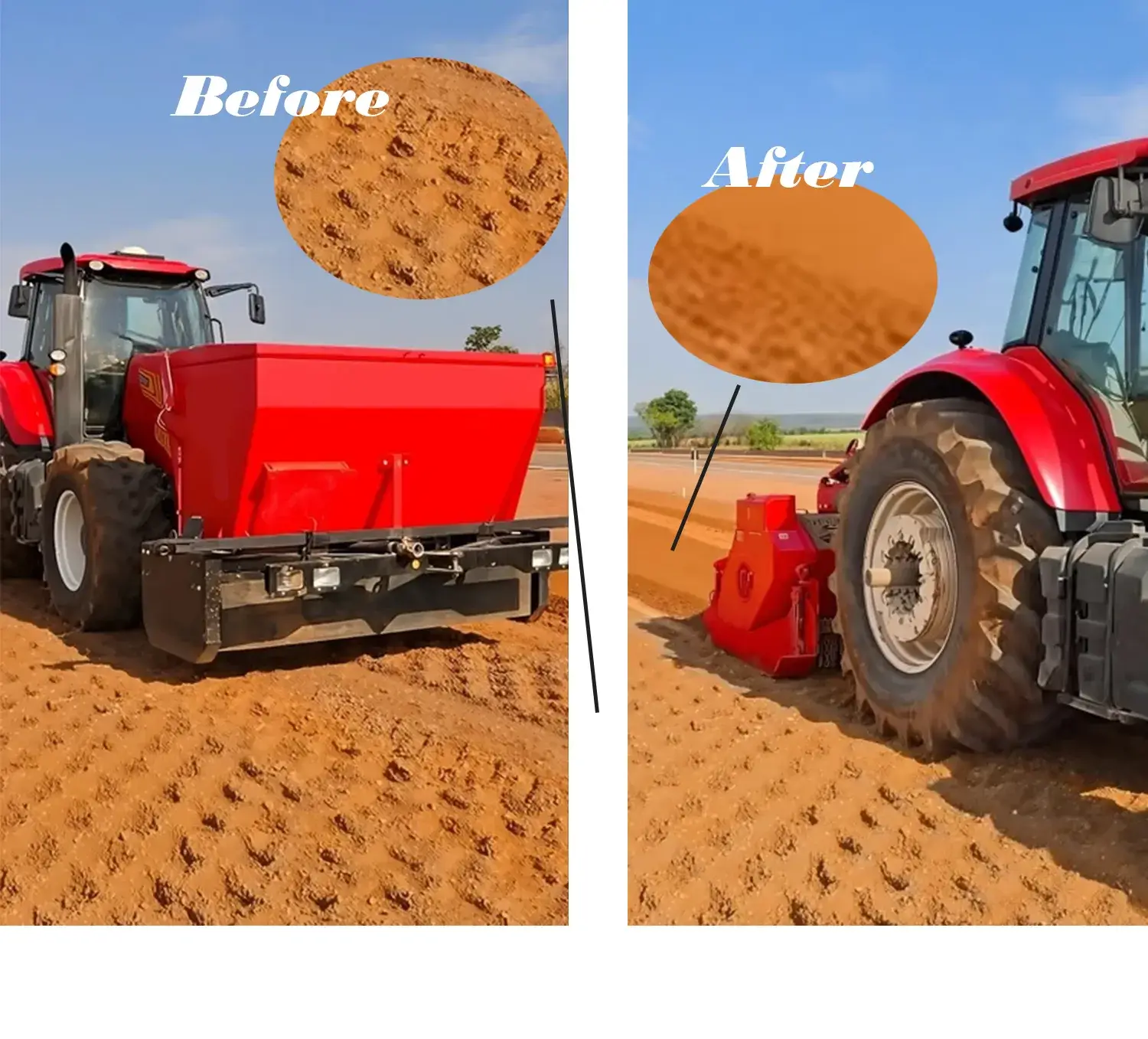
Caliche — a secondary accumulation of calcium carbonate that cements surface soil and gravel layers into a hardpan — presents a distinct challenge. Unlike bedrock limestone, caliche layers are highly variable in thickness (from 5 cm to over a metre), often contain embedded angular chert nodules that far exceed calcareous hardness, and sit at or near the surface where a PTO stone crusher operates at its standard working depth. A PTO stone crusher processing caliche must be capable of handling both the relatively soft matrix material and the occasional embedded chert or siliceous nodule without tooth fracture. This requirement points toward the use of HD (high-density) or carbide-tipped tooth configurations, which sacrifice some impact efficiency for dramatically improved fracture resistance when striking hard inclusions.
Sabkha — coastal or inland salt flat terrain where calcareous sediments are intermixed with evaporite minerals including halite (NaCl), gypsum (CaSO4·2H2O), and anhydrite — introduces a corrosion risk that is seldom addressed in standard PTO stone crusher documentation. Salt crystal growth in voids within the machine’s housing and under wear plates can cause structural micro-cracking and accelerate paint failure, exposing steel to direct atmospheric corrosion. For PTO stone crusher deployment in sabkha or coastal construction zones in the Gulf, selecting models with sealed bearing units, epoxy-primed internal surfaces, and stainless fasteners on critical wear-part connections will significantly extend service life between major maintenance interventions.
3. Action Method: Choosing the Right PTO Stone Crusher Mechanism for Calcareous Rock
The action method of a PTO stone crusher determines how mechanical energy is transferred to the rock being processed. For calcareous rock in construction applications, the selection logic differs from that used for European agricultural field stones, because the target material is harder, denser, and often presents in larger slab or block configurations rather than as scattered rounded pebbles.
Fixed-Tooth Rotor Impact for Soft to Medium Calcareous Formations
For soft chalky limestone and loose caliche hardpan up to 150–200 mm in fragment size, the fixed-tooth rotor impact method used in the PSC series and STCL/STCM-class tractor PTO stone crusher implements provides effective fragmentation at relatively modest tractor power (70–220 hp). The PSC 175 DT model (working width 1830 mm, weight 1600 kg, PTO 1000 RPM, min. tractor 100–150 hp, max stone diameter 150 mm, max depth 150 mm) is a practical starting point for medium-density calcareous soil work in Jordan, Lebanon, and the softer limestone zones of Saudi Arabia’s western provinces. The dual-transmission (DT) specification ensures the rotor reaches optimal peripheral velocity even when the tractor’s PTO output fluctuates under high ambient temperature conditions — a real operational risk above 40°C when engine thermostats may throttle output briefly to prevent overheating.
Counter-Blade Compression for Dense Limestone Slabs
When the construction profile includes dense crystalline limestone slabs exceeding 200–300 mm in largest dimension — common in road subgrade preparation across Oman’s Al Hajar mountain foothills and in deep infrastructure trenching in Bahrain and Qatar — the counter-blade compression action method of the STCM-class PTO stone crusher becomes the preferred approach. The STCM 200 (working width 2064 mm, weight 3550 kg, PTO 1000 RPM, tractor 170–220 hp, max stone 300 mm, max depth 200 mm) combines sufficient rotor torque with an adjustable counter-blade to apply both impact and compressive shear force to large limestone fragments, producing a consistent minus-50 mm output without the tooth fracture risk associated with pure impact on hard stone. For contractors working on large-diameter utility corridors or highway sub-base preparation in the UAE or Saudi Arabia, this PTO stone crusher class represents the practical midpoint between light agricultural crushers and full-scale dedicated rock milling trains.
Multi-Pick Milling for Dolomite and Large Boulder Formations
The RockMaster Agricultural PTO stone crusher — which processes stones up to 500 mm in diameter using a multi-pick rotor milling approach — is the appropriate choice for construction projects encountering intact dolomite or dense cemented limestone formations where the material needs to be reduced in place rather than blasted. This PTO stone crusher action method is directly analogous to the cutting heads used on roadheader machines in tunnelling, but scales to tractor-mounted format for surface construction applications. In the Levant — particularly across rocky terrain in Iraq’s Kurdish highlands, northern Syria’s agricultural borderlands, and Jordan’s eastern basalt plateau where large igneous and carbonate blocks frequently protrude — this class of PTO stone crusher for tractor can replace blast-and-clear sequences that would require separate permits and create regulatory complications on construction sites near populated areas.
Across all three action method categories, the operating speed recommendation remains 3 km/h in construction-grade calcareous material. Attempting to run faster through hard limestone formations does not improve productivity — it generates unnecessary shock loading on the rotor shaft and gearbox, which under high ambient temperature conditions may already be operating at the margin of the gear oil’s viscosity range.
4. Manufacturing Structure: What to Look for in a PTO Stone Crusher Built for Arid Construction
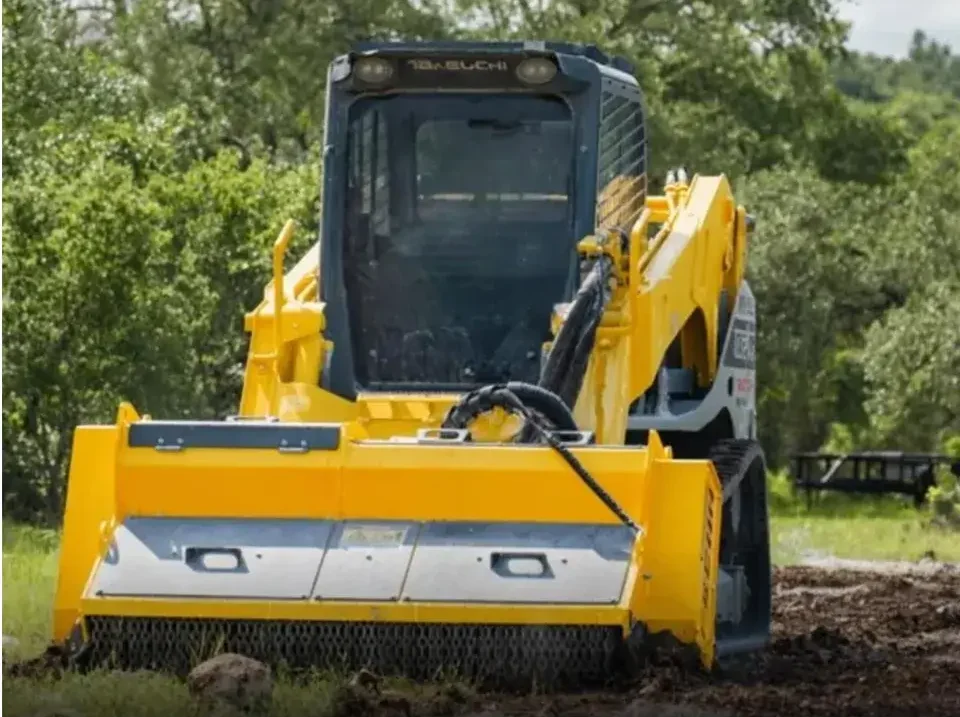
The manufacturing structure of a PTO stone crusher — meaning the physical design and construction decisions that determine how the machine is assembled and how it handles stress — takes on a different emphasis in construction applications compared to agricultural use. Several structural features become disproportionately important when the machine operates in high-temperature, high-abrasion, low-humidity environments.
Thor 2.4 PTO Stone Crusher — Construction-Grade Specification Review
The Thor 2.4 + Kit Drawbar represents one of the structurally heavier options in the PTO stone crusher range at 2,300 kg operating weight, which translates to a robust S355 steel chassis that resists the racking forces generated when processing irregular limestone slab formations at constant 3 km/h advance. The Kit Drawbar adds a trailing axle that serves a critical function on Middle Eastern construction sites: it distributes the machine’s weight across a wider footprint when operating on loose compacted caliche or unstable sabkha surface layers, reducing the risk of the rear of the machine sinking into the profile and generating uneven rotor depth across the working width. With a minimum tractor requirement of 180 hp and a 2.4 m working width, this PTO stone crusher is sized for medium-scale construction corridor preparation — pipeline right-of-way clearance, access track sub-base preparation, and agricultural land reclamation along irrigation canal networks in arid regions.
| Parameter | THOR 2.4 | THOR 3.0 |
|---|---|---|
| Length (mm) | 1546 | 1732 |
| Width (mm) | 2481 | 3000 |
| Height (mm) | 1212 | 1212 |
| Weight (kg) | 2300 | 2800 |
| Bottom Linkage | Category 2 | Category 2 |
| Working Width (m) | 2.4 | 3.0 |
| Min. Engine Power (hp) | 180 | 230 |
| Working Speed (km/h) | 3 | 3 |
| Required Control Valves | 2 | 2 |
Gearbox Design and Thermal Management in Arid PTO Stone Crusher Operation
The gearbox in a PTO stone crusher is the component most sensitive to ambient temperature in arid construction environments. At standard operating temperatures (15–25°C), mineral gear oils of ISO VG 220 grade maintain adequate viscosity and film strength across the entire gear mesh and bearing contact zones. At ambient temperatures above 40°C — the routine working environment in Gulf state construction from April through October — oil sump temperature in an unshaded, heavily loaded PTO stone crusher gearbox can rise to 80–100°C during a continuous work shift. At these temperatures, ISO VG 220 mineral oil begins to thin measurably, reducing film thickness in bearing journals and hypoid gear contacts below the minimum required for full-film lubrication. The practical consequence is accelerated micro-pitting of gear flanks and shortened bearing life, both of which produce expensive repair events.
The solution is straightforward but frequently overlooked: specify a synthetic gear oil of equivalent ISO VG rating when deploying a PTO stone crusher in Middle Eastern construction conditions. Synthetic PAO (polyalphaolefin) or PAG (polyalkylene glycol) oils of ISO VG 220 maintain viscosity stability and oxidative stability at temperatures 20–30°C above their mineral equivalents, without significant change in their cold-start behaviour. For machines where the gearbox manufacturer specifies GL-4 or GL-5 classification, a full synthetic of equivalent classification is the correct arid-climate substitution. This single maintenance decision extends gearbox service intervals and reduces the risk of thermal failure during the peak construction season when downtime is most costly.
Crushing Chamber Dust Sealing in High-Calcareous-Dust Environments
Processing calcareous rock generates a fine white powder — calcite dust with particle sizes below 10 microns — that is both highly abrasive and capable of migrating into bearing housing voids, hydraulic cylinder rod seals, and PTO driveshaft grease nipple channels. A PTO stone crusher operating in dry limestone or caliche environments without attention to secondary dust sealing will experience bearing failure at half the interval observed in agricultural soil conditions. Labyrinth-type bearing housings with positive-pressure grease purge on each greasing cycle are the appropriate construction standard; standard agricultural grease nipples without purge capability should be replaced with heavy-duty agricultural construction equivalents before deployment on a dry calcareous site. The hydraulically controlled rear door and adjustable skid assemblies on most PTO stone crusher models in this range use cylinder rod seals that should be inspected and replaced at the start of each dust season rather than at the standard annual interval.
5. Material System: Steel Grades, Wear Parts, and Coatings for Calcareous Rock Duty
The material system of a PTO stone crusher — the combination of steels, surface treatments, and wear components that make up its working surfaces — must be evaluated specifically for calcareous rock duty rather than applied generically from agricultural specifications. Calcareous dust, chert nodules, and the thermally aggressive operating environment of Middle Eastern construction all place different demands on material selection than standard field stone crushing in temperate zones.
Rotor Teeth for Calcareous Rock Duty
Standard STC/3 fixed teeth — the base specification for the PSC and STCL/STCM PTO stone crusher product families — are heat-treated alloy steel, appropriate for soft to medium calcareous limestone at the fragmentation diameters these models target (up to 150–300 mm). When chert nodules are known to be present in the caliche or when the limestone formation exceeds approximately Mohs 4 in hardness, the STC/3/HD (high-density) tooth specification provides significantly better resistance to tooth root fracture under eccentric loading. HD teeth use a wider cross-section and a modified root geometry that redistributes impact stress away from the most vulnerable location in the tooth’s mechanical profile. For dolomite-dominant or heavily chert-bearing formations, the STC/FP (flat-faced pick) configuration shifts to a wedge-cutting rather than impact-fracture mechanism, which delivers slower fragmentation but dramatically reduces catastrophic tooth failure events when the rotor encounters an unexpectedly hard inclusion.
Hardox Liners: Selection for Calcareous vs. Siliceous Abrasion
Hardox wear plate — the industry-standard abrasion-resistant steel used for PTO stone crusher chamber liners, rear door facings, and side scraper components — is available in grades from Hardox 400 to Hardox 600. For agricultural field stone duty dominated by siliceous rocks (granite, flint, quartzite), Hardox 400 liners provide a cost-effective balance of wear life and initial cost. For calcareous rock duty in Middle Eastern construction, the situation is somewhat more nuanced: pure limestone and dolomite are less abrasive than siliceous rock at equivalent particle size, but the fine calcareous dust produced in quantity during continuous crushing has a particle morphology (sharp rhombohedral crystals) that is highly effective at two-body abrasive wear on steel surfaces exposed to sustained dust flow. On balance, Hardox 450 or 500 liners represent the better long-term investment for PTO stone crusher deployment in high-volume calcareous dust generation conditions — the 25–30% increase in initial liner cost is typically recovered within a single construction season through reduced liner replacement frequency.
| Component | Standard Spec | Recommended for Calcareous / Arid |
|---|---|---|
| Rotor teeth (soft limestone) | STC/3 alloy steel | STC/3 — adequate |
| Rotor teeth (caliche + chert) | STC/3 alloy steel | STC/3/HD or carbide-tipped |
| Rotor teeth (dolomite) | STC/3 alloy steel | STC/FP pick-type + HD |
| Chamber liner | Hardox 400 | Hardox 450 or 500 |
| Gearbox oil | ISO VG 220 mineral GL-4/5 | ISO VG 220 synthetic PAO/PAG |
| Bearing housings | Standard agricultural sealed | Labyrinth seal + heavy-duty construction spec |
| Main chassis coating | Alkyd enamel, standard | Epoxy primer + polyurethane topcoat |
| Fasteners (sabkha zones) | Zinc-plated steel | A4 stainless steel or galvanic-isolated |
Chassis Coating and Corrosion Protection in the Gulf Climate
The Arabian Gulf coastal environment combines high humidity (relative humidity regularly above 80% at night even when daytime values are low), salt aerosol from the sea surface, and the aggressive microclimate created by calcareous dust settling on uncoated steel surfaces. Under these conditions, standard alkyd enamel paint systems — adequate for European agricultural use — show measurable coating failure within one to two seasons. For PTO stone crusher machines destined for Qatar, Bahrain, Kuwait, eastern Saudi Arabia, or the UAE coastline, the specification of an epoxy primer (minimum 100 microns DFT) with a polyurethane or epoxy topcoat (minimum 80 microns DFT) on all external steel surfaces, combined with sacrificial zinc anode protection on submerged or buried components, represents the minimum corrosion protection standard for a five-year service life expectation in these environments.
6. Operating a PTO Stone Crusher in Arid Conditions: Practical Protocols
Beyond equipment specification, the operational protocols used when running a PTO stone crusher in Middle Eastern arid conditions determine whether theoretical machine life translates into actual service life. Several practices differ substantially from standard European or Korean agricultural guidance.
Shift Timing and Heat Management
In Gulf states, the standard practice for outdoor construction work during summer (May–September) is to concentrate heavy machinery operation in the hours between 04:00 and 12:00, before ambient temperatures reach peak values. For PTO stone crusher operation, this means the gearbox thermal load is heaviest in the middle of the work period rather than at the end. Schedule a mandatory 20-minute cool-down stop (tractor at idle, PTO disengaged) at or just before the two-hour mark of continuous PTO stone crusher operation when ambient temperatures exceed 40°C. This single practice has been documented to extend gearbox seal life by 30–40% in comparable equipment deployed in Gulf construction environments.
Dust Suppression and Calcareous Fine Management
Where a water supply is accessible on site, a simple spray bar positioned ahead of the PTO stone crusher working zone reduces calcareous dust generation by 60–70% at the rotor entry point. This directly extends tooth life, bearing life, and tractor air filter service intervals. Some PTO stone crusher models in the upper range include a water spray system option (primarily designed as a cooling function for asphalt cutter use) that can be redeployed as a calcareous dust suppression measure in construction contexts. Where no water supply is available, operating the PTO stone crusher in a single pass at reduced working depth (80–100 mm rather than the rated maximum) and reducing forward speed to 2 km/h cuts dust emission substantially at some productivity cost.
Tooth Inspection Intervals in Calcareous Conditions
In calcareous rock construction duty without dust suppression, plan for tooth inspection every 40–60 hours rather than the 50–80 hours standard for agricultural stone work. The fine abrasive component of calcareous dust wears teeth from all surfaces simultaneously, unlike field stone impact wear which is concentrated on the tooth face. A tooth at 50% face wear in agricultural conditions may still have 60% of its useful life remaining; in calcareous construction duty, 50% face wear typically corresponds to a remaining life of only 30–40% because the simultaneous wear of the root area has compromised the tooth’s structural reserve. Early replacement at the first sign of root taper is economically preferable to waiting for fracture at depth.
Post-Shift Cleaning Protocol for Calcareous Sites
At the end of each working shift on a calcareous site, compressed air blow-down of the machine’s internal crushing chamber, gearbox cooling fins, and all bearing housing access points is essential. Calcareous dust left overnight in bearing housing gaps hydrates from atmospheric moisture (even in arid climates, overnight relative humidity rises significantly) and forms a mildly alkaline calcium carbonate paste that acts as a lapping compound during the following day’s start-up. Compressed air at 6–8 bar, directed systematically across all dust accumulation points, takes 10–15 minutes and prevents a maintenance failure mode that is entirely avoidable.
7. PTO stone crusher Product Range for Construction Use
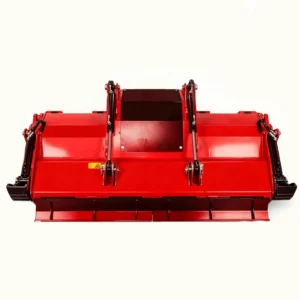
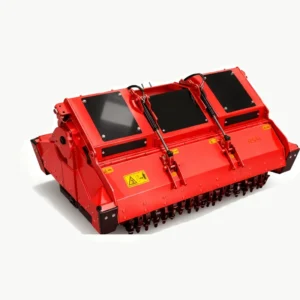
Select the right agricultural PTO stone crusher or construction tractor crusher for your project scale and rock type

8. Regulatory Environment: PTO Stone Crusher Compliance in the Middle East and Korea
Operating a PTO stone crusher in Middle Eastern construction requires awareness of a multi-layered regulatory environment that differs markedly from the EU machinery safety framework that governs most agricultural PTO stone crusher design documentation. The following covers the key jurisdictions relevant to buyers and operators in this region.
Saudi Arabia: SASO and MOMRA Equipment Requirements
In the Kingdom of Saudi Arabia, construction equipment including tractor-mounted stone processing implements is subject to the Saudi Standards, Metrology and Quality Organisation (SASO) technical regulations for machinery safety. SASO has adopted SASO/IEC 60204-1 for electrical safety and references ISO 11684 for safety signage on agricultural and construction machinery — the same standard applied in EU markets. For import and operation of a PTO stone crusher machine on construction sites managed by the Ministry of Municipal, Rural Affairs and Housing (MOMRA), the machine must carry a Certificate of Conformity (CoC) issued by a SASO-recognised inspection body confirming that the equipment meets the applicable technical regulation. Additionally, under the Saudi Environmental Law (Royal Decree M/165 of 2021) and its implementing regulations, construction activities generating airborne particulate matter above 150 µg/m³ (PM10, 24-hour average) require dust suppression measures — directly relevant to dry PTO stone crusher operations in built-up or residential-adjacent construction zones.
United Arab Emirates: ESMA and Abu Dhabi / Dubai Construction Standards
The UAE’s Emirates Authority for Standardisation and Metrology (ESMA) oversees machinery standards across all seven emirates. UAE.S GSO 6/2017 (GCC Machinery Safety Standard, equivalent to Machinery Directive 2006/42/EC) applies to PTO stone crusher equipment placed on the UAE market. Construction site health and safety is further regulated under Dubai’s OSHAD (Occupational Safety and Health Administration Dubai) SF-37 Machinery and Equipment standard and Abu Dhabi’s OSHAD-SF Elements Framework. Both frameworks require that PTO-driven attachments carry documentation demonstrating conformity with ISO 4254-7 (agricultural machinery safety for soil-working implements) and that the PTO driveshaft guarding meets the requirements of GSO ISO 5674. Failure to produce these documents during a UAE Occupational Safety Inspector site visit can result in immediate equipment removal orders and financial penalties that typically exceed the cost of the documentation itself.
Qatar and Bahrain: Local Content and Import Certification
Qatar’s National Programme for Suppliers Development (NPSD) and the Qatar General Organisation for Standards and Metrology (QS) require that imported construction machinery — including specialist tractor-mounted stone crushing equipment — carry a valid third-party test certificate from a body accredited by the GCC Accreditation Centre (GAC). Bahrain’s National Standards, Metrology and Testing (BSMD) enforces the GCC Machinery Regulation (GCCMR) under Ministerial Order No. 2 of 2019, which aligns broadly with EU Machinery Directive standards while adding Gulf-specific clauses on heat-protection labels for equipment surfaces that may reach temperatures dangerous to personnel in high-ambient conditions — directly applicable to PTO stone crusher gearbox and exhaust-proximate housings in Middle Eastern summer operation.
Jordan and Iraq: Construction Equipment Regulatory Frameworks
Jordan’s Jordan Institution for Standards and Metrology (JISM) administers JS ISO 11684 for construction and agricultural machinery safety signs, and Jordan’s Labour Law No. 8 of 1996 (as amended) requires that employers using motorised equipment for ground-clearing or construction operations conduct risk assessments and provide operator training documentation. In Iraq, the construction machinery regulatory framework is less codified than Gulf standards, but contractors operating under international engineering contracts (particularly on oil and gas infrastructure projects where PTO stone crusher use is common for corridor preparation) are typically required to comply with the project’s specific equipment management plan, which usually references ISO 9001 quality management for maintenance records and ISO 45001 occupational health and safety management for operational risk documentation.
South Korea: RDA, KOSHA, and Agricultural Machinery Act
Although Korea lies outside the Middle East, it is the primary market orientation for this product programme, and Korean operators who deploy PTO stone crusher machines in construction-adjacent applications — including rocky land reclamation, terraced agricultural development, and rural road preparation — face a distinct regulatory requirement. The Korea Occupational Safety and Health Agency (KOSHA) Code H-52-2012 governs the safe use of PTO-driven agricultural implements and requires that operators receive documented safety training specific to the implement type before use. The National Institute of Agricultural Sciences (NIAS, under the Rural Development Administration) conducts performance testing of imported agricultural PTO stone crusher machines under the Agricultural Mechanisation Promotion Act (농업기계화촉진법), and machines that pass NIAS performance testing receive a test report number that is required for registration as an approved implement in Korea’s farm subsidy system. Contractors from the Gulf states procuring PTO stone crusher for sale for export to Korea must be aware that both the agricultural regulatory pathway (NIAS/RDA) and the construction machinery regulatory pathway (KOSHA) may apply depending on the end use of the machine.
9. Construction Applications: Where a PTO Stone Crusher Outperforms Conventional Methods
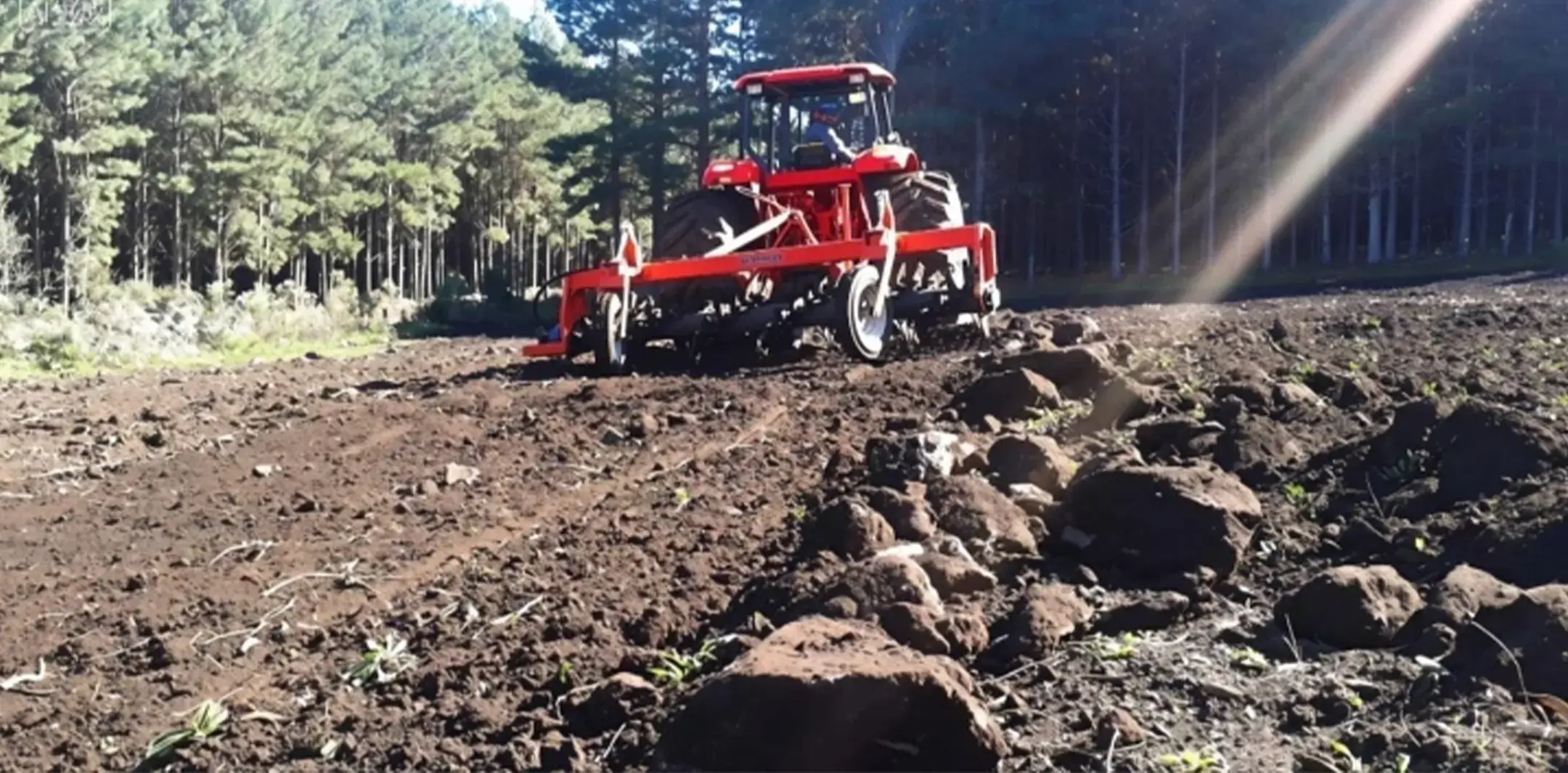
In Middle East construction contexts, the value of a PTO stone crusher is best understood by comparing it to the conventional alternatives — blasting, hydraulic breaker, or manual removal — across the scenarios most commonly encountered in the region.
| Application | Recommended PTO Stone Crusher Class | Advantage Over Conventional Method |
|---|---|---|
| Pipeline right-of-way soft limestone clearance | PSC 175–200 or STCM 150 | No blasting permits; on-site aggregate reuse; single-pass clearance |
| Road shoulder caliche hardpan preparation | Thor 2.4 or STCM 200 | Faster than hydraulic breaker; produces compactable sub-base in place |
| Wadi bank agricultural reclamation | PSC 125–150 or STCL class | Avoids topsoil removal; improves drainage; single pass clears and levels |
| Dense dolomite or chert-bearing sabkha construction | RockMaster with HD picks | Processes up to 500 mm boulders; eliminates manual picking operations |
| Solar and wind farm access track preparation | Thor 2.4 or 3.0 + Kit Drawbar | Wide coverage, no material export needed; speed matches GCC infrastructure project timelines |
The PTO stone crusher’s economic case in Middle Eastern construction rests primarily on the elimination of material haulage. In a region where aggregate import and long-haul trucking represent a significant proportion of construction materials costs, converting on-site calcareous rock to usable sub-base material through a PTO stone crusher machine avoids both the disposal cost of the excavated rock and the purchase and delivery cost of imported aggregate. Project managers on linear infrastructure projects (pipelines, roads, transmission lines, irrigation canals) have documented material cost reductions of 18–35% on rocky sections where a PTO stone crusher was deployed instead of break-and-haul methods — savings that typically justify the machine’s purchase cost within a single contract.
Câu hỏi thường gặp
Biên tập viên: PXY