Mô tả
EP-70-150HP PTO Stone Crusher — PSC Series Tractor-Mounted Rock Crusher
Power Range: 70–150 hp | PTO Speed: 540–1000 rpm | Working Width: 1110–2070 mm | Max Shredding Diameter: 150 mm
1. Technical Specifications — PSC Series PTO Stone Crusher
All six PSC series pto stone crusher models are listed below. Dimensions are in millimeters unless otherwise noted. The ST suffix indicates single-transmission drive; DT indicates dual-transmission drive for higher torque capacity at wider working widths.
| Tham số | PSC/ST 100 | PSC/ST 125 | PSC/ST 150 | PSC/ST 175 | PSC/DT 175 | PSC/DT 200 |
|---|---|---|---|---|---|---|
| Tractor Power (hp) | 70–120 | 80–120 | 90–120 | 100–120 | 100–150 | 120–150 |
| PTO Speed (rpm) | 540–1000 | 540–1000 | 540–1000 | 540–1000 | 1000 | 1000 |
| Working Width (mm) | 1110 | 1350 | 1590 | 1830 | 1830 | 2070 |
| Total Width (mm) | 1414 | 1654 | 1894 | 2134 | 2134 | 2374 |
| Trọng lượng (kg) | 1230 | 1280 | 1440 | 1570 | 1600 | 1750 |
| Rotor Diameter (mm) | 450 | 450 | 450 | 450 | 450 | 450 |
| Max Shredding Diameter (mm) | 150 | 150 | 150 | 150 | 150 | 150 |
| Max Working Depth (mm) | 150 | 150 | 150 | 150 | 150 | 150 |
| No. of Teeth (type PSC/3 + C/3/SS) | 22+4 | 26+4 | 32+4 | 38+4 | 38+4 | 42+4 |
* Asterisk on tractor power indicates optimal operating range. ST = Single Transmission. DT = Dual Transmission.
2. About Our 70-150HP PTO STONE CRUSHER PSC MODELS
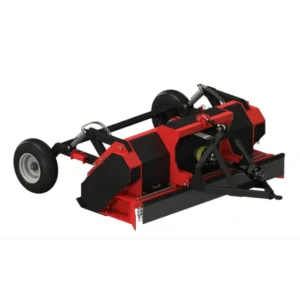
The EP-70-150HP Máy nghiền đá PTO is a tractor-mounted rock crushing attachment engineered for farmers, land managers, and civil construction contractors who need to clear, crush, and recycle stones directly in the field. Designed for tractors in the 70 to 150 horsepower range, the PSC series connects to the tractor’s standard three-point hitch and draws power exclusively through the PTO shaft — no separate hydraulic circuits or auxiliary engines required. This direct drive simplicity translates into faster setup time, lower maintenance complexity, and a more predictable power delivery compared to hydraulically driven alternatives available in the market.
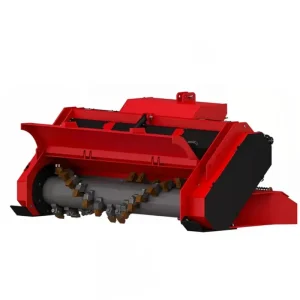
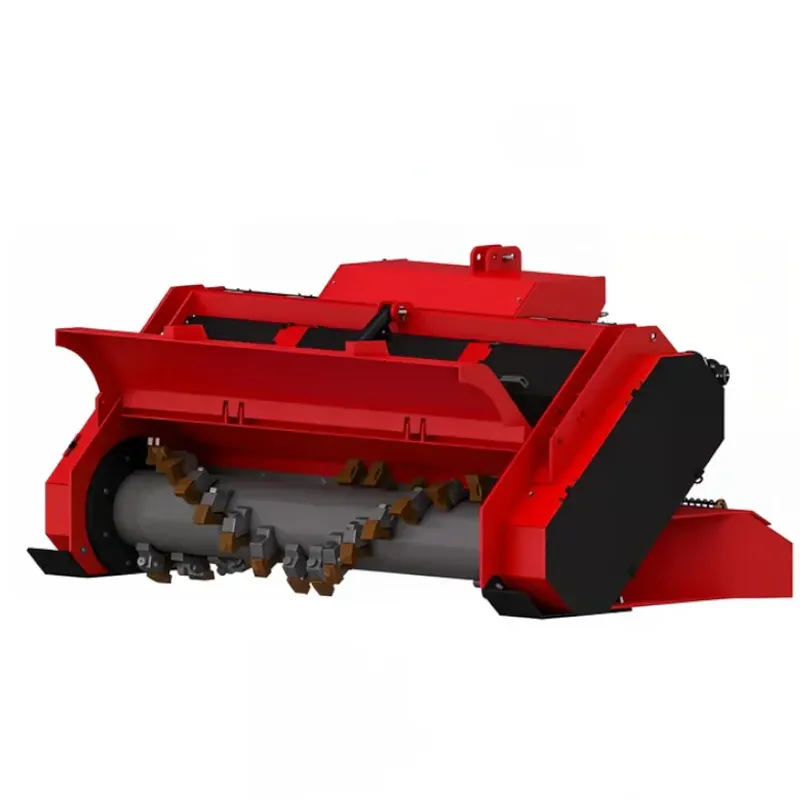
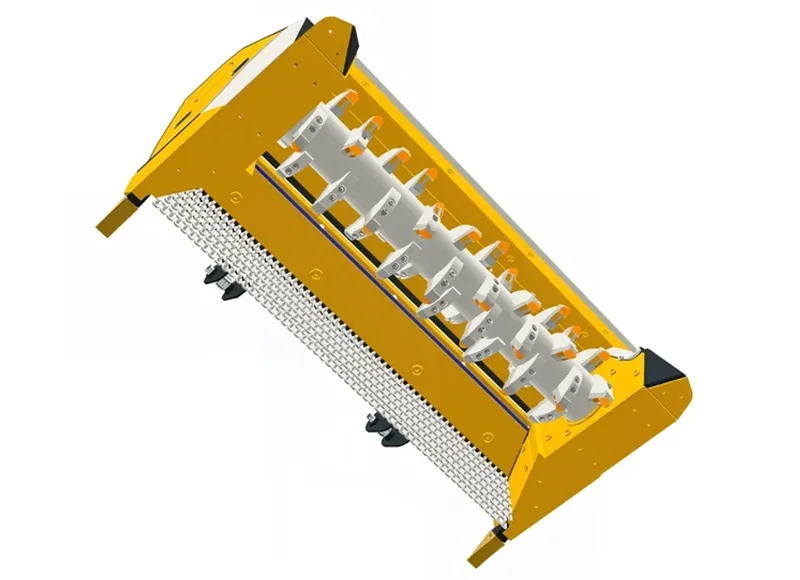
What separates the PSC series from lighter-duty máy nghiền đá is its rotor architecture. A 450 mm diameter rotor carries precision-set PSC/3 cutting teeth combined with C/3 side support picks and stainless steel wear plates (SS type). The tooth count scales with the working width — from 22+4 on the narrowest 1110 mm model to 42+4 on the widest 2070 mm configuration — ensuring consistent stone coverage across the full pass width. Maximum shredding diameter is 150 mm, accommodating the majority of surface and near-surface rocks encountered in agricultural fields, vineyards, olive groves, and light construction sites. The maximum working depth of 150 mm allows the rotor to engage embedded stones at a level that would otherwise require manual removal or deep tillage equipment.
For Korean agricultural operations, particularly in the rocky hillside and terraced farmland areas common across Gyeongbuk, Chungcheong, and the southern peninsula regions, a máy nghiền đá kéo of this power class fills a critical gap. Rather than renting heavy excavators or hiring manual labor to remove stones before planting, Korean growers can attach the PSC crusher to an existing mid-size tractor and process the field in a single pass, reducing both time and seasonal input costs substantially. The machine is equally suited for land reclamation projects, road shoulder maintenance, and paddy-to-upland conversion work increasingly common in Korea’s changing agricultural landscape.
3. Five Key Product Advantages of PTO Stone Crusher
The EP-70-150HP connects solely through the tractor PTO shaft, operating at either 540 or 1000 rpm depending on the model. This eliminates the need for supplementary hydraulic plumbing or remote cylinder connections, meaning virtually any compatible tractor — whether a Korean-built LS Tractor, TYM, or an imported John Deere or New Holland — can run the crusher without additional valve kits. The direct mechanical drive also delivers more consistent rotor torque under heavy stone loads than hydraulic systems, which can suffer pressure drops when multiple circuits are engaged simultaneously.
Six PSC series configurations — from PSC/ST 100 through PSC/DT 200 — cover tractors from 70 hp all the way to 150 hp, with working widths spanning 1110 mm to 2070 mm. This breadth means a small family farm running a 70 hp tractor can enter the PSC lineup at the narrowest model, while a larger cooperative managing hundreds of acres can step up to the dual-drive 150 hp variants without switching to a completely different product family. Standardized rotor diameter (450 mm) and tooth geometry across all models simplify spare parts stocking.
Unlike lighter máy nghiền đá PTO nhỏ units that handle only surface pebbles, the PSC series processes stones up to 150 mm in diameter at a maximum working depth of 150 mm. This combination is sufficient to break up the embedded rock layers frequently encountered when converting uncultivated hillside plots in Korea, reducing them to manageable gravel that remains in the soil profile as drainage aggregate rather than being hauled off-site — a meaningful labor and transport cost saving.
The rotor tooth layout combines three tooth types on the same drum: the primary PSC/3 cutting picks handle initial stone fracture; the C/3 counter picks provide secondary reduction on larger fragments; and the SS stainless end-plates protect the rotor side flanges from abrasive wear at the outermost cutting edges. This tri-type arrangement extends overall tooth life and reduces the likelihood of uneven rotor wear patterns that can cause vibration on single-tooth-type designs common in lower-cost máy nghiền đá.
The PSC series mounts to any standard ISO 730 Category II or III three-point hitch, making it compatible with the full range of mid-size tractors sold in Korea and globally. When transport between fields is required, the machine lifts cleanly on the tractor linkage, and total widths (from 1414 mm to 2374 mm depending on model) remain within standard road transport limits for most models — a practical consideration in Korea’s narrower rural road network where oversized equipment transport requires permits.
4. How the PTO Stone Crusher Works
The operating principle of a tractor pto stone crusher is straightforward but relies on precisely engineered rotor dynamics to achieve effective stone reduction at agricultural forward speeds. When the tractor operator engages the PTO, rotational power from the tractor’s transmission is transferred through the driveshaft to the crusher’s input gearbox. Inside the gearbox, a bevel gear set and output shaft redirect the rotation to drive the rotor drum at the correct operational speed. The gearbox is one of the most critical mechanical components in the system — its design must handle peak impact torque generated when the rotor teeth strike embedded stones, which can reach multiples of the steady-state drive torque within milliseconds.
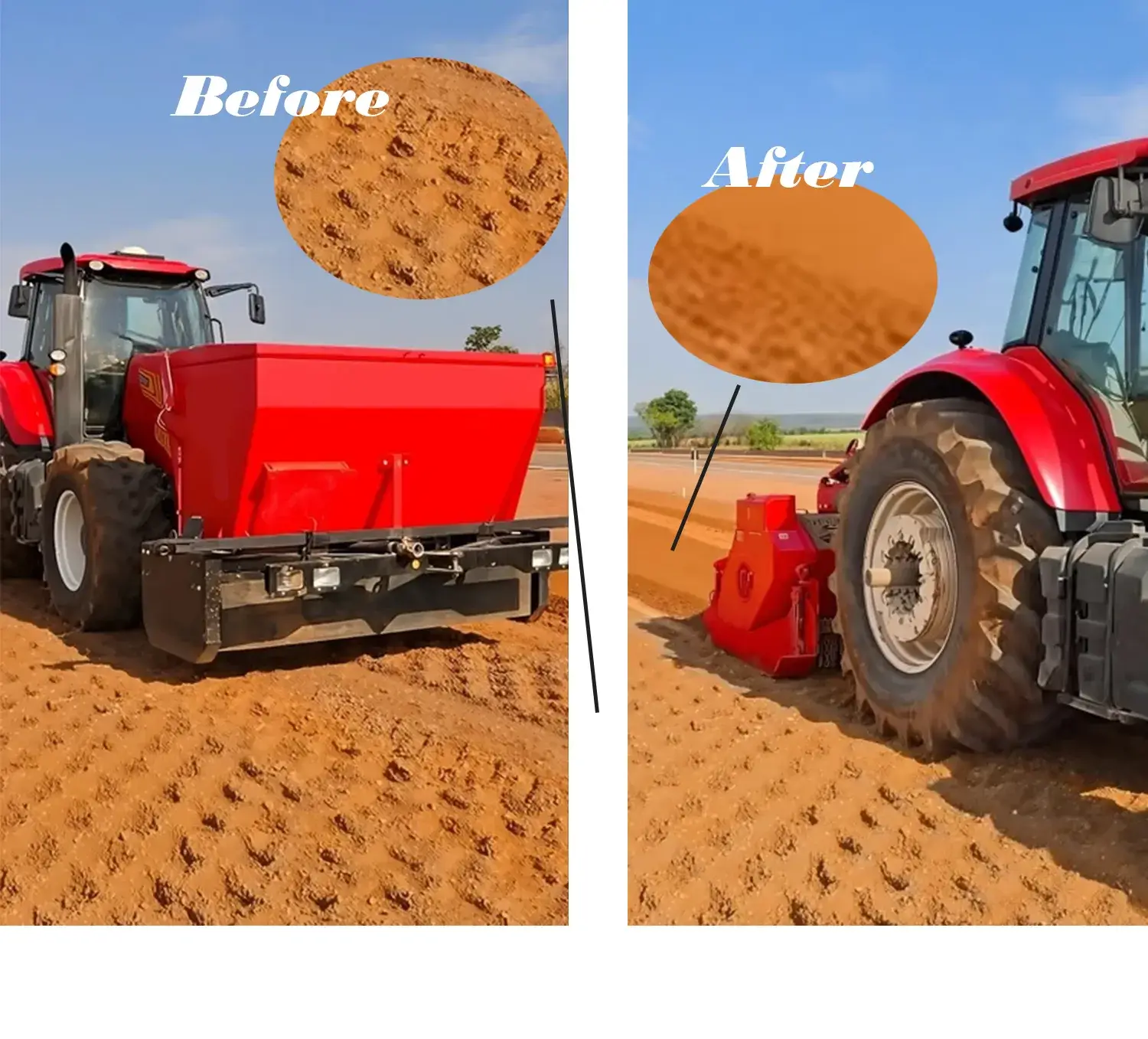
As the tractor moves forward, the rotor spins at high speed, with the cutting teeth sweeping downward into the soil surface in the direction of travel. When a tooth contacts a stone, the kinetic energy stored in the rotor’s rotating mass is transferred into the stone through the hardened tooth tip, fracturing the rock along its natural cleavage lines. Larger stones require multiple tooth strikes across successive rotor passes as the tractor advances. The crushed material — now reduced to gravel-sized fragments — is retained under the rear hood of the machine until fine enough to pass through the rear screen or deflector, at which point it is deposited back into the field as distributed stone mulch. This in-situ processing is what makes a pto driven stone crusher far more efficient than excavating and removing rock for off-site crushing.
The pto stone crusher machine’s depth is controlled by the tractor’s three-point hitch position adjustment or via the rear depth roller (fitted on some configurations), allowing the operator to precisely target the 0 to 150 mm working depth range. Shallower passes are used for light surface stone clearing on established fields, while maximum-depth passes suit initial land clearing on previously uncultivated rocky ground. PTO speed selection — 540 or 1000 rpm depending on PSC/ST models — adjusts rotor peripheral velocity, with higher PTO speed delivering more aggressive crushing action suited for harder stone types.
4. Material Construction of PTO Stone Crusher
The structural integrity of any pto stone crusher depends almost entirely on the materials selected for its most stress-exposed components. In the PSC series, the main chassis frame is fabricated from high-tensile structural steel plate, with critical weld joints reinforced through double-pass MIG welding and stress-relief treated after fabrication. This prevents fatigue cracking at weld toes — one of the most common failure modes in heavy agricultural machinery subjected to continuous impact loading from stone strikes.
The rotor drum itself is machined from forged and normalized alloy steel. The tooth holders — the pockets into which the replaceable PSC/3 cutting picks and C/3 secondary picks are locked — are precision-bored to maintain concentricity tolerances tight enough to ensure balanced rotor rotation. Out-of-balance rotors at 1000 rpm generate significant bearing loads and vibration, so manufacturing precision at this step directly affects machine longevity and operator comfort. Each tooth holder is heat-treated to a surface hardness that resists deformation from repeated rock impacts while retaining enough toughness in the core to absorb shock without brittle fracture.
The replaceable cutting teeth are manufactured from tungsten carbide-tipped or chromium-molybdenum alloy tool steel, depending on configuration. The SS stainless steel side plates fitted at the rotor ends provide corrosion resistance and abrasion resistance in the wet-soil operating environment typical of paddy-adjacent fields and post-rain land clearing in Korea’s monsoon season. The rear hood and side shields are constructed from wear-resistant Hardox-grade steel plate or equivalent, offering superior impact resistance compared to mild steel covers found on lower-cost pto stone crusher products.
5. Application Scenarios of PTO Stone Crusher
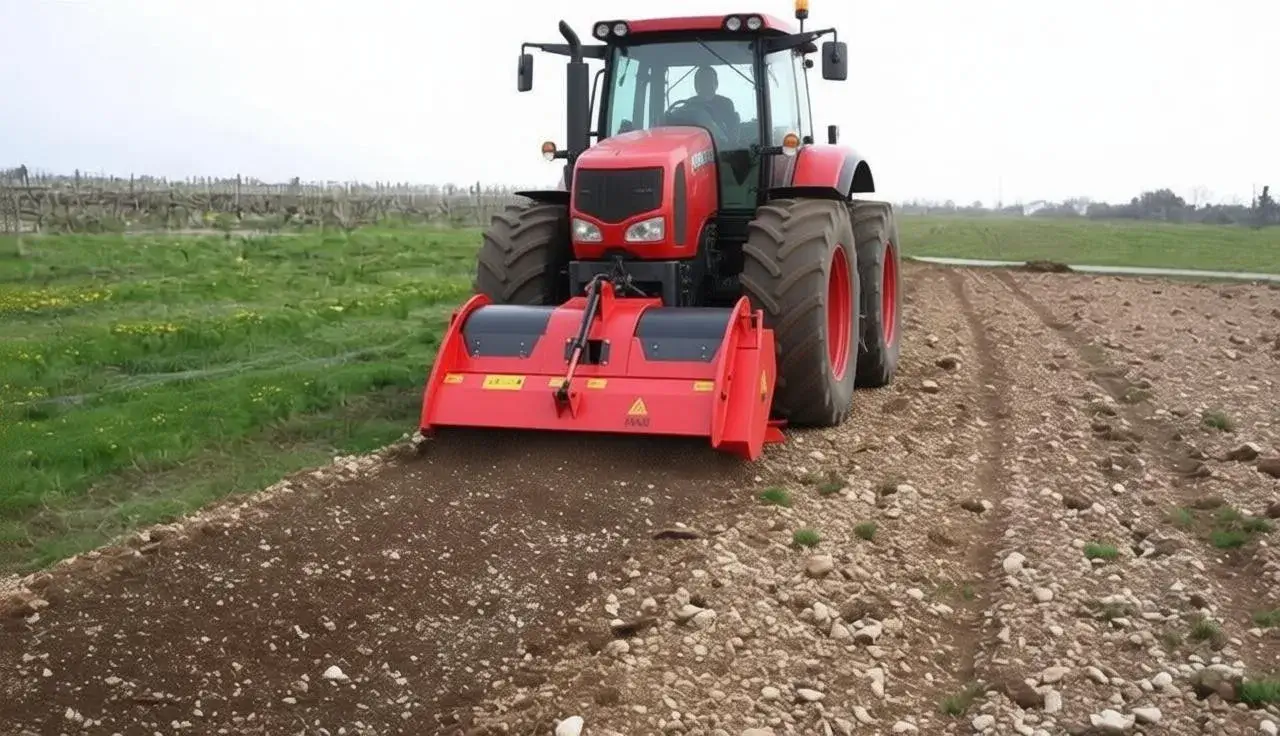
The EP-70-150HP pto stone crusher for tractor serves a broad range of land preparation and maintenance tasks wherever surface and embedded rocks create operational challenges for cultivating, mowing, or infrastructure work.
Agricultural Land Preparation in Rocky Fields
This is the primary use case for most buyers of a máy nghiền đá cho máy kéo. Fields that contain significant rock content — whether from glacial deposit, hillside erosion, or prior land use — cannot be tilled effectively without first reducing or removing the stones. The PSC series processes these rocks in situ, leaving a cultivatable seedbed without the expense of rock-picking attachments, manual labor, or haul-away services. In Korea’s mountain-adjacent farming zones, this application alone justifies machine investment within one to three seasons.
Vineyard and Orchard Floor Management
Vineyards and orchards on rocky soils — widespread across the Mediterranean, South America, and increasingly in Korea’s expanding fruit-growing regions — benefit directly from máy nghiền đá nông nghiệp equipment that can work between tree rows. The narrower PSC/ST 100 and PSC/ST 125 models fit inter-row clearances typical of established vine or tree spacing, crushing stones that would otherwise damage mowing equipment blades or interfere with drip irrigation line installation. The crushed stone remaining in the row floor also improves drainage and reduces dust.
Road and Track Shoulder Preparation
Rural access roads in Korea and throughout Asia often have stone-covered unpaved shoulders that create hazards for vehicles and impede roadside drainage maintenance. A tractor driven stone crusher can systematically process these shoulder areas, reducing protruding rocks to road gravel without the cost of a dedicated road grader or crusher plant. Municipal road maintenance contractors and county agricultural departments in Korea increasingly specify PTO-driven stone crushers for this kind of low-volume but widespread infrastructure maintenance work.
Reclamation of Previously Uncultivated Land
Abandoned hillside paddies, former forestry plots, and marginal land parcels often contain a combination of surface rocks, root stock, and shallow stone layers that standard tillage machinery cannot penetrate. The PSC stone crusher handles the initial pass on this category of land, pulverizing the stone layer and breaking compacted surface crusts so that subsequent tillage and seeding operations can proceed. This multi-stage reclamation approach — crusher first, subsoiler second, cultivator third — is becoming a documented best practice among Korean land development contractors converting idle land to productive agricultural use.
Construction Site Clearing and Gravel Production
Small civil construction and landscaping contractors use máy nghiền đá di động attachments — like the PSC series on a mid-size farm tractor — to clear rocky areas ahead of foundation work, drainage trench installation, or green space development. The resulting crushed stone can serve as on-site fill material, compacted base layer aggregate, or decorative gravel in landscaping applications, reducing the need to import crushed stone from quarries and lowering site material costs. This dual-purpose utility — clearing and producing usable aggregate simultaneously — is a compelling selling point for Korean civil contractors operating in rocky terrain.
6. Applicable Standards & Regulations
PTO-driven agricultural machinery, including Máy nghiền đá gắn trên máy kéo cần bán products, is subject to machinery safety standards, gearbox performance regulations, and agricultural equipment certification requirements that vary by market. Understanding these requirements is essential for procurement managers sourcing equipment for regulated operations.
Korea (국내 규정): Agricultural machinery sold in Korea must comply with the Agricultural Mechanization Promotion Act (농업기계화 촉진법) and associated Ministry of Agriculture, Food and Rural Affairs (MAFRA / 농림축산식품부) safety certification requirements. PTO-driven implements are specifically addressed under Korean Industrial Standard KS B 6230, which covers power transmission safety guards and driveshaft enclosures for agricultural equipment. The Rural Development Administration (RDA / 농촌진흥청) administers performance testing for agricultural machinery claiming government procurement eligibility. Gearboxes fitted to PTO attachments must also comply with KS B 6208 governing power transmission components. Importers of the PSC series for the Korean market should ensure CE documentation and conformity declarations are available for customs clearance under HS Code 8432.80.
Liên minh châu Âu: The EU Machinery Regulation (EU) 2023/1230 (replacing Directive 2006/42/EC from 2027) requires CE marking for all agricultural machinery placed on the EU market. PTO shaft safety guards must conform to EN ISO 4254-7 (Agricultural machinery — Safety — Part 7: Combine harvesters, forage harvesters and cotton harvesters, and — more broadly — implement-specific safety sections). Gearbox noise and vibration must satisfy Directive 2006/42/EC essential health and safety requirements. EN 12100 provides the general risk assessment framework applicable to all machinery design.
United States: ASABE Standard S318.15 governs agricultural tractor PTO connection dimensions and safety. OSHA 29 CFR 1928.51 specifically addresses rollover protection and PTO guarding for agricultural tractors. The PSC series PTO connection conforms to ASABE S318 for interchangeability with ASABE-compliant tractor PTO shafts, including 1000 rpm and 540 rpm spline profiles used across American-market tractors.
Australia and New Zealand: AS/NZS 4024.3301 covers safety of agricultural machinery, with specific provisions for PTO-driven implements. Agricultural machinery importers in Australia must also comply with the Australian Competition and Consumer Commission (ACCC) product safety framework, and gearbox lubricants used in imported equipment must comply with environmental regulations under NGER Act provisions where applicable.
7. Compatible Drive Components
MỘT máy nghiền đá pto system performs best when the full drive train — from tractor output shaft to rotor input — is matched in torque capacity and geometric specification. We supply the complete range of compatible drive components alongside the PSC crusher, enabling one-stop sourcing for new installations and field replacements.
PTO Shaft Assemblies
The PTO driveshaft connecting the tractor output to the crusher input gearbox must be correctly rated for the torque and speed range of the PSC series pto stone crusher. We supply telescoping PTO shaft assemblies with integrated overrun clutches and shear bolt torque limiters appropriate for 70–150 hp drive applications. Shafts are available in both 540 rpm (6-spline) and 1000 rpm (21-spline) variants to match the tractor’s PTO type. Using a correctly rated PTO shaft prevents driveline shock damage during stone strikes that generate impulse torque spikes well above steady-state ratings.
Gearboxes for Stone Crusher Drives
The input gearbox on the PSC series must handle the full rated power of a 150 hp tractor at 1000 rpm input, translating rotation to the rotor at correct speed and torque multiplication. Our compatible gearboxes are engineered with helical or bevel-helical gear sets in case-hardened alloy steel, housed in ductile iron cases capable of absorbing peak impact loads. Gearbox oil capacity and thermal rating are sized for continuous duty cycles in hot summer field conditions.
8. About Us – PTO Stone Crusher Manufacturer
We are a specialized manufacturer of tractor-mounted land management equipment, with focused engineering capability across the full range of pto stone crusher manufacturers requirements — from compact single-rotor crushers for small farms to heavy-duty dual-drive models for large-scale land reclamation projects. Our engineering team has accumulated substantial field data from deployments across rocky agricultural terrain in Europe, Asia, and the Americas, using that operational feedback to continuously refine rotor geometry, tooth metallurgy, and gearbox sizing in each product generation.
Our quality system follows ISO 9001 manufacturing standards, and each machine undergoes functional testing on the production floor before shipment. Export documentation packages — including CE declarations, material certificates, operation manuals in Korean (한국어), and customs-ready commercial invoices — are prepared as standard for Korean and Asian-market shipments. We have established logistics channels to Korean ports including Busan and Incheon, with experience navigating Korea’s agricultural equipment import certification process under MAFRA requirements.
Whether you are sourcing a Máy nghiền đá gắn trên máy kéo cần bán for your first land clearing project or expanding an existing fleet with additional models, our sales engineering team can assist with tractor compatibility verification, model selection based on field stone size and density, and spare parts provisioning for multi-year operational coverage.
Câu hỏi thường gặp
Q1. What is a PTO stone crusher and how does it attach to my tractor for use on rocky Korean farmland?
Q2. Which PSC model should I choose for my 100 hp Korean-brand tractor working in a rocky hillside vineyard?
Q3. How does a pto stone crusher differ from a standalone portable stone crusher machine for agricultural use?
Q4. What is the maximum stone size a small PTO stone crusher in the 70–100 hp range can crush in a single pass?
Q5. What are stone crushers used for in Korean agriculture and how do they help with land reclamation on rocky terrain?
Q6. How does the PTO gearbox on a tractor-driven stone crusher handle peak impact torque without breaking during heavy fieldwork?
Q7. When should a Korean farmer consider using a pto stone crusher for hire versus purchasing one outright for their operation?
Biên tập viên: PXY