FIELD KNOWLEDGE GUIDE
Processing Basalt and Granite with a PTO Rock Crusher: What You Need to Know About Hard Rock
A complete technical and practical guide for farmers, land developers, and rock crusher operators dealing with some of the toughest geological materials in Colombia and across the Andean region.
Quick Summary
A PTO-driven rock crusher powered by a tractor’s Power Take-Off shaft is one of the most practical field solutions for breaking down basalt and granite directly where they surface. This guide covers how these machines work, why hard igneous rock presents unique mechanical challenges, which structural design elements matter most, what materials the crusher itself must be built from, and which Colombian and international regulations apply to machinery operating in these conditions.
1. Why Basalt and Granite Demand a Different Approach
Not all fieldstones are created equal. Farmers and land developers working in the Andean highlands of Colombia — in departments like Cundinamarca, Boyacá, and Antioquia — regularly encounter two particularly demanding geological materials: basalt and granite. Basalt, a fine-grained extrusive igneous rock, rates around 6 on the Mohs hardness scale and commonly reaches compressive strengths between 100 and 350 MPa. Granite, a coarser intrusive igneous rock, shares a similar hardness range but features a more crystalline internal structure with interlocking feldspars, quartz grains, and mica — a combination that generates extreme internal stress during fracture. Together, these two rock types account for the majority of “hard rock” field obstacles that break conventional tillage implements and defeat standard mulchers and rock crusher units not purpose-built for hard stone work.
The challenge for any PTO rock crusher attempting to process these materials comes down to energy transfer and material resilience. When a high-speed rotor hammer strikes a granite cobble, the energy required to initiate fracture across grain boundaries is significantly higher than what’s needed for limestone or sandstone. Basalt, being denser and more homogeneous, tends to fracture in sharp-edged fragments rather than crumbling — which places heavy point-load stress on hammer tips and anvil liners. The implication for equipment selection is straightforward: crushing these materials effectively requires not just adequate horsepower but specifically engineered tooth geometry, appropriate rotor mass, hammer material hardness, and a housing that can absorb high-frequency shock loads over extended operating periods. A PTO rock crusher built without these considerations will either underperform or deteriorate rapidly in basalt and granite — common outcomes when operators deploy a generic mulcher instead of a purpose-built rock crusher in these conditions.
For Colombian farmers operating in the rocky terrain of the Altiplano Cundiboyacense or the volcanic foothills near the Nevado del Ruiz, the cost of processing these materials conventionally — blasting, excavating, and hauling — is prohibitive for agricultural-scale operations. The PTO-driven field rock crusher offers a genuinely practical alternative: it processes hard rock in situ, eliminates the regulatory requirements associated with blasting, and converts what was an obstacle into a usable surface aggregate within a single pass. Understanding the rock crusher’s mechanical limits relative to the rock’s properties is what separates a productive operation from an expensive maintenance problem.
2. Action Method: How a PTO Rock Crusher Breaks Hard Rock
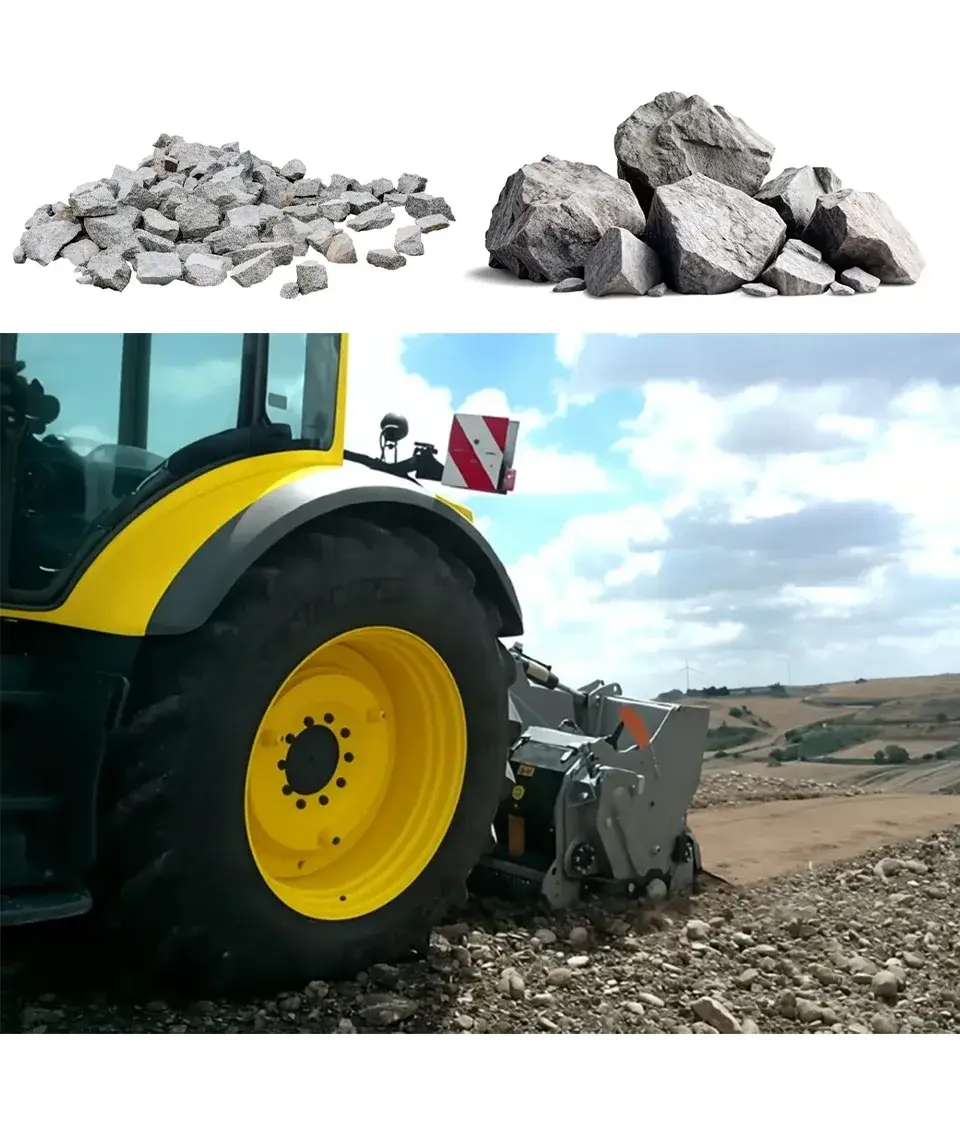
The core operating principle of a tractor-mounted PTO rock crusher is rotary impact crushing. Power is drawn from the tractor’s Power Take-Off shaft — spinning at either 540 RPM (typically on lighter-duty models) or 1000 RPM (the standard for medium and heavy machines designed for hard rock) — and transmitted through a gearbox to a central rotor shaft housed inside the main rock crusher crushing chamber. The rotor, which typically ranges in diameter from 450 mm on light field crushers to 1115 mm on the heaviest agricultural hard-rock variants, carries a series of hammers or teeth arranged in helical rows around its circumference. As the rotor accelerates, peripheral velocity at the hammer tips reaches 60–90 m/s depending on RPM and rotor diameter — sufficient to impart a kinetic energy blow capable of fracturing basalt and granite cobbles up to the rated maximum shredding diameter.
The first contact between hammer and rock produces an initial fracture — either through Hertzian contact stress or cleavage along natural crystal boundaries in granite’s case. The fragments are then thrown against counter-plates or fixed anvils mounted on the inner walls of the housing. This secondary impact further reduces fragment size, and the process continues in a closed-loop fashion until the material passes below the adjustable rear discharge gate, which controls maximum output size. The operator can typically adjust the rear gate to control grading — a feature that matters when the crushed material will be used for road base construction or farm track surfacing, where specific grading requirements determine compactability and drainage performance. On basalt, the sharp fracture edges mean dust generation is notable, which is why sealed gearboxes and robust bearing protection are non-negotiable features on machines deployed in these conditions.
Forward working speed is controlled entirely by the tractor operator. For basalt and granite, working speeds between 1 and 3 km/h are typical — significantly slower than the 3–5 km/h rated for lighter agricultural stone work. Reducing ground speed allows the rotor more time per unit area, effectively increasing the number of impact cycles each rock receives before being expelled, which is critical when the target material resists initial fracture — a hallmark of granite and basalt that tests any rock crusher to its design limits. Some rock crusher operators make a second pass at 90 degrees to the first to achieve finer, more uniform aggregate — a technique commonly used in Colombian road-base preparation projects where loose-surface road construction follows field clearing operations.
3. Structural Type: Fixed-Rotor vs. Swing-Hammer Configurations
PTO rock crushers and field rock crusher units designed for hard rock applications are broadly divided into two structural categories based on how their crushing elements are mounted to the rotor. Fixed-tooth or fixed-pick rotors carry permanently welded or bolted cutting picks — typically tungsten-carbide-tipped tools similar to those used in road milling — that engage rock through a combined shearing and impact action. This configuration favors harder, more abrasive materials like granite because the pick geometry can be optimized for specific fracture initiation, and the rigid mounting eliminates the compliance that would allow a hammer to deflect around a particularly tough obstacle. The trade-off is that a rock crusher using this configuration is more sensitive to large embedded boulders that exceed the rated capacity: overload can fracture the pick shank or damage the rotor body, which is why depth limiters and ground-following wheels are standard on fixed-pick machines.
Swing-hammer configurations, by contrast, mount the crushing elements on pivot pins that allow them to fold back under sudden overload — a mechanical safety feature that protects the rotor from catastrophic damage when the machine encounters an unexpectedly large or deeply embedded rock. Swing hammers are better suited to mixed conditions where rock size varies significantly across the field, which is the more common scenario in Colombian agricultural contexts where geological history has produced irregular boulder distributions rather than uniform stone layers. Some machines on the market combine both approaches — a primary set of fixed picks for initial fragmentation supported by secondary swing hammers for finishing — which gives a useful rock crusher balance of hard-rock capability and overload resilience.
For rock crusher operators processing basalt specifically, the fixed-tooth or dual-rotor system used in the RSM and RSH series variants (matched to 200–500 hp tractors) offers the best outcome for continuous operation on dense volcanic rock. For mixed granite and soil scenarios more typical of the Colombian coffee-growing highlands, a well-matched swing-hammer machine in the 150–280 hp power class handles the realistic field rock crusher mix without the elevated maintenance overhead of a full fixed-pick system. Matching rock crusher structural type to local rock conditions is one of the most important rock crusher decisions a buyer can make, and it significantly affects both operating cost and long-term machine durability.
4. Manufacturing Construction: What the Machine Must Be Made Of
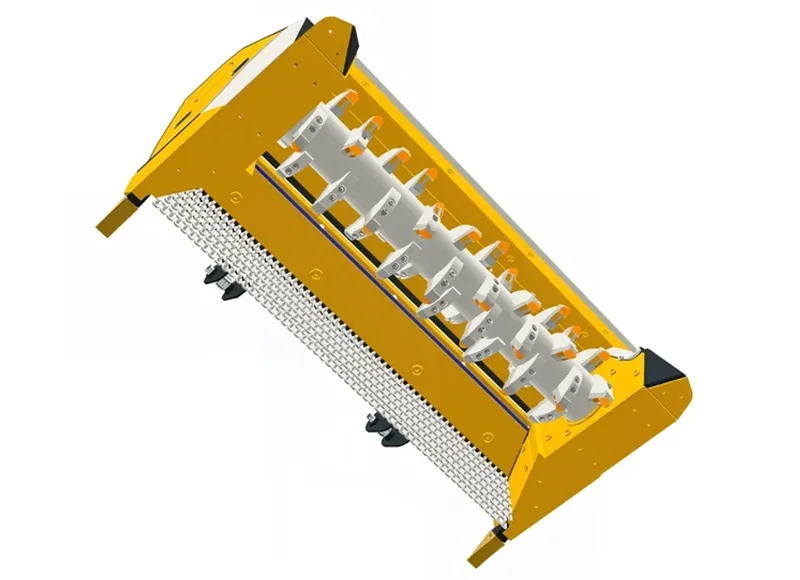
The manufacturing construction of a PTO rock crusher intended for basalt and granite work must prioritize impact resistance, vibration absorption, and serviceability. The outer housing of any heavy-duty rock crusher — sometimes called the main frame or body shell — typically begins as structural steel plate with a wall thickness of 10–20 mm, cut and formed using laser or plasma systems for dimensional precision. For hard-rock rock crusher deployment, this base plate is reinforced with S136 or equivalent hardened steel panels on the inner surfaces of the crushing chamber, where wear from rebounding stone fragments is greatest. Some high-duty models apply dual-layer liners: a sacrificial outer wear plate backed by a structural impact-absorbing layer, which extends replacement intervals considerably and reduces the cost per operating hour over the machine’s service life.
The rotor itself is the most mechanically demanding component. Rotor shafts are machined from high-alloy steel forgings — typically 42CrMo4 or similar — heat-treated to achieve core toughness without sacrificing surface hardness. Rotor body discs are individually balanced and press-fitted to the shaft in precision-machined keyways to eliminate runout under operational loads. For rock crusher machines targeting granite and basalt, rotor diameters of 550 mm and above are typical in the medium power class (150–280 hp), scaling up to 940–1115 mm in the heavy RSM/RSH class (300–500 hp). The larger the rotor, the higher the moment of inertia and the more kinetic energy stored in the flywheel effect — which is particularly valuable when the rotor strikes a very hard rock and the instantaneous load spike temporarily exceeds what the tractor PTO can sustain. Robotic welding cells ensure consistent weld quality on high-stress joints, while coordinate measuring machines (CMM) verify dimensional accuracy on critical rotor and gearbox components before final assembly.
The gearbox deserves special attention on any rock crusher. On hard-rock PTO rock crusher units, the gearbox must not only step up input RPM to rotor operating speed but also absorb and dampen the impulse loads that propagate back from the rotor through the driveline during impact events. Heavy-duty agricultural crushers typically employ a sealed, oil-bath gearbox with multi-stage helical or bevel-helical gear sets, integrated with a cam clutch or hydraulic slip coupling on the PTO input shaft to provide overload protection. The housing is sealed against dust ingress — critical in basalt-dust environments where fine silica particles accelerate gear and bearing wear at a rate that dramatically shortens service life if left unmanaged.
5. Material System: Metallurgy Behind the Hammers and Teeth
The material system used for rock crusher wear parts — primarily the hammers, picks, and anvil liners — is arguably the largest determinant of operating cost per hectare in basalt and granite applications. Standard carbon steel hammers wear rapidly against igneous rock, generating frequent replacement cycles that erode any cost advantage the machine offers over conventional stone removal. Purpose-built hard-rock rock crusher and stone-crushing designs address this through two material technologies: alloy steel castings and tungsten carbide inserts. The hammer body is typically cast from a chromium-molybdenum alloy steel (Cr content 1.5–2.5%, Mo 0.3–0.5%) with controlled heat treatment to achieve a through-hardness in the HB 380–480 range — hard enough to resist abrasion but not so brittle that it shatters on impact. Tungsten carbide tips are pressed or brazed into recesses at the leading edge of the hammer tip, where direct rock contact occurs; tungsten carbide (WC-Co grade, typically 10–15% cobalt binder) achieves a hardness of HRA 86–92, capable of sustaining acceptable wear rates against granite and basalt over hundreds of operating hours.
Counter-plates and anvil liners are commonly fabricated from Hardox 400 or 500 (a registered trademark of SSAB) or equivalent quenched and tempered wear steels with plate hardness in the Brinell 370–500 range. These plates are designed as consumable wear elements — easy to replace through bolted attachment points — rather than integral structural components, which reduces maintenance cost and complexity considerably. In regions like Colombia where specialized rock crusher wear-steel stock may not be locally available, using machines with common-specification replaceable liners (rather than proprietary shapes) ensures that replacement parts can be sourced from regional industrial steel distributors in Bogotá, Medellín, or Cali without depending on international shipping lead times that can immobilize a machine for weeks during a critical land-preparation window.
Surface coatings and thermal treatments play a supporting role. The outer housing receives corrosion-resistant primer and topcoat systems compatible with tropical humidity levels typical of Colombia’s coffee and banana-growing zones (annual rainfall can exceed 2000 mm in parts of Antioquia). The rotor shaft bearing seats are induction-hardened and ground to tight tolerances, ensuring continued dimensional accuracy even after extended vibration exposure. For rock crusher operators in Colombia’s warmer coastal regions — the Caribe and Pacífico departments — high-ambient-temperature ratings on gearbox oil are a practical specification point worth checking before finalizing a machine order, as standard ISO VG 220 gear oils can oxidize faster in continuous tropical operating conditions than in temperate European or North American climates.
6. PTO Rock Crusher Model Selection: Technical Specifications Overview
The table below summarizes the main technical parameters of available PTO rock crusher models across the product range. Selecting the correct model for basalt and granite requires matching tractor horsepower, rotor diameter, and maximum shredding diameter to the specific field conditions. All models listed operate at 1000 RPM PTO unless noted.
| Model Series | Tractor Power (hp) | PTO (RPM) | Working Width (mm) | Rotor Ø (mm) | Max Stone Ø (mm) | Max Depth (mm) | Weight (kg) |
|---|---|---|---|---|---|---|---|
| PSC 100 | 70–120 | 540–1000 | 1110 | 450 | 150 | 150 | 1230 |
| PSC 150 | 90–120 | 540–1000 | 1590 | 450 | 150 | 150 | 1440 |
| PSC 200 | 120–150 | 1000 | 2070 | 450 | 150 | 150 | 1750 |
| THOR 2.4 | 180+ | 1000 | 2400 | 550+ | 300 | 200 | 2300 |
| THOR 3.0 | 230+ | 1000 | 3000 | 550+ | 300 | 200 | 2800 |
| RockMaster SC 200 | 280–400 | 1000 | 2080 | 700 | 500 | 250 | 4850 |
| RockMaster SC 225 | 280–400 | 1000 | 2320 | 700 | 500 | 250 | 5050 |
| RockMaster SC 250 | 280–400 | 1000 | 2560 | 700 | 500 | 250 | 5250 |
7. Tractor Compatibility: Matching Power to Rock Hardness
Pairing the right tractor to a PTO rock crusher unit in basalt or granite conditions is not simply a matter of having enough rated horsepower — it involves three interrelated factors: continuous PTO output, tractor weight, and hydraulic flow capacity. Most PTO-driven agricultural rock crushers require two double-acting hydraulic remote circuits for depth control and rear-gate adjustment; on lighter tractors, the available hydraulic pump output may be borderline for these functions while simultaneously managing the three-point hitch. As a rule of thumb, operators tackling dense volcanic basalt in Colombia’s mountain departments should plan for a tractor at least 20% more powerful than the rock crusher’s rated minimum — a rock crusher rated at 180 hp minimum should ideally be paired with a 220 hp tractor when the target material is consistently basaltic.
Tractor weight matters because the three-point hitch must carry the full implement weight while the crusher operates. The THOR 2.4, for example, weighs 2,300 kg; the RockMaster SC 250 weighs 5,250 kg at operating configuration. Colombian farmers familiar with medium-horsepower tractors in the 120–180 hp class should note that the rear-axle static lift capacity of the tractor must exceed the implement weight with a practical margin of at least 30% to maintain adequate depth control on sloping terrain — common in the Andean agricultural zones of Cundinamarca and Nariño. For the heavier RockMaster rock crusher series, tractors in the 280–400 hp class are specified, which typically puts the buyer into the territory of large-frame row-crop or specialty-clearing tractors of the type operated by commercial land development contractors rather than smallholder farms.
8. Available Models: Our PTO Rock Crusher Series
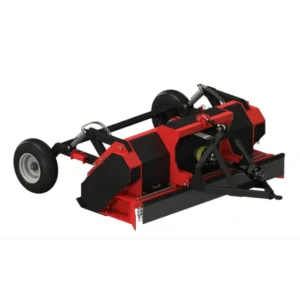
EP-THOR 2.4 + Kit Drawbar
180 hp minimum. 2.4 m working width. Category 2 linkage. Designed for medium-large basalt and granite field clearing operations. Includes drawbar kit for transport stability.
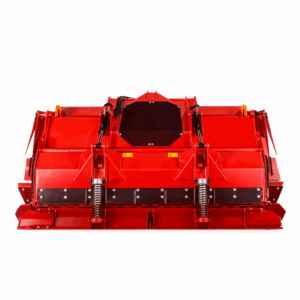
EP-RockMaster SC Series
280–400 hp. Rotor diameter 700 mm. Max stone 500 mm diameter. Purpose-built for heavy hard-rock clearing — the top choice for granite boulders above 30 cm diameter.
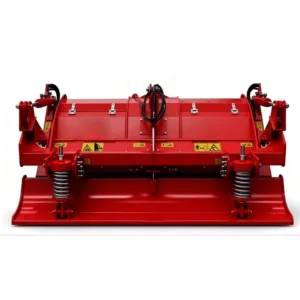
EP-PSC Models (100–200)
70–150 hp. Rotor diameter 450 mm. Compact, versatile field stone crusher for smaller basalt fragments (max 150 mm). Ideal for driveway maintenance, pasture renovation, and narrow rural roads in Colombia.
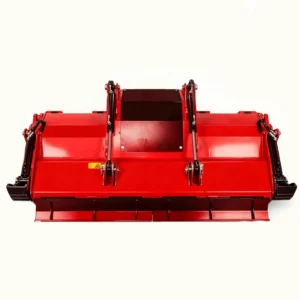
Máy nghiền đá gắn trên máy kéo EP
Purpose-engineered three-point hitch mounted design for direct tractor integration. Suitable for agricultural land clearing, pasture renovation, and rural road-base preparation across Colombia’s diverse terrain.
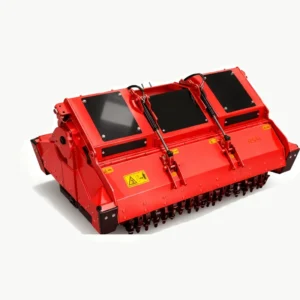
EP-Agricultural Rock Crusher (Korean Series)
Purpose-refined for agricultural use in mountainous terrain with mixed stony soils. Combines field-proven Korean manufacturing with robust design for diverse Latin American operating conditions.
9. Hard Rock vs. Soft Rock: A Practical Comparison for Crusher Selection
Understanding where basalt and granite sit in the broader spectrum of field materials helps calibrate machine selection, expected wear rates, and operating cost. The comparison below covers the main rock categories an operator is likely to encounter across Colombia’s diverse geological zones — from the sedimentary lowlands of the Llanos Orientales to the igneous highlands of the Cordilleras.
| Rock Type | Mohs Hardness | Compressive Strength (MPa) | Wear Impact on Crusher | Min. Recommended Series | Typical Colombian Location |
|---|---|---|---|---|---|
| Limestone | 3–4 | 30–100 | Low | PSC 100 (70 hp) | Caribe Coast, Santander |
| Sandstone | 5–6 | 50–170 | Moderate (abrasive) | PSC 150 / THOR 2.4 | Llanos, Huila |
| Basalt | 5.5–6 | 100–350 | High (sharp fragments) | THOR 2.4 / RockMaster SC | Nariño, Boyacá Altiplano |
| Granite | 6–7 | 130–250 | Very High (crystalline wear) | RockMaster SC 200–250 | Cundinamarca, Antioquia |
| Quartzite | 7 | 150–300 | Extreme | RockMaster SC 250 (max) | Vichada, Guainía |
10. Industry Standards, Regulations & Compliance Context
Operating a PTO rock crusher in Colombia and across the Andean region sits within a regulatory framework that spans machinery safety, worker protection, and agricultural land-use law. Buyers and operators should be aware of the applicable standards before deploying equipment commercially.
International Machinery Standards: ISO 11684 covers safety signs and hazard pictograms for agricultural machinery, including stone crushers. ISO 4254 (series) provides general agricultural machinery safety requirements, including guarding of power transmission components — the PTO shaft and gearbox being primary focus points. EN ISO 11684-1 and EN ISO 4254-1 are the European harmonized equivalents, referenced in CE Machinery Directive compliance documentation. Equipment carrying the CE marking has been assessed for conformity with EU Machinery Directive 2006/42/EC, which governs rotating components, projectile hazards (highly relevant for stone crushers), and noise emission levels.
Colombia — Occupational Safety & Machinery: Resolución 1409 de 2012 (Ministerio de Trabajo) regulates safe work at height — applicable when positioning or servicing a stone crusher mounted to a high-clearance tractor. Decreto 1072 de 2015, which consolidates Colombia’s occupational health and safety regulatory framework (Sistema de Gestión de Seguridad y Salud en el Trabajo, SG-SST), requires employers using heavy agricultural machinery to conduct formal hazard identification and risk assessment procedures before deploying equipment in field conditions. Resolución 2400 de 1979 (Estatuto de Seguridad Industrial) sets baseline standards for industrial equipment guarding, noise exposure (85 dB(A) 8-hour TWA), and personal protective equipment requirements for machine operators — all directly applicable to PTO crusher operation. Colombia’s ICONTEC administers the NTC (Norma Técnica Colombiana) voluntary standards program and has adopted numerous ISO standards relevant to agricultural machinery safety.
CAN Andean Community & Regional Standards: For buyers in Ecuador, Peru, and Bolivia — fellow CAN (Andean Community) member states — Decisión 562 facilitates the intra-bloc import of standardized machinery without duplicated conformity assessment requirements. Argentina and Chile, while not CAN members, recognize CE-marked machinery under bilateral technical standards agreements that cover agricultural equipment safety, simplifying the approval process for contractors operating across the Southern Cone. For any operator selling crushing services across borders in the Andean region, documenting the machine’s ISO 9001 quality system compliance and CE certification provides the strongest foundation for meeting multi-jurisdictional regulatory requirements without country-specific re-certification.
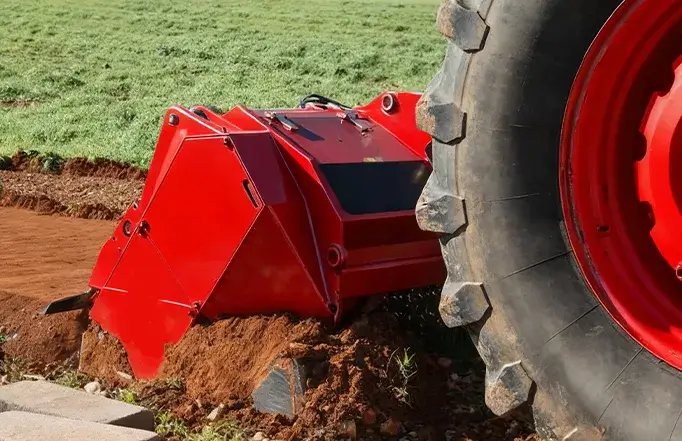
11. Maintenance Priorities When Running on Basalt and Granite
Hard igneous rock significantly accelerates wear on every contact surface within the crusher, and a proactive maintenance discipline makes the difference between a cost-effective rock crusher operation and one where hammer replacement alone negates the economic benefit of in-situ crushing. The following priorities apply specifically to basalt and granite duty cycles, above and beyond the standard service intervals for lighter stone work.
Hammer and pick inspection frequency on any rock crusher unit should be doubled compared to the manufacturer’s schedule when granite or basalt is the primary material. On a machine rated for 150-hour inspection intervals under normal conditions, inspect hammer tip wear at 75 hours when the rock is consistently igneous. Tungsten carbide tips that show wear back to within 3 mm of the hammer body shank should be replaced immediately — running on worn tips dramatically increases impact stress on the rotor body and accelerates bearing fatigue. Carry a spare set of hammers on any extended rock crusher field operation and establish a relationship with a supplier who can deliver replacement wear parts to Bogotá, Medellín, or Cali within 48–72 hours of order placement.
Rock crusher gearbox oil sampling at 200-hour intervals — rather than the 500-hour standard — is advisable in basalt-dust environments. Silica dust ingress through imperfect seal surfaces degrades gear oil faster than general field debris, and oil analysis provides an early warning of accelerated wear before it progresses to catastrophic gear failure. Bearing preload on the rotor shaft should be checked at each annual service and adjusted to specification: vibration from hard-rock impacts can gradually loosen bearing retention hardware if not periodically re-torqued. Finally, the rock crusher rear discharge gate and its adjustment mechanism should be cleaned and lubricated after every operating day in granite conditions — fine silica dust mixed with moisture forms a grinding compound that jams gate pivot pins and can render the depth-adjustment inoperable without warning.
12. About Us
We are a specialist manufacturer and global supplier of PTO-driven rock crusher and stone crushing equipment and agricultural land preparation machinery, built on more than 50 years of industry experience. Our rock crusher product range covers everything from compact lightweight crushers for narrow farm lanes (PSC Series, 70 hp minimum) to heavy-duty hard-rock machines capable of processing basalt and granite boulders up to 500 mm in diameter (RockMaster SC Series, 280–400 hp). All rock crusher machines leave our facility certified to ISO 9001, CE (Machinery Directive 2006/42/EC), and SGS-Verified Manufacturer standards, ensuring that buyers in Colombia, Ecuador, Peru, and other markets can import with confidence in regulatory compliance. Our rock crusher technical support team assists with model selection, rock crusher tractor compatibility verification, and spare-parts logistics — including delivery of wear parts to major Colombian cities.
Ready to tackle basalt and granite on your land?
Our team can help you identify the right PTO rock crusher model for your tractor, your terrain, and your project goals in Colombia and across the Andean region.
Câu hỏi thường gặp
Biên tập viên: PXY