Опис
EP-3–5 Km/h Tractor Soil Rotavator — PSW Series
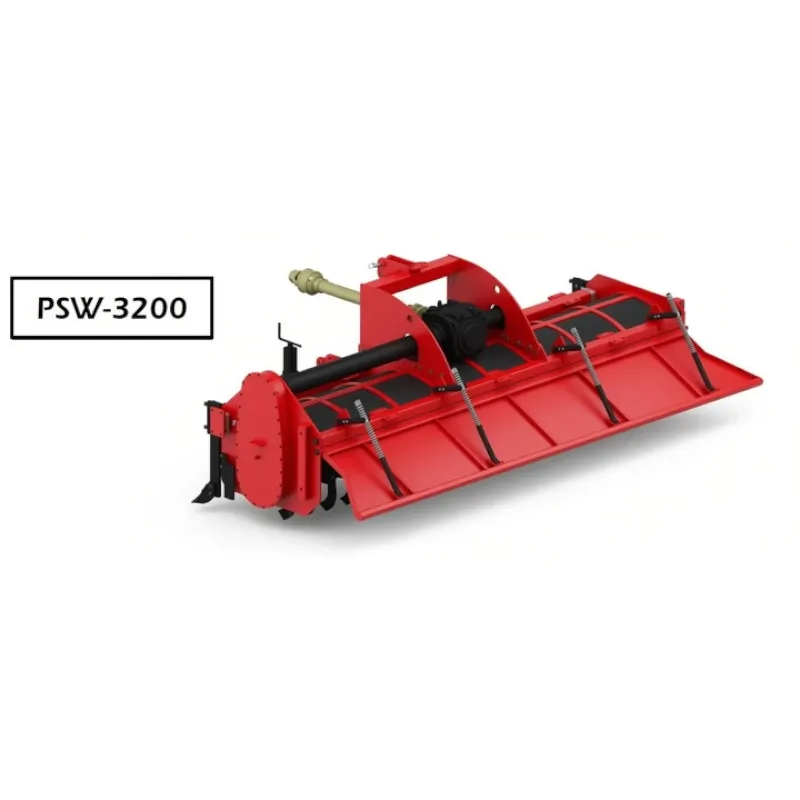
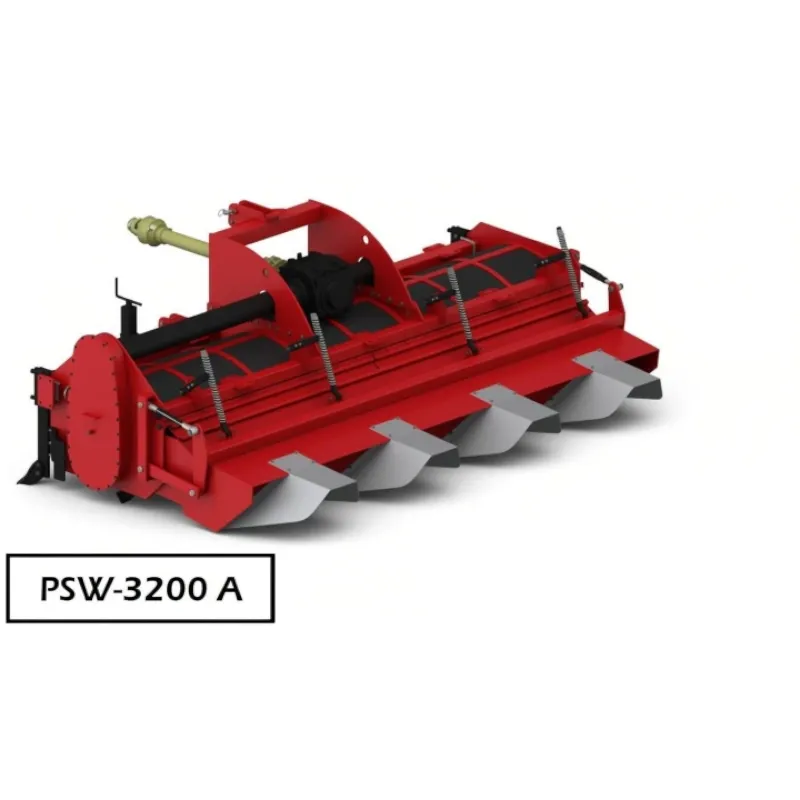
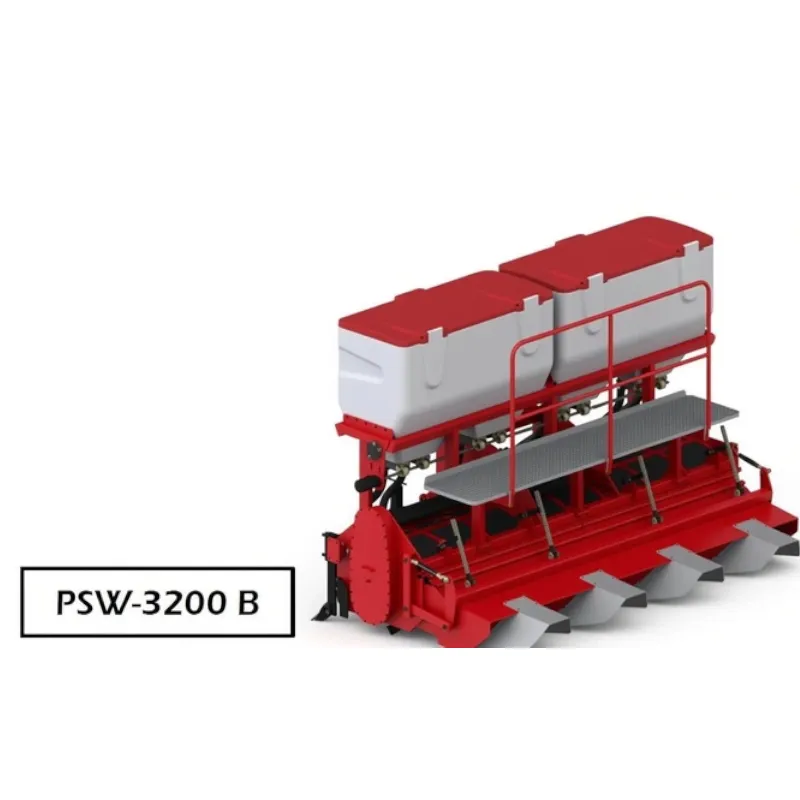
The PSW series is a professional-grade ротаційний пристрій designed for large-scale primary tillage and deep seedbed preparation across a working width of 3.20 metres. Available in three configurations — PSW-3200, PSW-3200 A, and PSW-3200 B — this tractor soil rotavator operates at a working speed of 3 to 5 km/h driven by a tractor with a minimum engine output of 140 cv, making it one of the most capable heavy duty rotavator and high-output ротаційний пристрій solutions available to professional farming operations, land contractors, and large-scale vegetable producers worldwide. With working widths available in four options ranging from 3.0 metres to 3.6 metres, the PSW series covers a broad spectrum of field conditions and tractor pairing requirements. The PSW-3200 B adds an integrated 2,000 kg-capacity fertiliser bunker, enabling simultaneous tillage and granular fertiliser application in a single tractor pass — a capability that sets it apart from conventional ротаційний пристрій designs and delivers significant time and cost savings during land preparation campaigns. B2B buyers in South Korea’s commercial agriculture sector will find this agriculture tractor rotavator particularly well suited to the deep-tillage requirements of paddock preparation before transplanting and to the spring land preparation cycle that drives peak demand for high-output tillage equipment across the peninsula.
1. Technical Specifications — PSW Series Rotavator
The table below provides complete dimensional and operational parameters for all three PSW series ротаційний пристрій models. Dimensional values are in millimetres (mm) unless otherwise indicated. Weight is in kilograms (kg). Working speed in km/h; engine power in cv (metric horsepower). Use this data to verify tractor compatibility and transport logistics requirements before placing a purchase order.
| Параметр | PSW-3200 | PSW-3200 A | PSW-3200 B |
|---|---|---|---|
| Dimensions | |||
| Length (mm) | 1,880 | 2,300 | 2,300 |
| Width (mm) | 3,545 | 3,545 | 3,545 |
| Height (mm) | 1,350 | 1,350 | 2,530 |
| Weight | 1,650 kg | 1,665 kg | 1,800 kg |
| Bottom linkage category | 2 | 2 | 2 |
| Working width | 3.20 m | 3.20 m | 3.20 m |
| Bunker capacity (fertilizer) | — | — | 2,000 kg |
| Tractor Requirements | |||
| Engine power (min.) | 140 cv | 140 cv | 140 cv |
| Working speed | 3–5 km/h | 3–5 km/h | 3–5 km/h |
| Required control valves | — | — | 2 |
| Available Working Widths | |||
| A) 3.0 m B) 3.2 m C) 3.4 m D) 3.6 m | |||
PSW-3200 B requires 2 tractor hydraulic control valves for fertiliser bunker and metering system operation. All three models share the same category 2 bottom linkage and 3.20 m nominal working width. Working width options (3.0–3.6 m) are specified at order time.
2. About Our Tractor Soil Rotavator-PSW Series
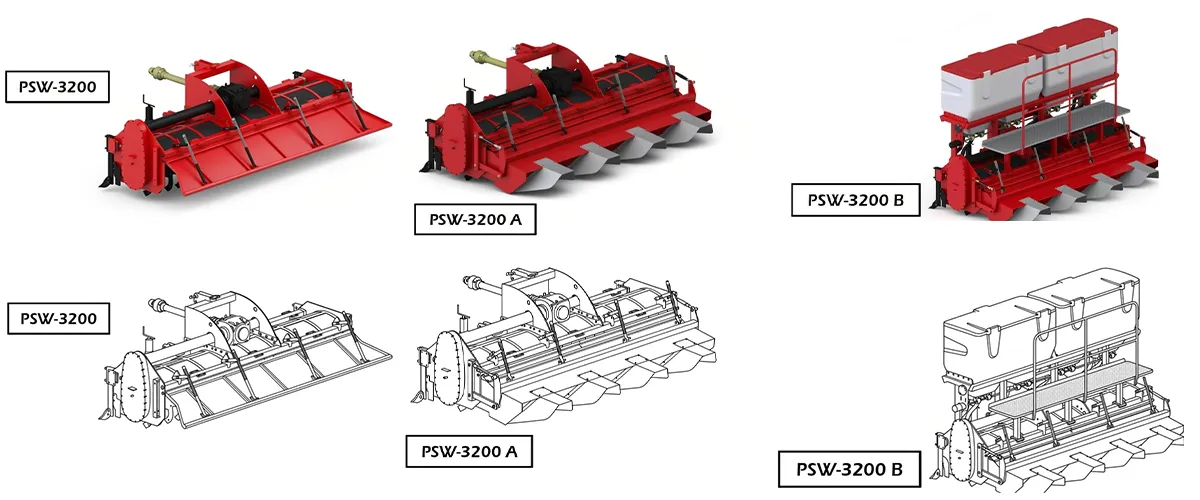
The PSW-3200 ротаційний пристрій is a three-point linkage, PTO-driven tillage implement that combines deep soil fragmentation with a rear-discharge profile suitable for direct seeding passes or pre-planting bed shaping. Mounted on a category 2 bottom linkage, the PSW series connects to any tractor equipped with a standard rear three-point hitch and PTO output in the 140 cv and above power range. The machine’s 3.20 m working width — with available variants at 3.0 m, 3.2 m, 3.4 m, and 3.6 m — gives operators the flexibility to match the implement width to the row spacing or bed layout used in their cropping system, avoiding unnecessary headland passes and maximising field coverage per tractor hour with every ротаційний пристрій pass. This flexibility is a key reason why the PSW series ротаційний пристрій is the preferred ротаційний пристрій choice among professional horticultural producers in South Korea, where precise bed widths for highland vegetable crops are a critical operational constraint.
The three model variants address different operational requirements within the same basic machine architecture. The PSW-3200 ротаційний пристрій is the standard configuration, weighing 1,650 kg with a machine length of 1,880 mm — compact enough for operations where headland turning space is limited or where the tractor’s three-point linkage lift capacity requires a lighter implement. The PSW-3200 A extends the machine length to 2,300 mm and increases weight marginally to 1,665 kg, accommodating extended rear guidance systems or alternative rear attachment points for downstream implements. The PSW-3200 B adds the integrated fertiliser bunker system — a 2,000 kg capacity hopper feeding a precision metering unit — and increases overall machine length to 2,300 mm and height to 2,530 mm, with a corresponding weight of 1,800 kg. The PSW-3200 B requires two hydraulic control valves from the tractor to manage the fertiliser metering and hopper functions in addition to standard three-point linkage control, making tractor hydraulic compatibility an important pre-purchase check for buyers of this variant.
All three PSW variants share the same 3.20 m working width, 3,545 mm total machine width (including side guards and gearbox housings), and the same operating speed band of 3 to 5 km/h, which represents the optimal balance between rotor tip speed, tine penetration angle, and forward travel speed for the ротаційний пристрій to produce a fine, well-mixed seedbed tilth in loam and clay-loam soils. The working speed also determines the level of soil pulverisation achieved — a lower speed within the 3–5 km/h band produces finer tilth at the cost of reduced field throughput, while a higher speed increases area coverage but reduces pulverisation intensity. Experienced operators calibrate forward speed to soil condition and target tilth quality — a judgement that becomes intuitive after a few field hours with this agriculture machine rotavator.
3. Five Key Product Advantages
3.20 m Working Width — Four Size Options
With working widths of 3.0 m, 3.2 m, 3.4 m, and 3.6 m available, the PSW series ротаційний пристрій can be matched precisely to the row spacing, bed width, or field strip layout used in the buyer’s cropping system. This working width flexibility eliminates the compromise of using an oversized or undersized implement and ensures that the field coverage per tractor hour is optimised for the specific operation. For large-scale commercial producers in South Korea’s major vegetable and grain growing regions, selecting the correct working width can reduce total field preparation time by 15–25% compared with using a standard-width ротаційний пристрій.
Integrated Fertiliser Bunker — PSW-3200 B
The PSW-3200 B variant carries a 2,000 kg fertiliser bunker that meters granular fertiliser to the soil surface simultaneously with the ротаційний пристрій‘s tillage action. Combining tillage and fertiliser application in one pass eliminates a separate spreading operation and ensures that fertiliser is incorporated into the tilled layer rather than left on the surface. This integrated approach reduces both fuel consumption and field traffic compared with sequential tillage and fertiliser passes, saving significant operating cost over a full cropping season — a compelling operational advantage for South Korean contract farming operations running multiple fields simultaneously during the spring preparation window.
140 cv Minimum Power Requirement — High Throughput
Specifying a minimum tractor power of 140 cv (approximately 138 hp) ensures that the PSW ротаційний пристрій is always matched to a tractor capable of maintaining rated rotor speed and forward travel speed under load, even in heavy clay soils or after extended dry periods when soil hardness increases significantly. This power minimum also ensures that the tractor’s three-point linkage hydraulics can lift and control the PSW-3200 B’s 1,800 kg operating weight safely. For buyers running 140–200 cv tractors in South Korea, this power requirement is easily met by the mainstream large-horsepower tractor models widely used in commercial farming operations across Gyeonggi, Chungcheong, and Jeolla provinces.
Category 2 Three-Point Linkage — Universal Compatibility
The PSW series ротаційний пристрій mounts on a category 2 bottom linkage — the most common three-point hitch standard used on tractors in the 100–200 hp class worldwide, including the large majority of commercial farming tractors operating in South Korea. Category 2 linkage compatibility means no adapter kits or custom hitching arrangements are needed for most tractor pairings, reducing installation time, eliminating compatibility risk, and simplifying the specification process for dealers and distributors selling the PSW series to B2B buyers in Asian markets where standardisation on category 2 linkage is nearly universal in the relevant tractor power class.
3–5 Km/h Optimal Speed Band — Fine Tilth Control
Operating within the 3 to 5 km/h speed band allows this heavy duty rotavator to be tuned for different soil conditions and tilth quality targets by simply adjusting forward travel speed. At 3 km/h, maximum soil pulverisation is achieved — suitable for fine seedbed preparation before transplanting or precision direct seeding. At 5 km/h, field coverage is maximised with a coarser tilth still suitable for incorporation of crop residues and pre-planting primary tillage. This speed-based tilth control gives experienced operators an additional parameter to optimise, making the PSW series one of the most operationally versatile ротаційний пристрій options available in its working width class.
4. How the PSW Rotavator Works
The PSW series ротаційний пристрій — like all rotary-tine ротаційний пристрій designs — operates on the fundamental rotary tine principle: the tractor’s PTO shaft transmits rotational power through a gearbox and chain or gear drive to a horizontal rotor shaft running across the full working width of the machine. Tines — L-shaped or C-shaped blades manufactured from hardened boron steel — are bolted to flanges on the rotor shaft in a helical pattern that ensures progressive soil engagement across the full working width rather than simultaneous full-width impact, which would otherwise generate excessive shock loading on the rotor drive. As the tractor advances and the rotor spins, each tine cuts downward and rearward through the soil, breaking up clods and mixing the profile through the tilling depth.
The relationship between rotor speed and tractor forward travel speed determines the “bite” that each tine takes as it passes through the soil — a smaller bite (higher rotor speed or lower travel speed) produces finer fragmentation and a finer finished tilth. At the recommended working speed of 3 to 5 km/h, the PSW ротаційний пристрій consistently delivers a well-graded soil particle size distribution suitable for direct seedbed use without requiring a subsequent secondary tillage pass. Processed soil exits through the rear of the machine beneath a soil-conditioning hood and rear scraper board, which further levels and firms the tilled layer to produce a consistent seedbed surface. The rear hood position can typically be adjusted to control the degree of surface firming and the profile of the finished bed, giving operators the ability to tailor the seedbed finish to the requirements of the subsequent planting or seeding operation.
For the PSW-3200 B variant, the fertiliser bunker and metering system of the ротаційний пристрій operate in parallel with the tillage function. Granular fertiliser is metered from the 2,000 kg bunker by a hydraulically driven distribution system — controlled by the tractor’s first hydraulic control valve — and broadcast across the soil surface immediately ahead of the tine rotor. The tillage action of the ротаційний пристрій then incorporates the fertiliser into the tilled layer, achieving thorough mixing and distribution through the soil profile. The metering rate is adjustable to match the agronomic fertiliser rate requirement of the crop being established, and the hydraulic drive allows the operator to start and stop fertiliser distribution from the tractor cab without leaving the seat — an important practical feature when managing headland turns and end-of-field applications.
5. Material & Construction
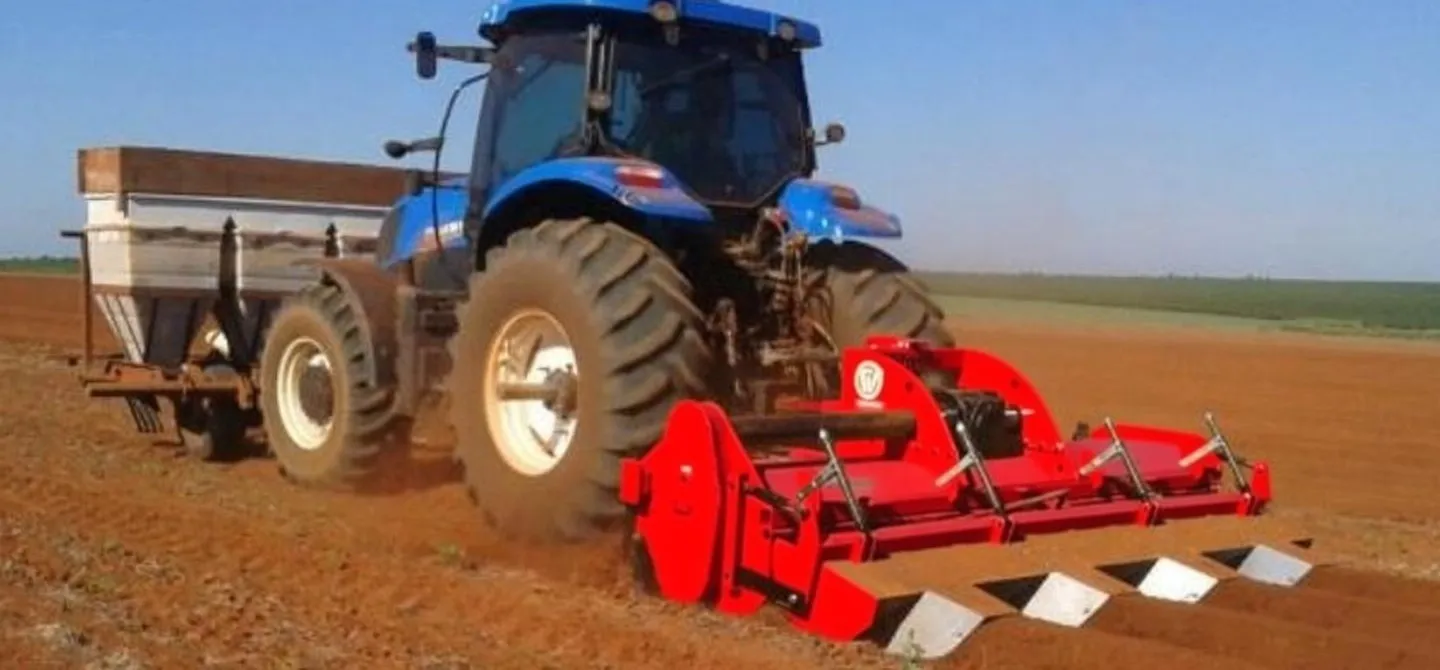
The structural integrity of any heavy-duty ротаційний пристрій, and of the PSW series ротаційний пристрій in particular, depends on careful material selection throughout the machine. The main frame and cross-members are fabricated from heavy-section structural steel, welded to form a rigid assembly that resists the bending and torsional loads imposed during deep tillage in hard or stony soils. Key frame joints use full-penetration welds inspected to ensure structural continuity, and the frame surface is hot-dip galvanised or high-build epoxy coated to resist corrosion during outdoor storage between seasons — an important durability consideration in Korea’s humid summer climate where untreated steel welds can begin to corrode rapidly during the fallow storage period between spring and autumn tillage campaigns.
The rotor tines are the most critical consumable components of any ротаційний пристрій and are manufactured from boron-alloyed steel heat-treated to achieve a hardness in the region of 45–55 HRC. This hardness range balances wear resistance against brittleness — harder tines resist abrasive wear in sandy or gritty soils, while tines at the lower end of the hardness range are tougher and more resistant to the bending impact loads that occur when the tine strikes buried stones or root masses. The tine bolt pattern of this ротаційний пристрій allows individual tine replacement without removing the rotor assembly, which means routine tine maintenance can be carried out in the field using basic hand tools — a practical maintenance feature that significantly reduces machine downtime during peak tillage periods on South Korean farms where workshop time is at a premium.
The main gearbox housing is cast from ductile iron, which combines the casting geometry flexibility of grey iron with significantly improved impact toughness — an important property for a gearbox that absorbs the shock impulse loads transmitted when the rotor encounters buried obstacles. Internal gear sets are machined from case-hardened alloy steel and ground to achieve close tooth profile tolerances, minimising vibration and noise at operating speed. Gearbox seals are specified for the operating temperature range expected in Korean summer conditions, and the gearbox fill and drain points are positioned for easy access without removing the unit from the machine. The chain or side-drive transmission components of the ротаційний пристрій are sealed in oil-bath housings to ensure consistent lubrication regardless of the machine’s operating attitude — a design detail that extends transmission life in the variable-slope conditions encountered when tillaging hillside paddocks in South Korea’s mountainous farming regions.
6. Application Scenarios
The PSW series ротаційний пристрій — a true professional-grade ротаційний пристрій — is designed for a range of professional tillage and land preparation tasks where consistent, high-quality seedbed preparation across large working widths is the primary requirement.
Primary Seedbed Preparation for Cereals & Vegetables
In commercial cereal and vegetable production systems, the ротаційний пристрій is typically used as the final seedbed preparation pass before drilling or transplanting. The PSW series at 3–5 km/h working speed produces a tilth quality suitable for direct seeding of most cereal and vegetable crops without requiring a secondary cultivation pass. For South Korea’s major upland crop areas — highland Chinese cabbage, radish, and garlic in Gangwon and Chungcheong provinces — consistent seedbed tilth is a critical quality factor that directly influences crop establishment uniformity and yield potential. The PSW agriculture tractor rotavator delivers this consistency reliably across the full 3.20 m working width in a single pass.
Crop Residue Incorporation
After harvest, the ротаційний пристрій provides one of the most effective methods for incorporating straw, stalks, and root debris into the soil profile. The rotor’s cutting action chops and mixes residue material through the tilled layer rather than simply burying it intact, which accelerates biological decomposition and avoids the formation of residue layers that can impede seedling root development. For double-cropping systems common in South Korea’s southern regions — where a summer paddy rice crop is followed immediately by a winter vegetable crop — rapid residue incorporation using a 3m rotavator or wider variant minimises the interval between harvest and re-planting, maximising the number of productive cropping cycles per year.
Green Manure & Cover Crop Incorporation
Cover crops and green manures — phacelia, vetch, rye, and mustard being commonly used in Korean arable rotations — need to be incorporated into the soil before the main crop is established. The PSW ротаційний пристрій‘s tine action effectively chops and mixes green biomass through the soil profile, providing both organic matter input and a functional primary tillage operation in the same pass. The PSW-3200 B’s fertiliser bunker adds the ability to apply basal fertiliser simultaneously, so the tillage, organic matter incorporation, and fertiliser application steps are consolidated into a single field operation — significantly reducing the total number of tractor passes required during the intense spring planting preparation period.
Orchard & Vineyard Floor Management
In established orchards and vineyards, inter-row ротаційний пристрій tillage manages weed competition, aerates compacted soil between tree rows, and incorporates surface organic matter from mown grass or fallen leaves. The PSW series working width options — particularly the 3.0 m and 3.2 m configurations — suit wider-spaced orchard and vineyard row arrangements, and the machine’s robust construction handles the root and stone burden typical of mature orchard floors. South Korea’s apple, pear, and grape producing regions in North Gyeongsang and Chungbuk provinces increasingly use mechanised inter-row management to reduce labour dependence in orchard operations, and the agriculture equipment rotavator is a central component of these mechanised systems.
Paddy Field Preparation for Upland Conversion
As South Korean agriculture adapts to shifting water availability and changing market demands, an increasing area of paddy rice land is being converted to upland vegetable and feed crop production. This conversion requires deep primary tillage to break up the impermeable hardpan layer that characterises paddy soils and to create the free-draining seedbed profile needed for upland crops. The heavy duty rotavator PSW series ротаційний пристрій, operating at the lower end of the 3–5 km/h speed range to maximise tillage depth and pulverisation intensity, is well suited to this conversion tillage task — providing the soil profile modification needed to transition from flooded rice cultivation to drained upland cropping in a manageable number of field operations.
Contract Tillage & Land Preparation Services
Agricultural contractors offering tillage services to multiple farm clients need a ротаційний пристрій that delivers consistent, high-quality results across a range of soil types and field conditions without requiring constant adjustment or maintenance intervention. The PSW series ротаційний пристрій‘s robust construction, straightforward operator controls, and wide working width make it a commercially attractive implement for contractors seeking to maximise productive hours per machine per season. The availability of the PSW-3200 B with integrated fertiliser bunker also allows contractors to offer a combined tillage-and-fertilise service, adding revenue per field visit and differentiating their service offering from competitors using conventional single-function ротаційний пристрій machines.
7. Applicable Standards & Regulatory Considerations
Buyers of a ротаційний пристрій for professional commercial use should be aware of the applicable national and international standards that govern PTO-driven ротаційний пристрій implements, gearbox design, and agricultural machinery safety in their operating country.
South Korea — Agricultural Machinery Safety Act (농업기계화 촉진법) & KMST — Agricultural machinery operated commercially in South Korea falls under the Agricultural Mechanisation Promotion Act. PTO-driven tillage implements including the PSW series ротаційний пристрій are subject to safety assessment under the Korean Agricultural Machinery Safety Test (KMST) system. Buyers should confirm that the supplied machine’s PTO shaft guard meets Korean agricultural machinery safety standards, which align with ISO 4254-7 (agricultural machinery safety — rotary cultivators). For commercially operated ротаційний пристрій equipment, compliance with the KMST assessment process is advisable before field deployment.
EU Machinery Regulation 2023/1230 (successor to Directive 2006/42/EC) — European buyers or dealers importing this ротаційний пристрій into the EU must ensure the machine carries a CE marking confirming compliance with the Machinery Regulation’s essential health and safety requirements. For PTO-driven rotary cultivators, this includes specific requirements on PTO shaft guard design and retention force (aligned with ISO 11684 safety sign requirements), rotor zone guarding, and the maximum exposed stub-shaft length at the tractor PTO coupling point. The gearbox and its mounting must additionally satisfy structural integrity requirements under the EHSR. Full technical documentation including a Declaration of Conformity must accompany CE-marked machines.
ISO 4254-7 — Agricultural Machinery Safety: Rotary Cultivators — This international standard specifically addresses the safety requirements for rotary cultivators including ротаційний пристрій and rotary tiller designs. It covers rear-zone guarding, tine containment in the event of breakage, operator safety distances, and labelling requirements. Machines built to ISO 4254-7 meet the baseline safety requirements recognised in most global export markets and significantly simplify the regulatory compliance process for buyers and distributors outside the EU who need to demonstrate due diligence in equipment safety evaluation.
USA — ASABE S210 & OSHA CFR 1928.57 — In the United States, agricultural machinery guarding requirements for PTO-driven equipment are governed by OSHA 29 CFR 1928.57 and the ASABE S210 standard for PTO shaft dimensions and safety. Buyers sourcing a ротаційний пристрій for commercial use in the U.S. market should confirm that the PTO shaft connector dimensions comply with ASABE S318 and that the machine’s rotor guarding meets the containment requirements of OSHA 1928.57 for mechanically-powered tilling implements.
Australia — AS 2091 & State Agricultural Machinery Regulations — Australian commercial buyers of rotary tillage equipment must comply with AS 2091 safety requirements for agricultural machinery and with applicable state regulations governing machinery operation and transport. The rotavator gearbox must carry adequate oil sealing to prevent environmental contamination — a requirement that has become increasingly enforced under state environmental protection legislation governing farm machinery maintenance and storage practices.
8. Compatible Components & Related Products
The PSW ротаційний пристрій is designed as part of a complete power transmission system from the tractor PTO shaft to the rotor. We supply matched PTO shafts, gearboxes, and drive components to support the complete drivetrain, giving B2B buyers single-source access to everything the system needs.
PTO Shafts & Gearbox Components
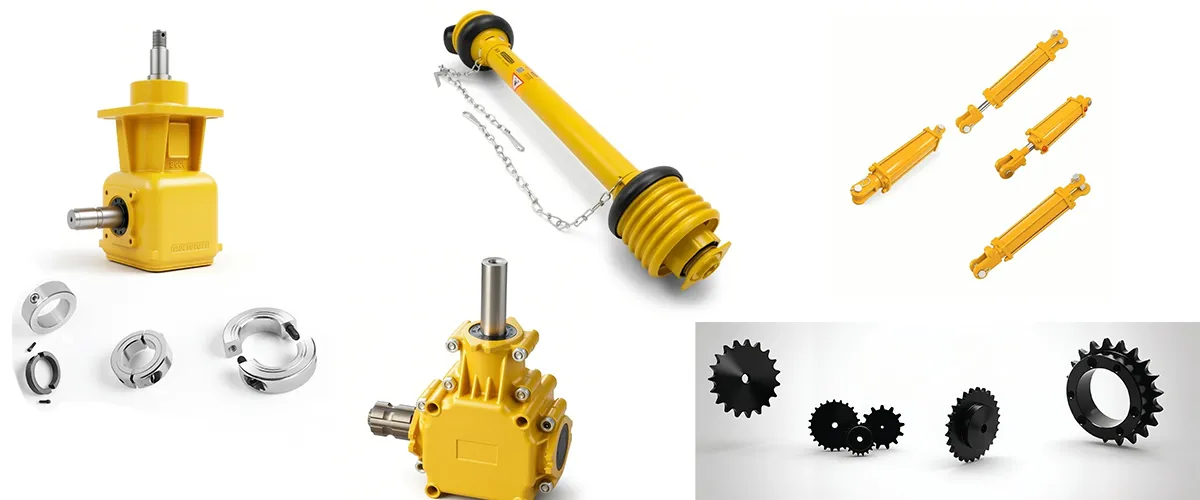
A PTO shaft matched to the PSW ротаційний пристрій‘s input torque requirement and tractor PTO output specification is essential for safe, reliable operation. The shaft must include a properly rated overrunning clutch or shear-bolt torque limiter to protect the ротаційний пристрій gearbox in the event of rotor blockage, and a full-length guard complying with applicable safety standards. We supply compatible gearbox components and gear sets for the PSW series, including replacement gearbox internals for scheduled maintenance and field repair situations. Keeping a set of common spare gears on hand at the operating site significantly reduces unplanned downtime risk during peak tillage periods.
Browse our complete Gearbox and gear product range for components compatible with PTO-driven rotavator applications.
Drive Sprockets & Transmission Components
The PSW ротаційний пристрій‘s side-drive chain transmission — connecting the central gearbox output to the rotor shaft across the working width — uses precision-machined sprockets that must maintain accurate chain pitch engagement throughout their service life to ensure smooth, vibration-free rotor operation. Worn sprockets cause chain slap, premature chain stretch, and increased drivetrain noise that signals accelerated wear across the entire side-drive system. We supply replacement sprocket sets for the PSW series drive chain, sized and hardened to the same specification as the original equipment components, ensuring that replacement sprockets provide the same service life as the originals rather than wearing prematurely and accelerating chain wear in turn.
Explore the complete Sprocket and drive component range for rotavator transmission applications.
9. World Success Case
Client 1 Profile:
Company: Jeju Island Agricultural Solutions, South Korea
Відгуки клієнтів:
“We’ve been using the EW-4000 rock rake before preparing soil with the PSW-3200, and the combination is perfect for our rocky land. The rock rake efficiently clears debris, so the rotavator can do its job without any interruptions. The quality of the equipment is exceptional, and it’s made a huge difference in soil preparation here in Jeju, where the terrain is tough and rocky.”
Client 2 Profile:
Company: Tractor Dealers, South Korea
Відгуки клієнтів:
“As a distributor of tractors, we highly recommend the PSW-3200 series and the EW-4000 rock rake to our customers. The PSW-3200 B model with the fertilizer hopper is especially great for large-scale operations, and the rock rake makes pre-tillage stone management much easier. The equipment is durable, efficient, and perfect for South Korea’s soil conditions.”
Client 3 Profile:
Company: Potato Farmers Co-op, United States
Відгуки клієнтів:
“We’ve been using the PSW-3200 for years to prepare our soil for potatoes, and adding the rock rake to the mix has been a game-changer. The rocky soil here in the Midwest would often cause damage to our rotavator, but with the rock rake clearing debris first, our equipment lasts longer, and we’re able to work more efficiently. We highly recommend it!”
Client 4 Profile:
Company: Agri-Construction Ltd, United Kingdom
Відгуки клієнтів:
“We use the EW-4000 rock rake and PSW-3200 together for land reclamation and agricultural site preparation in the UK. The rock rake is perfect for clearing debris, and the PSW-3200 makes soil tilling efficient, even in heavy clay soils. The equipment is robust and reliable, and it has allowed us to reduce labor costs and speed up our operations significantly.”
10. Про нас
We are a specialist manufacturer and global B2B supplier of professional-grade tillage equipment, PTO-driven implements, and associated power transmission components. Our rotavator product line spans compact machines for market garden and horticultural applications through to wide, heavy-duty implements like the PSW series designed for large-scale arable and vegetable production systems. Every machine in our product range is developed by a team with extensive field knowledge of the tillage conditions encountered across diverse agricultural systems — from the volcanic soils of Japan and Korea to the clay-dominated arable lands of Northern Europe and the hardpan soils common in parts of South America.
We understand that the decision to invest in a heavy duty rotavator and professional rotavator of this scale is a significant capital commitment, and we support buyers through the full pre-purchase evaluation process with detailed technical data, field performance references, and post-sale commissioning support.
Часті запитання
Q1. What is the purpose of a rotavator, and how does it differ from a plough or conventional disc harrow for seedbed preparation?
А ротаційний пристрій — and the PSW series ротаційний пристрій specifically — is a PTO-driven rotary tine implement that simultaneously cuts, lifts, and mixes soil to produce a fine, crumb-structured tilth suitable for direct seeding or transplanting. Unlike a plough, which inverts the soil profile in furrow slices, a ротаційний пристрій fragments and homogenises the tilled layer without full profile inversion, making it better suited to shallow seedbed preparation and residue incorporation. Compared with a disc harrow, the ротаційний пристрій‘s tine action produces finer fragmentation and better residue chopping, particularly for fibrous crop residues like maize stover or straw that disc blades tend to push aside rather than cut. The PSW series agriculture tractor rotavator is designed specifically for one-pass seedbed preparation to the quality standard required for direct seeding or mechanical transplanting.
Q2. What is the difference between a tiller and a rotavator, and which one should I choose for large-scale commercial vegetable production in South Korea?
In common agricultural usage, the terms “tiller” and “ротаційний пристрій” are often used interchangeably, but technically a rotary tiller (or rotovator tiller) typically refers to a lighter, garden-scale machine, while a ротаційний пристрій — particularly in the commercial agricultural context — implies a more robust, higher-capacity implement designed for tractor mounting and field-scale use. The PSW series is unambiguously in the commercial ротаційний пристрій category: at 1,650–1,800 kg working weight and a 140 cv minimum tractor power requirement, it is designed for professional agricultural use rather than garden or small-holding applications. For large-scale commercial vegetable production in South Korea, the PSW ротаційний пристрій is the appropriate choice — a garden-scale rotovator tiller would be completely underpowered for the scale and working width requirements of commercial field operations.
Q3. How does a rotavator work, and what determines the quality of the seedbed it produces in clay or heavy loam soils?
А ротаційний пристрій works by driving a horizontal rotor shaft — mounted across the full working width of the machine — at high rotational speed via the tractor’s PTO. Tines bolted to the rotor shaft cut through the soil in a rotating arc, fragmenting clods and mixing the soil profile through the tilling depth. Seedbed quality is primarily determined by three variables: rotor tip speed (set by PTO speed and rotor diameter), tractor forward travel speed (which controls the size of each tine’s bite into the soil), and soil moisture content at the time of operation. In clay-dominated soils common in South Korea’s river basin farming regions, operating the ротаційний пристрій when soil moisture is near field capacity — rather than when the soil is either saturated or bone dry — produces the best clod fragmentation and tilth quality. The PSW series’ 3–5 km/h speed range allows operators to fine-tune forward speed relative to soil conditions on the day.
Q4. Which working width should I choose for the PSW series rotavator, and what factors determine the best working width for my farm operation in Korea?
Working width selection for the PSW ротаційний пристрій depends on four main factors: your tractor’s rated PTO horsepower and three-point linkage lift capacity, your field size and shape, the bed or row spacing used in your cropping system, and the transport route from field to field. Wider working widths (3.4 m and 3.6 m) maximise field coverage per tractor hour but require more tractor power and may be challenging to transport on narrow farm access roads. Narrower options (3.0 m and 3.2 m) are better suited to smaller or more irregularly shaped fields and to farms where transport width is constrained by farm laneways. For most commercial arable and vegetable operations in South Korea working with 140–180 cv tractors, the 3.2 m or 3.4 m working width typically offers the best balance of productivity and operational flexibility.
Q5. What maintenance does a heavy duty rotavator require, and how often should tines be inspected and replaced during a typical Korean farming season?
Routine maintenance for the PSW series heavy duty rotavator includes daily pre-use inspection of tine condition and bolt torque, gearbox oil level check, and PTO shaft guard integrity inspection. Tine wear rate depends heavily on soil type — abrasive sandy or gravelly soils wear tines significantly faster than loam or clay soils. A practical approach is to weigh a sample of new tines before the season and re-weigh them at intervals to calculate actual wear rate per hectare, then use that data to schedule replacement before tines become critically short and begin damaging tine holders. For typical South Korean agricultural soils, a tine life of 80–200 hectares per set is a reasonable working estimate, but actual wear experience with the specific soil type on your farm should be measured in the first season and used to refine the replacement schedule thereafter.
Q6. What are powered cultivators and rotavators used for in professional agriculture, and how does the PSW series compare to other agriculture equipment rotavator options?
Powered cultivators and ротаційний пристрій machines are used in professional agriculture for primary or secondary tillage, seedbed preparation, residue incorporation, and weed management — tasks that collectively represent the largest time and fuel cost in a typical crop establishment programme. The PSW series distinguishes itself from lighter agriculture equipment rotavator alternatives in several ways: its 3.20 m working width (with options up to 3.6 m), its 140 cv minimum power specification indicating true heavy-duty capability, and the availability of the PSW-3200 B with integrated 2,000 kg fertiliser bunker — a feature not available on most competing commercial rotavator products at this working width. For B2B buyers comparing ротаційний пристрій options, the PSW series ротаційний пристрій‘s combination of working width, fertiliser bunker option, and robust construction represents a higher initial investment justified by lower operating cost per hectare over a long machine service life.
Q7. What tractor specifications do I need to safely operate the PSW-3200 B rotavator with fertiliser bunker in South Korea, and are there any compatibility checks I should do before ordering?
To operate the PSW-3200 B ротаційний пристрій safely, your tractor must meet the following minimum specifications: engine output of at least 140 cv (approximately 138 hp); category 2 three-point rear linkage with a minimum lift capacity of 2,500 kg at the linkage lower links to handle the machine’s 1,800 kg operating weight plus the full 2,000 kg fertiliser load; PTO output at 1,000 rpm (or 540 rpm with a step-up adapter, to be verified); and two independent hydraulic control valve outputs for the fertiliser bunker and metering system. Before ordering, verify the tractor’s hydraulic flow rate for the control valves (litres per minute) against the PSW-3200 B’s hydraulic system requirements, which we will provide in the technical datasheet. Most 140–180 cv tractors from mainstream brands operating commercially in South Korea will meet these requirements without modification, but confirmation before purchase is recommended.
Q8. How does the rotavator tractor combination in the PSW series compare to subsoil tillage equipment for improving soil structure in South Korean paddy field conversion projects?
The rotavator tractor combination in the PSW series addresses the surface and near-surface soil structure — typically the top 150–250 mm of the soil profile — very effectively, producing the fine tilth and residue incorporation needed for crop establishment. However, for paddy field conversion projects where the primary objective is breaking up the impermeable clay hardpan that sits at 200–400 mm depth, a single ротаційний пристрій pass is generally not sufficient on its own. The recommended approach for paddy-to-upland conversion is to first use a deep subsoiler or chisel plough to fracture the hardpan layer, then follow with the PSW ротаційний пристрій to refine the surface tilth and incorporate any surface organic matter. This two-implement system — deep subsoil disruption followed by ротаційний пристрій seedbed refinement — is the standard approach used by Korean agricultural extension services for paddy conversion projects and produces the best long-term soil drainage and cropping performance.
Редактор: PXY