Agricultural Land Preparation — Kenya & East Africa
PTO Stone Crusher for Kenyan Smallholder Farms: Dealing with Murram, Quartzite, and Volcanic Scoria
A comprehensive technical and practical reference for farmers, land developers, and agricultural mechanization specialists working in Kenya and across East Africa — covering how a tractor-mounted pto stone crusher handles the three most problematic geological materials found in Kenyan smallholder farm environments, and why this equipment matters equally to Korean agricultural technology investors and buyers evaluating comparable upland terrain solutions.
1. Kenya’s Stone Problem: Why Murram, Quartzite, and Volcanic Scoria Demand Different Approaches
Kenya’s agricultural land presents a geological challenge that is simultaneously widespread and highly varied by region. In the Central Highlands around Nyeri, Meru, and Kirinyaga — prime zones for tea, coffee, maize, and horticultural production — the topsoil frequently sits atop a dense layer of murram: a lateritic gravel consisting of iron and aluminum oxide-rich nodules cemented by clay and silica. Murram does not behave like ordinary gravel. It consolidates under vehicle traffic and tractor tyres into a surface nearly as resistant as compacted concrete, yet breaks up into fine, dusty fragments when correctly processed by a stone crusher machine. Left unmanaged, murram nodules at the surface physically impede seeding, block irrigation emitters, and cause premature wear on cultivation equipment.
Move toward the Rift Valley corridor — Nakuru, Naivasha, Eldoret — and the stone challenge shifts dramatically. Here, volcanic scoria: the irregular, vesicular (porous) basalt fragments ejected during volcanic eruptions and subsequently weathered into fields over millennia, creates both a mechanical obstacle and a soil amendment opportunity. Volcanic scoria fragments range from 20 mm to 300 mm in diameter and are often partially buried, making conventional ploughing destructive rather than productive. An agricultural stone crusher that can engage these fragments and reduce them to sub-50 mm material transforms what is effectively a soil productivity barrier into a coarse mulch layer with significant water-retention properties. In the Taita Hills, Kitui, and parts of Machakos County, the geological picture changes again: here, ancient metamorphic quartzite outcroppings and near-surface quartzite seams present the hardest natural stone challenge found on Kenyan farmland. Quartzite — essentially metamorphosed sandstone with silica cementation at the molecular level — can approach 7 on the Mohs hardness scale, making it extremely abrasive to cutting edges and rotor teeth on any stone crusher for tractor applications. Understanding these three distinct material types is essential before selecting the appropriate pto stone crusher model for a given Kenyan farming context.
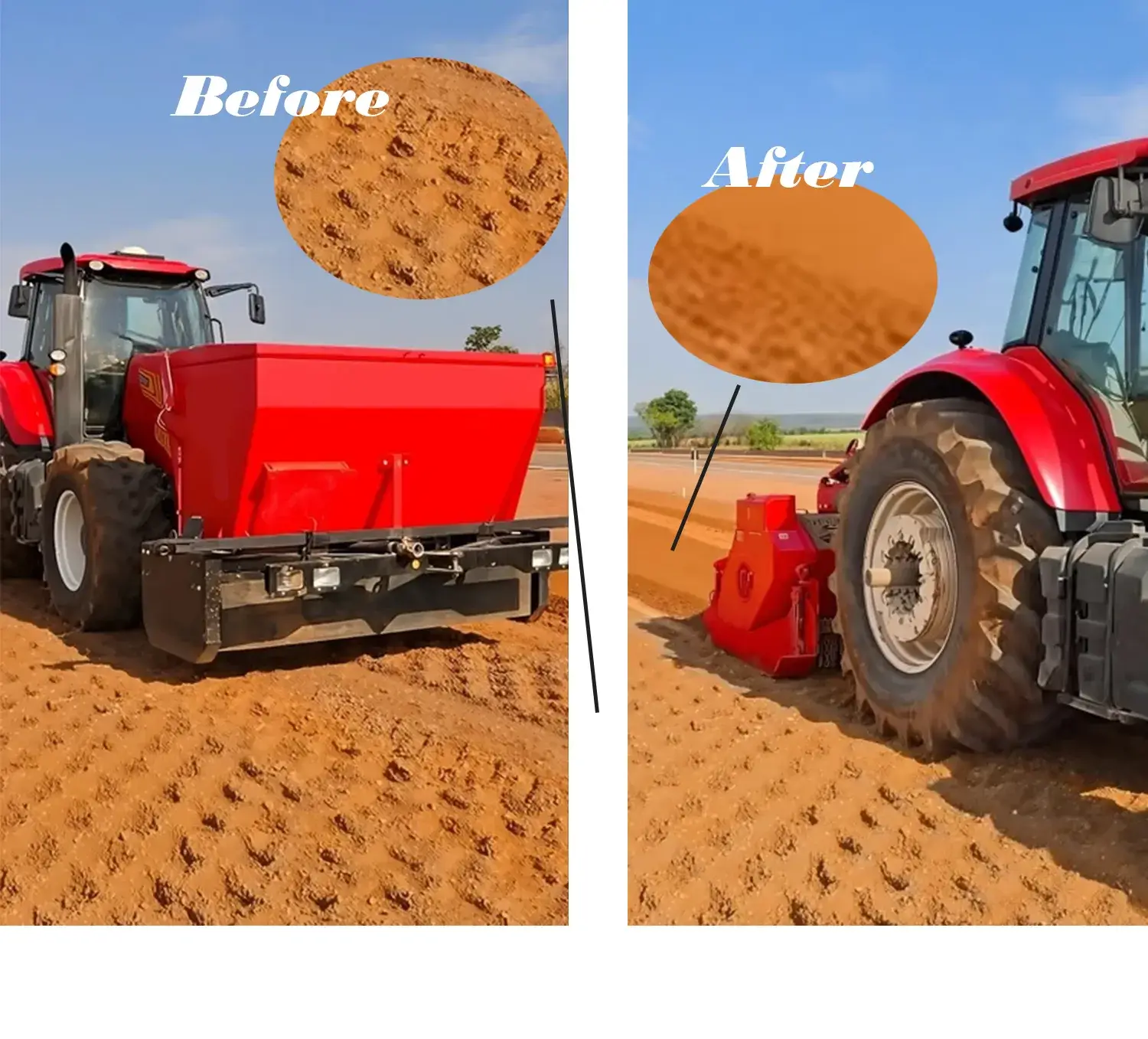
2. Action Mechanism: How a PTO Stone Crusher Processes Murram, Quartzite, and Scoria
The operating principle of a tractor-mounted pto stone crusher relies on high-speed rotational impact rather than static compression or shear. When the tractor’s Power Take-Off (PTO) shaft engages — typically at 540 or 1,000 RPM depending on model specification — rotational energy is transmitted through a gearbox to a rotor drum carrying multiple hardened tooth assemblies. As the drum spins at high peripheral velocity and the tractor advances at a controlled working speed of 2–5 km/h, stones and rocky material entering the crushing chamber are struck repeatedly by the rotating teeth, thrown against internal counter-blades and Hardox-lined chamber walls, and progressively reduced in size until fragments are small enough to pass under the adjustable counter-blade gap and exit through the rear discharge chute. The entire process happens in a single forward pass of the tractor, eliminating the separate collection-and-haul cycle that makes manual stone management so labor-intensive and costly on Kenyan smallholder plots.
How this mechanism interacts with each of Kenya’s three problem materials differs meaningfully. Murram nodules, despite their consolidated surface hardness, are relatively brittle in cross-section. When struck by the rotor teeth at impact velocities characteristic of 540–1,000 RPM operation, they shatter predictably along their internal void boundaries, producing fine, sandy output that integrates readily into the surrounding soil matrix. The practical result is a soil surface that was previously stony and hard becoming workable and uniform in a single pass — a significant productivity gain for smallholders using hand tools or small tractors for subsequent operations. Volcanic scoria presents a different challenge: the vesicular (porous) structure of scoria means individual fragments have high void volume relative to their mass, making them lighter per unit volume than solid basalt but with irregular, angular fracture surfaces that generate extreme tooth wear. Operators working in Rift Valley scoria zones typically need to replace rotor teeth at shorter intervals than operators working on limestone or murram, and the selection of a higher-carbide tooth tip grade is strongly recommended. Quartzite is the most demanding of the three. Its extreme silica hardness and tendency to produce sharp, plate-like fragments with conchoidal fracture patterns places maximum stress on both tooth tips and chamber liner surfaces. On quartzite-dominant land in Taita Taveta or Kitui districts, working speeds should be reduced to 1.5–2 km/h and PTO speed kept at 1,000 RPM to maximize energy per impact, with systematic tooth inspection after every 4–6 working hours.
3. Manufacturing Structure: What Makes a Stone Crusher Built for East African Conditions
The structural demands of operating a stone crusher machine in Kenyan agricultural conditions are more severe than those encountered in most European or North American farming environments. The combination of red laterite dust (fine silica and iron oxide particles), high ambient temperatures during the dry season, intermittent but intense tropical rainfall, and the abrasive nature of all three target materials (murram, quartzite, scoria) creates a service environment that accelerates wear, promotes corrosion, and generates peak impact loads far above average values. Equipment that is structurally adequate for European farm conditions may exhibit premature fatigue cracking at weld seams, gearbox seal failures, or rotor bearing collapse within a single season of intensive Kenyan farm use.
A properly engineered stone crusher for tractor application in this environment is built around a fully welded S355 or S460 structural steel chassis, with key load-bearing welds post-weld stress-relieved to minimize residual tensile stresses at joint lines. The crushing chamber side walls and base are lined with replaceable Hardox 400 or Hardox 500 abrasion-resistant steel wear plates — a critical design choice because murram’s siliceous component will rapidly erode mild steel chamber surfaces if unprotected. The rotor drum is a heavy, solid steel fabrication chosen specifically for rotational inertia: a heavier rotor maintains its angular momentum through hard-stone impact events, preventing the machine from stalling on large embedded quartzite fragments or dense murram nodules. The gearbox — the component most vulnerable to Kenyan dust conditions — must be sealed to IP65 equivalent standard or better, with labyrinth-type shaft seals at PTO input and rotor output, and a filtered breather vent to prevent differential pressure-induced dust ingestion. Machines with belt-and-pulley power transmission (rather than gear-driven power transmission) are not recommended for consistent quartzite or volcanic scoria work, as belt slip under high-impact loads reduces effective energy delivery at the rotor and shortens belt life substantially in abrasive dust environments.
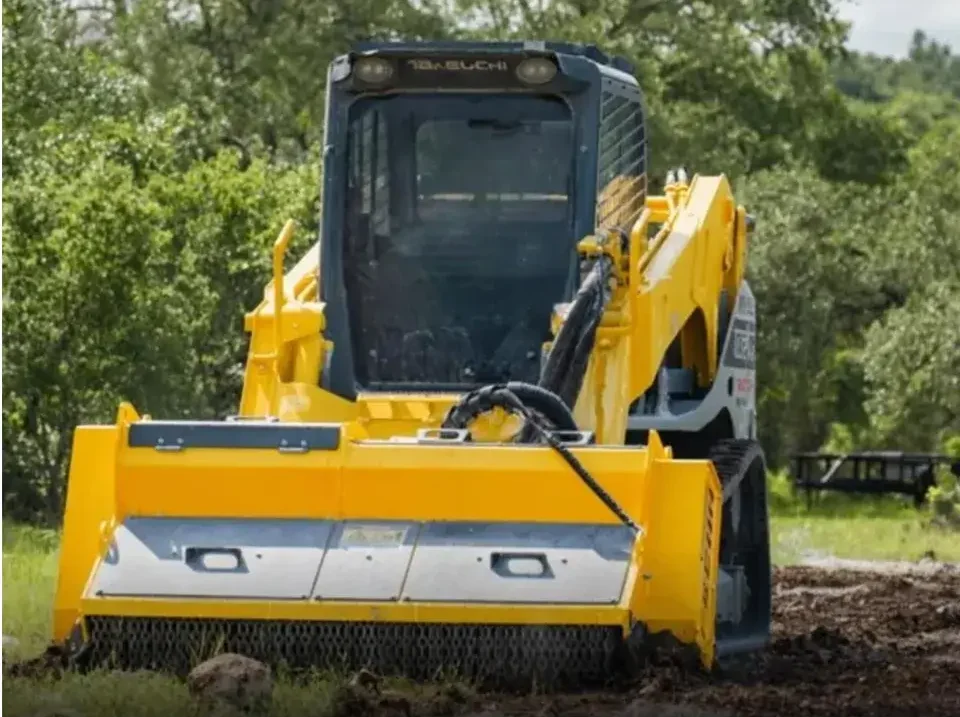
4. Material System: Alloys and Wear Grades Matched to Kenyan Stone Types
The material hierarchy within a high-performance agricultural stone crusher follows a deliberate hardness gradient — hardest at the tooth tip where impact energy concentrates, progressively tougher toward the rotor body and housing where fracture resistance matters more than abrasion resistance. For Kenyan applications, particularly those involving quartzite or volcanic scoria, the tooth tip specification deserves close attention. The industry standard for stone crusher teeth in hard-rock agricultural applications is a cemented tungsten carbide (WC-Co) insert with cobalt binder content between 6% and 10%. Lower cobalt content (6–8%) yields higher hardness (approaching 1,600 HV) and better abrasion resistance against quartzite’s silica matrix, while slightly higher cobalt (9–10%) provides better impact toughness for scoria’s irregular, shock-loading fracture behavior. Where a farm operator cannot afford multiple tooth grades for different field sections, a mid-range 8% Co carbide grade offers a practical compromise across all three Kenyan stone types.
The tool holder — the steel body that receives the carbide insert and mounts to the rotor — is typically cast from austenitic manganese steel (Hadfield alloy, approximately 12–14% Mn, 1.1–1.4% C). This alloy is non-magnetic, tough, and critically work-hardens under repeated impact: as murram nodules or quartzite chips repeatedly strike the exposed holder face during operation, the surface hardness increases from an initial ~200 HB to 500+ HB, while the core remains tough enough to absorb impact energy without brittle fracture. Chamber liners use Hardox 400 plate for murram-dominated work and Hardox 500 for quartzite or mixed-stone environments where abrasive wear is more aggressive. The housing exterior — including the three-point hitch mounting arms, side protection plates, and skid shoes — is fabricated from S275 structural steel and finished with a zinc phosphate primer plus two-component polyurethane topcoat, providing adequate corrosion resistance through Kenya’s long rains season when machinery often sits in contact with wet laterite soil for extended periods.
5. Stone Crusher Product Range: From Smallholder Scale to Large Land Projects
Our stone crusher and mulcher product lineup covers the full tractor power spectrum relevant to Kenyan agricultural operations — from small 70 hp tractors used by cooperative members on 2–5 hectare plots to large 360 hp machines deployed on commercial tea estate preparation or government land reclamation projects. Browse the complete product catalogue here.
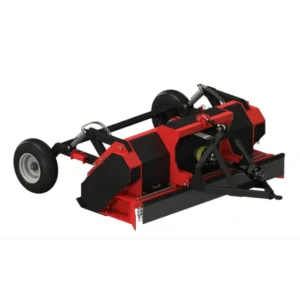
EP-Thor 2.4 + Kit Drawbar
Working width 2.4 m. Dimensions: 1,546 mm (L) × 2,481 mm (W) × 1,212 mm (H). Weight 2,300 kg. Minimum engine power 180 cv. Category 2 linkage. Working speed 3 km/h. Requires 2 control valves. The drawbar kit makes this unit highly mobile between separate land parcels — a practical advantage for smallholder cooperatives or service contractors operating across multiple farms in the Central Highlands or Rift Valley zones.
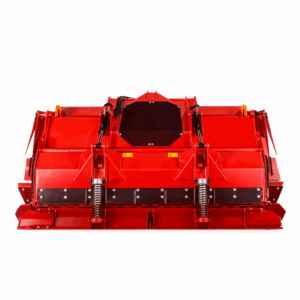
ஈபி-ராக்மாஸ்டர் விவசாயக் கல் நொறுக்கி
A purpose-built heavy-duty agricultural stone crusher for high-stone-density land clearing. Fixed-tooth rotor with Hardox-lined crushing chamber, sealed multi-stage gearbox, and replaceable wear components throughout. Well-suited to Kenya’s volcanic scoria zones near Nakuru and Naivasha, and to mixed murram-quartzite terrain in Kitui and Machakos. Direct 3-point hitch mounting to category 2 tractors from 80 hp upward.
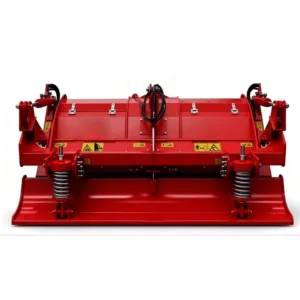
EP-PSC Models (STCL / STCM Series)
The PSC series covers tractor power from 70 to 220 hp across the STCL and STCM model lines. STCL configurations: working widths 1,110–2,070 mm, max stone diameter 150 mm, max depth 150 mm, weight 1,230–1,750 kg, PTO 540–1,000 RPM. STCM configurations: working widths 1,340–2,304 mm, max stone diameter 300 mm, max depth 200 mm, weight 1,850–3,800 kg, rotor diameter 550 mm. The STCM models are particularly appropriate for Kenya’s medium-to-large stone zones where murram nodules up to 300 mm are encountered.
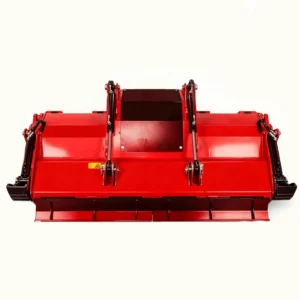
EP-டிராக்டரில் பொருத்தப்பட்ட பாறை நொறுக்கி
Standard 3-point hitch tractor stone crusher optimized for medium-scale operations. Thick-gauge steel housing, replaceable hardened steel hammer system, and a heavy-duty sealed gearbox resistant to dust infiltration. Handles murram nodules, scoria fragments, and demolition rubble in a single forward pass. A practical, mid-range stone crushing machine for Kenyan county government land preparation programs or NGO-supported smallholder mechanization initiatives.
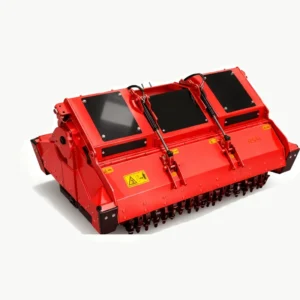
EP-Agricultural Tractor-Mounted Rock Crusher (Korea)
Designed for 200–360 hp tractors. Dense iron-chain rear chute controls stone projectile splash and suppresses airborne dust — critical for operator safety in Kenya’s quartzite-dominant zones where stone ejection risk is highest. Crushes rocks up to 500 mm diameter. Suitable for large-scale Kenyan land rehabilitation projects and government-funded irrigation scheme preparation, as well as comparable Korean hillside farmland stone clearance programs.
6. Technical Specifications: PSC Series STCL and STCM Models
Reference data for Kenya and East Africa applications. PTO input speed: 540–1,000 RPM depending on model. Category 2 three-point hitch. All dimensions in mm.
| Model | Series | Tractor (hp) | PTO (rpm) | Work Width (mm) | Max Stone Ø (mm) | Max Depth (mm) | Weight (kg) | Teeth |
|---|---|---|---|---|---|---|---|---|
| STCL/ST 100 | STCL | 70–120 | 540–1000 | 1,110 | 150 | 150 | 1,230 | 22+4 |
| STCL/ST 125 | STCL | 80–120 | 540–1000 | 1,350 | 150 | 150 | 1,280 | 26+4 |
| STCL/ST 150 | STCL | 90–120 | 540–1000 | 1,590 | 150 | 150 | 1,440 | 32+4 |
| STCM/ST 125 | STCM | 80–110 | 540–1000 | 1,340 | 300 | 200 | 1,850 | 26+4 |
| STCM 150 | STCM | 150–220 | 1000 | 1,584 | 300 | 200 | 3,000 | 32+4 |
| STCM 200 | STCM | 170–220 | 1000 | 2,064 | 300 | 200 | 3,550 | 42+4 |
| STCM 225 | STCM | 180–220 | 1000 | 2,304 | 300 | 200 | 3,800 | 48+4 |
| Korea EP 200–360 hp | Heavy | 200–360 | 1000 | — | 500 | — | — | — |
| Thor 2.4 | Mulcher | 180+ | — | 2,400 | — | — | 2,300 | — |
Note: STCL models use fixed-tooth rotor STCL/3 + C3/SS tooth type. STCM models use fixed-tooth rotor STC/3 + STC/3HD tooth type. Rotor diameters: STCL 450 mm, STCM 550 mm. All units Category 2 three-point hitch. Specifications subject to model variant.
7. What Is Crusher Stone Used For? Agricultural Benefits on Kenyan Smallholder Land
Once a pto stone crusher has processed murram nodules, volcanic scoria, or quartzite fragments to sub-50 mm size and returned the material to the soil surface, a set of agronomic benefits accumulates that is often underappreciated relative to the equipment’s primary function as an obstacle-removal tool. Understanding what crushed stone is used for in a Kenyan small farm context makes the investment case for a stone crusher for sale or for cooperative hire much clearer than the headline function of “clearing rocks” alone would suggest.
Crushed murram returned to the surface acts as a self-stabilizing gravel mulch: it suppresses weed germination between maize or bean rows without herbicide, reduces evaporative water loss during the hot, dry interseason periods (March–May and October–December in Kenya’s two-season rainfall system), and provides a firm but permeable surface that reduces compaction from foot traffic during harvest. On sloped land — common in Nyeri, Kirinyaga, and Meru Counties — a surface mulch of crushed material also substantially reduces runoff velocity and therefore topsoil erosion loss during intense short-rain events. Crushed volcanic scoria from the Rift Valley brings additional benefits: the vesicular structure of scoria fragments creates excellent micro-habitat for beneficial soil organisms and, as scoria weathers, it releases trace elements including iron, magnesium, calcium, and potassium into the rooting zone — elements that are often limiting in intensively cropped Kenyan red soils. Crushed quartzite fragments contribute less mineral fertility but serve as a durable, slow-weathering grit component in the soil profile, improving drainage in clay-dominant soils of the lower Taita Hills and improving structural stability of raised beds used for horticulture production in export vegetable programs.
8. Regulatory Framework for Stone Crushers and Agricultural Machinery
Kenya: Agricultural machinery operated commercially in Kenya falls under the oversight of the Kenya Bureau of Standards (KEBS), which administers Kenya Standard (KS) regulations applicable to agricultural equipment safety, including KS 2561 and related machinery safety standards. Imported stone crushing equipment must comply with KEBS product conformity assessment (PVoC) requirements at the port of entry. The Kenya Plant Health Inspectorate Service (KEPHIS) may have jurisdiction over equipment that contacts soil in quarantine buffer zones. Under the Occupational Safety and Health Act (OSHA 2007, Cap. 514), employers operating stone crusher equipment on farm land are required to maintain machinery in safe condition, provide appropriate personal protective equipment (steel-capped footwear, face shields, hard hats) to all workers within 50 meters of operating equipment, and maintain records of machine maintenance and operator training. The National Environment Management Authority (NEMA) Environmental Management and Coordination Act may require environmental impact assessment for large-scale stone crushing operations on land exceeding certain thresholds in protected watershed areas.
Republic of Korea (대한민국): Agricultural machinery imported into South Korea is regulated under the Agricultural Mechanization Promotion Act (농업기계화촉진법), administered by the Rural Development Administration (RDA, 농촌진흥청). All imported stone crushing machines require RDA safety certification testing before commercial distribution and subsidy eligibility. Korean Industrial Standards (KS) — including KS B 6370 and related agricultural equipment standards — define the technical safety evaluation framework. Under Korea’s Farmland Act (농지법), operators using stone crushing equipment on registered farmland must ensure that activities do not result in permanent alteration of the designated land class without prior approval from the relevant local agricultural land commission. Environmental impact assessment may be required for operations exceeding defined acreage thresholds under the Environmental Impact Assessment Act (환경영향평가법). Operators are also subject to the Occupational Safety and Health Act (산업안전보건법), which sets minimum safety distances, PPE requirements, and equipment maintenance standards for stone crushing operations.
European Union: Stone crusher machines sold in EU member states must bear CE marking under the EU Machinery Directive 2006/42/EC, supported by a Declaration of Conformity and technical file. ISO 5674 governs PTO shaft guard requirements. For operations in environmentally sensitive zones (Natura 2000 areas), supplementary national environmental regulations apply. ATEX Directive 2014/34/EU may apply in specific dusty agricultural environments classified as potentially explosive atmospheres.
East Africa Regional: Tanzania, Uganda, and Rwanda, as EAC (East African Community) partner states, have adopted regional machinery safety standards aligned with KEBS frameworks under the EAC Standardization, Quality Assurance, Metrology and Testing (SQMT) Act. Cross-border agricultural equipment trade within the EAC benefits from mutual recognition of standards, though buyers are advised to verify current SQMT conformity mark requirements before importing used tractor stone crusher equipment across national boundaries within the Community.
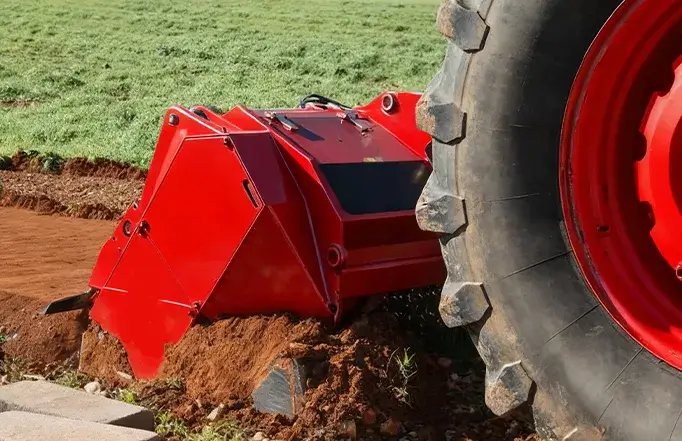
9. Selecting the Right Stone Crusher for Kenyan Farm Conditions
Choosing between a small pto stone crusher and a large field machine for Kenyan conditions requires working through a practical checklist of site-specific parameters. General regional guidelines are shown below, but always verify against a site-specific soil and stone survey before final specification.
Central Highlands (Murram)
STCL/ST 100 to STCM/ST 125 models (70–110 hp tractors) handle typical Central Highlands murram conditions effectively. Max murram nodule diameter rarely exceeds 150 mm in cultivated topsoil layers. PTO 540 or 1,000 RPM. Working speed 3–4 km/h. Standard STC/3 tooth grade adequate for murram.
Rift Valley (Volcanic Scoria)
STCM 150 or STCM 200 models (150–220 hp tractors) recommended for scoria fragments up to 300 mm. Higher cobalt-content tooth tips (9–10% Co grade) recommended for shock-load resistance on irregular scoria surfaces. Working speed 2–3 km/h. Frequent tooth inspection schedule essential.
Taita Hills / Kitui (Quartzite)
Hardest conditions. STCM 200, STCM 225, or Korea EP 200–360 hp units for large quartzite outcroppings. Specify Hardox 500 chamber liners, lower-cobalt (6–8%) high-hardness carbide tooth tips. Working speed reduced to 1.5–2 km/h. Pre-ripping with a heavy subsoiler recommended for embedded quartzite slabs exceeding 400 mm before stone crusher passes.
Cooperative / Service Contractor
Thor 2.4 + Kit Drawbar provides maximum mobility between smallholder parcels within a cooperative. 2.4 m working width covers typical 40–60 m plot width efficiently. Drawbar transport reduces road damage and tyre wear vs. driving 2,300 kg machine on public murram roads between sites.
10. About Us
We specialize in the supply, technical support, and after-sales servicing of professional stone crusher machines, mulchers, and land preparation equipment for commercial farming operations, smallholder cooperatives, government land reclamation programs, and agricultural development organizations worldwide. Our product range addresses the complete spectrum of tractor power — from compact 70 hp cooperative units suited to Kenya’s Central Highlands smallholder plots to 360 hp machines sized for commercial tea estate rehabilitation or Korean upland farmland development projects. Every stone crusher in our range is supported by documented CE conformity records for EU market customers and technical packages compatible with Korean RDA certification requirements for Korean buyers.
We maintain active supply relationships with buyers across East Africa — including Kenya, Uganda, Tanzania, and Ethiopia — as well as South Korea, Southeast Asia, the Middle East, and Europe. Whether you are evaluating a small pto stone crusher for sale for a pilot cooperative program or specifying a fleet of heavy stone crushing machines for a large irrigation scheme preparation, our team of agricultural engineers and agronomists provides technical selection support, site-specific recommendation, and post-delivery spare parts supply to minimize downtime throughout your project.
Frequently Asked Questions
Q1. How does a pto stone crusher handle dense murram nodules found in Kenya’s Central Highlands farming zones?
Q2. Which stone crusher model is best suited for dealing with volcanic scoria near Nakuru, Kenya, and how does it compare to Korean basalt crushing applications?
Q3. What is crusher stone used for after processing quartzite fragments on Taita Hills farmland in Kenya?
Q4. Where can I find a reliable agricultural stone crusher supplier who can deliver to Nairobi and provides a quote with CE documentation?
Q5. How does a small pto stone crusher perform differently from a large tractor stone crusher when processing hard quartzite on Kenyan farmland?
Q6. When is the right time to use a stone crusher for tractor preparation of murram-covered land before planting in Kenya’s long rains season?
Editor: PXY