How Does a PTO Stone Crusher Work: Rotor, Hammers, and Gearbox Mechanics Explained
An In-Depth Engineering & Technical Analysis of Power Take-Off Rock Crushing Machinery for Colombian Agriculture and Infrastructure Maintenance Projects.
Introduction to Power Take-Off Agricultural Stone Crushing
In Colombia’s challenging agricultural terrains, managing rocky soil is crucial for maximizing crop yields, establishing flat pasturelands, and preventing severe wear on secondary seeding machinery. Power Take-Off (PTO) stone crushers represent the gold standard for on-site geological modification. Unlike traditional haul-away methods, a PTO stone crusher processes bedrock and scattered stones directly in the field. These heavy-duty implements are towed behind tractors, where they utilize structural transport systems and high-capacity trailer axles to traverse uneven surfaces. High-performance trailer axles provide the vital foundational support necessary to carry massive crushing chambers over soft soils, ensuring that the heavy impact forces do not cause structural failure or compromise the tractor’s towing dynamics during active field operations.
Understanding the mechanical inner workings of these machines requires a deep dive into the synchronization of the tractor’s PTO shaft, the heavy-duty speed-reducing gearbox, the high-inertia rotor assembly, and the replaceable tungsten carbide hammers. By supporting the structural weight on durable trailer axles, operators can seamlessly crush stones ranging from river rocks to buried limestone ledges. In the following sections, we will demystify the core mechanical principles, material systems, and structural designs that allow these machines to pulverize geological obstacles, while highlighting why rugged transport chassis equipped with heavy-duty trailer axles are vital for maintaining systemic reliability in the field.
For professional agricultural contractors exploring reliable machinery, visiting the comprehensive PTO கல் நொறுக்கி Products Catalog provides a direct overview of high-durability machines designed to meet modern farming challenges.
1. Operational Dynamics and Active Working Mechanism
The primary working mechanism of a PTO stone crusher relies on the mechanical conversion of high-speed rotational energy from the tractor’s PTO shaft into massive crushing kinetic force. As the tractor moves forward, power is transmitted via a Cardan shaft directly to the central gearbox. The gearbox reduces the rotational speed while multiplying the torque, sending high-energy mechanical drive to the rotor via multi-groove transmission belts or heavy-duty gear systems. To withstand the continuous shockwaves of stone crushing, the entire chassis is stabilized by dual-tire trailer axles. These structural trailer axles prevent the implement from bouncing erratically during heavy impact, preserving a consistent working depth and protecting the tractor’s three-point linkage from structural stress.
During operation, the rotor spins at high speeds inside the enclosed crushing chamber. The carbide hammers impact the rocks at high velocity, shattering them instantly against a wear-resistant internal counter-blade. This impact-based method processes stones into fine gravel. Because the crushing chamber remains close to the ground, the load is continuously balanced across the frame. Reinforced trailer axles must continually bear the dynamic loads of this localized earth-pulverizing process. High-load trailer axles ensure that as rocks are crushed and dynamic friction peaks, the implement maintains an even wheel track and stays firmly aligned with the tractor’s path.
The interaction between the rotating hammers and the fixed anvil is highly aggressive. Without high-quality structural isolation and dynamic load-bearing trailer axles, the resulting vibrations would quickly degrade the welding joints of the main frame. Therefore, heavy-duty trailer axles act as passive shock-absorbing buffers, dispersing low-frequency vibrations into the soil while providing a stable, towed platform that moves effortlessly across the rugged landscapes of Colombia.
2. Structural Classifications and Configuration Types
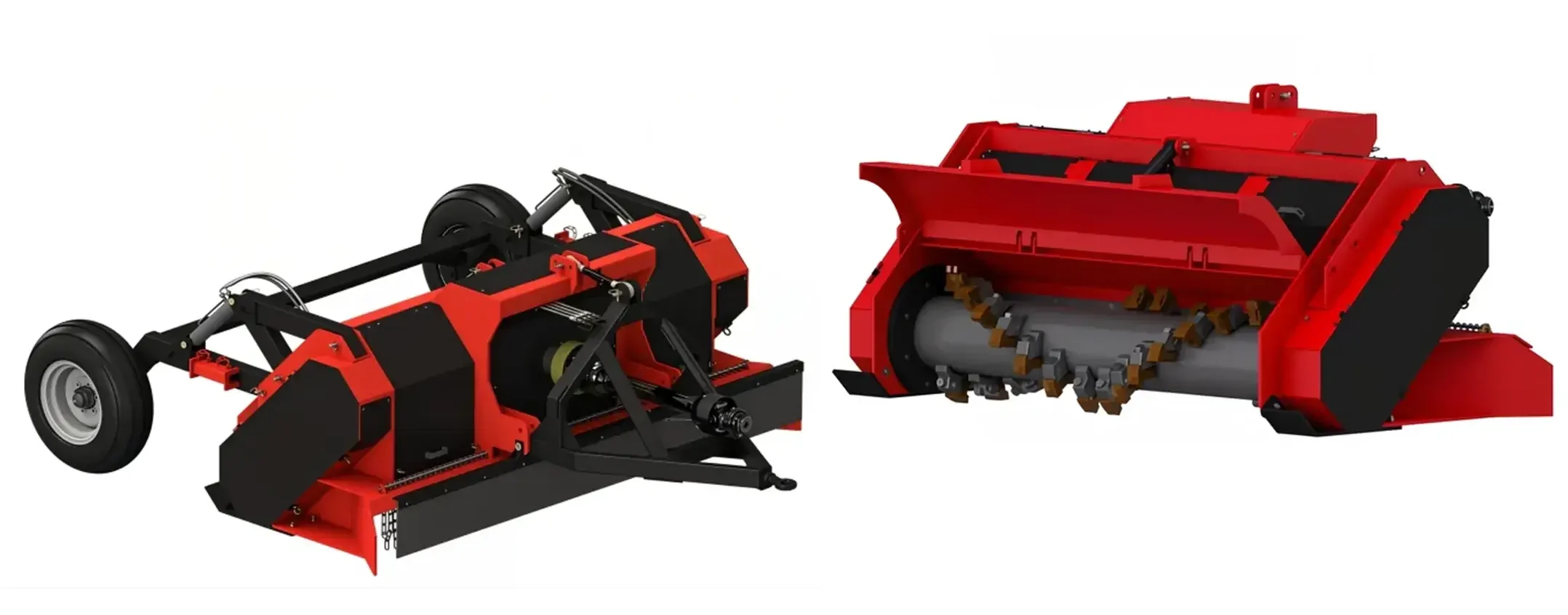
PTO stone crushers are classified into several structural configurations depending on their mounting style, rotor design, and transport mechanics. The primary distinction lies between three-point linkage mounted models and heavy trailed models equipped with independent transport wheelsets on dedicated trailer axles.Trailed models are preferred for larger agricultural stone crushing projects, where machines exceed three tons in empty weight. These trailed units transfer their structural weight entirely to heavy-duty dual-tyre trailer axles. This dual-tyre trailer axles layout ensures optimal weight distribution, preventing soil compaction and ensuring that the tractor’s hydraulic lift is not overloaded during long working days.
Another critical classification is the rotor configuration, which is divided into fixed-hammer and swinging-hammer systems. Fixed hammer systems are highly rigid, utilizing bolt-on carbide teeth to crush solid bedrock, while swinging-hammer systems are ideal for stony soils mixed with vegetation. Regardless of rotor type, trailed machines require specialized agricultural trailer axles to control working depth via hydraulic cylinders attached to the transport frame. These multi-position trailer axles can raise the machine for road transport or lower it into the ground for active crushing, proving that versatile trailer axles are vital to both mobility and process efficiency.
Trailed variants with integrated trailer axles also allow for the installation of additional attachment kits, such as hydraulic rear graders or heavy-duty drawbars. The structural design of these trailed stone crushers places extreme physical demands on the wheel assemblies, meaning that the engineering of agricultural trailer axles must incorporate high-tensile steel shafts and heavy-duty hub bearings capable of resisting constant dust intrusion and water ingress.
3. Structural Manufacturing & Core Components
The structural integrity of a stone crusher is a testament to precision mechanical engineering. Every component, from the structural frame to the rotating assemblies and the underlying trailer axles, is designed to withstand severe mechanical wear. The frame is robotically welded using thick structural steel plates to ensure perfect symmetry and eliminate stress concentration points. At the rear, the structural chassis is integrated with high-load trailer axles that utilize heavy-duty multi-leaf springs or solid suspension mounts to absorb secondary impact vibrations during operation.
| Mechanical Component | Structural Design & Manufacturing | Influence of Trailer Axles |
|---|---|---|
| Main Drive Gearbox | Multi-stage reduction gear with internal oil cooling bath and integrated freewheel mechanism. | Relies on balanced trailer axles to maintain horizontal drive shaft alignment, reducing angular wear on the PTO joints. |
| Rotor Drum | Thick-walled steel tube with spiral-patterned tool holders, dynamically balanced at high RPMs. | Dynamic centrifugal forces are absorbed by the chassis and distributed to the ground through sturdy trailer axles. |
| Tungsten Hammers | Drop-forged hammer bodies with brazed dual-point carbide tips for maximum penetration. | Impact shocks are isolated from the tractor frame through the damping effect of dual trailer axles and tires. |
| Transport Assemblies | Reinforced steel wheel hubs, agricultural flotation tires, and integrated hydraulic cylinders. | Utilizes specialized agricultural trailer axles to ensure accurate depth control and effortless road transport. |
The gearbox is protected by a heavy-duty steel shroud, and power transmission to the rotor is typically handled by dual-side belt drives. These belts act as slipping clutches to protect the gears if the rotor hits a large obstacle. The transport system features heavy-duty trailer axles with a robust mechanical or hydraulic height-adjustment mechanism, ensuring the tractor operator can lift the machine and clear obstacles on rugged country lanes.
Furthermore, the wheels are mounted on heavy-duty trailer axles featuring sealed tapered roller bearings. These bearings are packed with water-resistant grease and fitted with multi-lip seals to exclude soil particles. The choice of trailer axles directly affects the machine’s maximum towing speed, terrain adaptivity, and long-term chassis durability, making it one of the most critical structural assemblies in modern trailed stone crushers.
4. Material Systems and Wear-Resistant Metallurgy
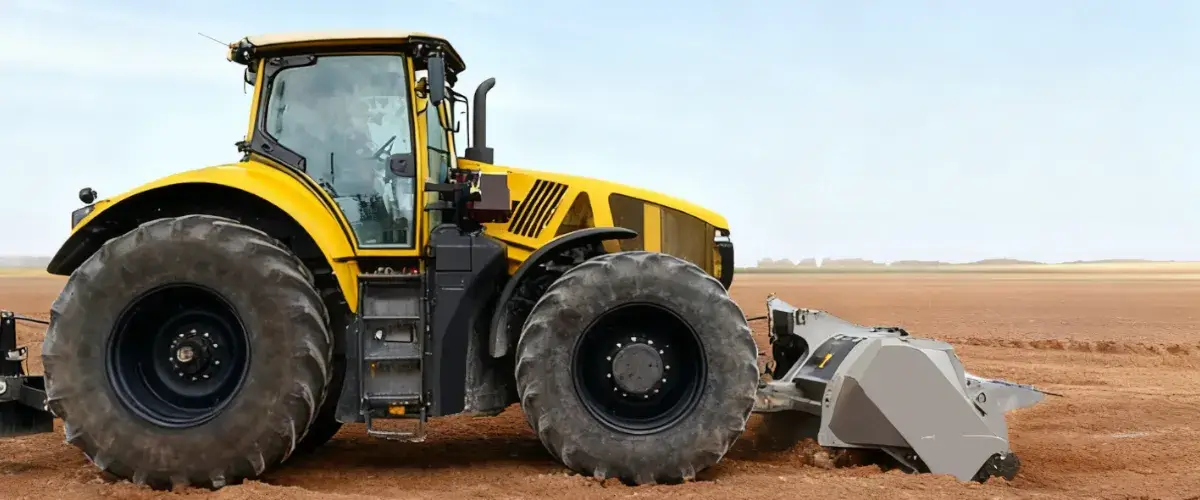
Because stone crushers operate in extremely abrasive environments, their material systems must combine extreme hardness with exceptional impact toughness. The main crushing chamber is lined with replaceable wear plates made from Hardox 500 or Hardox 600 steel. These premium alloy steels undergo rigorous heat treatment to achieve high Brinell hardness levels, protecting the underlying structural frame. Structural components like the drawbar, main frame, and heavy-duty trailer axles are fabricated from high-strength structural steels such as Q345B or S355JR. These materials provide the necessary elasticity to resist structural fatigue under high dynamic stresses.
The structural manufacturing of trailer axles requires high-grade carbon steel, such as 40Cr or 45# steel, which undergoes precise quenching and tempering. This heat-treatment process ensures that the trailer axles can withstand massive torsional and bending stresses without cracking. The wheel hubs and spindle spindles are engineered with tight tolerances to prevent high-speed bearing failures, ensuring that the trailer axles provide exceptional service life even in highly dust-laden and wet conditions.
On the rotor, tool holders are forged from high-strength chromium-molybdenum steel alloys, while the replaceable hammers feature tungsten carbide tips. These carbide tips are vacuum-brazed to the hammer bodies using copper-nickel active filler metals. This multi-material design combines the extreme wear resistance of carbide with the exceptional shock resistance of ductile alloy steel. The high-load transport wheelsets, supported by structural trailer axles, are fitted with thick, multi-ply agricultural tires designed to withstand puncture hazards on sharp, freshly crushed gravel beds.
5. Colombian Regulatory Compliance, Agricultural Standards & Gearbox Laws
In Colombia, agricultural machinery towed on public roads must strictly comply with transport regulations enforced by the Ministerio de Transporte and the Superintendencia de Industria y Comercio (SIC). Trailed stone crushers must feature road-worthy transport wheelsets equipped with certified agricultural trailer axles that meet local weight-per-axle limits. Under Colombian road safety regulations, any trailed implement exceeding a designated gross weight must be supported by trailer axles fitted with auxiliary braking systems and safety reflective markers. High-quality trailer axles with integrated mechanical or hydraulic brakes are highly recommended to prevent heavy implements from jackknifing when braking on steep mountain slopes.
Furthermore, the main gearboxes must adhere to strict international ISO and DIN standards for gear transmission efficiency, noise emissions, and structural safety. Under SIC environmental guidelines, machinery gearboxes must be fully sealed to prevent oil leaks from polluting agricultural land and waterways. Heavy-duty gearboxes must feature dynamic pressure-release vents and double-lip shaft seals to protect internal components from Colombia’s high relative humidity and dust-heavy environments.
By utilizing fully compliant machinery with certified gearboxes and certified road-worthy trailer axles, Colombian agricultural contractors can operate safely across national highways, rural development tracks, and private crop fields, ensuring full compliance with national agricultural development standards.
6. Featured High-Performance PTO Stone Crusher Models
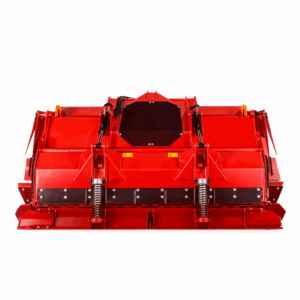
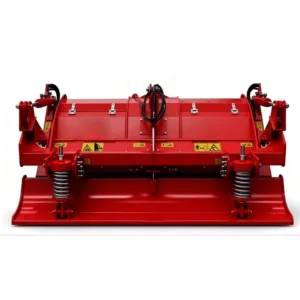
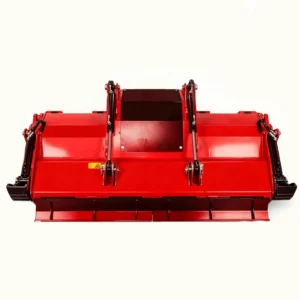
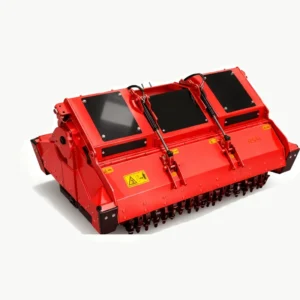
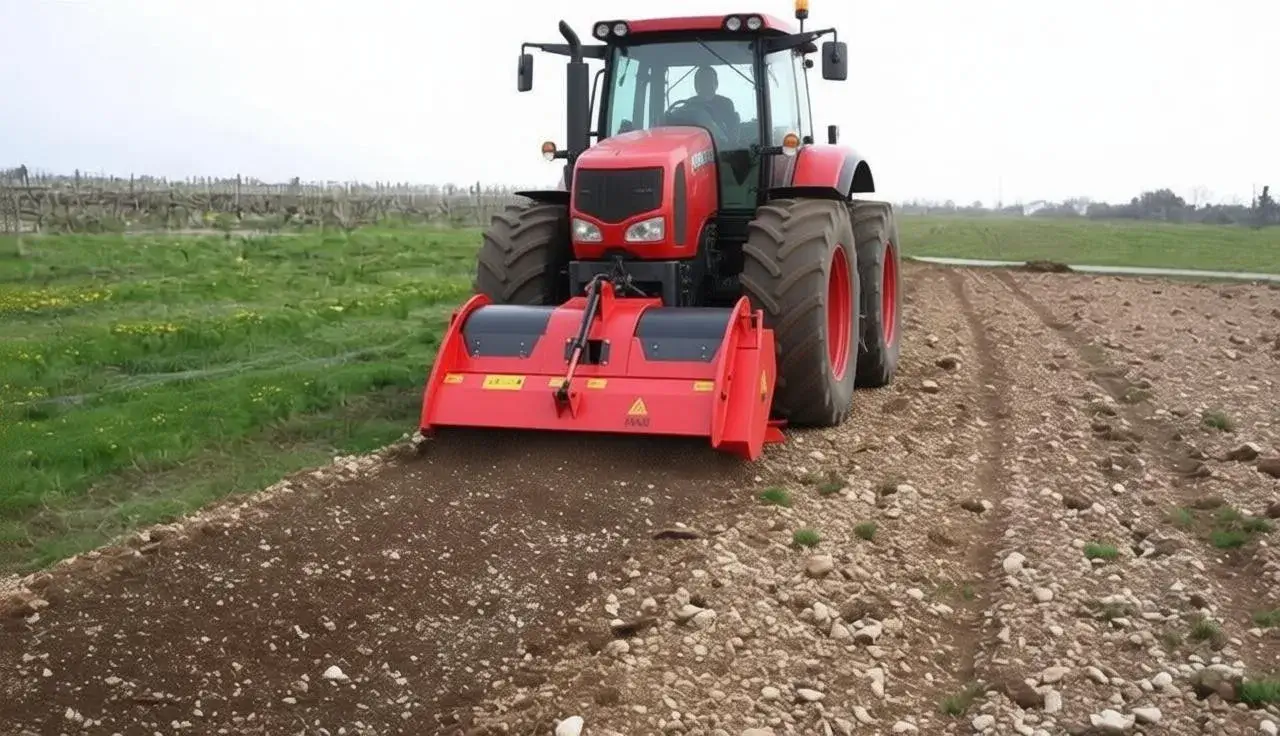
Our heavy-duty stone crushers are engineered for demanding land clearing and rock reclamation projects. Below is an overview of our top-performing implements, each featuring reinforced frames, high-performance gearboxes, and heavy-duty transport assemblies built on heavy-duty trailer axles:
7. Leading Agricultural Engineering & Manufacturing Since 1970
Our company has been at the forefront of agricultural and municipal engineering since 1970, working hand-in-hand with agricultural producers and land developers to manufacture machinery that solves real-world challenges. We specialize in high-efficiency stone crushers, soil rotary cultivators, rock rakes, potato planters, and compost barn maintenance tools. Over more than five decades, our engineers have developed robust, reliable machines that deliver exceptional longevity under the most grueling conditions. By mounting our heavy trailed implements on premium-grade trailer axles, we guarantee that our clients receive implements capable of delivering optimal tractive efficiency, minimal soil compaction, and outstanding durability.
From our state-of-the-art manufacturing plants to our regional distribution partners in Colombia, we are committed to delivering advanced solutions that maximize farm productivity. We focus on continuous design improvement, incorporating high-quality structural components, advanced heat-treatment systems, and high-performance trailer axles into every agricultural implement. Our support teams are always available to help you select the ideal machine configuration for your local soil conditions.
8. Frequently Asked Questions (FAQ) & Detailed Technical Answers
Q1. What is the technical function of trailer axles on heavy-duty agricultural PTO stone crushers in Colombia?
In Colombia, trailer axles serve as the primary load-bearing foundation for our heavy trailed implements. They support the entire machine weight (often exceeding 2.5 tons) and protect the tractor’s three-point hitch from severe shockwaves. Heavy-duty trailer axles maintain a uniform working depth by keeping the chassis stabilized over rough, rock-cluttered soils, ensuring efficient, consistent pulverization.
Q2. How do you maintain the hub bearings of trailer axles on rocky terrains?
The tapered roller bearings on our trailer axles must be greased every 50 operating hours with lithium-complex EP2 grease. Regular maintenance of these trailer axles ensures that water and abrasive stone dust are excluded from the wheel hubs, preventing bearing seizure during high-stress field clearing operations.
Q3. Why are trailed rock crushers with dual trailer axles superior to mounted stone crushers?
Trailed units equipped with dual trailer axles distribute heavy loads over a wider surface area. These trailer axles prevent soil compaction on agricultural fields, allow for larger crushing chambers, and enable medium-horsepower tractors to safely pull massive rock-crushing implements.
Q4. Do the trailer axles on your machinery feature hydraulic braking systems?
Yes, we offer custom-engineered trailer axles with integrated hydraulic or pneumatic brakes. These braked trailer axles are vital for complying with Colombian highway regulations and preventing dangerous jackknife situations on steep mountain descents.
Q5. Which materials are used to manufacture high-load trailer axles for agricultural implements?
Our heavy-duty trailer axles are forged from high-tensile 40Cr carbon steel, which is fully quenched and tempered. This metallurgy ensures the trailer axles possess high elasticity and structural strength, allowing them to absorb extreme ground shocks without deformation.
Q6. How does the hydraulic depth adjustment system interact with the trailer axles?
Trailed models feature hydraulic cylinders directly linked to the wheel assembly frame. Actuating the cylinders pivots the trailer axles downward to lift the chassis for transport, or retracts them upward to lower the spinning rotor into the rocky soil.
Q7. Are your agricultural trailer axles compatible with high-flotation farm tires?
Absolutely. Our heavy-duty trailer axles feature standard multi-bolt ISO wheel studs, making them compatible with heavy-duty flotation tires. Combining these trailer axles with flotation tires ensures optimal load distribution on wet Colombian soils.
Q8. How does a damaged transport assembly or bent axle spindle affect the gearbox?
If the trailer axles are bent, the entire frame tilts, causing severe misalignment of the PTO drive shaft. This misalignment creates high angular stress on the gearbox inputs, leading to accelerated oil seal failure and premature gear wear.
Editor: PXY