Agricultural Land Reclamation · Arid Zone Soil Science
PTO Stone Crusher for Iranian Farmland: Dealing with Gypsum Rock and Calcareous Hardpan in Arid Zones
A practical guide for Iranian farmers, land developers, and agricultural contractors on selecting and operating the right pto stone crusher in gypsum-dominated, semi-arid soil environments.
Iran’s arid and semi-arid farmland covers a significant portion of the country’s agricultural zones — from the broad plains of Isfahan and Fars provinces to the edge of the Dasht-e Kavir. What distinguishes these landscapes from typical rocky fields elsewhere is the presence of two particularly challenging soil obstacles: gypsum rock outcrops and calcareous hardpan layers. Both materials are notoriously resistant to conventional tillage equipment and have historically limited the amount of cultivable land available to Iranian farmers. The good news is that modern PTO 석재 분쇄기 technology has changed the equation significantly, allowing operators to reclaim land that was previously considered unworkable — converting it into seedbeds capable of supporting wheat, pistachio orchards, saffron cultivation, and fodder crop production.
This article explains the geological and agricultural context, walks through how a tractor stone crusher actually engages these materials mechanically, covers what to look for in a machine’s construction and material specs, and reviews the applicable regulatory environment across key markets including Iran, the broader Middle East, and South Korea’s import context. At the end, you’ll find a curated product overview, a regional comparison table, and an FAQ section targeting real questions from growers and contractors.
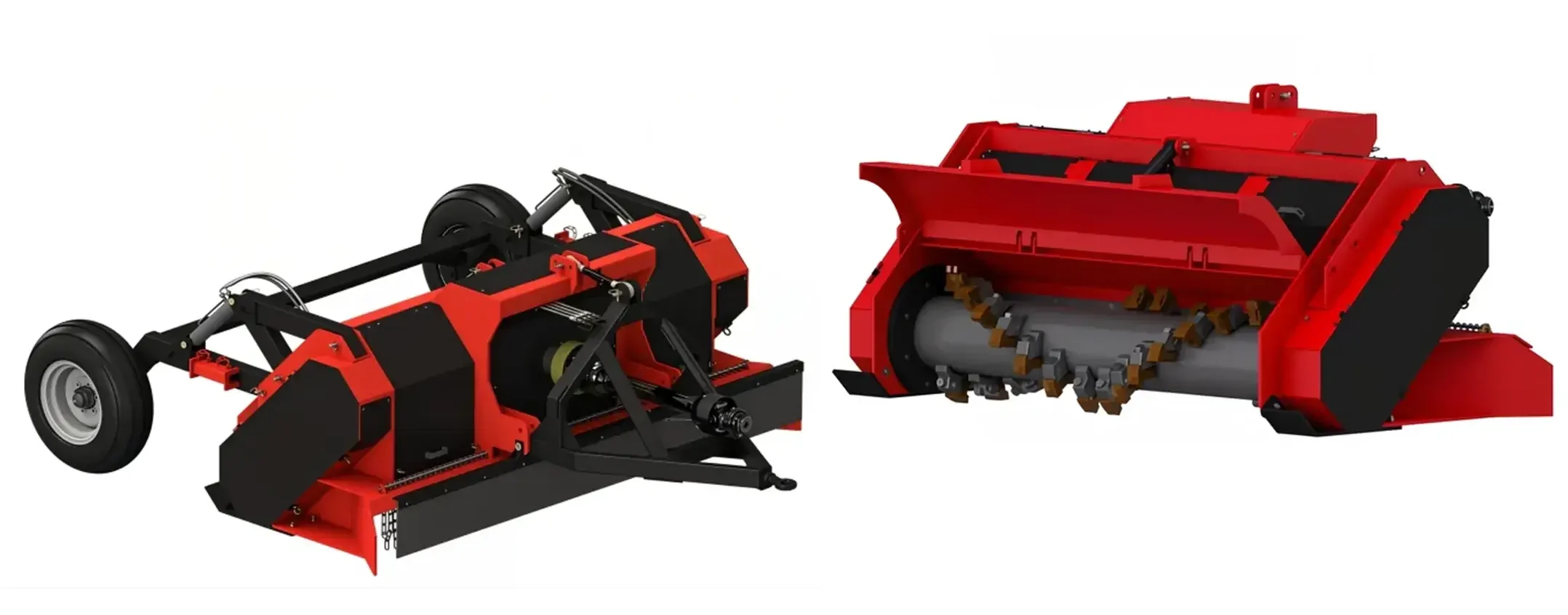
1. Understanding Gypsum Rock and Calcareous Hardpan in Iranian Arid Zones
Gypsum (calcium sulfate dihydrate, CaSO₄·2H₂O) forms naturally in evaporitic sediment sequences common across central and western Iran. When exposed at or near the surface, it creates irregular, fractured rock masses that standard plows shatter rather than pulverize, often leaving sharp fragments that damage tractor tires, irrigation pipes, and downstream implements. The Mohs hardness of gypsum sits at approximately 2.0, which sounds low on paper — but field gypsum often contains embedded calcite nodules and compacted quartz grains that make effective fragment reduction considerably harder than laboratory figures suggest.
Calcareous hardpan, sometimes called petrocalcic horizon locally, develops when calcium carbonate migrates downward through the soil profile and re-precipitates at a specific depth, typically between 15 cm and 60 cm below the surface. Once cemented, this layer creates an impenetrable barrier to root penetration and water infiltration. Rainfall — already scarce in arid zones — cannot percolate beyond the hardpan, leading to surface waterlogging during infrequent storms while deeper horizons remain bone-dry. For farmers attempting to grow deep-rooted crops like pistachio or pomegranate, breaking through this layer is not optional; it is a prerequisite for sustainable production. A agricultural stone crusher operating at the correct working depth is one of the most efficient tools available for this purpose, particularly when deployed prior to deep ripping.
| Obstacle Type | Typical Depth | Primary Problem | Recommended Approach |
|---|---|---|---|
| Surface gypsum outcrop | 0 – 20 cm | Blocks seedbed prep, damages implements | PTO stone crusher, PSC 100–175 class |
| Subsurface gypsum nodules | 10 – 40 cm | Root restriction, waterlogging | STCM 150–225 class, 200 mm working depth |
| Calcareous hardpan | 15 – 60 cm | Drainage failure, root barrier | RSL/RSM class + deep ripper follow-pass |
| Mixed calcareous-gypsic crust | 0 – 30 cm | Surface sealing after rain, poor germination | Aggressive tractor stone crusher, heavy-duty teeth |
2. Action Mode: How a PTO Stone Crusher Engages Hard Arid Soils
The operational sequence of a PTO 석재 분쇄기 can be broken into three distinct mechanical phases, each of which matters differently when dealing with gypsum and calcareous substrates specifically.
Phase 1 — PTO Torque Transfer and Rotor Activation
Power flows from the tractor’s power take-off shaft (typically at 540 or 1000 RPM depending on model) through a heavy-duty gearbox to the central rotor. Unlike belt-driven alternatives that slip under shock load, direct mechanical connection maintains consistent torque delivery even when the rotor strikes a large gypsum mass. This uninterrupted power transfer is particularly important in gypsiferous soils because gypsum fractures unpredictably — one pass may encounter loose nodular material, and the next may hit a cemented slab. A machine that loses RPM under variable load will leave uneven results and potentially stall. Models like the PSC series operating at 540–1000 RPM PTO input and the STCM series running at 1000 RPM both maintain consistent throughput precisely because of this direct-drive design philosophy.
Phase 2 — High-Velocity Impact and Primary Fracture
Inside the crushing chamber, hardened alloy hammers — typically tipped with tungsten carbide — rotate at high velocity and strike the exposed rock surface. The impact generates compressive stress that propagates through the crystal structure of the gypsum or calcite mass, causing it to fracture along natural cleavage planes. Gypsum fractures readily along {010} and {100} planes, which means properly tuned hammer geometry can break a 150 mm gypsum nodule into sub-50 mm fragments in a single pass. For calcareous hardpan, which has a more amorphous microstructure, the fracture pattern is more random, but sufficiently high impact energy still achieves adequate size reduction for follow-on tillage operations.
Phase 3 — Counter-Plate Grinding and Aggregate Redistribution
Fractured material is thrown against an adjustable counter-plate (anvil bar), where secondary size reduction occurs before the output passes through a rear grill or deflector. The sizing of this grill determines the maximum aggregate output size — an important parameter for Iranian farmers who may want the crushed material to remain in the field as a soil amendment or drainage layer rather than be swept aside. The rear gate on machines like the PSC 200 and RockMaster series can be adjusted to retain oversized fragments for additional rotor passes, ensuring the field surface meets the target granulometry before the tractor advances.
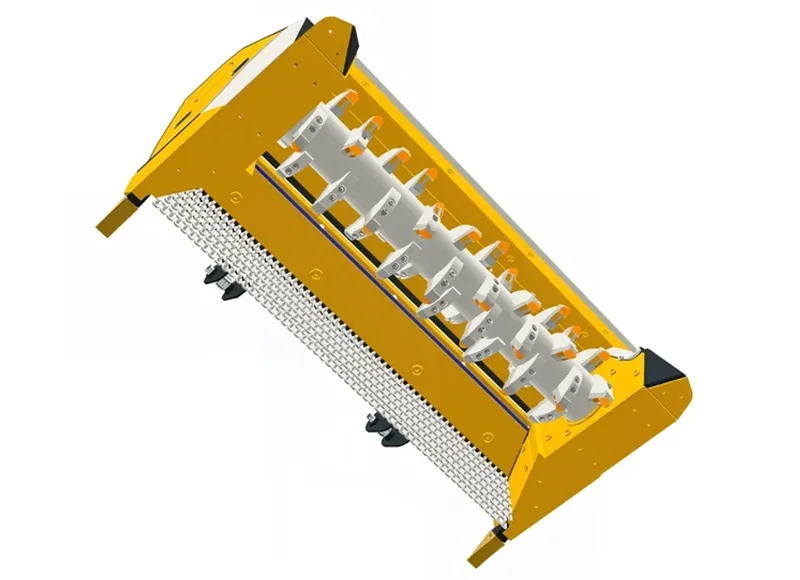
3. Manufacturing Construction: What Goes Into a Machine Built for Gypsum Conditions
Gypsum is chemically aggressive toward ferrous metals. In humid conditions, even briefly, the sulfate ion in solution can accelerate corrosion of mild steel components at a rate significantly higher than in neutral soils. This matters when evaluating the housing, rotor shaft, and bearing housings of any stone crusher for tractor intended for Iranian arid-zone conditions. Well-engineered machines address this through several layers of design:
Frame and Housing
The outer housing on proven agricultural crushers is fabricated from thick-gauge high-strength steel, typically S355 or equivalent, with internal wear liners made from Hardox 400 or 450. Hardox is a abrasion-resistant steel grade (roughly 370–430 HB hardness) that resists the sliding abrasion of gypsum fragments considerably better than standard mild steel. The housing on the PSC series, for instance, includes interchangeable internal Hardox protection panels that can be replaced in the field without specialized tooling, extending service life significantly compared to welded-in alternatives. Exterior surfaces are treated with heavy-duty primer and topcoat systems designed to resist sulfate-bearing dust accumulation.
Rotor Assembly
The rotor is the heart of any agricultural stone crusher. On machines matched to Iranian gypsum conditions, the rotor diameter typically ranges from 450 mm (PSC/STCL class, lighter duty) to 550 mm (STCM class) and up to 700 mm for the heavier STCH range. Larger diameter rotors achieve higher peripheral velocity for a given RPM, delivering more impact energy per hammer strike — which matters when dealing with cemented calcareous layers that resist initial fracture. Hammers are secured using bolted or pin-retained systems; the bolted type is preferred for durability under continuous shock loading, while pin-retained hammers offer faster field replacement when individual teeth wear out or break on unexpectedly hard inclusions.
Gearbox and Drive System
The gearbox deserves particular scrutiny in arid-zone applications. Dust infiltration through deteriorated seals is one of the leading causes of premature gearbox failure in sandy, gypsiferous environments. High-quality machines use sealed multi-stage gear units with positive-pressure lubrication and labyrinth dust seals on input and output shafts. The THOR 2.4 model, for example, operates with a heavy-duty sealed gearbox matched to a 180 cv (approximately 133 kW) minimum tractor, with 2 required hydraulic control valves — a configuration that provides ample torque reserve for the shock loading characteristic of gypsum outcrop work. Operators in Iran should verify the gearbox IP rating (dust/water ingress protection); an IP65 or higher rating is appropriate for conditions in provinces like Yazd, Kerman, or South Khorasan.
It is worth noting here that gearbox design and safety in agricultural machinery is subject to specific standards in key export markets. South Korea, which is the primary focus market for this platform, requires that PTO-driven attachments comply with KS B ISO 11684 (safety markings for agricultural machinery) and KS R ISO 5674 (PTO shaft guards). The European CE marking — which most models listed here carry — is accepted as a baseline standard but Korean Agricultural Machinery certification (KAMICO inspection) may be required for government procurement or formal distribution agreements. Importers in other Middle Eastern markets should note that the Gulf Cooperation Council’s GSO 1363 standard covers general agricultural machinery safety, and Jordan, Iraq, and Saudi Arabia have adopted versions of ISO 4254-7 for mechanized tillage equipment. Iranian domestic standards under ISIRI (Institute of Standards and Industrial Research of Iran) framework include ISIRI 3777 for tractor-mounted rotating implements, and compliance documentation should be requested from suppliers when procuring for formal agricultural project use.
4. Material System: Teeth, Anvils, and Wear Components
The tooth geometry and metallurgy of the crushing implements is arguably the single most important variable in a machine’s effectiveness against gypsum and calcareous material. Three main tooth types are used across the product range, each with distinct trade-offs:
| Tooth Type | Material | Best For | Limitation |
|---|---|---|---|
| STC/3 Fixed tooth | Alloy steel + tungsten carbide tip | General gypsum / calcareous surface work | Higher shock risk on embedded boulders |
| STC/3 HD Heavy Duty | Chrome-moly steel, reinforced shank | Dense calcareous hardpan, mixed rock | Heavier, requires more tractor HP |
| STC/FP Flat Pick | Tungsten carbide insert, flat geometry | Road base prep, fine aggregate output | Wears faster in highly abrasive sand |
| R/65 Pick (RSL/RSM) | Conical tungsten carbide, 65 mm shank | Very large stones, deep hardpan breaking | Higher per-unit cost; requires heavier machine |
For most Iranian farmland scenarios involving shallow gypsum outcrops (0–20 cm depth), the STC/3 or STC/3+HD combination fitted to the PSC 125–175 or STCM 150–175 class offers the best balance of teeth count, impact energy, and operating cost. Deeper calcareous hardpan work, particularly in Isfahan or Kerman provinces where cemented layers can reach 40 cm depth, warrants the RSL or RSM class machines with conical pick geometry and working depths up to 280 mm.
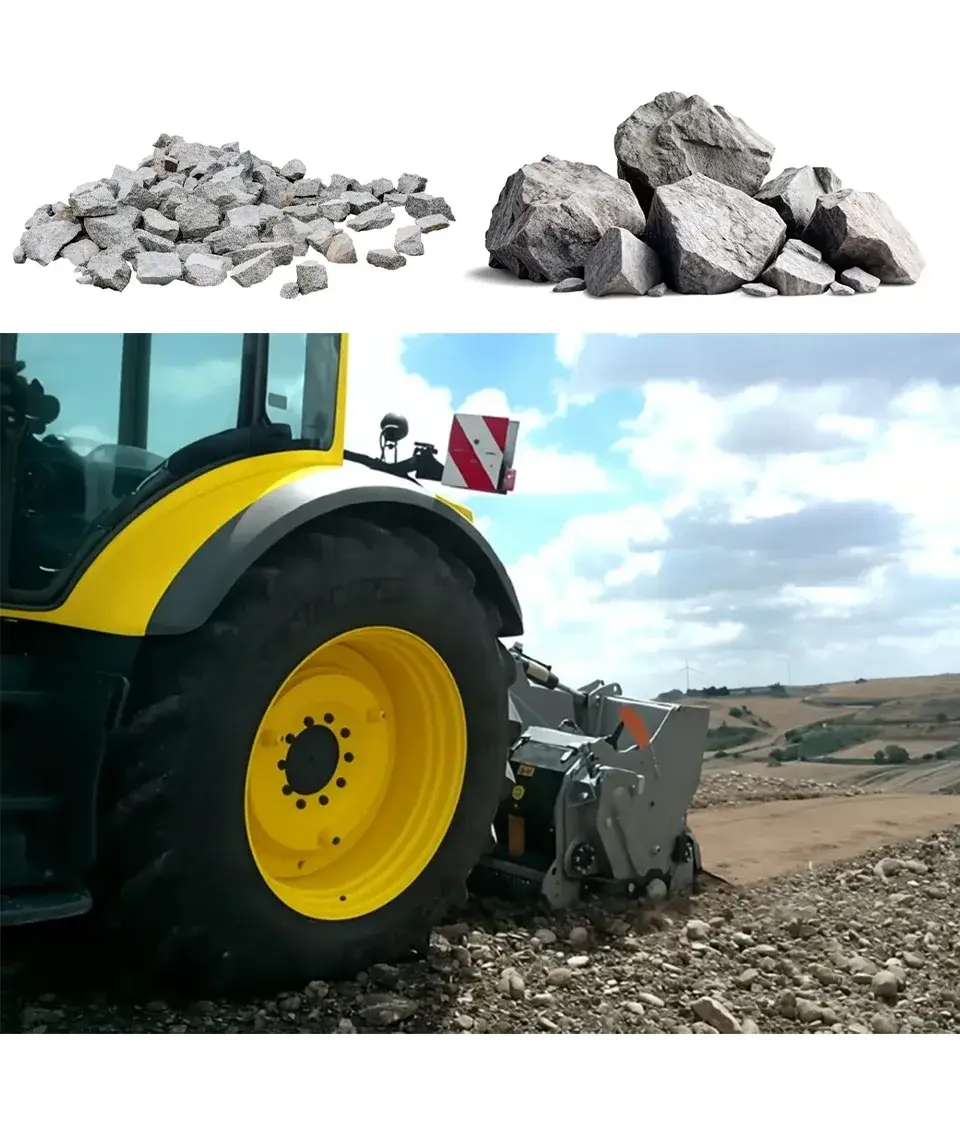
5. Matching the Right PTO Stone Crusher to Iranian Field Conditions
Selecting the appropriate machine is not simply a matter of matching tractor horsepower. Iranian field conditions introduce specific variables — salt accumulation in soils, wide daily temperature swings that cause gypsum crystal expansion and contraction, and the prevalence of mixed rock types within a single field — that all influence which equipment configuration will deliver reliable results across a full growing season.
The following operational parameters deserve careful evaluation before purchase:
Working Width vs. Field Geometry
Many Iranian smallholding plots follow irregular cadastral boundaries, and access paths between fields are often narrow. The PSC 100 at 1110 mm working width is genuinely mobile in these environments, fitting through standard farm gates and rural road access points. Larger models like the PSC 200 at 2070 mm working width or the STCM 225 at 2304 mm are better suited to commercial-scale land reclamation projects where field dimensions allow efficient turning radii. An Iranian farmer working a 2–5 hectare holding will typically find the PSC 125 or PSC 150 to be the practical sweet spot — wide enough to make reasonable daily coverage, compact enough to be maneuvered without difficulty.
Tractor HP Matching and PTO Speed
Iranian tractors in common agricultural use range from small 45–60 hp two-wheel-drive models to 120–160 hp four-wheel-drive units from brands like MF, New Holland, and domestic manufacturers. For gypsum-heavy conditions specifically, under-powering the crusher is a frequent mistake — operators who use a 70 hp tractor at the absolute lower end of a PSC 100’s specification will find the machine struggling through dense gypsiferous soil, leading to stalling, excessive PTO shaft stress, and premature wear on the gearbox. A buffer of 10–15% above the minimum rated HP is advisable in conditions where material hardness varies unpredictably.
Most machines in this range operate at 1000 RPM PTO — confirm your tractor’s PTO output speed before ordering, as some older Iranian tractors only offer 540 RPM at the standard PTO shaft. The PSC 100 and PSC 125 can accept both 540 and 1000 RPM input, making them compatible with a wider range of available tractors in the region.
6. Recommended Product Models for Iranian Arid-Zone Applications
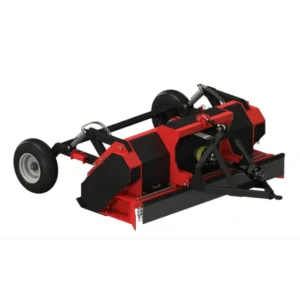
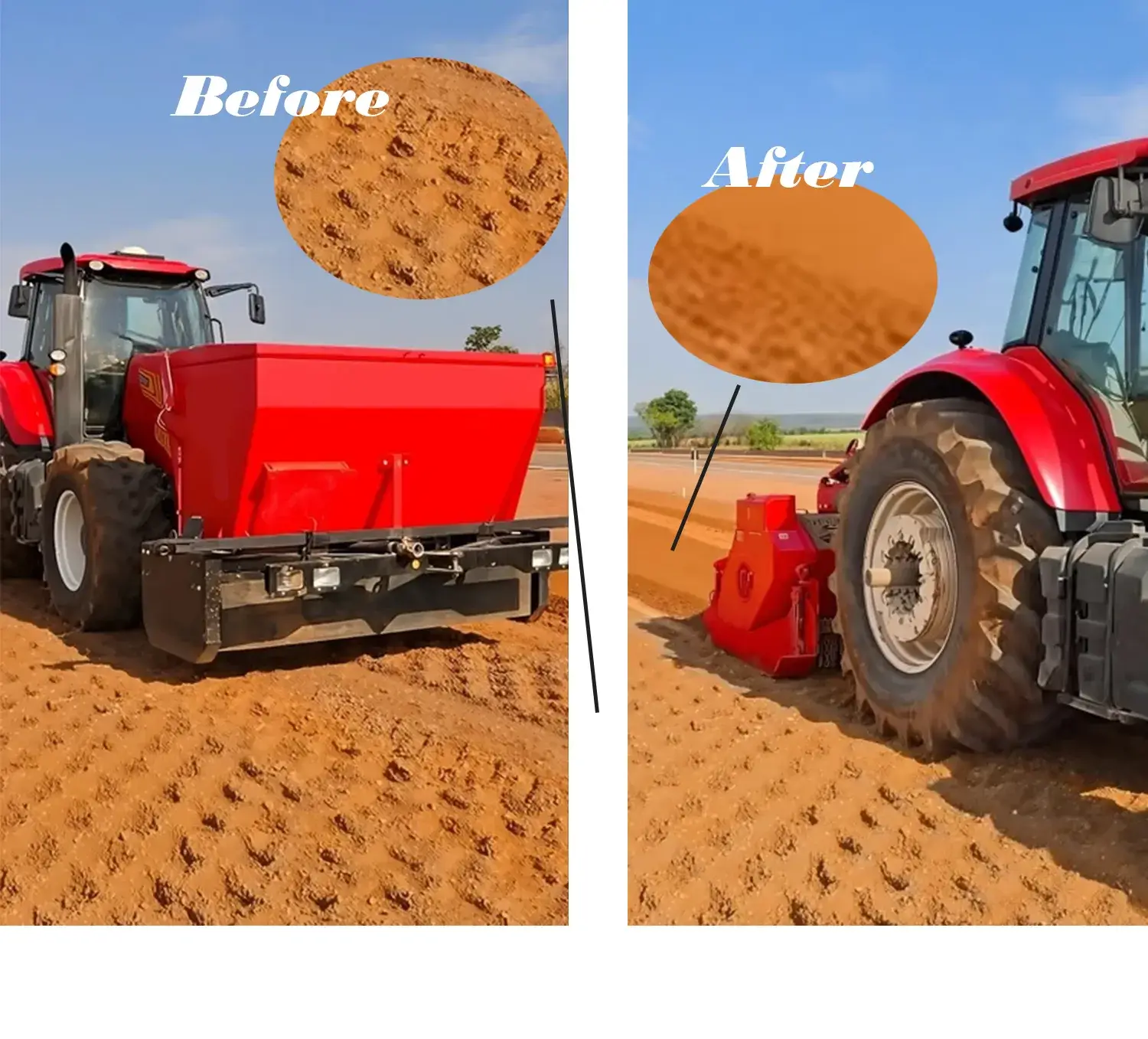
The following five models from the Mulchers / Stone Crushers product range represent a progression from compact field-use machines to heavy commercial land reclamation equipment. Each product link leads to detailed specifications and application notes.
7. Regulatory Landscape: Agricultural Machinery Standards Across Key Regions
For buyers, importers, and contractors working across Iran, the Middle East, and export channels to South Korea, understanding the applicable regulatory framework is essential. Standards affect not only import clearance but also warranty validity, operator safety obligations, and eligibility for government-subsidized agricultural equipment programs. Below is a summary of the most relevant standards by region:
| Region / Market | Key Standard | Scope | Notes for Crushers |
|---|---|---|---|
| Iran (domestic) | ISIRI 3777; ISIRI 12300 | Tractor-mounted rotating implements, safety | ISIRI compliance required for formal agricultural ministry procurement |
| European Union | EU Machinery Directive 2006/42/EC; ISO 4254-7 | All powered agricultural machinery | CE marking obligatory; covers PTO shaft guard dimensions and rotor housing |
| South Korea | KS B ISO 11684; KS R ISO 5674; KAMICO inspection | Safety markings, PTO shaft guards | KAMICO certification required for MAFRA-subsidized purchases |
| GCC / Middle East | GSO 1363; Saudi SASO 2595 | Agricultural machinery general safety | Gearbox enclosure and PTO connection standards mirror ISO 500 |
| USA / North America | ASABE S203.12; OSHA 1928.57 | PTO guarding, farm equipment operator safety | Relevant for distributors exporting to North American markets |
Operators in Iran working under the Agricultural Jihad Ministry (Jihad-e Keshavarzi) subsidy programs for land reclamation should confirm that any imported stone crusher machine carries documentation showing compliance with the applicable ISIRI standard and has passed customs inspection under HS code 8432.80 (other agricultural soil-working machinery). The gearbox specifically is often inspected separately for oil leakage certification during customs clearance at Bandar Abbas and Tehran ports.
8. Operational Best Practices for Gypsum and Hardpan Conditions
Even a properly specified machine will underperform if deployed incorrectly in gypsiferous arid-zone conditions. The following field practices, developed from experience with similar soil environments in southern Spain, the Maghreb, and the Anatolian plateau, translate well to Iranian conditions:
Work Across the Slope, Not Down
In sloped Iranian terrain, working across the contour (perpendicular to the slope) reduces the risk of crushed material migrating downslope and re-accumulating at the field edge. This is particularly relevant in gypsum-rich hillsides of Lorestan and Chaharmahal-Bakhtiari provinces, where irregular microtopography means that a single straight working run can pass through three or four distinct soil zones.
Soil Moisture Timing
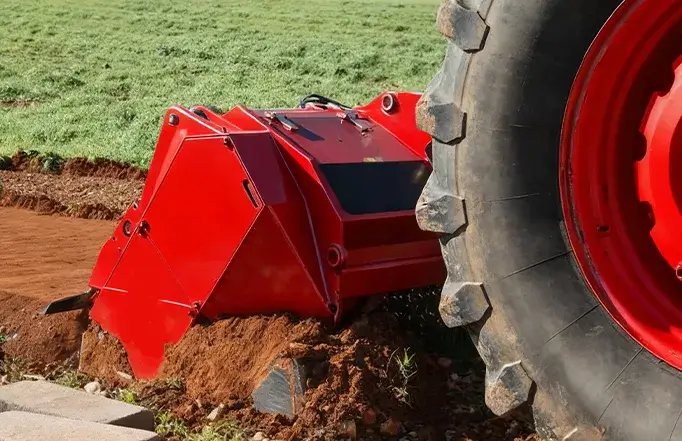
Gypsum and calcareous hardpan are significantly easier to break when the upper soil profile contains some moisture — typically 12–20% gravimetric water content. After a rainfall event or light irrigation pass, the surface crust softens marginally while the deeper hardpan, already somewhat plastic due to capillary wetting, offers less resistance to initial fracture. Planning crusher operations for 24–48 hours after a significant precipitation event can reduce fuel consumption by 15–20% and extend tooth life noticeably.
Post-Crushing Ripping and Seeding Sequence
For calcareous hardpan situations requiring full root-zone development, the optimal sequence is: (1) one or two crusher passes at maximum working depth to fragment the cemented layer, (2) a deep subsoil ripper pass at 50–70 cm to break up the fractured mass and improve drainage, (3) a disc or rotary tiller pass to incorporate organic material if available, and (4) direct seeding or transplanting. Skipping the ripper step after crushing is a common shortcut that leads to re-consolidation of the hardpan within 2–3 years as fine calcium carbonate particles settle back into cemented layers under irrigation.
Gearbox Maintenance in Dusty Conditions
Replace gearbox oil at half the manufacturer-specified interval during the first season of operation in gypsiferous sand environments. Fine gypsum dust infiltrating deteriorated seals creates a mildly abrasive oil contamination that accelerates gear flank wear. Use a manufacturer-approved extreme-pressure (EP) gear oil with an ISO VG 220 or 320 viscosity grade for PTO stone crushers operating in ambient temperatures above 35°C, which are common in Iranian arid zones from May through September.
9. Model Comparison: Which Machine for Which Iranian Scenario?
| Model | Tractor HP | Working Width | Max Depth | Max Stone ⌀ | Best Use in Iran |
|---|---|---|---|---|---|
| PSC 125 | 80–120 | 1350 mm | 150 mm | 150 mm | Smallholder gypsum surface prep, narrow fields |
| PSC 175 | 100–150 | 1830 mm | 150 mm | 150 mm | Mid-size farm reclamation, gypsum + shallow hardpan |
| STCM 175 | 160–220 | 1824 mm | 200 mm | 300 mm | Commercial-scale orchard floor prep, deep calcareous breaking |
| 토르 2.4 | 180마력 | 2400 mm | Variable | High | Large-scale land reclamation, pistachio plantation prep |
| RSL DT 200 | 130–190 | 1960 mm | 280 mm | 300 mm | Deep hardpan breaking, mixed gypsum-limestone terrain |
10. About Our Stone Crusher Supply & Support Network
We specialize in sourcing and supplying professional-grade PTO 석재 분쇄기 equipment for agricultural and land reclamation applications across Asia, the Middle East, and export markets including South Korea. Our product portfolio spans the full range of mulchers, stone crusher machines, rock pickers, rock rakes, and companion soil preparation equipment — all selected for documented performance in demanding conditions.
Our technical team includes professionals with hands-on experience in arid-zone agricultural machinery deployment, and we maintain an active supplier network capable of providing genuine spare parts, wear components (hammer teeth, anvil bars, gearbox seals), and service support for all listed models. We work with importers, agricultural contractors, government agencies, and individual farmers to identify the most appropriate equipment configuration for each application. Whether you are a Korean agricultural importer looking for a certified pto stone crusher for sale from a verified supplier, or an Iranian land developer sourcing an agricultural stone crusher for a pistachio plantation project, we encourage you to reach out through our contact page.
Frequently Asked Questions
Editor: PXY