Knowledge Guide · New Zealand Pastoral Agriculture
뉴질랜드 목초지 개발을 위한 PTO 석재 분쇄기
From volcanic hillsides in the Bay of Plenty to gravel-laden Canterbury plains — how tractor-driven stone crushers are reshaping New Zealand’s pastoral frontier.
Introduction
1. Why New Zealand Pastoral Farmers Need a Reliable PTO Stone Crusher
New Zealand’s pastoral landscape is both its greatest asset and its most stubborn challenge. Across the North Island’s volcanic plateaus and the South Island’s braided river outwash terrains, surface and near-surface stones represent a persistent barrier to higher-yield pasture management. Unlike sedimentary plains where deep ploughing gradually buries rock debris, New Zealand soils — particularly the shallow Pumice and Brown soils of the central North Island — regenerate stone exposure with every frost cycle and heavy rain event. The result is a perpetual land maintenance challenge that conventional tillage cannot fully address.
A PTO stone crusher, driven directly from the tractor’s Power Take-Off shaft, offers pastoral farmers an efficient in-situ solution. Rather than loading, hauling, and disposing of fieldstone, the crusher pulverises surface rocks into fine aggregate that remains on-site — improving soil drainage, reducing compaction points, and eliminating risk of damage to downstream harvesting equipment. For New Zealand sheep and beef operations where pasture renovation cycles run every 8–12 years, integrating a tractor stone crusher into the renovation workflow delivers measurable long-term returns.
This guide covers the operating principles, construction details, material specifications, relevant regulatory considerations under New Zealand law, and an overview of available product models suited to local conditions.
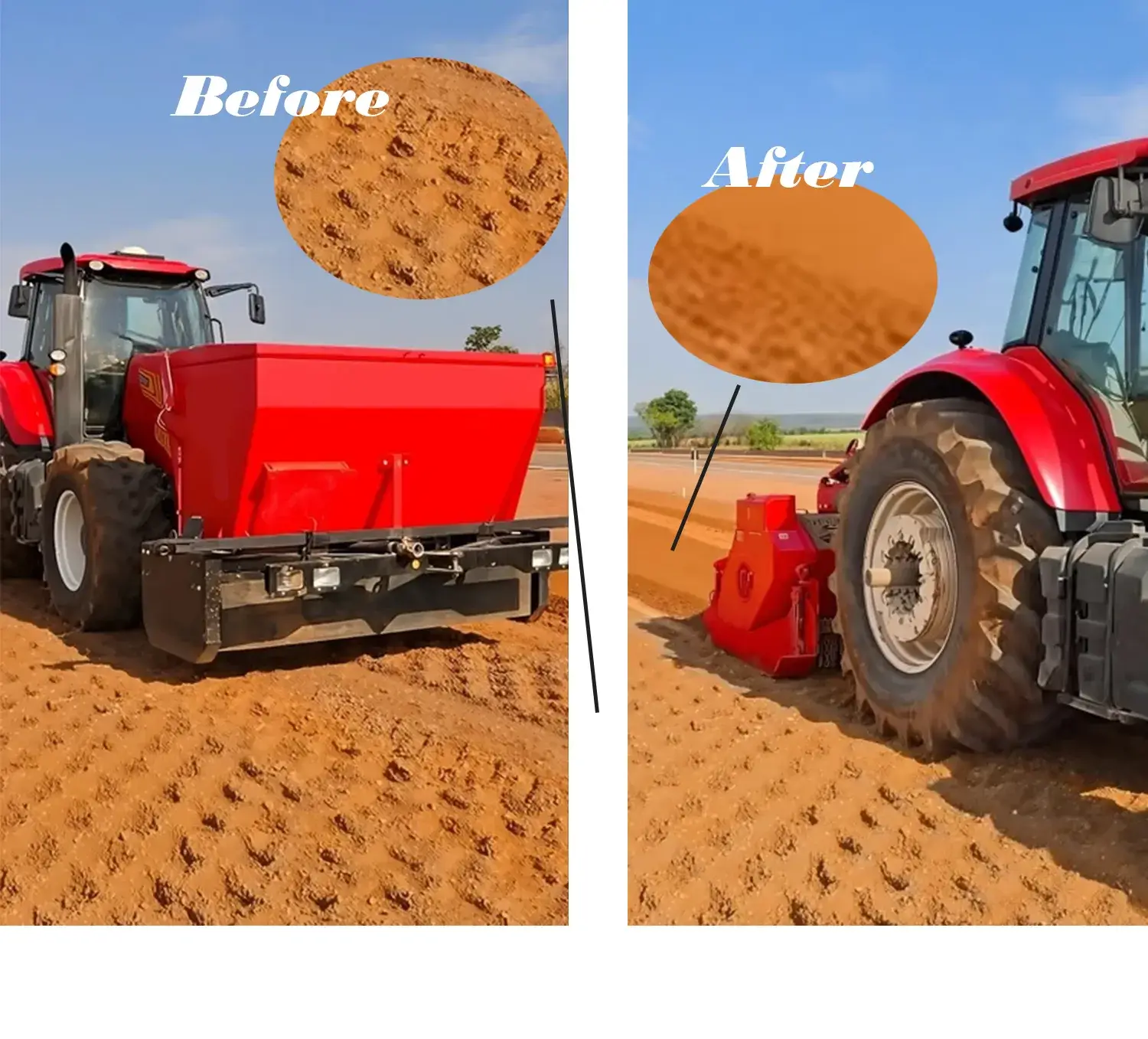
Mechanism
2. How a PTO Stone Crusher Actually Works: Action Mode Explained
The operating principle of a PTO-driven stone crusher is elegant in its directness. Power is transferred from the tractor engine through the Power Take-Off shaft — typically at 540 RPM or 1000 RPM depending on the model — into a central bevel or spur gearbox. This gearbox multiplies rotational speed and directs torque to a heavy-duty rotor assembly mounted transversely inside the crushing chamber.
As the rotor accelerates, the hammers or pick-teeth mounted along its circumference achieve tip speeds high enough to shatter fieldstone on contact. The initial impact fragments the rock into coarse pieces, which are then redirected by the chamber geometry back toward the rotor for secondary processing. A counter-blade or anvil plate — typically bolted to the rear of the housing and adjustable for gap width — provides a fixed resistance surface that further reduces particle size. The size of the output aggregate is controlled by the clearance between the rotor and the counter-blade together with an optional rear grate system.
The critical engineering detail is the cam-clutch or slip-clutch protection on the PTO driveline. New Zealand’s volcanic rocks, particularly andesite and basalt found in Northland and the Waikato, are extremely hard. Without overload protection, a sudden encounter with an embedded boulder could transmit a shock load back through the PTO shaft and damage the tractor’s gearbox. Modern stone crushers for tractor use incorporate automatic slip or cam-clutch systems that disconnect instantly under shock load and reset without operator intervention.
The forward speed of the tractor during operation — typically 2–4 km/h — determines depth of material processing. Slower passes allow the rotor to work more deeply into surface stones, while faster passes favour surface levelling on lighter infestations.
| Phase | Action | Result |
|---|---|---|
| PTO Engagement | Shaft torque transferred at 540–1000 RPM via gearbox to rotor | Rotor reaches operational tip speed |
| Primary Impact | Hammers/picks strike surface and near-surface rock | Stones shatter into coarse fragments |
| Secondary Reduction | Fragments rebound against anvil/counter-blade | Further particle size reduction |
| Grading & Deposit | Output passes rear grate; oversized pieces recirculate | Graded aggregate deposited on-site |
Engineering
3. Manufacturing Structure: How These Machines Are Built
The structural integrity of a PTO stone crusher is the single most important factor in its long-term economics. Machines operating on New Zealand’s volcanic hillside pastures face not only hard rock but also uneven terrain, steep gradients, and wide temperature swings — all of which stress the frame and gearbox assembly in ways that cheaper fabrications cannot withstand.
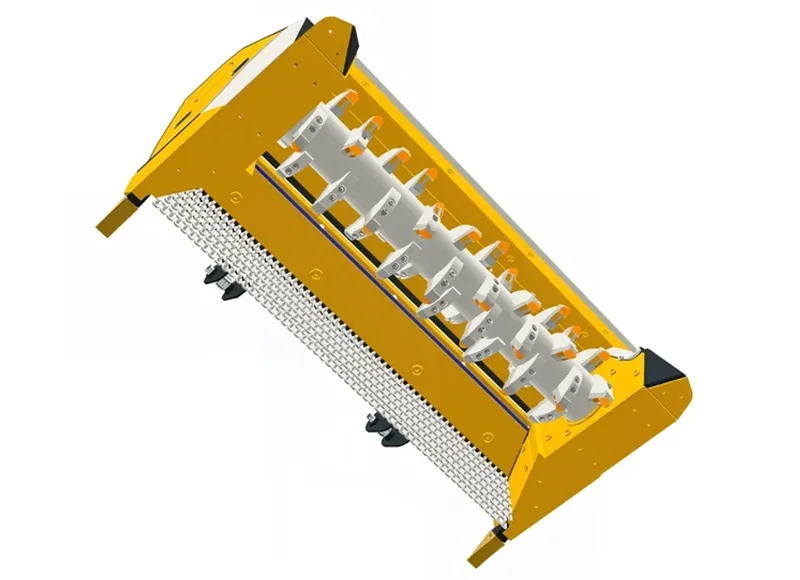
The main housing or chassis is fabricated from high-tensile structural steel plate — typically S355 or equivalent — welded into a closed-section box. High-stress zones around the rotor bearing housings are reinforced with additional plate gussets. Inside the chamber, replaceable wear plates line all internal surfaces; these are bolted rather than welded so operators can swap them without specialist tooling. Premium units use Hardox 400 or Hardox 500 wear plate on the internal chamber surfaces, which provides approximately four to six times the abrasion resistance of ordinary mild steel.
The rotor shaft itself is a precision-machined solid-steel component supported by self-aligning spherical roller bearings. These bearings tolerate the significant radial shock loads generated during rock impact while accommodating minor shaft deflection. Bearing housings are sealed against dust and gravel ingress — a critical requirement in the dry, dusty conditions prevalent on Canterbury and Otago pastoral farms during summer renovation work.
The rear linkage system uses a Category 2 three-point hitch mount as standard, ensuring compatibility with the full range of tractors used across New Zealand pastoral operations. Depth control is achieved through adjustable skid shoes on either side of the housing; these protect the cutting head from ground contact on uneven terrain while maintaining a consistent working depth over the rotor.
Materials
4. Material System: What Goes Into a High-Quality Stone Crusher
The performance longevity of any agricultural stone crusher depends heavily on the materials used at the critical wear points — specifically the hammer or pick-tooth system, the counter-blade, and the internal chamber lining. Each of these components takes a different type of mechanical punishment and must be engineered accordingly.
Hammers and pick teeth are the primary consumable items. In compact PSC-series machines, fixed-tooth cutters are forged from high-chromium alloy steel and heat-treated to achieve a surface hardness of 58–62 HRC. This hardness level provides excellent resistance to abrasion from silica-rich rocks — the type commonly found in New Zealand’s greywacke and andesite deposits. Premium-tier models use tungsten carbide tip inserts brazed onto a tough manganese steel body, combining the extreme surface hardness of carbide with the shock-absorbing ductility of the substrate. Tungsten carbide tips typically last two to three times as long as all-steel alternatives in hard-rock conditions.
The counter-blade or anvil is manufactured from austenitic manganese steel — the same material used in jaw crusher wear plates — which work-hardens under impact, becoming progressively tougher during operation. It is retained by high-tensile bolts and can be reversed or replaced when worn.
External paint systems on machines intended for the New Zealand market should comply with the coating durability expectations common in the agricultural sector. A multi-layer primer and polyurethane topcoat system provides adequate protection against the moisture and UV exposure common in northern New Zealand. Machines operated in coastal pastoral areas — particularly Northland and the Coromandel — benefit from additional zinc-phosphate primer layers on all welded seams to resist salt-air corrosion.
| Component | Material | Typical Hardness | Key Property |
|---|---|---|---|
| Hammers / Pick Teeth | High-Cr alloy steel or WC-tipped | 58–62 HRC | Abrasion resistance |
| Counter-Blade (Anvil) | Austenitic manganese steel | Work-hardens to ~300–350 BHN | Impact toughness + wear |
| Internal Wear Lining | Hardox 400 / 500 plate | 400–500 BHN | Surface abrasion resistance |
| Main Frame | S355 structural steel | — | Structural rigidity |
| Rotor Shaft | Alloy steel, machined | — | Torsional/fatigue strength |
Compliance
5. Gearbox Standards and Regulatory Considerations in New Zealand
In New Zealand, the Health and Safety at Work Act 2015 (HSWA) and the associated Health and Safety at Work (General Risk and Workplace Management) Regulations 2016 establish the framework for safe operation of agricultural machinery, including PTO-driven equipment. Operators and farmers classified as PCBUs (Persons Conducting a Business or Undertaking) have a primary duty of care to eliminate or minimise health and safety risks so far as reasonably practicable.
With respect to gearboxes and PTO drivelines specifically, WorkSafe New Zealand’s guidance aligns closely with ISO 11684 (which governs safety signs) and ISO 4254-1 (agricultural machinery general safety requirements), noting that: (1) all PTO driveline shafts must be fitted with a full-length protective guard covering the rotating shaft between the tractor and the implement; (2) this guard must be secured and free to rotate independently of the shaft; (3) annual inspection of the guard for cracks, deformation, or missing components is strongly recommended. The gearbox itself must be fitted with an appropriate overload protection device — either a cam-type overrunning clutch or a friction slip clutch — particularly for machines operating in the hard-rock conditions common in New Zealand pastoral landscapes.
New Zealand also adheres to the Machinery Equipment and Vehicles (MEV) provisions under the Building Act and associated regulations for machines used near watercourses or wetlands. Under the Resource Management Act 1991 (RMA), land disturbance activities near waterways may require consent from the regional council. Pastoral farmers undertaking riparian zone development with stone crushers should consult their respective regional council — including Environment Canterbury, Horizons Regional Council, and Waikato Regional Council — regarding earthwork and vegetation clearance consents.
The Agricultural Chemicals and Veterinary Medicines (ACVM) framework does not directly govern stone crushing equipment, but operators should be aware that disturbed soil can mobilise sediment into waterways — a matter governed by the National Policy Statement for Freshwater Management 2020. Best-practice guidance from Beef + Lamb New Zealand and DairyNZ recommends maintaining a vegetated buffer strip when stone crusher operations are conducted within 30 metres of any waterway.
Regional Context
6. Matching Machine Specifications to New Zealand Rock Types
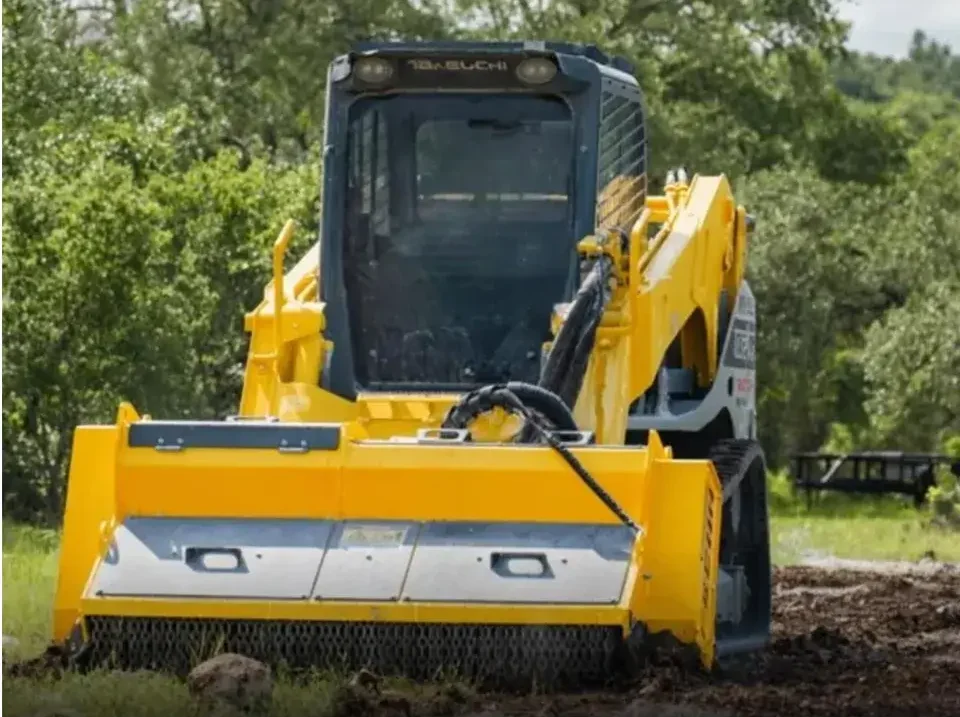
New Zealand’s geological diversity means there is no single “one size fits all” approach to stone crusher selection. The North Island’s volcanic regions — dominated by rhyolite, andesite, and basalt — present hard, angular rock that places high demands on cutting tooth hardness. The Central Plateau soils around Taupo and Rotorua are characterised by pumice stones that are friable and low density; these crush readily but generate fine dust that accelerates bearing wear, meaning sealed bearing assemblies are especially important in this region.
The South Island presents a different profile. Canterbury’s braided river plains contain large quantities of rounded greywacke cobbles and shingle — highly abrasive, moderately hard rock that favours machines with a high tooth-to-surface-area ratio and replaceable tungsten-carbide cutting tips. Marlborough’s shallow soils overlay limestone and schist, where a combination of large slab fragments and rounded cobbles requires a machine with both deep working capacity and high impact energy per tooth. Otago’s schist terrain, particularly around Central Otago, produces flat angular fragments that can wedge beneath skid shoes; hydraulically adjustable depth control is a significant operational advantage in this region.
For general North Island pastoral renovation, a machine in the STCM or PSC series class — working width 1.5–2.0 m, tractor requirement 150–220 hp — represents the practical mainstream choice. Larger South Island operations processing greywacke and schist at scale may justify the step up to an RSM-class machine capable of handling rocks up to 500 mm diameter.
제품
7. Recommended PTO Stone Crusher Models for New Zealand Pastoral Conditions
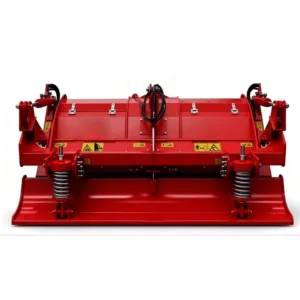
PSC Series Field Stone Crusher
Compact and lightweight; ideal for narrow pastoral lanes, driveway borders, and small-block renovation. Working widths from 1110–2070 mm. Tractor requirement: 70–150 hp.
Max stone diameter: 150 mm · Max depth: 150 mm
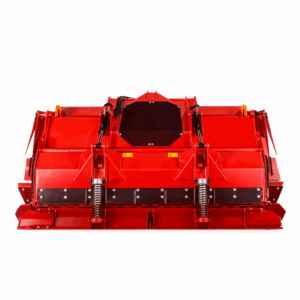
RockMaster 농업용 석재 분쇄기
Handles rocks up to 500 mm in diameter. Paired with 280–400 hp tractors. Suitable for large South Island operations dealing with greywacke and schist.
Max stone diameter: 500 mm · Max depth: 250 mm
Benefits
8. Operational Advantages for New Zealand Pastoral Operations
The primary financial argument for a PTO stone crusher in a pastoral setting is the elimination of multiple handling steps. Traditional stone removal requires a scraper or front-end loader to windrow surface rock, a trailer for transport, and either an off-site crusher or a designated rock dump — each step adding cost and delay. A PTO stone crusher collapses all of these steps into a single tractor pass. The crushed aggregate remains in the paddock, improving surface drainage and providing a stable sub-base for the next pasture sward.
For sheep and beef operations undertaking 설 end-of-rotation pasture renovation, the practical benefit extends beyond cost. A stone-cleared seedbed allows precision air-seeding equipment to achieve consistent seed-to-soil contact — a factor that can lift germination rates by 10–15% compared to rough, stone-obstructed ground. Over a 10-year pasture cycle, this compounding improvement in pasture establishment delivers material revenue gains per hectare.
Operators should also consider the protective benefit for downstream implements. Rotary hoes, disc cultivators, and precision seeders used after stone crushing face dramatically reduced risk of blade and bearing damage from embedded rock. In New Zealand, where specialist agricultural machinery repairs are costly and sourcing of European-specification parts can take weeks, avoiding stone-induced damage has clear economic logic.
FAQ
Frequently Asked Questions
Q1. What tractor horsepower do I need for a PTO stone crusher suitable for New Zealand pastoral renovation?
For light to moderate stone loads on North Island pastures, tractors between 70–150 hp pair well with PSC series compact crushers. For South Island operations dealing with large greywacke cobbles or schist slabs, you should be looking at 150–220 hp for mid-range STCM-class machines, and 280+ hp for heavy-duty RSM or RockMaster models handling stones above 300 mm diameter.
Q2. How does a PTO stone crusher differ from a rock picker for New Zealand sheep and beef farms?
A rock picker physically removes and collects stones into a hopper — useful when you want to relocate material entirely. A PTO stone crusher pulverises stones in-situ and leaves the aggregate on the paddock surface. For most pastoral renovation goals, the crusher is faster, more fuel-efficient per hectare, and eliminates the labour of emptying collection hoppers.
Q3. Is there a New Zealand regulation requiring a PTO guard when using a stone crusher on a pastoral property?
Yes. Under the Health and Safety at Work Act 2015 and associated regulations, all rotating PTO shafts must be guarded with a full-length, free-rotating guard. WorkSafe New Zealand enforces this, and failure to maintain guarding constitutes a notifiable breach under the HSWA. Inspect your guard before every work season and replace cracked or missing sections immediately.
Q4. Which PTO stone crusher models are best suited to the volcanic soils of the central North Island of New Zealand?
The PSC Series compact crusher handles the friable pumice stones typical of the central plateau well. Its sealed rotor bearings are especially important in dusty pumice conditions. For farms transitioning andesite-heavy hill country, the Tractor-Mounted Rock Crusher with fixed-tooth configuration provides better cutting penetration into harder volcanic fragments.
Q5. What is the maximum rock diameter that an agricultural stone crusher can handle for a New Zealand pasture renovation project?
It depends on the model. The PSC Series compact crusher handles up to 150 mm diameter. Mid-range tractor stone crushers in the STCM class can manage up to 300 mm. The RockMaster heavy-duty crusher handles rocks up to 500 mm — suitable for the large schist and greywacke slabs encountered in Central Otago and Marlborough.
Q6. How often do hammer teeth need replacing on a stone crusher used for New Zealand pastoral land development?
On hard volcanic or greywacke rock, standard high-chrome steel teeth typically last 80–150 operational hours before needing rotation or replacement. Tungsten carbide tipped teeth last 200–400 hours in similar conditions. Always keep spare teeth on-hand during renovation season — mid-season wear can accelerate unexpectedly if you encounter an unusually hard rock layer.
Q7. What working depth does an agricultural stone crusher achieve for shallow New Zealand soils over volcanic hardpan?
Working depth varies by model and ground conditions. Compact PSC Series machines work to approximately 150 mm depth. The Tractor-Mounted Rock Crusher model reaches 280 mm, and heavy RockMaster-class machines can work down to 250–500 mm where needed. For the shallow pumice and yellow-brown earth soils common on New Zealand hill country, the PSC or STCM series typically provides more than adequate depth.
Q8. How does gearbox overload protection work on a PTO stone crusher used in hard-rock New Zealand pastoral conditions?
Most quality stone crushers incorporate either a cam-type overrunning clutch or a friction slip clutch at the PTO input. When the rotor encounters a sudden shock load — such as striking an embedded boulder — these devices allow the PTO shaft to momentarily “slip” or disengage, preventing the shock from travelling back to the tractor gearbox. Cam clutches reset automatically; slip clutches may need manual re-engagement after a major shock event.
Editor: PXY