Maintenance Guide · Agricultural Machinery · Korea & Global
PTO Stone Crusher Gearbox Failure:Causes, Warning Signs, and How to
Prevent Costly Breakdowns
A thorough technical guide for farmers, contractors, and equipment operators — covering why gearboxes fail on PTO stone crushers, the early signals you should never ignore, and the preventive steps that keep your machine earning rather than sitting idle.
Of all the components in a tractor stone crusher, the gearbox carries the heaviest responsibility and faces the most unforgiving working conditions. Every rock strike sends a shock load back through the drivetrain; every hour of operation builds heat, pressure, and microscopic wear inside the gear housing. When the gearbox eventually fails, the consequences reach well beyond the repair bill — downtime during peak land-preparation season can delay planting schedules and trigger a cascade of knock-on costs that far exceed the original repair expense. For Korean farmers working the rocky hillside paddocks of Gangwon and North Gyeongsang provinces, or contractors clearing granite-strewn plots in the southern coastal regions, an unexpected gearbox breakdown during the spring preparation window is particularly damaging.
This guide approaches gearbox failure systematically: what the gearbox actually does inside a PTO 석재 분쇄기, the mechanical and operational reasons it fails, the physical warning signs that precede catastrophic breakdown, the regulatory framework governing gearbox design and maintenance in key markets, and — most importantly — a practical prevention program that any operator can implement regardless of whether they run a compact STCL-class machine or a heavy-duty RSM series unit. Product specifications referenced throughout this article are drawn from the range available at pto-stone-crusher.com.
1. Manufacturing Construction: How Gearboxes Are Built and Why It Matters
Understanding what a well-built gearbox contains helps operators recognize when something is wrong. A gear reduction unit in a quality agricultural stone crusher comprises several interacting subsystems, each of which can become a failure point if not maintained or if original construction quality is compromised.
Gear Set and Housing
The primary gear set — usually spiral bevel or helical gears — is precision-machined from case-hardened alloy steel, typically 20MnCr5 or 18CrNiMo7-6 grade, with surface hardness of 58–62 HRC at the tooth flanks after carburizing and quenching. The gear housing itself is either heavy-wall grey cast iron (GG-25) or nodular cast iron (GGG-40) with integral ribbing to resist flexural stress and casting porosity that could allow oil seepage. Poorly manufactured housings — found on some lower-cost units — use thin-wall castings that crack under sustained vibration, creating sudden catastrophic oil loss.
Bearing Selection and Arrangement
The rotor shaft and output shaft in a stone crusher gearbox run on tapered roller bearings or spherical roller bearings depending on the thrust load characteristics of the specific design. Tapered rollers are preferred for high combined radial and axial load applications; spherical rollers self-align to accommodate shaft deflection under impact. Bearing preload — the slight interference fit that eliminates internal clearance and ensures proper load distribution — must be set precisely during assembly. Too little preload allows the rollers to skid and skate; too much generates excess heat. On a well-built unit, bearing life under full load conditions should reach 5,000 hours or more with correct lubrication.
Sealing System
The sealing arrangement is arguably the most failure-prone aspect of a stone crusher gearbox due to the extreme dust environment. A competent sealing system uses labyrinth seals (non-contact helical grooves that trap debris without friction), backed by radial shaft lip seals made from fluoroelastomer (FKM/Viton) rather than standard NBR rubber. FKM seals tolerate temperatures up to 200°C and resist the fine silica and limestone dust that destroys standard rubber seals within a few hundred hours in a stone-crushing environment. Some premium units add a positive-pressure purge system using grease injected at low frequency to push contaminants away from the shaft seal. Quality of the seal system is a major differentiating factor between budget and premium stone crushing equipment.
2. Material System: Lubricants, Seals, and Wear Components
The lubricant inside a stone crusher gearbox performs four simultaneous functions: it reduces friction between gear tooth flanks and bearing rolling elements, carries heat away from contact zones, forms a protective film that prevents metal-to-metal contact during transient overloads, and suspends and carries wear particles to the sump where they can be drained during oil changes. Any failure of the lubricant system — whether from incorrect grade selection, contamination, thermal breakdown, or simply running low — accelerates every other failure mode simultaneously.
| Lubricant Issue | Root Cause | Resulting Failure Mode | Diagnostic Sign |
|---|---|---|---|
| Wrong viscosity grade | Substitution with non-approved oil | Micropitting and surface fatigue on gear flanks | Grayish oil with fine metallic shimmer within 50 hrs |
| Dust contamination | Failed shaft seals or overfilled grease cavities | Abrasive wear of bearing raceways and gear flanks | Milky or gritty texture on dipstick; elevated temperature |
| Water ingress | Condensation in cold-storage seasons; pressure washing near seals | Rust pitting on bearing surfaces; emulsification of oil film | Creamy/foamy oil appearance; rust streaks on housing drain plug |
| Thermal breakdown | Extended operation above 90°C without oil change | Oxidation sludge deposits block oil channels; bearing starvation | Dark, varnished oil; burning smell during operation |
| Oil level too low | Seal leak not detected; missed service intervals | Gear tooth scuffing and seizure | High-pitched whining noise; housing surface temperature above 110°C |
Most stone crusher gearboxes in the STCM and RSL class are factory-filled with ISO VG 220 or ISO VG 320 gear oil meeting API GL-4 or GL-5 specification. The STCH and RSM/RSH heavy-duty series, which face higher sustained torque, typically call for ISO VG 320 with extreme-pressure (EP) additive packages. Always verify the specific grade in the machine’s operator manual — using a lower-viscosity oil in a high-torque unit creates insufficient film thickness under load, while an overly thick oil in a high-speed application generates excess churning losses and heat.
3. Root Causes of Gearbox Failure in Stone Crushing Equipment
Gearbox failures in the field rarely have a single cause. Most post-mortem analyses reveal a sequence of contributing factors where one deficiency set the stage for the next. The following causes account for the overwhelming majority of premature gearbox failures in stone crusher machines across agricultural applications globally, including Korea’s rocky highland farming zones.
1. Tractor-Implement Power Mismatch
Running a stone crusher on a tractor below its stated minimum horsepower requirement is a leading cause of gearbox damage. When the tractor lacks sufficient reserve power, it lugs down during heavy rock encounters, causing the PTO shaft to decelerate and then surge — cycling the drivetrain through repeated acceleration and deceleration stress. The THOR 2.4 + Kit Drawbar model, for example, specifies a minimum of 180 cv; operating it on a 130 cv tractor forces the gearbox to absorb load peaks the torque limiter was not sized to handle. Equally, overpowering a smaller unit can cause the same problem in reverse — if the torque limiter is set for a 150 hp tractor’s maximum output but is connected to a 220 hp machine, the tractor can stall the torque limiter and transmit full engine torque directly to the gearbox during a rock jam.
2. Incorrect PTO Speed
Many Korean tractors, particularly older domestically produced models, offer only 540 RPM PTO as standard. Units in the STCM DT and RSL/DT series require 1000 RPM for correct gear ratio operation. Running a 1000 RPM-optimized gearbox at 540 RPM means the internal gear ratio no longer delivers the design rotor speed — the rotor runs too slowly to fracture rock efficiently, and the operator typically responds by increasing ground pressure and advancing too aggressively, causing repeated rotor stalls that shock-load the gearbox beyond its design envelope. Always confirm PTO speed compatibility before connecting any implement.
3. Deferred Oil Changes and Contaminated Lubricant
The most common and most preventable cause of premature gear wear. In dry field conditions, fine dust particles suspended in the air around the machine penetrate compromised shaft seals at a rate that can render clean oil abrasive within 30–40 operating hours. Korean autumn harvesting conditions, where dry paddy field soils generate significant airborne dust, are particularly aggressive. An oil change interval of 250 hours under European temperate conditions should be shortened to 150 hours or less when operating in Korean hillside rocky terrain during dry periods. Visual inspection of oil condition at every 50-hour service point is non-negotiable.
4. Operating Through Alarm Signals
Many operators continue working when they notice unusual sounds or heat, reasoning that they can “finish the field” before investigating. This is the single fastest route to converting a minor seal replacement or bearing swap into a complete gearbox rebuild or replacement. By the time a failing bearing generates audible noise and a gearbox housing registers 120°C to the touch, metal-to-metal contact has already been occurring for hours. The bearing has likely spalled, spreading metal fragments through the oil that are now scoring the gear flanks. Acting on the first sign rather than the most severe sign saves both the gearbox and the schedule.
4. Warning Signs: What Your Gearbox Is Trying to Tell You
Mechanical failure rarely arrives without warning. The challenge is that early signals in a loud, vibrating field environment can easily be missed or dismissed. The table below maps observable symptoms to likely internal causes and appropriate immediate actions — applicable across the entire range from small PTO 석재 분쇄기 units to heavy STCH and RSM-class machines.
| Observable Symptom | Likely Internal Cause | Urgency Level | Recommended Action |
|---|---|---|---|
| Low-frequency rumble or grinding noise — distinct from normal rotor impact sounds | Bearing race damage or spalling; gear tooth chipping | STOP immediately | Drain oil, inspect for metal particles; do not restart until inspected |
| High-pitched whine that varies with PTO speed | Oil starvation; incorrect oil viscosity; gear mesh misalignment | STOP — same session | Check oil level first; if low, refill and monitor temperature for 15 min |
| Gearbox housing too hot to hold hand against (above approx. 70°C surface) | Contaminated oil; bearing preload too tight; oil level low | Investigate within day | Allow to cool; check oil level and condition; replace if discolored |
| Oil seeping from shaft seal or housing joint | Worn radial shaft lip seal; housing gasket failure; overfill | Investigate within day | Mark and monitor rate of seepage; plan seal replacement within one week |
| Sudden loss of rotor speed or power without tractor PTO fault | Belt slip (belt-drive units); gear tooth failure; shaft shear | STOP immediately | Do not attempt to restart; inspect drive train before any further operation |
| Intermittent metallic clicking synchronized with rotor rotation | Early-stage tooth edge chipping; loose fastener in rotor assembly | Investigate same day | Open inspection cover; check for loose hardware; inspect gear teeth with mirror |
| Increased vibration transmitted to tractor linkage during operation | Worn rotor shaft bearings; loose mounting bolts; rotor imbalance from tooth loss | Investigate within 2 days | Check all mounting hardware torques; inspect rotor for missing tools; check bearing end-play |
5. The Prevention Program: How to Avoid Gearbox Failure Systematically
Prevention is dramatically cheaper than repair. A complete gearbox rebuild on a mid-range stone crusher machine can cost two to five times as much as a season’s worth of conscientious oil changes and inspections. The following program is grounded in the maintenance requirements of the product range and adapted for the higher-intensity operating conditions common in Korean rocky terrain applications.
Before Each Working Session
Check the gearbox oil level with the machine on level ground and PTO disengaged. Inspect all external seals and housing joints visually for signs of seepage. Confirm the PTO shaft guard and torque limiter connection are secure and undamaged. Verify that the tractor PTO speed selector matches the implement’s specified input RPM — this takes ten seconds and prevents a category of failure that accounts for a disproportionate share of premature gearbox damage across all tractor stone crusher models.
Every 50 Operating Hours
Grease all rotor shaft bearing points to the specified quantity — typically one to three pumps per point, not more. Over-greasing forces grease past the seal lips and into the area where it collects dirt, accelerating the very contamination it is meant to prevent. Pull the oil inspection/filler plug and assess oil condition visually and by smell. Gritty texture means dust ingress; creamy texture means water; dark color with burnt smell means thermal breakdown. Any of these conditions warrants an oil change regardless of hour count.
Every 150–250 Operating Hours (Shorten to 150 in Dusty Korean Conditions)
Drain and refill gearbox oil. The drained oil should be examined for: volume of metallic particles (use a clean white rag), color uniformity, and smell. On gear-reduction units (RSL, RSM, RSH series), check the magnetic drain plug for accumulated swarf — a small accumulation of fine metallic paste is normal; discrete metal chips or flakes indicate tooth damage and should prompt an inspection. Replace V-belts on belt-drive models (STCL series) if any show cracking, glazing, or wear beyond the tension gauge specification. Check all gearbox mounting fasteners for torque — vibration loosens hardware steadily in stone crushing service.
Pre-Season Annual Inspection
Drain gearbox, flush with clean solvent-compatible rinse oil, refill with fresh oil of the correct grade. Inspect all shaft seals by feel (any softness or crumbling of the seal lip warrants replacement). Check gear tooth flank condition with a small mirror and inspection light through the oil fill port — scuffing marks, pitting, or flaking on the load-carrying flank surface are all actionable findings. Verify torque limiter slip torque with a torque wrench — consult the machine’s operator manual for the specified value, and adjust the limiter spring preload if outside range. Document all findings in a service log, which is also required for warranty tracking and, in some jurisdictions, for regulatory compliance purposes.
6. Mulchers / Stone Crushers: Product Range Overview
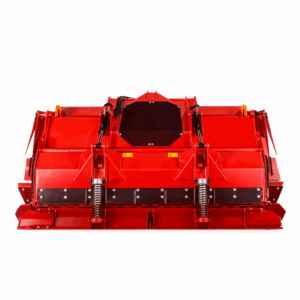
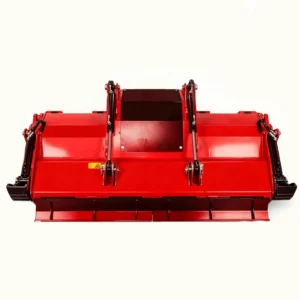
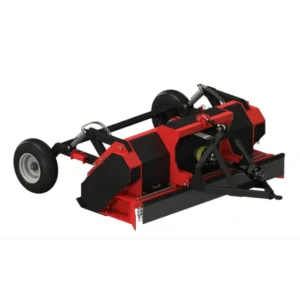
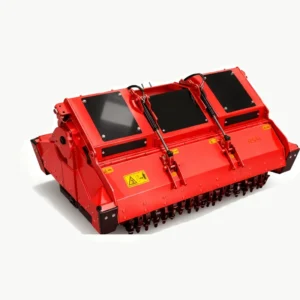
Selecting a pto stone crusher for sale with a gearbox sized correctly for your tractor and rock conditions is the foundation of long service life. The following models represent the current range, each with key gearbox-relevant specifications.
7. When the Gearbox Fails: Immediate Steps and Repair Decision Framework
Even with diligent maintenance, gearboxes eventually reach end of life or suffer an unexpected event failure. Knowing how to respond quickly and correctly limits secondary damage and speeds return to operation. Here is a practical sequence for any operator facing a suspected gearbox failure on a stone crusher for tractor.
Step 1 — Disengage PTO immediately and move tractor to a stable, level surface.
Never attempt to diagnose a hot, rotating gearbox. Allow at least 30 minutes for cooling. Do not attempt to restart to “test” — if internal damage has occurred, restarting will distribute metallic debris through the remaining oil, scoring all gear flanks and bearing surfaces in the housing.
Step 2 — Drain the oil and examine it carefully before cleaning up.
Pour the drained oil into a white bucket or container. Presence of metallic chips indicates gear tooth fracture or bearing cage failure — this is a total internal rebuild situation. Metallic paste or fine shimmer without discrete chips indicates progressive wear — the gearbox may still be serviceable after bearing and seal replacement. Clear, clean-looking oil in a unit that stopped working suddenly points toward a shaft shear or torque limiter failure rather than internal gear damage.
Step 3 — Assess repair vs. replacement economics.
For units under three years old with documented service history, internal repair (bearing replacement, seal kit, gear set if damaged) is typically economical. For older units or those where service history is unknown, a complete gearbox assembly replacement is often more cost-effective and more reliable than a partial rebuild of unknown internals. When sourcing a replacement, always specify the exact model and serial number of the implement — gear ratios, shaft spline counts, and mounting flange dimensions vary across model variants even within the same series, and installing an incorrect unit creates new failure modes.
Step 4 — Investigate the root cause before returning the machine to service.
Replacing a gearbox without understanding why the previous one failed is a route to repeating the same failure. Was the tractor undersized? Was the oil change interval exceeded? Was the torque limiter adjusted incorrectly? Each cause requires a corrective action before the machine goes back to work. For used tractor stone crusher for sale units, a thorough gearbox inspection should be part of any pre-purchase evaluation — it is the component most likely to carry hidden damage from previous misuse.
8. About Us
We specialize in supplying proven stone crushing equipment and related agricultural land preparation machinery to farmers, contractors, and agribusinesses across Asia, Europe, and beyond. Our technical team understands that gearbox reliability is not a nice-to-have — it is the core promise of any PTO-driven implement. Every product we offer comes with complete technical documentation, correct oil specifications, and realistic service interval guidance calibrated to actual field conditions rather than laboratory test environments.
For Korean customers navigating the RDA type approval process, or for international buyers seeking confirmation of regulatory compliance documentation, we provide direct technical support to streamline the purchasing and import process. Our product recommendations are always based on actual tractor-implement matching — we will not suggest a machine that is too large or too small for your specific tractor and land conditions.
Frequently Asked Questions
Editor: PXY