PTO Stone Crusher for Golf Course and Sports Field Construction: Subbase Aggregate Preparation
A comprehensive technical guide to how tractor-mounted PTO stone crushers prepare subbase aggregate for golf courses, sports fields, and recreational ground construction — covering action mode, structural type, manufacturing construction, and material systems.
1. Why Subbase Quality Determines the Life of a Golf Course or Sports Field
When designers and construction crews plan a new golf course, football pitch, cricket oval, or multi-purpose recreational facility, the first — and arguably most consequential — phase is the preparation of the subbase. This is the layer directly beneath the rootzone, drainage aggregate, or finished turf surface, and it performs several critical functions simultaneously: it must distribute the vertical loads imposed by players, vehicles, and maintenance machinery; it must support consistent drainage gradients; and it must remain dimensionally stable throughout seasonal freeze-thaw and moisture cycles. A poorly prepared subbase will heave, settle, or channel water in unpredictable ways, causing the finished surface above it to fail within years of opening.
In sites where surface rock, boulders, or deeply embedded stone layers are present — conditions extremely common across Colombia’s volcanic uplands, Andean foothills, and limestone plateau zones — conventional land preparation equipment simply cannot reduce the in-situ rock to the uniform aggregate gradation required by sports surface engineering specifications. This is exactly the problem that tractor-mounted PTO stone crushers are designed to solve. Rather than removing rock by excavation and replacement (an enormously expensive and time-consuming approach), these machines crush stone in place, grinding it down into a controlled aggregate that remains in the soil profile and contributes directly to subbase stability and drainage performance.
This guide covers the full technical picture of how PTO stone crushers work in golf and sports field construction contexts — from the basic action mode through structural design and material systems — so that project planners, agronomists, and sports ground contractors in Colombia and throughout Latin America can make well-informed equipment decisions.
2. Action Mode: How a PTO Stone Crusher Crushes Rock In Situ
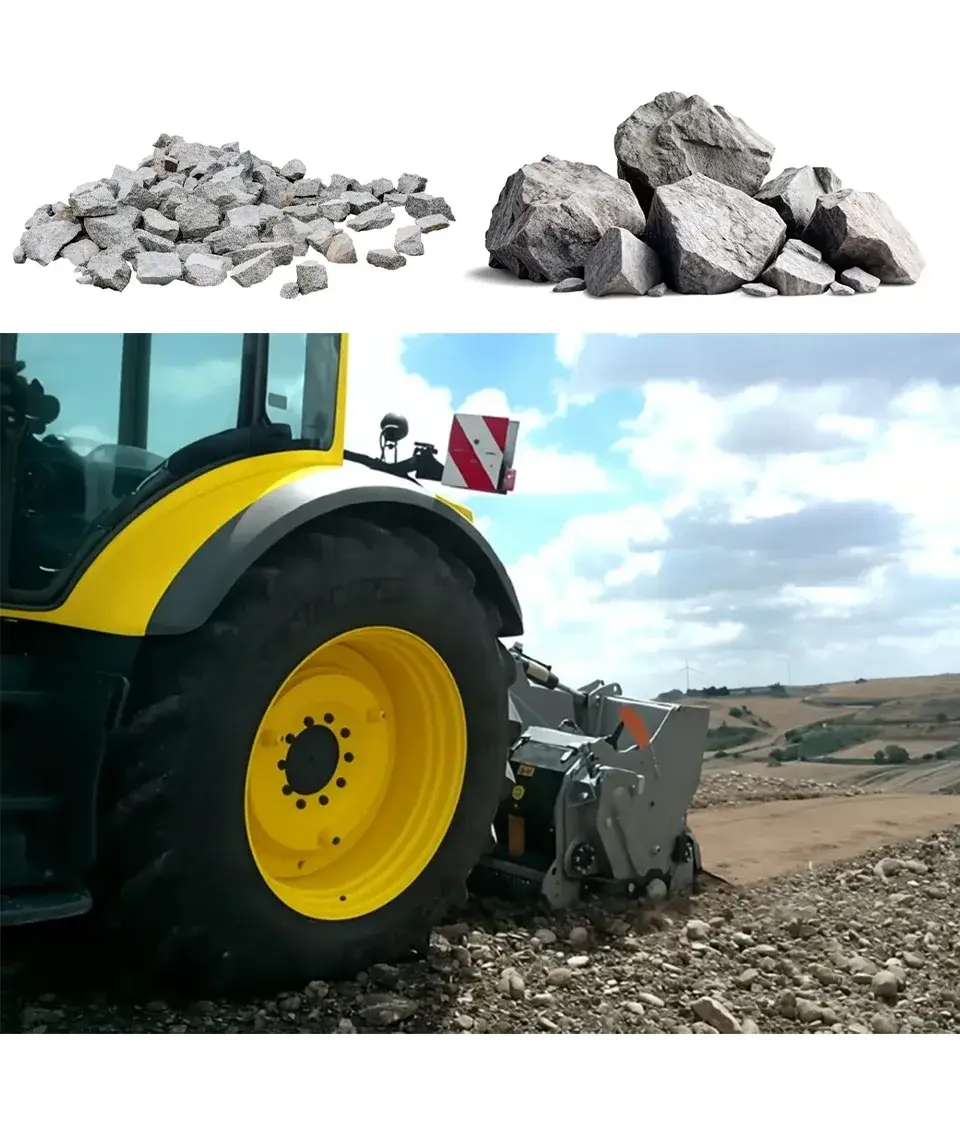
The defining characteristic of a PTO stone crusher — as opposed to a jaw crusher, cone crusher, or impact crusher — is that it operates directly in the soil profile, requiring no excavation, loading, or hauling of material. The machine is mounted on the rear three-point linkage of a tractor (category 2 linkage in all standard models) and driven from the tractor’s power take-off (PTO) shaft, typically at 540 RPM or 1000 RPM depending on model specification. As the tractor advances, the rotor assembly mounted in the working head rotates at high speed and its cutting tools engage the rock at soil surface level, fracturing and pulverizing it progressively.
The action sequence involves three overlapping phases. In the first phase — primary impact — the pick-type or tool-steel teeth on the outer perimeter of the rotor strike the rock with high kinetic energy, initiating fractures along natural cleavage planes. The rotational speed is calibrated so that the specific energy delivered per unit of rock volume is sufficient to overcome the compressive strength of common geological materials (granite, limestone, basalt, quartzite) without causing excessive vibration or structural fatigue in the host machine. In the second phase — secondary grinding — fragments generated by the initial impact are recaptured by subsequent teeth on the rotor’s next revolution, reducing them further. Finally, a grading plate or rear deflector limits the maximum particle size that can exit the working chamber, ensuring that all material deposited back into the soil meets the specified aggregate gradation. On models such as the PSC series, working depth reaches up to 200 mm, ensuring subbase rock is fully addressed without surface removal.
The result is a soil-stone mix that is intimately blended in the original formation — retaining the mineral composition of the local geology but converting previously impenetrable boulders and rocky outcrops into a free-draining, load-distributing granular layer that performs exactly as sports surface engineering specifications require. No material is removed from site, no replacement aggregate is trucked in, and the topsoil layer remains biologically active because it is worked rather than stripped.
3. Structural Type: How the Machine Is Built to Withstand Impact Forces
PTO stone crushers are classified by structural type primarily according to rotor configuration and working chamber geometry, both of which determine the range of rock sizes that can be processed and the maximum working depth achievable on a given tractor power class. The two principal structural categories are the drum rotor type (used in STCL, STCM, and STCH sub-series) and the combined rotor type (used in RSL and RSM sub-series), each suited to distinct site conditions.
In the drum rotor configuration, a single cylindrical rotor carries the cutting tools at a fixed radial distance from the drum axis. This design is compact, mechanically simple, and well-suited to the 70–220 hp tractor range that covers most farm-scale and smaller sports field contractors. The rotor diameter ranges from 450 mm in lighter models up to 700 mm in heavier STCH variants. The working chamber is enclosed on three sides by a heavy steel housing with wear liners, and the rear opening is partially restricted by a grading plate whose position can be adjusted to tune the maximum crushed particle size output.
The combined rotor RSL and RSM configurations use two independently sized rotor systems — designated as the G/3 and R rotor families — that operate in a staged sequence. The G/3 rotor processes the rock first, reducing it to an intermediate fragment size; the R rotor then takes the output of the first stage and reduces it to the final specification. This two-stage architecture allows machines in the 80–360 hp class to process rocks up to 300–500 mm in diameter to a finished depth of up to 400 mm, handling conditions that would overwhelm a single-rotor machine. For golf course construction on rocky volcanic soils common in Colombia’s coffee-growing departments such as Caldas, Nariño, and Antioquia, this combined-rotor approach is typically necessary to achieve the 200–280 mm working depth called for in USGA and European sports turf specification documents.
The overall machine frame is a welded structural steel chassis attached to a Cat 2 three-point hitch with adjustable traction links that allow the working head to track soil contours independently of the tractor frame. Depth-limiting skids or wheels on each side of the housing maintain a consistent working depth even as the ground profile changes, which is critical in sports ground construction where subbase levels must be held to within ±10 mm of design grade over the full field area.
4. Manufacturing Construction: What Separates a Production Stone Crusher from Field-Fabricated Equipment
The manufacturing quality of a PTO stone crusher is the single most important determinant of total lifecycle cost when the machine is operated in the demanding context of sports field and golf course ground preparation. Unlike primary agricultural use where stone impact is intermittent, subbase preparation for sports construction often requires the machine to work continuously in highly rocky conditions for extended periods — sometimes several thousand hours across a major golf development project spanning multiple seasons. This imposes structural fatigue, wear, and impact loading that will quickly expose weaknesses in sub-specification manufacturing.
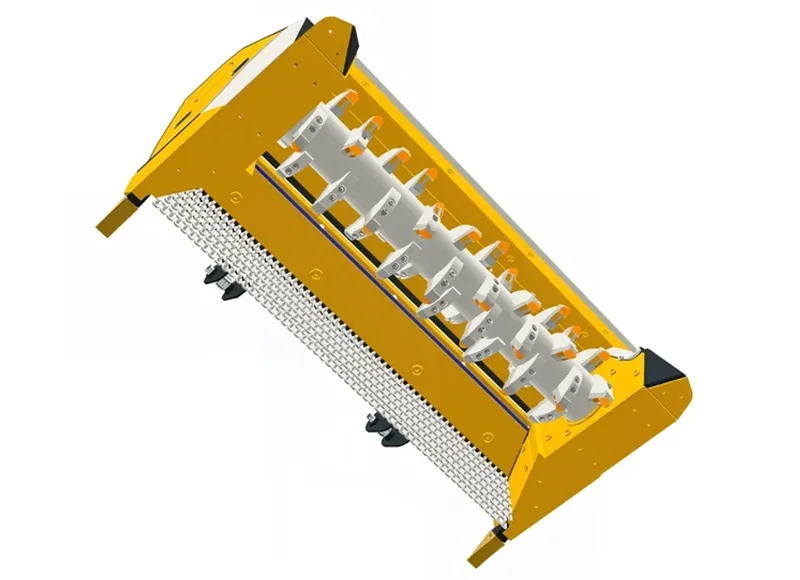
The rotor assembly is the most critical manufacturing element. Production-grade machines use a solid forged-steel rotor drum with tooth holder pockets machined to precise angular positions and welded with full-penetration multi-pass structural welds. Each tooth holder is drilled to accept a standardized bolt pattern, meaning that worn or damaged teeth can be replaced in the field without rotor removal. The rotor bearings are oversize sealed units rated for radial and axial combined loading, with grease channels accessible from outside the housing. Bearing life on well-manufactured machines in normal stone crushing duty typically exceeds 2,000 hours before replacement is required.
The internal wear surfaces of the working chamber are lined with bolt-in wear plates manufactured from high-hardness steel (typically 400–500 HBW Brinell hardness). These plates protect the structural housing from abrasive wear and can be replaced individually as they reach their wear limit, avoiding the cost of housing replacement. The rear grading plate is manufactured from the same specification material and is adjustable via a screw mechanism from outside the housing, allowing the operator to change the crushed particle size output without tools entering the working chamber.
The PTO driveline from tractor output shaft to rotor input shaft passes through a torque-limiting safety clutch (slip clutch or shear-bolt type depending on model), which protects the tractor transmission and rotor bearings from the peak torque spikes that occur when an exceptionally large or hard rock is first struck. This component is particularly important in the uncontrolled rock size environments encountered during golf course earthworks, where subsurface boulders of unpredictable dimensions may be encountered without warning during a production pass.
5. Material System: Cutting Tools, Wear Parts, and the Engineering of Consumables
The cutting tools — variously called teeth, picks, chisels, or bits depending on regional terminology — are the component that directly contacts the rock and therefore the dominant factor in both crushing performance and operating cost. Production stone crushers use a tiered system of tool types matched to specific crushing duties within the rotor array.
In the STC series (STCL, STCM, STCH), the standard tooth configuration designates STC/3 tools as primary impact teeth positioned at the leading positions of the rotor, C/3 tools as intermediate teeth, and SS profile tools at trailing positions. STC/3 teeth feature tungsten carbide inserts brazed into a heat-treated alloy steel shank body. Tungsten carbide (WC-Co grade, typically 85% WC by weight) offers a hardness of 1400–1600 HV, far exceeding the hardness of any naturally occurring rock. The carbide insert is the primary cutting edge; the steel body provides the toughness and impact resistance needed to absorb blow-back forces without brittle fracture. Field tooth life in standard basaltic rock conditions averages 80–150 hours per set depending on rock abrasivity index.
In the RSL and RSM combined-rotor series, the R-rotor positions use R/65 and R/65/HD picks — larger-bodied tools with a conical carbide tip designed to generate maximum point contact pressure on large-diameter rocks. The HD variant uses a thicker-walled body forged from higher-alloy steel for extended service in very hard rock environments such as the granitic formations found in parts of Colombia’s Guyana Shield territories. G/3 teeth in the first-stage rotor are configured similarly to STC/3 but sized proportionally larger to match the G/3 rotor diameter.
Replacement tooth systems are designed for rapid field exchange: a single hex wrench removes the retaining bolt, the worn tooth is tapped out with a drift punch, and the new tooth slides into the holder pocket. A full rotor re-tooth on a mid-size machine can be completed by two technicians in 3–4 hours, meaning that machine downtime for consumable wear is a predictable, manageable maintenance item rather than an emergency repair event.
6. Golf Course Subbase Preparation: Specific Requirements and Machine Selection Logic
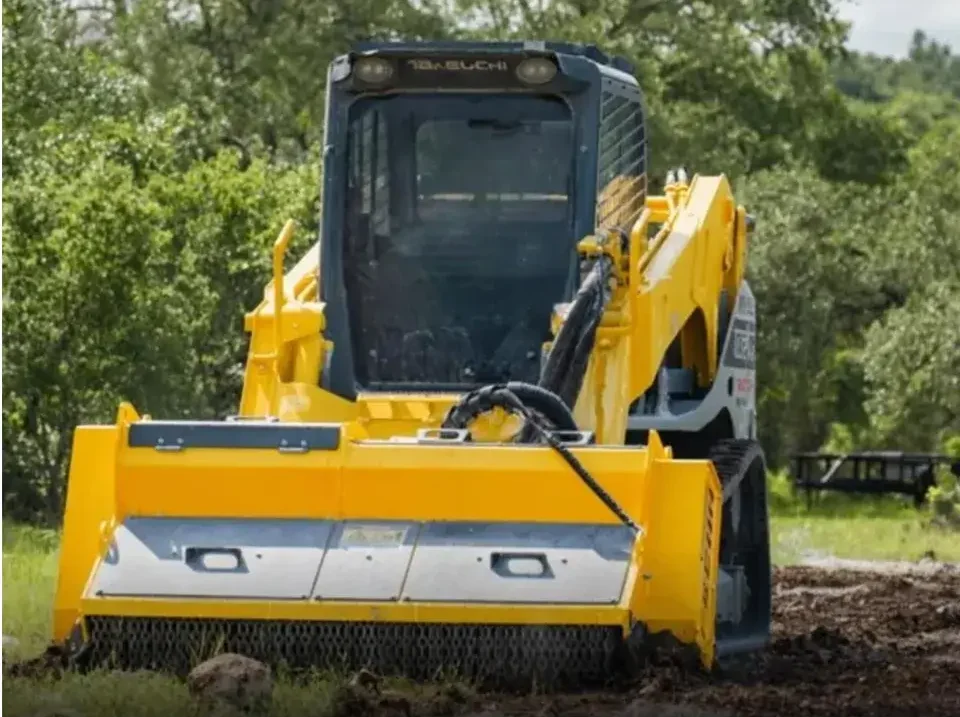
Golf course construction imposes unusually demanding subbase specifications because different zones of the course require substantially different aggregate characteristics. Greens are constructed following either USGA Method or push-up specifications, both of which require a precisely graded rootzone mix overlying a gravel drainage layer. The gravel must conform to a tight particle size distribution (typically 2–9 mm), with less than 10% of particles above or below that range. This gravel layer often needs to be sourced from or derived from the site’s own geology — and PTO stone crushers are the only practical tool for producing this material in situ when the subgrade contains the correct rock type.
Fairways and tees require less precise aggregate gradation than greens, but they must still be cleared of surface and near-surface stones that would prevent consistent turfgrass establishment and damage mowing equipment in the first years after seeding. For fairways on Colombian hillside sites — where basaltic and andesitic volcanic soils frequently contain abundant stones in the 50–300 mm size range — a STCM-series machine with a 170–220 hp tractor provides a practical combination of productivity (1,000–1,500 m² per hour) and rock handling capacity (300 mm maximum diameter, 200 mm depth). The 2,064–2,304 mm working widths of the STCM 200 and STCM 225 models are particularly well-matched to fairway preparation where wide swath coverage reduces the total number of tractor passes required.
Paths, cart tracks, and maintenance access roads within a golf course development also benefit from PTO stone crusher subbase preparation. A compacted crushed rock subbase produced in situ using an RSL or RSM model provides an excellent foundation for gravel cart paths without the need to import any external aggregate — a significant cost and logistics saving on remote Colombian course developments where access roads may not yet be constructed at the time of site earthworks.
7. Sports Field Construction: Football, Rugby, and Multi-Use Ground Preparation
Natural-turf sports fields for football (fútbol), rugby, baseball, and multi-purpose recreation require subbase conditions that support consistent surface firmness, acceptable traction, and rapid drainage — the combination that reduces injury risk and allows play to continue in wet conditions. In Colombia’s high-altitude municipalities such as Bogotá (2,600 m), Manizales, and Pasto, where the combination of volcanic soil parent material and frequent rainfall creates particularly challenging ground conditions, achieving these properties requires systematic subbase preparation rather than simply grading the existing surface.
A PTO stone crusher addresses the two most common subbase problems in Colombian sports field sites simultaneously: it eliminates surface rocks that prevent consistent rootzone depth establishment, and it creates a structured granular layer at 100–200 mm depth that acts as a reservoir drain, temporarily holding water during peak rainfall events and releasing it slowly through the natural soil matrix. This internal drainage function is particularly valuable in high-altitude sites where impermeable clay layers frequently occur at 150–250 mm depth — exactly the zone addressed by the maximum working depth of STCM and RSL series machines.
For municipal sports field projects and school athletics ground renovations — increasingly common as Colombia’s local governments invest in community recreational infrastructure — a compact STCL or STCM model paired with a 100–150 hp utility tractor represents the most practical and cost-effective approach. The PSC series models available at pto-stone-crusher.com are specifically designed for this segment, offering the working width and depth needed for sports ground subbase work while remaining compact enough to work within the constraints of existing urban-fringe sites.
8. Featured PTO Stone Crusher Models for Sports Ground Construction
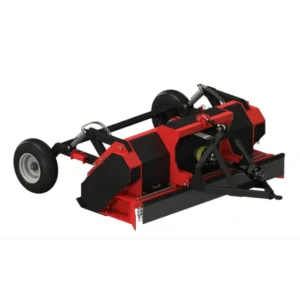
The following machines from the product range are particularly suited to golf course and sports field subbase preparation at various project scales and site conditions:
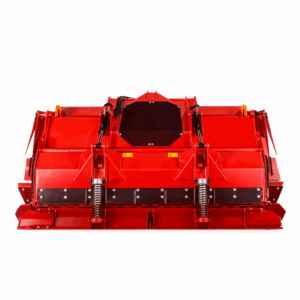
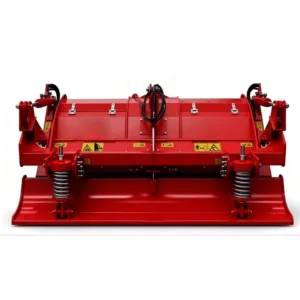
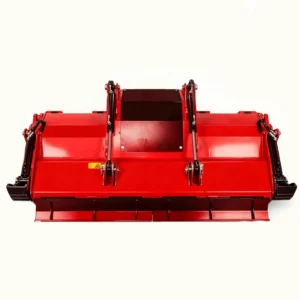
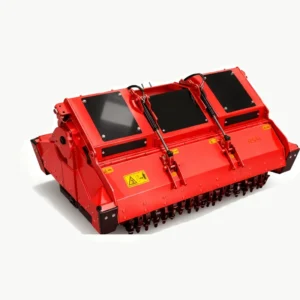
9. Regulatory Framework: Equipment Standards and Sports Construction Codes
PTO stone crushers and the sports facilities they help build are subject to a range of regulatory and standards requirements across different jurisdictions. Understanding these frameworks helps project planners in Colombia and internationally ensure compliance from equipment procurement through to facility certification.
Colombia — Instituto Colombiano del Deporte (Mindeporte) & Resolution 1956/2019: Mindeporte governs the technical standards for publicly funded sports facilities in Colombia. Sports fields eligible for national funding must comply with minimum dimensional, drainage, and surface performance specifications defined by Mindeporte and referenced to FIFA, World Rugby, and IAAF standards for the relevant sport. Subbase construction that fails to meet drainage permeability requirements (typically greater than 180 mm/hour for natural turf pitches) will disqualify a facility from certification. PTO stone crusher subbase preparation — by creating a granular in-situ layer with well-distributed pore space — is one of the most reliable methods for achieving this drainage threshold on naturally rocky Colombian sites.
Colombia — ICONTEC NTC Standards for Agricultural Equipment: PTO-driven implements operating on Colombian agricultural and construction sites are subject to applicable ICONTEC NTC safety standards for powered machinery. Operators should ensure that PTO drivelines carry CE or equivalent certification and that all rotating parts are guarded per standard requirements. The importation of PTO stone crushers into Colombia requires compliance with technical import regulations under DIAN, with appropriate tariff classification for agricultural machinery.
European Union — CE Machinery Directive 2006/42/EC: PTO stone crushers manufactured for European or export markets carry CE marking under the EU Machinery Directive, which requires risk assessment documentation, guarding of all rotating and impact components, and compliance with EN ISO 4254-1 (agricultural machinery safety — general requirements). Machines purchased from EU-certified manufacturers carry documentation confirming compliance — important for Colombian buyers sourcing through formal import channels.
USGA & R&A Golf Course Construction Standards: The United States Golf Association and The R&A jointly publish construction specifications for greens and fairways that define the physical properties of subbase aggregate layers. These documents specify gravel particle size distribution, hydraulic conductivity targets, and drainage layer depths that must be met for a course to receive handicap accreditation. Contractors using PTO stone crushers for in-situ aggregate preparation must verify that the crushed product meets USGA/R&A particle size specifications through sieve analysis before greens rootzone construction proceeds.
FIFA Quality Programme for Football Turf: FIFA’s Quality Programme for both natural and artificial turf pitches requires compliance with technical performance standards including surface evenness, drainage rates, and subbase structural integrity. Sites that intend to apply for FIFA Quality certification must ensure that subbase preparation — including any in-situ rock crushing — meets the supporting structural requirements defined in the FIFA Quality Programme Technical Manual. Soil investigation confirming adequate bearing capacity and drainage performance is typically required as part of the certification evidence package.
10. About This Resource
This guide is published to support sports ground contractors, golf course developers, and land preparation professionals seeking authoritative technical information on PTO stone crushers for subbase aggregate preparation. The product specifications referenced throughout this article are drawn directly from the technical documentation available at pto-stone-crusher.com.
Our product range covers the full spectrum of ground preparation requirements — from compact STCL models suited to 70–120 hp tractors on small sports field renovation projects, through to the RSH/HP heavy-duty series capable of handling 500 mm diameter rock at depths to 500 mm on major golf course earthwork contracts. Contact our technical team to discuss site-specific machine selection and obtain a project quotation.
Frequently Asked Questions — PTO Stone Crushers for Golf and Sports Field Construction
Q1. What is a PTO stone crusher and how is it different from other rock-breaking equipment used in construction?
A PTO stone crusher is a tractor-mounted implement driven by the tractor’s power take-off (PTO) shaft that crushes surface and near-surface rock in place, leaving the crushed material in the soil profile as subbase aggregate. Unlike jaw crushers, impact crushers, or excavation-based rock removal, it requires no material hauling, no separate crushing plant, and no replacement aggregate import — making it dramatically more cost-effective for sports field and golf course ground preparation on rocky sites across Colombia and Latin America.
Q2. Which PTO stone crusher model is best suited for golf course subbase preparation in Colombia’s volcanic soil regions?
For most Colombian golf course developments on volcanic basaltic soils with rocks up to 300 mm diameter, the STCM 150–225 range (150–220 hp tractor requirement) provides the best combination of rock handling capacity (300 mm max rock diameter, 200 mm working depth) and productivity. For sites in departments such as Nariño, Caldas, or Antioquia where deeper rocky layers are encountered, the RSL or RSM combined-rotor series extends maximum working depth to 280–400 mm. Visit pto-stone-crusher.com/products/ to compare detailed specifications for your site conditions.
Q3. How does the aggregate produced by a PTO stone crusher meet USGA golf green construction specifications?
USGA green construction requires a gravel drainage layer with particle sizes predominantly between 2 and 9 mm. A PTO stone crusher equipped with an appropriate rear grading plate can produce in-situ crushed material broadly within this specification if the site geology includes suitable rock types. However, sieve analysis of crushed output samples is always required before committing to the USGA method — some volcanic rock types crush to finer grades than required, in which case the crushed layer is better used as a subbase under an imported gravel drainage layer.
Q4. What tractor power is needed to operate a stone crusher for a sports field project in a Colombian municipality?
Municipal sports field projects typically involve rocky terrain with stones in the 50–200 mm range at depths to 150 mm. For this application, a tractor in the 80–120 hp class paired with an STCL or PSC series stone crusher provides adequate performance while remaining within the budget and availability constraints of most local government projects. If the site includes larger boulders or requires deeper preparation, upgrading to a 150–220 hp tractor with an STCM series machine significantly increases productivity and reduces total project time.
Q5. How long do the cutting teeth on a PTO stone crusher last in hard volcanic rock conditions, and what is the replacement cost?
Tooth life in basaltic volcanic rock — typical of Colombia’s coffee-growing highlands — typically ranges from 60–120 hours per set for STC/3 type tungsten carbide tools, depending on rock hardness (harder rock = shorter tooth life). Tooth replacement is a straightforward field operation requiring basic hand tools and approximately 3–4 hours of labor per full re-tooth. For current tooth pricing and availability, contact the sales team through the product page at pto-stone-crusher.com or use the contact form to request a spare parts quote for your specific model.
Q6. Can a PTO stone crusher be used to prepare the subbase for artificial turf installations as well as natural grass fields in Colombia?
Yes — in fact, artificial turf sports fields often have higher subbase quality requirements than natural turf because the synthetic surface does not self-repair, meaning any subbase settlement or drainage failure immediately appears as a surface problem. PTO stone crusher subbase preparation provides exactly the uniform granular layer with consistent drainage characteristics that artificial turf installation specifications require. For FIFA-standard artificial turf fields, ensure the subbase design is reviewed by a qualified sports surface consultant to confirm that the in-situ crushed layer meets FIFA Quality Programme technical requirements.
Q7. Where can I get a supplier quote for a PTO stone crusher for a golf course project in Bogotá or Medellín, Colombia?
Submit your project details — including the site location, estimated rock size and depth, tractor availability, and project timeline — via the contact form on pto-stone-crusher.com. The technical sales team will recommend the appropriate model from the STCM, STCH, RSL, or RSM series and provide a formal quotation with lead time and delivery options to Colombia. Direct enquiries are typically responded to within one business day.
Q8. What safety certifications should I look for when importing a PTO stone crusher into Colombia for a sports construction project?
Look for CE marking under the EU Machinery Directive 2006/42/EC, which indicates the machine has been assessed for guarding, PTO driveline safety, and structural integrity against applicable European standards. For import clearance under DIAN regulations, the exporter should provide the technical datasheet, CE Declaration of Conformity, and instruction manual in Spanish or English. Some Colombian contractors additionally request ISO 9001 manufacturing certification from the equipment supplier as evidence of consistent production quality.
Q9. How does in-situ stone crushing with a PTO machine compare to the cost of removing and replacing rocky subbase material on a golf course site?
Excavation and replacement of rocky subbase material typically involves excavator hire, multiple trucks for rock removal, imported backfill aggregate purchase and haulage, and compaction equipment — costs that routinely reach 4–8 times the equivalent cost of in-situ PTO stone crushing on the same area. Beyond direct cost, excavation also destroys the existing soil profile and requires careful compaction control on the replacement material to avoid differential settlement. In-situ crushing retains the existing soil structure, eliminates material haulage, and typically reduces total subbase preparation time by 60–70% on comparable rocky sites.
Q10. What is the working speed of a PTO stone crusher during sports field subbase preparation and how much area can it cover per day?
Working speed for PTO stone crushers in rocky subbase conditions typically ranges from 1.5–4 km/h depending on rock density and depth. Using an STCM 200 with a 2,064 mm working width at a conservative 2 km/h average speed, one machine can process approximately 4,100 m² per hour, or roughly 30,000–35,000 m² per 8-hour working day. A standard football pitch (approximately 7,000 m²) can be fully prepared in under three working days in medium-rocky conditions — a timeline that would be measured in weeks using conventional rock removal methods.
Editor: PXY