Technical Knowledge Series — Agricultural Stone Crushing
Heat Dissipation and Thermal Management in Continuous-Duty PTO Stone Crusher
Why gearbox temperature matters more than most operators realize — and what happens when it’s ignored during extended field operations in tropical and highland agricultural environments.
Gearbox Thermal Management
Colombia
Agricultural Stone Crusher
When a tractor-mounted pto stone crusher enters a continuous field operation — clearing rocky pastureland in Antioquia, breaking surface boulders in the coffee-growing zones of Nariño, or preparing compacted ground in Colombia’s Andean foothills — the pto stone crusher gearbox at the heart of the machine is doing something most operators never think about: converting mechanical loss into heat. Every gear mesh, every bearing contact, every seal drag is adding thermal energy to the oil sump. Over an eight-hour field day under a tropical sun, the accumulated temperature inside a pto stone crusher gearbox can reach levels that dramatically shorten oil life, compromise bearing clearances, and trigger seal failures that take the entire machine out of service for days at a time.

1. Action Mechanism: How Heat Is Generated in a Stone Crusher Gearbox
The gearbox of a pto stone crusher receives rotational power directly from the tractor’s power take-off (PTO) shaft — typically at 540 RPM or 1000 RPM input speed depending on the model configuration. This input rotation is amplified or stepped down through a series of gear meshes before reaching the rotor drum. At each gear mesh, a small but non-trivial fraction of the transmitted torque is converted into heat through three simultaneous mechanisms: sliding friction at the tooth contact zone, viscous shear of the gear oil film trapped between meshing teeth, and hydrodynamic losses within the oil as it churns through the housing. Individually, each source produces modest heat. In combination, under continuous full-load operation, the total thermal input can exceed the gearbox housing’s ability to dissipate it to the surrounding air — a condition called thermal runaway, where oil temperature rises faster than it can cool.
The pto stone crusher’s operating cycle makes this problem particularly acute. Unlike a road-going gearbox that sees variable load, the rotor of a tractor stone crusher for use in rocky agricultural fields strikes stones continuously at high frequency. Each impact is a shock load event transmitted back through the gearbox. This means the gear mesh forces — and therefore the frictional heat generation — operate near peak values for sustained durations. On a hot Colombian summer day in the lowland departments of Córdoba or Cesar, where ambient temperatures can reach 35°C or above, the temperature differential between the gearbox housing and the surrounding air is reduced, and convective cooling becomes less effective. The gearbox must then shed heat primarily through conduction through its own housing mass, which is inherently slower.
Understanding this heat generation mechanism is the first step toward preventing overtemperature failures. A pto stone crusher gearbox that runs at 90°C oil temperature is not “normal” — it is a sign that the operating conditions are at the thermal limit of the design, and any further increase in ambient temperature, oil degradation, or load intensity will push it past the point where reliable service can be sustained.
2. Structural Type: How Gearbox Architecture Shapes Thermal Behavior
Not all pto stone crusher gearboxes are structurally equal in their thermal management capability. The architecture of the gear train — whether it uses a single-stage straight-cut gear pair, a multi-stage helical arrangement, or a compound bevel-helical configuration — directly affects how much heat is generated per unit of transmitted torque, and how quickly that heat can escape to the environment. Helical gears produce lower instantaneous sliding friction at the tooth contact compared to straight-cut spur gears, so a helical-primary gearbox runs cooler at the same power level. However, helical gears introduce axial thrust loads that require heavier bearings, which themselves introduce additional friction heat. The net thermal balance depends heavily on how well the specific gearbox design has been optimized.
The housing structure is equally important. A compact, box-shaped cast iron housing with minimal external surface area has poor natural convection performance. A housing with finned external walls — a feature seen on higher-specification pto stone crusher gearboxes — dramatically increases the surface area available for convective heat transfer to the surrounding air. At a working speed of 3 km/h with the tractor moving across a field, there is some airflow over the gearbox housing, but it is modest. Fins or ribs can increase effective cooling surface area by 40–60% compared to a smooth housing of the same overall dimensions, which translates directly to lower steady-state operating temperature under the same load conditions.
The oil circulation system — whether splash-lubricated or pressure-fed — also governs thermal behavior in a fundamental way. Splash-lubricated systems rely on gear rotation to throw oil against bearings and internal surfaces. At low input shaft speeds (540 RPM PTO), splash lubrication generates modest oil movement and provides less effective thermal distribution within the housing. Pressure-fed systems actively pump oil through a circuit, which not only delivers lubrication more reliably but also acts as a heat transport mechanism — moving hot oil from bearings to the sump and distributing cooler oil back. For continuous-duty stone crushing equipment that operates for multi-hour sessions, pressure lubrication is the preferred structural choice where weight and complexity can be tolerated.
3. Manufacturing Structure: What the Gearbox Is Made of and Why It Matters
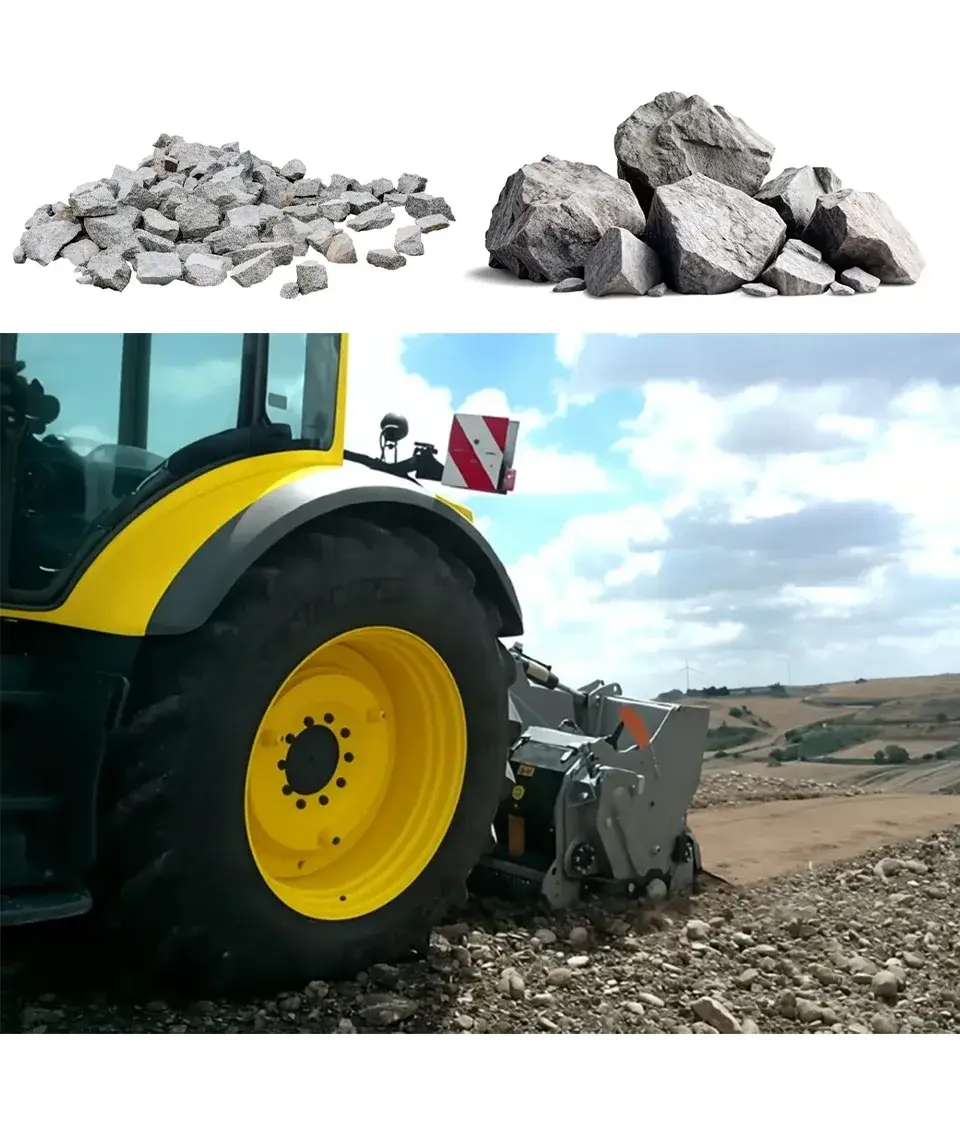
The manufacturing structure of a pto pto stone crusher gearbox — specifically the housing casting, the gear material and heat treatment, and the bearing selection — collectively determine how effectively the unit manages thermal stress over its service life. Starting with the housing: grey cast iron (GG25 / HT250) is the most common housing material for agricultural gearboxes in this class. Cast iron offers high thermal mass — the ability to absorb heat energy without an immediate temperature spike — combined with reasonable thermal conductivity and excellent vibration damping. A heavy cast iron housing on a tractor stone crusher for sale in the working weight range of 2,300 kg (such as the Thor 2.4 series) can absorb a meaningful heat pulse during a heavy rock strike before that energy redistributes through the oil and housing wall to the external air.
The gear blanks themselves are typically machined from medium-alloy steel (20CrMnTi or 42CrMo4 equivalent) and subjected to case carburizing or induction surface hardening after gear hobbing. The heat treatment creates a hard surface layer (typically 58–62 HRC) over a tougher core. This surface hardness serves two thermal purposes: first, the hardened tooth surface resists micro-welding (scuffing) that occurs when the oil film breaks down at elevated temperatures, and second, the dimensional stability of hard steel is better maintained against the thermal expansion and contraction cycles that occur during field operations. Bearings are selected for their temperature rating — in continuous-duty pto stone crusher gearboxes, tapered roller bearings with steel cages rated to at least 120°C continuous operation are standard, replacing the lighter duty deep-groove ball bearings that might be adequate in intermittent applications but struggle under sustained thermal load.
The oil seal design is a manufacturing decision with direct thermal consequences. FKM (fluoroelastomer) shaft seals retain their lip contact geometry and material properties up to approximately 180°C, while NBR (nitrile) seals begin to harden and lose lip contact force above 100°C. An NBR seal installed in a gearbox that regularly reaches 100°C oil temperature will develop leaks within one season, not because the seal was defective, but because it was thermally mismatched to the application. Modern well-specified pto pto stone crusher gearboxes use FKM-compound seals as standard equipment on the high-temperature output shaft positions, representing a modest manufacturing cost increase that pays back many times over in reduced oil contamination failures.

4. Material System: Gear Oil Selection as a Primary Thermal Management Tool
Of all the factors that determine whether a pto stone crusher gearbox survives continuous tropical-temperature operation, the gear oil specification is the one most directly in the operator’s control. Gear oil performs four simultaneous functions: lubricating tooth contact surfaces to prevent metal-to-metal wear, providing a fluid film in bearing raceways, transferring heat from hot zones (bearings, gear mesh) to the oil sump wall, and flushing away the microscopic metallic wear debris generated by normal contact. Under elevated temperature conditions, all four functions degrade simultaneously — viscosity drops (reducing film thickness), oxidation accelerates (increasing sludge formation), additive packages deplete faster (reducing extreme-pressure protection), and thermal conductivity changes with oil chemistry. For Colombian pto stone crusher operators who face sustained elevated temperatures, understanding the viscosity-temperature relationship of gear oil is fundamental.
ISO VG 220 gear oil is the most commonly specified grade for moderate-duty pto stone crusher gearboxes in temperate climates. At 40°C, it has a viscosity of approximately 220 cSt; at 100°C, this drops to approximately 19 cSt. For tropical lowland Colombian operations where gearbox oil may regularly reach 95–105°C, this viscosity at operating temperature may be insufficient to maintain adequate film thickness at gear mesh zones, particularly under the high shock loads of boulder-density work. Upgrading to ISO VG 320 or ISO VG 460 adds viscosity at high temperature: ISO VG 320 delivers approximately 26 cSt at 100°C, while ISO VG 460 provides approximately 32 cSt. The thicker film provided by the heavier grade directly reduces the metal-to-metal contact severity, the primary source of both wear debris and frictional heat generation. The trade-off is higher churning losses at low temperatures (cold morning starts), but in tropical Colombia’s year-round warm conditions, this trade-off almost always favors the heavier grade for full-day operations.
Synthetic ester-based gear oils offer a further advantage: they maintain higher viscosity indices than mineral oils, meaning their viscosity drops less steeply with temperature increase. A synthetic ISO VG 220 at 100°C may deliver equivalent or better film thickness compared to a mineral ISO VG 320 at the same temperature, while also running cooler due to lower internal fluid friction. The higher cost of synthetic oil is typically recovered within one maintenance cycle through extended oil change intervals and reduced bearing wear rates in high-temperature applications. For agricultural pto stone crusher operators managing multiple machines in the Colombian coffee or fruit growing regions, the per-machine cost reduction from extending oil change intervals from 200 to 400+ hours on synthetic represents a meaningful operational saving.
5. Passive vs. Active Cooling Mechanisms in Agricultural Gearboxes
Stone crusher gearboxes in the agricultural segment are overwhelmingly passively cooled — meaning they rely entirely on natural convection from the housing surface and conduction through the machine frame to dissipate heat, without any supplemental cooling system. This is appropriate for the majority of operating conditions, since the additional weight, complexity, and maintenance burden of an active cooling system (oil cooler, fan, or heat exchanger) would be difficult to justify for most field applications. However, understanding the limits of passive cooling helps operators recognize when they are approaching those limits — before failure occurs rather than after.
Passive cooling effectiveness in a pto pto stone crusher depends on three variables the operator can influence: airspeed across the housing, housing cleanliness, and oil level. Airspeed is determined primarily by tractor forward travel speed — at 3 km/h (the typical recommended working speed for stone crushers requiring 180–230 hp tractors), convective cooling from natural air movement is modest but present. Packed mud or stone dust coating the outside of the housing acts as thermal insulation, dramatically reducing the convective and radiative heat transfer that the housing design relies upon. A gearbox housing caked with 5 mm of dried clay has an effective thermal resistance 3–5 times higher than a clean casting — a difference that can translate to 15–25°C higher steady-state oil temperature. Simply washing the exterior of the gearbox housing at the end of each field day is one of the highest-value maintenance actions for thermal management, yet it is among the least commonly performed in field conditions.
Oil level is perhaps the most underappreciated thermal management variable. Below the correct fill level, the volume of oil available to absorb and redistribute heat is reduced, and the portion of the gear mesh that dips below the oil surface (which is what drives splash lubrication) decreases. An oil level that is 20% below the full mark can result in oil temperatures 10–15°C higher than the correctly-filled gearbox under identical load conditions. This compounds particularly dangerously in a machine that is already operating at elevated temperature — the incremental temperature rise from a low oil level may be enough to push bearing temperatures past the grease relubrication interval, triggering premature bearing spalling that presents weeks or months after the low-oil event.
6. Gearbox Maintenance Regulations and Safety Standards — Colombia and International
Agricultural stone crushing equipment operated in Colombia falls under multiple regulatory frameworks that address both operator safety and environmental protection in ways directly relevant to gearbox thermal management and lubricant handling. Colombian operators and equipment managers should be familiar with the following frameworks:
Colombia — SGSST and Environmental Compliance: Under Resolución 0312 de 2019 (Sistema de Gestión de Seguridad y Salud en el Trabajo), machinery operators must conduct and document risk assessments for all rotating mechanical equipment. A gearbox operating at elevated temperature that suddenly fails — releasing hot oil or shattering a housing — represents a serious occupational hazard that should be addressed in the machine-specific risk assessment. Decreto 1076 de 2015 (Environmental Sector Regulatory Decree) classifies used gear oil as hazardous industrial waste. Colombians must dispose of spent gearbox oil exclusively through DIAN-registered and CARs-authorized waste collectors; improper disposal on agricultural land is an infraction under Law 99 of 1993. Retain oil change records as documentation under both SGSST and environmental compliance frameworks.
European Union — Machinery Directive and ISO Standards: Stone crushers and mulchers sold into EU markets must comply with Machinery Directive 2006/42/EC, which requires that gearbox lubrication intervals, required oil grades, and overtemperature warning procedures be documented in the operator’s manual in the language of the destination market. EN ISO 4254-7 (safety of agricultural machinery, soil-working) applies specifically to stone crusher and mulcher attachments. The ISO 6743-6 standard covers the classification of lubricants for gear boxes, providing the framework within which ISO VG grades are defined. EU-origin equipment exported to Colombia retains CE marking obligations, and operators modifying lubrication specifications away from the original manufacturer’s recommendation do so at their own liability.
United States — OSHA and ASABE Standards: ASABE Standard S318 (Safety for Agricultural Equipment) establishes baseline requirements for guarding, operator protection, and documentation. OSHA 29 CFR 1910.217 addresses machine guarding including hot surfaces — a gearbox housing exceeding 60°C constitutes a burn hazard if unguarded. ASABE S292 covers agricultural equipment lubrication documentation requirements referenced in equipment certifications for North American markets.
Brazil — NR-31: Given that several tractor stone crusher models commonly used in Latin America originate from Brazilian engineering traditions (the Thor 2.4 and Thor 3.0 platforms are examples of this category), Brazilian NR-31 (Norma Regulamentadora 31 — Safety and Health at Rural Work) is relevant for understanding the regulatory framework within which these machines were designed. NR-31 mandates guarding on all PTO-driven components, thermal warning labels on surfaces exceeding 50°C, and maintenance documentation retention for a minimum of five years.
Colombia Environmental Note on Lubricant Storage: Agricultural operations in Colombia storing gear oil on-farm for tractor stone crusher maintenance must comply with Decreto 1713 de 2002 (solid waste management) and Resolution 1402 de 2006 regarding hazardous waste storage containers. Oil storage containers must be labeled, sealed, and kept away from water bodies and drainage channels to prevent soil and water contamination in agricultural zones.
7. Practical Cooling Strategies for Colombian Stone Crusher Operators
Beyond oil selection and structural design, there are operational strategies that experienced Colombian stone crusher operators use to manage gearbox temperature during long field days. These are not workarounds or shortcuts — they are engineering-informed practices that respect the thermal limits of the equipment and translate directly into extended machine life and lower total cost of operation. Understanding them is as important as understanding the theory of heat generation.
The most effective single practice is the midday cool-down stop. During the hottest part of a Colombian tropical day — roughly 11:00 to 14:00 — ambient temperatures are highest, solar radiation is at peak intensity, and the combined effect on gearbox thermal management is most severe. A 20–30 minute stop during this window, with the tractor engine running at idle (which keeps the PTO stationary but allows the tractor cooling system to function), allows the gearbox to shed accumulated heat to the air before resuming operations. Infrared thermometry shows that a correctly-timed midday stop can reduce afternoon peak gearbox temperatures by 15–20°C compared to operating through without a break — a difference that can mean the distinction between operating in the “elevated” risk zone versus the “critical” zone on hot lowland days.
Matching tractor horsepower to the stone crusher model is a second strategy with direct thermal consequences. All models in the stone crusher range have minimum tractor HP requirements: the Thor 2.4 requires a minimum of 180 hp, and the Thor 3.0 requires at least 230 hp. Operating with a tractor at or below the minimum rating means the tractor’s engine is working at high load percentage — in the region where PTO shaft torque fluctuation is greatest during stone impacts. High torque fluctuation causes higher gear mesh force variations, which translate to higher peak frictional heating events per unit time. An undersized tractor not only risks PTO overload shutdown but also accelerates thermal degradation of the gearbox oil through more frequent high-intensity heat pulses. Using a tractor with 10–20% power margin above the minimum rating smooths the torque delivery and reduces peak thermal spikes.
Housing cleanliness, as discussed in the structural section, deserves emphasis as an operational strategy. Making housing washdown part of the daily machine inspection routine — not a seasonal maintenance activity — reduces steady-state operating temperature measurably. In Colombian clay-soil regions (Cundinamarca, Nariño), equipment can accumulate significant mud on gearbox housings during a single field day. A pressure washer or high-flow water hose applied to the gearbox exterior at the end of each working day is a 5-minute task that may add years to bearing and oil seal service life by keeping housing surface temperatures at design levels.
Product Range
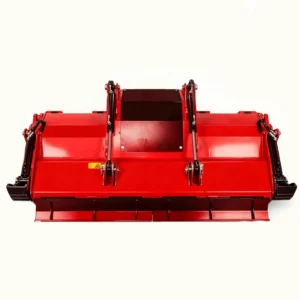
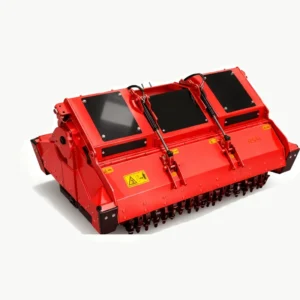
8. Stone Crusher Series — Models Matched to Colombian Conditions
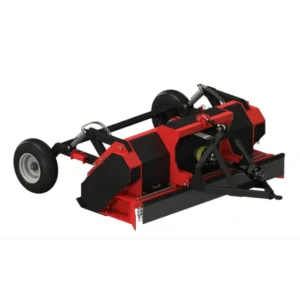
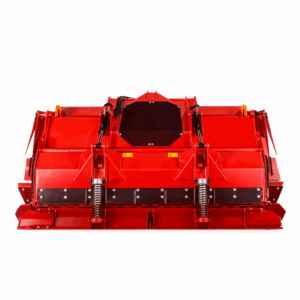
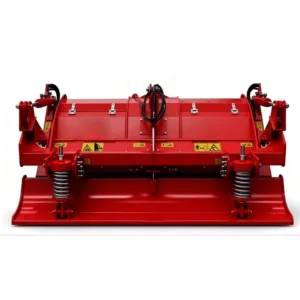
Each model in the stone crusher series is designed with specific tractor power and gearbox thermal parameters in mind. Selecting the right model for your terrain and climate directly affects how your gearbox manages heat during long field days.
9. Recognizing Overtemperature Warning Signs Before Failure Occurs
Most gearbox overtemperature failures in agricultural pto stone crusher equipment are not sudden catastrophic events — they are gradual degradation processes that give clear warning signs for weeks or months before a costly breakdown occurs. Knowing what to look for during routine daily checks can prevent what would otherwise become a multi-day repair requiring housing replacement or full gearbox rebuild. The challenge is that the most informative early warning indicators require brief attention during the working day, when operators are focused on clearing ground efficiently and field pressure is highest. Building these checks into the daily pre-operation and post-operation routine takes less than five minutes and pays a disproportionate maintenance dividend.
The first and most actionable warning sign is oil temperature at shutdown. After a full working day, with the tractor PTO disengaged but the implement still hitched, place a hand briefly on the gearbox housing (if safe to do so). A housing that is too hot to hold comfortably — generally interpreted as above 60–65°C on the external surface — indicates an internal oil temperature likely 20–30°C higher, well into the elevated risk zone for prolonged operation. A simple external infrared thermometer, available at low cost from agricultural supply stores in Bogotá, Medellín, or Cali, can quantify this precisely and takes a reading in seconds. The second warning sign is oil color and smell at the dipstick or fill plug. Fresh gear oil is typically amber to light brown. Oil that has darkened significantly to near-black, or that has a burnt or varnish smell, has experienced thermal degradation events that have consumed its antioxidant additive package. This oil needs replacement regardless of the hours elapsed since the last change.
Unusual noise patterns from the gearbox during operation — specifically a rhythmic ticking at gear frequency, a whining note that changes pitch with RPM, or an intermittent rattling — are acoustic signs of bearing distress that often follows thermal overloading. Thermal cycling (heating and cooling through the day) causes micro-fatigue in bearing raceways and cage structures that eventually shows up as noise before it shows up as catastrophic failure. Any new noise from a pto pto stone crusher gearbox that was not present during initial operation should be investigated promptly rather than deferred to the end of the planting or clearing season.
10. About Us
We are a dedicated supplier and technical resource for professional-grade tractor stone crusher equipment and related agricultural land preparation machinery, serving farmers, agribusinesses, rural developers, and land managers across Latin America with a particular focus on Colombia’s diverse terrain and climate regions. Our product catalog spans the complete range of stone crushing needs — from compact pto stone crusher units for smallholder operations to high-horsepower implements for large-scale land clearing and road base preparation.
Frequently Asked Questions
Editor: PXY