MAINTENANCE GUIDE · PTO STONE CRUSHER
Replacing Side Liners on a PTO Stone Crusher: When to Change and How to Fit Correctly
A practical step-by-step maintenance guide for agricultural machinery operators and workshop technicians — from Korean highland farms to commercial land-clearing operations
Side liner replacement is one of the most maintenance-critical tasks on any PTO石破砕機. Get the timing wrong — either too early or too late — and the cost impact is significant in both directions. Change liners before they have reached their useful service limit and you leave money on the table in the form of unused wear material. Wait too long, and the structural steel behind the liner begins to absorb direct fragment impact, leading to expensive frame repair or premature machine retirement. Between those two failure modes lies the practical maintenance window that this guide is designed to help you identify and act on correctly.
This article is written for operators, farm workshop technicians, and agricultural machinery dealers working with PTO石破砕機 equipment in Korean farming environments — including the rocky upland fields of Gangwon-do, the volcanic soils of Jeju Island, and the mixed agricultural zones of Gyeongbuk and Chungcheong provinces where surface stone density can vary dramatically from one field to the next. The information presented draws on the design features of the STCM, STCL, Thor 2.4, Thor 3.0, RockMaster, and PSC-series stone crusher models, and applies broadly to the structural architecture common across this class of tractor stone crusher equipment.
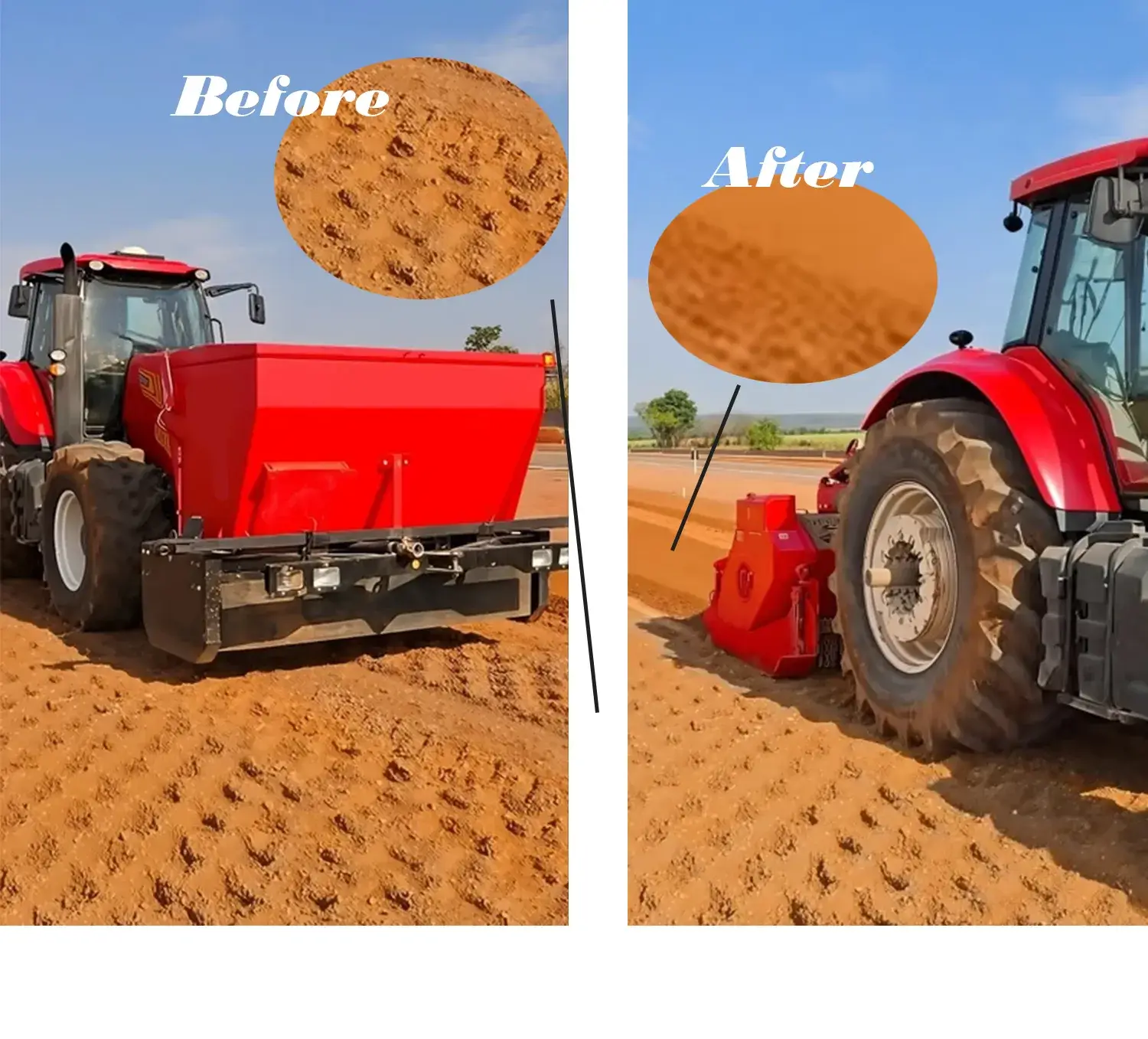
1. What Is a Side Liner and What Role Does It Play?
A side liner is a replaceable wear plate positioned along the interior lateral walls of the crushing chamber in a 石破砕機. Its core purpose is to absorb the kinetic energy of stone fragments projected outward by the spinning rotor, shielding the permanent structural steel of the main frame from direct abrasive and impact contact. Without this sacrificial protection layer, the structural housing would erode at a rate that makes economical machine operation impossible on hard or abrasive rock. The replaceable design of modern side liners is a deliberate engineering decision: it separates the consumable wear element from the permanent structure, meaning that maintenance is a straightforward bolt-on, bolt-off operation rather than a welding and fabrication exercise.
Beyond the protective function, side liners also play an active role in shaping the crushing chamber geometry. Together with the counter-blade, the rear containment door, and the rotor, the liners define the space through which stone fragments travel from the inlet to the outlet. When a liner panel wears unevenly or is worn well below its design thickness, the effective chamber volume changes in ways that alter the fragment flow path, affect the final crushed particle size, and in severe cases allow material to bypass the counter-blade zone entirely. A well-maintained liner assembly means a machine that processes material as it was designed to — consistently, efficiently, and without unnecessary stress on the rotor or bearings. For operators using a PTO石破砕機 in Korean agricultural applications, this consistency directly affects field preparation quality and downstream planting outcomes.
2. Action Mode: How the Crushing Motion Creates Liner Wear
To understand when and why to replace a side liner, it helps to understand the forces acting on it during normal operation. A PTO石破砕機 drives its rotor through the tractor’s Power Take-Off (PTO) shaft, which delivers rotational input at either 540 RPM or 1000 RPM depending on the model and application. This input is stepped up through the machine’s transmission system — belt drive, chain drive, or reduction gear depending on the specific design — to deliver the rotor tip speed needed for effective stone fracture.
When a rotor tooth of a PTO石破砕機 strikes a stone, the stone fractures and the resulting fragments are projected outward in a wide arc. The geometry of the crushing chamber determines where those fragments travel. In a standard STCM or PSC-series PTO石破砕機 operating at 1000 RPM PTO, fragment tip velocities at the rotor periphery reach levels that give each fragment significant kinetic energy on impact with the liner wall. This energy is dissipated through three simultaneous mechanisms: surface abrasion (the fragment slides across the liner under contact pressure), micro-gouging (harder mineral particles in the fragment cut fine grooves in the liner surface), and macro-impact (larger fragments strike at high velocity, creating discrete craters or deformations). The rate at which these mechanisms consume the liner material depends on the rock hardness, the operating speed, the ground speed, and the design geometry of the specific machine. Understanding this gives you a rational basis for setting inspection intervals rather than relying on fixed calendar schedules that may not reflect your actual operating conditions in Korean field environments.
3. Manufacturing Structure: How Side Liners Are Built
The manufacturing structure of a side liner directly determines how it wears, how long it lasts, and what it costs to replace. There are three main construction approaches used in contemporary stone crusher for tractor equipment, and each presents different trade-offs between initial cost, service life, and failure mode behaviour. Knowing which type is fitted to your machine is the first step in planning an intelligent maintenance schedule.
Monolithic Hardox Plate Construction
The most common construction type found on STCM, STCL, Thor, and RockMaster series machines is a single-piece plate of Hardox wear-resistant steel, either grade 400 or grade 500 (400 HB or 500 HB nominal surface hardness). These plates are cut to the exact profile of the liner recess, drilled with counter-bored bolt holes, and bolted directly to the main frame inner wall using high-tensile fasteners. The monolithic construction gives uniform wear behaviour across the full plate face. When replacement is due, the procedure is straightforward: remove the fasteners, extract the worn plate, and fit the new plate in its place. No welding is required. The main advantage is simplicity and low installation time; the main limitation is that once the full plate reaches minimum thickness, the entire plate must be replaced even if some areas still have significant life remaining.
Two-Zone Segmented Liner System
Higher-end models in the STCM and RSL series use a two-zone design where the liner panel is split into forward and rear segments. This design acknowledges that wear is not uniform — the rear segment adjacent to the counter-blade zone experiences significantly higher impact and abrasion than the forward section near the inlet. With a segmented system, the workshop technician can replace only the worn rear segment while leaving the still-serviceable forward segment in place, reducing both material cost and labour time per maintenance event. This approach is particularly cost-effective for Korean agricultural machinery operators running a PTO石破砕機 with high annual machine hours on the hard granite and basalt soils found in Gangwon-do and North Gyeongsang Province.
Chromium Carbide Overlay (CCO) Composite Plate
Chromium carbide overlay plates use a mild steel base plate with a fusion-bonded overlay of chromium carbide matrix, achieving surface hardness values of 600–700 HB. This construction offers two to three times the abrasion resistance of standard Hardox 400 in conditions where the dominant wear mechanism is fine-particle high-stress abrasion — such as highly siliceous Korean granite soils. The trade-off is brittleness: CCO plates can fracture under sustained high-impact loading from large, angular fragments. For most general-purpose agricultural stone crushing applications in Korea, Hardox 500 represents the better balance. CCO is worth considering only where the dominant stone type is fine-grained, highly abrasive, and smaller than the machine’s rated maximum input diameter.
4. Material System: Selecting the Right Grade for Korean Field Conditions
Choosing the correct liner material grade for your PTO石破砕機 is not a one-size-fits-all decision. Korean agricultural geology is diverse: Jeju Island’s volcanic basalt, Gangwon-do’s granitic metamorphic terrain, and the mixed sandstone and limestone outcrops of the central and southern provinces each create meaningfully different liner wear conditions. The following table summarises the most commonly used material grades, their mechanical properties, and their suitability for the range of Korean rock types that a トラクター用砕石機 is likely to encounter.
| Material Grade | Hardness (HB) | Tensile Str. (MPa) | Best Used For | Korean Field Context |
|---|---|---|---|---|
| ハードックス400 | 370–430 | 1250–1550 | Moderate abrasion, mixed soil-stone; lower cost replacement cycles | Southern coastal plains; mixed sedimentary upland soils; Chungcheong Province |
| Hardox 500 | 470–530 | 1550–1900 | High abrasion + moderate impact; hard igneous rock environments | Gangwon-do granite; Gyeongbuk metamorphic zones; Jeju basalt; standard upgrade from 400 |
| CCO (600–700 HB) | 600–700 (surface) | Base plate 400–500 | Extreme fine-particle abrasion; low-impact highly siliceous rock | Specific high-silica quartzite zones; not general-purpose in Korean agriculture |
| Manganese Steel (Hadfield) | 200 initial → 500+ HB work-hardened | 900–1200 | High-impact, large-fragment conditions; work-hardens under use | Less common in agricultural crushers; occasionally specified for road construction derivatives |
All hardness values are nominal. Actual wear life varies with rock type, machine operating speed, and ground speed. Consult the equipment parts documentation for grade specifications on your specific model.
5. When to Replace: Inspection Signs and Service Intervals
Establishing a clear replacement trigger is the most important discipline in side liner management for any PTO石破砕機 and agricultural stone crusher. The table below summarises the key inspection indicators and the recommended response at each severity level. These thresholds apply to standard Hardox 400 and 500 monolithic liner plates as fitted to the Thor 2.4, Thor 3.0, STCM series, and PSC/STCL-type machines. Segmented liner systems should be assessed zone by zone rather than as a single panel.
| Inspection Indicator | Severity Level | Recommended Action |
|---|---|---|
| Remaining thickness 75–100% of new | Normal service | Continue operation; inspect at next scheduled service (every 100 hours or seasonal) |
| 50–75% remaining; minor surface pitting or uniform abrasion | Moderate wear | Note wear pattern; consider rotating symmetric panels; continue with 50-hour check interval |
| 30–50% remaining; localised deep gouging in counter-blade zone | Significant wear | Order replacement parts immediately; plan change within 30–50 hours; inspect every 20 hours |
| 15–30% remaining; visible thinning; bolt holes elongating | Critical — replace soon | Replace at next available work stoppage; do not continue through a full working day |
| Below 15%; through-holes; cracking; abnormal vibration or noise | Emergency — stop now | Stop machine immediately; do not attempt to complete the pass; inspect frame behind liner before restarting |
Beyond the table, there are several operational signals on a PTO石破砕機 that indicate worn liners even before visual inspection: an unusual ringing or metallic resonance from the crushing chamber during operation; crushed output becoming coarser or more variable in particle size without any change in counter-blade setting; a gradual but unexplained increase in fuel consumption as the machine works harder to maintain rotor speed through a geometrically compromised chamber; or visible sparking at the rear outlet during evening operation indicating direct rotor-to-frame contact. Any of these signs should prompt immediate inspection — and, on finding liner wear below 30%, immediate part ordering even if you continue operating briefly while the parts are sourced.
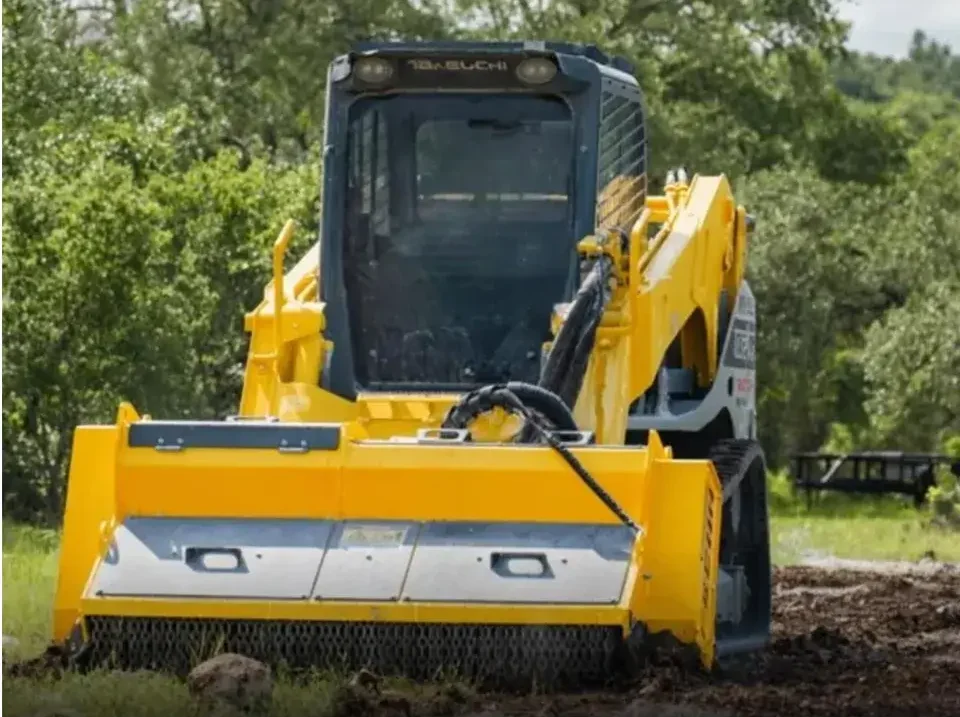
6. Tools and Workshop Preparation Before Starting
Side liner replacement on a 小型PTO式石破砕機 or a full-size commercial unit should never be approached as an improvised field repair. The work on a PTO石破砕機 involves removing bolts under stored tension from a machine that may have been operating at high temperature, working in a confined chamber with limited access, and handling steel panels that can weigh 15–60 kg depending on the model size and working width. For a Thor 2.4 (2,300 kg machine, 2.4 m working width) or Thor 3.0 (2,800 kg, 3.0 m working width), the side liner panels represent a substantial handling task even with two operators.
Before beginning work, gather the following items: a torque wrench calibrated to the fastener specification listed in your machine’s service manual; an impact driver or breaker bar (most liner bolts are M16 or M20 high-tensile grade 10.9, requiring substantial torque to break free); penetrating oil applied 30–60 minutes before work begins to help free corroded bolt threads; a set of appropriate sockets and extensions; a suitable steel punch or drift to align bolt holes during installation; a wire brush for cleaning the mounting face on the main frame; a file or angle grinder for removing burrs or raised material around worn bolt holes in the frame; clean lint-free rags for surface preparation; and a suitable lifting assistant or positioning tool — an adjustable engine hoist or a second person — for handling heavy panels. For Korean workshop conditions in winter months, a heat gun is helpful to expand frozen bolt threads if the machine has been standing in sub-zero temperatures typical of Gangwon-do winters.
7. Step-by-Step Replacement Procedure
The following procedure applies to bolt-on monolithic Hardox liner panels as fitted to the primary models in the Mulchers and Stone Crushers product range. Refer to your machine’s specific service documentation for torque values, bolt specifications, and any model-specific sequence requirements. Safety is the non-negotiable starting point: the machine must be fully de-energised, the PTO shaft disconnected from the tractor, and the tractor key removed and retained by the person performing the work before any access panel is opened.
Step 1 — Safety Shutdown and Access: Disconnect the PTO shaft from the tractor, apply the tractor handbrake, remove the key, and lower the machine to the ground on a flat, stable surface. Open the machine’s rear access panel or door — on STCM and PSC-type units this is typically a bolted panel at the rear of the crushing chamber. On Thor-series machines with the Kit Drawbar configuration, position the machine so the chamber opening is accessible without working under the raised implement.
Step 2 — Clean the Chamber: Before removing any fasteners, clear accumulated material from inside the crushing chamber. Residual stone fragments and compacted soil debris around bolt heads will make fastener removal difficult and can contaminate the new liner mounting faces. Use a stiff brush and compressed air if available. This step takes 10–15 minutes but saves significant frustration during fastener extraction.
Step 3 — Apply Penetrating Oil: Apply penetrating oil to all liner fastener heads and allow to soak for a minimum of 20 minutes — longer if the machine has not had liner work done recently or has operated in wet, muddy conditions. Korean agricultural environments — particularly the rice paddy transition zones in South Jeolla and South Chungcheong provinces — often expose bolt threads to aggressive soil chemistry that accelerates corrosion. Do not skip this step.
Step 4 — Remove Liner Fasteners in Sequence: Begin fastener removal from the centre of the panel and work outward. This sequence releases the panel progressively and prevents the panel from springing unexpectedly when the last edge bolt is freed. If a bolt is seized, do not apply excessive torque immediately — apply further penetrating oil, use a heat gun to expand the bolt head, and retry. Forcing a seized bolt risks damaging the tapped hole in the frame, which creates a much larger repair problem than the liner change itself.
Step 5 — Extract the Worn Liner Panel: With all fasteners removed, carefully extract the worn panel from the mounting recess. Heavy panels should be handled with two persons or with a suitable lifting tool. Set the panel aside on a flat surface for post-inspection — review the wear surface as described in the wear pattern diagnostic section to confirm the machine is operating correctly before installing the new panel.
Step 6 — Inspect and Prepare the Mounting Surface: Examine the structural frame wall behind the removed liner. Look for deformation, cracking, or material erosion that would indicate direct fragment contact through a worn liner. Light surface scratching is normal; deep gouges, through-wall penetration, or cracks require frame repair by a qualified welder before fitting a new liner. Clean the mounting face with a wire brush, remove any raised burrs with a file, and blow out the tapped bolt holes with compressed air or clean out thread damage with a tap of the appropriate size.
Step 7 — Fit the New Liner Panel: Position the new liner in the mounting recess, using a steel drift or punch to align the bolt holes if needed. Fit all fasteners finger-tight before torquing any of them — this allows the panel to self-locate evenly against the frame. Once all fasteners are started, torque them in a cross-pattern from centre outward to the service manual specification. For M16 grade 10.9 bolts, the typical torque is 195–230 Nm; for M20 grade 10.9, 370–450 Nm. If in doubt, consult the machine documentation.
Step 8 — Check Counter-Blade Setting After Liner Change: A new liner panel restores the chamber geometry to its design state. If the counter-blade was adjusted during the previous liner wear period to compensate for the changed geometry, it should now be reset to its standard operating position. Failure to re-check this setting can result in the counter-blade being too close to the rotor for the restored chamber geometry, increasing wear on the new liner unnecessarily in its early service hours.
Step 9 — Reconnect and Run Test: Close and secure the access panel on your PTO石破砕機, reconnect the PTO shaft to the tractor with all shaft guards in place, and engage the PTO at low tractor rpm with the machine raised. Listen for any abnormal noise — rattling, ringing, or periodic knocking — that might indicate a loose fastener or misaligned panel. Gradually increase to operating rpm and perform a short field test on light material before returning to full production. Inspect liner fastener torque again after the first two hours of operation, as new liner panels can settle slightly against the frame.
8. Model Reference: Key Parameters Affecting Liner Replacement Frequency
The following table provides the primary technical parameters for the stone crusher models most relevant to Korean agricultural land preparation. These parameters directly influence liner replacement frequency: higher rotor diameter and higher power input means higher fragment tip speeds and faster liner wear per hour; wider working width means more liner surface area to inspect but also more total wear area to spread impact energy across.
| モデル | Min. Power (hp) | PTO(回転数) | 作業幅(mm) | ローター径(mm) | マックスストーン直径(mm) | 体重(kg) | Working Speed (km/h) |
|---|---|---|---|---|---|---|---|
| Thor 2.4 | 180 | 1000 | 2400 | 550 | 300 | 2300 | 3 |
| Thor 3.0 | 230 | 1000 | 3000 | 550 | 300 | 2800 | 3 |
| STCM 125 | 80–110 | 540 / 1000 | 1340 | 550 | 300 | 1850 | 3 |
| STCM 175 | 160~220 | 1000 | 1824 | 550 | 300 | 3250 | 3 |
| STCL 100 | 70~120 | 540~1000 | 1110 | 450 | 150 | 1230 | 3–5 |
| RSL 125 | 90~120 | 540 | 1240 | 595 | 300 | 1800 | 3–5 |
Source: product specifications from pto-stone-crusher.com and technical documentation. All dimensions in mm; weights in kg. Working speed is manufacturer recommendation; actual speed depends on rock density and field conditions.
9. Regulatory Context: Agricultural Machinery Safety Standards Relevant to Liner Maintenance
Side liner condition is not only a machine performance issue — in many jurisdictions it has direct implications for occupational safety compliance and insurance validity. Understanding the applicable regulatory framework helps operators in Korea and export markets make defensible maintenance decisions backed by documented standards.
Republic of Korea (MAFRA / KAS): In Korea, the Ministry of Agriculture, Food and Rural Affairs (MAFRA) and the Korea Agency of HACCP Accreditation and Services (KAHAS) govern food safety, but agricultural machinery safety falls under the Rural Development Administration (RDA) and the Agricultural Machinery Certification (AMC) framework. The Agricultural Machinery Act (농업기계화촉진법) mandates that agricultural machinery operators maintain equipment in a condition that does not create hazards for the operator or bystanders. A PTO石破砕機 with liner condition below the safe operating threshold — particularly where fragment ejection risk has increased due to liner wear — constitutes a violation of this framework. The Korea New and Renewable Energy Center and the Korea Institute of Machinery and Materials (KIMM) publish relevant machinery safety guidelines that dealers and operators should consult when establishing maintenance schedules.
Republic of Korea — PTO Safety: Korean Occupational Safety and Health Act (산업안전보건법) regulations, administered by the Ministry of Employment and Labor (MOEL), require that rotating PTO-driven implements are operated with all shaft guards intact and that maintenance work on implements is only performed with the PTO fully disengaged and the power source secured. The step-by-step procedure above follows these requirements explicitly. Korean farm operators should document PTO shaft guard condition as part of their pre-season equipment inspection checklist.
European Union (CE Machinery Directive): Agricultural stone crushers imported from EU-certified sources carry CE marking under the EU Machinery Directive 2006/42/EC. This directive requires manufacturers to specify replacement intervals and minimum acceptable component thicknesses for safety-critical wear parts in the technical file. Operators who modify replacement intervals beyond those specified in the technical file, or who substitute non-specification wear material grades, may affect the CE declaration of conformity status of the machine. This is particularly relevant for Korean importers sourcing EU-origin stone crusher equipment who sell to or service customers subject to international supply chain audits.
United States (ASABE Standards): Although Korea and the US market are separate, Korean agricultural machinery exporters and multi-national farm operators should be aware that ASABE Standard EP496 (Agricultural Machinery Management) and ASABE S207 (Guarding for Agricultural Equipment) specify maintenance documentation requirements for PTO-driven implements that are broadly considered international best practice. Many Korean agricultural technology certifications reference or align with ASABE standards as technical benchmarks.
Japan (JIS Standards): Given the close agricultural trade and technology relationship between Korea and Japan, JIS B 9700 series standards on machinery safety and JIS B 9152 on maintenance of agricultural machinery are frequently referenced by Korean equipment manufacturers and dealers, particularly for equipment sold in the shared Pacific agricultural machinery market. Liner replacement intervals documented under these standards are generally comparable to CE requirements.
10. Related Products: Stone Crushers Referenced in This Guide
The following PTO石破砕機 products represent the models most commonly deployed in Korean agricultural land preparation and field stone management operations. Each model features bolt-on interchangeable liner systems designed for field-level replacement without specialist tooling.
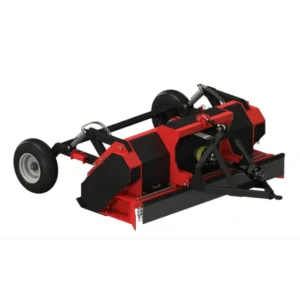
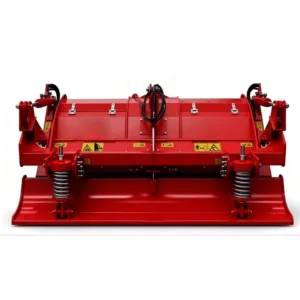
Thor 2.4 + キットドローバー
2.4 m width · 180 hp · 2,300 kg
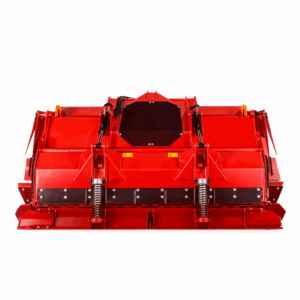
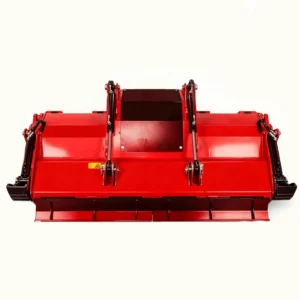
ロックマスター農業用石材破砕機
Heavy-duty agricultural stone crusher
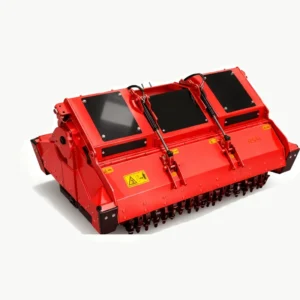
トラクター搭載型岩石破砕機
Mid-duty tractor stone crusher for sale
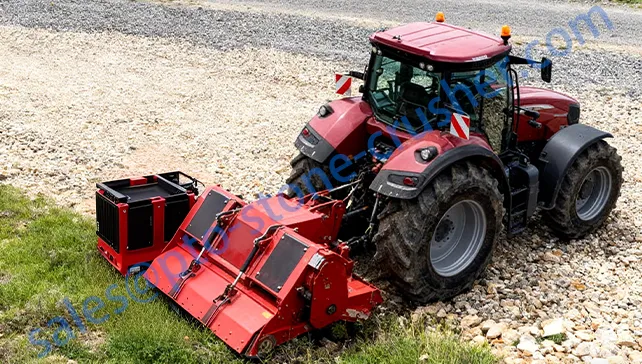
Agricultural Tractor Mounted Rock Crusher — Korea
Designed for Korean agricultural conditions
11. 会社概要
We supply and support professional PTO石破砕機 equipment for agricultural land preparation, field stone management, and land clearing operations across Korea and international markets. Our PTO石破砕機 product range includes the full spectrum of PTO-driven stone crushing machines — from compact small pto stone crusher units suitable for 70–80 hp tractors working in Korean highland orchards and terraced fields, through to high-power machines requiring 200 hp or more for large-scale land development projects.
よくある質問
編集者: PXY