Agricultural Field Preparation — Japan
Penghancur Batu PTO untuk Reklamasi Sawah Jepang: Pembersihan Lahan Basal Vulkanik dan Andesit
Japan’s volcanic archipelago presents some of the most demanding stone-clearing challenges in East Asian agriculture. Basalt cobbles, andesite fragments, and scoriaceous volcanic debris embedded in paddy subsoils require a pto stone crusher engineered for high-hardness igneous rock — not merely surface gravel.
1. Volcanic Stone in Japan’s Agricultural Landscape: The Scale of the Problem
Japan sits on the Pacific Ring of Fire, and for farmers seeking a pto stone crusher that can handle hard igneous material, this geology matters enormously. The consequence for farmers is not merely occasional surface stone — it is a landscape where volcanic basalt flows, andesite intrusions, tuff deposits, and scoria layers have been actively incorporated into the agricultural soil profile across Hokkaido, Tohoku, Kanto, and the southern Kyushu highlands for millennia. When rice paddy reclamation projects target formerly forested or fallow volcanic slopes — particularly in Hokkaido where new paddy development is ongoing — the pto stone crusher encounters rock types with Mohs hardness values between 5.5 and 7.5, far harder and more abrasive than the alluvial cobbles typical of temperate farmland in continental Asia or Europe.
The economic pressure to deploy the right pto stone crusher is real. Japan’s Ministry of Agriculture, Forestry and Fisheries (MAFF) has maintained policies supporting paddy field consolidation (hojyo seibi) and new reclamation, especially in Hokkaido where farm scale is larger and mechanization is more advanced. For a paddy field to receive water management certification, a pto stone crusher that produces sub-100 mm aggregate from the field’s native volcanic rock and be eligible for the government-supported field improvement programs, the subsurface must be prepared to a standard that excludes stones capable of damaging transplanting machines, paddy levelers, and irrigation infrastructure. A properly specified pto stone crusher is central to achieving that standard efficiently on volcanic ground.
This pto stone crusher resource examines the full technical picture: how a pto stone crusher operates mechanically when confronted with igneous rock, what construction standards and material specifications make the difference between a machine that lasts one season and one that lasts a decade — and how to select the pto stone crusher model that delivers the latter, which pto stone crusher product models are best suited to Japanese paddy reclamation work, and what regulatory obligations Japanese operators should be aware of when importing and deploying this category of stone crushing equipment.
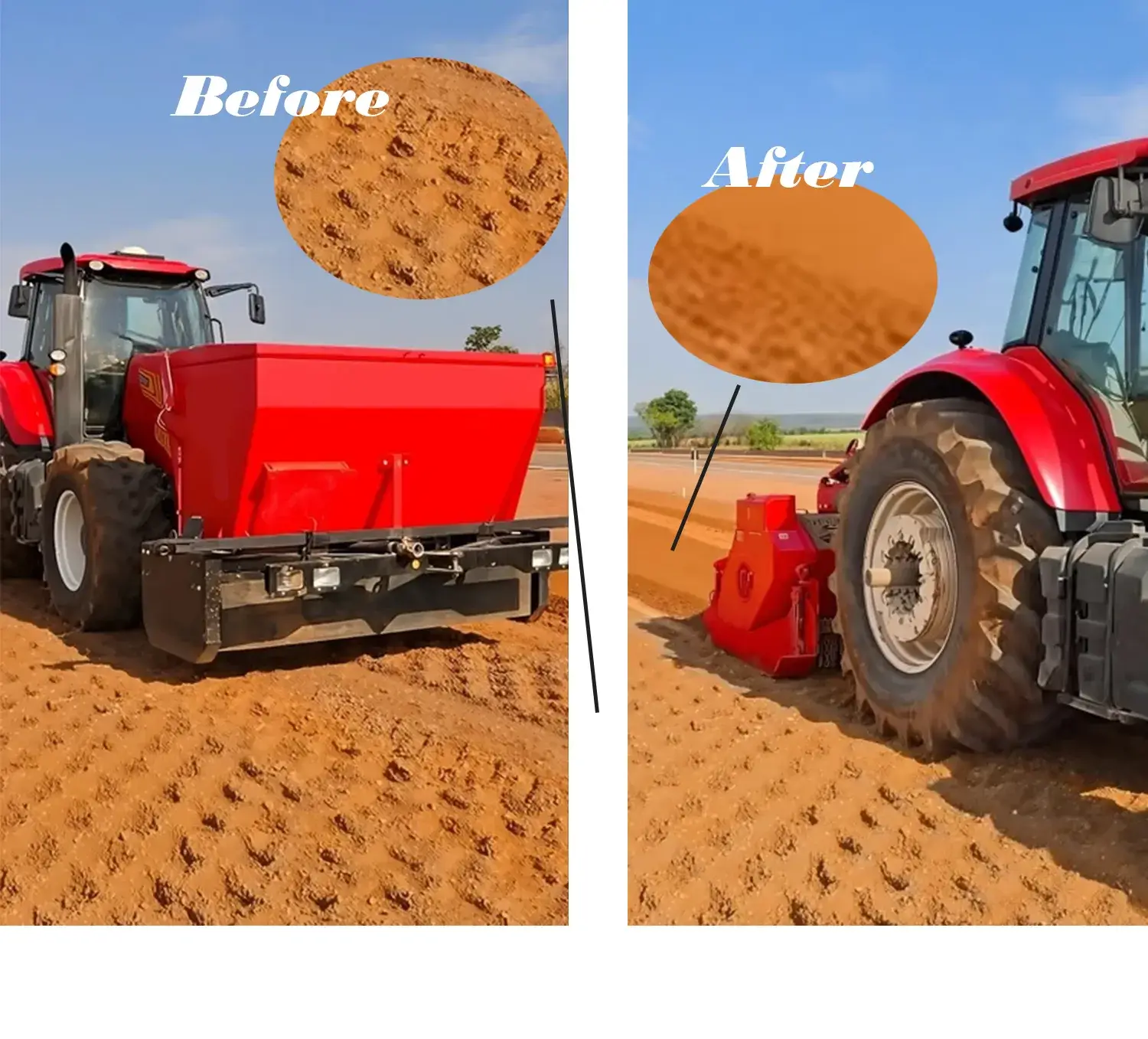
2. Action Mechanism: How the PTO Stone Crusher Works Against Volcanic Rock
The Power Take-Off Connection and Energy Delivery
Every pto stone crusher in the product range draws its operating energy from the host tractor’s engine via the rear Power Take-Off (PTO) shaft. When the tractor operator engages the PTO lever, the engine’s full rated torque is transmitted through a cardan shaft — a telescoping propeller shaft with universal joints at each end — to the input shaft of the stone crusher’s gearbox. The standard PTO output speeds used in the product range are 540 RPM and 1000 RPM, and the correct matching between tractor output and crusher input is one of the first decisions an operator must make. For volcanic basalt and andesite clearing in Japan — where rock hardness demands maximum rotor tip speed — models operating at 1000 RPM are the preferred choice. The higher rotational speed translates directly into greater kinetic energy per tooth impact, and it is kinetic energy, not simply mass, that fractures crystalline igneous rock along grain boundaries.
The cardan shaft design on every pto stone crusher must accommodate the angular displacement between the tractor’s fixed PTO stub and the crusher’s moving input shaft as the machine follows ground undulations during operation. On Hokkaido’s volcanic upland soils — which are frequently uneven due to lava flow surface features, root mounds from cleared forest, and drainage channel borders — this angular flexibility is not a minor convenience but a genuine operational necessity. The maximum permissible angle on the cardan shaft’s universal joints is typically 15–20°, and exceeding this during operation causes premature joint wear and can cause shaft vibration severe enough to damage the gearbox input seal.
Gearbox Transmission: Belt, Direct Shaft, and Reduction Gear Options
The gearbox of every pto stone crusher is the transmission bridge between the incoming PTO shaft rotation and the high-speed rotation of the crusher rotor. The three main transmission architectures found across the pto stone crusher product range — belt transmission (used on lighter PSC Series models), direct shaft with torque limiter (used on the STCM and THOR series), and reduction gear transmission (used on the heavy RSM-class machines) — each have specific advantages in the volcanic rock context. For Japanese paddy reclamation, selecting the right pto stone crusher gearbox architecture for operators typically working with 80–230 hp tractors and stone diameters primarily below 300 mm, the direct shaft transmission with an integrated torque limiter is the most balanced choice. When a pto stone crusher strikes an exceptionally hard basalt cobble that temporarily exceeds the rotor’s designed fracture capacity, the torque limiter disconnects the drive for a fraction of a second, preventing the shock load from propagating backward into the gearbox gears, the cardan shaft universal joints, and ultimately the tractor’s PTO stub shaft and rear axle bearings. This protective action in the pto stone crusher is particularly valuable on volcanic terrain where stone hardness is inconsistent — a field may contain predominantly soft scoria alongside occasional dense basalt cores with very different fracture resistance.
Rotor Impact Physics: Fracturing Basalt and Andesite
The rotor of the pto stone crusher is a heavy steel shaft with tooth holders welded or bolted radially along its length. As the rotor spins at high velocity inside the crushing chamber, the tungsten carbide tipped teeth strike stones entering through the front opening. The physics of fracturing igneous rock differs meaningfully from fracturing limestone or gravel. Basalt has a uniform fine-grained crystalline structure with relatively few natural cleavage planes — it tends to require a higher energy-per-unit-area impact to initiate fracture than sedimentary rocks of equivalent size. Andesite has similar characteristics. Each pto stone crusher overcomes this fracture resistance through rotor tip speed: at 1000 RPM input, a rotor with 550 mm diameter (as found in the STCM series) achieves a tip speed of approximately 28.8 m/s. At this speed, the impact energy per tooth strike is sufficient to initiate fractures in basalt cobbles up to 300 mm in diameter through a combination of direct impact stress and the reflected stress wave that travels back through the stone when the rotor tooth surface strikes a point on the cobble’s outer surface. The stone’s inertia and fixed position against the counter-blade provides the reactive force that completes the fracture.
3. Manufacturing Construction: Structural Engineering for Igneous Rock Conditions
Main Frame: Welded Box Architecture
The external housing of every pto stone crusher designed for hard-rock agricultural clearing is a welded box structure built from structural steel plate. The wall thickness of this box is not uniform — areas adjacent to the rotor, and especially the rear counter-blade mounting zone, use significantly heavier plate than the external side walls, which primarily serve containment functions. On STCM-class machines the main housing wall thickness in the high-wear zone is typically 20–25 mm compared to 10–12 mm on less critical outer surfaces. This thickness distribution matters for the Japanese volcanic rock context because basalt fragments thrown against the rear of the chamber at high velocity will erode and deform thin steel over repeated passes in ways that would require costly housing repair or replacement within a single clearing season.
The structural pto stone crusher frame must also manage resonance. Any rotating machine creates vibration, and a pto stone crusher operating in a field of hard rock creates substantial vibration from the irregular impact loading on the rotor. If the frame’s natural frequency happens to coincide with the rotor’s excitation frequency — which is related to the tooth passing frequency (number of teeth × rotor RPM) — resonance amplification can cause premature weld cracking at frame joints, particularly at the corners of the main housing box. Good structural design deliberately detunes the frame by varying plate thickness, adding internal bracing, and sometimes incorporating vibration-damping elastomeric mounts at specific attachment points. Japanese operators should confirm that their chosen pto stone crusher has been validated for the higher vibration levels. Using a pto stone crusher not tested on volcanic ash soils significantly increases the risk of premature bearing failure. for the higher vibration levels associated with volcanic rock before committing to a season’s operation.
Three-Point Hitch Interface and Drawbar Options
Attachment of the pto stone crusher to the host tractor follows the ISO 730 Category 2 three-point lower linkage standard for all models in the product range. This standard is fully compatible with the rear hydraulic lift systems of the Japanese tractor fleet — Kubota, Yanmar, Iseki, and Mitsubishi Mahindra tractors of the 60–200 hp range all incorporate Category 2 three-point linkage as the domestic standard. The lower link pin diameter (28.7 mm) and upper link pin diameter (28.7 mm) are standardized, meaning no adapter is required for the majority of Japanese farm tractors when mounting a PSC Series, STCM Series, THOR, or RockMaster pto stone crusher directly.
These pto stone crusher THOR 2.4 and THOR 3.0 models include a Kit Drawbar option — a trailing wheel assembly that transforms the three-point mounted machine into a semi-trailed implement. This configuration is valuable on the gently sloping volcanic hillside paddies of Hokkaido and Iwate prefectures, where the trailing wheel allows the crusher to follow the field surface contour independently of the tractor’s rear linkage position. The drawbar kit also reduces the dynamic load on the tractor’s three-point linkage lift cylinders during passage over surface irregularities, which is relevant for protecting older tractors where the hydraulic lift seals may be approaching service life limits.
Rotor Bearing Housing and Shaft Sealing
A pto stone crusher deployed in volcanic soil faces a specific contamination challenge that standard agricultural equipment does not: volcanic ash fines and silica dust. Japan’s soils in regions like the Kanto loam plateau and Hokkaido’s volcanic ash belts (known as Kita Kantō loam and Towada pumice zones) contain very fine silica particulates that suspend in the air during stone crushing operations. These particles are small enough to penetrate standard lip seal designs and enter bearing housings, where they act as a lapping compound against bearing races. The result is accelerated bearing wear, with SKF or NSK equivalent L-series flange bearings failing in 200–400 hours instead of the design life of 2,000+ hours. High-quality pto stone crusher models address this with sealed-for-life bearing cartridges, labyrinth-type dust exclusion seals, and positive grease pressure maintenance through a central lubrication point. Japanese operators sourcing any pto stone crusher for volcanic terrain should specifically ask suppliers about the bearing sealing specification and confirm it has been tested in volcanic ash environments.
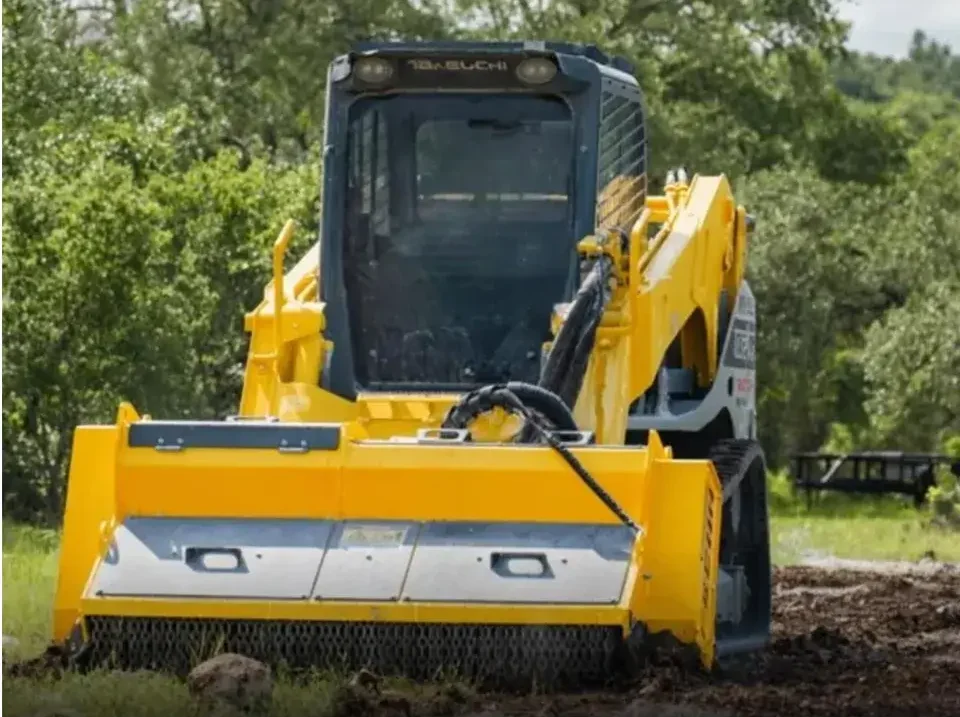
4. Material System: Steels, Alloys, and Wear Components for Hard Igneous Rock
Hardox Wear Steel in the Crushing Chamber
The internal lining of the crushing chamber on mid and heavy-duty pto stone crusher models uses Hardox wear steel. For every pto stone crusher operating on volcanic material, uses Hardox brand abrasion-resistant steel plate from SSAB, or equivalent grades from other premium mills. Hardox 450 offers a nominal Brinell hardness of 450 HB and is the standard choice for general agricultural stone crushing including limestone, gravel, and moderately hard granite. For volcanic basalt and andesite — which have a silica content of 45–75% and a quartz equivalent that makes them substantially more abrasive than limestone — Hardox 500 (nominal 500 HB) or even Hardox 600 in the highest-stress contact zones is the appropriate specification. The practical difference is measurable: in a field season clearing basalt cobbles from volcanic paddy subsoil, Hardox 450 side liners may show 8–12 mm of wear loss on the leading edges of the counter-blade area after 300–400 hours of operation, while Hardox 500 liners in the same position lose approximately 4–6 mm over the same period. The bolt-on, interchangeable design of these liners on STCM-class and RockMaster-class machines means that seasonal replacement is straightforward and economical — it does not require the machine to go to a fabrication shop.
Rotor Shaft Alloy Specifications
The rotor shaft in every pto stone crusher for volcanic rock clearing must be selected for fatigue resistance rather than simply ultimate tensile strength. Basalt and andesite fracture in a brittle manner, and when a large cobble fractures suddenly under rotor impact, the load on the shaft drops from peak impact value to near-zero almost instantaneously. This repeated high-amplitude, short-duration load cycling — sometimes several hundred cycles per minute during intensive clearing passes — creates fatigue conditions that are more damaging than a steady high load. Rotor shafts manufactured from CrMoV (chromium-molybdenum-vanadium) alloy steel that has been quenched and tempered to a core hardness of 300–350 HB offer excellent fatigue life under these conditions. The surface of the shaft where tooth holders are welded is a particular concern: stress concentration at weld toes can initiate fatigue cracks. Properly manufactured rotors use full-penetration welds with post-weld heat treatment or controlled cooling to minimize residual stress at these locations.
Tungsten Carbide Tooth Grades for Volcanic Rock
The tooth tips that physically contact the volcanic stone are the fastest-wearing consumable components on any pto stone crusher. Selecting the right tooth type for your pto stone crusher is as important as selecting the right rotor diameter. For basalt and andesite clearing in Japan, the tooth grade selection is critical. Standard agricultural tungsten carbide grades (roughly WC-Co with 10–13% cobalt binder) offer excellent toughness for softer rock types but can suffer edge chipping when striking the very hard, fine-grained surfaces of fresh basalt. The STC/3/HD (heavy-duty) tooth type referenced in the product range uses a modified carbide geometry and a tougher binder composition that sacrifices a small amount of wear resistance in exchange for significantly better impact resistance — the right trade-off for volcanic igneous rock where the primary failure mode is chipping rather than gradual abrasion. Operators in Japan’s volcanic paddy regions should run the STC/3/HD tooth type as the standard choice and reserve the STC/3/FP (flat profile) for situations where fineness of output aggregate is the primary objective, such as when the crushed material will be re-incorporated as sub-base for irrigation channel construction within the field boundary.
Protection Chain Alloy and Configuration
Rear protection chains on every pto stone crusher serve two functions: limiting ejection of stone fragments to a safe distance behind the machine, and influencing output particle size distribution by providing additional resistance to material exit. In the volcanic rock context, chains face the additional challenge of exposure to abrasive silica-laden soil during clearing passes. Premium chain alloys use case-hardened boron steel links with surface hardness of 550–600 HB — significantly harder than the 380–420 HB found in standard agricultural chain. The higher surface hardness resists the abrasive cutting action of basalt chip surfaces dragged against the chain links during each rotor revolution. Link diameter selection also matters: heavier-section chain absorbs more impact energy per strike from ejected basalt chips, but adds weight and can restrict material flow if set too dense. The optimal configuration for Japanese paddy reclamation is typically medium-density chain with heavier-gauge boron steel links, replaced on an annual inspection schedule rather than waiting for visible failure.
5. Product Models and Technical Specifications
The following pto stone crusher specifications are drawn directly from the product range. Matching the correct pto stone crusher model to Japanese volcanic paddy conditions requires evaluating tractor horsepower, maximum stone diameter in the target field, desired working width, and the terrain slope. All models use Category 2 three-point lower linkage compatible with Japanese tractor standards.
PSC Series — Field Stone Crusher (70–150 hp, compact volcanic clearing)
| Model | Traktor (hp) | PTO (rpm) | Lebar Kerja (mm) | Berat (kg) | Diameter Batu Maksimum (mm) | Kedalaman Maksimum (mm) |
|---|---|---|---|---|---|---|
| PSC 100 | 70–120 | 540–1000 | 1110 | 1230 | 150 | 150 |
| PSC 125 | 80–120 | 540–1000 | 1350 | 1280 | 150 | 150 |
| PSC 150 | 90–120 | 540–1000 | 1590 | 1440 | 150 | 150 |
| PSC 175 | 100–150 | 1000 | 1830 | 1600 | 150 | 150 |
| PSC 200 | 120–150 | 1000 | 2070 | 1750 | 150 | 150 |
STCM Series — Medium-Power Volcanic Rock Clearing (80–280 hp)
| Model | Traktor (hp) | PTO (rpm) | Lebar Kerja (mm) | Berat (kg) | Diameter Batu Maksimum (mm) | Kedalaman Maksimum (mm) |
|---|---|---|---|---|---|---|
| STCM 150 | 150–220 | 1000 | 1584 | 3000 | 300 | 200 |
| STCM 175 | 160–220 | 1000 | 1824 | 3250 | 300 | 200 |
| STCM 200 | 170–220 | 1000 | 2064 | 3550 | 300 | 200 |
| STCM 225 | 180–220 | 1000 | 2304 | 3800 | 300 | 200 |
THOR Series — Large-Width Paddy Reclamation (180–230 hp)
| Model | Traktor (hp) | Working Width (m) | Berat (kg) | Working Speed (km/h) | Control Valves | Kategori Penghubung. |
|---|---|---|---|---|---|---|
| THOR 2.4 + Kit Drawbar | 180 | 2.4 | 2300 | 3 | 2 | 2 |
| THOR 3.0 + Kit Drawbar | 230 | 3.0 | 2800 | 3 | 2 | 2 |
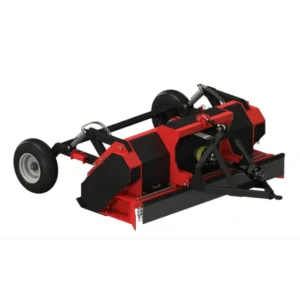
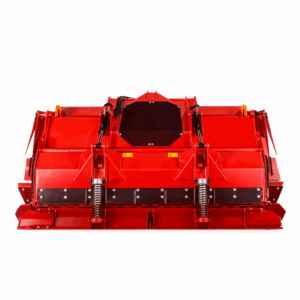
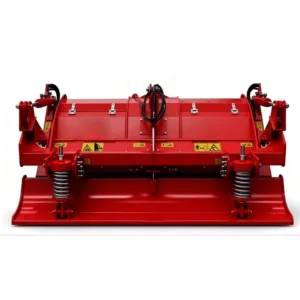
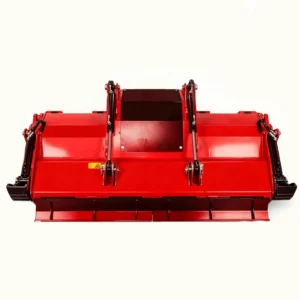
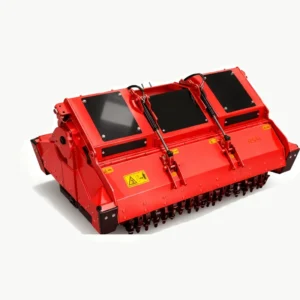
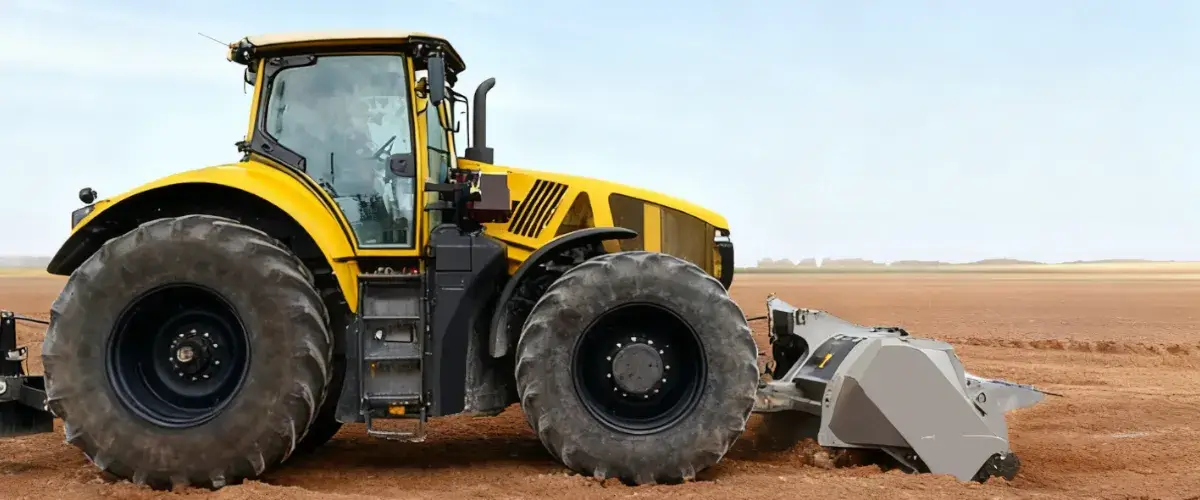
6. Our Stone Crusher / Mulcher Product Range
7. Japan-Specific Application Contexts: Hokkaido, Tohoku, and Kyushu
Hokkaido: Large-Scale Paddy Reclamation on Volcanic Plateau
Hokkaido accounts for roughly 25% of Japan’s total rice production but hosts the most challenging volcanic stone management conditions in the country. The Tokachi Plain, Ishikari Plain, and the volcanic uplands surrounding Mt. Tokachi, Mt. Meakan, and the Daisetsuzan massif all contain extensive basalt lava plateau zones where the agricultural subsoil incorporates dense basalt cobble layers at 15–40 cm depth. New paddy development and paddy consolidation projects on Hokkaido routinely encounter these layers during sub-drainage installation and paddy leveling. The pto stone crusher requirement here is firmly in the STCM-class machine range — machines capable of 200–300 mm maximum stone diameter at depths to 200 mm, operating with 150–220 hp tractors, which represent the typical Hokkaido commercial farm power range. The STCM 200 and STCM 225 pto stone crusher models are well-matched to this environment. Working widths of 2064–2304 mm align with Hokkaido’s wider paddy dimensions, allowing the pto stone crusher to cover ground efficiently, allowing efficient coverage in fewer passes compared to narrower PSC-class machines.
Hokkaido’s climate introduces a secondary consideration: freeze-thaw cycling. During spring thaw, frost heave actively lifts new stones to the surface from the subsoil, meaning that volcanic paddy fields may require stone crushing treatment in multiple successive seasons after initial reclamation. The pto stone crusher approach — processing volcanic stones in-place rather than collecting and hauling them — is the defining economic advantage of this category of stone crushing equipment — is particularly economical when the same field requires repeated annual treatment over 3–5 seasons until the frost heave cycle exhausts the accessible subsurface stone supply. Understanding this temporal dimension helps justify the capital investment in the pto stone crusher for Hokkaido operators who might otherwise expect a single treatment to be sufficient.
Tohoku: Andesite and Welded Tuff on Mountain Piedmont Paddies
The Tohoku region — Aomori, Iwate, Miyagi, Akita, Yamagata, and Fukushima prefectures — contains significant areas of piedmont paddy on volcanic andesite and welded tuff parent material. Andesite differs from basalt in being slightly less dense but comparable in hardness, with a more porphyritic texture (large crystals in a fine matrix) that can cause irregular fracture behavior in the pto stone crusher. Large andesite phenocrysts may fracture cleanly at the crystal boundary while the fine-grained matrix is highly abrasive. Welded tuff (ignimbrite), formed from compacted volcanic ash flows, varies widely in hardness from very soft (easily crushed by PSC-class machines) to nearly as hard as andesite where the tuff has been heavily welded and silicified. Field assessment of rock type before committing to a machine class is strongly recommended — a simple scratch test with a steel knife blade distinguishes soft tuff (easily scratched) from hard welded tuff or andesite (knife marks surface but does not gouge). The STCL/PSC class pto stone crusher handles soft to moderately hard volcanic material adequately; the STCM or RockMaster-class pto stone crusher is required for hard welded tuff and andesite. Selecting the wrong-class pto stone crusher for hard andesite will result in tooth failure within the first 20 hours of operation.
Kyushu: Volcanic Ash Soil (Shirasu) and Scoria Management
Kyushu’s agricultural zones near the Kirishima-Kinkowan volcanic belt, Sakurajima, and the Aso caldera present a different volcanic material challenge: pumice and scoria deposits (known as shirasu) that are highly porous and relatively soft, combined with occasional dense basalt dyke intrusions. Shirasu itself is not a hard-rock crushing challenge — it fractures easily under even light impact and the PSC Series or small pto stone crusher models are sufficient. However, where basalt dykes or andesite plugs intersect the shirasu fields, the contrast between extremely soft surrounding material and very hard intrusive rock creates operational challenges: the machine’s counter-blade gap setting optimized for the surrounding shirasu will allow the hard intrusive fragments to pass without full crushing, while a tighter gap setting appropriate for the hard rock will over-process the soft shirasu to an undesirable fine dust. Operators in Kyushu should use a pto stone crusher with hydraulically adjustable counter-blade. The pto stone crusher’s ability to change crushing gap setting from the cab without stopping is critical in mixed volcanic material fields. — all STCM-class and RockMaster-class pto stone crusher units provide this feature — and be prepared to adjust gap settings during the pass when transitioning between soft and hard volcanic material zones.
8. Regulatory Framework: Gearboxes, Machinery Safety, and Agricultural Equipment Laws
Japan: Agricultural Machinery Safety Standards and PTO Regulations
In Japan, agricultural machinery safety is governed primarily through the Agricultural Mechanization Promotion Law (Nōgyō no kikaikaino sokushin ni kansuru hōritsu), administered by the Ministry of Agriculture, Forestry and Fisheries (MAFF). Under this framework, the Agricultural Machinery Safety Foundation (known as JAMAS — Japan Agricultural Machinery and Solutions Association, formerly the Japan Agricultural Mechanization Research Station, JAMS) evaluates imported agricultural attachments for compatibility with Japanese safety standards. Imported pto stone crusher machinery entering Japan is required to conform to JIS (Japan Industrial Standard) B 1553, which specifies dimensions and operational requirements for PTO shafts on agricultural tractors up to 150 kW. The PTO shaft guard — the plastic or metal cover over the cardan shaft — must conform to JIS B 9700 (ISO 4254-1 equivalent) for machinery safety. Operators who remove or damage PTO shaft guards for any reason are in violation of the Occupational Safety and Health Act (Rōdō anzen eisei hō) and may face liability in the event of an accident during work in agricultural settings.
For gearboxes specifically, Japan follows JIS B series standards for mechanical power transmission components. Imported pto stone crusher gearboxes must comply with applicable JIS gear quality standards and are subject to the Product Liability Act (Seizōbutsu sekinin hō, PL Law) enacted in 1994 and enforced from 1995, which places responsibility for defective product-caused damage on the manufacturer or importer. This means that importing a pto stone crusher into Japan as a commercial product — even as a one-off purchase by an individual farming cooperative — technically creates product liability obligations under Japanese law. Importers should ensure that the machine supplier provides adequate documentation of the product’s design standards and any applicable CE or equivalent certification.
Korea: Machinery Safety and Agricultural Equipment Standards
The Republic of Korea governs agricultural machinery safety through the Agricultural Mechanization Promotion Act (농업기계화 촉진법) administered by the Ministry of Agriculture, Food and Rural Affairs (MAFRA). For a pto stone crusher entering Korea, the Korean Agency of Technology and Standards (KATS) issues KS (Korean Standard) specifications for agricultural machinery, with KS B ISO 500 applying to PTO shaft specifications and KS B ISO 730 covering three-point linkage dimensions. Imported pto stone crusher machines entering Korea for commercial use must obtain registration with MAFRA under the Agricultural Machinery Registration system if they are to be eligible for government agricultural machinery support subsidies — a significant consideration given that Korea’s farm mechanization subsidy programs can cover 50% or more of machine purchase cost for registered equipment. The gearbox and PTO shaft must meet KS standards, and a Declaration of Conformity from the manufacturer is typically required. Korean Agricultural Machinery Industry Association (KAMIA) can provide guidance on certification paths for imported stone crushing equipment.
European Union: CE Marking and Machinery Directive
Every pto stone crusher placed on the European Union market must carry CE marking in compliance with the EU Machinery Directive 2006/42/EC (which was succeeded by the Machinery Regulation EU 2023/1230, applicable from January 2027). CE marking confirms that the machine meets essential health and safety requirements covering design, guarding, noise emissions, and vibration. For gearbox components specifically, the Machinery Directive requires that all power transmission components be adequately guarded and that the torque limiter (if provided) is calibrated to the manufacturer’s specification. EU operators running any pto stone crusher should be aware that modifying the pto stone crusher torque limiter setting — a common field practice to increase apparent crushing power — constitutes an unauthorized modification that voids the CE marking and transfers product liability to the operator. EN ISO 4254-7 (agricultural machinery — safety for soil-working machinery) is the harmonized standard specifically applicable to pto stone crusher machines in the EU context.
United States and Australia: OSHA, ASABE, and Farm Safety Standards
In the United States, operators of a pto stone crusher must comply with OSHA 29 CFR Part 1928 and specifically addresses PTO shaft guarding requirements for farm machinery. ASABE (American Society of Agricultural and Biological Engineers) Standard S205 covers PTO shaft specifications, and ASABE S360 addresses agricultural machinery noise. For gearboxes on imported stone crushing equipment, AGMA (American Gear Manufacturers Association) standards — particularly AGMA 6013 for enclosed gear drives — provide the design reference framework that competent importers should verify against. Australia’s agricultural machinery safety is governed by the model Work Health and Safety Act and Regulations, with AS 4024.1603 covering safety of machinery for soil preparation. Both jurisdictions emphasize that PTO shaft guards must be maintained in operational condition during field use, and both allow private use of uncertified foreign machinery under certain conditions but restrict commercial resale without compliance documentation.
9. Operational Guidance for Volcanic Rock Clearing in Japanese Conditions
Pre-Season Rock Survey
Walk the target field before deploying any pto stone crusher and use a steel probe rod (at least 600 mm long) to identify stone layer depth and density. Mark zones with dense surface basalt separately from zones with mainly sub-surface material. This survey data directly informs counter-blade gap setting and forward speed selection for each zone.
RPM Selection for Hard Igneous Rock
Always run the pto stone crusher at 1000 RPM PTO when clearing volcanic basalt or andesite. If your pto stone crusher does not offer 1000 RPM input capability, it is not suitable for hard igneous rock clearance. The higher rotor tip speed is essential for fracturing these hard, crystalline rock types. Running at 540 RPM is appropriate only for soft scoria and pumice (shirasu zones in Kyushu). Confirm your tractor PTO output specification before engagement.
Volcanic Ash Dust Management
Volcanic ash fines generated during clearing are extremely abrasive to bearing seals and air filters. Clean or replace the tractor’s primary air filter every 4–8 hours during intensive pto stone crusher volcanic ash clearing sessions during intensive volcanic ash clearing. Check the pto stone crusher’s cardan shaft universal joint grease nipples daily and apply fresh grease to displace dust contamination from the grease chamber.
Tooth Inspection Protocol
Inspect the pto stone crusher tungsten carbide teeth after every 8 hours of operation on hard basalt or andesite. The pto stone crusher tooth replacement schedule on volcanic rock is significantly shorter than on sedimentary stone. of operation when clearing hard basalt or andesite. The STC/3/HD tooth profile can suffer edge chipping on initial contact with a fresh, unweathered basalt surface. Replace any tooth showing more than 3 mm of edge recession or visible carbide tip loss — a degraded tooth both reduces crushing efficiency and accelerates wear on adjacent tooth holders.
Frost Heave Multi-Season Planning
In Hokkaido’s climate, plan for 3–5 annual stone crushing passes on newly reclaimed volcanic paddies. Frost heave during winter will push new stones to the surface from the treated subsoil layer each spring. Build this multi-season pto stone crusher treatment into your reclamation project budget and timeline rather than expecting a single pass to produce a permanently clean paddy surface.
Counter-Blade Adjustment for Mixed Materials
When the pto stone crusher transitions between zones of different rock hardness — common in Kyushu’s shirasu-dominant fields with basalt intrusions — adjust the hydraulic counter-blade from the tractor cab rather than stopping to make the change manually. The hydraulically adjustable counter-blade on STCM and RockMaster class machines makes this a fluid, continuous adjustment during operation.
10. Model Selection Guide: Japanese Volcanic Paddy Clearing Scenarios
| Application Scenario | Region | Rock Type | Recommended Model | HP Range |
|---|---|---|---|---|
| Small paddy consolidation, narrow fields | Tohoku, Kyushu | Scoria, soft tuff | PSC 100 / PSC 125 | 70–120 |
| Medium paddy, basalt cobble sub-layer | Tohoku, Kanto | Basalt, andesite | PSC 175 / STCM 150 | 100–160 |
| Hokkaido large-block paddy reclamation | Hokkaido | Basalt, lava cobbles | STCM 200 / STCM 225 | 170–220 |
| Wide paddy preparation, frost heave zones | Hokkaido | Mixed volcanic | THOR 2.4 / THOR 3.0 | 180–230 |
| Hard welded tuff and dense basalt | Kyushu, Tohoku | Welded tuff, basalt | RockMaster (STCH-class) | 280–400 |
| Shirasu field with basalt dyke intrusions | Kagoshima, Miyazaki | Shirasu + basalt | STCM 175 with hydraulic blade | 160–220 |
Pertanyaan yang Sering Diajukan
Q1. Which pto stone crusher model is most reliable for clearing volcanic basalt cobbles in Hokkaido paddy reclamation projects?
For Hokkaido paddy reclamation where the pto stone crusher will face basalt cobble layers as the primary challenge, the STCM 200 or STCM 225 are the leading candidates. These models handle stones up to 300 mm in diameter at working depths to 200 mm, which covers the typical Hokkaido basalt cobble size distribution. They operate at 1000 RPM PTO — essential for the rotor tip speed needed to fracture dense igneous rock. Confirm your tractor is rated at 170–220 hp before specifying the pto stone crusher model. If you are unsure which pto stone crusher suits your Hokkaido volcanic site, a soil and rock assessment before purchase is strongly recommended. If your field has stones consistently above 300 mm or very dense layered basalt, the RockMaster or STCH-class machine may be required.
Q2. What is the best pto stone crusher tooth type for andesite and welded tuff clearing in Tohoku rice paddy fields?
For andesite and welded tuff in Tohoku, when operating a pto stone crusher on both harder rock types on both harder rock types with high silica content — the STC/3/HD (heavy-duty) tooth profile is the appropriate choice. This tooth uses a tougher carbide binder composition that resists the chipping failure mode common when striking the porphyritic surface of andesite. For very hard silicified tuff, you may find that the STC/3/HD teeth need replacement every 40–60 hours rather than the 100+ hours typical on limestone soils. Budget for tooth consumption as an operating cost in Tohoku’s volcanic andesite zones — it is a normal and expected maintenance item, not a product defect.
Q3. How does a PTO stone crusher handle the shirasu soil (volcanic ash) conditions found in Kagoshima for rice paddy preparation?
Shirasu (volcanic pumice/scoria deposits) is actually easier to process than many operators expect — it is relatively soft and fractures at low impact energy. The PSC Series small pto stone crusher or STCM 150 class machine handles shirasu effectively at 540 or 1000 RPM. The challenge in Kagoshima fields is the mixture of soft shirasu with occasional hard basalt dyke fragments. For mixed fields, the STCM Series with hydraulically adjustable counter-blade is most flexible — you can open the blade for the soft shirasu zones and tighten it when approaching harder material, all from the tractor cab without stopping. The volcanic ash fines from shirasu crushing are very abrasive to tractor air filters — a consideration that applies to any pto stone crusher operating in Kyushu’s pumice-dominant zones; clean or replace them daily.
Q4. What are the Japanese MAFF registration requirements when importing a tractor stone crusher for commercial farm use in Japan?
For commercial use and eligibility for Japanese agricultural machinery subsidy programs, the pto stone crusher must be registered with MAFF through the JAMAS (Japan Agricultural Machinery and Solutions Association) evaluation process. The key documents required are: the manufacturer’s technical specification sheet, CE Declaration of Conformity (or equivalent), PTO shaft dimension confirmation against JIS B 1553, and a Japanese-language safety instruction manual if the machine will be operated by Japanese-language workers. Customs clearance of the pto stone crusher also requires classification under the appropriate HS code for agricultural machinery — typically 8432.80 (other agricultural machinery for soil preparation) — which affects the applicable import duty rate. Consult a Japanese customs broker familiar with agricultural equipment for the specific documentation sequence.
Q5. How many seasons of stone crusher treatment does a newly reclaimed volcanic paddy in Hokkaido typically require before it’s ready for transplanting machinery?
On typical Hokkaido volcanic plateau paddy reclamation, operators should budget for 3–5 annual pto stone crusher treatment seasons. Each pto stone crusher pass removes the stones that frost heave brings to the surface over the preceding winter. after initial clearing. Frost heave in winter pushes subsurface stones to the surface each spring, meaning the first pass removes the current visible layer but a new layer appears after the first winter. By year 4 or 5, the accessible subsurface stone reservoir is largely exhausted and the paddy surface achieves the uniformity needed for rice transplanting machinery operation without stone damage risk. Some heavily stoned volcanic sites may require 6–8 seasons. Annual treatment with the pto stone crusher over multiple seasons is less costly than a single-season intensive treatment. The multi-season pto stone crusher approach is both economically sound and operationally practical for Hokkaido paddy programs. than a single-season intensive treatment and allows paddy use to begin earlier in the program.
Q6. What is crusher stone used for after a pto stone crusher processes volcanic basalt in Japanese rice paddy fields?
Crushed basalt returned to the paddy surface by the pto stone crusher serves several valuable functions. What the pto stone crusher produces is not waste — it is a valuable soil amendment and site material resource. in the Japanese paddy context. Fine basalt aggregate (under 20 mm) incorporated into the top 150 mm of paddy soil by subsequent tillage improves drainage in clay-heavy paddy soils and provides slow-release mineral nutrients (particularly calcium, magnesium, and trace elements) that basalt weathers to supply over many seasons — a process sometimes called rock dust soil amendment. Medium aggregate (20–60 mm) deposited on paddy access paths and farm road surfaces provides excellent trafficability for heavy equipment during wet conditions. Coarser crushed basalt (60–150 mm) can be used as sub-base material for concrete irrigation channel foundations within the field boundary, reducing the need to import aggregate from external sources.
Q7. How do I compare the cost of a used tractor stone crusher for sale versus buying new for Hokkaido volcanic paddy work?
When comparing used versus new pto stone crusher options for Hokkaido volcanic basalt work, inspecting any used pto stone crusher thoroughly for Hokkaido volcanic basalt work, the critical inspection points on a used unit are: tooth holder condition (worn or cracked holders cannot be re-tipped and are expensive to replace), counter-blade wear depth (if worn past 50% of original thickness, replacement cost may approach new machine value), housing wear in the high-impact zone behind the rotor (thin wall sections indicate near-end-of-life on the housing itself), and bearing condition (spin each end by hand — roughness or noise indicates bearing replacement needed). Volcanic rock service is much harder on all these components than standard sedimentary rock service, so a machine previously used on limestone may still have substantial remaining life on that rock type but be near end-of-life for Hokkaido basalt conditions. Insist on operating hours documentation for any used pto stone crusher — volcanic rock service accumulates damage much faster than sedimentary rock service and, if possible, a field inspection in operation before purchase.
Editor: PXY