الوصف
EP Rock Picker Series — CT-2100 Model | agricultural rock picker Korea
EP-5 Km/h Rock Picker For Tractor — CT-2100
Hydraulically driven, tractor-mounted rock picker for tractor — 1.95 m working width, 2.5 m³ integrated bunker, 3–5 Km/h working speed. Built for large-scale agricultural land clearing, field reclamation, and pre-cultivation rock removal in demanding terrain conditions across Korea and global markets.
1. Technical Specifications — EP CT-2100 Rock Picker
The following table lists the complete technical data for the CT-2100 model. All dimensions are in millimeters unless otherwise noted.
| المعلمة | CT-2100 |
|---|---|
| Dimensions | |
| الطول (مم) | 6000 |
| العرض (مم) | 3050 |
| الارتفاع (مم) | 2340 |
| الوزن (كجم) | 3400 |
| Bottom Linkage Category | 2 |
| عرض العمل | 1.95 m |
| Bunker Capacity | 2.5 m³ |
| Tractor Requirements | |
| Engine Power (min.) | 110 cv |
| Oil Flow (min.) | 60 L/min |
| Working Speed | 3–5 Km/h |
| صمامات التحكم المطلوبة | 2 |
2. What Is the EP CT-2100 Rock Picker For Tractor?
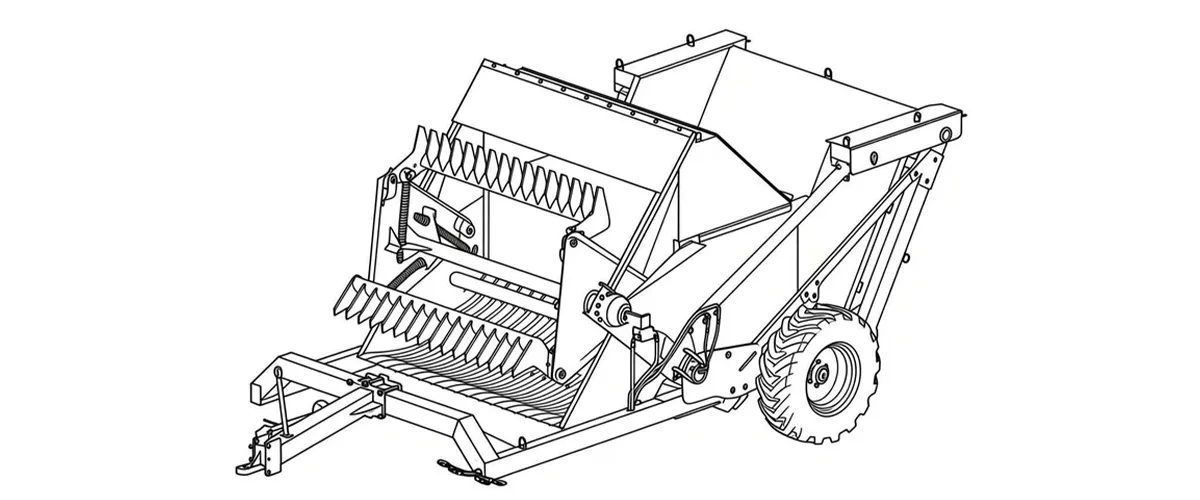
The EP CT-2100 is a purpose-designed rock picker for tractor built for professional agricultural land preparation and field clearing operations. Unlike simple rock rakes that push stones into windrows for manual collection, this machine picks up, lifts, and deposits rocks directly into an on-board 2.5 m³ bunker — eliminating the secondary handling step that consumes time and labour on rocky field operations. The operator drives the tractor at a steady field pace of 3 to 5 Km/h while the machine continuously picks, elevates, and stores rocks without stopping the forward movement.
Designed for tractors with a minimum engine output of 110 cv and equipped with a category 2 three-point bottom linkage, the CT-2100 integrates into the standard tractor’s rear hitch and runs entirely on the tractor’s hydraulic system — requiring a minimum oil flow of 60 L/min and two control valves. The 1.95 m working width covers a productive swath per pass that keeps field campaign times competitive even on large rocky holdings in Korea’s mountainous Gangwon-do or Gyeonggi provinces, where spring frost-heave brings fresh stones to the surface each season. At 3400 kg operating weight and dimensions of 6000 mm × 3050 mm × 2340 mm, the CT-2100 is a substantial piece of rock picking equipment suited to serious land development rather than occasional light clearing work.
3. Five Key Advantages of the EP CT-2100 Rock Picker
On-Board 2.5 m³ Bunker — No Secondary Handling
The integrated 2.5 m³ steel bunker collects picked rocks on the machine itself as the tractor moves forward. This eliminates the need for a follow-behind trailer, a separate loader, or a manual collection crew. When the bunker reaches capacity, the operator positions the tractor at the field edge and uses the hydraulic tipping function to discharge the load — then returns immediately to picking without interrupting the clearing campaign. For large operations in Korea’s rural upland districts, this autonomous collection capability is the primary factor that separates productive farm rock picker machines from simple displacement tools.
Fully Hydraulic Drive — No PTO Shaft Required
The CT-2100 operates entirely from the tractor’s hydraulic circuit. There is no PTO shaft to align, engage, or guard — which simplifies hitching, eliminates a common mechanical failure point, and removes the operator safety hazard associated with exposed rotating PTO components. Two tractor control valves manage the picking mechanism and bunker tipping independently, giving the operator full control from the cab. This hydraulic-drive approach is increasingly specified by Korean land development contractors who prefer simplified driveline architecture on machines working in irregular or sloped terrain.
Controlled 3–5 Km/h Working Speed — Efficient & Thorough
The 3 to 5 Km/h working speed range is the operational sweet spot for a stone picker machine of this type. At the lower end, the picking mechanism has time to engage, lift, and convey each stone without overloading — critical on fields with high stone density. At the upper end, area coverage per hour reaches a level that makes large-field operations economically viable. Korean agricultural operations managing multi-hectare reclamation projects — converting former scrubland or mountain-slope terracing into cultivable plots — will typically run at 4 Km/h to balance thorough picking with daily area output.
Category 2 Three-Point Linkage — Standard Tractor Compatibility
The category 2 bottom linkage system is the most widely used hitch specification on tractors in the 110 to 200 cv range — matching the most common mid-to-large tractor configurations deployed in Korean commercial agriculture. This standardisation means the CT-2100 fits without adapters on tractors from all major brands available in the Korean market, including domestic Korean-assembled tractors and imported European or North American units. There is no modification required to either the tractor or the implement for a standard category 2 fitment.
1.95 m Working Width — Productive Field Coverage
The CT-2100’s 1.95 m working width is wider than most competing agricultural rock picker machines in its horsepower class. At 4 Km/h, this translates to approximately 0.78 hectares of nominal coverage per hour — or roughly 6 to 7 hectares per working day when accounting for turning time and bunker emptying stops. For Korean farming cooperatives managing shared land reclamation on behalf of member farms, this productivity level makes meaningful progress visible within a single campaign season, even on heavily stoned upland sites.
4. How Does a Rock Picker Work? — CT-2100 Operating Principle
Many buyers asking how do rock pickers work are surprised to learn that a machine like the CT-2100 performs a complete pick-and-store cycle in continuous forward motion, without stopping. Here is how the process unfolds in sequence:
As the tractor moves across the field, the CT-2100’s picking head — positioned at the front of the working width — moves in close contact with the soil surface. The hydraulically driven picking rotor or gathering mechanism sweeps stones from the ground surface and lifts them upward through an intake channel. The design of the intake assembly is critical: it must collect stones without scooping excessive soil with them (which adds weight and reduces bunker capacity) while still capturing all rocks within the specified pickup range. The gap between the intake tines or paddles and the ground surface can typically be adjusted to suit the field’s stone size distribution.
Once lifted from the surface, stones travel through an elevator or conveyor section that raises them to the level of the bunker inlet. A separation stage — typically an open-web or bar-type conveyor — allows loose soil and small debris to fall back to the ground while retaining stones above the minimum pickup size. This soil separation is important for two reasons: it preserves the topsoil on the field rather than removing it with the stones, and it maximises the useful stone-storage capacity of the 2.5 m³ bunker by not filling it with dirt.
Stones that pass the separation stage drop into the bunker, where they accumulate until the operator decides to empty. The bunker tips hydraulically — controlled from the tractor cab via one of the two dedicated control valves — discharging the stone load at the field edge or into a waiting trailer. The second control valve governs the picking mechanism speed or other operating functions independently of the bunker tipping circuit, giving the operator precise command over both functions simultaneously if required.
5. Materials & Construction of Rock Picker
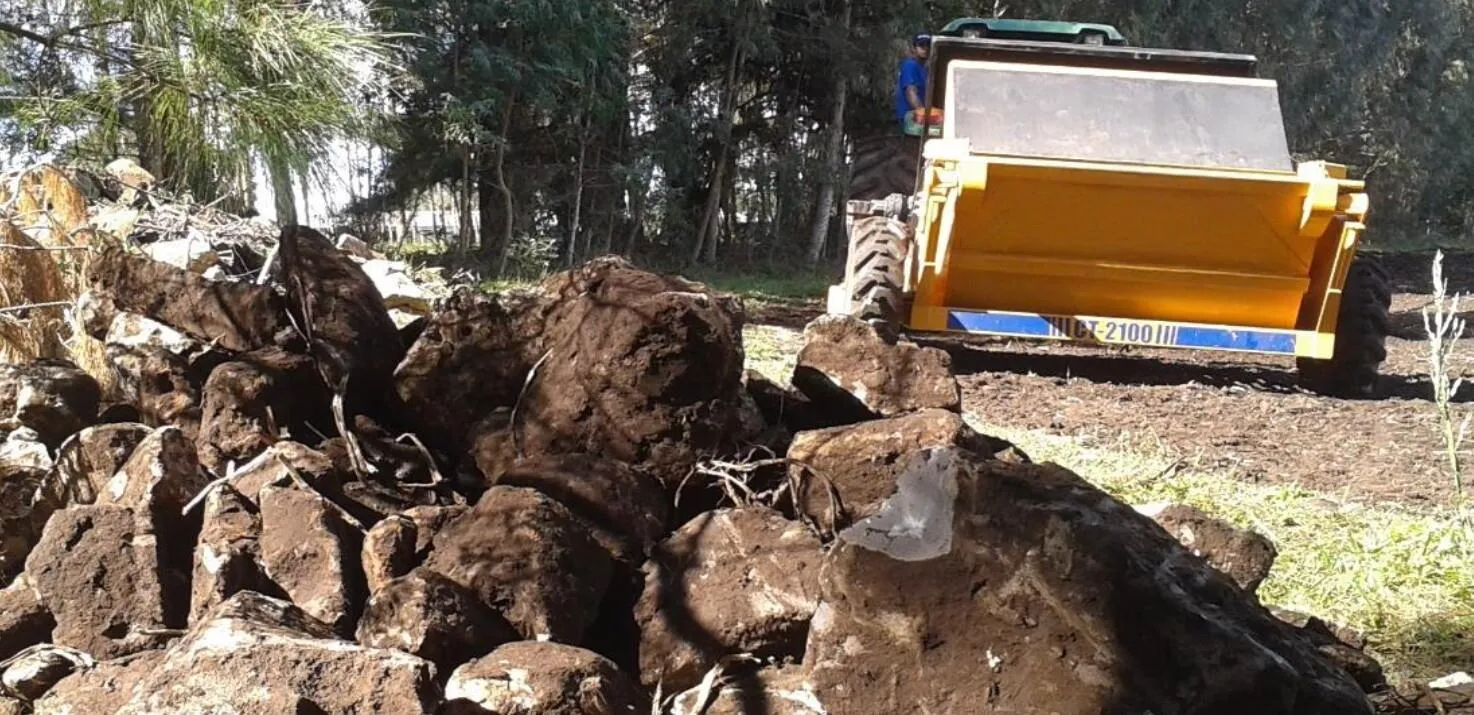
The EP CT-2100 is engineered to withstand the most demanding conditions encountered in large-scale land reclamation and field clearing operations. The main structural frame is fabricated from high-tensile structural steel sections, fully welded and dimensioned to carry the dynamic loads generated when picking and lifting heavy stones continuously over multi-hour field sessions. Frame joints are designed with appropriate throat welds and reinforcement gussets at high-stress intersections — the points most prone to fatigue failure on lesser-built machines working the same task.
The bunker body is formed from structural-grade steel plate, reinforced at the base and sides to handle the impact loading of stones dropping from the elevator discharge. The tipping mechanism — hydraulically actuated and designed to operate reliably under full load — uses heavy-duty pivots and cylinders rated for the full bunker capacity at maximum stone density. The hydraulic circuit components are sourced from established industrial suppliers and dimensioned for the 60 L/min minimum flow requirement, with appropriate pressure ratings to handle peak demand during picking and tipping operations simultaneously.
Wear components in the picking head — tines, fingers, paddles, or bars depending on the specific picking mechanism design — are manufactured from hardened steel or carbide-tipped alloy to resist the abrasive contact with soil and rock that characterises every operating hour. These parts are designed as replaceable items that can be changed in the field without special tooling, keeping the machine productive rather than requiring workshop downtime for routine wear maintenance. All external steel surfaces are protected by a primer and topcoat paint system suitable for agricultural field exposure; the paint specification includes appropriate flexibility to resist cracking from the vibration and impact inherent in this application.
6. Application Scenarios of Rock Picker
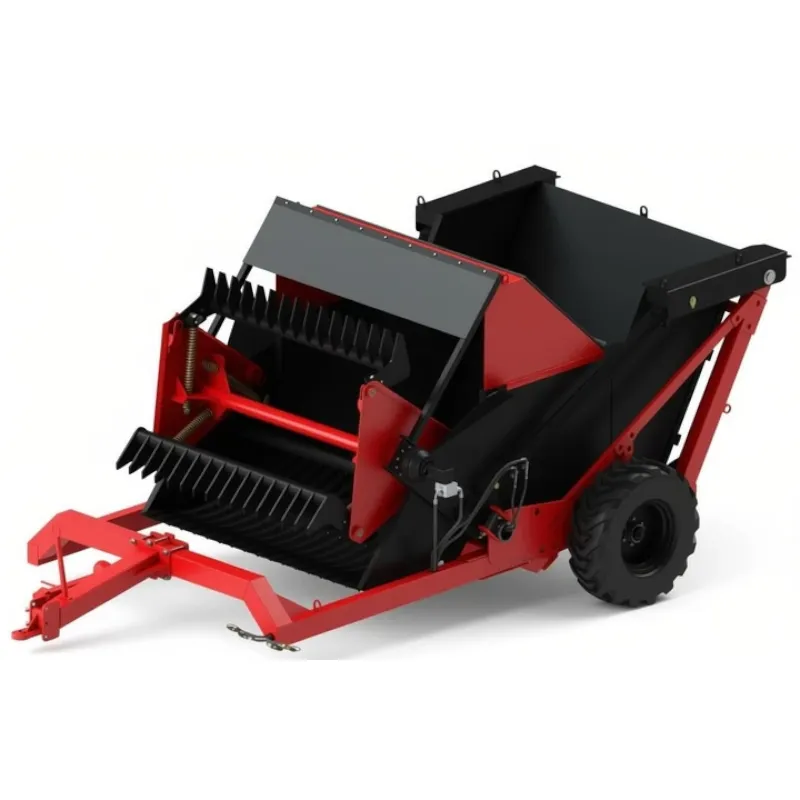
Understanding what is a rock picker in practical terms means understanding the specific field situations where this equipment solves real problems. The EP CT-2100 rock picker is deployed across a broad range of land management and agricultural preparation contexts:
New Land Reclamation — Korea’s Upland Districts
Converting former scrubland, hillside terracing, or afforestation areas into productive farmland in Gangwon-do, Chungcheongbuk-do, and North Gyeongsang Province regularly involves dealing with dense surface and near-surface rock concentrations. The CT-2100 is the correct farm equipment rock picker for this task — collecting stones from the cleared surface in a single pass so that subsequent tillage and seeding operations can proceed without risk to equipment or crop establishment. Korean government-supported rural development programmes that incentivise upland land conversion represent a significant demand source for this category of machine.
Post-Frost Seasonal Field Clearing
Korea’s seasonal freeze-thaw cycle pushes subsurface rocks to the surface each spring — a phenomenon that affects cultivated fields year after year regardless of previous clearing history. Farmers growing root crops (potatoes, ginseng, radish, carrot) in rocky soils need to clear surface stones before each planting season to protect both planting equipment and harvesting machinery from impact damage. The CT-2100 handles this annual spring clearing efficiently, moving through fields at a productive pace before the soil dries and planting windows open — making it a year-round asset for operations growing these high-value crops across Korea’s agricultural interior.
Orchard & Permanent Crop Site Preparation
Before planting fruit trees, grape vines, or any permanent crop that will occupy the land for decades, thorough stone removal from the top soil profile is essential. Stones left in the planting zone deflect root systems, impede cultivation equipment operating between rows, and create hazards for mowing machinery throughout the crop’s productive life. The CT-2100’s 1.95 m working width and continuous picking action provides the thorough, high-productivity stone removal that new orchard sites in Korea’s fruit-growing regions of Gyeongnam and Jeonnam demand before planting investment is committed.
Sports Field & Turf Construction
Golf courses, sports pitches, and landscaped turf areas require a stone-free root zone before seeding or turf laying can begin. The rock picking machine approach is far more productive than manual stone removal for large-area sports field construction, and the CT-2100’s ability to collect and remove picked stones from the site (via the tipping bunker) rather than leaving windrows on the surface makes it appropriate for projects where the finished surface must be clean immediately after mechanical clearing. Korea’s growing golf and sports infrastructure market creates consistent demand for this capability.
Construction Site Grading & Topsoil Preparation
Civil construction sites that require seeded or turfed slopes — highway embankments, dam faces, industrial estate surrounds, residential development green areas — need stone-free topsoil before hydroseeding or hand-seeding can be carried out effectively. The CT-2100 serves as a cost-effective alternative to manual stone picking on these large-area applications, moving efficiently across graded and settled topsoil to remove stones that would otherwise block seeding equipment or prevent uniform seed-to-soil contact across the slope face.
Post-Flood & Erosion Recovery
Korea’s seasonal monsoon (장마) delivers intense rainfall events that cause erosion, soil movement, and stone deposition on low-lying agricultural land. After flood events, previously cleared fields can receive significant stone deposits from upstream movement. The CT-2100’s pull behind rock picker equivalent continuous-pickup action handles these deposited stones efficiently, restoring the field to production-ready condition far faster than manual methods. Agricultural insurance and disaster-recovery schemes in Korea increasingly recognise mechanised stone clearing as an allowable restoration cost, making machine selection documentation and specification sheets relevant to claim submissions.
7. Regulatory Compliance & Industry Standards
Agricultural machinery with hydraulic drive systems and mechanical handling components is subject to machinery safety and equipment performance regulations in all major markets. Buyers deploying the CT-2100 rock picker machine in Korea or exporting to other markets should be aware of the following regulatory landscape:
Korea — RDA & KOSHA Agricultural Machinery Standards
In South Korea, agricultural machinery is regulated under the Agricultural Machinery Act (농업기계화촉진법) overseen by the Rural Development Administration (RDA / 농촌진흥청). Hydraulically driven implements must comply with Korean Industrial Standards (KS) for hydraulic hose and fitting safety ratings, and the tractor-implement hydraulic coupling must conform to ISO 5675 for flat-face quick couplers or ISO 7241 for poppet-valve couplers. The Korea Occupational Safety and Health Agency (KOSHA) requires documented operator training for all agricultural machinery above specified weight thresholds, including machine-specific risk assessments under the Occupational Safety and Health Act (산업안전보건법). Imported machinery must be registered with the RDA before commercial distribution within Korea.
European Union — Machinery Directive & EN ISO Standards
European buyers must confirm CE compliance under Machinery Directive 2006/42/EC and, from 2027, the Machinery Regulation (EU) 2023/1230. Hydraulic circuits must conform to EN ISO 4413 (hydraulic fluid power safety requirements) and the three-point linkage must meet ENISO 730 dimensional standards. Agricultural machinery for land preparation is further addressed under EN ISO 4254-1 (general safety rules). Rock pickers with mechanical handling components must have adequate guarding of nip points and rotating elements per EN ISO 11684 (safety signs) and EN ISO 4254 series. A technical file and declaration of conformity must accompany the machine on entry to the EU single market.
United States — ASABE & OSHA Standards
In the US, agricultural machinery hydraulic systems must comply with ASABE Standard S518 (hydraulic couplings for agriculture) and the three-point hitch must conform to ASABE S217 category 2 dimensions. OSHA 29 CFR Part 1928 governs agricultural machinery operator safety broadly. State-by-state transport regulations on public roads apply to the CT-2100’s 3050 mm width — which approaches or exceeds standard lane widths in some states, requiring slow-moving vehicle (SMV) markings and potentially escort vehicles for road transport. Rock pickers for tractors sold in North America must also comply with applicable EPA emission rules for any powered accessories.
Australia & Other Asia-Pacific Markets
For buyers sourcing rock pickers australia-bound or for other Asia-Pacific markets: in Australia, agricultural machinery safety is addressed under AS/NZS 4024.3502 (safeguarding of machinery) and state-based Work Health and Safety (WHS) Acts. Hydraulic systems must meet AS 2671 (hydraulic fluid power). Japan’s MAFF regulates imported agricultural machinery under the Agricultural Mechanization Promotion Law, requiring conformity confirmation before distribution. New Zealand’s Health and Safety at Work Act 2015 and associated agricultural machinery guidance apply to commercial farm use. In all cases, confirming local registration and compliance marking requirements with the importer or relevant authority before deployment is strongly recommended.
8. About Us
We are a specialist supplier of professional-grade agricultural land preparation equipment, with a product portfolio covering rock pickers for tractors, stone rakes, and associated field machinery for demanding terrain conditions. Our product selection process prioritises machines with proven field performance records, robust mechanical construction, and established aftermarket spare-parts supply chains — because equipment that fails in a remote field location costs far more than any initial price difference.
We supply B2B customers globally — including Korean agricultural cooperatives, land development contractors, government rural infrastructure agencies, and equipment importers who service professional farmers.
9. Related Products — Complete Land Preparation System
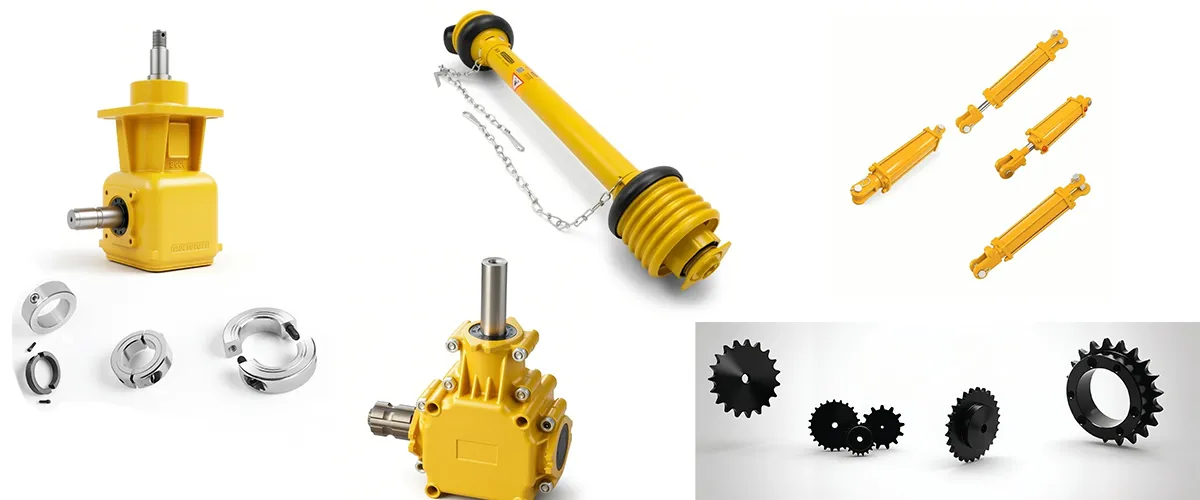
The CT-2100 pto rock picker equivalent delivers its best results when used as part of a coordinated land preparation workflow. We supply a range of compatible drive components and ancillary equipment that integrates directly with the machines in this series, allowing procurement teams to source a complete land preparation package from one supplier.
PTO Shafts
Where PTO-driven implements are part of your land preparation fleet alongside the hydraulic CT-2100, matching the correct PTO shaft length and gearbox ratio to your tractor specification is critical. Incorrect shaft length causes vibration, premature cross-joint wear, and potential safety failure.
الأسئلة الشائعة
المحرر: PXY