Agricultural Equipment Guide · Korea Edition
What Is a PTO Stone Crusher and How Is It Different from a Standalone Rock Crusher?
A practical guide for Korean farmers, landowners, and agribusiness operators looking to understand their options in tractor-powered stone crushing equipment.
If you manage farmland with rocky terrain, deal with stone-littered paddocks after heavy rain, or need to clear construction debris on your property, chances are you’ve come across two very different types of equipment: a PTO stone crusher and a standalone rock crusher. At first glance, both seem to do the same thing — break rocks into smaller pieces. But the way they work, who they’re built for, and how much they cost to operate are fundamentally different. This guide unpacks each machine from the ground up, so you can make an informed decision that fits your operation.
Korean agricultural land — particularly in the mountainous regions of Gangwon-do, North Gyeongsang, and South Jeolla provinces — regularly deals with embedded field stone and surface rock that interferes with mechanised planting, tillage, and harvesting. For operators running tractors in the 80 to 220 hp range, a tractor-mounted كسارة الحجارة PTO offers a compelling alternative to hiring mobile crushing contractors or investing in large standalone equipment. Understanding where each machine excels is the first step.
1. What Exactly Is a PTO Stone Crusher?
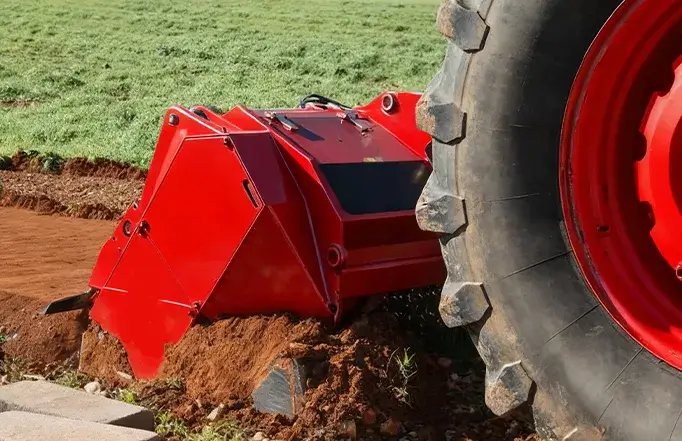
A PTO stone crusher — short for Power Take-Off stone crusher — is a tractor-mounted implement that draws its operating power directly from a tractor’s rear PTO shaft. The machine attaches to the tractor’s three-point linkage (typically Category 2) and is driven at either 540 RPM or 1000 RPM, depending on the model and tractor capacity. As the tractor moves forward, a high-speed rotor fitted with hardened carbide picks or fixed teeth rotates at high velocity, impacting and fracturing stones directly in the path of travel. The crushed material is immediately redistributed back into the soil surface, leaving a cleared, level working area in a single pass.
Unlike dedicated crusher machines that require their own engine or external power source, a tractor stone crusher piggybacks on the tractor you already own. This means no separate fuel system, no standalone engine maintenance, no need for an operator to manage a second machine, and no additional transport logistics. The working width typically ranges from around 1,100 mm on compact models up to 2,560 mm on heavy-duty configurations, making them practical for everything from narrow orchard rows to broad open paddocks. Maximum stone crushing diameters vary by series — lighter STCL models handle up to 150 mm stones, mid-range STCM models handle up to 300 mm, and heavy STCH or RSM series can process stones up to 500 mm in diameter.
For Korean farmers navigating rocky volcanic soils in Jeju Island or the granite-rich uplands of the Korean Peninsula, a well-matched agricultural stone crusher can transform uncultivable land into productive field in a single season — without bringing in specialist contractors or heavy plant equipment.
2. Action Mode: How a PTO Stone Crusher Actually Works
The core of any stone crusher for tractor is the rotor — a solid steel drum mounted horizontally inside the crusher head. This rotor is fitted with an array of tungsten carbide picks, fixed-tooth cutters, or free-swinging hammers, depending on the model design. When the PTO engages, the rotor spins at operating speed (typically 1,000 RPM on most modern agricultural models). As the tractor advances at a controlled working speed — generally 3 to 5 km/h, though some models operate up to 10 km/h when trailing — the rotor strikes and breaks stones on contact.
The impact crushing process works through a combination of direct hit force and the counter-crushing action of the rear containment grid or shear bar. Stones entering the working chamber are first struck by the rotor picks, then further reduced against internal anvils or wear plates as they pass through the decreasing gap between rotor and rear grid. The resulting fragments are typically reduced to 50–80 mm or smaller, depending on grid opening size and rotor speed. This material is immediately redistributed into the topsoil, filling in the pockets left by removed stones and creating a more uniform seed bed or roadbed surface. The operator controls depth of engagement through the three-point linkage — raising or lowering the machine to vary how aggressively it enters the soil layer.
| Series | Tractor HP Range | Max Stone Diameter | Max Working Depth | PTO Speed |
|---|---|---|---|---|
| STCL | 70 – 150 hp | 150 mm | 150 mm | 540 / 1000 RPM |
| STCM | 80 – 220 hp | 300 mm | 200 mm | 1000 RPM |
| STCH | 280 – 400 hp | 500 mm | 250 mm | 1000 RPM |
| RSL | 80 – 190 hp | 300 mm | 150 – 280 mm | 540 / 1000 RPM |
| RSM / RSM HP | 200 – 360 hp | 500 mm | 400 mm | 1000 RPM |
| RSH / HP | 360 – 500 hp | 500 mm | 500 mm | 1000 RPM |
3. Manufacturing Construction: What’s Inside a PTO Stone Crusher
The structural integrity of a stone crusher machine is what separates reliable long-term performers from machines that fail after a season of heavy work. A well-engineered PTO stone crusher is built around a heavy-gauge welded steel frame — typically constructed from high-tensile structural steel with a minimum wall thickness calibrated to handle the continuous shock loads generated by rotor impact at 1,000 RPM. The frame must resist torsional flexing as the machine crosses uneven terrain while also absorbing thousands of micro-impacts per minute without fatigue cracking at weld joints.
Inside the frame, the rotor shaft runs in heavy-duty sealed bearing housings designed for contaminated environments — dust, mud, water, and stone grit will inevitably enter the working zone, so bearing protection is a critical build-quality indicator. The gearbox transmitting PTO torque to the rotor shaft uses case-hardened spiral bevel or helical gears running in an oil bath, with provisions for external cooling on larger models. PTO protection is handled through a cam clutch or overrunning clutch mechanism that disengages the driveline when rotor torque spikes — critical for preventing driveline damage if the rotor strikes a buried concrete block or exceptionally hard boulder.
The front entry skids and rear containment plates are typically fabricated from Hardox wear-resistant steel or equivalent — a Swedish-grade abrasion-resistant material with a Brinell hardness of 400–500 HB. The side wear plates lining the internal crushing chamber are also replaceable, meaning the chassis can outlast multiple sets of wear components with proper maintenance. The three-point mounting frame is designed to Category 2 or Category 3 linkage standards, with pin dimensions and load ratings conforming to ISO 730 specifications.
4. Material System: The Picks, Teeth, and Wear Components
The material system of a كسارة الحجارة PTO refers to the consumable cutting and crushing components that make direct contact with stone. This is the highest-wear zone of the machine and the biggest driver of long-term operating cost. Most professional agricultural stone crushers use one of three main pick or tooth types: tungsten carbide insert picks (the most common for hard basalt and granite), fixed-tooth STC/3 style blades (used in compact STCL configurations for softer limestone and small fieldstone), or free-hammer systems (less common in tractor-mounted equipment but used in some mulcher-crusher hybrid machines).
Tungsten carbide — also called cemented carbide or hard metal — is an engineering material with a hardness of approximately 1,600 HV, roughly eight times harder than high-speed steel. The carbide insert is brazed or press-fit into a forged steel body, which is then bolted to the rotor in a specific chevron or helical pattern. This pattern distributes impact loads evenly across the rotor drum and ensures continuous cutting contact as the drum rotates. The bolt torque specification, bolt grade (typically Grade 10.9 or higher), and seat geometry between pick body and rotor pocket are all critical to preventing pick loss during high-impact operation. Lose a pick at 1,000 RPM and the rotor imbalance can damage bearings within minutes.
Wear life varies significantly by application. In soft agricultural loam with occasional fieldstone, a set of carbide picks may last 200 to 400 hours. In rocky, abrasive volcanic soil or limestone terraces — conditions common in Jeju Island’s basalt fields or the southern Korean uplands — wear life may drop to 80–150 hours. Sourcing genuine OEM replacement picks at a fair supplier price is therefore a key part of the total cost-of-ownership calculation when evaluating equipment.
| Pick / Tooth Type | Material | Best Application | Typical Wear Life |
|---|---|---|---|
| STC/3 Fixed Tooth | Hardened steel + carbide tip | Small fieldstone, limestone | 150 – 400 hrs |
| R/65 Round Pick | Forged steel + WC insert | Granite, basalt, hard rock | 80 – 250 hrs |
| STC/FP Flat Pick | Alloy steel + carbide face | Mixed rock / demolition debris | 100 – 300 hrs |
| STC/3/HD Heavy Duty | High-alloy steel + premium carbide | Volcanic rock, coarse basalt | 120 – 350 hrs |
5. What Is a Standalone Rock Crusher?
A standalone rock crusher — sometimes called a fixed plant crusher, mobile jaw crusher, or impact crusher — is a self-contained machine with its own engine, chassis, and conveyor system. These machines are most commonly seen on construction sites, quarries, and road-building projects where large volumes of rock must be processed and stockpiled in a specific output size range. They are fundamentally stationary processing tools: rock is brought to the crusher (by excavator, dumper, or conveyor), crushed to a target specification, and discharged onto a pile or secondary conveyor.
The scale and complexity of standalone crushers is significantly greater than any tractor-mounted implement. A compact mobile jaw crusher — the smallest practical standalone option — typically weighs between 15,000 and 35,000 kg, requires a diesel engine producing 75 to 150 kW, and has a jaw opening of 600 x 400 mm or larger to accept feed material. Operating costs include diesel fuel (often 10–25 litres per hour), engine servicing, jaw plate replacement, and the cost of a separate operator or machine crew. Transportation between sites requires a low-loader trailer and appropriate permits under Korean Road Traffic Act provisions governing heavy haulage.
For comparison, a typical tractor stone crusher for sale in the 180 hp class (such as the THOR 2.4 series) weighs approximately 2,300 kg, mounts on an existing farm tractor, and requires no fuel or operating cost beyond the tractor’s normal diesel consumption. This is not a like-for-like comparison — standalone crushers can process hundreds of tonnes per hour and create precise, graded aggregate — but for farmland clearing, field stone management, and site preparation at the scale of a typical Korean smallholding or mid-size operation, a PTO model is far more practical and economical.
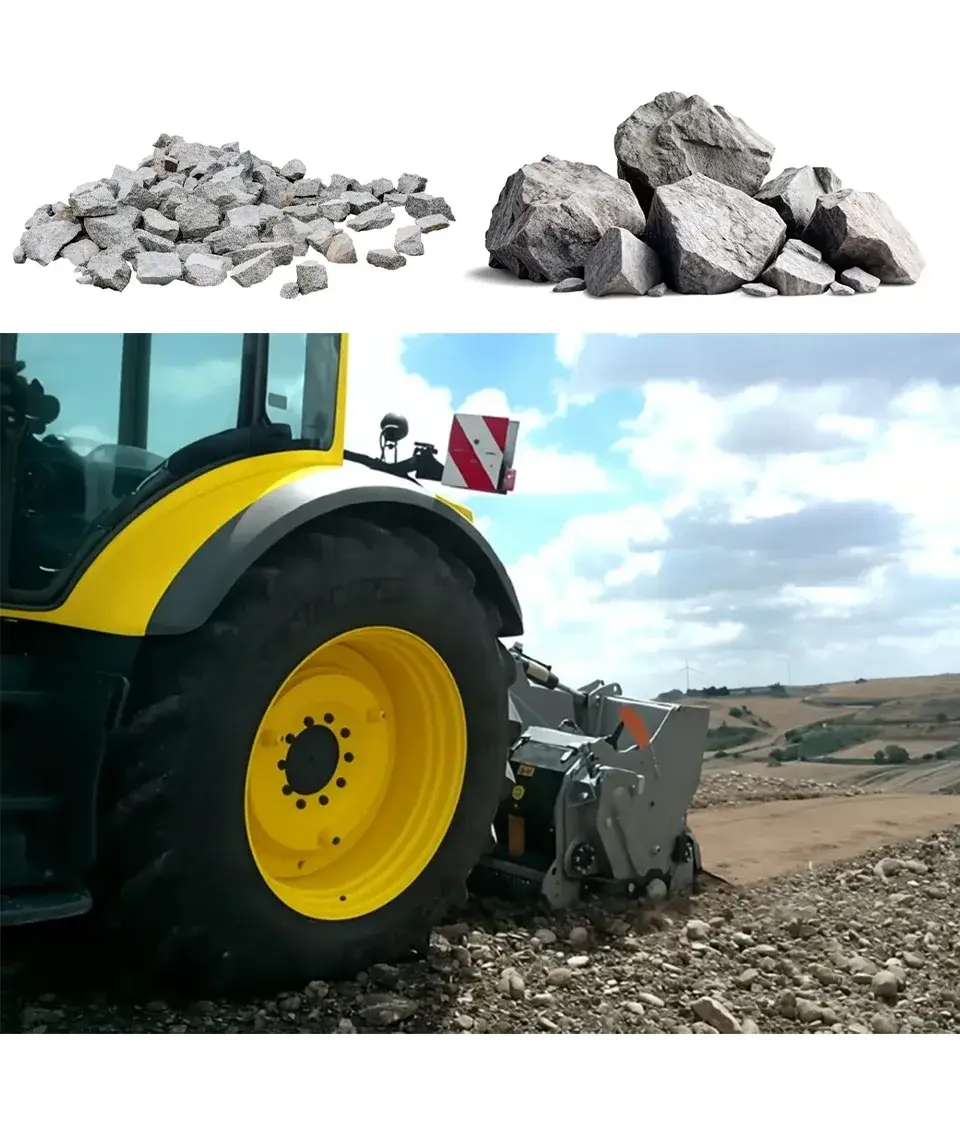
6. Side-by-Side: PTO Stone Crusher vs Standalone Rock Crusher
The clearest way to understand the difference is to compare the two types across the dimensions that matter most for agricultural and land management applications in Korea.
| Attribute | PTO Stone Crusher | Standalone Rock Crusher |
|---|---|---|
| Power source | Tractor PTO shaft (540 or 1000 RPM) | On-board diesel engine |
| Mobility | High — moves with the tractor across the field | Low — requires trucking between sites |
| Machine weight | 1,200 – 8,000 kg (implement only) | 15,000 – 80,000+ kg |
| Tractor requirement | 70 – 500 hp depending on model | None — self-powered |
| Processing method | In-situ rotor impact — material stays on-site | Feed-and-stockpile — material collected |
| Output size control | Limited (grid opening only) | Precise (adjustable jaw/screen) |
| Typical application | Field clearance, land prep, pasture improvement | Quarrying, road construction, aggregate production |
| Operator requirement | Tractor operator only | Crusher operator + loader/excavator operator |
7. Our PTO Stone Crusher Product Range
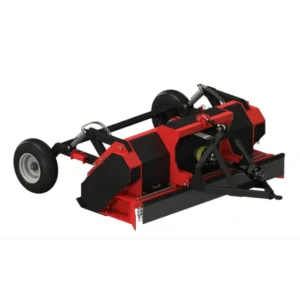
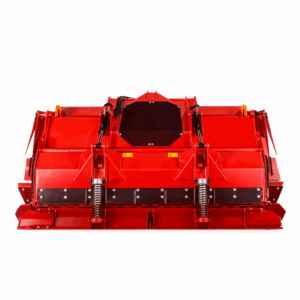
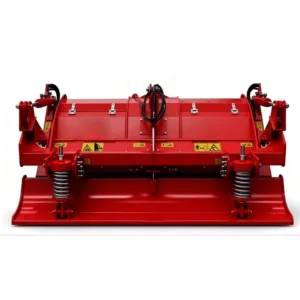
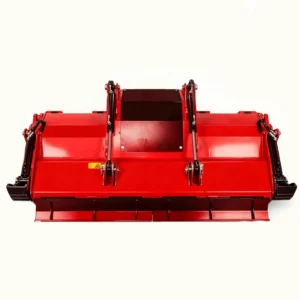
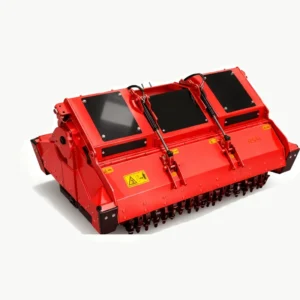
We offer a comprehensive selection of agricultural stone crusher models tailored to different tractor sizes, field conditions, and stone densities. Whether you’re managing a small family farm in Chungcheong province or a large agricultural operation in the Honam Plains, there’s a model suited to your specific requirements. Below are the key models available in our Mulchers / Stone Crushers series.
8. How to Choose the Right Model for Your Operation
Selecting the right small pto stone crusher or full-scale crusher series starts with understanding three variables: your tractor’s available PTO horsepower, the maximum stone size you typically encounter, and the working width that aligns with your field layout or plot dimensions. A common mistake is over-specifying on working width at the expense of rotor power — a 2.5-metre crusher driven by a marginal 100 hp tractor will consistently underperform and put excessive load on the PTO drivetrain.
For operators running compact utility tractors in the 80–120 hp bracket — a common configuration for Korean fruit farms and terraced vegetable operations — the STCL or PSC series offers the most appropriate power-to-width ratio. For larger grain and forage operations running 150 hp and above, the STCM series with its 300 mm maximum stone capacity and up to 2,304 mm working width covers the bulk of field-clearing applications. Korean operators in Gangwon-do dealing with granite outcroppings may want to consider the RSL series, which features the dual-rotor G/3 + R configuration capable of handling stones up to 300 mm in both surface and sub-surface positions, with working depths up to 280 mm.
It’s also worth considering the gearbox quality and PTO protection system when comparing models. A cam clutch protected PTO shaft is preferable to a simple slip clutch — it resets automatically after a locked-rotor condition without requiring manual re-engagement, which matters in high-stone-density fields where rotor stalls are not uncommon. Look for models where the gearbox housing and internal gear geometry are built to handle full-rated input torque continuously, not just intermittently.
9. Regulatory Considerations: Gearboxes, PTO Equipment, and Agricultural Machinery Standards
Buyers and operators of PTO-driven stone crushers should be aware of the regulatory framework governing agricultural machinery in Korea and internationally. In the Republic of Korea, agricultural machinery including tractor-mounted stone crushers is subject to the Agricultural Mechanization Promotion Act (농업기계화 촉진법) and associated standards under the Rural Development Administration (RDA). Safety-related standards for PTO-driven implements are generally aligned with KS B 6301 for agricultural machinery structural integrity and performance testing.
PTO protective equipment — specifically the PTO shaft guard and driveline shielding — is mandated under Korean Occupational Safety and Health Act provisions (Article 107 and related regulations from the Ministry of Employment and Labor), which require that exposed rotating driveline components on agricultural machinery be guarded against inadvertent contact. The guard must cover the full length of the rotating shaft from the tractor output coupling to the implement input shaft. Failure to maintain or fit proper PTO guarding exposes operators and employers to enforcement action under these provisions.
In the European Union, PTO stone crushers exported to EU member states are subject to CE marking requirements under the Machinery Directive 2006/42/EC (to be replaced by the Machinery Regulation EU 2023/1230 from 20 January 2027). This requires a technical file, Declaration of Conformity, and conformity with applicable harmonised standards including EN ISO 4254-1 (agricultural machinery general safety) and EN ISO 11684 (safety signs). Operators in Germany should additionally note DGUV Regel 114-006, which governs safe operation of tractor-mounted implements. In France, the INRS (Institut National de Recherche et de Sécurité) publishes guidance on PTO implement safety under ED 6003. UK operators post-Brexit must comply with UKCA marking requirements and PSSR 2000 for any pressurised hydraulic circuits within the implement.
In Australia, where Korean-manufactured agricultural equipment is increasingly exported, relevant standards include AS 3788 (machinery inspection), and state-specific work health and safety regulations governing agricultural equipment in New South Wales (WHS Regulation 2017), Victoria (OHS Regulations 2017), and Queensland (WHS Regulation 2011). All require guarding of PTO drivelines and provision of operator instructions in plain language.
Regardless of jurisdiction, all models in our range ship with Korean and English operation manuals, and our after-sales support team can provide guidance on local compliance documentation for import into specific markets.
10. Where PTO Stone Crushers Are Used in Korean Agriculture and Land Management
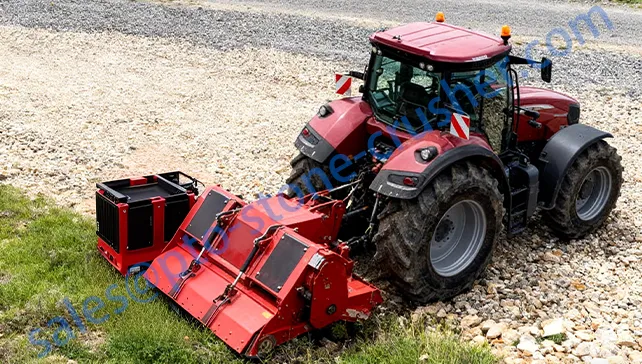
The versatility of a portable stone crusher machine powered by PTO makes it applicable across a remarkably wide range of Korean land management scenarios. On active farms, these machines are used to clear fieldstone ahead of mechanised planting — removing the stones that damage seeding units, inhibit root development, and reduce overall crop yields. In orchards and vineyards planted on the rocky hillsides of Gyeonggi-do and Chungbuk, narrow-width models clear inter-row debris without damaging tree roots or irrigation lines.
Post-typhoon land rehabilitation is a significant and growing application in Korea. The typhoon seasons of recent years — including Typhoon Hinnamnor in 2022, which caused severe land degradation across South Gyeongsang province — deposited large quantities of rock and construction debris across agricultural areas. A stone crusher for tractor can be deployed immediately after such events to break down and reintegrate displaced rock into the soil profile, restoring the land to cultivation-ready condition far faster than manual clearing or contractor-based approaches.
Rural road maintenance is another strong application. Unpaved access roads on Korean farms regularly suffer surface degradation from erosion and frost heave, exposing embedded stone. A single pass with a compact PSC or STCL model can resurface several hundred metres of farm road in a working day, recycling broken stone into a durable, well-graded surface without the need to import or purchase aggregate material.
Farmland Preparation
Removing surface and near-subsurface stones before seeding, transplanting, or mechanical harvesting operations.
Orchard & Vineyard Clearance
Compact models process stones in narrow inter-row spaces without disturbing irrigation infrastructure or root zones.
Road Maintenance
Re-grading unpaved farm access roads by crushing protruding stones and redistributing material in a single pass.
Disaster Recovery
Rapid restoration of storm-affected and landslide-impacted agricultural land without waiting for contractor availability.
Frequently Asked Questions
Q1. What is the difference between a PTO stone crusher and a standalone rock crusher for agricultural use in Korea?
Q2. Which PTO stone crusher model is best suited for a Korean farm tractor with around 100 to 120 horsepower?
Q3. How does a PTO stone crusher handle the basalt rock commonly found in Jeju Island’s volcanic agricultural fields?
Q4. What Korean agricultural machinery standards apply to tractor-mounted stone crushers and their gearboxes?
Q5. How often should the tungsten carbide picks on an agricultural stone crusher be replaced during a typical Korean farming season?
Q6. Is a tractor-mounted rock crusher effective for restoring farmland damaged by typhoons or landslides in South Korea?
Q7. What is the right working speed for operating a PTO stone crusher on Korean terraced hillside farms?
Q8. Can a used tractor stone crusher for sale from international suppliers be imported into Korea and used legally on agricultural land?
Q9. Which stone crusher for tractor is best for a Korean orchard grower dealing with narrow row spacing and rocky sub-surface soil?
Editor: PXY