TECHNICAL GUIDE · PTO STONE CRUSHER
Side Liner Wear Patterns in PTO Stone Crushers: What the Wear Profile Tells You
A diagnostic guide for operators, workshop technicians, and farm managers — from field land clearing to Andean agricultural operations in Colombia
Every كسارة الحجارة PTO tells a story through its wear. When you pull a machine out of service and inspect the side liners, the pattern of material removal, gouging, and abrasion is not random — it reflects how the machine was operated, what type of rock it processed, and whether the crushing chamber geometry was set up correctly. For operators running agricultural stone crusher equipment across Colombia’s diverse terrain — from the rocky Andean hillsides above Bogotá to the volcanic stone fields of the coffee-growing Eje Cafetero region — developing the ability to read a wear profile accurately can mean the difference between a timely liner swap and a catastrophic structural failure.
This guide breaks down the mechanics behind side liner degradation in tractor-mounted rock crushers, explains the relationship between wear patterns and operational variables, and gives you a practical framework for making maintenance decisions based on what you observe. Whether you are managing a fleet of agricultural stone crusher machines for a Colombian coffee or potato farming cooperative, or running a single small كسارة الحجارة PTO for land preparation on a family farm, the principles described here apply across the full range of currently available models — from compact light-duty units to high-power machines requiring 180 to 230 hp tractors.
1. What Are Side Liners — and Why Do They Matter?
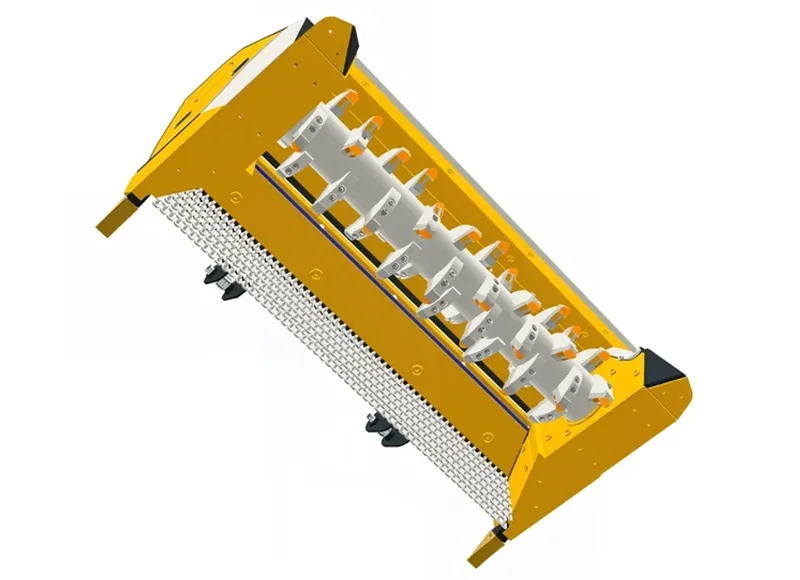
Side liners are replaceable wear plates mounted on the internal lateral walls of the crushing chamber in a كسارة الحجارة PTO. Their primary function is to protect the structural steel of the main frame from direct abrasion by the stone fragments that the spinning rotor throws outward at high velocity during operation. Without them, the main housing would erode rapidly and require expensive repair welding or full frame replacement — costs that make even a modest investment in quality liner material look trivial by comparison.
In a well-designed tractor stone crusher, the side liners serve a secondary but equally important function: they help guide the flow of crushed material toward the rear outlet, working in conjunction with the counter-blade and rear door to define the final particle size. When liners wear unevenly, the flow geometry changes. Material may pool in low-resistance areas, bypass the counter-blade prematurely, or create dead zones where uncrushed stones accumulate and cause violent secondary impacts. Understanding this dual role — protection and flow management — is the starting point for correctly interpreting wear profiles.
In modern كسارة الحجارة PTO designs such as the PSC and STCM series, side liners are typically manufactured from Hardox 400 or Hardox 500 steel (a wear-resistant high-strength steel with a nominal surface hardness of 400 or 500 HB respectively) and are bolted in place to allow field-level replacement without specialist tooling. Some heavy-duty models use chromium carbide overlay (CCO) composite liners on the most exposed face sections for maximum abrasion resistance in very hard, siliceous rock conditions.
2. Action Mode: How Stone Impact Creates Side Liner Wear
The rotor of a كسارة الحجارة PTO spins at high speed — typically driven by the tractor’s PTO shaft at 540 or 1000 RPM, stepped up through the gearbox or belt transmission to deliver the rotor tip speeds necessary for effective crushing. When a fixed tooth (STC/3 type) or pick (R/65 type) strikes a stone, it fractures and projects the resulting fragments outward in a wide spray pattern. The trajectory of these fragments is governed by the rotor tip speed, the point of impact geometry, and the fragment mass and shape. The majority of fragment energy is directed outward and slightly rearward — which is why the rear-facing portion of the side liner, adjacent to the counter-blade zone, typically experiences the highest wear rate in normal operation.
Three distinct wear mechanisms operate simultaneously on a كسارة الحجارة PTO side liner surface. The first is high-stress abrasion: fragments sliding under pressure along the liner surface, removing steel in thin layers analogous to file action. This produces a smooth, polished wear surface with relatively uniform material removal. The second mechanism is low-stress abrasion: lighter fragment particles rolling across the surface without significant force. This tends to produce a fine-scratched texture. The third — and most damaging — is impact gouging: larger fragment pieces striking the liner at high velocity, leaving discrete craters, chips, and deformed zones. Impact gouging is identifiable by its irregular, cratered surface morphology and is concentrated in the zones of highest fragment kinetic energy. The relative proportion of each mechanism depends on the stone hardness, the operating speed, and the setting of the crushing chamber geometry.
3. Structure Type: How Chamber Geometry Influences Wear Location
The crushing chamber in a stone crusher machine is not a simple rectangular box — it is a carefully shaped space designed to create a controlled flow path for rock fragments from entry to exit. Understanding the three primary chamber structural types helps predict where side liner wear will concentrate.
Open-Front, Enclosed-Rear (Standard STC-Type)
This is the most common configuration used in mainstream models like the STCM and STCL series and the PSC range featured on pto-stone-crusher.com. Material enters from the front opening with the inlet controlled by a dosing blade or opening flap. The rotor accelerates fragments rearward where they contact the counter-blade and internal rear liners. In this layout, side liner wear concentrates heavily in the counter-blade interaction zone — typically the rear 40–60% of the liner panel. The forward section of the liner sees primarily low-stress abrasion from incoming soil and fine aggregate. Monitoring the rear section thickness is the primary maintenance indicator in this configuration.
Dual-Rotor / Reduction Gear Configuration (RSM, RSH)
Heavy-duty machines in the RSM (200–360 hp) and RSH (360–500 hp) series use a reduction gear transmission instead of belt drive, allowing a larger, more massive rotor to operate with higher torque delivery. In these machines, the side liner wear pattern is more symmetrical left-to-right because the larger rotor diameter distributes impact energy over a wider arc. However, total material removal rate is higher per operating hour due to the higher input power and heavier rock capability. Liner replacement intervals are consequently shorter, and a two-zone liner design (separate forward and rear panels) is common to allow targeted replacement of the highest-wear section without disturbing the full liner assembly.
Compact Orchard / Vineyard Design (STCL-Type)
In the STCL-type compact design, the narrower working width (1110–2070 mm on the STCL range) means the side liners are physically closer to the rotor ends, and the fragment spray geometry creates a higher incidence angle of impact on the liner surface. This produces a wider, more dispersed wear pattern across the full liner area rather than the concentrated rear-zone wear seen in wider machines. In Colombian orchard and vineyard applications on sloped Andean terrain — where the RockMaster Agricultural Stone Crusher or similar compact units are typically used — soil mixed with small volcanic stones tends to accelerate abrasive wear uniformly. Operators in these conditions should check liner thickness at multiple points across the full panel face, not just at the traditionally expected rear concentration zone.
4. Manufacturing Structure: Materials and Their Wear Behaviour
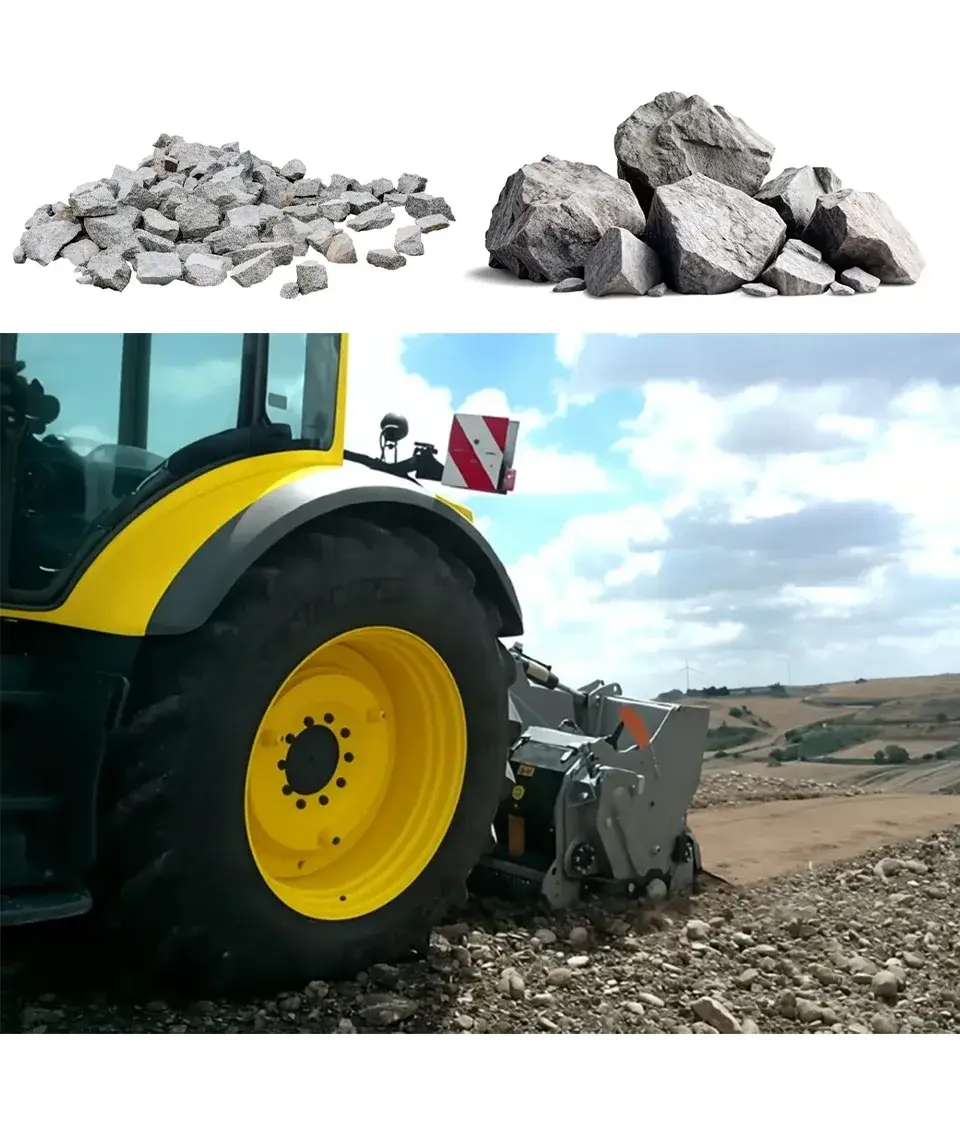
The material from which a كسارة الحجارة PTO side liner is manufactured determines its failure mode just as much as its raw hardness number. Three material systems are commonly used in contemporary stone crushing equipment, and each produces a distinct wear profile signature that a trained eye can identify on an inspected liner panel.
| Material System | Hardness (HB) | Dominant Wear Mode | Visual Wear Signature | Best Application |
|---|---|---|---|---|
| Hardox 400 | 370–430 | Abrasion, moderate impact | Smooth, polished zones; shallow uniform thinning across rear 50% | Limestone, sandstone, soft volcanic rock; mixed soil-stone conditions |
| Hardox 500 | 470–530 | High abrasion, impact gouging | Localised impact craters in counter-blade zone; fine scratching elsewhere | Granite, quartzite, hard volcanic basalt; high-silica content soils |
| Chromium Carbide Overlay (CCO) | 600–700 (surface) | Extreme abrasion resistance; brittle under high impact | Surface spalling in high-impact zones; minimal abrasive loss in low-impact areas | Extremely abrasive stone with moderate fragment size; continuous operation |
| Manganese Steel (Hadfield) | 200 initial → 500+ work-hardened | High impact; work-hardens under repeated loading | Peened, dimpled surface with minimal uniform wear; fractures at edges under fatigue | High-impact conditions with large fragments; less suitable for purely abrasive environments |
Note: Actual wear rates depend heavily on rock type, operating speed, PTO rpm, and chamber settings. The profiles above represent typical behaviour under normal agricultural stone crushing conditions.
5. Reading the Wear Profile: Five Diagnostic Patterns and What They Mean
When you remove a used liner panel from a كسارة الحجارة PTO and lay it flat for inspection, the wear topography is a record of every operating hour the machine has accumulated. Experienced maintenance technicians learn to read these patterns the way a geologist reads rock strata — each zone telling a part of the operational story. The five patterns described below are the most diagnostically significant for كسارة الحجارة PTO كسارة الحجارة PTO equipment used in Colombian and wider Latin American agricultural contexts.
Pattern 1 — Concentrated Rear-Centre Wear
Appearance: A distinct oval depression in the rear centre of the liner, often with a sharp boundary between the worn and unworn zones.
Diagnosis: The counter-blade is set too high (too close to the rotor), concentrating fragment impact energy in a narrow zone rather than distributing it across the full liner area. The machine is producing very fine, uniform output but at the cost of accelerated liner wear in one spot. In practice this means more frequent part replacement without gaining equivalent throughput benefit.
Action: Lower the counter-blade by one or two adjustment positions and re-monitor. If the wear pattern broadens, the adjustment is working. If it persists in the same location even after adjustment, suspect a misaligned or bent counter-blade casting that is deflecting material asymmetrically.
Pattern 2 — Asymmetric Left-Right Wear
Appearance: One side liner shows significantly greater wear depth or coverage than the other, with the worn liner often displaying impact gouges while the lighter-wear side shows only fine scratching.
Diagnosis: The rotor is laterally displaced — either from a worn or collapsed bearing on the heavier-wear side, or from a bent rotor shaft. In some cases the cause is operational: running the machine on a consistent lateral slope (common on Colombian Andean hillsides) biases the fragment spray toward the downhill liner under gravity. Check tractor operating angle records if asymmetric wear appears after operation on sloped terrain.
Action: Check rotor shaft runout with a dial indicator. If within tolerance, review operating conditions. If out of tolerance, the bearing must be replaced before further use to prevent shaft failure.
Pattern 3 — Forward-Zone Wear (Inlet Area)
Appearance: Significant wear in the front 30–40% of the liner, close to the material inlet opening. The rear section of the liner may appear relatively unworn by comparison.
Diagnosis: The machine inlet opening is too wide, allowing large fragments to enter the chamber before they have been sufficiently pre-broken by the initial rotor tooth impact. These oversized fragments are deflected directly sideways into the forward liner section with high kinetic energy. This is particularly common in agricultural stone crusher applications on terrain with coarse volcanic or granite boulders exceeding the rated maximum shredding diameter of the specific model — for instance, feeding 300 mm rocks into a machine rated for 150 mm maximum input.
Action: Reduce the inlet opening setting and verify that the rock size being fed does not exceed model specifications. Refer to the product datasheet for the specific unit being operated.
Pattern 4 — Full-Surface Uniform Wear
Appearance: Even, consistent material removal across virtually the entire liner face. The surface texture is uniformly abraded — smooth in abrasion-dominant conditions, evenly dimpled if both impact and abrasion are present at similar intensities.
Diagnosis: This is generally the healthiest wear pattern and indicates a well-adjusted machine operating within its design parameters on rock material close to its optimal rated size range. The chamber geometry is distributing impact and abrasion evenly, which maximises liner service life per unit area of wear material consumed.
Action: No operational changes needed. Continue monitoring thickness at regular inspection intervals (typically every 100–150 hours of operation in normal field stone crushing conditions). Replace when minimum thickness is approached.
Pattern 5 — Through-Hole Puncture or Rapid Edge Cracking (Warning Sign)
Appearance: Holes penetrating fully through the liner panel, or multiple cracks radiating from a common impact point, particularly at panel edges or bolt-hole locations. The surrounding steel may show evidence of heat discolouration or deformation.
Diagnosis: This pattern indicates a critical failure in progress. The causes include: (a) liner material grade mismatch for the rock type — for example, using a CCO liner in a high-impact application causing brittle fracture propagation; (b) pre-existing sub-surface cracks reaching critical depth; (c) very hard abrasive rock with angular fragments above the design input limit striking the liner at high velocity. If not addressed immediately, the structural steel of the main frame behind the liner is at risk of direct damage, and fragment ejection through the liner breach creates a serious operator safety hazard.
Action: Stop machine operation immediately. Do not continue to the end of the field pass. Remove the panel and replace before any further use. Inspect the structural frame behind the failed panel for deformation or cracking. Report the failure mode to the equipment supplier with photographs so that the appropriate liner grade can be specified for the replacement.
6. Liner Thickness Monitoring: Inspection Methods and Replace-or-Rotate Decision
Knowing when to replace a كسارة الحجارة PTO side liner — and when simply rotating or flipping it will extract additional service life — is one of the most practically valuable skills a workshop technician managing a fleet of كسارة الحجارة PTO for tractor equipment can develop. Premature replacement wastes usable wear material; delayed replacement risks structural damage and potential injury. The following inspection protocol is adapted from best practices used by commercial land-clearing operators and Colombian agricultural machinery workshops servicing the coffee, potato, and flower-growing sectors.
The primary measurement tool for a كسارة الحجارة PTO liner inspection is an ultrasonic thickness gauge (UTG), which can measure remaining steel thickness through a painted or lightly rusted surface without requiring grinding or removal of the panel. This is the preferred method for in-service measurements at regular intervals. When the panel has been removed for inspection, a simple calibrated measuring pin or digital vernier caliper used at marked grid points across the face provides sufficient accuracy for a replacement decision.
| Remaining Thickness (% of new) | Condition Assessment | Recommended Action |
|---|---|---|
| 75–100% | New or lightly worn — normal service condition | Continue operation; inspect at next scheduled service |
| 50–75% | Moderate wear — check pattern for anomalies | Continue; note wear pattern; consider rotating if asymmetric |
| 30–50% | Significant wear — plan replacement in next 50–80 hours | Order replacement; do not run to failure; shorten inspection intervals |
| 15–30% | Critical — imminent failure risk | Replace immediately; inspect frame behind liner for damage |
| Below 15% or through-hole present | Failure condition — machine must be stopped | Stop immediately; replace liner and inspect frame; assess root cause |
7. Rock Type and Its Effect on Liner Wear Rate in Colombian Agricultural Contexts
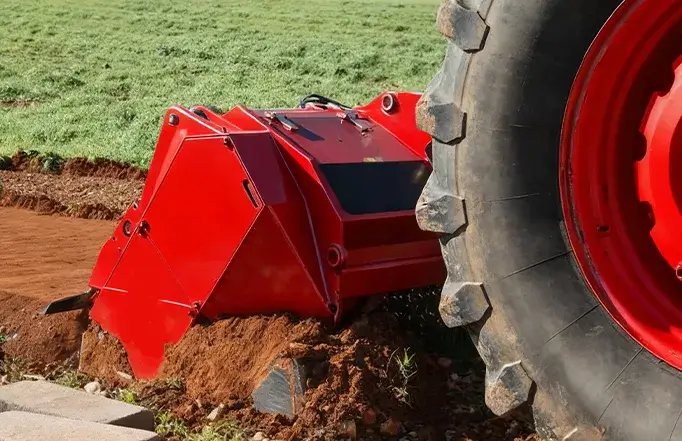
Colombia’s geology creates a wide range of rock conditions within relatively short distances. For any farmer or contractor searching for a كسارة الحجارة PTO solution, this geological diversity matters directly. The stone crusher near me search for a Colombian farmer or contractor is likely to turn up machines that will face very different wear conditions depending on the region. In the Eje Cafetero (the coffee-growing triangle of Caldas, Risaralda, and Quindío departments), the prevalent stone type is dark volcanic basalt — a dense, fine-grained rock with a Mohs hardness of 5.5–6.5 and relatively high silica content. In the potato-growing departments of Boyacá and Nariño, soils frequently contain fragments of andesite, shale, and occasional granite intrusions. Along the Caribbean coast and in lowland departments, limestone and softer sedimentary rock fragments predominate.
Each rock category produces a different wear signature. Basalt’s high hardness combined with its tendency to fracture into sharp-edged angular fragments drives high-stress abrasion and impact gouging simultaneously — the most damaging combination for side liners. Limestone, being softer and more friable, produces a predominantly low-stress abrasion pattern with much lower wear rates per hour. Granite, while less common in agricultural soils, combines extreme hardness with a tendency to produce very large, heavy fragments when it does occur — leading to the severe impact-gouging concentrated wear patterns described in Pattern 3 above.
A practical table for estimating relative liner wear rate by rock type is provided below. These factors are indexed to a baseline value of 1.0 representing typical mixed-aggregate agricultural field conditions (soil plus mixed sedimentary stone fragments below 150 mm diameter). Operators in Colombia should use these factors to adjust their planned replacement intervals for new site conditions.
| Rock / Substrate Type | Mohs Hardness | Relative Wear Factor | Typical Colombia Region |
|---|---|---|---|
| Limestone / soft sedimentary | 3–4 | 0.5–0.7× | Caribbean coast, Magdalena valley lowlands |
| Sandstone / shale mix | 4–5 | 0.8–1.0× | Boyacá, Santander agricultural zones |
| Andesite / volcanic tuff | 5–6 | 1.0–1.4× | Nariño, southern Andes potato country |
| Basalt (volcanic) | 5.5–6.5 | 1.5–2.0× | Eje Cafetero (Caldas, Risaralda, Quindío) |
| Granite / quartzite intrusions | 6.5–7.5 | 2.0–3.5× | Eastern Andes exposures, some Antioquia farm zones |
8. PTO Speed, Ground Speed, and Their Effect on Wear Profile Distribution
Of all the operator-controllable variables that influence كسارة الحجارة PTO side liner wear, PTO speed and ground speed are the two with the most direct effect on where wear concentrates and how quickly it accumulates. Understanding the relationship between these variables and wear behaviour helps operators in Colombia and across Latin America make better field decisions that extend liner service life without sacrificing throughput.
PTO Speed: Most modern pto stone crusher for sale equipment is designed to operate at either 540 RPM or 1000 RPM PTO input. Machines with fixed-tooth rotors in the STCM and STCL ranges typically use 1000 RPM for maximum rotor tip speed and crushing efficiency. Running at 1000 RPM produces higher fragment kinetic energy than 540 RPM — roughly 3.4× higher energy per fragment at the same rotor diameter, since kinetic energy scales with the square of velocity. This means that all else being equal, running at 1000 RPM versus 540 RPM will produce approximately 3× the liner wear rate in impact-dominated conditions. For machines that offer a choice of PTO speed, operators should consider whether the material hardness actually requires full PTO speed on a given day’s work. On lighter stone density passes (surface clearing of small scattered rocks in soil), reduced PTO speed extends liner life considerably without meaningful reduction in crushing quality.
Ground Speed: The recommended ground speed for most كسارة الحجارة PTO models in the PSC and STCM range is 3 km/h. Exceeding this speed — often an instinctive response to pressure to cover more area in less time — overfeeds the chamber. Overfeeding creates a larger fragment population in the crushing chamber simultaneously, which increases the probability of multiple fragments striking the liner at the same time (cumulative impact loading) and concentrates wear in the forward-mid liner zone. For the Thor 2.4 model (working width 2.4 m, minimum 180 hp tractor requirement) and Thor 3.0 (working width 3.0 m, minimum 230 hp), the manufacturer’s specified 3 km/h ground speed is particularly important to observe on the first passes through dense rock fields. Creeping below 2 km/h, by contrast, creates underfeeding and concentrates wear in the rear counter-blade zone from the repeated processing of the same small quantity of material. Correct ground speed produces the healthiest Pattern 4 (full-surface uniform wear) described earlier.
9. Regulatory Context: Agricultural Machinery Safety and Wear Part Standards
For operators sourcing replacement side liners or making decisions about كسارة الحجارة PTO maintenance across different regulatory jurisdictions, understanding the applicable framework is increasingly important — particularly when the equipment is used in contract land-clearing work that may be subject to formal safety inspection or insurance requirements.
Colombia — ICONTEC / MinAgricultura: Colombian agricultural machinery regulations are administered primarily through the Instituto Colombiano de Normas Técnicas y Certificación (ICONTEC) and the Ministerio de Agricultura y Desarrollo Rural. NTC standards harmonised with ISO reference frameworks govern the safe design and maintenance of agricultural equipment with rotating components. For PTO-driven machinery specifically, the use of a correctly rated PTO shaft with integrated torque-limiting clutch or shear bolt protection is a mandatory safety feature that Colombian operators should verify is in place before each season. Worn or incorrectly specified side liners that create uncontrolled fragment ejection risk constitute a safety hazard under these frameworks.
European Union (CE Marking): Equipment sold into the EU market must meet the requirements of the EU Machinery Directive 2006/42/EC, which governs machinery safety and requires documentation of expected wear component replacement intervals as part of the technical file. For agricultural stone crushing equipment, this includes specification of minimum acceptable liner thickness before replacement and the required protection chain condition. Colombian operators importing EU-origin machinery should have access to the technical file as part of the CE documentation package. Replacement parts must meet the dimensional and material specifications documented in the technical file to maintain CE compliance.
United States (ASABE Standards): The American Society of Agricultural and Biological Engineers (ASABE) publishes standards including ASABE S207 (guarding for agricultural equipment) and ASABE EP496 (agricultural machinery management). While not directly binding in Colombia, these standards are frequently referenced by equipment manufacturers in their maintenance documentation and provide a useful technical baseline for liner replacement interval recommendations.
Brazil (ABNT): Given the significant volume of Mercosur-region agricultural equipment trade between Brazil and Colombia, Brazilian ABNT NBR standards for agricultural machinery — particularly NBR 10664 governing PTO shaft safety devices — are relevant for equipment entering Colombia through Brazilian distribution channels. Maintenance teams should verify that wear part specifications meet ABNT requirements for equipment with Brazilian certification marks.
10. Product Spotlight: Stone Crushers Referenced in This Guide
The wear pattern principles described throughout this article apply broadly across the range of stone crusher machines available for agricultural applications. The following models from the Mulchers / Stone Crushers product series represent the units most commonly referenced in the context of Colombian land preparation and field clearing operations. All product specifications are sourced directly from the product pages at pto-stone-crusher.com.
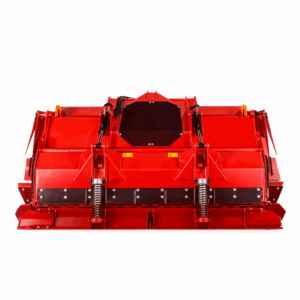
Thor 2.4 + Kit Drawbar
Working width: 2.4 m · Min. 180 hp
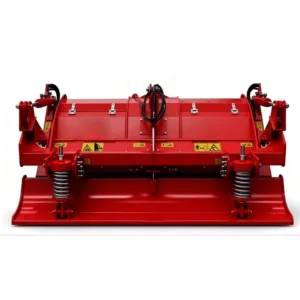
RockMaster Agricultural Stone Crusher
Heavy-duty agricultural stone crusher
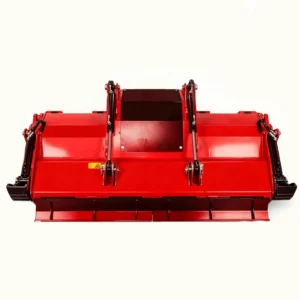
PSC Series Field Stone Crusher
STCL-type · 70–150 hp range
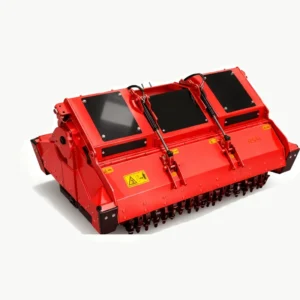
Agricultural Tractor Mounted Rock Crusher
Used tractor stone crusher for demanding farm conditions
11. About Us
We are a specialist distributor and technical support provider for professional stone crusher for tractor equipment, serving agricultural operators, land preparation contractors, and farm machinery dealers across Colombia and Latin America. Our product range covers the full spectrum of PTO-driven stone crushing equipment — from small pto stone crusher units suitable for compact tractors operating in orchards and vineyards to high-power machines requiring 200 hp or more for large-scale land clearing operations on new agricultural developments.
Frequently Asked Questions
Editor: PXY