KNOWLEDGE & TECHNICAL GUIDE
Understanding the Power Curve: How a 540 RPM vs. 1000 RPM PTO Affects Stone Crusher Performance
A practical deep-dive into PTO shaft speeds, drivetrain engineering, and how the right rotational input changes everything for agricultural stone crusher operators — from small farms in the Colombian highlands to large-scale land reclamation projects across Latin America.
A PTO stone crusher relies entirely on the rotational power delivered through the tractor’s Power Take-Off shaft. The two standard shaft speeds — 540 RPM and 1000 RPM — are not interchangeable and affect torque delivery, rotor tip speed, vibration, fuel consumption, and overall crushing throughput in fundamentally different ways. Choosing the wrong PTO speed for a given pto stone crusher model can result in premature drivetrain wear, substandard fragmentation, and even catastrophic mechanical failure. This guide explains the physics, the machine design implications, and the real-world selection criteria that matter most for operators sourcing a tractor stone crusher for agricultural or construction use.
1. What Is a PTO and Why Does Speed Matter?
The Power Take-Off (PTO) is a splined output shaft located at the rear — or sometimes mid-mount — of an agricultural tractor. It transfers rotational energy from the tractor’s engine gearbox to a connected implement, whether that’s a mower, a pump, or in our case, a كسارة الحجارة PTO. The implement connects via a Cardan shaft with universal joints, which accommodates the angular movement between the tractor and the stone crushing equipment during field operation.
Two international standard speeds define the vast majority of tractor PTO systems in use today. The first, 540 RPM, is the older of the two standards and is almost universally present on tractors from around 35 hp upward. The second, 1000 RPM, was introduced to meet the power demands of larger implements and became standard on higher-horsepower tractors — typically those above 100 hp. Some modern tractors offer both speeds via a two-speed PTO gearbox, providing operators with genuine flexibility. Understanding which speed your tractor delivers, and which speed your agricultural stone crusher is designed to accept, is the single most important compatibility decision you will make before purchasing stone crushing equipment.
In practical terms, the difference between 540 and 1000 RPM at the PTO stub is not just about how fast the shaft turns — it directly determines the torque multiplication ratio inside the crusher’s gearbox, the peripheral velocity of the rotor and its tools (picks, hammers, or fixed teeth), and the energy available per unit of time for fracturing rock. Neither speed is categorically “better”; rather, each is optimized for a specific range of machines and applications. A compact small pto stone crusher designed for 540 RPM operation will be damaged if connected to a 1000 RPM output, while a heavy-duty crusher engineered for 1000 RPM will underperform — or refuse to function — on a 540 RPM input.
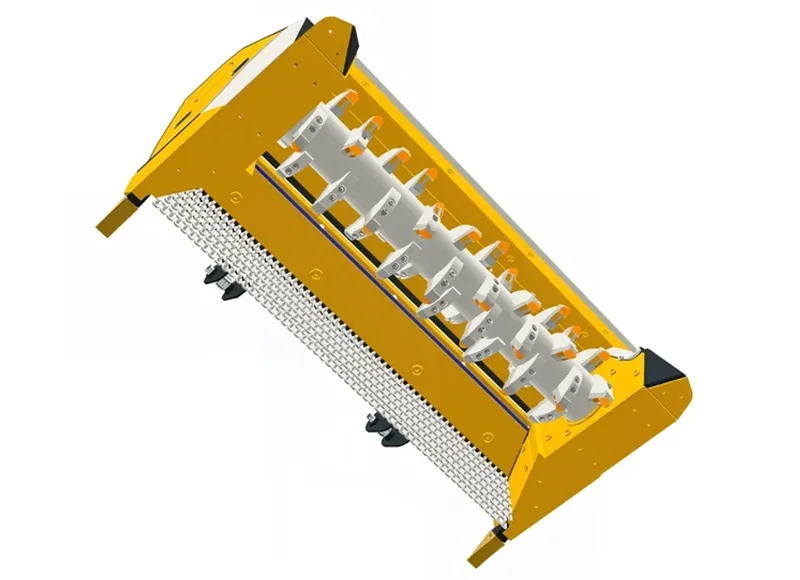
2. Action Mode: How a PTO Stone Crusher Actually Breaks Rock
Before comparing the two shaft speeds, it helps to understand the action mode of a rotor-type stone crusher machine. The tractor’s PTO shaft drives a heavy rotor — typically a fabricated steel drum or a multi-disc assembly — at high speed. Attached to this rotor are hardened cutting tools: fixed teeth, free-swinging hammers, or carbide-tipped picks arranged in a helical or chevron pattern. As the rotor spins, these tools strike and shear surface stones and sub-surface rock, driving them into a containment chamber where a fixed counter-blade (shear bar) and a rear containment grid complete the fragmentation cycle. The crushed material is discharged back to the ground at a reduced particle size, typically suitable for incorporation into the seedbed or compaction as a sub-base layer.
The key variable in this action mode is the rotor’s peripheral speed — the velocity at the tip of each cutting tool. Higher tip speed means more kinetic energy per strike, which translates to more aggressive fragmentation per tooth impact. The rotor’s peripheral speed is a direct product of the shaft input RPM multiplied by the internal transmission ratio built into the crusher’s gearbox. A crusher designed for 540 RPM input typically uses a larger multiplication ratio — often between 2.5:1 and 4:1 — so that the rotor achieves sufficient tip speed (usually 20–30 m/s for agricultural stone crushing equipment) despite the lower shaft speed. A 1000 RPM crusher uses a smaller multiplication ratio because it starts with a higher input speed, allowing the designer to keep the gearbox more compact and the driveline loads lower.
This difference in gearbox ratio has cascading effects across the entire drivetrain and is the structural reason why the two crusher types are not interchangeable despite sharing an external Cardan shaft connection.
3. Structural Type: Single Transmission vs. Dual Transmission Layouts
The structural architecture of a tractor stone crusher differs meaningfully depending on its design RPM. Understanding these structural types is essential for buyers comparing models or sourcing a pto stone crusher for sale in markets like Colombia, Ecuador, Peru, or other Latin American countries where a wide range of tractor models — from older 540 RPM-only units to modern dual-speed machines — coexist on the same farms and job sites.
Single lateral transmission (540 RPM models): On compact and mid-range crushers designed for 540 RPM, the Cardan shaft connects directly to a single lateral gearbox housing mounted on one side of the machine. The gearbox steps up the speed to the rotor via a chain or gear train, and the rotor runs on bearings mounted in the side plates of the main frame. This layout is simple, easy to service, and well-suited to machines with working widths up to approximately 2.4 meters — which maps closely to machines like the EP-Thor 2.4 Kit Drawbar, with its 2,481 mm working width, 2,300 kg machine weight, and a Category 2 bottom linkage connection, designed for tractors delivering a minimum of 180 cv engine power. The single transmission layout concentrates stress at one driveline entry point, making it more vulnerable to shock loads if an oversized stone is ingested, but also simpler to diagnose and repair in the field.
Dual lateral transmission (1000 RPM models or wide 540 RPM models): Wider machines — those covering 3.0 meters or more — and higher-power applications frequently adopt a dual transmission layout in which the Cardan shaft drives a central gearbox that then splits power to two side gearboxes or chains via secondary driveshafts. This arrangement distributes torque more evenly across the full width of the rotor, reducing bending stress on the rotor shaft and allowing higher cutting tool populations. The EP-Thor 3.0 Kit Drawbar, for example, at 3,000 mm wide and 2,800 kg, requires a minimum tractor power of 230 cv and uses 2 hydraulic control valves — a clear indication of the more complex hydraulic and mechanical layout that accompanies larger, higher-energy crushing operations.
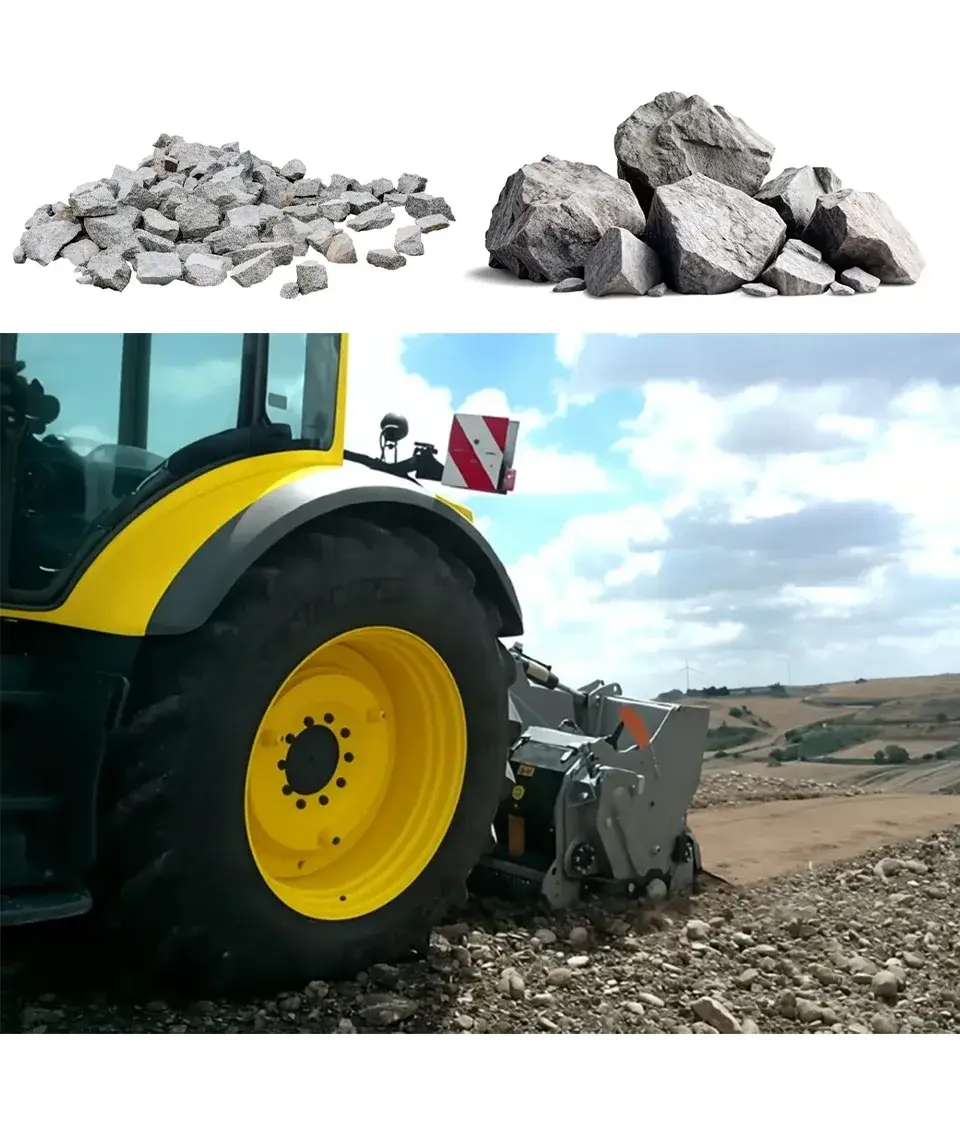
4. 540 RPM vs. 1000 RPM: Direct Performance Comparison
The table below condenses the principal engineering differences between 540 RPM and 1000 RPM PTO-driven stone crusher designs. These figures are representative of typical agricultural stone crusher configurations and should be used as a guide for selection — consult the specific model’s technical documentation for exact values before purchase.
| Parameter | 540 RPM PTO | 1000 RPM PTO |
|---|---|---|
| Shaft rotational speed (input) | 540 RPM | 1000 RPM |
| Typical shaft spline profile | 6-spline (1-3/8″) | 21-spline (1-3/4″) |
| Typical tractor power range | 35–180 hp | 100–350+ hp |
| Internal gearbox step-up ratio (typical) | 2.5:1 – 4:1 | 1.3:1 – 2:1 |
| Typical rotor RPM (output) | 1200–2000 RPM | 1500–2500 RPM |
| Cardan shaft torque loading | Higher (for same power) | Lower (same power, higher RPM) |
| Suitable working width | Up to ~2.4 m (compact) | 2.4 m – 3.0 m+ (heavy-duty) |
| Crushing depth capability (stones) | Up to ~15–20 cm | Up to ~20–30+ cm |
| Field operating speed (typical) | 2–4 km/h | 3–6 km/h |
| Vibration level at tractor | Moderate | Lower (smoother power flow) |
| Shock protection requirement | Slip clutch essential | Cam clutch or slip clutch |
Values shown are representative ranges for tractor-mounted agricultural stone crushers. Individual model specifications may differ.
5. Manufacturing Construction: How Crushers Are Built for Each RPM Range
The manufacturing construction of a stone crusher machine differs significantly depending on its target PTO speed, and these differences go well beyond the gearbox. The entire structural philosophy — frame geometry, rotor mass, bearing sizing, and protection system design — responds to the torque and speed regime the machine will operate in.
Frame and chassis: A 540 RPM crusher handling elevated torque loads requires a heavier primary frame, typically fabricated from thick structural steel plate (8–12 mm on the side panels, up to 20 mm on stress-bearing sections near the gearbox). The frame must resist both the sustained loading from the rotor’s inertia and the impulse loads from irregular stone impacts. The EP-Thor 2.4 Kit Drawbar, with a machine weight of 2,300 kg for a 2.4 m working width, illustrates this mass requirement clearly — the structure must be robust enough to support the rotor assembly and absorb field shock without fatigue cracking at welded joints. By comparison, a 1000 RPM crusher of equivalent width may be marginally lighter in the frame because the drivetrain transmits lower torque, but the higher rotor RPM demands more precise bearing alignment and greater attention to dynamic balance.
Rotor construction: Agricultural stone crusher rotors are typically built from a heavy-wall steel tube or a stack of laser-cut discs welded or bolted to a central shaft. Tool mounting bosses — either machined tapped pockets for bolt-on tools or welded retaining blocks for free-hammer pins — are positioned around the circumference in a pattern designed to balance the rotor both statically and dynamically. A properly balanced rotor running at 1,500–2,000 RPM produces far lower vibration than an unbalanced one, and vibration directly determines bearing life and structural fatigue life. For this reason, reputable pto stone crusher manufacturers perform dynamic balancing of the rotor assembly as a production step, not an option.
Containment chamber and wear protection: The crushing chamber — the enclosed zone beneath and around the rotor — is lined with replaceable wear plates, typically cut from Hardox 400 or Hardox 500 abrasion-resistant steel. These steels have a Brinell hardness of 400–500 HB, roughly three to four times the wear resistance of standard structural steel. The shear bar (fixed counter-blade) is a separate wear item that must be periodically adjusted as it wears to maintain the correct clearance to the rotor tools. In well-designed stone crushing equipment, the rear containment grid is also adjustable or replaceable, allowing operators to tune the maximum particle size of the crushed output — a valuable feature when the crushed material will be used as a sub-base aggregate for rural road construction in Colombia’s mountainous terrain.
6. Material System: Steels, Carbides, and Wear Surfaces
The material system of a كسارة الحجارة PTO determines how long the cutting tools last, how consistently they crush, and ultimately what the cost per hectare of operation will be over the machine’s service life. This matters enormously for operators in Colombia, Peru, and Ecuador who are processing highly abrasive basalt, andesite, or quartzite-bearing soils — rock types common in the Andean volcanic geology and the páramo plateaus of both the Eastern and Western Cordilleras.
Main frame steel: Structural mild steel (S355 / ASTM A572 Grade 50 equivalent) is the baseline frame material, offering a yield strength of approximately 355 MPa. High-stress zones around bearing housings and gearbox mounts may use higher-grade steels (S690 or equivalent) to maintain adequate safety margins without excessive material thickness — important for keeping machine weight within the tractor’s Category 2 three-point linkage capacity.
Wear plate steel: Hardox 400 and Hardox 500 (by SSAB, Sweden) are the dominant brand-name abrasion-resistant steels used in agricultural crusher wear liners worldwide. Hardox 400 delivers 370–430 HB hardness with reasonable toughness, making it suitable for general stone crushing. Hardox 500 at 470–530 HB is reserved for the most abrasive rock conditions. The key material property is that these steels combine high hardness with adequate impact toughness — they resist both abrasive wear (surface scratching and micro-cutting by hard mineral particles) and impact wear (cracking and chipping under high-energy stone strikes).
Cutting tools — fixed teeth: Fixed teeth on machines like the EP-PSC Models series are typically forged from alloyed tool steel and induction-hardened at the tip to 58–62 HRC. Some advanced designs incorporate tungsten carbide inserts (WC-Co grade with 6–12% cobalt binder) pressed or brazed into the tooth tip, delivering hardness exceeding 1,400 HV and dramatically longer service life in high-silica rock conditions. Carbide-equipped teeth cost significantly more per unit but may reduce tool change frequency by a factor of three to five in the most abrasive applications — an important economic consideration when sourcing spare parts for stone crushing equipment in remote parts of Colombia’s Boyacá, Meta, or Caquetá departments where parts logistics can add days to downtime.
Cutting tools — hammer flails: Free-swinging hammer flails are used on some lighter agricultural stone crusher designs. These hammers swing outward under centrifugal force during operation and retract when they hit an obstruction larger than they can crush, providing a degree of self-protection against large embedded boulders that would otherwise stall or damage a fixed-tooth machine. Hammer flail material is typically high-manganese cast steel or forged Boron steel (27MnCrB5), offering good toughness at the expense of slightly lower hardness compared to tungsten carbide tips.
7. Available Stone Crusher Models — Matching PTO Speed to Application
Selecting the right model from the available range of agricultural stone crushers requires matching the PTO speed, working width, and machine weight to your specific tractor and field conditions. Below is an overview of the current product lineup, with direct links to full specifications.
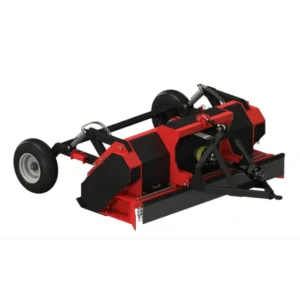
EP-Thor 2.4 + Kit Drawbar
Working width 2.4 m · Weight 2,300 kg · Min. 180 cv · 3 km/h working speed · Cat. 2 linkage. Compact and maneuverable, suited for fields where obstacles limit turning radius. Ideal for smaller ISUZU-type and Korean tractors widely used in Colombian valley farms.
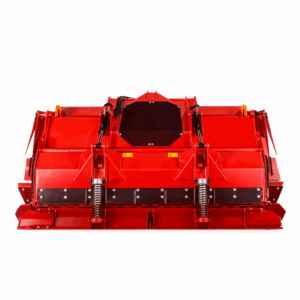
EP-RockMaster Agricultural Stone Crusher
A mid-range agricultural stone crusher optimized for farmland preparation and pasture renovation. Combines robust rotor construction with serviceable wear components, making it a practical choice for operators who perform regular seasonal maintenance.
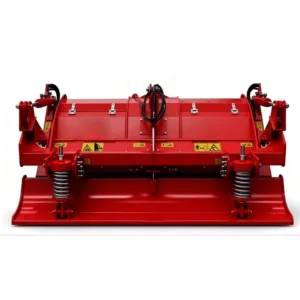
EP-PSC Models Stone Crusher
A lightweight compact series engineered for narrow-area work — rural road edges, driveway rehabilitation, orchard rows, and pasture renovation on small farms. The built-in bulldozer plate maintains surface level after each pass. Represents the best entry-level small pto stone crusher option in the lineup.
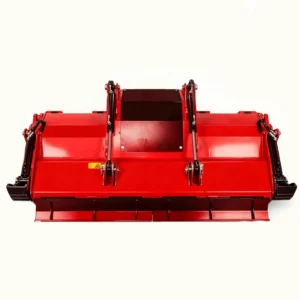
EP-Tractor Mounted Rock Crusher
Engineered for three-point mount attachment, this tractor stone crusher delivers direct power transfer from tractor to rotor with minimal driveline losses. Category 2 linkage compatibility makes it versatile across a broad range of mid-power tractors used throughout Latin America.
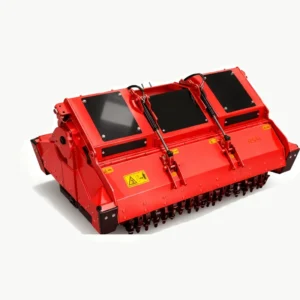
EP-Korea Agricultural Rock Crusher
Manufactured to Korean agricultural engineering standards, this model is particularly well-suited for operators using Korean-brand tractors. It bridges the gap between compact PSC-type machines and heavier-duty THOR-series units — a practical stone crusher for tractor applications requiring moderate working widths with proven reliability.
8. The Power Curve Explained: Torque, RPM, and What Happens When They Mismatch
The phrase “power curve” in the context of a PTO stone crusher refers to the relationship between the torque available at the rotor and the rotational speed at which that torque is delivered. Power is mathematically the product of torque and angular velocity (P = T × ω), so a fixed engine power can be delivered either as high torque at low RPM or as lower torque at high RPM. The design of the crusher’s transmission determines where on that torque-speed curve the rotor operates during normal work.
At 540 RPM input, the drivetrain sees roughly 1.85 times the torque of a 1000 RPM system delivering the same power. This means every universal joint, every gearbox shaft, every bearing, and every spline in a 540 RPM crusher is experiencing considerably higher torsional stress than the equivalent component in a 1000 RPM machine. This is why 540 RPM Cardan shafts are designed with 6-spline 1-3/8-inch profiles rather than the 21-spline 1-3/4-inch profiles used on 1000 RPM systems — the larger spline engagement area on the 1000 RPM standard is a response to higher speed rather than higher torque; the 540 RPM system actually requires more careful attention to overload protection to compensate for the higher per-revolution torque loading.
When a stone crusher for tractor is operated at an RPM lower than its design speed — for instance, connecting a 1000 RPM crusher to a 540 RPM PTO — the rotor will spin at well below its intended peripheral velocity. The result is that stones are not struck with enough kinetic energy to fracture efficiently. Instead of being cleanly broken, rock tends to be pushed ahead of the machine, dragged through the chamber, or simply deflected without crushing. This dramatically reduces throughput, increases fuel consumption per hectare of processed area, and generates excessive shock loads on the drivetrain as the rotor attempts to grab stones it cannot fracture at the available tip speed.
The reverse mismatch — connecting a كسارة الحجارة PTO designed for 540 RPM to a 1000 RPM PTO output — is potentially catastrophic. The rotor will over-speed, the gearbox will be subjected to extreme centrifugal forces on its internal components, and the bearing loads will far exceed design values. In the best case, the crusher’s internal overload protection (if present) will trip or shear a sacrificial bolt. In the worst case, catastrophic bearing or gear failure occurs at field speed, with obvious safety implications for the operator.
9. Regulatory & Safety Standards for PTO-Driven Agricultural Equipment
PTO-driven implements, including stone crushers, are subject to safety standards and regulatory requirements in multiple jurisdictions. For operators, distributors, and procurement departments evaluating a pto stone crusher for sale — particularly in Colombia and neighboring Latin American countries — awareness of these regulations is important for both legal compliance and insurance purposes.
ISO 11684 (Tractors, machinery for agriculture and forestry — Safety signs and hazard pictorials): This international standard mandates the presence, placement, and content of safety warning labels on agricultural machinery, including PTO-driven implements. A compliant stone crusher must display warnings indicating PTO engagement zones, rotating parts hazards, safe operating distances, and maintenance lockout procedures. Absence of compliant labeling can result in customs rejection or liability exposure in markets that enforce CE marking equivalents.
EN 1152 / ISO 8210 (Agricultural machinery — PTO drive shafts and PTO drive shaft guards): European standard EN 1152 and ISO 8210 specify the guarding requirements for PTO driveshafts. The rotating Cardan shaft between tractor and implement must be fully enclosed in a non-rotating plastic or metal guard to prevent entanglement. In the EU and in countries whose agricultural machinery import standards mirror EU norms, machinery sold without a certified shaft guard assembly cannot be legally placed on the market. Colombia, through its participation in MERCOSUR-adjacent trade agreements and adoption of NTC (Norma Técnica Colombiana) standards aligned with ISO frameworks, increasingly expects imported agricultural equipment to carry documentation of PTO shaft guard compliance.
Colombia — ICA and INVIMA oversight: The Instituto Colombiano Agropecuario (ICA) oversees the registration and technical approval of agricultural machinery imported and used in Colombia. Importers of stone crushing equipment should verify whether the specific model falls under ICA registration requirements or whether customs clearance requires a technical dossier demonstrating compliance with basic safety and performance specifications. Resolution 00001779 of 2020 and related ICA directives govern agricultural machinery standards in the country.
EU Machinery Directive 2006/42/EC (and successor Machinery Regulation EU 2023/1230): For equipment manufactured in Europe or marketed with CE marking, the Machinery Directive requires a conformity assessment covering hazard identification, risk reduction, and technical documentation. The successor Machinery Regulation EU 2023/1230, in force from January 2027, strengthens requirements around digitized documentation and remote access to technical files — relevant for international buyers who need to verify compliance history for imported machines.
Brazil — ABNT NBR standards: Brazil — a major producer and exporter of agricultural machinery to Andean markets — has its own set of ABNT NBR standards governing agricultural implements, notably ABNT NBR 12069 (safety of agricultural machinery) and ABNT NBR 12070. Machines built and certified to these standards are a common baseline for equipment circulating in Colombia, Peru, Ecuador, and Bolivia through informal and formal import channels.
United States — ASABE (American Society of Agricultural and Biological Engineers) standards: ASABE S203 specifies PTO shaft speeds and spline dimensions for North American tractors. While most Latin American operators use ISO/EN-dimensioned equipment, understanding ASABE dimensional standards matters when sourcing spare Cardan shafts or replacement spline components from North American suppliers.
10. How to Verify PTO Speed Compatibility Before Installation
Before connecting any كسارة الحجارة PTO to your equipment, go through these verification steps. Skipping them risks mechanical damage, reduced performance, and possible injury.
Step 1 — Identify your tractor’s PTO output speed. Check the tractor operator’s manual or the PTO stub shaft itself. Tractors with dual-speed PTO will have an engagement lever or electronic selector marked “540” and “1000” (or “Economy 540E” on some modern models). Single-speed tractors will state their PTO speed in the specification chapter. If in doubt, count the splines: 6 splines on a 1-3/8-inch stub indicate 540 RPM; 21 splines on a 1-3/4-inch stub indicate 1000 RPM.
Step 2 — Confirm the crusher’s rated input speed. Every reputable pto stone crusher manufacturer will state the required PTO input speed in the technical data sheet. Check the product plate on the machine. If the plate has been lost or obscured, contact the supplier for documentation. Never assume compatibility based on shaft diameter alone — an adapter exists that physically fits a 540 RPM stub to a 1000 RPM gearbox input; using one to bridge a speed mismatch will destroy the drivetrain.
Step 3 — Verify the Cardan shaft overload protection type. Confirm that the driveshaft assembly fitted to the crusher includes an appropriate overload protection device — slip clutch, cam clutch, or shear bolt — rated for the expected peak torque. Cam clutches are superior in heavy stone crushing applications because they engage instantly after an overload event without requiring operator intervention, unlike shear bolt systems that require a field repair.
Step 4 — Check three-point linkage category and lift capacity. All models in the PTO stone crusher range referenced here use Category 2 three-point linkage. Confirm your tractor can lift the implement’s weight — a 2,300 kg Thor 2.4 requires a tractor with rear lift capacity of at least 2,800 kg to maintain adequate ground clearance when turning at headlands.
11. Field Conditions in Colombia and Latin America: What They Mean for PTO Speed Selection
Farmers and contractors sourcing a كسارة الحجارة PTO in Colombia face a distinctive set of geological and infrastructure conditions that influence which PTO speed configuration performs best. The Andean volcanic arc that runs through Nariño, Cauca, Huila, and continuing north through the coffee zones of the Eje Cafetero produces rocky volcanic soils with high concentrations of basalt cobbles and andesitic fragments — abrasive, dense rock types that demand robust cutting tool systems and adequate rotor tip speed. The 540 RPM configurations on compact machines like the EP-PSC Models are well-suited to these conditions when stone diameters are modest (up to 15–20 cm) and field widths allow for multiple passes.
In the Llanos Orientales — the vast lowland plains of Meta, Casanare, and Vichada — soil conditions shift to sandy or clayey sedimentary profiles with fewer surface rocks but more deeply embedded laterite concretions and ironstone nodules. These harder, more isolated rock pieces respond better to the higher tip speeds achievable with 1000 RPM configurations, and the higher forward working speed that 1000 RPM machines can sustain helps offset the large field areas typical of Llanos operations.
The Caribbean coast departments (Córdoba, Sucre, Bolívar) and the Magdalena Valley present a third scenario: limestone karst terrain with fractured surface rock and shallow bedrock outcrops. Here the combination of moderate stone size with unpredictable sub-surface features argues for a mid-range machine with adjustable containment door — allowing the operator to reduce fragmentation intensity on softer limestone zones while maintaining throughput on harder outcrops within the same field.
12. About Us
We specialize in supplying and distributing professional-grade PTO-driven agricultural equipment — including stone crushers, mulchers, rock rakes, potato planters, and soil management implements — to farmers, contractors, and land development operators worldwide. Our portfolio covers a broad spectrum of machine types and power ranges, from compact single-operator PSC-series stone crushers suited to small-scale land clearing, through to heavy-duty Thor-series mulcher-crushers requiring 180 cv or more. Every product in our catalogue is sourced from established engineering facilities with documented manufacturing quality systems and traceable material certifications.
Frequently Asked Questions
Editor: PXY