الوصف
EP Series — Row Crop Fertilizer Application
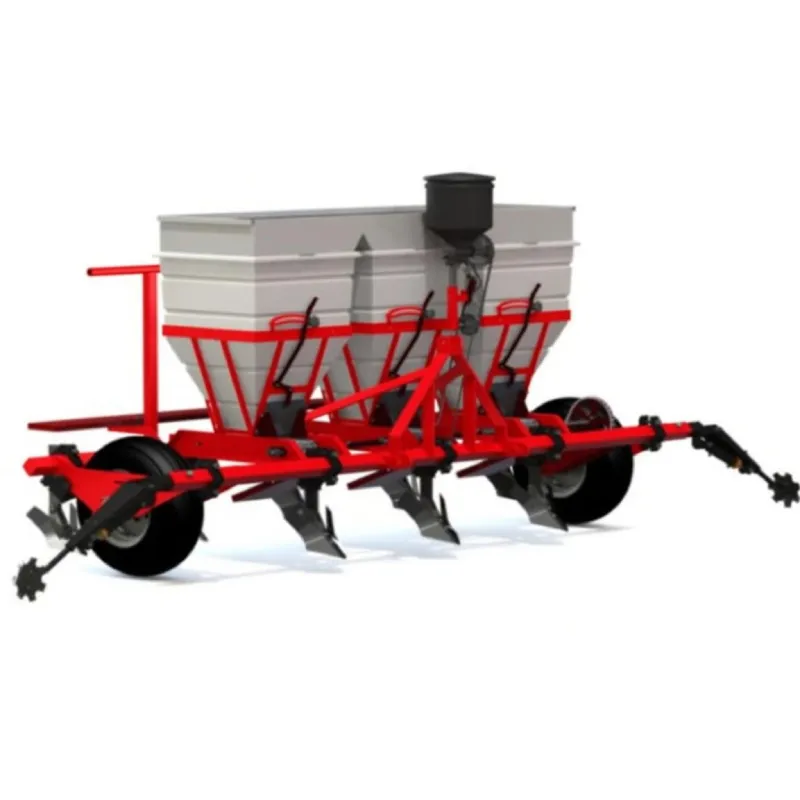
EP-3-4 Rows Fertilizer Spreader for Tractor
Category 2 three-point mounted fertilizer spreader for professional row-crop application — 3-row and 4-row configurations, 350 Kg bunker capacity per row, 8–10 Km/h working speed. Engineered for precise, consistent fertilizer placement in potato, vegetable, and cereal cultivation across Korea and global agricultural markets.
1. Technical Specifications — EP-380 & EP-480 Fertilizer Spreader
The table below covers the complete technical data for both EP series fertilizer spreader models. The EP-380 serves 3-row operations; the EP-480 is the 4-row version of the same platform.
| المعلمة | EP-380 (3 Rows) | EP-480 (4 Rows) |
|---|---|---|
| وزن | ||
| Empty Weight (Kg) | 600 | 700 |
| Bottom Linkage Category | 2 | 2 |
| Number of Rows | 3 | 4 |
| متطلبات الجرارات | ||
| Engine Power (min.) | 75 cv | 85 cv |
| Operational Data | ||
| Bunker Capacity (fertilizer/row) | 350 Kg | 350 Kg |
| Total On-Machine Fertilizer Capacity | 1,050 Kg | 1,400 Kg |
| سرعة العمل | 8–10 Km/h | 8–10 Km/h |
2. What Is the EP-380 / EP-480 Fertilizer Spreader for Tractor?
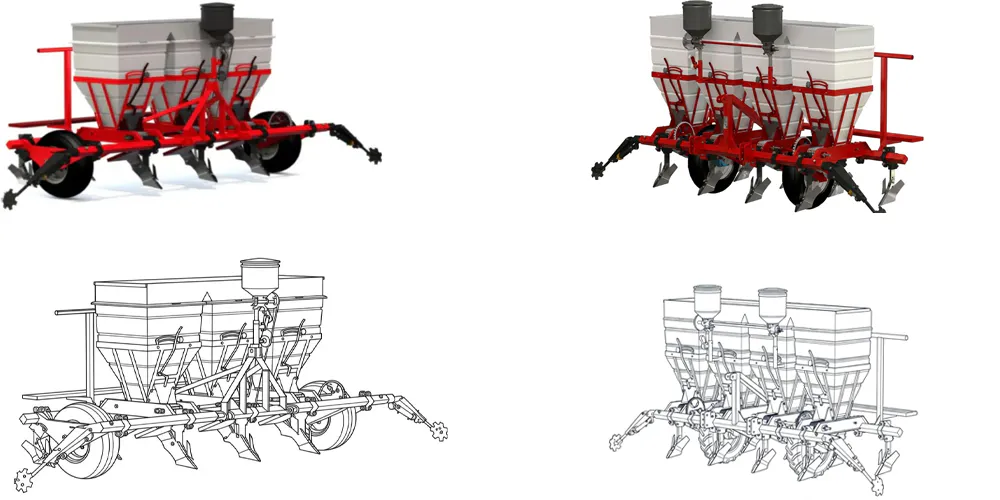
The EP-380 and EP-480 are professional-grade row-crop fertilizer spreader machines designed for tractor-mounted application of granular and powder fertilizers in precisely positioned furrows running parallel to the crop rows. The EP-380 serves 3-row configurations and the EP-480 expands the same system to 4 rows — both sharing the same category 2 three-point bottom linkage, the same 350 Kg bunker capacity per row, and the same 8 to 10 Km/h working speed range. This consistency across the range allows operators who grow multiple crops or manage fields of varying widths to switch between the 3-row and 4-row setups without retraining or changing tractors.
Unlike broadcast fertilizer spreader systems that scatter fertilizer across the entire soil surface — resulting in significant nutrient loss to volatilisation, runoff, and weed benefit — the EP series places fertilizer directly into each crop row furrow at a controlled rate per row. The result is targeted nutrition delivery that improves fertilizer use efficiency, reduces total input costs per hectare, and supports sustainable farming practices increasingly required by Korean agricultural policy and international food production standards. Available in 3-row (EP-380, 600 Kg empty weight, minimum 75 cv tractor) and 4-row (EP-480, 700 Kg empty weight, minimum 85 cv tractor) configurations, this is a tractor fertilizer spreader series built for serious row-crop producers.
3. Five Key Advantages of the EP Fertilizer Spreader Series
Row-Precise Fertilizer Placement
The EP series delivers fertilizer directly into each crop row furrow, not across the entire soil surface. This precision placement concentrates nutrients where the crop root system will access them during the critical early growth phase — reducing total fertilizer input while improving crop uptake efficiency. For Korean potato and vegetable producers managing input costs against tightening margins, this targeted approach to agriculture fertilizer spreader operation translates directly into measurable cost savings per hectare and improved early-season crop establishment compared to broadcast application methods.
350 Kg Per-Row Bunker Capacity — Fewer Refill Stops
Each row bunker on the EP-380 and EP-480 holds 350 Kg of fertilizer, giving the 3-row EP-380 a total on-machine capacity of 1,050 Kg and the 4-row EP-480 a capacity of 1,400 Kg per fill. At typical fertilizer application rates for Korean row crops (150–300 Kg/ha), these capacities allow extended field runs without stopping to refill — keeping the tractor productive and reducing the time-and-fuel cost of each refill cycle. This is a decisive advantage during the narrow planting windows of Korea’s spring agricultural season, when every working hour counts.
8–10 Km/h Working Speed — High Area Productivity
The 8 to 10 Km/h operating speed range is significantly faster than PTO-driven cultivator-type implements that typically work at 3–5 Km/h. At 9 Km/h with the EP-480 covering 4 rows simultaneously, a skilled operator can cover 8 to 12 hectares per day in average field conditions. This high throughput makes the EP series competitive against broadcast tow behind fertilizer spreader systems on a cost-per-hectare basis while delivering the agronomic benefits of row-precise placement. For large Korean agricultural operations running tight seasonal calendars, this speed advantage directly supports on-time planting schedules.
Category 2 Three-Point Hitch — Universal Tractor Compatibility
The category 2 bottom linkage system fits the most common tractor hitch specification in the 75 to 150 cv power range — covering virtually all tractors used in Korean commercial row-crop production, from domestic Korean-assembled brands to imported European and North American machines. There are no adapters, modified link pins, or custom fabrication requirements. The EP-380 and EP-480 attach and detach from any category 2 tractor in minutes, and the simple mechanical drive system requires no PTO shaft connection — reducing hitching time and eliminating one of the most common sources of field delays in tractor-implement operations.
Scalable from 3 to 4 Rows — Same System, Greater Coverage
The EP-380 and EP-480 share the same fundamental architecture — bunker design, metering mechanism, furrow opener configuration, and drive system. This means an operation that starts with the 3-row EP-380 can upgrade to the EP-480 without replacing the tractor or retraining operators. The step from 3 to 4 rows increases area coverage by 33% per pass for a 10 Kg increase in empty machine weight and 10 cv increase in required tractor power — the most efficient capacity upgrade path available in this fertilizer spreader tractor category.
4. Fertilizer Spreader Working Principle — How the EP Series Operates
Understanding the fertilizer spreader working principle of the EP series starts with the flow of fertilizer from bunker to soil. Each row on the EP-380 and EP-480 has its own dedicated hopper — a 350 Kg capacity container mounted above each row unit. Fertilizer — whether granular NPK compound, single-nutrient granule, or compatible powder formulations — is loaded into these hoppers before the field operation begins.
As the tractor moves forward at the prescribed 8–10 Km/h working speed, the ground-wheel-driven metering mechanism at the base of each hopper releases fertilizer at a calibrated rate per unit of forward distance traveled. Ground-wheel drive is a fundamental design choice: because the metering rate is linked to wheel rotation rather than to a PTO shaft or timer, the actual application rate per hectare automatically compensates for any variation in tractor ground speed — the machine applies the same mass of fertilizer per metre of travel regardless of whether the operator speeds up or slows down slightly at headlands. This self-compensating behaviour is a significant accuracy advantage over fixed-rate broadcast systems.
Fertilizer metered from the hopper travels through a feed tube to a furrow opener positioned at the correct row spacing. The furrow opener — typically a hoe or tine type — creates a shallow slot in the soil at the desired depth for subsurface fertilizer placement. The fertilizer drops into this slot immediately behind the opener point, then a covering device or closing wheel presses soil back over the placed fertilizer, protecting it from surface exposure, rain splash, and volatilisation loss. This subsurface placement is particularly important for urea-based fertilizers in Korea’s warm spring soil conditions, where surface-applied urea loses 15–40% of its nitrogen to ammonia volatilisation within days of application — losses that are virtually eliminated by even shallow soil covering.
5. Materials & Construction
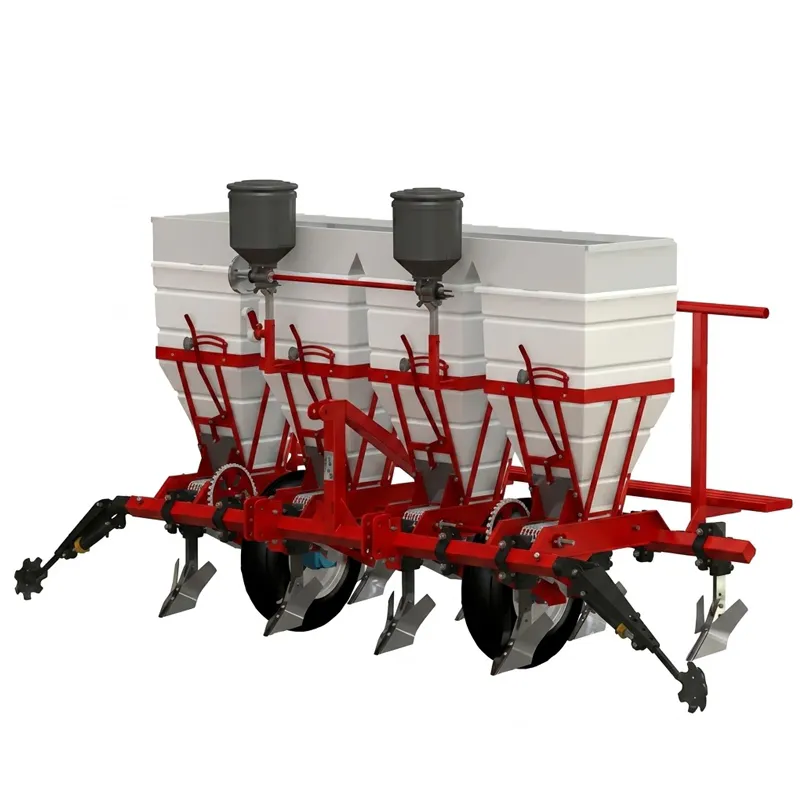
The EP-380 and EP-480 fertilizer spreaders are built for continuous field use in chemically aggressive agricultural environments — because fertilizers, particularly nitrogen compounds like urea and ammonium nitrate, are corrosive to unprotected steel over time. The structural frame is fabricated from high-tensile structural steel, with all welded joints designed to carry the combined static weight of the loaded hoppers plus the dynamic loads from ground-following as the implement traverses uneven terrain.
The hoppers — the largest and most directly fertilizer-exposed components — are manufactured from high-density polyethylene (HDPE) or equivalent engineering-grade polymer. This material choice is deliberate: polymer hoppers are inherently corrosion-resistant to all common granular fertilizer formulations including those containing ammonium nitrate, ammonium sulphate, potassium chloride (muriate of potash), and compound NPK products. Polymer construction also reduces the total weight of the implement compared to equivalent steel hoppers — a meaningful consideration when the loaded machine (at 350 Kg per hopper) already adds substantial ballast to the tractor’s rear axle.
The metering mechanism — including the feed rollers, metering plates, and adjustment slides — is constructed from treated steel and engineering-grade polymer for the components in direct fertilizer contact. The furrow openers are fabricated from hardened boron steel and are designed as bolt-on replaceable units that can be changed in the field without specialist tools when wear reaches the replacement threshold. Ground wheels — the mechanical power source for the metering drive — are pneumatic-tyre wheels running on sealed bearings, selected for low rolling resistance on soft spring soils without the compaction damage that solid rubber or steel wheels can cause to prepared seedbeds. All external steel surfaces receive a corrosion-resistant primer and topcoat paint system compatible with agricultural chemical environments.
6. Application Scenarios
The EP-380 and EP-480 fertilizer spreader series addresses a range of row-crop fertilization requirements across different crop types, soil conditions, and farm scales. The following scenarios represent the most common and valuable deployment contexts for these machines in Korean and global B2B agricultural operations:
Potato Cultivation — Korea’s Highland Production Regions
Potato production in Korea’s Gangwon-do highland belt — the country’s primary potato-growing region — involves simultaneous furrowing, planting, and fertilizer application in a single or multi-pass operation. The EP-480 4 Rows Fertilizer Spreader for Tractor is well matched to this workflow, placing fertilizer in the furrow at planting depth before or simultaneously with seed potato placement. The 350 Kg per-row bunker capacity supports extended field runs on the large plots typical of commercial potato operations in Pyeongchang, Jeongseon, and Hongcheon without constant refill interruptions.
Vegetable Crop Establishment — Greenhouse & Open Field
Commercial vegetable production in Korea’s Chungnam and Jeonnam provinces — covering crops including cabbage, garlic, onion, leek, and radish — typically follows row-based cultivation patterns where basal fertilizer must be placed at row spacing before transplanting or direct seeding. The EP-380 3 Rows Fertilizer Spreader for Tractor provides the precision placement and controlled rate that row vegetable producers need, applying fertilizer in the correct furrow position without contaminating the spaces between rows where weed competition would be stimulated by broadcast applications of nitrogen.
Maize & Cereal Row Cropping
Maize production in Korea and across Southeast Asian export markets served by Korean agri-supply chains requires precisely timed and placed starter fertilizer at or near seeding time. The EP-480’s 4-row configuration matches standard maize row spacings commonly used in Korean commercial fields (typically 70–80 cm row spacing), applying starter compound fertilizer at the correct lateral distance from the seed furrow to avoid fertilizer-salt injury to germinating seedlings. The agriculture fertilizer spreader format delivers this band-placement precision far more accurately than any broadcast alternative in the same operating scenario.
Top-Dressing Side-Placement Applications
Beyond planting-time basal application, the EP series is used for in-season top-dressing fertilizer applications where nitrogen or compound fertilizers are placed alongside established crop rows during the growing season. Operating at 8–10 Km/h through established row crops, the machine’s furrow openers place the fertilizer to the side and slightly below the soil surface at the base of the crop — where rain or irrigation moves it into the root zone without the surface-loss mechanisms that affect top-dressed broadcast applications in warm, humid Korean summer conditions. This represents a major use case for fertilizer spreader commercial operations running high-value vegetable crops under intensive management.
Ginseng & High-Value Specialty Crop Fertilization
Korean ginseng cultivation — one of the country’s most valuable and labour-intensive agricultural enterprises — takes place in precisely managed row beds where fertilizer timing, placement, and rate are critical quality and yield determinants. The EP-380’s narrow 3-row configuration suits the close-spaced, precision-managed ginseng bed layouts typical of Gyeonggi and Chungnam production areas. Row-precise fertilizer delivery eliminates the over-application and between-row waste inherent in broadcast methods, helping ginseng producers maintain the soil chemistry profile their crop demands over the multi-year production cycle.
Contract Farming Services & Agricultural Service Providers
Agricultural service contractors in Korea who provide fertilization services across multiple client farms benefit from the EP series’ straightforward calibration, fast field-to-field transitions, and compatibility with a wide range of common tractor models. The ability to switch between the EP-380 for smaller or narrower fields and the EP-480 for large-scale row crop areas — using the same category 2 hitch on the same tractor — gives service contractors the operational flexibility to serve diverse client needs from a single-implement investment. The large fertilizer spreader capacity of the EP-480 (1,400 Kg total on-machine) further reduces refill downtime across a full service day.
7. Customer Success Case Studies
Case Study 1: Large-Scale Potato Production in Gangwon-do, South Korea
A major vegetable cooperative in Gangwon-do replaced their aging broadcast spreaders with three Watanabe ADB-480 4-Row units. By switching to targeted placement of slow release fertilizer and npk fertilizer, the cooperative reported a 22% reduction in fertilizer waste and a 15% increase in Grade-A tuber yield. The ability to maintain a 10 km/h working speed allowed them to cover 400 hectares in record time before the monsoon season.
Case Study 2: Professional Sports Turf Management in Sydney, Australia
A premier turf management firm utilized a customized ADB-380 for applying pet friendly lawn fertilizer and starter fertilizer for grass on professional rugby fields. Providing a perfect aesthetic finish while complying with local pet safe fertilizer regulations for community-use fields.
7. Regulatory Compliance & Industry Standards
Agricultural fertilizer application equipment — including the drive mechanisms, gearboxes, and mechanical linkages in the EP fertilizer spreader series — is subject to machinery safety standards and agricultural input regulations in all major markets. The following frameworks are relevant for buyers deploying this tractor fertilizer spreader across Korea and international markets:
Korea — RDA, KOSHA & Fertilizer Management Act
In South Korea, the use of fertilizer application equipment is governed by multiple regulatory frameworks. The Fertilizer Management Act (비료관리법) regulates the types, grades, and labelling of fertilizers used in agricultural production — and by extension the application equipment must be calibrated to comply with the registered application rate for each fertilizer product. The Rural Development Administration (RDA / 농촌진흥청) provides guidance on mechanised fertilizer application best practices under its Good Agricultural Practice (GAP) framework. The Korea Occupational Safety and Health Agency (KOSHA) requires that tractor-implement systems, including gearboxes and mechanical drive components, comply with the Occupational Safety and Health Act machinery safety provisions for agricultural equipment. Imported machinery must be registered with the RDA before commercial sale or leasing in Korea.
European Union — Machinery Directive & Fertilizer Application Standards
In the EU, this fertilizer spreader machine type must comply with the Machinery Directive 2006/42/EC (and from 2027 the Machinery Regulation (EU) 2023/1230). The three-point hitch must conform to EN ISO 730 category 2 dimensions. For fertilizer application equipment specifically, EN 13406 (agricultural machinery — fertiliser distributors) provides performance and testing standards that European buyers increasingly expect compliant machines to meet. The EU Sustainable Use of Pesticides Directive and Nitrates Directive (91/676/EEC) also influence fertilizer application practice — particularly in Nitrate Vulnerable Zones where application rates, timing, and methods are controlled. Precision row-application as delivered by the EP series supports compliance with these rate and placement requirements far more effectively than broadcast alternatives.
United States — ASABE Standards & State Regulations
ASABE Standard S217 governs category 2 three-point hitch dimensions in the US market — confirming dimensional compatibility for US buyers. ASABE EP542 covers uniform terminology for soil-engaging components relevant to the furrow openers used in the EP series. US buyers in states with nutrient management planning requirements (California, Maryland, Virginia, and others) should confirm that the EP series’ row-placement delivery method qualifies as an approved fertilizer application technique under their state’s nutrient management plan framework, as precision placement often qualifies for more favourable rate allowances than broadcast methods under these regulatory schemes.
Australia, Japan & Other Asia-Pacific Markets
In Australia, agricultural machinery gearboxes and mechanical drive systems must comply with AS/NZS 4024.3502 (safeguarding of machinery) and state WHS Acts. Japan’s MAFF regulates fertilizer application equipment under the Agricultural Mechanization Promotion Law, requiring conformity confirmation before commercial distribution. In both markets, the category 2 hitch (ISO 730) is the standard most commercial-grade tractors are fitted with in the 75–150 cv range, confirming the EP series’ compatibility without modification. For buyers sourcing from these markets, we provide full technical documentation to support local registration and compliance verification processes on request.
The EP-380 and EP-480 are supplied with an operator manual covering calibration procedures, application rate adjustment, and maintenance schedules. Material test certificates and CE-equivalent technical documentation are available on request for projects subject to third-party inspection or import authority review.
9. About Us
We are a specialist supplier of professional-grade agricultural field machinery for row-crop production, with a product portfolio covering fertilizer spreader systems, soil preparation implements, and associated precision planting equipment. Our approach to product selection prioritises machines with verifiable field performance records, calibration accuracy that meets agronomic precision standards, and aftermarket spare-parts supply chains capable of supporting machines over multi-season service lives.
We supply B2B customers globally — including Korean agricultural cooperatives, commercial potato and vegetable producers, contract fertilization service companies, and agricultural equipment importers serving professional farmers across Korea’s major agricultural regions. Our Korea-facing supply operations can provide technical documentation in Korean on request, support RDA registration processes, and coordinate CIF delivery to Korean ports at Busan or Incheon. Whether you are evaluating a new fertilizer spreader for a single-farm operation or sourcing fleet quantities for a multi-site agricultural service business, our technical team will respond to your enquiry within one business day.
10. Related Products — Complete Drive System Supply
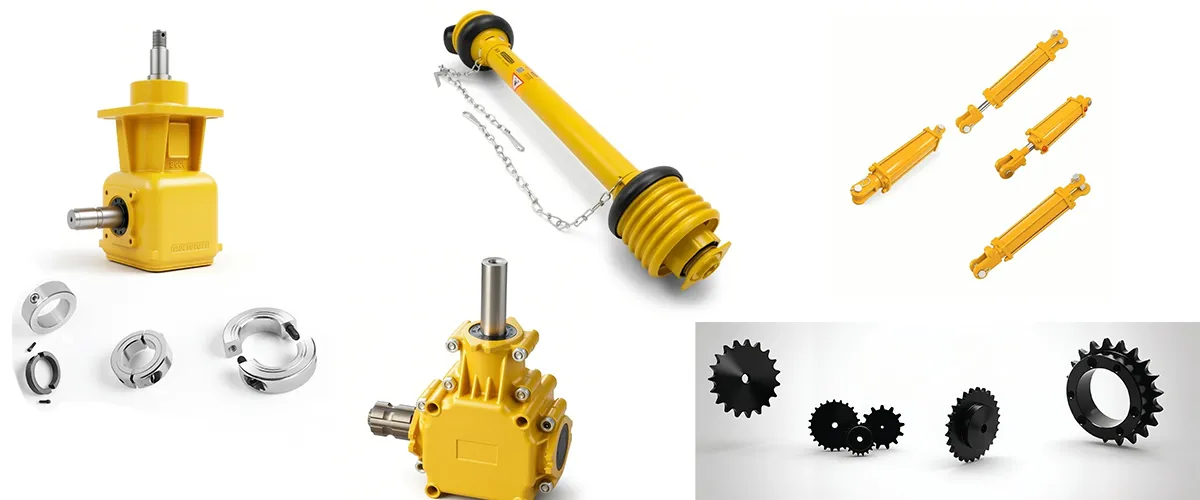
The EP fertilizer spreader series is designed to integrate with a broader precision agriculture equipment ecosystem. We supply a full range of compatible PTO shafts, gearboxes, and transmission components that complete the driveline for PTO-driven implements in the same field operation fleet — offering the one-stop supply advantage that simplifies procurement for multi-implement agricultural operations.
PTO Shafts & Gearboxes
Where your field operation includes PTO-driven implements alongside the ground-wheel-driven EP fertilizer spreader — such as rotary cultivators, PTO-driven rotavators, or other powered implements — correctly rated PTO shafts and gearboxes are essential for safe and reliable power transfer. Mismatched shaft length or under-rated gearbox torque capacity are the most common causes of premature PTO drivetrain failure in mixed-implement farming operations.
Drive Sprockets & Transmission Components
The ground-wheel drive system in the EP-380 and EP-480 fertilizer spreader uses a chain-and-sprocket transmission to transfer rotation from the ground wheel to the metering mechanism. The sprocket ratio in this drive chain determines the actual application rate per hectare — changing the sprocket pair is the primary method for adjusting the fertilizer dose across the machine’s calibration range. We supply matched sprocket sets in the full range of standard and metric sizes used in agricultural metering drives.
الأسئلة الشائعة
المحرر: PXY