Technical Guide — Agricultural Stone Crushing Equipment
How to Install and Align a PTO Drive Shaft on a Tractor-Mounted Stone Crusher
A step-by-step technical guide covering PTO drive shaft installation, alignment verification, safety compliance, and maintenance best practices — specifically for agricultural and field stone crusher machines including the THOR 2.4, RockMaster, PSC, and STCM series كسارة الحجارة PTO models.
Linkage: Category 2
Tractor: 70–500 hp
Audience: Korean & Asian Farmers
1. Why Correct PTO Drive Shaft Installation Matters for Stone Crusher Performance
Connecting a tractor stone crusher to your tractor’s power take-off might look straightforward — but the difference between a correctly aligned PTO shaft and a sloppily fitted one can be the difference between years of trouble-free field crushing and a catastrophic drivetrain failure mid-season. For anyone running a كسارة الحجارة PTO in Korean agricultural zones, paddy field preparation areas, or rocky highland pastures from Gangwon to Jeolla, getting this step right from day one is simply non-negotiable.
A misaligned or incorrectly shortened PTO shaft generates excessive vibration in the universal joint yokes, accelerates bearing wear in the crusher’s input gearbox, and — at the operating speeds typical of stone crushing equipment running at 1000 RPM — can cause a catastrophic shaft separation in a fraction of a second. Shaft ejection events at PTO speed are among the leading causes of serious injury on Korean farms where machinery operators sometimes work in close proximity to the attachment being operated. This guide walks through every step of the installation and alignment process in the order a field technician would actually perform it, referencing the specific machine configurations available in our range of agricultural stone crusher models.
Whether you are setting up one of the compact THOR 2.4 models for the first time, fitting a heavier STCM-series stone crusher machine to a 150-hp tractor, or performing a seasonal pre-work inspection on equipment that has been in storage since last autumn, the principles described here apply consistently across the full product range. Follow the sequence completely — skipping steps to save time is where most installation errors originate.
2. Action Mechanism — How a PTO Stone Crusher Actually Works
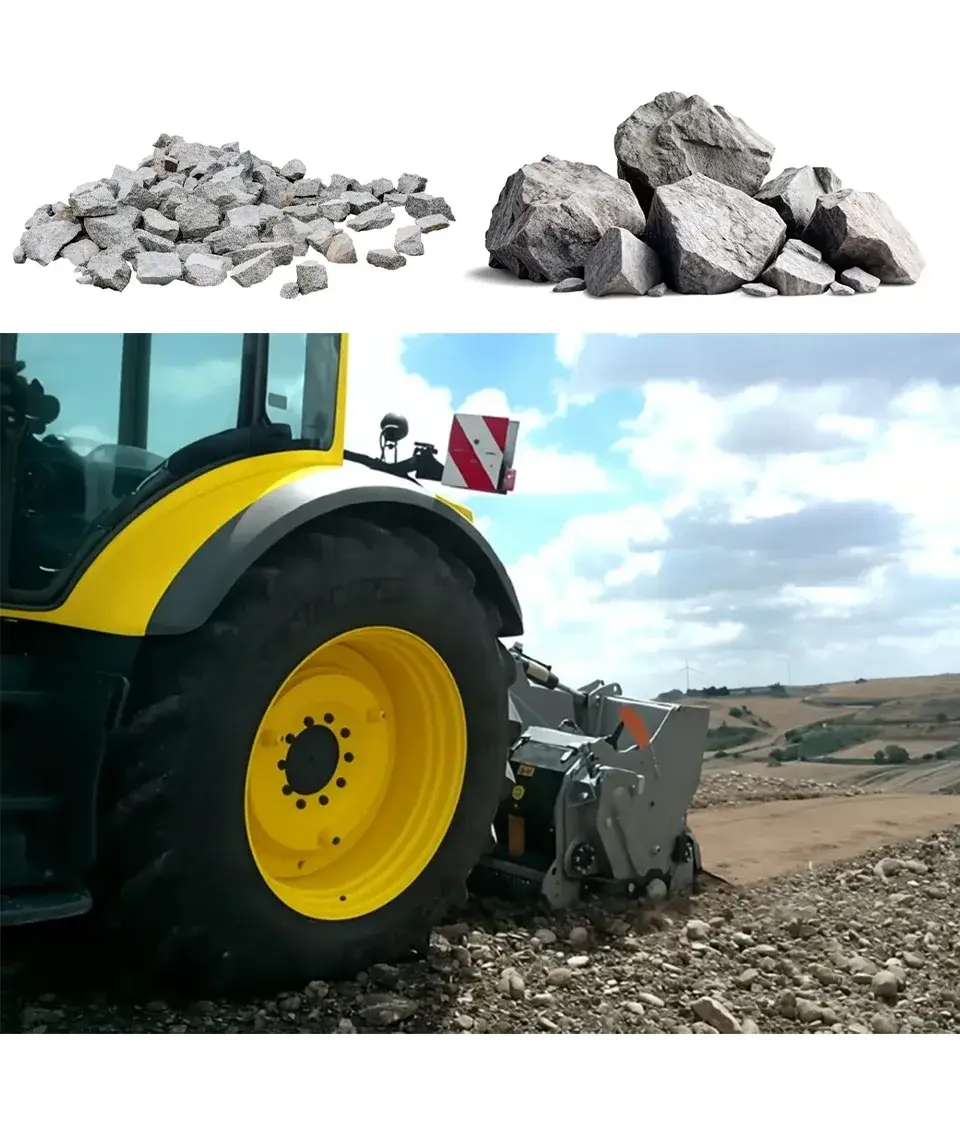
Before diving into installation, it helps to understand what the PTO shaft is actually doing inside the machine. A pto stone crusher for tractor works by taking rotational torque from the tractor’s rear power take-off shaft and transmitting it through a universal-joint Cardan shaft into the crusher’s input gearbox. The gearbox multiplies the incoming RPM and redirects the drive onto a heavy-duty rotor drum equipped with tungsten carbide-tipped cutting and hammering teeth — the same teeth that do the actual stone fragmentation work.
As the rotor spins at high speed (typically 1000 RPM at PTO input, translated to higher peripheral rotor speed by the gearbox ratio), the tips of the teeth strike surface stones, embedded rocks, and hard soil concretions with enough kinetic energy to fracture them. On models like the STCM series — which accept tractors in the 80–220 hp range — the rotor diameter reaches 550 mm and the maximum stone shredding diameter is 300 mm. The STCH series handles even harder and larger material, with a 700 mm rotor diameter and the capacity to fragment stones up to 500 mm across. The entire crushing action is continuous and self-feeding: the forward motion of the tractor combined with the rotor’s rotation continuously presents fresh material to the hammering zone.
The PTO shaft, therefore, must deliver full-rated torque continuously — not just during acceleration or light loading. Any misalignment, incorrect operating angle, or insufficient shaft overlap forces the universal joint crosses to operate at non-ideal joint angles, generating torque fluctuations that are transmitted back into both the tractor’s PTO gearbox and the crusher’s input assembly. On a portable stone crusher machine working through hard rocky ground, these fluctuations can be severe and cumulative in their damage.
3. Manufacturing Structure — What a PTO Drive Shaft Assembly Consists Of
Understanding what you are physically handling during installation makes the process faster and reduces mistakes. A standard agricultural PTO drive shaft assembly — as used on the full range of كسارة الحجارة PTO machines compatible with category 2 three-point linkage tractors — consists of the following components working together as a system.
Outer Tube & Inner Profile
The two sliding telescopic tubes — outer and inner — allow the effective shaft length to change as the tractor and implement move relative to each other during field operation. On most stone crusher for tractor applications, these profiles are lemon-shaped, trilobular, or hexagonal in cross-section to transmit torque while permitting axial movement.
Universal Joint Crosses (Spider)
A pair of universal joint crosses (one at each end) allow the shaft to operate at an angle relative to the input and output axes. For standard 540 RPM PTO applications on lighter STCL-series machines, the maximum permissible continuous operating angle is typically 25°, though manufacturers recommend keeping normal field operating angles below 15° wherever terrain allows.
Yoke Connections & Safety Guard
The two end yokes connect the shaft to the tractor PTO stub and the crusher input shaft stub using spring-loaded quick-release pins or bolted collars. Over the full assembly, a complete plastic or metal safety guard (cone + full tube guard) is mandatory under agricultural machinery safety legislation in Korea, the EU, and most regions where this equipment is sold.
Shaft assemblies supplied for use with the THOR 2.4 (180 cv minimum tractor) and THOR 3.0 (230 cv minimum) models are significantly more robust than those used on smaller field stone crushers — reflecting the higher input torque these machines demand from the tractor. When ordering a replacement or initial shaft, always verify the torque rating in Nm against the maximum tractor output, not just the RPM speed compatibility.
4. Material System — Steel Grades, Surface Treatments & Coupling Standards
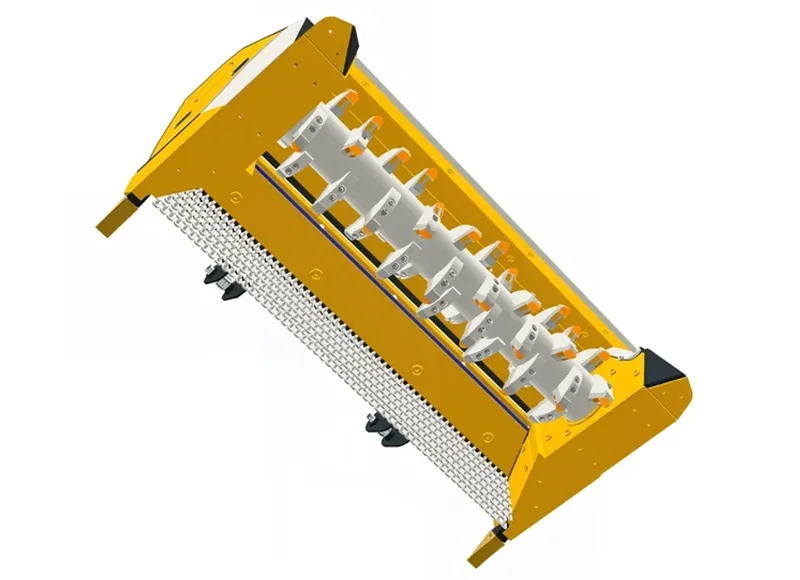
The material specification of a PTO shaft directly determines its fatigue life under the cyclic torsional loads generated by stone crushing — one of the most mechanically demanding agricultural applications for drivetrain components. Shaft tubes used on heavy-duty agricultural stone crusher applications are typically manufactured from seamless cold-drawn carbon steel conforming to EN 10305-1 or equivalent KS D 3507 (Korean Industrial Standard for seamless steel tubes for mechanical use) with minimum yield strengths in the range of 355–520 MPa depending on the section.
Universal joint crosses (spider assemblies) are case-hardened alloy steel components, typically 20CrMo or 42CrMo4 (equivalent to KS D 3867 chromium-molybdenum steel), surface hardened to 58–62 HRC at the bearing journal surfaces while retaining a tough core to absorb shock loading without brittle fracture. The bearing cups in each spider are precision-ground and retain grease through labyrinth seals or grease nipples depending on the joint design generation. Yokes connecting to the PTO stub and crusher input are either forged or hot-formed steel with precision-bored recesses to ensure concentricity of the shaft axis — a critical factor for smooth rotation at 1000 RPM operating speeds.
The safety guard assembly covering the rotating shaft is typically high-density polyethylene (HDPE) on lighter models, transitioning to reinforced polypropylene or steel-reinforced polymer on the heavier STCM and RSM series guards. Guard attachment to the tractor and implement — using non-rotating anchor chains — is a regulatory requirement in all markets where these machines are sold, including Korea under the Agricultural Machinery Safety Act (농업기계의 안전기준에 관한 규칙), and is not optional safety theater. A well-maintained guard that stays anchored and rotates freely around the shaft extends the life of the shaft tubes by protecting them from soil and stone impact during field operation.
5. Tools & Preparation — What You Need Before Starting
Attempting a PTO shaft installation without the right tools on hand is a common reason the job ends up done incorrectly. The following items should be ready before you start, regardless of which كسارة الحجارة PTO model you are working on.
| Tool / Item | Purpose | Critical? |
|---|---|---|
| Steel tape measure (3 m min.) | Measure collapsed and extended shaft length, verify overlap | Yes |
| Angle finder / digital inclinometer | Verify PTO shaft operating angle at 3-point linkage height | Yes |
| Angle grinder with cutting disc | Shorten shaft tubes to correct length if new shaft needs sizing | Situational |
| File / deburring tool | Remove sharp edges from cut tube ends before reassembly | Yes (if cut) |
| Grease gun with multi-purpose EP grease | Lubricate sliding profile and universal joint grease nipples | Yes |
| Torque wrench (appropriate range) | Torque bolted yoke connections to specified values | Yes |
| Anchor chain / tie wire | Secure guard cone to fixed tractor or machine point per regulations | Yes — Legal |
| Safety gloves & eye protection | Personal protection during cutting, deburring, greasing | Yes |
6. Step-by-Step PTO Drive Shaft Installation Guide
Step 1 — Attach the Implement to the Three-Point Linkage First
Before touching the PTO shaft, connect the كسارة الصخور المثبتة على جرار to the tractor’s three-point lower links and top link. With the implement hanging on the linkage at its normal working height setting, you can now accurately measure the distance between the tractor PTO stub face and the crusher input shaft stub face. This is the reference measurement from which all shaft sizing calculations are derived. Do not estimate this figure — measure it with the implement in its normal working position, not in the raised transport position.
Step 2 — Measure Required Shaft Length (Collapsed and Extended)
Separate the PTO shaft into its two tube halves. Hold each half in position between the tractor stub and crusher stub to determine what the total assembled length needs to be. The critical rule here is the 1/3 – 2/3 overlap rule: when the shaft is at its shortest operating length (implement raised to transport position), the inner profile must still overlap the outer profile by at least one-third of the total tube length. When at maximum extension (implement lowered at full depth), the overlap must remain at least 150 mm for safe torque transmission. Mark this length on the tube before cutting — and always err on the side of leaving it slightly longer than the minimum if in doubt.
Step 3 — Cut, Deburr, and Verify Equal Lengths
Using an angle grinder with a quality cutting disc, cut both the outer tube and the inner profile (guard profile included) squarely to the marked length. The cut must be perpendicular to the tube axis — an angled cut creates an uneven bearing surface in the sliding profile zone and concentrates stress at the cut edge. After cutting, deburr all edges thoroughly with a file and remove all metal swarf from inside the tube profiles. Steel particles inside the profile act as abrasives and can score the sliding surfaces within the first operating cycle. Confirm that the outer tube and inner tube have been cut to matching equivalent lengths — if one is significantly longer than the other the shaft cannot be reassembled correctly.
Step 4 — Grease the Sliding Profile and Reassemble the Shaft
Before sliding the two halves together, apply a generous coat of EP (extreme pressure) lithium complex grease to the full length of the inner profile’s outer surface. The sliding profile is a constant-friction surface during field operation every time the implement flexes over undulating terrain, and dry running destroys the profile surfaces rapidly. Slide the two halves together and verify that the assembly moves freely through its full stroke without binding. Confirm that the yoke alignment arrows or marks on both halves are in the same plane — misaligned yokes (90° offset) create 2nd-order velocity fluctuations even when the shaft is otherwise correctly installed.
Step 5 — Connect to Tractor PTO Stub and Crusher Input Shaft
Engage the tractor-end yoke onto the PTO stub shaft, pressing firmly until the spring-loaded locking ring clicks into the shaft groove. Tug the yoke back firmly to confirm it is fully seated — a partially seated yoke will vibrate loose and can separate under load. Connect the crusher-end yoke to the crusher input stub in the same manner. On models using bolted collar connections rather than quick-release pins (common on high-torque STCH and RSM series models), torque the collar bolts to the manufacturer’s specified value using a torque wrench — do not estimate “tight enough.”
Step 6 — Check and Verify Operating Angle
With the implement connected and sitting at working height, use a digital inclinometer or angle finder placed along the shaft to measure the actual operating angle at both the tractor end and the implement end. For 1000 RPM PTO applications (as used on the STCM, STCH, RSL, RSM, and RSH series heavy-duty stone crusher machines), the maximum recommended continuous operating angle per universal joint is 12–15 degrees. For 540 RPM applications (STCL light series), the permissible angle is slightly higher at up to 25 degrees, but keeping it below 20° significantly extends joint life. If the angle exceeds the recommended limit, adjusting the top link length or implement hitch height position is required before proceeding to start the machine.
Step 7 — Install and Secure the Safety Guard System
Slide the guard cone sections over the shaft assembly, ensuring they seat properly on the guard support rings at each yoke end. The guard must rotate freely around the shaft — spin it by hand to confirm it is not rubbing on the shaft body. Attach the guard anchor chains: one end to the fixed tractor chassis point (never to the PTO shaft itself), the other to the guard bracket. The chain length should be short enough to prevent the guard from rotating with the shaft if the shield catches on anything, but long enough to permit full shaft angle movement without going tight. This chain attachment is a legal requirement under the Agricultural Machinery Safety Act applicable in Korea (농업기계의 안전기준에 관한 규칙 별표 1) and the EU Machinery Directive 2006/42/EC for machines sold into European markets.
Step 8 — Test Run at Low Speed Before Field Work
Before engaging the PTO at full operating speed, perform a low-RPM test engagement. Stand to the side — never directly behind the shaft — and engage PTO at around 200–300 RPM. Listen and observe for abnormal vibration, visual shaft wobble, guard contact noise, or any binding in the sliding profile section. If everything runs cleanly, increase to operating speed in stages. Let the machine run at operating speed for at least 2 minutes before moving into work. Stop, inspect all connection points for signs of loosening, and only then proceed to field stone crushing work.
7. Regulatory Compliance: Korea and International Standards for PTO Shaft Safety
Operators, dealers, and agricultural contractors working with stone crusher for tractor systems in Korea and internationally need to be aware of the following mandatory regulatory frameworks governing PTO drive shaft safety and gearbox design.
Korea — 농업기계의 안전기준에 관한 규칙
The Agricultural Machinery Safety Standards Act (농업기계의 안전기준에 관한 규칙) requires that all PTO-driven agricultural machinery sold in Korea carry a CE-equivalent safety certification or Korean Agricultural Machinery Safety Mark, with mandatory PTO shaft guards meeting prescribed strength and coverage requirements. PTO shafts and guards must comply with safety criteria set by the Rural Development Administration (농촌진흥청, RDA), which also requires periodic inspection records for commercially operated equipment.
EU — Machinery Directive 2006/42/EC
The EU Machinery Directive mandates CE marking for all agricultural machinery, including PTO-driven stone crushers. Essential Health and Safety Requirements (EHSR) under Annex I specifically address PTO drive components: shafts must be fully guarded, guards must be anchored to prevent co-rotation, and machinery must incorporate overload protection (typically a friction torque limiter or shear bolt) to protect both tractor PTO and implement gearbox from sudden overload events common in stone crushing applications.
ISO 5676 & ISO 11684 — PTO Shaft Standards
ISO 5676 specifies the dimensional requirements for agricultural tractor and machine PTO drive shaft coupling — defining spline dimensions for both 540 RPM (6-spline, 34.9 mm) and 1000 RPM (21-spline, 34.9 mm) PTO stubs. ISO 11684 covers safety signs and hazard pictograms that must be displayed on PTO shaft guards and adjacent machine surfaces. Both standards are referenced in Korean KS (Korean Standards) equivalent normative documents for agricultural machinery.
Gearbox Safety: AGMA / ISO 6336 for Agricultural Crushers
The gearbox inside every كسارة الحجارة PTO must be designed and rated according to recognized gear capacity standards — typically ISO 6336 (pitting and bending fatigue) or AGMA 2001. For stone crusher applications, a service factor of 2.0 or higher is typically applied to account for shock loading from stone impacts. Gearbox oil seals must comply with dust and debris ingress ratings appropriate for field environments — IP65 equivalent or higher is standard for crushers operating in Korean paddy field preparation and rocky highland reclamation work.
8. Most Common PTO Shaft Installation Mistakes — And How to Avoid Them
Even experienced tractor operators make consistent errors when setting up كسارة الحجارة PTO drivetrain connections. The following failure modes account for the majority of premature PTO shaft and gearbox failures observed on agricultural stone crushing equipment operating in Korea and across Asian markets.
Using a 540 RPM Shaft on a 1000 RPM Application
The most dangerous error. A 540 RPM rated shaft run at 1000 RPM will fail — the timing varies but failure is certain. The RPM rating on the shaft label is not a suggestion. STCM, STCH, RSM, and RSH series stone crusher models require 1000 RPM shafts exclusively.
Insufficient Profile Overlap at Maximum Extension
When the implement is at its deepest working position, the inner and outer profiles must still have at least 150 mm overlap. If not, the shaft can separate under load — creating an unguided rotating projectile situation. This is the second most common cause of serious operator injury on stone crusher machines globally.
Yoke Phasing Error (Misaligned Yoke Arrows)
The two yoke ends of the shaft must be in the same rotational plane (0° offset, sometimes referred to as “in-phase”). An out-of-phase assembly causes a cyclical speed fluctuation at twice the shaft rotation frequency, generating vibration that destroys bearings and can resonate destructively through the tractor’s transmission at operating speeds.
No Overload Protection Device (Torque Limiter)
Stone crushing is a shock-load intensive application. Running without a friction clutch or shear bolt torque limiter on the drive shaft — as required by most heavy-duty stone crusher machine models — transmits sudden stone-impact peaks directly into the tractor PTO housing. This can crack tractor transmission casings and strip gearbox input shaft splines in a single severe rock strike event.
9. Routine Maintenance Schedule for PTO Drive Shafts on Stone Crushers
Once correctly installed, a PTO shaft on a tractor stone crusher requires a consistent maintenance routine to deliver the design service life. Stone crushing is one of the most abrasive operating environments for any rotating component, and maintenance intervals should be more frequent than on lighter-duty implements like mowers or tillers. The schedule below applies to machines operating under typical Korean agricultural field conditions — heavy clay or rocky highland soils with field sessions of 4–8 hours.
Before Each Use
Visually inspect the guard for cracks, splits, or missing sections. Verify anchor chain is intact and connected. Check that both yoke locking rings are engaged. Test sliding profile movement by hand — should slide without stiffness.
Every 8 Hours of Operation
Grease all universal joint nipples — typically 1–2 pumps of EP grease per nipple. Grease the sliding profile through the profile grease fitting if fitted. Check for any new play or roughness in universal joint movement when rotated by hand.
Every 50 Hours or Seasonal
Disassemble the shaft and clean the profile sliding surfaces. Remove all old grease and soil contamination. Inspect profile surfaces for scoring or galling. Replace universal joint assemblies if needle bearing play is detected. Inspect guard for UV degradation on polymer components. Confirm torque limiter slipping torque is within specified range.
10. Our PTO Stone Crusher Range — Compatible Models
Each of the models below uses the PTO drive shaft system described in this guide. All are available for agricultural stone crushing, field preparation, and land reclamation applications in Korea and internationally. Click any model to view full technical specifications.
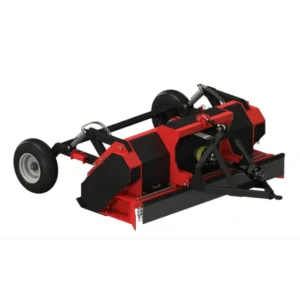
EP-THOR 2.4 + Kit Drawbar
Min. 180 cv | 2.4 m Width
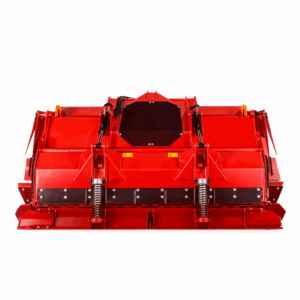
EP-RockMaster Agricultural Stone Crusher
Versatile Field Stone Crusher
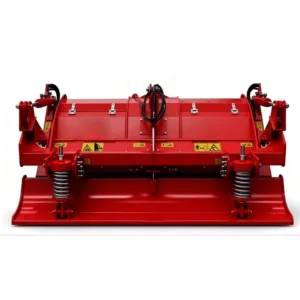
EP-PSC Models (STCL/STCM/STCH)
70–400 hp | Multiple Widths
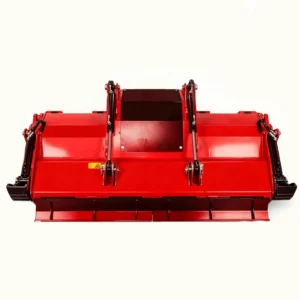
EP-Tractor Mounted Rock Crusher
Heavy-duty Field Crusher
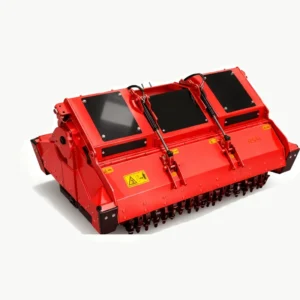
EP-Agricultural Rock Crusher (Korea)
Korea-Specific Agricultural Model
11. About Us — Agricultural Stone Crushing Equipment Specialists
We are a specialist supplier of professional agricultural stone crushing equipment and tractor-mounted land preparation machinery serving farmers, agricultural contractors, and land reclamation operations across Korea and the broader Asia-Pacific region. Our product range spans the full power spectrum — from compact STCL series small pto stone crusher models compatible with 70-hp tractors through to RSH/HP series heavy-duty crushers capable of fragmenting 500 mm diameter stones with tractors up to 500 hp. This breadth allows us to serve both smallholder Korean hill farmers reclaiming rocky highland paddies and large-scale contractors clearing land for commercial agricultural development projects.
Beyond supplying the machines, we provide direct technical support on PTO shaft sizing, tractor compatibility verification, and field setup guidance — exactly the kind of practical knowledge covered in this guide. We understand the field conditions that Korean tractor stone crusher operators encounter: the granite-rich soils of the Taebaek mountain range, the embedded stone layers in reclaimed agricultural land around estuaries, and the demanding productivity expectations of commercial farming operations that need their equipment working every available day of the growing season without unplanned downtime.
Frequently Asked Questions — PTO Stone Crusher Installation & Use in Korea
Editor: PXY