Agricultural Land Preparation · Andean & Coastal Regions
PTO Stone Crusher for Chilean Agriculture: Andean Volcanic Rock and Alluvial Gravel Clearing Guide
A practical knowledge guide for Chilean farmers, landowners, and agricultural contractors dealing with volcanic basalt, ignimbrite, alluvial river gravel, and surface fieldstone — covering how a PTO石料破碎机 works, how to select the right model, and what operational conditions matter most across Chile’s diverse growing regions.
1. Why Chilean Farmland Presents Unique Stone-Clearing Challenges
Chile’s agricultural landscape is among the most geologically varied in South America. The country sits along the Pacific Ring of Fire, and its soils carry the direct imprint of millions of years of volcanic activity, glacial action, and tectonic uplift. In the Maule, O’Higgins, and Biobío regions — where wheat, wine grapes, cherries, and vegetables are grown intensively — farmers regularly encounter volcanic basalt fragments and ignimbrite blocks that work their way to the surface after plowing, frost heave, or heavy rainfall. In the Araucanía region, Andean-origin alluvial fans deposit continuously replenished rounded gravel across otherwise fertile river-plain soils.
Stone damage to tractor tires, planting equipment, and irrigation systems is a genuine economic loss category for Chilean producers. A single growing season’s worth of hidden rock strikes on a planter can cost more in repairs than the annual lease payment on a quality 拖拉机碎石机. Beyond machinery damage, uncleared stones limit seeding depth consistency, prevent full root development in root crops, and create uneven soil surfaces that complicate drip-tape installation and precision irrigation.
The traditional approach — hand-picking crews, road graders, or buying cleared land at a premium — is giving way to mechanized solutions. An 农业碎石机 attached to the tractor’s three-point linkage and powered by the PTO shaft offers a fundamentally different solution: instead of removing stone from the field, it reduces stone to fine gravel and reincorporates that material into the soil profile, improving drainage, tilth, and workability in a single pass.
2. Action Mechanism — How a PTO Stone Crusher Actually Works
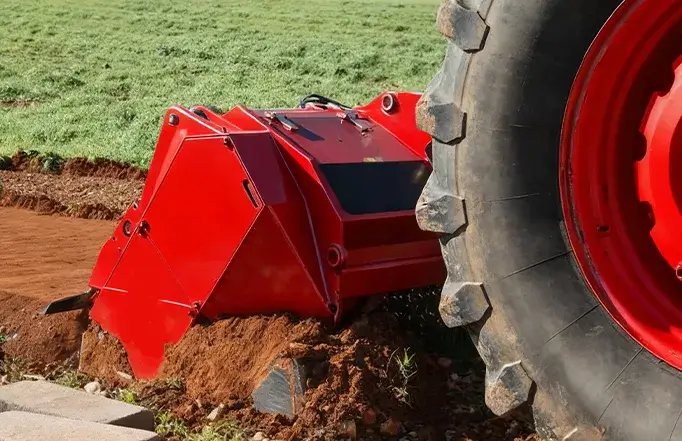
The operating principle of a PTO石料破碎机 is fundamentally different from a conventional jaw crusher or impact crusher of the kind used in aggregate quarrying. Rather than applying high-force compression between jaws, a PTO-driven field crusher uses a high-inertia rotor spinning at 1,000 RPM (driven through the tractor’s power take-off shaft) to deliver repeated, rapid impact energy to stones as the machine advances through the soil at approximately 3 km/h. The rotor carries a series of tungsten carbide-tipped cutting tools — called picks, teeth, or chisels depending on the design — arranged in a helical pattern around the drum.
As the rotor spins and the tractor advances, the tools engage each stone multiple times in rapid succession. The impact energy fractures the stone along natural cleavage planes, progressively reducing it from a whole rock to fragments, then to coarse gravel, and finally to fine aggregate that passes through the rear sieve or grate of the machine and falls back into the furrow. The rear-mounted adjustable counter-blade (also called a counter-bar) controls how fine the final material becomes — tightening the gap forces more re-processing of larger fragments, while opening it allows faster throughput at a coarser final size.
The depth of operation is controlled by the tractor’s three-point linkage height and by the machine’s own depth skids or roller. Most models operating in Chilean conditions work at 150–200 mm depth, which covers the top layer where damaging stones are concentrated after normal cultivation. Deeper operation up to 250–300 mm is possible with higher-power variants, useful when previous deep plowing has mixed large volcanic rocks into the subsoil zone.
The critical distinction between a 拖拉机用碎石机 and a simple rotary tiller is the rotor inertia — a stone crusher rotor is massively heavier than a tiller rotor, and it is this stored rotational kinetic energy that allows the machine to absorb the momentary shock of striking a hard stone without stalling or overloading the PTO shaft. The heavy flywheel effect is what separates a genuine stone crusher from lighter machines that can only handle small pebbles.
3. Manufacturing Structure — Key Components Explained
A professionally built PTO石料破碎机 for agricultural use consists of several distinct structural assemblies, each engineered to survive thousands of hours of high-impact work in abrasive soil environments. Understanding these components helps buyers evaluate quality when comparing suppliers, and helps operators plan maintenance intervals correctly.
Main Frame & Housing
The outer frame is typically fabricated from high-tensile structural steel plate, welded and stress-relieved to handle the continuous vibration of crusher operation. Side plates and the top cover protect the rotor from direct soil impact while containing flying debris. The rear door or rear housing is where the adjustable counter-blade is mounted, and it is often hinged for easy maintenance access.
Rotor Assembly
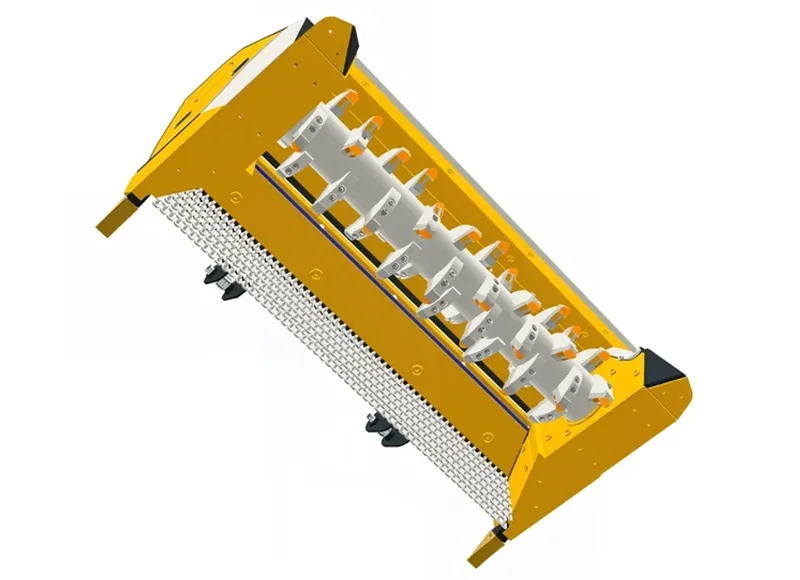
The rotor is the heart of the machine. It consists of a precision-machined central shaft, flanged rotor discs welded at regular intervals, and tungsten carbide-tipped tool holders bolted into each disc. The entire assembly is dynamically balanced to minimize vibration. Rotor diameter typically ranges from 450 mm in lighter machines to over 1,000 mm in heavy-duty models — larger diameter means higher tip speed at a given RPM, which increases crushing intensity.
Gearbox & PTO Drive
The gearbox steps up the PTO input speed to match the rotor’s optimal operating RPM. In most agricultural stone crushers, the PTO input runs at 1,000 RPM (some models also accept 540 RPM). A shear-bolt or torque-limiter coupling between the PTO shaft and gearbox input provides overload protection — if the rotor strikes an unusually large, immovable rock, the coupling sacrifices itself rather than allowing the gearbox to absorb the full shock.
Depth Control & Linkage
Three-point linkage Category II (standard on most agricultural tractors from 75 hp upward) is the attachment method for all models. Depth is controlled by a combination of the tractor’s linkage height setting and the machine’s own skid shoes or ground-following roller. A rear roller provides consistent soil engagement and helps level the surface after crushing — important for seed-bed quality on Chilean vegetable and vine row-crop farms.
After-sale wear part availability is a critical purchasing factor. Tungsten carbide picks are consumable items and need regular replacement — typically every 100–200 hours of hard-rock work. When evaluating a stone crusher for sale, always verify that picks, counter-blade segments, belts, and bearing kits can be sourced domestically or shipped quickly from the supplier.
4. Material System — What These Machines Are Built From
The service life of a 碎石机 in demanding Andean volcanic rock conditions is determined almost entirely by material selection in the high-wear zones. Entry-level machines built from standard mild steel and ordinary carbide grades will show significant rotor disc wear, side plate erosion, and counter-blade deterioration within the first season of heavy use in Chilean basalt soils. Professional-grade machines address this through a layered material strategy.
The rotor discs themselves are typically manufactured from Hardox 400 or equivalent abrasion-resistant wear steel, with Brinell hardness values in the 370–420 HB range. This material offers a practical balance between toughness (resistance to impact fracture) and surface hardness (resistance to abrasion). Pure hardness without toughness leads to brittle failure — a major concern when striking large volcanic rocks that can generate extreme point-load forces exceeding the impact resistance of purely hard but brittle materials.
The cutting tools — whether fixed teeth (in STCL-type designs), chisel picks (in RSL-type designs), or combination tooth-and-pick arrangements — use tungsten carbide inserts brazed or pressed into alloy steel tool bodies. Tungsten carbide hardness (85–92 HRA) far exceeds that of any natural rock, ensuring that the tool always cuts the stone rather than the stone abrading the tool. However, carbide is brittle in tension, so the steel body backing must absorb flex without transmitting bending stress to the carbide tip.
Side liners, wear plates, and the counter-blade are typically made from manganese steel (Mn13) or chromium carbide overlay (CCO) wear plate — materials specifically designed for high-impact plus high-abrasion conditions. When specifying an 农业碎石机 for Chilean conditions, ask your supplier specifically about the counter-blade material and its expected replacement interval under volcanic rock conditions, as this is often the first component to reach wear limits in basalt-heavy soils.
5. Model Selection Guide — EP Series PTO Stone Crushers
The following table compares the EP Series stone crusher and mulcher models available for Chilean agricultural applications. Working width, tractor power requirement, working speed, and weight are the primary selection parameters. All models use Category 2 three-point linkage and require 1,000 RPM PTO input (unless noted).
| 模型 | 工作宽度 | Tractor Power | 工作速度 | Weight | Best For |
|---|---|---|---|---|---|
| EP-PSC Models (STCL Series) | 1,110–2,070 毫米 | 70–150马力 | 3–5 km/h | 1230–1750公斤 | Orchards, vineyards, narrow passes, rural road maintenance. Small pto stone crusher ideal for compact tractors. |
| EP-RockMaster (STCM Series) | 1,340–2,304 毫米 | 80–220马力 | 3–5 km/h | 1,850–3,840 公斤 | Mid-sized arable fields. Stones up to 300 mm diameter. Max depth 200 mm. Standard Chilean farm tractor size. |
| EP-THOR 2.4 + Kit Drawbar | 2,400 mm | 180 hp min. | 3公里/小时 | 2300公斤 | Large open fields, heavy rock loads. Drawbar option allows long-distance towing between fields. Contractor use. |
| EP型拖拉机式岩石破碎机 | 多变的 | 80–220马力 | 3–5 km/h | 多变的 | Direct 3-point hitch mount. Suitable for Chilean farming operations requiring a dedicated stone crusher for tractor 3-point hitch. |
| EP-Korea Agricultural Rock Crusher | 多变的 | 80–200 hp | 3–5 km/h | 多变的 | Korean market-optimized configuration. Suitable for Andean foothill fields with mixed volcanic and alluvial stone types. |
Note: All models require Category 2 three-point linkage and 1,000 RPM PTO. Tractor requirements listed are minimums; working in heavy volcanic rock conditions or at maximum working width should be matched with the upper end of the power range.
6. Understanding Chilean Stone Types — What Your Crusher Will Face
Not all stones crush the same way, and Chilean agricultural soils present some of the most challenging rock varieties for mechanical crushing. Choosing the right cutting tool type and operating parameters depends on understanding what you are actually crushing. The major stone types encountered in Chilean farmland include the following.
Andean Volcanic Basalt
Dense, fine-grained, with compressive strength typically 200–350 MPa. Highly abrasive due to silica content. Found extensively in the Araucanía and Los Ríos regions. Requires heavy-duty picks (STC/3-type or equivalent) and frequent tool inspection — tip wear is rapid in fresh basalt. Reduce working speed to 2–3 km/h in heavy basalt fields.
Ignimbrite (Volcanic Tuff)
Lighter, more porous volcanic rock deposited by pyroclastic flows. Widespread in the Maule and O’Higgins regions. Compressive strength is lower (50–150 MPa) and the material crushes readily. However, the irregular pore structure means pieces can shatter unpredictably — ensure the machine’s rear debris guards are in place before operating.
Alluvial River Gravel
Rounded, water-worn pebbles and cobbles deposited by Andean meltwater rivers across the Central Valley floor. Mixed lithology including quartzite, andesite, and granite. The rounded shape means individual impacts must build up before fracture. Effective crushing with standard tooth arrangements but at slightly lower throughput than angular stone.
7. Recommended PTO Stone Crusher Models for Chilean Conditions
The following EP Series mulcher/stone crusher products are available and suitable for the field conditions described throughout this guide. Click each product to view full technical specifications and request a quote.
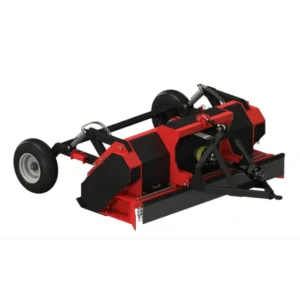
EP-THOR 2.4 + Kit Drawbar
2,400 mm width · 180 hp min · 2,300 kg · Drawbar transport kit
View Product
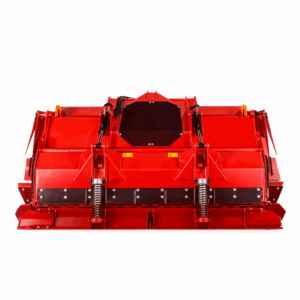
EP-RockMaster 农业用石料破碎机
80–220 hp · Up to 300 mm stone · Max depth 200 mm
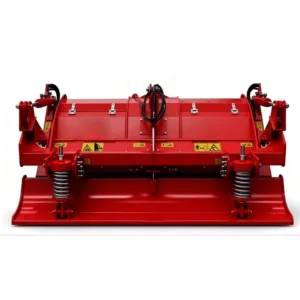
EP-PSC Models (STCL Series)
Compact · 70–150 hp · 1,110–2,070 mm · Orchards & vineyards
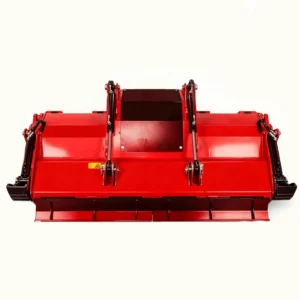
EP型拖拉机式岩石破碎机
3-point hitch mount · Versatile configuration · Chilean arable farms
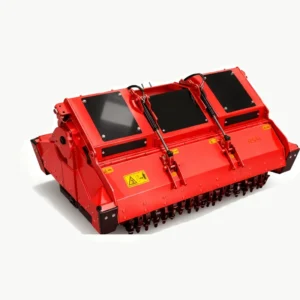
EP-Agricultural Rock Crusher (Korea)
Andean foothill optimized · Mixed volcanic & alluvial stone
8. Operational Best Practices for Chilean Field Conditions
Getting maximum productivity and machine life from a PTO石料破碎机 in Chilean conditions requires adjusting standard European operating guidelines for local soil characteristics and stone types. Several factors that are minor considerations in European silty loam conditions become critical when dealing with Chilean volcanic basalt soils.
Pre-season field survey: Before first use in a new field, walk the area or drive slowly with front loader to identify any stone outcrops, buried concrete debris from old irrigation infrastructure, or rock ledges that could damage the machine. Mark large immovable stones with flags and avoid those zones. A portable stone crusher machine attachment can be repositioned to skirt around problem areas, but a proper survey avoids costly surprises.
Soil moisture management: Operating in wet, sticky clay soils — common in irrigated Chilean valley floor farms — significantly increases rotor torque load and reduces throughput, because wet clay packs around tool holders and impairs stone ejection. Ideally, operate when soil moisture is below field capacity. If the soil is visibly sticking to the front skid shoes, the conditions are marginal for stone crushing and may cause PTO overload events.
Pass overlap: Maintain a 10–15% lateral overlap between adjacent passes to ensure complete coverage, especially when surface stones are dense. Chilean basalt fields with continuous rock emergence benefit from two passes at different headings (second pass at 45–90° to the first) for the first-season treatment, after which annual maintenance passes are typically sufficient.
Post-crush leveling: After the stone crusher pass, the rear roller typically leaves a reasonable surface, but for seed-bed preparation purposes a light pass with a rear press or light disc harrow helps consolidate the crushed aggregate back into the soil profile and prepares an optimal germination bed. This is especially important in Chilean cherry, kiwi, and table grape operations where surface finish affects drip-tape installation and mechanized picking equipment travel.
9. Regulatory Framework — Safety and Import Compliance for Stone Crushing Equipment in Chile and Globally
Agricultural stone crushing machinery sold and operated in Chile must conform to applicable safety and import regulations. Understanding the regulatory context helps buyers ensure compliance and avoid customs delays or workplace safety penalties.
Chile — SAG, SEC, and SUSESO
In Chile, the agricultural machinery sector is overseen by the Servicio Agrícola y Ganadero (SAG) for regulatory classification purposes. Machinery safety in the workplace falls under the Superintendencia de Seguridad Social (SUSESO) framework, with specific reference to DS 594 (Reglamento sobre Condiciones Sanitarias y Ambientales Básicas en los Lugares de Trabajo) and DS 40 requirements for machinery operator training and protection. PTO-driven equipment must have PTO shaft guards in place during operation — this is an inspection item during SUSESO field audits at commercial agricultural operations.
EU / European Standard (CE Marking)
Equipment sold into the European market or manufactured to EU standards must carry the CE marking under the Machinery Directive 2006/42/EC. A CE-marked stone crusher has been assessed against harmonized EN standards for vibration, noise, guarding, and PTO shaft safety. Chilean importers who source CE-certified equipment benefit from a documented conformity path, which simplifies compliance demonstration to SUSESO inspectors and provides confidence in the adequacy of the machine’s safety design.
United States — ASABE PTO Safety Standards
The American Society of Agricultural and Biological Engineers (ASABE) Standard S207 governs PTO shaft and driveline design for agricultural implements in the US market. While Chilean law does not directly mandate ASABE compliance, equipment meeting ASABE S207 for PTO stub dimensions, shaft guard design, and overload protection provides a recognized international baseline for safety that is directly relevant to Chilean operators using standard ISO 1 or ISO 2 PTO configurations.
ISO Standards — International Machinery Safety
ISO 4254-1 covers general safety requirements for agricultural machinery, and ISO 11684 governs safety sign systems on agricultural equipment. Professional-grade stone crushers intended for export markets are designed to these standards, ensuring that operator warning decals, emergency shutdown access, and minimum safe distances from the cutting zone are consistently addressed regardless of the country of operation.
Import Regulations — Chilean Customs (Servicio Nacional de Aduanas)
Agricultural machinery imported into Chile is classified under HS Chapter 84 of the Chilean customs tariff. Stone crushers and mulchers for agricultural use typically fall under subheading 8432 (soil-working machinery) or 8436 (other agricultural machinery). Import duties and applicable VAT (IVA, currently 19%) apply unless the importer qualifies under relevant agricultural modernization incentive programs. Commercial importers should confirm HS classification with their customs broker before shipment to avoid reclassification delays at port.
10. About Us
We are a specialist supplier and distributor of professional agricultural stone crushing and field preparation equipment, serving farmers, landowners, and contractors across agricultural markets in Asia, Latin America, and beyond. Our product range covers the complete spectrum of tractor-mounted stone crushers — from compact 小型动力输出轴式碎石机 units for orchard and vineyard work to heavy-duty mulcher-crusher combinations for large arable operations.
Every machine in our EP Series range has been evaluated for real-world agricultural conditions. We work directly with farmers to match the right model to their specific soil type, stone variety, tractor power, and land scale requirements. Technical documentation, wear part sourcing, and operator training guidance are included with every sale. We export directly to Chilean agricultural buyers and can assist with customs documentation and logistics coordination to major Chilean ports.
常见问题解答
Q1. What is a pto stone crusher and how does it help Chilean farmers clear volcanic basalt from their fields? ▼
Q2. Which tractor size do I need to run a pto stone crusher effectively on my Chilean fruit farm or vineyard? ▼
Q3. How deep can an agricultural stone crusher work and what is the maximum stone size it can handle in Andean alluvial soils? ▼
Q4. What is crusher stone used for in agriculture and how does crushed stone improve soil quality in Chilean volcanic soils? ▼
Q5. How does a small pto stone crusher compare to a full-size model for a mixed farm operation with vineyards and grain fields in the Maule region? ▼
Q6. How often do the tungsten carbide teeth need replacing on an agricultural stone crusher used in heavy volcanic rock in southern Chile? ▼
Q7. What are the main advantages of a tractor stone crusher over hiring a contractor with an excavator bucket to pick stones in a Chilean field? ▼
编辑:PXY