Agricultural Land Management Guide
PTO Stone Crusher for Canadian Farms:
Shield Rock, Glacial Till & Frost-Heaved Stone Clearing
A practical knowledge guide for Canadian farmers dealing with surface stones, glacial deposits, and freeze-thaw soil disruption — and how the right tractor stone crusher makes reclamation viable.
Canadian farmland presents some of the most demanding rock-clearing challenges found anywhere in temperate agriculture. From the ancient granite ridges of the Canadian Shield to the dense glacial till deposits across the Prairies, and the seasonal frost-heave that relentlessly pushes new stones to the surface each spring — the workload on a farm’s land preparation program never really stops. This guide covers why these geological conditions are so stubborn, how a PTO石料破碎机 addresses them more efficiently than older removal techniques, and what specific machine characteristics matter most when you’re choosing stone crushing equipment for Canadian field conditions.
1. Why Canadian Farmland Faces a Persistent Stone Problem
Canada’s agricultural zones sit atop some of the world’s oldest and most geologically complex formations. The Precambrian Shield — a vast, rocky expanse covering much of Ontario, Quebec, and extending into Manitoba — contributes angular quartzite, granite, and gneiss fragments that have been migrating toward the surface through freeze-thaw cycles for thousands of years. These are not soft limestone flakes. Shield rock tends to be extremely hard, often with compressive strengths exceeding 200 MPa, which places serious demands on any 碎石机 operating in the region.
Glacial till deposits, common across Alberta, Saskatchewan, and southern Ontario, tell a different story. Till is an unsorted mix of clay, silt, sand, gravel, and boulders deposited directly by glacial ice without the sorting that running water produces. The stones in till range from pebbles to boulders, often with rounded, subangular shapes that distribute impact forces differently than flat-bedded rocks. When a tractor pulls through till-heavy fields, the rotor of a 拖拉机碎石机 must contend with unpredictable stone sizes and sudden impacts — a strong case for machines with overload protection systems and high-tensile rotor bodies.
Frost heave is the mechanism that ensures the problem never fully resolves itself. When moisture in the soil freezes, it expands and physically pushes stones upward. After thaw, the stones don’t return to their previous depth — loose soil fills the void beneath them, and net upward migration accumulates over seasons. A field that was carefully cleared five years ago can look like a quarry floor after a wet autumn followed by a hard freeze. This cycle is most pronounced in fine-textured soils where capillary rise keeps moisture near the stone base, particularly in clay-loam zones common across the Prairies.
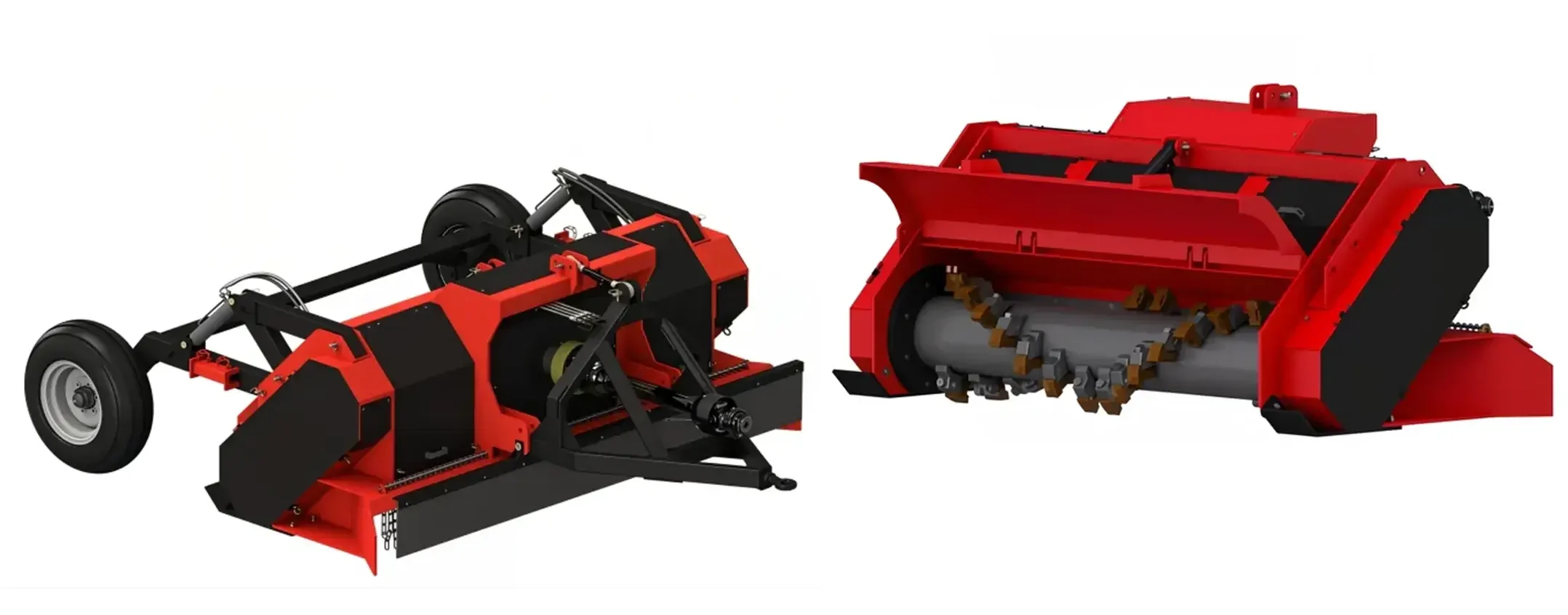
2. Action Mechanism: How a PTO Stone Crusher Actually Works
Unlike rock-picking equipment that collects and removes stones from a field, a PTO石料破碎机 attacks a fundamentally different part of the problem: it reduces stones in place, leaving the crushed material in the soil where it can actually improve drainage and aeration rather than being carted away. Understanding the mechanical action helps a buyer match machine specifications to their particular field challenges.
Power flows from the tractor’s Power Take-Off shaft — typically at 540 or 1000 RPM depending on the model — through a dedicated driveline to the machine’s gearbox. The gearbox steps up the rotational speed and redirects torque to a horizontal rotor drum mounted beneath the machine housing. As the rotor spins at working speed, cutting tools fixed to it impact stones on or just below the soil surface. The physics here matter: kinetic energy from the rotor is transferred to the stone through impact, fracturing it along natural grain boundaries. Repeated passes reduce a surface stone from an obstacle to a fine, workable fragment.
The containment chamber formed by the machine housing is not passive — it provides secondary crushing surfaces. Fragments ejected from the rotor impact the rear grid or deflector bar, breaking down further before being deposited back into the soil. The depth of engagement is controlled either mechanically via depth wheels or hydraulically from the tractor cab, allowing operators to target surface stones without excessive soil disruption in fields with established drainage structures.
| Method | Rotor Speed (RPM) | Max Stone Diameter | Best for Canadian Condition |
|---|---|---|---|
| PSC Series (light to mid) | 540–1000 | up to 150 mm | Glacial till surface stones, frost-heaved gravel |
| STCM Series (mid-range) | 1000 | up to 300 mm | Mixed till/clay deposits, field preparation |
| RockMaster / RSL Series (heavy) | 540 or 1000 | up to 300 mm | Shield rock outcrops, dense boulder till |
| THOR 2.4 / 3.0 (high-horsepower) | Drawbar PTO | Large field rocks | Large-acreage Canadian Prairie reclamation |
3. Manufacturing Structure: What Goes Into a Field-Grade Machine
The structural engineering of a 农业碎石机 intended for Canadian conditions must reconcile two competing demands: enough mass to resist impact-driven vibration, and a weight-to-working-width ratio that doesn’t overwhelm the tractor’s three-point lift or push axle loads beyond safe limits on wet Prairie soils. The machines in this product range have been engineered with this balance in mind, and the structural details reflect it.
The main chassis frame is fabricated from high-strength structural steel sections, typically with continuous MIG welds at load-bearing joints rather than spot or plug welds. Frame sections are dimensioned to resist both the torsional loads from asymmetric stone impacts and the bending moments imposed when the machine rides over surface irregularities at working depth. Cross-member spacing is calculated to prevent harmonic resonance at typical operating speeds, which would otherwise amplify vibration into the tractor’s three-point linkage and reduce operator comfort during long days of use.
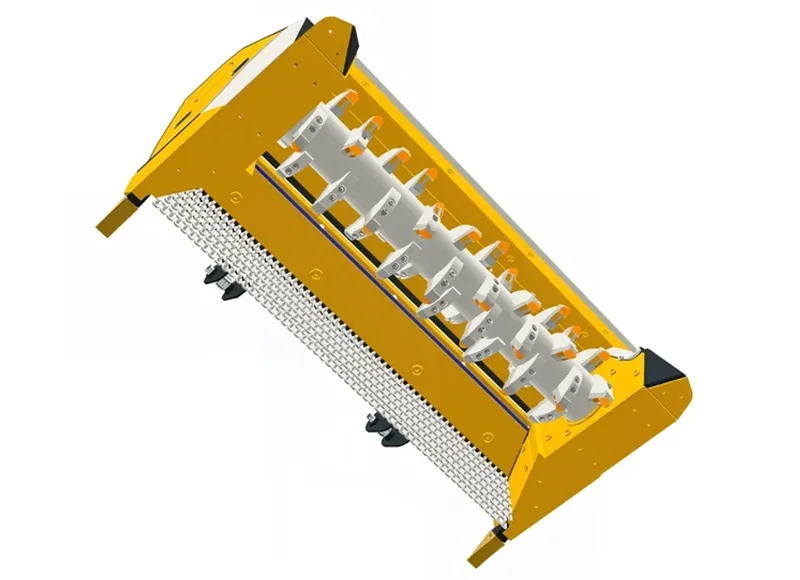
The rotor assembly — arguably the most critical structural component — consists of a central shaft machined to tight tolerances, flanged rotor discs, and the cutting tool holders. In the STCM and RSL series, rotor diameters of 550 mm and 595 mm respectively provide the rotational inertia needed to carry momentum through hard stone contacts without stalling mid-pass. Rotor shaft bearings are housed in sealed, grease-nipple-accessible units designed for field maintenance rather than workshop service — an important consideration for remote Canadian operations where downtime cost is significant.
The gearbox is the single component most likely to influence long-term reliability. On machines like the STCM series, the 1000 RPM input gearbox must transfer substantial torque from the PTO shaft to the rotor while absorbing shock loads from stone impacts that can spike well above steady-state operating torque. Multi-stage helical or bevel-helical designs are used in this class of machine, with oil-bath lubrication and multi-lip sealing against dust infiltration. Protection systems — shear bolt, slip clutch, or cam clutch — provide a sacrificial break point that allows the gearbox to survive an encounter with an immovable sub-surface obstruction without catastrophic damage.
4. Material System: Alloys, Hardening, and Wear Geometry
The material choices in a 拖拉机用碎石机 applications are not marketing rhetoric — they directly determine how many hours a set of cutting tools lasts before replacement, and what the total cost of ownership looks like across a typical Canadian farming season. The Shield rock and quartzite fragments common in Eastern Canada are among the most abrasive materials these machines will encounter anywhere.
Cutting picks in the STC/3 tool type used on STCL and STCM series machines are carbide-tipped, with tungsten carbide inserts brazed or interference-fit into the steel body of the pick shank. Tungsten carbide offers exceptional hardness — typically 1400–1800 HV on the Vickers scale — which allows it to maintain a cutting edge through thousands of impacts with granite and quartzite without deforming or wearing as rapidly as heat-treated steel alone would. The pick body itself is made from a through-hardened alloy steel to resist bending and fatigue cracks at the shank-to-holder interface.
For the RSL and RockMaster series targeting harder field conditions, the G/3 rotor uses a combination of standard picks and HD (heavy-duty) picks positioned strategically around the rotor circumference. HD picks have a larger carbide tip cross-section to absorb the higher impact loads encountered when processing 300 mm diameter stones. The rotor body itself in these heavier models uses wear plate segments — often Hardox 400 or equivalent — lining the interior crushing chamber so that stone fragments bouncing off the chamber walls erode the replaceable liner rather than the structural frame.
Side cutters and end-cutter blades at the lateral edges of the rotor extend cutting width and prevent the machine from leaving uncut ridges at the pass boundary. These components see particularly high wear because they process the full depth of material at the boundary between cut and uncut ground. In most current designs, they are bolt-on replaceable items fabricated from wear-resistant steel grades, allowing field-level replacement without welding or machining.
| Component | Material / Standard | Key Property |
|---|---|---|
| Carbide pick tip | Tungsten carbide (WC-Co) | 1400–1800 HV, abrasion resistance |
| Pick shank body | Through-hardened alloy steel | Fatigue and bending resistance |
| Chamber liner panels | Hardox 400 or equivalent wear plate | 400 HB, impact + abrasion |
| Rotor shaft | Forged alloy steel, precision machined | Fatigue life, dimensional stability |
| Main frame | Structural high-strength steel, full-pen welds | Torsional and bending stiffness |
| Side cutters | Bolt-on wear-resistant steel | Field-replaceable, lateral wear zone |
5. Stone Crusher Models: Choosing the Right Fit for Your Farm
Each of the following models in the Mulchers / Stone Crushers product range addresses a distinct tier of Canadian field conditions. Matching the machine to your dominant stone type, tractor horsepower, and field scale is the single most important decision in the selection process.
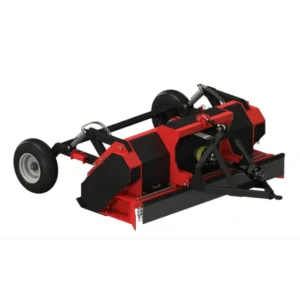
THOR 2.4 + Kit Drawbar
High-output PTO stone crusher designed for large tractors. Working width of 2.4 m with drawbar attachment — suited to wide-pass Prairie reclamation.
- Engine power: min. 180 cv
- Working width: 2,400 mm
- Machine weight: 2,300 kg
- Working speed: 3 km/h
- Linkage category: 2
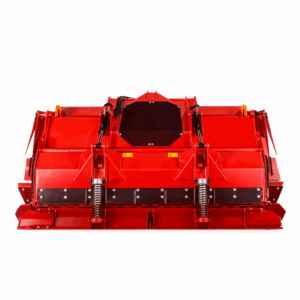
RockMaster农业碎石机
Medium-to-heavy duty agricultural stone crusher with a maximum crushing diameter of 200 mm. Handles the hardened stone types common in Ontario and Quebec field zones.
- Max crushing diameter: 200 mm
- PTO input: 540/1000 RPM compatible
- Carbide pick tooling
- Depth-controlled via linkage
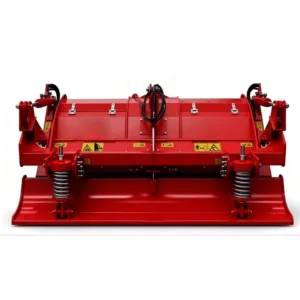
PSC Models — Field Stone Crusher
Compact field stone crusher covering 70–150 hp tractors. Max 150 mm stone diameter, 150 mm working depth. Ideal for frost-heaved gravel and small till stones in mixed grain farms.
- Tractor range: 70–150 hp
- PTO: 540–1000 RPM
- Max stone: 150 mm diameter
- Max depth: 150 mm
- Rotor diameter: 450 mm
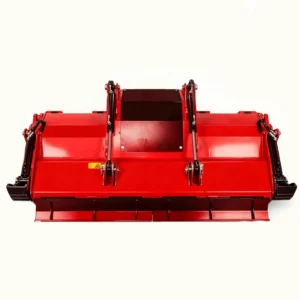
拖拉机式岩石破碎机
Fixed-tooth cutter design compatible with 80–190 hp tractors. Max crushing diameter 300 mm, working depth 280 mm — a strong performer for RSL-class conditions including road-edge and headland stone work.
- Tractor range: 80–190 hp
- Max crushing: 300 mm
- Max depth: 280 mm
- Fixed-tooth cutter type
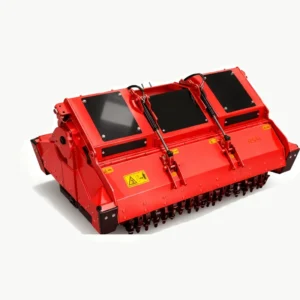
Agricultural Rock Crusher — Korea Edition
Tailored for Korean agricultural operations with Korean-language support, KS B 6301 compliance, and local delivery infrastructure. Suited to terrace fields and volcanic-soil stone clearing.
- KS B 6301 standard compliance
- Korean-language manual included
- Nationwide logistics support
- Customizable pick types
6. Gearbox Standards and International Regulations Relevant to Stone Crushers
For any operator sourcing or deploying a pto stone crusher for sale across national markets, understanding the applicable gearbox and machinery regulations is not optional. The machine’s drivetrain sits at the intersection of tractor-side PTO regulations and implement-side mechanical standards, and non-compliance can affect insurance coverage, warranty validity, and operator safety certification in multiple jurisdictions.
Canada
Agriculture and Agri-Food Canada follows ASABE (American Society of Agricultural and Biological Engineers) standards for PTO shaft connections, specifically ASABE S203 and S219, which govern the dimensions and guarding requirements of 540 and 1000 RPM PTO shafts. The Canadian Centre for Occupational Health and Safety (CCOHS) requires all tractor PTO shafts to be guarded by a rotating shield that is independently supported and does not rotate with the shaft. Provincial safety authorities in Ontario, Alberta, and Saskatchewan align with these federal guidelines. Purchasers importing stone crushing equipment into Canada should verify that the driveline assembly meets the CE-marked European guarding standard EN ISO 4254-1 (tractors and machinery for agriculture — safety), which is broadly accepted as an equivalent technical reference in Canadian import contexts.
European Union
EU-operated machinery must comply with the Machinery Directive 2006/42/EC, which requires a Declaration of Conformity and CE marking. For agricultural attachments, EN ISO 4254-1 provides the safety standard framework covering guarding of moving parts, emergency stop requirements, and stability criteria. The gearbox itself must be designed so that oil can be checked and changed without removing other major assemblies — a requirement that influences service access panel design. ATEX classification is not typically required for open-field PTO attachments, but operators working in dusty harvest conditions should confirm their specific regional authority’s interpretation.
South Korea
The Korean Agency for Technology and Standards (KATS) administers KS (Korean Standards) for agricultural machinery. KS B 6301 is the primary standard governing the construction, testing, and safety of tractor-attached implements. It covers gearbox housing material requirements, minimum oil seal standards, and mandatory guards over PTO driveline components. After-sales service warranty terms for main structural components including the frame, rotor shaft, gearbox housing, and transmission parts are expected to follow these standards under normal operational conditions. Importers working with Korean distributors are advised to provide a KS-equivalent test certificate or a third-party equivalency assessment.
United States
ASABE standards govern PTO and implement safety across US states. OSHA 29 CFR 1928 specifically addresses agricultural equipment safety for workers, including requirements for guarding rotating parts on tractor-powered implements. Many states additionally reference ANSI/ASABE S318 for agricultural machinery definitions and terminology, which affects how specifications should be labeled when marketing 小型动力输出轴式碎石机 models or used tractor stone crusher for sale listings. EPA Tier 4 Final emission standards apply to the tractor providing power, not to the implement itself, but the PTO-driven machine must be compatible with the reduced-torque delivery profiles of Tier 4 Final engine management systems at partial load.
Australia
Safe Work Australia guidelines and AS 4825:2011 (tractors — rollover protective structures) inform the general safety framework for tractor operations. For PTO implements, the relevant standard is AS/NZS 1234 covering guarding requirements for power take-off shafts and connectors. Importers bringing 拖拉机用碎石机 equipment into Australia under the Agricultural and Veterinary Chemicals Code must also confirm the machine does not inadvertently qualify as a chemical application device if dust suppressants are used in conjunction with crushing operations.
| Country/Region | Key Standard / Regulation | Applies To |
|---|---|---|
| Canada | ASABE S203, S219; CCOHS PTO guarding | PTO shaft dimensions & guarding |
| European Union | Machinery Directive 2006/42/EC; EN ISO 4254-1 | CE marking, safety, gearbox access |
| South Korea | KS B 6301 | Construction, testing, warranties |
| USA | OSHA 29 CFR 1928; ANSI/ASABE S318 | Worker safety, labeling |
| Australia | AS/NZS 1234; Safe Work Australia | PTO guarding, implement safety |
7. Depth Control and Soil Conservation in Canadian Field Contexts
One concern frequently raised about stone crushing equipment is whether repeated passes disturb soil structure to a degree that offsets the benefit of stone removal. This is a legitimate agronomic question, and the answer depends heavily on how the machine is set up and operated — particularly depth control. Canadian Prairie soils are often characterised by relatively shallow topsoil horizons overlying dense subsoil or glacial till layers. Setting the crushing depth to match the stone population rather than maximizing rotor engagement is the correct approach in these soils.
Hydraulic depth adjustment, available on mid-to-heavy models, allows the operator to set a precise, repeatable working depth from the tractor cab without leaving the seat between passes. This level of control matters because the same field may have areas of shallow soil over bedrock alongside deeper till deposits, and a fixed-depth mechanical setting would either leave stones untouched in the deep zones or disrupt topsoil severely in the shallow zones. Hydraulic control bridges this variability efficiently.
From a soil conservation standpoint, 小型动力输出轴式碎石机 operations compare favorably to physical stone removal in one important dimension: the crushed material stays in the field. This preserves soil volume and avoids the progressive lowering of field elevation that occurs when stone mass is physically trucked out year after year. Crushed granite and quartzite also contribute to improved soil tilth in heavy clay soils — the angular fragments create macropores that improve both drainage and aeration over time.
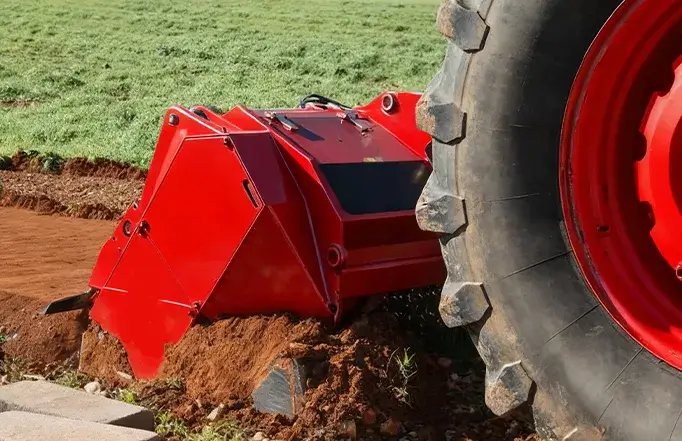
8. Operational Best Practices for Canadian Seasonal Conditions
Timing stone crushing operations to the right seasonal window has a measurable impact on both machine wear and field condition outcomes. In the Canadian context, the ideal window typically falls in early spring — after frost has left the top 200–300 mm of soil but before field moisture drops to the point where dust becomes a visibility and respiration concern for the operator. This window also coincides with peak stone exposure, as the final thaw cycle has deposited the winter’s frost-heaved stones at or near the surface.
For glacial till operations, working when the soil has dried slightly from saturated spring conditions is important for machine stability. Fully saturated clay-loam till deforms plastically under the machine’s weight, and the depth wheels can sink below their set position, causing the rotor to engage deeper than intended. Allowing the surface to dry to field capacity — not bone dry, which increases rotor shock from hard stone — produces the best combination of machine stability and tool life.
Shield rock outcrops present a different operational challenge. These are often partially embedded, with the visible portion representing only a fraction of the total rock mass. Using a probe or visual inspection before running the 农业碎石机 across suspected outcrop zones prevents rotor contact with sub-surface structures that exceed the machine’s rated capacity. Where outcrops are identified, working the perimeter with the crusher to reduce spalled and frost-fractured surface fragments is productive, while leaving the core outcrop for a more targeted method if needed.
Routine maintenance in the field follows a straightforward pattern: daily grease cycle on all nipple-lubricated bearings, pre-shift inspection of pick condition and tight-fastening of any that show rotation in the holder, and weekly gearbox oil-level check. Models with sealed oil-bath gearboxes typically specify a 250-hour or seasonal oil change interval, whichever comes first. Maintaining the oil change schedule is particularly important when operating in dusty Shield rock conditions, as microscopic silica particles in the air that work past seals abrade gear surfaces faster than organic field dust.
9. Tractor Compatibility and Horsepower Matching Guide
One of the most common mistakes when sourcing a 出售拖拉机式碎石机 is under-specifying the tractor’s available PTO horsepower relative to the machine’s demand. PTO horsepower is typically 80–85% of engine horsepower on modern tractors, and stone crushing is a high-demand, intermittent-peak application. Running a crusher at the absolute limit of available PTO power means that any hard stone contact that exceeds average demand will cause the tractor to stall or engage the PTO overload clutch, interrupting work and increasing wear on the protection system.
A practical rule of thumb used by experienced operators is to match the machine’s minimum tractor horsepower rating to approximately 80% of the tractor’s rated engine power — not the full PTO output. This leaves a 20% reserve for peaks without putting the operator in a position where normal operations are running at or beyond the tractor’s limit. For the STCM 150–220 hp range, this means a tractor with 200+ engine horsepower is the practical minimum for comfortable, sustained operation.
The three-point linkage category must also match: all the models listed here require a Category 2 linkage, which is standard on tractors from approximately 45 hp upward. However, Category 2 linkage on a 100 hp tractor has a different lift capacity than Category 2 on a 250 hp tractor, and the heavier models in this range — particularly the THOR 2.4 at 2,300 kg and THOR 3.0 at 2,800 kg — require a tractor with adequate rear lift capacity to raise the machine fully for transport and headland turns. Consult your tractor’s operator manual for rear linkage lift capacity at the lower link ball ends before finalizing a machine selection.
| 模型 | Min. Tractor Power | Recommended Practical Min. | 机器重量 |
|---|---|---|---|
| PSC / STCL 100–175 | 70–150马力 | 90–120 hp engine | 1230–1750公斤 |
| STCM 150–225 | 150–220 hp | 180–220 hp engine | 3,000–3,840 kg |
| RockMaster / RSL 125–225 | 80–190 hp | 100–150 hp engine | 1600–2650公斤 |
| THOR 2.4 Kit Drawbar | 180马力 | 220+ hp engine | 2300公斤 |
| THOR 3.0 Kit Drawbar | 230 cv | 280+ hp engine | 2,800 kg |
10. Small Farm vs. Large-Scale Operation: Choosing Your Approach
The scale of operation changes the economic calculus of stone crusher selection significantly. A mixed grain farm in Prince Edward Island operating a 100 hp utility tractor over 200 acres of glacially influenced soil has fundamentally different needs from a 5,000-acre Saskatchewan grain operation running 300+ hp equipment. Understanding where your situation sits on this spectrum will help narrow the product choice.
Small to Mid-Scale Farm (under 500 acres)
A compact 小型动力输出轴式碎石机 in the PSC or STCL class makes the most economic sense. Lower acquisition cost, lighter machine weight for smaller tractors, and the ability to handle the stone population a smaller acreage generates annually without oversizing the investment. Field rate on a compact machine running at 3 km/h across a 1.35 m working width processes roughly 4 hectares per day — sufficient for annual frost-heave management on a 200-acre farm.
Large Prairie or Shield Operation (500+ acres)
The STCM, RockMaster, or THOR series justify their higher specification through daily area coverage. A STCM 225 running at 1000 RPM PTO with a 2.3 m working width can process significantly more field per day than compact alternatives, reducing the annual stone management program to a manageable number of operating days. For operations that also contract out crushing services to neighboring farms, the higher-capacity models offer a better return on the capital expenditure.
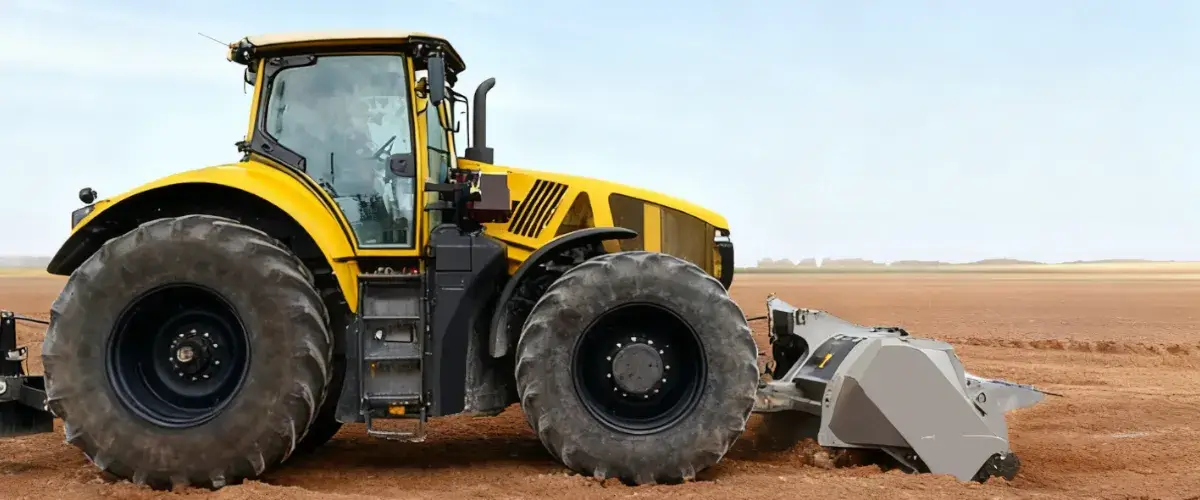
11. Portable Stone Crusher Machine Uses and Compact PTO Models for Mixed Operations
Not every stone management challenge requires the heaviest machine available. A portable stone crusher machine format — meaning a compact PTO stone crusher that can be transported between multiple farm sites or leased across a farming cooperative — opens up economic options that a large fixed-installation unit doesn’t. The smaller PSC and STCL models in this range are genuinely portable in the sense that they can be loaded onto a standard flatbed trailer, transported over public roads without special wide-load permits in most Canadian provinces, and attached to any compatible tractor at the destination site.
This portability factor has driven interest in stone crusher near me type searches among cooperative farming communities in Alberta and Saskatchewan, where individual farms may not have a large enough stone burden to justify sole ownership of a crusher but collectively can run a single machine across multiple neighboring properties across a season. A 小型动力输出轴式碎石机 running five or six farms per spring season on a shared-cost basis often produces a better return on capital than a larger dedicated unit running one farm. Properly managed, the machine’s seasonal utilization rate stays high enough to justify the investment through the combined acreage of the participating group.
For contractors offering stone crushing services — a growing niche in the Canadian Prairie provinces as more landowners recognize the productivity gains from properly cleared fields — a mid-range pto stone crusher for sale with a working width of 1.8–2.3 m represents the practical sweet spot. It’s wide enough to cover meaningful area per day, light enough to transport efficiently, and compatible with a range of customer tractors in case the contractor’s own machine is unavailable on a given day. The stone crusher machines in the STCM 175–200 range fit this profile well, with the STCM 175 at 3,250 kg covering a 1,824 mm working width and the STCM 200 at 3,550 kg covering 2,064 mm.
When evaluating a pto stone crusher for sale — whether new or used — the condition of the gearbox and rotor shaft bearings deserves closer scrutiny than the external frame condition. A worn rotor bearing produces measurable lateral shaft play that accelerates pick holder wear and eventually damages the rotor disc flanges, while a structurally sound-looking machine with an internally worn gearbox may need expensive drivetrain work within the first season. Any inspection of a used tractor stone crusher for sale should include a PTO test run with a load measurement and listening for gear whine or irregular vibration that suggests worn gear flanks.
12. What Is Crusher Stone Used For? Agricultural and On-Farm Applications
Beyond the obvious benefit of removing a crop-yield obstacle, crushed stone produced by an in-field PTO石料破碎机 has several productive downstream applications on a Canadian farm. Understanding these secondary uses reinforces why in-place crushing is often a superior approach to physical removal.
Crushed stone aggregate left in the field improves drainage in heavy clay soils — particularly relevant across the Red River Valley in Manitoba and the heavy clay belts of Ontario. Angular crushed fragments create macropore structures that resist the capillary compaction that makes unmodified clay soils waterlog after spring thaw. Over three to five seasons of in-field crushing and natural tillage incorporation, farmers in these zones commonly observe measurably faster field drying after precipitation events.
Crushed stone collected from field passes and stockpiled can serve as base material for farm track repairs, vehicle approach areas, and drainage culvert fill. This on-farm use eliminates the need to purchase and transport commercial crusher run aggregate for routine infrastructure maintenance — a genuine cost saving in remote Prairie and Shield-adjacent farm locations where aggregate delivery adds significant expense. In this context, the 碎石机 is not just a field preparation tool; it becomes part of the farm’s material supply chain.
For horticultural operations — market gardens, berry farms, and vineyard establishments in British Columbia and Ontario — crushed stone incorporated into bed preparation improves both drainage and soil temperature regulation in early spring. The thermal mass of crushed stone fragments near the soil surface absorbs daytime solar energy and releases it slowly overnight, moderating late-frost risk in perennial plantings. Some specialized horticultural operators specifically value the stone crushing equipment output as a soil amendment input, not just a stone removal product.
常见问题解答
编辑:PXY