Technical Knowledge Series · Canadian Prairie Agriculture
PTO Stone Crusher for Canadian Prairie Reclamation
From the glaciated plains of Manitoba and Saskatchewan to the Peace River country of Alberta — understanding how tractor-mounted rock crushers enable productive reclamation of Canada’s stone-laden agricultural land.
Introduction
1. The Prairie Stone Problem: Why Canadian Farmers Need Specialised Crushing Equipment
Canada’s prairie provinces — Alberta, Saskatchewan, and Manitoba — contain some of the world’s most productive agricultural land. Yet this productivity is perpetually challenged by a geological legacy: the last glaciation deposited an enormous quantity of stones across the prairie landscape, ranging from fist-sized cobbles to multi-tonne boulders embedded at varying depths. Every spring thaw cycle causes frost heave to push fresh stones to the surface, a process that prairie farmers call “the prairie harvest” — an ironic term for the annual crop of rocks that must be cleared before seeding can begin.
Historically, stone removal on Canadian prairies involved front-end loaders or specialised rock windrowers pushing surface stones into piles, followed by collection and transport to rock piles at field margins. This process is labour-intensive, slow, and requires multiple passes with different equipment. More critically, it does not prevent re-emergence — stone piles at field edges can slowly migrate back into the working area, and new stones continue to frost-heave annually. For the reclamation of marginal or previously unusable land — particularly in the Peace River Country of northwestern Alberta and northeastern British Columbia — a PTO stone crusher offers a fundamentally different approach.
Rather than relocating stones, a PTO-driven stone crusher pulverises them in-situ into soil-incorporated aggregate. This approach suits reclamation contexts particularly well because disturbed or newly cleared land typically carries the highest stone burden, and the in-situ aggregate improves soil aeration and drainage in the heavy clay loams common across the Manitoba lowlands and Saskatchewan plains.
Operating Principles
2. Action Mode: The Physics of PTO-Driven Stone Crushing on Prairie Land
The operating cycle of a PTO stone crusher begins the moment the tractor’s PTO shaft engages. Rotational power at 540 or 1000 RPM enters a purpose-built bevel gearbox at the top of the machine and is redirected at 90 degrees to a horizontal drive shaft connecting to the rotor. The gearbox provides a step-up ratio that converts the moderate PTO shaft speed into the higher rotor speed needed for effective stone fragmentation.
On the Canadian prairies, where glacial granite erratics — often the hardest rock type an agricultural machine will encounter — are common, the kinetic energy delivered by each hammer strike is the critical variable. A rotor of 550 mm diameter spinning at approximately 1,800 rpm delivers hammer tip speeds exceeding 50 m/s. At this velocity, a 3 kg pick tooth carries a kinetic energy sufficient to fracture most granite cobbles in a single strike. The fractured material is then projected against the rear anvil plate and descending internal walls of the crushing chamber, where secondary and tertiary size reduction occurs before the aggregate is deposited through a rear gate.
The forward travel speed of the tractor — typically 1.5–4 km/h for heavy prairie stone loads — determines the density of rotor strikes per unit area. Reclamation passes on virgin or heavily stoned land are conducted at 1.5–2 km/h; maintenance passes on previously crushed fields can be conducted faster. Most operators undertake at least two passes on heavy-stone reclamation ground: one slower “primary” pass to break large material and a second “finishing” pass at slightly higher speed to level and homogenise the aggregate.
| Condition | Recommended Speed | No. of Passes | Notes |
|---|---|---|---|
| Virgin reclamation land | 1.5–2 km/h | 2–3 | High stone burden; use low range |
| Established field renovation | 2.5–3.5 km/h | 1–2 | Annual frost-heave management |
| Gravelled road base preparation | 2–3 km/h | 1–2 | Uniform aggregate sizing important |
| Seedbed finishing pass | 3–4 km/h | 1 | After primary crushing pass |
Construction
3. Manufacturing Structure: Heavy-Duty Construction for Prairie Demands
Canada’s prairie reclamation context places exceptional demands on stone crusher durability. Prairie rock — predominantly granitic erratics transported from the Precambrian Canadian Shield — is among the hardest material a field crusher will face. This means that frame construction, rotor design, and bearing specification must be engineered for sustained high-impact operation, not just intermittent light-duty stone clearance.
The frame of a prairie-grade stone crusher is typically fabricated from 12–15 mm thick structural steel plate, with critical weld zones at the rotor housing reinforced by gusseted internal ribs. The crushing chamber inner walls are lined with replaceable Hardox 500 wear plates — bolted rather than welded — permitting on-site replacement without returning the machine to a dealer. This replaceability is critical for prairie operators who often work hundreds of kilometres from the nearest agricultural machinery dealer.
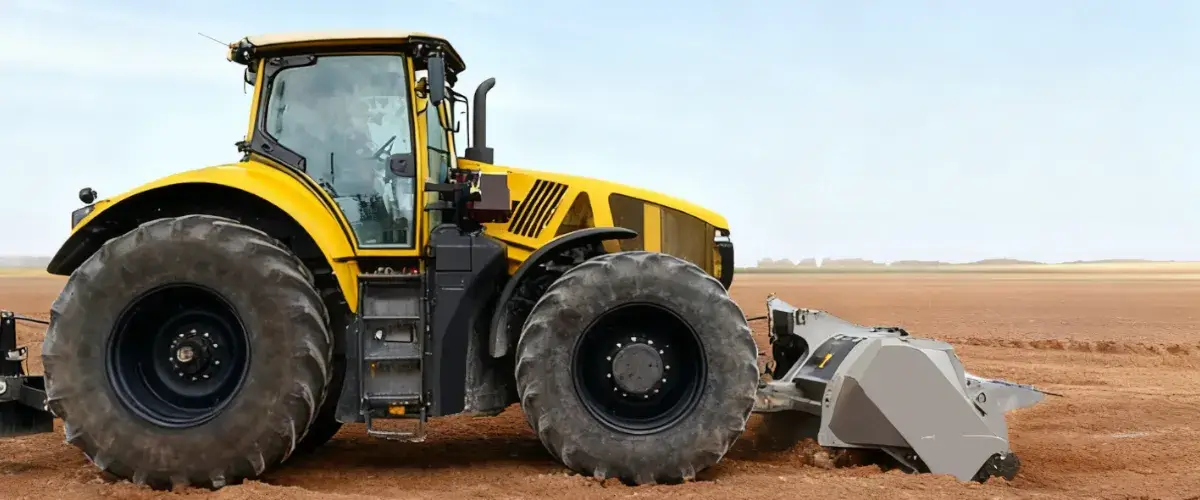
The rotor assembly on mid to heavy models uses a solid-steel shaft mounted in spherical roller bearings rated for continuous radial loads in the multi-tonne range. Bearing lubrication is provided via centralised grease nipple fittings accessible without removing guards, enabling routine maintenance during work stoppages without disassembly. On the THOR 2.4 and THOR 3.0 series drawbar-equipped models, the additional support provided by the drawbar wheel reduces frame flexing during transport over uneven prairie roads — an important durability factor given the long distances machinery travels between fields on large Canadian grain farms.
The three-point linkage mount uses Category 2 pins as standard, compatible with virtually all current tractor models used across the prairie provinces from 150 to 350+ hp. Hydraulic connection requirements vary by model: machines with hydraulic depth control and rear gate adjustment require 2 control valves from the tractor’s remote hydraulic system.
Materials
4. Material System: What Makes These Machines Last in Canadian Field Conditions
Canadian prairie rock — primarily granodiorite, granite, and quartzite transported by Pleistocene glaciers — has a Mohs hardness rating of 6–7 and extremely high silica content. This combination is highly abrasive; it will wear through standard mild steel components in a matter of hours at operational PTO speeds. Material selection at every wear point is therefore the central design consideration, not an afterthought.
Pick-tooth cutters on mid-range and heavy prairie machines use a composite construction: a forged manganese steel body — which deforms plastically under impact rather than shattering — with a tungsten carbide (WC-Co) insert tip of 89–92 HRA hardness brazed into a precision seat. The carbide resists the high-silica abrasion of granite while the body absorbs the impact energy. Individual pick teeth are mounted in replaceable bolt-on holders, allowing operators to swap worn teeth without removing the entire tooth assembly from the rotor.
Counter-blades are manufactured from Hadfield manganese steel (approximately 12% Mn), which work-hardens under repeated rock impact from an initial hardness of 180–220 BHN to over 500 BHN at the surface after several hours of operation. This means the anvil plate effectively “seasons” itself in service — a characteristic particularly useful in prairie reclamation work where counter-blade replacement in remote field locations is impractical mid-season.
External corrosion protection is relevant in the Canadian context because of the extreme thermal cycling between summer operating temperatures (regularly exceeding 30°C) and winter storage conditions (down to -40°C in Saskatchewan and Alberta). Thermal cycling stresses paint adhesion; a zinc-rich primer topcoated with two-component polyurethane paint provides adequate protection for 5–7 years before refurbishment is needed.
| Wear Component | Material Choice | Service Life (hard prairie granite) |
|---|---|---|
| Pick teeth — standard steel | High-Cr alloy steel 58–62 HRC | 60–120 hours |
| Pick teeth — carbide tipped | WC-Co insert on Mn steel body | 200–400 hours |
| Counter-blade / anvil | Hadfield 12% Mn steel | 400–800 hours (reversible) |
| Chamber wear plates | Hardox 400–500 | 600–1,200 hours |
| Rotor body | Cast or fabricated alloy steel | Machine lifetime with normal care |
Local Context
5. The Unique Demands of Prairie Reclamation: Frost, Clay, and Glacial Granite
The seasonal dynamics of Canadian prairie farming create a distinctly narrow operational window for stone management. Spring fieldwork typically begins in late April in southern Saskatchewan and Alberta, and extends through May in the Peace River country. The window between soil thaw and seeding time — often just 3–4 weeks for canola and wheat producers — means stone crushing operations must be completed efficiently without consuming the prime seeding window.
The heavy clay soils of the Manitoba Red River basin and the clay loams of the Saskatchewan-Alberta border regions present specific challenges for stone crusher depth control. These soils are highly plastic when wet — a stone crusher operating in wet spring conditions on clay loam can leave deep wheel ruts that increase compaction and create surface drainage problems. Spring stone crushing should ideally be timed for when the soil has dried sufficiently to support tractor traffic without excessive rutting, or alternatively deferred to fall reclamation campaigns when soils are typically firmer after the summer dry period.
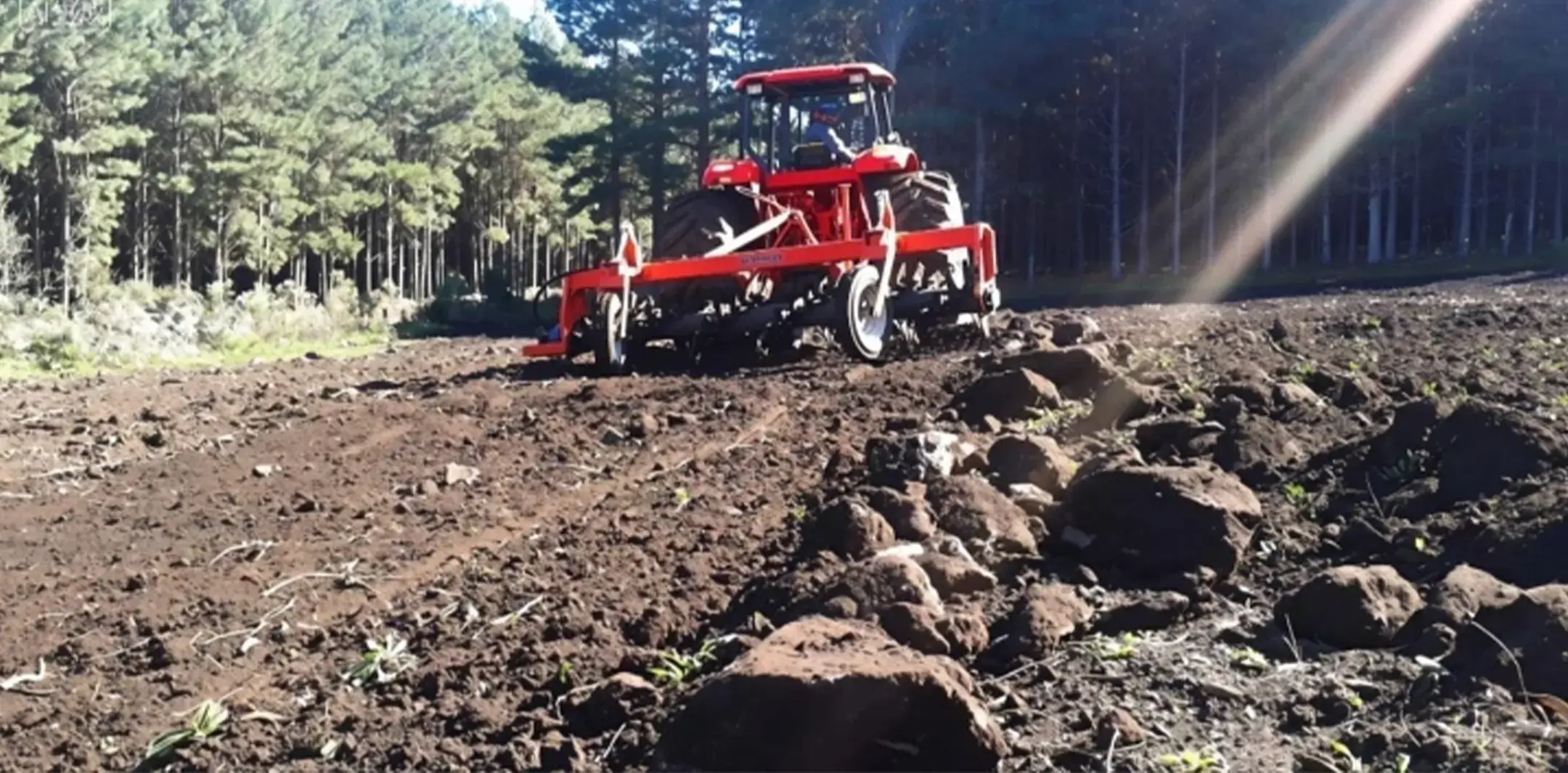
The Peace River Country of northwestern Alberta and northeastern British Columbia presents a different reclamation context: heavily wooded farmland being cleared for the first time often contains large embedded stones alongside root masses and logging debris. In these conditions, a machine with robust overload protection on the PTO driveline is essential — unexpected hard contacts with large embedded boulders or root-bound rock formations are far more common than in established agricultural fields.
产品
6. Stone Crusher Models for Canadian Prairie Reclamation
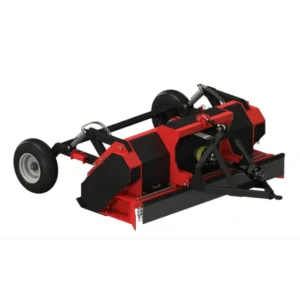
THOR 2.4 + Kit Drawbar
2400 mm working width. 2300 kg. Requires 180 hp minimum. Drawbar configuration provides excellent stability on long prairie transport runs. Working speed: 3 km/h.
Category 2 linkage · 2 control valves required
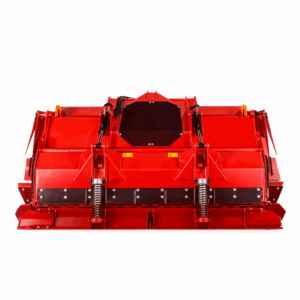
RockMaster农业碎石机
Handles stones up to 500 mm diameter. Designed for the most demanding reclamation applications. Pairs with 280–400 hp tractors. Models at 2080–2560 mm working width.
Max depth: 250 mm · Max stone: 500 mm
FAQ
常见问题解答
Q1. What is the best pto stone crusher for reclaiming glacial granite on Canadian prairie farmland?
For large glacial erratics (cobbles above 200 mm) common on the prairies, you need a machine matched to 200+ hp tractors with tungsten carbide tipped teeth and robust overload protection on the driveline. The RockMaster and mid-range STCM series machines handle this class of material well. For annual frost-heave management on established fields, a compact PSC or tractor-mounted model suffices.
Q2. How does Canadian Alberta Farm Safety Regulation affect PTO stone crusher operation on reclamation sites?
Under Alberta’s Occupational Health and Safety Act and the Farm Safety Regulation (updated 2016), farms employing paid labour must conduct hazard assessments for PTO-driven equipment. All PTO guards must be intact and functional. Overload clutches must be operational. Employees must be trained in safe PTO engagement and the specific hazards of stone crushing operations before beginning work.
Q3. Where can I find a used tractor stone crusher for sale suitable for Saskatchewan prairie reclamation conditions?
Used stone crushers suitable for prairie conditions appear regularly on local agricultural auction sites and classified listings. When evaluating used equipment, prioritise inspection of the rotor shaft bearings for radial play, the condition of the internal wear plates, and the integrity of the PTO driveline guard. Machines with worn or missing guards should be budgeted for guard replacement before use.
Q4. What is the recommended PTO RPM setting for crushing hard granite cobbles on Alberta reclamation land?
For hard granite cobble crushing, operate at the machine’s rated PTO speed — 1000 RPM for dual-speed gearbox models, or 540 RPM for older single-speed models. Do not operate below the rated speed when working heavy material; reduced rotor tip speed drops crushing energy significantly and increases the risk of rotor stalling, which can damage the gearbox clutch.
Q5. How many hectares per hour can a stone crusher for tractor achieve on a typical Manitoba spring reclamation field?
At a typical reclamation working speed of 2–2.5 km/h with a 2.0 m working width, you achieve approximately 0.4 ha/hr per pass. On a heavy-stone reclamation block requiring two passes, expect a net rate of 0.2–0.25 ha/hr. On established fields with lighter annual stone loads at 3.5 km/h, a 2.0 m machine can achieve around 0.65–0.70 ha/hr.
Q6. Does crushing rocks in-situ on Canadian clay loam soils damage the soil structure compared to removing stones by hand?
Crushing rocks in-situ improves soil drainage and aeration by introducing permeable angular aggregate into the clay matrix. Unlike heavy stone removal equipment which makes multiple passes with loaders and trailers, a single-pass PTO crusher causes less wheel-traffic compaction per hectare processed. Conducting crushing operations when the soil is dry enough to support tractor traffic — avoiding working wet clay soils — minimises any structural damage.
Q7. Which agricultural stone crusher model works best in the Peace River country of Alberta with mixed stone and wood debris?
The THOR series drawbar-equipped models and the RockMaster heavy-duty crusher are the best options for Peace River conditions where you encounter both large embedded stones and organic debris. Their robust overload clutch systems handle sudden shock loads from buried boulders, and the wide working width reduces the number of passes needed on newly cleared land. A mulcher-configured model that handles both rock and vegetative debris is the most versatile choice.
Q8. Do I need a water permit to use a stone crusher near a prairie pothole wetland in Saskatchewan?
Potentially yes. Saskatchewan’s The Water Security Agency Act and associated Drainage Licensing framework require an approval for land disturbance activities that could affect surface water drainage, including activities near prairie potholes and wetlands. Contact the Water Security Agency before beginning any stone crusher reclamation work adjacent to or draining toward wetland areas.
编辑:PXY