The Western Australian Wheatbelt is one of the most distinctive dryland cropping regions on earth. Stretching from Geraldton in the north to Esperance in the south, it covers roughly 154,000 square kilometres of ancient laterised terrain, where shallow gravelly soils overlie deeply weathered Precambrian granite and gneiss. What this geology produces at the surface — and just below it — is a relentless supply of ironstone gravel, quartz rubble, and occasional deeply embedded laterite boulders that challenge tillage equipment season after season.
Farmers expanding paddock areas, reclaiming previously cleared but unmanaged land, or attempting to transition from minimal-till back to deep-ripping programs consistently encounter these stone loads. The conventional approach — ploughing around rocky patches, windrowing loose surface stones by hand, or simply accepting yield penalties in stony areas — is increasingly unworkable given the labour scarcity and the economics of large-scale broadacre cropping in WA. A properly specified PTO stone crusher mounted to the farm tractor offers a more direct, cost-effective path to stone management at scale.
This guide explains how a PTO stone crusher functions in dryland farming conditions, which machine characteristics matter most for ironstone and quartz rubble, how to match equipment to tractor horsepower in the WA broadacre context, and what regulatory considerations apply to agricultural equipment operating in Australian conditions. Product specifications referenced here are drawn from current model ranges to ensure the information is accurate and practically applicable.
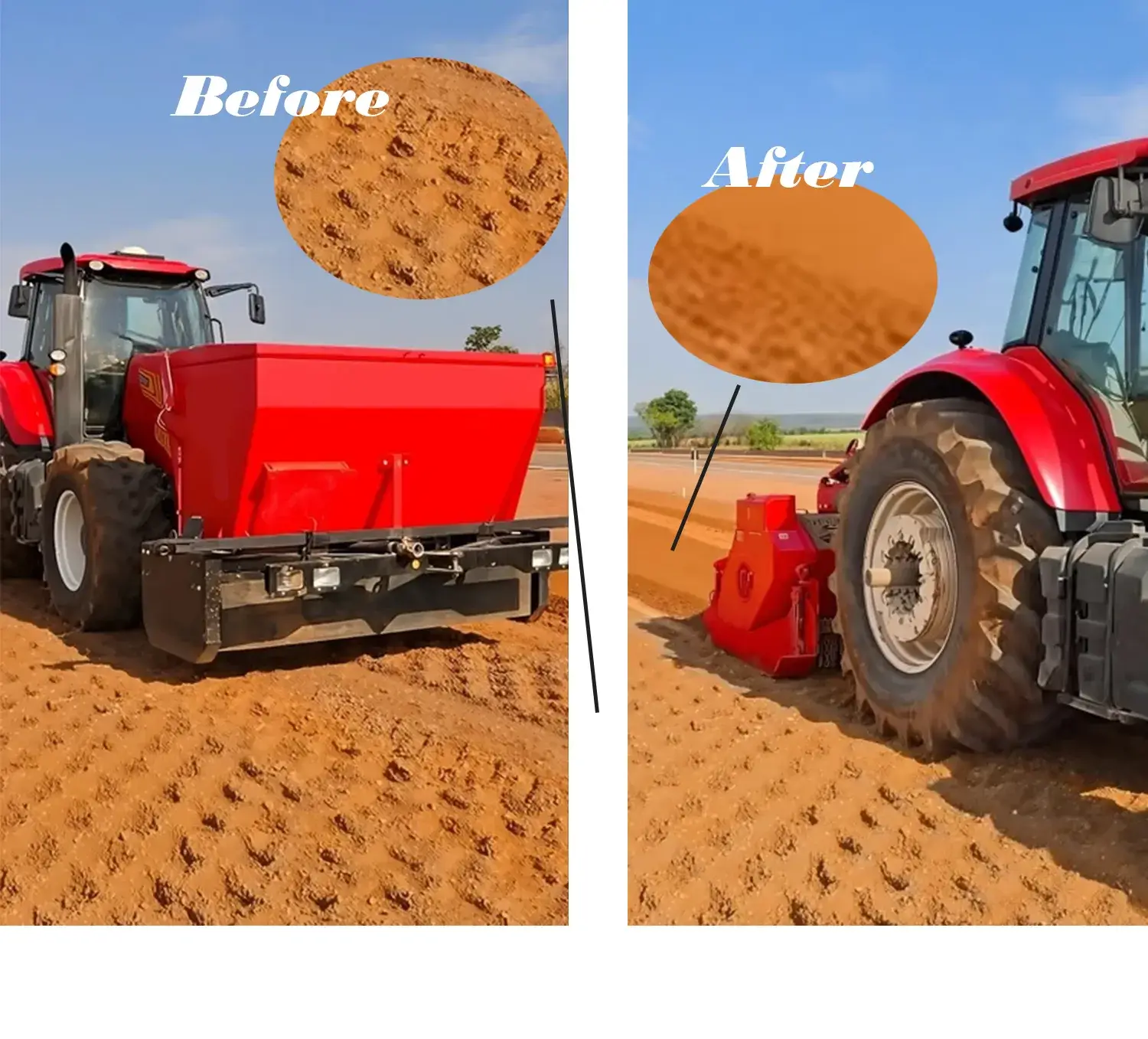
1. Understanding the Geology: Why Wheatbelt Soils Are So Stony
The stone problem in the WA Wheatbelt is ultimately a geological one. The region sits on the Yilgarn Craton, one of the oldest stable continental blocks on earth, where prolonged deep chemical weathering over millions of years has produced thick laterite profiles. The result is a layered soil system: at the surface and in the upper 100–300 mm, ironstone gravel fragments — essentially cemented ferruginous nodules and pisoliths — are mixed through sandy loam or clay-loam topsoil. Beneath this, a more consolidated laterite hardpan or mottled zone may be encountered at depth. Quartz rubble appears throughout, derived from the residual silica that resisted weathering in the original granite parent material.
The ironstone gravel fraction is characteristically angular to sub-angular, ranging in diameter from pea-sized fragments under 20 mm up to cobbles and small boulders exceeding 200 mm. Unlike the rounded river-gravels found in alluvial soils, the angular character of ironstone pisoliths means they sit interlocked in the soil profile, resisting displacement. When a plough or ripper tine strikes a cluster of interlocked ironstone cobbles, the energy transmitted back through the implement can be substantial, accelerating wear on points, shares, and disc components. A PTO stone crusher, by contrast, processes these materials into finer fragments and reincorporates them into the soil profile rather than simply displacing them to the side.
Quartz rubble in the Wheatbelt presents a harder challenge. Quartz has a Mohs hardness of 7, making it considerably more abrasive than ironstone (typically 5–6 on the Mohs scale). On crusher tooth wear, this difference is meaningful: a machine operating in predominantly quartz rubble conditions will consume teeth roughly 1.5–2 times faster than in mixed ironstone-sand soils. Selecting the appropriate tooth type — standard STC/3, heavy-duty STC/3/HD, or conical R/65 picks — is therefore not a minor footnote but a significant economic decision affecting total operating cost per hectare.
2. Action Mechanism: How a PTO Stone Crusher Processes Ironstone and Quartz
A PTO stone crusher is a 3-point hitch implement driven through the tractor’s power take-off shaft. As the tractor moves forward at typically 2–5 km/h, the implement’s heavy-duty rotor — spinning at high speed from 540 or 1000 RPM PTO input — engages surface and near-surface stone material. The fixed teeth or picks mounted to the rotor strike incoming stones with high kinetic energy, fracturing them against a steel counter-blade positioned in the crushing chamber. The fractured material exits through the rear of the machine, either dispersed back onto the soil surface at a reduced particle size or reintegrated into the upper soil profile.
In Wheatbelt conditions, the critical parameters for action efficiency are working depth and maximum shredding diameter. Ironstone gravel layers in WA soils are commonly found in the 50–200 mm depth zone, meaning a machine capable of processing to 150–200 mm depth is necessary for complete surface and near-surface clearance. Larger embedded ironstone boulders — which are less common but present in some paddock areas, particularly in breakaway country — may require mid-range machines capable of handling stones up to 300 mm diameter. Quartz rubble tends to be smaller in individual piece size but denser in concentration, making throughput rate (stones per square metre per hour) a more relevant performance measure than maximum stone diameter.
Drive Method
PTO shaft → rotor → high-speed fixed-tooth impact fragmentation
Typical Working Speed
2–5 km/h; 2–3 km/h recommended in dense Wheatbelt ironstone
Output Material
Fractured gravel returned to soil, surface smoothed for subsequent tillage
3. Manufacturing Structure: Build Characteristics That Matter in Harsh WA Conditions
Dryland farming in Western Australia places stone crushing equipment under conditions significantly more demanding than European agricultural soils. The combination of low soil moisture (most Wheatbelt soils are worked under dry conditions prior to seeding), highly abrasive ironstone and quartz particles, and the large areas to be covered in limited seasonal windows means machine durability is not a secondary concern but the primary one. Understanding the structural elements that govern service life helps when evaluating which tractor stone crusher model represents genuine value for a WA operation.
Rotor construction is the starting point. The rotor diameter determines the circumferential velocity at which teeth strike material — larger rotors hit harder at the same RPM. STCL-class machines use a 450 mm rotor, while STCM-series models step up to a 550 mm rotor. For RSL-series machines (80–190 hp range), the G/3 rotor reaches 595 mm and the R-type rotor 612 mm. These larger rotors generate significantly higher fragmentation energy per tooth strike, which is why they are preferred when dealing with dense ironstone conglomerates or quartz cobble accumulations rather than loose surface gravel. For most Wheatbelt applications involving mixed ironstone gravel in the 50–150 mm size range, the STCM class (550 mm rotor) provides an effective balance between fragmentation capability and manageable tractor HP demand.
The crushing chamber housing must withstand constant abrasion from fine iron-oxide and silica particles circulating during operation. Interchangeable Hardox wear plates — typically Hardox 450 or 500 grade — line the chamber interior on mid-range and upper machines. These can be removed and replaced independently without major machine disassembly, which is practically important given that WA farms often operate many kilometres from the nearest workshop. The counter-blade, which acts as the anvil face for fragmentation, is also made from Hardox on machines in the STCM 150 and above class, with hydraulic remote adjustment available on higher models allowing the operator to vary output particle size from the tractor cab.
Protection chains hanging from the front and rear of the crushing chamber serve a dual purpose: they contain forward-ejected material to reduce hazard distance, and they perform some pre-fragmentation of larger stones entering the chamber. In the context of WA legislation, these chains are not optional accessories — they are fundamental safety components required to meet workplace machinery safety obligations under Western Australia’s Work Health and Safety Act 2020.
4. Material System: Choosing the Right Teeth for Ironstone and Quartz
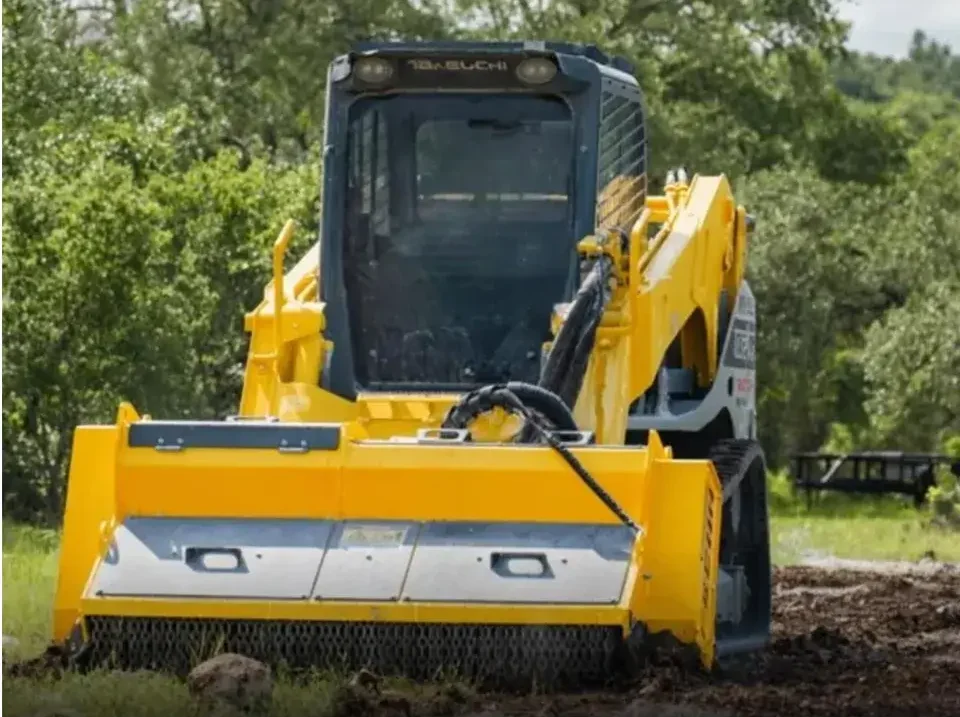
The cutting element — commonly called a tooth, pick, or bit — is the consumable most closely linked to operating cost in stone crusher applications. For WA dryland conditions, selecting the correct tooth type for the specific stone mix on a given property can reduce consumable spend by 30–50% compared to using a standard tooth in an application that demands heavy-duty tooling. Three primary tooth types are available across the STCL, STCM, and RSL product lines.
STC/3 standard fixed teeth are carbide-tipped and work well in mixed ironstone gravel with individual stone sizes under 100–120 mm in predominantly sandy loam soils. For the lighter end of Wheatbelt applications — paddocks with moderate gravel cover and minimal large cobbles — these represent the most cost-effective choice. STC/3/HD (heavy-duty) teeth incorporate a more robust tooth body and a reinforced carbide tip designed for high-silica and high-hardness material. In quartz-dominant rubble patches or areas with consolidated ironstone cemented layer fragments (laterite breakaway debris), the HD variant delivers significantly better service life. For RSL-class machines, the conical R/65 and R/65/HD picks offer 360-degree rotational wear distribution, meaning the pick body wears evenly on all faces and maintains cutting geometry longer than a flat-profile tooth.
One practical reality of WA operations is that paddock conditions often vary across a single field — a farmer may encounter loose surface ironstone gravel in one zone, dense quartz cobble patches near old drainage lines, and occasional large embedded boulders at break-away margins. Operating with STC/3/HD teeth across the whole paddock provides the necessary safety margin in hard material while maintaining acceptable cost in softer zones. Carrying a set of spare teeth on the tractor during a multi-day crushing run is strongly advised — tooth failure mid-paddock in a remote WA location can result in costly machine damage if the bare tooth holder contacts rotor housing surfaces.
5. Selecting the Right Model for Wheatbelt Conditions
The table below maps key model specifications to typical Wheatbelt stone conditions. Use this alongside confirmed tractor PTO horsepower and rear hitch lift ratings when requesting a supplier quote.
| Model Series | Tractor HP | Max Stone Ø (mm) | Max Depth (mm) | Rotor Ø (mm) | WA Suitability |
|---|---|---|---|---|---|
| STCL | 70–150马力 | 150 | 150 | 450 | Light ironstone gravel, smaller paddocks |
| STCM 150–175 | 150–220 hp | 300 | 200 | 550 | Mixed ironstone + quartz, broadacre paddocks |
| STCM 200–225 | 170–280 hp | 300 | 200 | 550 | High stone density, wider working coverage |
| RSL Series | 80–190 hp | 300 | 150–280 | 595 / 612 | Gear transmission, steep or sloped terrain |
| Thor 2.4 (PSC) | Min 180 cv | — | — | — | 2.4 m width, drawbar-supported, 2,300 kg |
| Thor 3.0 (PSC) | Min 230 cv | — | — | — | 3.0 m width, drawbar-supported, 2,800 kg |
cv = metric horsepower. Specifications verified from manufacturer data sheets. Always confirm rear hitch lift capacity before selecting model weight class.
6. Available Stone Crusher Models
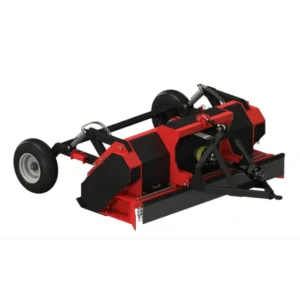
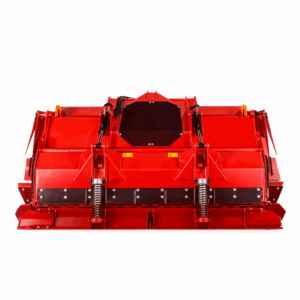
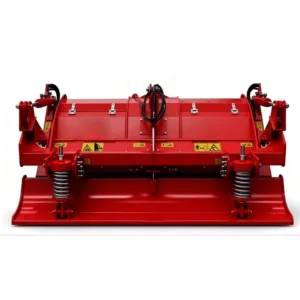
The following models are available in the Mulchers / Stone Crushers product range. Specifications are listed for reference — contact us for availability and current supplier quote details for Australian operations.
7. The Broadacre Context: Scale, Tractor Fleet, and Working Width Decisions
Western Australian broadacre farming operates at a scale uncommon in most other agricultural regions of the world. Individual farms of 5,000 to 20,000 hectares are not unusual in the central and northern Wheatbelt, and paddock sizes frequently exceed 200–400 hectares. This scale fundamentally changes the economics of stone management. In a European context, a 1.5 m wide stone crusher making multiple passes over a 5-hectare paddock represents a reasonable day’s work. In WA, the same operation scaled to a 500-hectare paddock with significant gravel coverage demands much wider working widths and more hours per season than narrower machines can deliver.
The Thor 3.0 with Kit Drawbar, with its 3.0-metre working width and minimum power requirement of 230 cv, is well-matched to the 200–280 hp tractors common in large WA grain operations. Its drawbar-mounted configuration distributes machine weight more favourably on the tractor’s rear axle, an important consideration on the sand-over-gravel soils where rear axle loading affects traction in dry conditions. At 2,800 kg machine weight, it sits within the rear lift capacity of most modern 200 hp+ tractors fitted with appropriate ballast.
For WA operations running 150–180 hp tractors — still very common in the mid-sized family farm sector — the STCM 175 (160–220 hp) with a 1,824 mm working width provides a practical match. At 3,250 kg, the rear hitch capacity of the matched tractor must be confirmed before ordering. On properties where stone conditions vary significantly across paddocks — lighter surface gravel in some zones, dense cobble layers in others — the STCM’s hydraulically adjustable counter-blade allows working depth and output particle size adjustment without stopping, which is a genuine productivity advantage during long clearing days.
8. Field Operation Tips for the WA Wheatbelt Environment
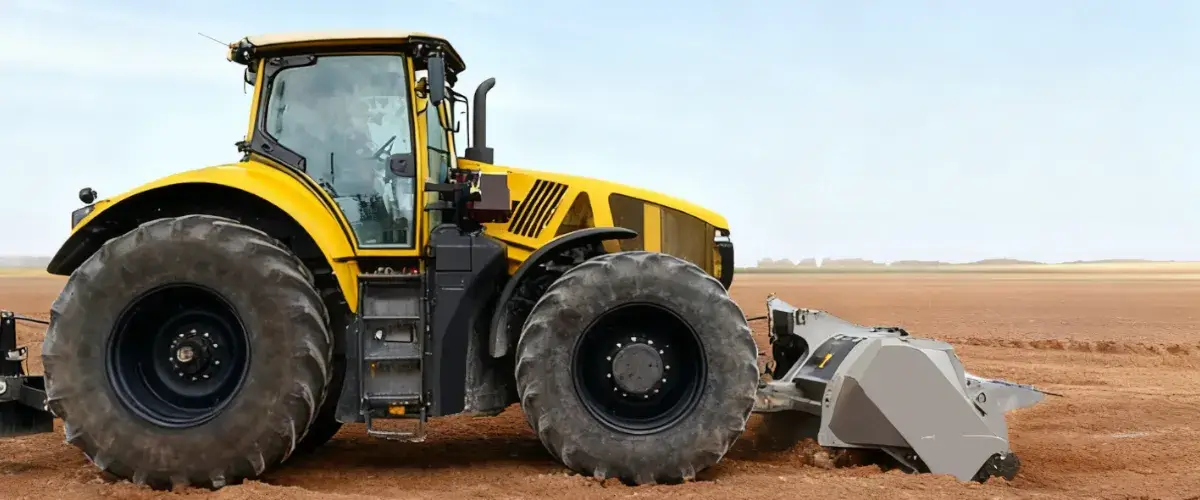
Operating a PTO stone crusher effectively in Wheatbelt conditions requires awareness of several field-level factors that don’t appear in a specification sheet but significantly influence outcomes. Soil moisture is probably the most important. Ironstone gravel cemented lightly by dry clay bonds breaks more cleanly when the surface layer has some residual moisture — completely dry powder-dry soil allows gravel fragments to redistribute without fragmentation, essentially rolling under the teeth rather than being struck cleanly. Early morning runs after overnight dew, or operations timed shortly after a light rainfall event, typically produce better fragmentation results per pass than running at midday in summer conditions.
Travelling speed should be reduced when encountering denser cobble zones. The instinct to maintain forward speed to cover more area per hour often backfires — at 5 km/h in dense ironstone, the rotor cannot dwell over each stone group long enough for complete fragmentation, leaving oversized fragments that must be addressed on a second pass. At 2.5–3 km/h, a single pass typically produces acceptable output in most Wheatbelt gravel profiles. A second pass at 90 degrees to the first can significantly improve results in paddock areas with dense angular cobble layers, as the cross-pass angle ensures that stones not fully fragmented in the first pass are engaged from a different geometry in the second.
Post-crushing tillage is typically the immediate next step — whether deep-ripping for compaction relief, spreading and sowing, or disc cultivation. Stone crushed to 50–80 mm diameter fragments can still present issues for seeder coulters on direct-drill systems, so understanding your target particle size and setting the machine’s counter-blade position accordingly before starting is worth the few minutes it takes. The adjustable Hardox counter-blade on mid-range and upper models exists precisely for this purpose, and operators who take the time to calibrate output size at the paddock start tend to report significantly better downstream equipment performance.
9. About Our PTO Stone Crusher Range
We supply and support professional-grade PTO stone crusher and agricultural rock crusher equipment for farming, land development, and infrastructure preparation operations globally, including Australia, New Zealand, and Asia-Pacific markets. Our product range spans from compact small PTO stone crusher models suited to 70–100 hp tractors through to heavy-duty stone crushing equipment requiring 280–500 hp machines.
Every machine is selected based on verified technical specifications, parts availability, and manufacturer support infrastructure. We work directly with broadacre farmers, land clearing contractors, and large-scale agricultural enterprises to match the correct stone crusher for tractor pairing to existing fleet and field conditions.
常见问题解答
编辑:PXY