US Import & Trade Compliance Guide
Importing a PTO Stone Crusher to the United States:
HS Codes, Tariffs, and Customs Requirements
A practical reference for buyers, importers, and agricultural dealers navigating the US customs process for tractor stone crusher equipment — from tariff classification to port clearance documentation.
Purchasing a pto stenkross from an overseas supplier and clearing it through US Customs and Border Protection (CBP) involves more procedural steps than most agricultural buyers initially expect. Getting the Harmonized System (HS) code right determines which tariff column applies, whether antidumping or countervailing duties attach, and how USDA agricultural import inspection requirements are triggered. This guide walks through each stage of the US import process specifically for PTO-driven stone crushing equipment — covering classification, duty rates, documentation, and the agency-specific compliance points that affect this category of stone crushing equipment.
1. What Is a PTO Stone Crusher and How Does It Work?
Before tackling classification, it helps to understand what a pto stenkross actually is from a customs perspective — because customs officers classify goods based on their function and construction, and misrepresentation of a machine’s primary purpose is one of the most common sources of import compliance problems in agricultural equipment.
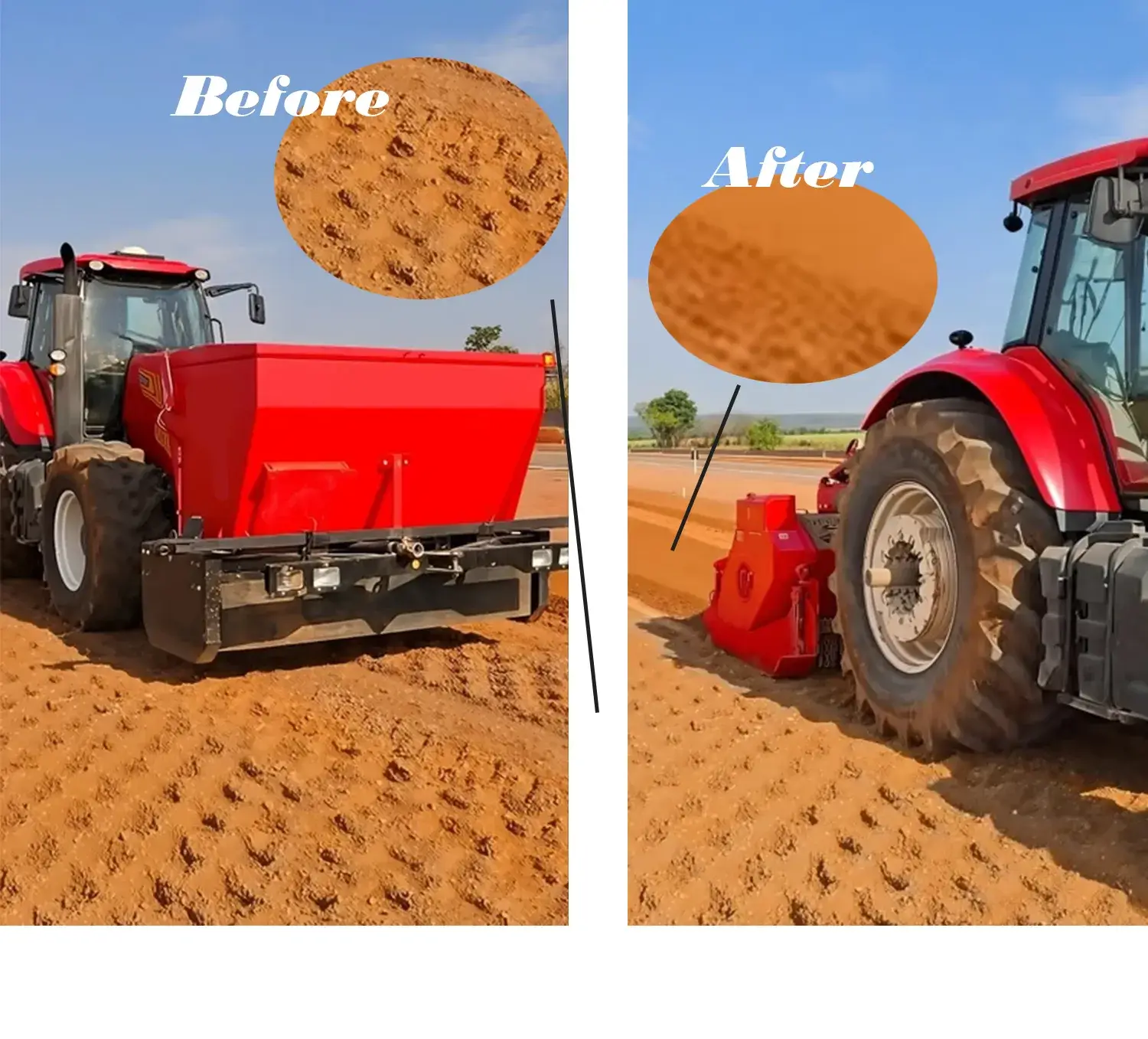
A tractor stone crusher is a tractor-mounted, PTO-driven implement designed to reduce surface and near-surface stones to small fragments in place, without removing them from the field. The machine attaches to the tractor’s three-point linkage (Category 2 in most models) and draws rotational power from the tractor’s Power Take-Off shaft at 540 or 1000 RPM. This shaft input drives an internal gearbox, which multiplies and redirects torque to a horizontal rotor drum fitted with carbide-tipped cutting picks or fixed-tooth cutters.
The rotor impacts and fractures stones on contact, and secondary crushing occurs as stone fragments impact the machine’s internal containment structure. The crushed material is deposited back into the soil. Models in the current lineup span from compact units with working widths around 1,100 mm suited to 70–150 hp tractors, all the way to wide-format machines requiring 180–230 cv of tractor power and covering working widths of 2,400–3,000 mm.
For customs purposes, this is an agricultural implement — not a standalone machine. It has no independent power source, cannot operate without a tractor, and is permanently designed for field preparation. This distinction matters substantially for HS classification, as it places the product within a different chapter than standalone crushing or grinding machinery. An accurate product description on the commercial invoice should read along the lines of: “PTO-driven agricultural stone crusher / soil preparation implement, three-point linkage, for tractor attachment” — not “stone crusher machine” or “crushing plant,” which pull classification toward Chapter 84 grinding machinery subheadings that carry different duty rates.
2. Action Mechanism: How the Machine Functions
Understanding how a stone crusher for tractor operates is relevant not just to buyers, but also to import brokers preparing entry documentation — because the mechanical description determines how CBP inspectors assess whether the declared classification is defensible. The action mechanism is rotary impact crushing, driven entirely by the tractor PTO.
Power transmission begins at the tractor’s PTO stub shaft, passes through a universal-joint driveline, and enters the machine’s gearbox input flange. The gearbox, typically a multi-stage helical or bevel-helical design with an oil-bath lubrication system, steps up rotor speed and provides overload protection via an integrated shear bolt, slip clutch, or cam clutch assembly. From the gearbox output, power is transmitted to the central rotor shaft.
The rotor assembly carries the cutting tools — carbide-tipped picks in STCL and STCM series models, or fixed-tooth cutters in RSL and RockMaster configurations. As the rotor rotates, these tools contact surface stones and fracture them through kinetic impact. The housing above the rotor acts as a containment chamber; fragments ejected by the rotor impact the rear shear bar or grid screen and undergo secondary size reduction before settling back into the soil profile. Depth of engagement is controlled by adjustable depth wheels or hydraulic cylinder adjustment from the tractor cab.
The machine produces no output other than crushed material deposited in the field. There is no screen, conveyor, hopper, or collection system — which distinguishes it from processing crushers or portable stone crusher machine designs used in construction. This operational profile is precisely what the CBP’s binding ruling process, when applied, consistently places within the agricultural implement category rather than the industrial crushing machinery category.
3. Manufacturing Structure: Frame, Rotor, and Gearbox Assembly
The physical construction of a pto stenkross is directly relevant to US customs entry because component materials can affect classification under certain interpretive rules, and because CBP officers examining a shipment physically will assess whether what they see matches the declared description. The manufacturing structure of agricultural stone crushers in this product range follows a consistent pattern across model families.
The outer housing and main frame are welded structural steel assemblies. Frame sections use high-strength mild and structural steel grades with full-penetration welds at primary load joints. The external housing panels — top, rear, and side shields — are typically formed from wear-resistant steel plate, often Hardox 400 grade or equivalent at the internal crushing chamber surfaces. These panels are the first components to contact stone fragment rebound and require regular inspection and replacement in high-wear field conditions.
The rotor shaft is the machine’s central structural element, machined from forged alloy steel to close dimensional tolerances. Flanged rotor discs welded or bolted to the shaft carry the pick holder blocks. Pick holders are either bolt-on steel sleeves or conical-seat rotating holders, depending on the tool type used. Carbide picks for STCL and STCM class machines use tungsten carbide tips of the STC/3 and STC/3HD type; RSL and RSM models use G/3 type picks alongside larger R/65 series round-shank picks with conical tungsten carbide tips for the harder, higher-mass rotor configurations.
For customs purposes, importers should note that tungsten carbide content in the picks may flag the shipment for additional scrutiny under anti-dumping orders applicable to certain tungsten carbide products. However, the picks in this case are integrated components of an agricultural implement and are not imported as standalone cutting tool blanks or inserts — a distinction that should be clearly supported by the product description, packing list, and commercial invoice. Separating picks from the machine for shipping is a common cost-saving measure but can create classification complications if the picks arrive as a separate commercial line item.
4. Material System: Steels, Carbides, and Coatings in the Product Range
The material specifications of a stone crusher machine in this category affect both performance characteristics in the field and import classification nuances at the US border. Understanding the material composition allows importers to prepare accurate documentation and anticipate potential inspection queries from CBP.
Main frame and housing structural members are fabricated from S355JR or equivalent structural steel (yield strength approximately 355 MPa), with normalized plate used for flat sections and hot-formed sections for tubular and profiled members. Wear-zone liners inside the crushing chamber — particularly the rear deflection bar and grid, which receive constant impact from stone fragments — use abrasion-resistant plate grades equivalent to Hardox 400 (400 Brinell hardness). These are bolt-on or weld-on panels designed for field replacement. Their Brinell hardness value places them in a different customs material category than mild steel structural components, which can occasionally trigger additional documentation requests under CBP’s steel import monitoring programs.
Carbide pick tips are sintered tungsten carbide (WC-Co grade), typically with cobalt binder content in the 6–12% range depending on the toughness and hardness balance required for the target rock type. These are brazed or press-fit into forged alloy steel shanks. The rotor shaft itself is forged from a medium-carbon alloy steel such as 42CrMo4 or equivalent, heat-treated to achieve the fatigue resistance required at high-impact operating cycles. Bearing housings are cast or machined ductile iron with sealed double-row ball or roller bearings.
| Komponent | Material Specification | Import Note |
|---|---|---|
| Main frame sections | S355JR structural steel | Standard steel; Section 232 steel tariffs may apply |
| Crushing chamber liners | Hardox 400 wear plate (400 HB) | High-alloy steel; disclose material grade on invoice |
| Rotor shaft | 42CrMo4 forged alloy steel | Forged steel component; part of whole implement |
| Carbide pick tips | WC-Co sintered carbide | Integrated implement parts; not standalone inserts |
| Pick shank bodies | Through-hardened alloy steel | Part of assembled implement |
| Gearbox housing | Cast ductile iron / machined steel | Cast iron components; part of assembled implement |
5. US Tariff Landscape: Section 232, Section 301, and Agricultural Equipment Exemptions
The US tariff system for agricultural machinery imports is not a single-rate structure — it is a layered system where the base HTSUS duty rate represents only the floor, and additional measures can substantially increase the landed duty burden. For anyone sourcing a tractor stone crusher for sale internationally and planning US importation, understanding all applicable duty layers is essential to cost-of-entry calculations.
Base HTSUS Duty Rate
Under HTSUS 8432.80.0000, the Column 1 (NTR) general rate of duty is free — 0% ad valorem. This rate applies to imports from countries with Normal Trade Relations status, which covers the majority of the world. Column 2 rates (applying to a small list of countries lacking NTR status) are higher and should be confirmed for the specific origin country before entry.
Section 232 Steel and Aluminum Tariffs
Section 232 of the Trade Expansion Act of 1962 authorizes the President to impose tariffs on steel and aluminum imports based on national security grounds. The current Section 232 tariffs — 25% on steel articles and 10% on aluminum articles (subject to ongoing adjustment) — apply to the steel content of an imported machine only when the goods are classified as steel articles under Chapter 73, not when they are classified as machinery under Chapter 84. A pto stenkross classified under HTSUS 8432 is a manufactured machine, not a steel article, and therefore does not directly attract Section 232 steel tariffs on the finished machine as a whole. However, spare parts shipped as steel articles separately from the machine may be affected. Confirm current rates and any country-specific agreements (such as the US-EU steel arrangement) with a licensed customs broker at time of importation, as these provisions change frequently.
Section 301 Tariffs (Goods of Chinese Origin)
Section 301 tariffs imposed on goods of Chinese origin, implemented from 2018 onward, cover a wide range of agricultural machinery components and assembled equipment. Agricultural soil preparation machinery classified under HTSUS 8432 subheadings has appeared on Section 301 lists, and goods sourced from or with substantial transformation in the People’s Republic of China may attract additional duties of 7.5% to 25% above the base rate. As of 2025, the tariff situation for Chinese-origin agricultural machinery remains subject to review and modification, and the current applicable rate for any specific product under 8432 should be verified against the USTR’s published Section 301 list using the HTSUS subheading before shipment. This is a critical due-diligence step for importers sourcing pto stone crusher for sale equipment through suppliers with manufacturing or assembly in China.
Merchandise Processing Fee and Harbor Maintenance Fee
In addition to ad valorem duties, all commercial entries into the US are subject to the Merchandise Processing Fee (MPF) — currently 0.3464% of the entered value, subject to a minimum of $32.71 and a maximum of $634.62 per entry. The Harbor Maintenance Fee (HMF) applies to shipments arriving at US ports by water and is assessed at 0.125% of the cargo value. These fees are assessed regardless of the duty classification outcome and should be included in the total landed cost calculation.
| Charge Type | Rate / Basis | Applicability |
|---|---|---|
| Base HTSUS duty (8432.80.0000) | Free (0%) — NTR countries | All NTR origin countries |
| Section 301 additional duty | 7.5–25% ad valorem | Chinese-origin goods only; confirm current rates |
| Section 232 steel tariff | Does not apply to Ch. 84 finished machines | N/A for whole implement; may apply to spare steel parts |
| Merchandise Processing Fee | 0.3464% (min $32.71 / max $634.62) | All commercial entries |
| Harbor Maintenance Fee | 0.125% of cargo value | Ocean freight shipments to US ports |
6. Customs Entry Documentation: What CBP Requires for Agricultural Implement Imports
A formal entry (CBP Form 3461 for release, followed by CBP Form 7501 for entry summary) is required for commercial shipments valued over $2,500 arriving in the US. For machines in the weight and value range of a tractor stone crusher — where a single STCM 200 unit weighs 3,550 kg and represents a significant commercial value — formal entry is standard. The documentation package required to support entry includes several distinct document categories.
Commercial Invoice
The commercial invoice must include: seller and buyer names and addresses, country of origin, detailed product description (including model number, working width, weight, and PTO input speed), unit quantity, and transaction value in USD. The product description must accurately reflect the machine’s function as an agricultural PTO-driven soil preparation implement — not a generic “stone crusher machine” without agricultural context, which risks misclassification into industrial crushing machinery headings. Include the intended HTSUS classification on the invoice as a reference.
Packing List
The packing list should itemize the contents of each shipping unit, including gross and net weights, dimensions, and any separately packaged components such as spare picks, tool kits, or operating manuals. If replacement carbide picks are included in the same shipment as the machine, they should be listed as integral spares for the implement — not as separate line items that could be classified independently as cutting tools.
Bill of Lading or Airway Bill
The transport document (ocean bill of lading, straight or negotiable) provides CBP with carrier information, routing, and goods identification. For heavy agricultural machinery shipped by ocean, the bill of lading description should match the commercial invoice product description to avoid discrepancy queries during entry processing.
Certificate of Origin
If the machine originates from a country with a Free Trade Agreement (FTA) with the US — such as South Korea under KORUS FTA, or EU member states for specific sub-agreements — a Certificate of Origin in the format prescribed by the applicable FTA is required to claim preferential tariff treatment. Note that for HTSUS 8432 goods, the base duty rate is already free for NTR countries, so the FTA origin certificate’s primary value may be in avoiding Section 301 or other additional duties rather than reducing the base rate.
USDA Inspection and Agricultural Compliance
All agricultural machinery and equipment entering the United States is subject to USDA Animal and Plant Health Inspection Service (APHIS) inspection to prevent the introduction of plant pests and noxious weeds via soil, plant material, or organic debris on or in the machinery. CBP coordinates APHIS inspection at the port of entry. For new, factory-condition machines, inspection is typically a quick visual check. For used equipment, APHIS requires that all soil and organic matter be removed before arrival — machines arriving with soil contamination will be quarantined and require cleaning at the importer’s expense before release. Because agricultural stone crusher equipment is specifically designed to contact and move soil, USDA inspectors may scrutinize machinery in this category more closely than non-soil-contact implements, even when factory-new.
7. Gearbox Regulations and PTO Safety Standards: US and International Compliance
The gearbox is the most mechanically complex component of a pto stenkross and is subject to distinct safety standards in multiple jurisdictions. Compliance with these standards affects whether a machine can legally be operated in a given country, and non-compliant machines can be refused entry or require post-import modification at significant cost. Understanding the applicable framework across key markets is important for both buyers and international dealers.
United States — OSHA and ASABE Standards
In the United States, OSHA 29 CFR 1928 governs agricultural equipment safety for workers, including guarding requirements for tractor-driven PTO implements. ASABE Standard S203.17 (PTO Shaft Dimensions, 540 and 1000 RPM) defines the physical dimensions and engagement characteristics of PTO connections, and ASABE S219 specifies PTO guards and master shield requirements. All machines operating in the US agricultural sector should be equipped with a CE-marked or ASABE-compliant PTO driveline guard covering the entire length of the rotating driveshaft. The driveline guard must be independently supported and must not rotate with the shaft. ASABE S318 defines agricultural machinery terminology for labeling purposes, which is relevant when preparing product descriptions for customs entry and for US dealer sale documentation.
European Union — Machinery Directive and EN ISO 4254-1
Machines bearing CE marking have been assessed against the EU Machinery Directive 2006/42/EC, which requires a Declaration of Conformity confirming compliance with essential health and safety requirements. For PTO-driven agricultural implements, EN ISO 4254-1 provides the specific technical requirements covering PTO guard dimensions, interlocking requirements for engine access, stability testing, and operating information. CE marking is widely accepted by CBP as evidence of product quality and safety conformity, even though CE itself is not a US regulatory requirement. Including a copy of the CE Declaration of Conformity in the import documentation package provides evidence that the machine meets internationally recognized safety standards, which can support the agricultural implement classification claim if CBP raises questions.
South Korea — KS B 6301
Korean standard KS B 6301, administered by the Korean Agency for Technology and Standards (KATS), governs the construction, testing, and safety of tractor-attached agricultural implements including stone crushers. Gearbox housing material requirements, minimum oil seal standards, guard dimensions for PTO drivelines, and after-sales warranty obligations for main structural components are all addressed in this standard. For buyers in Korea importing or purchasing machines that have been supplied into the Korean market, confirming KS B 6301 equivalency provides assurance that warranty terms and structural specifications meet the expectations of Korean agricultural standards authorities. Our Korean-market agricultural rock crusher model is specifically configured to meet these requirements, and Korean-language technical documentation is available upon request.
Australia — AS/NZS 1234 and Safe Work Australia
Australia’s PTO implement standard AS/NZS 1234 specifies guarding requirements for power take-off shafts and connectors on agricultural machinery sold in Australia and New Zealand. Safe Work Australia’s model Work Health and Safety Codes of Practice additionally require that all moving parts on agricultural machinery be guarded against accidental contact. Agricultural machinery importers in Australia must confirm compliance with both the guarding standard and any state-specific agricultural machinery dealer licensing requirements before offering equipment for sale.
Canada — ASABE and CCOHS Requirements
Canada follows ASABE S203 and S219 for PTO shaft dimensions and guarding, consistent with US standards. The Canadian Centre for Occupational Health and Safety (CCOHS) requires independently supported, non-rotating PTO guards on all tractor PTO-driven implements. Provincial farm safety authorities in Ontario, Alberta, and Saskatchewan align with these federal guidelines, and import documents for agricultural equipment typically need to reference ASABE conformity to satisfy provincial inspection requirements for commercial dealerships.
| Region | Primary Standard / Regulation | Gearbox / PTO Requirement |
|---|---|---|
| United States | OSHA 29 CFR 1928; ASABE S203, S219 | Non-rotating PTO guard; 540/1000 RPM shaft compliance |
| Europeiska unionen | Machinery Directive 2006/42/EC; EN ISO 4254-1 | CE marking; Declaration of Conformity; guard interlocks |
| South Korea | KS B 6301 | Gearbox housing material; oil seal standard; warranty |
| Australia / NZ | AS/NZS 1234; Safe Work Australia | PTO connector guarding; moving part protection |
| Canada | ASABE S203, S219; CCOHS | ASABE-compliant PTO guard; non-rotating shield |
8. Available Models: Specifications for Import Entry and Tractor Compatibility
Each model in the Mulchers / Stone Crushers product line has distinct weight, dimension, and horsepower characteristics that affect shipping cost, container loading configuration, and tractor compatibility. These specifications are also required for the CBP entry form and bill of lading description.
THOR 2.4 + Dragstångssats
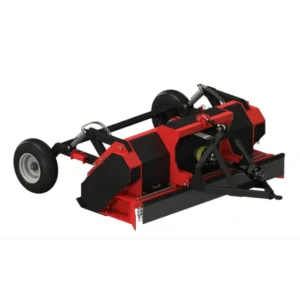
High-output 2.4 m working-width crusher. Requires minimum 180 cv tractor. For US import documentation, declare as “PTO-driven agricultural stone crusher implement, HTSUS 8432.80.0000.”
- Dimensions: 1546 × 2481 × 1212 mm
- Weight: 2,300 kg
- Working width: 2,400 mm
- Min. tractor: 180 cv
- Linkage: Category 2
RockMaster jordbruksstenkross
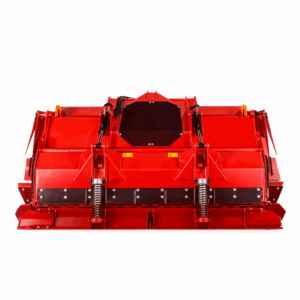
Mid-weight agricultural stone crusher suited to 80–190 hp tractors. Max stone diameter 200 mm. A strong match for Midwestern US farms dealing with limestone surface stones.
- Max crushing diameter: 200 mm
- PTO input: 540/1000 RPM
- Carbide pick tooling
- 3-point linkage Cat. 2
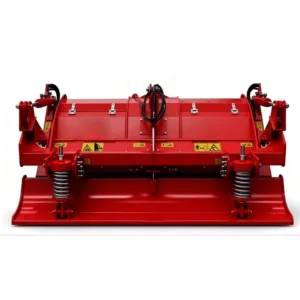
PSC / STCL Models — Field Stone Crusher
Compact field-duty crusher for 70–150 hp tractors. Max stone 150 mm, max depth 150 mm. Well-suited to US small farm and hobby farm applications. Lighter weight simplifies FCL/LCL container arrangements.
- Tractor range: 70–150 hp
- PTO: 540–1000 RPM
- Max stone: 150 mm
- Weight: 1,230–1,750 kg (by variant)
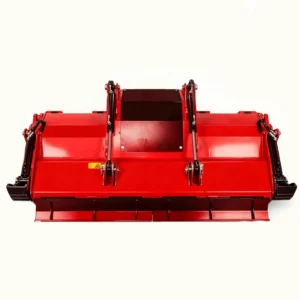
Traktormonterad stenkross
Fixed-tooth design for 80–190 hp tractors. Handles up to 300 mm stones at 280 mm working depth. Suitable for US applications in rocky Appalachian, Ozark, and New England hill farm regions.
- Max crushing: 300 mm
- Max depth: 280 mm
- Tractor: 80–190 hp
- Fixed-tooth cutter type
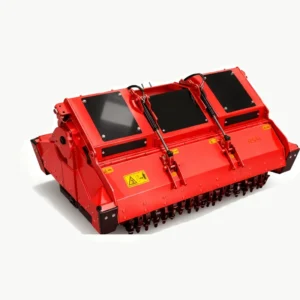
Agricultural Rock Crusher — Korea Edition
Configured specifically for Korean agricultural market needs, KS B 6301 compliant, Korean-language documentation. For Korean buyers also sourcing into US, KORUS FTA preferential treatment may reduce total import cost — verify with a licensed customs broker.
- KS B 6301 compliant
- Korean-language manual
- KORUS FTA eligible (verify origin)
- Customizable pick types
9. KORUS FTA and Agricultural Equipment: Preferential Tariff Treatment for Korean-Origin Goods
The United States-Korea Free Trade Agreement (KORUS FTA), which entered into force in March 2012, provides for preferential tariff treatment on a wide range of goods of Korean origin entering the United States. For agricultural machinery classified under HTSUS Chapter 84, KORUS FTA eliminates or reduces duties beyond the existing NTR (MFN) rate. Since the base HTSUS duty rate for 8432.80.0000 is already free under NTR, the primary commercial benefit of KORUS FTA for Korean-origin stone crusher for tractor equipment relates to avoiding Section 301 tariffs — though Section 301 tariffs specifically target Chinese-origin goods and do not apply to genuine Korean-origin products.
To claim KORUS FTA preferential treatment, the imported pto stenkross must qualify as an originating good under the KORUS rules of origin. For agricultural machinery, substantial transformation and regional value content tests apply. If a machine is assembled in Korea using components sourced from multiple countries, the customs broker must assess whether the rules of origin criteria are met before claiming FTA preference. A Certificate of Origin in KORUS FTA format must be provided to CBP with the entry documentation. Importers who claim FTA preference and are later audited by CBP may be required to provide supplier documentation supporting the origin claim — maintain this paperwork for a minimum of five years post-entry.
For buyers in Korea who are also distributing machines into the US market, or who are considering a US market entry for agricultural stone crusher equipment, the KORUS framework offers a structurally favorable trade corridor. The combination of a 0% base duty rate, no Section 301 exposure, and FTA documentation infrastructure makes Korean-origin stone crushing equipment one of the more straightforward agricultural implement import categories from a landed duty perspective — provided documentation is correctly maintained and the origin criteria are genuinely satisfied.
10. About Our International Supply Program
We are a specialist supplier of pto stenkross equipment and related tractor-mounted agricultural implements, serving farm operations, land management contractors, and agricultural dealerships in multiple markets. Our product range covers the full spectrum from compact small pto stone crusher models suited to sub-100 hp utility tractors through to high-horsepower THOR series machines designed for large-scale land reclamation and Prairie-type field operations.
For buyers in the United States, we provide complete export documentation packages including commercial invoices formatted for US customs entry, packing lists itemized at component level, and certificates of origin in formats appropriate for applicable trade agreements. We are familiar with HTSUS classification requirements for agricultural implements and can work with your customs broker to ensure the documentation package is aligned with CBP filing requirements before shipment. CE Declarations of Conformity are available for all models in the current range, confirming compliance with EU Machinery Directive 2006/42/EC requirements — documentation that supports the agricultural implement classification and demonstrates internationally recognized safety standard conformity.
For the Korean market, our service program is specifically structured to meet KS B 6301 standards. Korean-language operation and maintenance manuals, along with QR-linked video tutorials, are included with all Korean-market units. Our Korean-speaking technical support team is accessible by email and handles inquiries from initial specification through ongoing maintenance and parts supply. Main structural components — frame, rotor shaft, gearbox housing, hydraulic systems, and transmission parts — are warranted under normal use in accordance with Korean agricultural machinery service standards. Standard wear parts (picks, side liners, depth shoe components) are stocked for rapid dispatch via domestic logistics partners.
Vanliga frågor
Redaktör: PXY