Agricultural Land Clearing — South America
Дробилка с приводом от ВОМ для расчистки сельскохозяйственных земель в Южной Америке: Колумбия, Бразилия и Аргентина.
Across Colombia’s highland valleys, Brazil’s expansive cerrado, and Argentina’s pampas, rocky soils remain one of the greatest barriers to profitable farming. A pto stone crusher addresses this challenge at its source. A well-matched PTO stone crusher turns those obstacles into opportunity — right where the stones lie.
1. Why Stone Management Matters in South America’s Agricultural Belt
South America hosts some of the world’s most fertile farmland — and some of its rockiest. From the Andean foothills cutting through Colombia and Ecuador to the red laterite soils of Brazil’s interior plateau and the rocky sub-surface layers across much of Argentina’s agricultural provinces, surface and near-surface stones are a persistent challenge. They damage planting equipment, obstruct root development, slow field operations, and reduce the effective use of thousands of hectares of otherwise productive land each season.
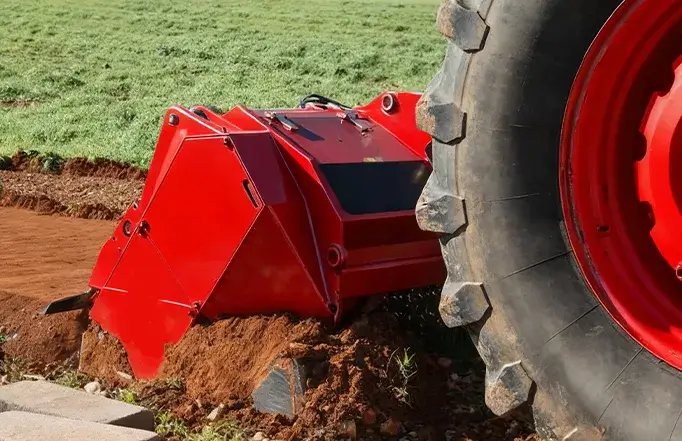
The pto stone crusher — specifically the tractor-mounted, PTO-driven variety — has transformed how farmers approach this problem. The pto stone crusher operates by connecting directly to the tractor’s power take-off, converting engine torque into high-speed rotor impact energy capable of fracturing stones of considerable size. Rather than hauling rock or hand-clearing fields, a properly selected pto stone crusher grinds stones in place. The pto stone crusher deposits the processed material as aggregate directly back onto the field surface., leaving the material as a compacted sub-layer or fine aggregate that actually improves drainage and trafficability. For smallholders in Colombia’s coffee-growing departments, large soy operators in Mato Grosso, and cattle ranchers across the Buenos Aires province, this technology represents a genuine shift in what’s possible on rocky ground.
This guide walks through how these machines work mechanically, how they’re constructed, what materials go into them, which models are best suited to South American field conditions, and what legal and regulatory considerations apply when deploying agricultural machinery in Colombia, Brazil, and Argentina. Whether you’re actively searching for a stone crusher for tractor use or comparing available models from a supplier, this resource will give you a firm foundation.
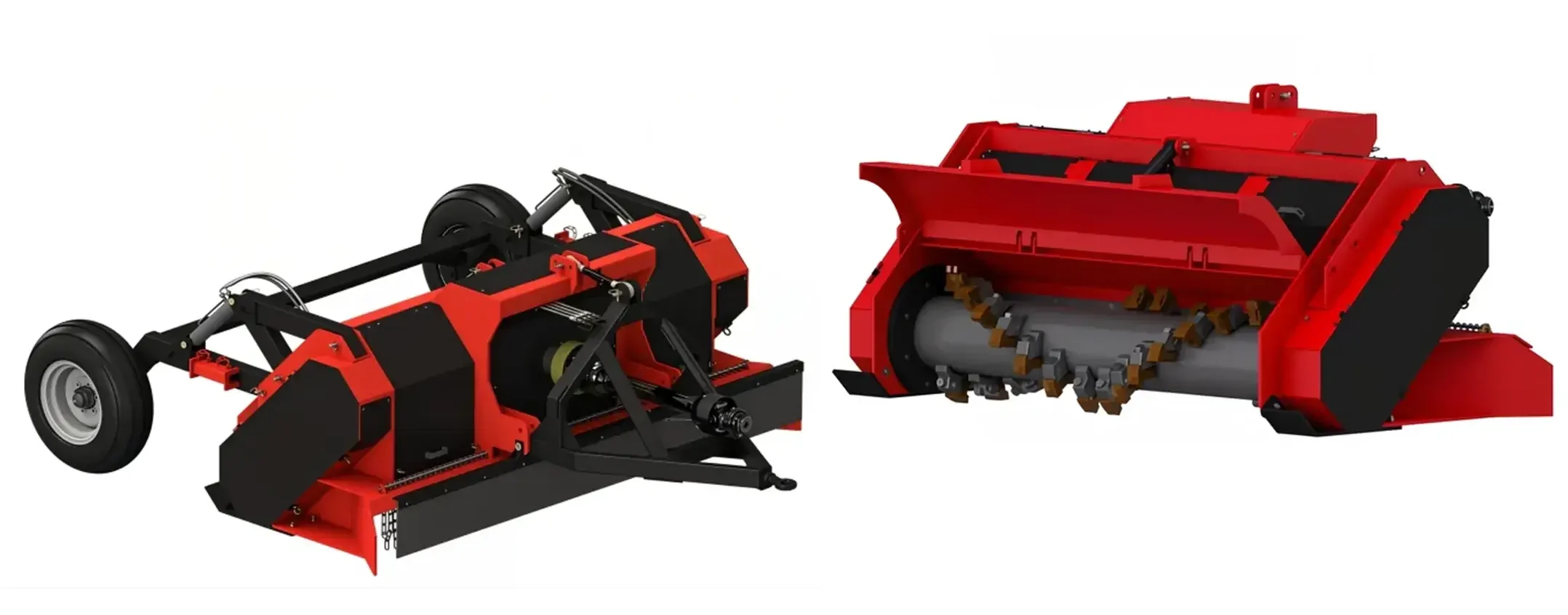
2. Action Mechanism: How a PTO Stone Crusher Actually Works
Power Take-Off Drive System
The entire chain of crushing action in a pto stone crusher begins at the tractor’s rear PTO shaft. Every pto stone crusher in the product range uses this direct power take-off connection as the primary energy source. The tractor’s engine torque is transferred through a cardan shaft (also called a propeller shaft or driveshaft) to the stone crusher’s internal gearbox. This shaft typically operates at either 540 RPM or 1000 RPM depending on the model and tractor configuration — a critical matching point that operators must verify before fieldwork. When the RPM match is off, the rotor either under-performs or risks mechanical strain on the gearbox bearings.
The direct PTO connection is one of the key reasons the pto stone crusher outperforms independently powered units in field efficiency: there’s no separate engine to fuel, start, or maintain. All power comes from the prime mover already on-site — the farm tractor. This simplicity also reduces total weight and improves the pto stone crusher’s balance on hillside terrain, which is directly relevant to Colombian highland farms where slopes are common.
Gearbox Transmission and Torque Distribution
Between the PTO shaft and the rotor lies the transmission assembly. On lighter-duty models such as the PSC Series, a belt-based or direct shaft arrangement transfers power to the rotor. On mid-range models — including the STCM Series which operates from 80 to 220 hp — the machine uses a direct transmission with a torque limiter that protects the drivetrain if the rotor strikes an object beyond its crushing capacity. Heavy-duty machines like the RSM series use a reduction gear transmission, which delivers more torque at lower RPM, giving the rotor the mechanical advantage needed to fracture large rock slabs up to 500 mm in diameter.
Understanding the gearbox type of the pto stone crusher matters in South America because field conditions vary significantly. Selecting the correct pto stone crusher transmission architecture for your terrain type directly affects throughput and long-term reliability. A coffee farm in Colombia’s Huila department may encounter mostly loose surface stones and volcanic rock fragments; the PSC or STCL-class machine is well-matched there. A large-scale land-clearing project in Mato Grosso involving consolidated limestone or basalt slab layers demands the torque reserve that only a reduction gear RSM or RSH system can reliably deliver at operational speeds around 3–5 km/h.
High-Speed Rotor and Impact Crushing
The rotor is the heart of every pto stone crusher. Each pto stone crusher model uses a heavy-duty horizontal rotor to deliver the primary impact force against stones. Mounted horizontally inside the main housing, the rotor spins at high velocity — typically driven by the 1000 RPM PTO path. Fixed teeth or free-swinging hammers are arranged in rows along the rotor body. As the pto stone crusher moves forward at working speed (generally 3 km/h under load), stones entering the crushing chamber are struck repeatedly by these impact elements.
The crushing mechanism is primarily percussive: the initial impact shatters the stone’s crystalline structure or fractures it along natural cleavage planes. Larger fragments are thrown against the rear counter-blade — an adjustable Hardox steel plate — and crushed further. The final aggregate exits from the rear and is deposited directly onto the field surface or sub-surface layer. The rear hydraulic door controls the exit clearance and therefore the approximate maximum output particle size.
3. Manufacturing Construction: What Goes Into the Structure
Frame and Housing Architecture
The main frame of a tractor stone crusher or pto stone crusher must absorb continuous shock loads that would destroy lighter fabrications within hours. Agricultural models are built around a welded structural steel frame — typically constructed from high-yield-strength plate steel — with the rotor housing forming an integrated box around the crushing chamber. On machines from the STCM and RockMaster categories, the frame is fully enclosed to prevent debris scatter, reduce dust exposure for the tractor operator, and maintain consistent crushing conditions inside the chamber. This fully enclosed design is not universal: lighter PSC-class units have more open geometries that improve access for cleaning and tooth replacement but offer less debris containment.
Side plates on mid and heavy-duty machines are reinforced with bolt-on, interchangeable wear panels — often made from Hardox 450 or Hardox 500 steel. These panels absorb the lateral abrasion from stone fragments ricocheting inside the chamber and can be individually replaced when worn, which substantially extends the service life of the overall unit without requiring full housing replacement. This modular approach to wear parts on the pto stone crusher is significant for operations in remote areas of Brazil or Argentina, where access to fabrication shops may be limited.
Three-Point Linkage and Attachment System
All pto stone crusher models in the product range use a Category 2 three-point bottom linkage hitch system (following ISO 730 specification) for mounting to the tractor’s rear hydraulic lift. This is the near-universal standard on utility and row-crop tractors in South America, meaning pto stone crusher compatibility is not generally a concern with modern John Deere, New Holland, AGCO, or SAME tractors that make up the majority of commercial farm fleets in Brazil, Argentina, and Colombia. The drawbar kit option — as seen on the THOR 2.4 and THOR 3.0 models — adds a trailing-wheel assembly that allows the machine to follow ground contours more precisely over undulating terrain, which is especially useful in Colombia and in the hilly regions of Brazil’s southern states like Rio Grande do Sul and Santa Catarina.
Rotor Design and Bearing Assemblies
The rotor is mounted on heavy-duty flanged bearing housings at each end of the housing. Bearing selection is one of the less-visible but most consequential construction decisions. Agricultural stone crushers operate under high radial and axial loads simultaneously — the rotor mass creates radial loading, while off-center stone impacts generate axial shock. Manufacturers use spherical roller bearings in sealed housings that resist both the mechanical loading and the inevitable penetration of fine stone dust and soil moisture. Periodic bearing inspection and re-greasing intervals (typically every 50–100 operating hours) are an important maintenance discipline in tropical and subtropical climates like those in Colombia’s Andean midlands or Brazil’s seasonal dry-wet cerrado zones.
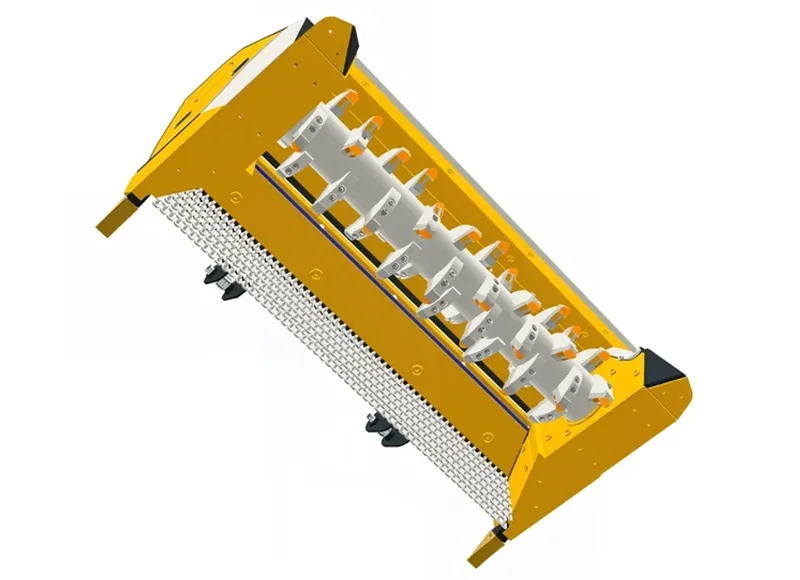
4. Material System: Steels, Alloys, and Wear Components
Structural and Wear-Grade Steels
The steel selection in a high-quality pto stone crusher follows a logical gradient: structural members use standard high-strength low-alloy steel (HSLA) such as S355 or equivalent grades, which provide the yield strength and weldability needed for the frame. As components move closer to the impact zone, steel grades escalate sharply. Internal wear liners and counter-blades are manufactured from Hardox 450 or Hardox 500 — grades with Brinell hardness values between 450–550 HB. This hardness level is critical for abrasion resistance against silica-bearing granite, flint, and limestone — the three most commonly encountered rock types across the target agricultural regions of South America.
The rotor shaft itself is typically manufactured from alloy steel that has been quenched and tempered — a heat treatment process that increases core toughness to withstand shock loading while maintaining adequate surface hardness. Some manufacturers use CrMo (chromium-molybdenum) steel grades for rotor shafts, which offer excellent fatigue resistance over tens of thousands of impact cycles per hour of operation. The teeth or pick holders on the rotor are usually manufactured from case-hardened alloy steel, with replaceable carbide-tipped inserts that contact the stone surface.
Tungsten Carbide Tooth Tips and Picks
The actual cutting and impact element in contact with stone is most commonly a tungsten carbide (WC) composite tip brazed or mechanically locked into a steel holder. Tungsten carbide’s combination of extreme hardness (typically 1500–2000 HV) and reasonable toughness makes it the dominant choice for this application. The three tooth types referenced across the PSC, STCL, and STCM product families — STC/3 standard, STC/3/HD heavy-duty, and STC/3/FP flat-profile — represent a progression from general-purpose use to applications where either higher impact loading or a finer output size is prioritized. For pto stone crusher operation on the volcanic basalt soils found in Colombia’s coffee belt, the STC/3/HD type is typically recommended; for limestone-dominant soils in Brazil’s agricultural south, standard STC/3 teeth perform well at lower operating cost.
Protection Chains and Ejection Control
Steel protection chains hang across the rear opening of the pto stone crusher crushing chamber on most models. These chains serve a dual purpose: they limit the ejection distance of fragmented material (an important safety feature during field operation), and they help control the size distribution of material leaving the machine. The chains are manufactured from case-hardened link steel, typically in sizes that provide a reasonable balance between deflection ability (so they absorb stone impacts without transmitting full load to the housing) and wear resistance. Chain replacement schedules vary by application intensity — harder, more abrasive rock types wear chains faster, and in a country like Brazil where quartz-rich sedimentary soils are common, chains may need inspection every 200–400 operating hours.
5. Product Models: Specifications for South American Field Conditions
Choosing the right pto stone crusher for sale requires matching the pto stone crusher’s power range, working width, and crushing capacity’s power range, working width, and crushing capacity to the specific field conditions — tractor horsepower available, stone size distribution, working depth required, and field width. The following specifications come directly from the product range and provide a starting framework for comparison.
PSC Series — Field Stone Crusher (STCL-class, 70–150 hp)
| Модель | Трактор (л.с.) | ВОМ (об/мин) | Рабочая ширина (мм) | Вес (кг) | Max Stone Ø (mm) | Максимальная глубина (мм) |
|---|---|---|---|---|---|---|
| ПСК 100 | 70–120 | 540–1000 | 1110 | 1230 | 150 | 150 |
| ПСК 125 | 80–120 | 540–1000 | 1350 | 1280 | 150 | 150 |
| ПСК 150 | 90–120 | 540–1000 | 1590 | 1440 | 150 | 150 |
| PSC 175 | 100–150 | 1000 | 1830 | 1600 | 150 | 150 |
| PSC 200 | 120–150 | 1000 | 2070 | 1750 | 150 | 150 |
RockMaster / STCM Series — Medium-Duty (80–280 hp)
| Модель | Трактор (л.с.) | ВОМ (об/мин) | Рабочая ширина (мм) | Вес (кг) | Max Stone Ø (mm) | Максимальная глубина (мм) |
|---|---|---|---|---|---|---|
| СТКМ 150 | 150–220 | 1000 | 1584 | 3000 | 300 | 200 |
| СТКМ 175 | 160–220 | 1000 | 1824 | 3250 | 300 | 200 |
| СТКМ 200 | 170–220 | 1000 | 2064 | 3550 | 300 | 200 |
| СТКМ 225 | 180–220 | 1000 | 2304 | 3800 | 300 | 200 |
THOR Series — Large Working Width (180–230 hp)
| Модель | Трактор (л.с.) | Working Width (m) | Вес (кг) | Working Speed (km/h) | Control Valves |
|---|---|---|---|---|---|
| THOR 2.4 + Комплект дышла | 180 | 2.4 | 2300 | 3 | 2 |
| THOR 3.0 + Kit Drawbar | 230 | 3.0 | 2800 | 3 | 2 |
6. Our Stone Crusher Product Range
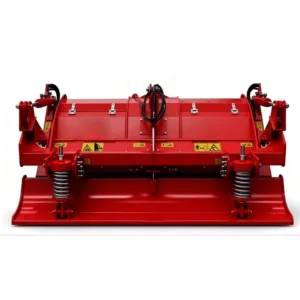
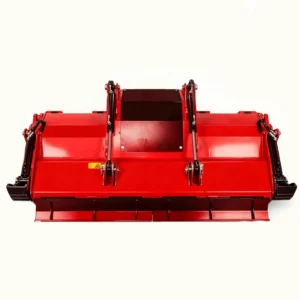
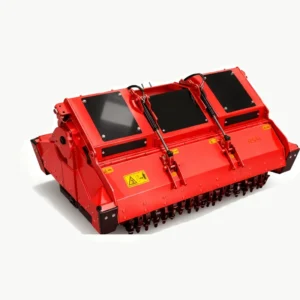
7. Country-by-Country Context: Colombia, Brazil, and Argentina
Colombia: Highland Farms and Coffee Belt Clearing
Colombia’s agricultural landscape is dominated by Andean topography. For Colombian farmers, the pto stone crusher represents the most cost-effective approach to preparing highland plots for productive cultivation. Across the coffee-growing departments of Huila, Nariño, Tolima, and Antioquia, farms are typically small to medium in size and operate on slopes where volcanic soils contain significant gravel and cobble fractions brought up by soil erosion and root activity. The pto stone crusher need here is for compact, lightweight machines that can be safely operated on slopes of up to 15–20° and attached to 70–120 hp tractors — the most common range found on Colombian coffee farms. The PSC 100, PSC 125, and PSC 150 models are well-sized for this environment.
Colombia’s main lowland agricultural zones — the Llanos Orientales and parts of the Valle del Cauca — present different challenges: larger land parcels with heavier stone concentrations requiring machines in the 150–220 hp range. Land-clearing activity for palm oil and cassava cultivation in these areas has increased demand for pto stone crusher options for portable stone crusher machine options that can be moved between plots efficiently. The drawbar kit on THOR models is a practical advantage in these contexts, enabling the crusher to trail autonomously on road transport between fields without being unhooked from the tractor’s PTO.
Brazil: Cerrado Conversion and Red Laterite Management
Brazil’s agricultural expansion — particularly in the states of Mato Grosso, Mato Grosso do Sul, Goiás, and Tocantins — involves converting cerrado vegetation and managing the laterite (ferricrete) concretions that form in the upper soil profile of these tropical savannas. These hardened iron-oxide nodules, locally known as cascalho, range from a few centimeters to over 20 cm in diameter and severely limit planting depth for soybean, maize, cotton, and sugarcane. This is precisely the application profile that makes a pto stone crusher indispensable on Brazil’s agricultural frontier.
For large Brazilian agribusiness operations seeking a pto stone crusher working with 180–280 hp tractors, the STCM/HP series — with working widths from 2064 to 2304 mm — represents the logical fit. These machines deliver the throughput needed at commercial scale, where a single field block may span hundreds of hectares. Brazil’s well-developed agricultural machinery distribution network also means that spare parts for pto stone crusher for tractor configurations are readily obtainable, reducing downtime risk. The southern states of Brazil (Paraná, Santa Catarina, Rio Grande do Sul) have a long history of working with European-style agricultural attachments — exactly the design lineage from which the STCM and THOR models derive.
Argentina: Pampas Stone Clearing and Patagonian Land Development
Argentina’s agricultural heartland — the humid pampas — has largely been cultivated for generations, but persistent pto stone crusher use is still required annually as freeze-thaw cycles bring subsurface material to the surface — a problem the pto stone crusher resolves directly on-site, deep root disturbance, and erosion continue to bring subsurface material to the surface. In the Andean provinces of Mendoza, Neuquén, and Río Negro, vineyard and orchard expansion onto historically uncultivated terrain makes the small pto stone crusher — particularly the PSC Series and STCL-class — highly relevant. A pto stone crusher in this power range integrates easily with the 80–120 hp tractors common in Argentine and Chilean viticulture. These machines fit between vine rows and can work in the confined passes typical of Argentine viticulture operations.
In Patagonia, the combination of basaltic rock substrates, thin sandy topsoil, and the drive to expand irrigated horticulture and alfalfa production creates demand for heavier-duty machines in the RSL and STCM range, particularly units capable of working to 200–280 mm depth in consolidated material. Farmers and ranchers in this region often ask “where can I find a tractor stone crusher for sale near me” — the answer increasingly involves sourcing from international suppliers who maintain regional dealer networks in Chile and Argentina’s agricultural provinces.
8. Legal and Regulatory Considerations: Gearboxes, Machinery, and Agricultural Equipment
Operating agricultural machinery including PTO-driven pto stone crusher units across South America’s main farming nations requires awareness of safety, import, and environmental regulations that govern both the machinery itself and the gearbox components integral to its operation.
Brazil
Brazil’s agricultural machinery safety framework is governed primarily by Regulatory Norm NR-31 (Norma Regulamentadora 31), issued by the Ministry of Labor and Employment (now Secretaria do Trabalho), which establishes safety and health conditions for rural agricultural work. Under NR-31, all PTO-driven equipment must be operated with the PTO shaft properly guarded. The cardan shaft between the tractor and the stone crusher’s gearbox input must have intact plastic or metal guards covering the universal joints and shaft body at all times during operation. Failure to maintain these guards can result in fines and personal liability in the event of an accident.
For gearboxes specifically, Brazilian ABNT standards (Associação Brasileira de Normas Técnicas) apply to the design and testing of mechanical power transmission components. Imported gearboxes destined for use in agricultural machinery must meet the technical requirements of ABNT NBR norms applicable to mechanical transmissions. From a customs standpoint, gearboxes and agricultural machinery enter under specific NCM (Nomenclatura Comum do Mercosul) codes that determine applicable import duties — currently negotiated under the Mercosul common external tariff, which typically places gearboxes for agricultural use at a zero or reduced tariff rate for intra-bloc trade. Extra-bloc importations may attract duties in the 14–18% range depending on the NCM classification.
Argentina
Argentina’s pto stone crusher and agricultural machinery safety is regulated through SENASA (Servicio Nacional de Sanidad y Calidad Agroalimentaria) for biological and phytosanitary matters, and through the Ministry of Agriculture’s framework for machinery certification. Imported agricultural equipment must obtain a Certificate of Conformity (Certificado de Conformidad) from an authorized testing body when the equipment has no existing national approved equivalent. For PTO-driven implements including stone crushers, the INTI (Instituto Nacional de Tecnología Industrial) provides testing and certification services relevant to mechanical safety standards.
Argentina’s gearbox regulation environment follows IRAM (Instituto Argentino de Normalización y Certificación) standards. For PTO-input gearboxes used in agricultural attachments, IRAM standards align broadly with ISO 500 for PTO power transmission and ISO 730 for three-point hitches. From a practical standpoint, operators in Argentina should ensure that the gearbox’s rated input torque is not exceeded — most gearbox failures in field conditions result from running equipment on undersized tractors or engaging the PTO under load (a practice that generates torque spikes 3–5× the steady-state operational value).
Колумбия
Colombia’s regulatory framework for agricultural machinery is administered through the ICA (Instituto Colombiano Agropecuario) and the Ministry of Agriculture and Rural Development. While Colombia does not currently have a dedicated stone crusher-specific certification regime, imported agricultural equipment must comply with INVIMA (food/health, if applicable), and general machinery import requirements under DIAN (Directorate of Customs and National Taxes). When a pto stone crusher is operated on slopes — a common condition in Colombian highland agriculture — it must comply with NTC (Normas Técnicas Colombianas) safety standards that address overturning risk. Operators should ensure that the stone crusher’s working weight and tractor ballasting are appropriate for their terrain gradient.
For gearboxes specifically, Colombia follows ISO standards for agricultural machinery through ICONTEC (Instituto Colombiano de Normas Técnicas y Certificación). Key applicable norms include ISO 500 (PTO shafts) and ISO 11684 (safety signs on agricultural machinery). PTO shaft guards must meet ISO 4254-1 requirements. Operators who source stone crushing equipment from international suppliers — including pto stone crusher for sale through online platforms — are advised to request the CE Declaration of Conformity that European-origin machines carry, which demonstrates compliance with the EU Machinery Directive 2006/42/EC. While this is not a Colombian legal requirement per se, it provides assurance that the safety design standards have been met.
Regional Environmental Regulations
Land clearing with a pto stone crusher intersects with environmental regulations across all three countries. In Brazil, operations on Cerrado or Atlantic Forest-adjacent land may require prior licensing under SISNAMA (Sistema Nacional de Meio Ambiente) and compliance with the Forest Code (Lei No. 12.651/2012), which restricts clearing in areas designated as legal reserves or permanent protection areas. In Argentina, provincial environmental laws (particularly in Buenos Aires, Mendoza, and Patagonian provinces) govern land use change. In Colombia, the Ministry of Environment’s Resolution 531/2013 and related norms govern land clearing activities in sensitive ecosystems. Operators using stone crushers for initial land clearing — as distinct from routine annual stone management on established farmland — should seek environmental clearance through the relevant national agency before commencing operations.
9. What Is Crusher Stone Used For in Agricultural Contexts?
A question that frequently arises among first-time buyers of a pto stone crusher or agricultural stone crushing equipment is: what actually happens to the material after the machine processes it? The answer is more useful than many expect. Crushed stone returned to the field surface is not simply debris — it serves multiple functions depending on its particle size distribution and the specific management objective.
The pto stone crusher deposits material that is more useful than many expect. Where the crushing output is relatively fine (particles under 20–30 mm), the aggregate is quickly incorporated into the topsoil through subsequent tillage passes. In clay-dominated soils common in Colombia’s upland areas, this introduction of mineral grit improves drainage and reduces compaction. Fine limestone fragments, in particular, function as a slow-release liming agent, gradually raising soil pH toward the 6.0–6.5 range optimal for most crops. This dual function of the pto stone crusher — mechanical clearance and soil amendment — is one of the most underappreciated benefits of using a stone crusher for tractor rather than manual stone removal followed by external lime application.
Where crushing output is coarser (30–80 mm range), the material is suitable for road base preparation. On rural farms in Brazil and Argentina, internal farm roads and drainage channels benefit enormously from on-site crushed stone. The alternative — importing gravel from external quarries — involves significant transport costs on roads that are often themselves in poor condition. Using a portable stone crusher machine to generate gravel from in-field material closes this loop: the stone that would have damaged equipment becomes the material that maintains field access roads through wet seasons.
Stone that is crushed to a uniform 10–40 mm size distribution and deposited over a previously rocky pasture surface also improves trafficability for livestock. Sheep and cattle on rocky ground suffer hoof problems at far higher rates than those on cleared, graded pastures. For Argentine ranchers considering the economic case for a pto stone crusher, reduced veterinary costs and improved livestock weight gain on previously rocky grazing land are tangible returns that should enter the purchase justification calculation.
10. Practical Operating Guidelines for South American Conditions
Pre-Season Soil Survey
Before committing to a pto stone crusher machine width and power class, walk the field and map stone density and average diameter. If more than 30% of the field surface shows exposed stones over 200 mm, start with a pto stone crusher in the STCM-class or RockMaster-class machine rather than an entry-level PSC.
PTO Engagement Discipline
Engage the pto stone crusher PTO before entering dense stone concentrations — never under load. This prevents torque spike damage to the gearbox input shaft and the universal joint on the cardan shaft. Most manufacturers specify a 30–60 second spin-up time before advancing.
Soil Moisture Management
In Brazil’s seasonal climate, pto stone crusher operations should account for heavy clay soils that can be either bone-hard during dry season or waterlogged during wet season. Ideally, stone crushing operations occur when soil moisture is at field capacity — after a rain event but with surface water drained. This reduces dust, improves stone fracture, and avoids smearing the tillage layer.
Tooth Wear Monitoring
Tungsten carbide teeth on the pto stone crusher are wear items, not consumables — they should be inspected every 50 operating hours and rotated if possible. On silica-rich soils like those in parts of Argentina’s Mendoza province, wear rates are 30–50% higher than on softer limestone. Budget for replacement teeth as part of the overall operating cost calculation.
Slope Safety (Colombia)
When operating on sloped ground in Colombia’s highland farms, always work across the slope (on contour) rather than up and down. Ensure the tractor is appropriately ballasted — front weights or a front loader add stability. The STCL and PSC-class machines are designed for these conditions, but proper tractor setup is the operator’s responsibility.
Counter-Blade Adjustment
The hydraulic counter-blade clearance setting directly controls the maximum output particle size. For road base preparation, widen the gap slightly. For pasture renovation where you want maximum size reduction, reduce the gap. Field-test a 20-meter pass at each setting before committing to a full field run.
11. Model Selection Guide: Matching Machines to South American Applications
| Application Scenario | Country Fit | Recommended Model | HP Range | Максимальный камень (мм) |
|---|---|---|---|---|
| Coffee farm slope clearing, small plots | Колумбия | PSC 100 / PSC 125 | 70–120 | 150 |
| Vineyard inter-row stone management | Argentina, Colombia | PSC 150 / PSC 175 | 90–150 | 150 |
| Cerrado land preparation (soy/maize) | Brazil | STCM 200 / STCM 225 | 170–220 | 300 |
| Large pasture renovation / pampas | Argentina, Brazil | THOR 2.4 / THOR 3.0 | 180–230 | 200+ |
| Heavy rock slab clearing, basalt terrain | Brazil (Paraná), Argentina | RockMaster (STCH-class) | 280–400 | 500 |
| Llanos land clearing (palm oil / cassava) | Колумбия | STCM 175 / THOR 2.4 | 160–180 | 300 |
12. About Us
We are a dedicated supplier of professional pto stone crusher and agricultural stone crushing equipment, focused on providing high-performance solutions for land clearing, pasture renovation, and soil preparation across global farming markets. Our pto stone crusher product range covers the full spectrum of field stone crusher requirements — from compact, small pto stone crusher units for smallholder operations to heavy-duty, high-torque machines for large-scale commercial land development.
Every machine in our range is selected and verified for real-world field performance. We work directly with agricultural operators, contractors, and land developers to match the right pto stone crusher to application conditions to match equipment to application conditions — not just on paper, but through hands-on field consultation. Our support network covers parts availability, technical guidance, and operating documentation in multiple languages to serve South American, Korean, and global markets effectively.
Часто задаваемые вопросы
Q1. What type of pto stone crusher works best for rocky farmland preparation in Colombia’s Andean highlands?
For Colombia’s highland farms — typically smallholder plots with slopes and 70–120 hp tractors — the PSC Series (PSC 100 to PSC 175) or the STCL-class machine is usually the right starting point. These compact, PTO-driven models handle stone diameters up to 150 mm efficiently on uneven terrain. If your fields have stones consistently above 200 mm in diameter, stepping up to the STCM Series is advisable. Always confirm your tractor’s rear linkage lift capacity before specifying machine weight — a 1600 kg machine attached to an underpowered rear hydraulic system can create instability on slopes.
Q2. How do I find a reliable agricultural stone crusher supplier who can ship to Brazil or Argentina?
The most practical approach is to contact suppliers directly via their product website and ask for shipping details, regional dealer contacts, and spare parts availability. Confirm that the supplier can provide a CE Declaration of Conformity or equivalent documentation for customs clearance. Ask whether they have experience shipping to Mercosul countries and whether the machine is listed under the appropriate NCM code for reduced import duty under agricultural equipment categories. Established suppliers in this category typically respond quickly to quote requests for specific models and can provide the documentation needed for Brazilian SISCOMEX import registration or Argentine AFIP procedures.
Q3. What PTO RPM setting should I use when operating a stone crusher for tractor work on cerrado soils in Brazil?
Most pto stone crusher STCM and RockMaster class machines are optimized for 1000 RPM PTO operation. When operating a pto stone crusher at 1000 RPM on laterite soils, The harder, silica-rich laterite concretions (cascalho) common in Brazil’s Mato Grosso region specifically benefit from the higher rotor tip speed that 1000 RPM delivers — this gives more kinetic energy per impact and more complete stone fragmentation in a single pass. Check your tractor’s PTO specification (some models offer both 540 and 1000 RPM outputs on separate spline sizes) and confirm the cardan shaft is rated for the operating torque at 1000 RPM before field deployment. PSC-class machines can run at 540 RPM for lighter surface stones.
Q4. Which tractor-mounted rock crusher model is best suited for pasture renovation on Argentina’s pampas with mixed limestone and granite stones?
For large-scale pasture renovation on Argentina’s pampas where a pto stone crusher is needed, — where flat terrain and 150–230 hp tractors are common — the THOR 2.4 or THOR 3.0 with the Kit Drawbar option is an excellent fit. The 2.4 m and 3.0 m working widths are well-matched to the wide field scales typical in Buenos Aires province, and the drawbar allows the machine to follow field contours without excessive three-point linkage strain during long passes. The THOR series handles mixed rock types including limestone and granite effectively. For areas with consistently large stones (above 250 mm), the STCM 200 or STCM 225 adds the additional rotor diameter and tooth count that improves performance on harder granitic material.
Q5. What does crusher stone used for on farm roads in Brazil cost to produce versus buying external gravel?
Producing road-base material on-site using a small pto stone crusher typically costs a fraction of importing external gravel. The pto stone crusher’s ability to process in-field material eliminates haulage entirely. a fraction of importing external gravel — especially for farms in inland Brazil where gravel haulage distances can exceed 80–150 km from the nearest quarry. While the machine’s capital cost and maintenance need to be amortized across the operation’s life, farms that operate continuously across wet-season soft conditions particularly benefit from the economics: on-site crushing provides road aggregate exactly when and where it’s needed without waiting for truck deliveries that may not be possible when access roads are flooded. The break-even point is generally reached within 2–4 seasons depending on the scale of road maintenance required.
Q6. How do PTO stone crushers for sale compare to portable stone crusher machines in terms of South American field performance?
PTO-driven pto stone crusher models have a clear advantage over self-propelled portable units in field conditions where the operator already has a farm tractor: lower total cost of ownership, better maneuverability in confined spaces, and no separate engine maintenance burden. Portable crusher machines (jaw crusher or cone crusher type) are better suited for static processing at a fixed location — quarry-style operation. For moving across fields, crushing stones in place, and depositing output immediately, the PTO tractor stone crusher is unambiguously more practical and economical for farm-scale operations in Colombia, Brazil, and Argentina. The decision between the two only becomes nuanced when stone volumes are so large (hundreds of thousands of tonnes) that quarry-scale equipment becomes more efficient per tonne processed.
Q7. What are the most common stone types in Brazil’s cerrado region and which crusher rotor tooth type handles them best?
Brazil’s cerrado soils commonly encountered by the pto stone crusher contain laterite (ferricrete) concretions — rounded iron-oxide hardened nodules in sizes from 20–200 mm — as well as quartz pebbles, and in some areas, limestone cobbles. Laterite has a moderate hardness of around 5–6 on the Mohs scale but a brittle structure that responds well to percussive crushing. Standard STC/3 teeth handle this material effectively. Quartz, which is harder (Mohs 7) and more abrasive, increases tooth wear rates. For fields with significant quartz content, STC/3/HD (heavy-duty) tooth holders with reinforced carbide tips are the preferred choice — they’re more expensive per unit but last significantly longer in high-abrasion conditions, reducing total operating cost across a season.
Редактор: PXY