Agricultural Stone Crushing Guide
How Much Horsepower Does a PTO Stone Crusher Actually Need to Crush Limestone?
A practical, field-tested breakdown of horsepower requirements for limestone crushing — from light orchard work to heavy-duty field reclamation — matched to the right PTO stone crusher models.
If you’ve been searching for a straight answer on tractor horsepower for limestone crushing, you’re not alone. It’s one of the most commonly asked questions among farmers, land clearing contractors, and rural property owners who want to use a дробилка для камня с приводом от ВОМ to deal with surface limestone on their fields. The honest answer is: it depends — but not in a frustratingly vague way. Once you understand the variables at play, the numbers become very clear and practical.
Limestone is one of the harder agricultural stones to crush. Unlike loose fieldstone or soft sedimentary material, limestone presents uniform density, angular fracture points, and significant resistance at surface contact. This means your tractor’s PTO output — and crucially, its consistency under load — matters far more than a simple label on a spec sheet. A 100-hp tractor running at 75% capacity through loose soil handles a very different workload than the same machine grinding into exposed limestone beds.
1. How a PTO Stone Crusher Actually Works: The Action Mechanism
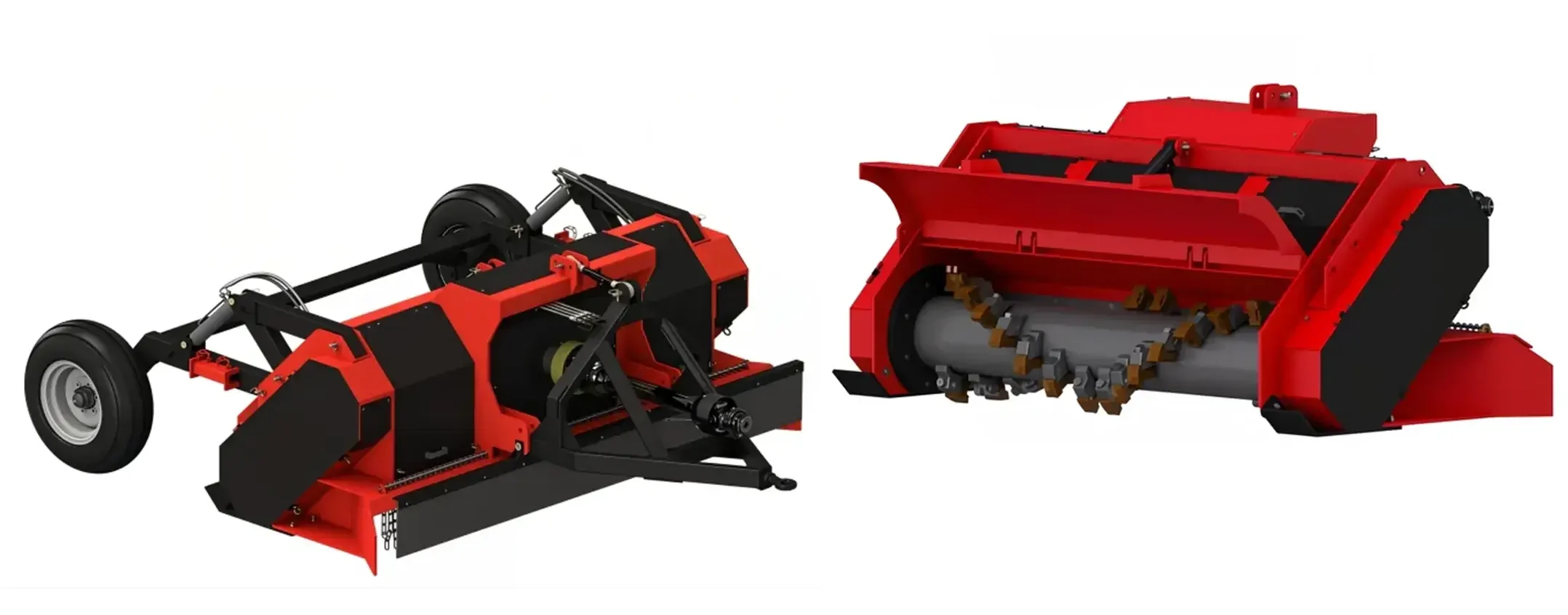
Understanding why horsepower matters starts with understanding what happens inside the machine. A PTO stone crusher is a rotary-drum implement mounted on your tractor’s three-point hitch and driven directly from the tractor’s Power Take-Off (PTO) shaft. When the tractor moves forward, the rotor — studded with hardened steel teeth or carbide picks — spins at high RPM and makes repeated, high-force impacts against stone material.
The crushing action is not a slow, grinding compression the way a jaw crusher works. Instead, it’s a rapid-impact sequence — each tooth strike delivers a shock load against the stone’s surface, fracturing it along natural cleavage lines. This is why PTO speed matters so much: at 1000 RPM, the rotor tooth spacing and impact frequency are tuned for efficient fracture without stalling the PTO shaft. Running below the recommended PTO RPM — common when a tractor is underpowered for the task — results in incomplete fractures, increased tooth wear, and heat buildup in the gearbox.
Limestone, in particular, responds well to high-frequency impact crushing because its crystalline calcium carbonate structure fractures predictably. However, harder limestone seams — particularly compact or dolomitic varieties common in Korean upland farm regions — require significantly more rotational torque to initiate the first fracture event. This is the physical reason why limestone work typically demands more horsepower than the same crusher working on softer fieldstone.
The rotor drum itself also plays a role in how much power is consumed. A larger-diameter rotor has more rotational inertia, which helps maintain RPM through high-resistance impacts — but that larger rotor also demands more horsepower from the tractor to maintain its angular velocity under load. This is why manufacturers specify different horsepower ranges for models with different rotor diameters, not just different working widths.
2. Manufacturing Structure: What’s Inside a Quality PTO Stone Crusher
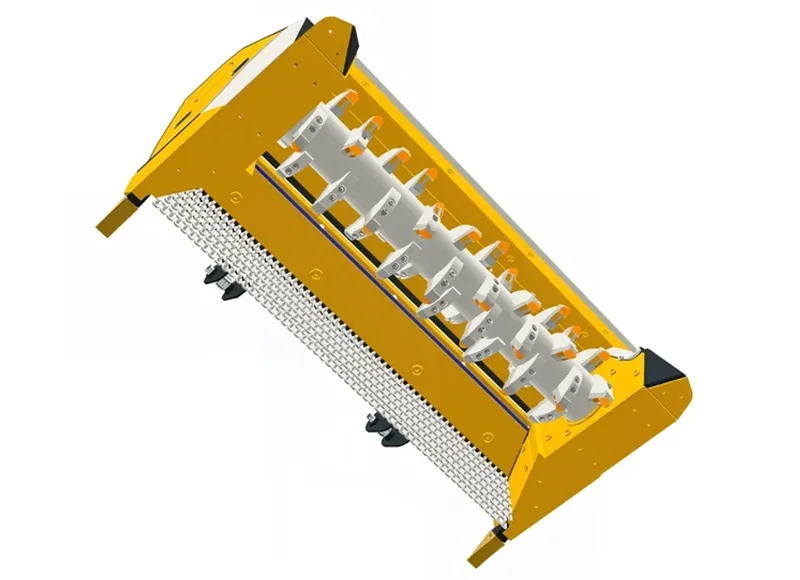
A well-built agricultural stone crusher is engineered around a few critical structural elements. The main housing is typically constructed from high-strength structural steel, often reinforced at the rotor chamber with Hardox-grade wear-resistant plating. Hardox steel is significantly harder than standard carbon steel, which means internal wear surfaces — including the counter blades and rear hood liners — last far longer under the repeated stone impacts that define this work.
The rotor assembly is the heart of the machine. In modern tractor stone crushers, rotors are typically forged or machined from heat-treated steel and balanced to minimize vibration at operating RPM. Tooth holders — the mount points for the interchangeable crushing teeth — are designed for quick replacement in the field, because teeth wear faster than any other component and regular replacement is part of routine stone crushing maintenance.
Between the rotor and the tractor’s PTO shaft sits the gearbox. This is one of the most structurally important and load-critical components in the entire system. The gearbox steps up the PTO rotation speed from 540 or 1000 RPM at the shaft to the rotor’s operating speed, while also transmitting the full torque load of every stone impact back through the drivetrain. A gearbox rated for underpowered or overpowered conditions will fail prematurely — this is why matching horsepower correctly to the machine is as much a durability concern as it is a performance concern. In Korea, agricultural machinery gearboxes are subject to safety inspection standards under the Rural Development Administration (농촌진흥청) equipment guidelines, and machinery imported for use in Korean farmland must comply with KS (Korean Standard) certifications for power transmission components.
The rear containment system — typically an adjustable steel hood or rear door — also affects how the machine handles high-density material like limestone. A hydraulically adjustable rear hood allows the operator to control how long crushed material stays in the rotor chamber before being discharged, which directly affects final particle size. For limestone applications where a specific graded output is desired (for road base, for example), this adjustment is essential.
3. Material System: Why Limestone Demands More from Your Tractor
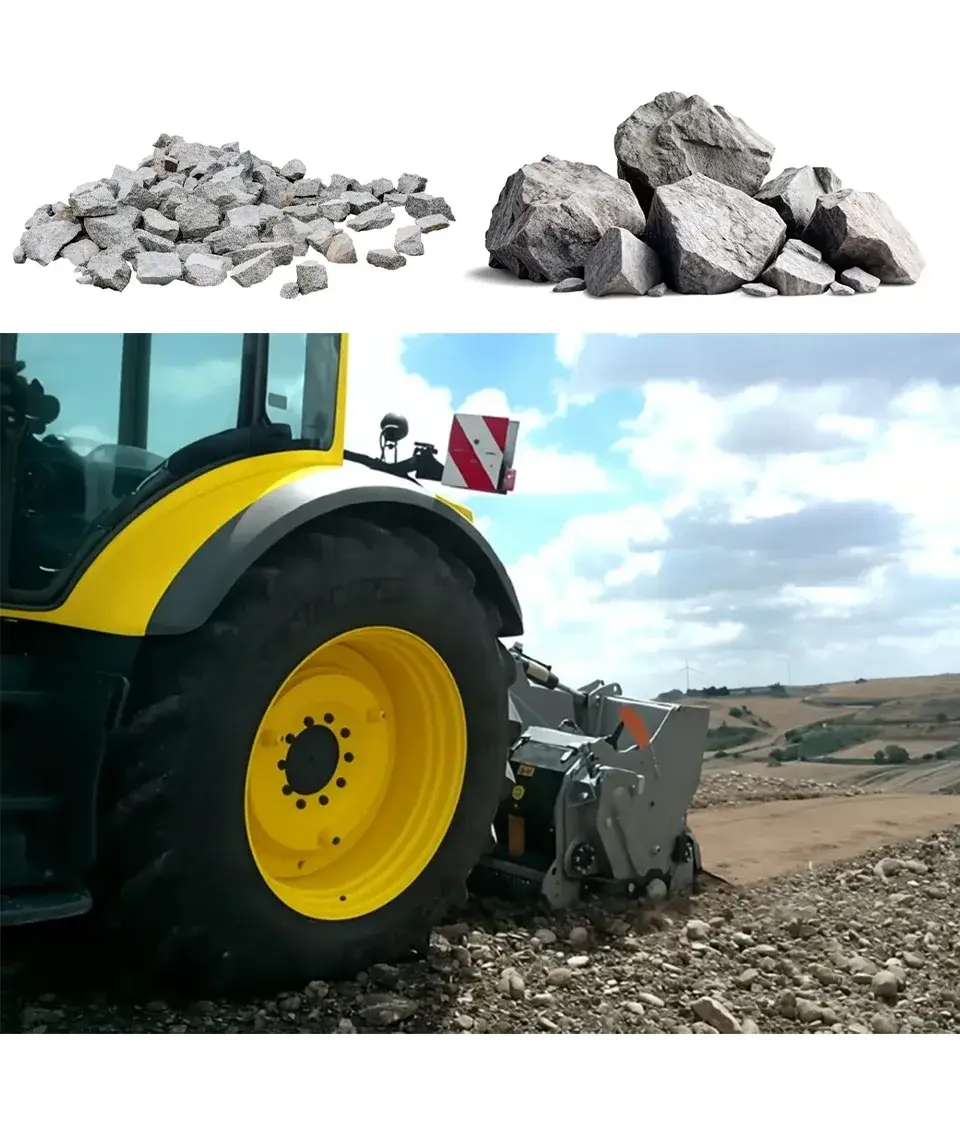
Not all rocks are equal, and understanding where limestone sits on the hardness and toughness scale matters when selecting an agricultural stone crusher. On the Mohs hardness scale, limestone typically falls between 3 and 4 — softer than granite or basalt, but considerably harder than clay-bound fieldstone or soft sandstone. More importantly, limestone’s compressive strength — typically 50–170 MPa depending on density — means that a rotor tooth needs to deliver significant force to initiate fracture.
There are also regional variations in limestone character that Korean farmers working in Gyeonggi, Gangwon, and North Chungcheong provinces — areas known for carbonate rock exposure — need to account for. Dolomitic limestone common in mountain-adjacent farmland is harder and more abrasive than the purer calcite limestone found in lowland fields. This means the actual horsepower demand in field conditions may exceed the manufacturer’s minimum specification when working with dense local limestone varieties.
The depth of material also matters significantly. Surface limestone that has been frost-fractured or already weathered is much easier to crush than dense embedded beds. A PTO stone crusher working at 100mm depth on weathered surface limestone might require 80–100 hp, while the same machine pushed to 200mm on a dense limestone shelf could stall a tractor rated for 150 hp if soil moisture is high and the forward speed is not reduced proportionally.
Tooth selection is the other material-system factor. For harder limestone, carbide-tipped teeth or heavy-duty pick-style teeth (sometimes designated STC/3/HD or equivalent) are preferred because they maintain their cutting geometry longer under repeated hard-stone contact. Using standard mild-steel teeth on hard limestone will accelerate wear significantly, which in turn increases the effective resistance the rotor experiences — effectively increasing the horsepower demand even if the machine spec hasn’t changed. Choosing the right tooth type for limestone is one of the simplest and most cost-effective ways to keep horsepower demand within the tractor’s comfortable operating range.
4. Horsepower Requirements by Model and Application: A Practical Reference Table
The table below maps common PTO stone crusher configurations to their tractor horsepower requirements, covering the range of models available for agricultural limestone work. These figures reflect the minimum recommended PTO horsepower — operators working in dense limestone or at maximum working depth should target the upper end of each range for reliable performance and reduced gearbox stress.
| Model Series | HP Range | PTO RPM | Max Stone Ø | Max Working Depth | Best Limestone Use |
|---|---|---|---|---|---|
| STCL Series (PSC Light) | 70–150 hp | 540–1000 | 150 mm (6 in) | 150 mm (6 in) | Orchards, vineyards, light surface limestone |
| STCM Series (PSC Mid) | 80–280 hp | 1000 | 300 mm (12 in) | 200 mm (8 in) | Agricultural fields, limestone bed reclamation |
| STCH Series (PSC Heavy) | 280–400 hp | 1000 | 500 mm (20 in) | 250 mm (10 in) | Dense limestone beds, land clearing, road base prep |
| RSL Series | 80–190 hp | 540–1000 | 300 mm (12 in) | 150–280 mm | Multi-depth limestone, inter-row work |
| RSM / RSM/HP Series | 200–360 hp | 1000 | 500 mm (20 in) | 400 mm (16 in) | Heavy-duty embedded limestone, construction prep |
| RSH / RSH/HP Series | 360–500 hp | 1000 | 500 mm (20 in) | 500 mm (20 in) | Maximum-depth industrial limestone processing |
For Korean agricultural operators — particularly those working on the rocky hillside plots (다랑이 논) of Gyeongbuk and Gangwon — the STCM series covers the majority of practical limestone applications, pairing well with the mid-range tractors commonly found on Korean farms. The 80–220 hp operating window of the STCM matches the John Deere 6M, LS MT7 Series, and TYM T7 series tractors widely used in the domestic agricultural market.
5. Gearbox Standards, Regulations, and Legal Considerations by Region
The gearbox connecting the PTO shaft to the crusher rotor is a regulated safety and performance component in most countries. Understanding the relevant standards is important both for safe operation and for warranty compliance — using a stone crusher at horsepower levels exceeding the gearbox’s rated capacity voids most manufacturer warranties and can create liability exposure in commercial farm settings.
Agricultural machinery in South Korea falls under the Agricultural Machinery Act (농업기계화 촉진법) and must conform to KS B standards for power transmission components. PTO-driven implements connected to tractors registered under the Korea Ministry of Agriculture, Food and Rural Affairs (MAFRA) must use PTO shafts and gearboxes conforming to ASAE/ISO 500 standards. Imported stone crushers must obtain farm machinery certification through the National Academy of Agricultural Science (NAAS) before commercial use on subsidized farmland.
PTO-driven agricultural equipment sold in the EU must comply with Machinery Directive 2006/42/EC, which includes requirements for PTO shaft guards, torque limiters, and gearbox load ratings. The EN ISO 11684 series covers PTO shaft safety and marking, and CE marking is mandatory for all commercial agricultural stone crushers placed on the EU market. Countries including Germany and France additionally require agricultural insurance policies to specifically list crusher attachments above a set power threshold.
In the US, ASAE Standard S318 and ASAE EP228 govern PTO shaft dimensions and safety requirements. OSHA standard 1928.57 specifically addresses PTO shaft guarding on agricultural equipment. Most state-level regulations defer to federal ASAE standards, though California and certain Midwestern states have additional noise and dust emission requirements for on-farm stone processing equipment.
Australia follows the AS 1473.1 standard for tractor PTO shafts and requires that stone crusher imports comply with Australian Design Rule specifications. Farm machinery certification via the National Farmer’s Federation guidelines is recommended for commercial operators. New Zealand’s Health and Safety at Work Act 2015 (HSWA) requires all PTO-driven implements to have documented risk assessments prior to use in commercial agricultural operations.
Regardless of jurisdiction, the operational principle is consistent: never exceed the PTO horsepower rating printed on the crusher’s specification plate. For limestone work — which is near the top of the demand curve for any given machine size — running at 90–95% of maximum rated power for extended periods is normal and acceptable. Running beyond rated power risks thermal failure of the gearbox oil, tooth holder fatigue fractures, and bearing seizure in the rotor assembly.
6. How to Choose the Right Horsepower for Your Limestone Application
The most reliable method for matching horsepower to your limestone crushing job isn’t simply reading a spec sheet — it’s a combination of knowing your tractor’s actual continuous PTO output, understanding the limestone density and depth on your specific site, and selecting a machine with a working width that keeps forward speed in a productive but sustainable range.
Start with your tractor. Most agricultural tractors quote engine horsepower, but PTO horsepower is typically 15–20% less due to drivetrain losses. A 120-hp engine tractor usually delivers around 95–100 hp at the PTO shaft under continuous load. This distinction matters: crusher manufacturers rate their machines against PTO horsepower, not engine horsepower. If you have a 120-hp tractor, you’re working in the 90–110 hp range at the PTO — which places you comfortably in the STCM 125 or STCL 175 range for limestone work at moderate depth.
For light surface limestone — stones up to 150mm diameter sitting at or just below topsoil level — 70 to 100 PTO horsepower is sufficient for most standard working widths. This is the domain of the small pto stone crusher category, which offers good maneuverability on smaller plots and lower running costs. If your limestone beds run deeper (150–200mm) or the stones are larger (up to 300mm), you’ll want a minimum of 120–160 PTO horsepower to maintain consistent rotor speed through the dense material.
For serious field reclamation work — large quantities of embedded limestone on agricultural land being prepared for row cropping or pasture — the 180–280 PTO horsepower range covered by the STCM/HP and wider STCM models provides the combination of rotor inertia, working width, and tooth count needed for cost-effective single-pass coverage. Operating at this power level typically allows forward speeds of 2–4 km/h in difficult limestone while maintaining the rotor at rated RPM, which is the ideal operating condition for maximizing throughput and minimizing tooth wear.
7. Three-Point Hitch Category and PTO Shaft Specifications: What You Need to Know
Horsepower isn’t the only compatibility factor. The three-point hitch category and PTO shaft type must also match between tractor and crusher. Almost all agricultural stone crushers in the 70–280 hp range use a Category 2 three-point hitch (top link and two lower link arms), which corresponds to tractors in roughly the 45–180 hp engine range — exactly the overlap zone where limestone crushing is most commonly performed on farms.
PTO shaft speed is the other critical specification. Older tractors and some compact utility tractors run at 540 RPM PTO, while most modern agricultural tractors used for stone crushing run at 1000 RPM. Many mid-range stone crushers (including the STCL and some RSL configurations) are available in both 540 and 1000 RPM versions. Running a 1000 RPM-rated crusher on a 540 RPM PTO shaft will result in a 46% reduction in rotor speed, which dramatically reduces crushing performance and may cause the machine to bog down completely in dense limestone.
The PTO shaft itself — the Cardan shaft connecting tractor to implement — must be rated for the horsepower being transmitted. Standard agricultural PTO shafts in the 540 RPM category are typically rated for continuous transmission of up to 100 Nm of torque, while 1000 RPM shafts operate at lower torque values due to the higher speed. For high-demand limestone applications, a heavy-duty PTO shaft with a cam clutch or shear bolt torque limiter is strongly recommended to protect the gearbox from sudden shock loads when the rotor contacts unexpectedly large or deeply embedded stone.
8. Forward Speed, Working Depth, and Power Management in Limestone Conditions
One of the most practical pieces of advice for limestone crushing work is this: forward speed is your most powerful throttle. When a tractor shows signs of laboring — RPM dropping, exhaust darkening, hydraulic response slowing — the immediate correction is to reduce forward speed, not to increase throttle. Reducing speed decreases the rate at which material enters the rotor chamber, giving each tooth more time to process fewer stones, which restores rotor RPM and reduces shock loading on the gearbox.
Typical productive forward speeds for limestone work are 1.5–3 km/h for dense embedded material, and 3–5 km/h for surface limestone on prepared agricultural land. These speeds assume the tractor is running at full throttle with the PTO engaged at the correct RPM. Working faster than 5 km/h in any significant limestone volume will generally result in incomplete fracturing — stones being pushed aside rather than crushed — and rapid tooth wear from glancing contact.
Working depth should be set conservatively for first passes over unknown terrain. Starting at 100mm and observing tractor load before increasing to 150mm or 200mm is a sensible approach that protects both the machine and the tractor from unexpected high-resistance encounters with large embedded stone. Most tractor-mounted rock crushers have depth skids or adjustable frame settings that allow precise depth control — use them, especially on new ground.
9. Explore Our PTO Stone Crusher Series
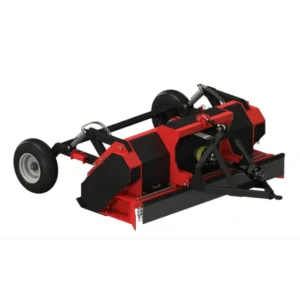
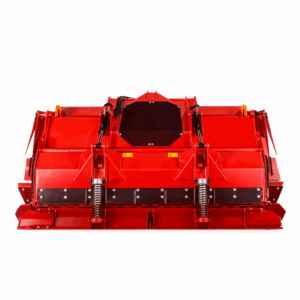
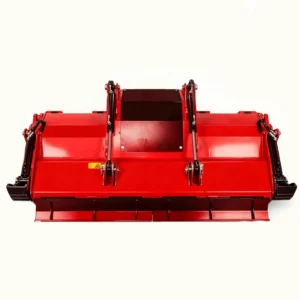
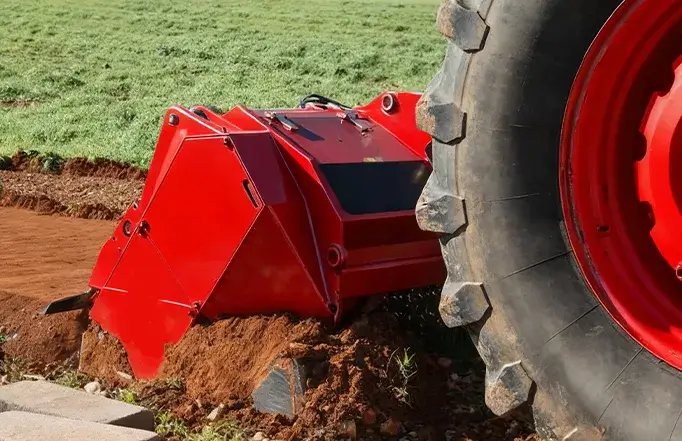
The following models cover the full range of limestone crushing applications, from light orchard clearing to full-scale field reclamation. Each is available with technical support for Korean agricultural operators and compatible with standard Category 2 three-point linkage tractors in the relevant horsepower ranges.
10. Quick HP Decision Guide for Limestone Crushing
Still not sure where you land? Use this quick-reference guide based on the most common scenarios that Korean and international agricultural operators encounter with limestone:
You can successfully crush light surface limestone (stones under 100mm, depth under 100mm) with a compact stone crusher for tractor in the STCL light range. Reduce working width and forward speed to keep the PTO from lugging under load.
This is the most versatile range for agricultural limestone work. You can run a 1,350–1,820 mm working width effectively, handling stones up to 150mm at 150mm depth. This covers the majority of limestone scenarios on Korean upland and highland farms.
You’re well-suited for the STCM mid-range series and the THOR 2.4 configuration (minimum 180 hp). Working width up to 2,400 mm at 200mm working depth is achievable in most limestone conditions, with good single-pass results.
The full STCM/HP range and THOR 3.0 (minimum 230 hp) are appropriate. At 3,000 mm working width, a 230-hp tractor can process large-scale limestone fields efficiently, with maximum stone diameter capacity of 300 mm.
The STCH and RSM/RSH series are designed for this range. At 280–400 hp, you can run the heaviest stone crusher machines with 500mm stone capacity and up to 250–400mm working depth — appropriate for full land reclamation and road-base preparation from limestone ground.
Часто задаваемые вопросы
Q1. What is the minimum horsepower tractor needed to crush limestone with a PTO stone crusher on Korean agricultural land?
Q2. How does limestone hardness affect the horsepower demand of an agricultural stone crusher compared to softer fieldstone?
Q3. Where can I find a tractor stone crusher for sale that is compatible with Korean agricultural certification requirements?
Q4. What working depth should a PTO stone crusher be set to when crushing dense limestone for the first time on a new field?
Q5. Which is better for limestone crushing — a 540 RPM or 1000 RPM PTO stone crusher, and does it change the horsepower requirement?
Редактор: PXY