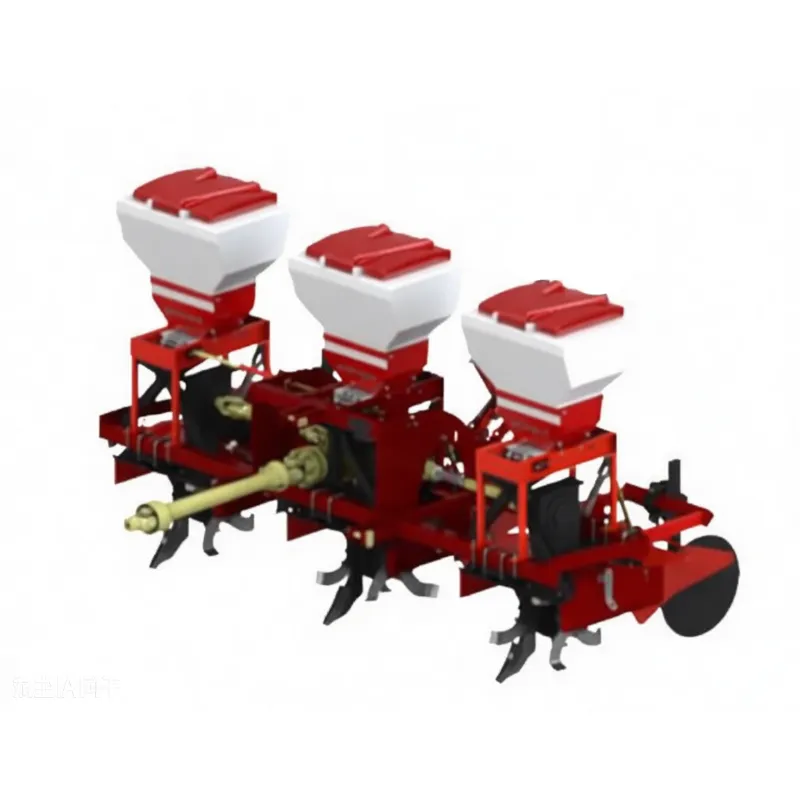
Descrição
EP-3–5 Km/h 3 Rows Rotary Cultivator for Tractor | PTO Rotary Cultivator Tractor
The EP series cultivador rotativo — one of the most complete cultivador rotativo systems available — is a professional-grade, tractor-mounted implement that combines deep soil cultivation with simultaneous row-by-row granular fertiliser application. Covering three model configurations — EP-2100 (2 rows), EP-3100 (3 rows), and EP-5100 (5 rows) — the EP series delivers working speeds of 3 to 5 Km/h at a PTO input speed of 540 RPM, with a fertiliser bunker capacity of 125 Kg per row and a minimum tractor engine power of 75 cv (EP-2100 and EP-3100) or 100 cv (EP-5100). As a 3 point rotary cultivator mounted on a category 2 bottom linkage, the EP series connects to any compatible tractor without adapters and enables commercial-scale vegetable, grain, and forage crop growers in South Korea and globally to prepare seedbeds and apply basal fertiliser in a single pass — reducing field traffic, saving fuel, and cutting the labour cost of separate tillage and top-dressing operations. This rotary cultivator tractor configuration is the standard specification for professional B2B buyers seeking a reliable, high-output cultivador rotativo system.
1. Technical Specifications — EP Series Rotary Cultivator
The table below provides complete technical parameters for all three EP series cultivador rotativo models. Weight values are in kilograms (Kg); engine power in metric horsepower (cv); PTO speed in RPM; working speed in Km/h; bunker capacity in Kg per row. Use these values to select the correct model for your tractor’s power rating and your field’s row count requirement.
| Parameter | EP-2100 | EP-3100 | EP-5100 |
|---|---|---|---|
| Weight | |||
| Empty weight (Kg) | 720 | 1,020 | 1,300 |
| Bottom linkage category | 2 | 2 | 2 |
| Furrower with spring (rows) | 2 | 3 | 5 |
| Tractor Requirements | |||
| Engine power min. (cv) | 75 | 75 | 100 |
| Data | |||
| Bunker capacity fertilizer/row (Kg) | 125 | 125 | 125 |
| Input speed PTO shaft (RPM) | 540 | 540 | 540 |
| Working speed (Km/h) | 3 – 5 | 3 – 5 | 3 – 5 |
All three EP series cultivador rotativo models share the same PTO input speed (540 RPM), working speed range (3–5 Km/h), bunker capacity per row (125 Kg), and category 2 bottom linkage. The EP-5100 requires a minimum tractor engine power of 100 cv due to the greater total implement weight and five-row PTO load.
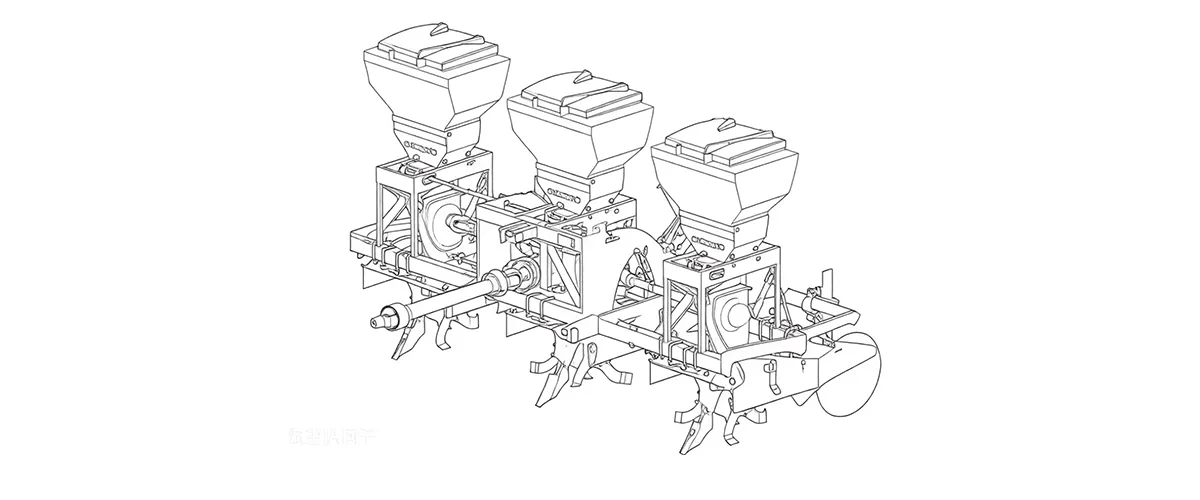
2. About Our 3–5 Km/h 3 Rows Rotary Cultivator for Tractor
The EP series cultivador rotativo directly addresses a fundamental inefficiency in conventional tillage-based cropping systems: the need for two separate field operations — one for soil cultivation and one for basal fertiliser application — that together consume twice the fuel, twice the tractor hours, and twice the soil compaction load compared with a single combined pass. By integrating a spring-loaded furrower assembly and a per-row fertiliser bunker into the cultivador rotativo frame (125 Kg capacity per row) into a single cultivador rotativo machine frame, the EP series allows the operator to open soil, cultivate the tillage zone, and deliver granular fertiliser into the rooting depth simultaneously as the tractor advances through the field at 3 to 5 Km/h.
Three model variants cover different field scale requirements. The EP-2100 carries 2 furrower-with-spring row units and weighs 720 Kg, suited to smaller paddocks or tractor fleets where a lighter implement is preferred. The EP-3100 scales to 3 row units at 1,020 Kg, which is the most commonly specified configuration in South Korea’s commercial vegetable and grain growing regions — providing sufficient row coverage for efficient field work while remaining within the three-point linkage lift ratings of 75 cv tractors widely used in Korean agricultural operations. The EP-5100 extends to 5 row units at 1,300 Kg and requires a minimum tractor engine power of 100 cv to sustain rated PTO speed and maintain stable three-point linkage control during operation. All three variants share the same per-row bunker capacity, PTO speed, working speed, and bottom linkage category — making spare parts, service procedures, and operator familiarity transferable across the model range when multiple units are operated within the same farming enterprise.
O cultivador rotativo operates as a complete soil-and-crop-nutrition management system, not merely as a tillage tool. Its spring-loaded furrower units engage the soil to a defined depth, creating a furrow in which fertiliser is deposited at the correct agronomic position relative to the seed row, while the rotary cultivation action simultaneously breaks up the surrounding soil profile to create the fine-tilth seedbed needed for even germination. For B2B buyers in South Korea — where precision fertiliser placement is a key factor in achieving the consistent crop yields required for fresh vegetable export markets in Japan, China, and Southeast Asia — the EP series’ combined cultivation and fertilisation capability is the defining operational advantage over conventional single-function large rotary cultivator alternatives.
3. Five Key Product Advantages
Single-Pass Cultivation and Fertilisation
The EP series cultivador rotativo performs deep soil cultivation and precise per-row granular fertiliser placement in a single tractor pass. This eliminates the need for a separate fertiliser spreader pass before or after cultivation, halving field traffic, fuel consumption, and tractor operating hours per hectare prepared. For South Korean commercial growers managing tight seasonal windows during spring planting campaigns, the time saving from single-pass operation translates directly into greater area coverage per day and reduced weather-related risk from having a multi-pass field preparation programme open over more days than necessary.
125 Kg Per-Row Fertiliser Bunker Capacity
Each row unit in the EP cultivador rotativo carries its own 125 Kg fertiliser bunker, providing substantial on-board fertiliser storage that reduces refill frequency during long field runs. For the EP-3100 (3 rows), the total on-board fertiliser capacity is 375 Kg — sufficient to treat a significant area at typical basal fertiliser application rates before a bunker refill is required. This per-row bunker architecture also ensures that fertiliser distribution between rows remains balanced regardless of field slope or machine attitude changes, since each bunker is independently filled and metered rather than feeding from a single central hopper through branching distribution tubes.
Spring-Loaded Furrower System for Soil Adaptation
The furrower-with-spring system on each row unit is a critical design feature of the EP cultivador rotativo. The spring loading allows each furrower to deflect independently over subsurface stones, root masses, or variations in soil hardness without transmitting shock loads back to the machine frame or risking tine breakage. This compliance means the tiller rotary cultivator can operate in the rocky highland soils common across South Korea’s Gangwon, Gyeonggi, and Chungcheong provinces without requiring the level of pre-clearance stone removal that a rigid-furrower system would demand, broadening the range of field conditions in which the EP series can be profitably deployed.
Category 2 Linkage — Universal Tractor Compatibility
The EP cultivador rotativo mounts on a category 2 bottom linkage — the universal standard for tractors in the 75–150 cv class that represents the core of South Korea’s commercial tractor fleet. Category 2 compatibility means no hitch adapters, custom mounting brackets, or hydraulic interface modifications are required for any tractor in the 75 cv and above power class. This out-of-the-box compatibility simplifies the buying decision for Korean agricultural dealers and farm cooperatives specifying the EP rotary soil cultivator for new tractor pairings, and eliminates the implementation risk associated with non-standard linkage conversions.
Scalable Row Configuration — 2, 3, or 5 Rows
Three model configurations — EP-2100, EP-3100, and EP-5100 — cover row requirements from 2 to 5 rows in a single product family, allowing agricultural buyers to match the cultivador rotativo row count to their specific crop row spacing and tractor power availability without compromising on any other feature. All three models share the same furrower spring system, bunker capacity per row, PTO speed, and bottom linkage category. This model family approach simplifies training, spare-part stocking, and after-sales service for Korean agricultural equipment dealers who support multiple customers with different field sizes and tractor power ratings across a regional dealer territory.
4. How the EP Rotary Cultivator Works
The EP series cultivador rotativo — like any professional-grade cultivador rotativo — receives power from the tractor’s PTO shaft at 540 RPM and distributes this through an internal gearbox to the rotary tine rotor shaft, which drives the cultivation tines through the soil at high rotational speed. As the tractor advances at 3 to 5 Km/h, the rotating tines cut downward and rearward into the soil, fragmenting clods, mixing crop residues into the tilled layer, and creating the fine, level seedbed tilth needed for uniform germination. The combination of forward travel speed and tine rotor speed determines the bite-per-tine — lower travel speed produces finer tilth at the cost of field output rate, while higher speed increases area coverage with a slightly coarser finished tilth. Within the 3–5 Km/h operating range, the EP rotary cultivator tractor operator can tune this balance in real time to match the current soil conditions.
Simultaneously with the cultivation action, each row unit’s spring-loaded furrower penetrates the tilled soil layer to the desired fertiliser placement depth, cutting a narrow slot ahead of and below the path of the crop seed row. Granular fertiliser from the 125 Kg per-row bunker is gravity-fed or mechanically metered through a distribution tube into this slot, placing fertiliser at the agronomically optimal depth and lateral position relative to the seed row — close enough for root uptake but below the seed-soil contact zone to avoid fertiliser burn at germination. The furrower spring mechanism allows each row unit’s furrower to ride up over subsurface obstacles independently, maintaining consistent fertiliser placement depth on the adjacent clear-path rows even when one row unit deflects over a buried stone or root mass.
After the furrower passes, the closing wheel or soil-pressing element behind each row unit re-closes the fertiliser slot with firm soil contact, preventing fertiliser from drying out, washing away, or volatilising before root uptake begins. The complete sequence — tine cultivation, furrower depth cutting, fertiliser deposition, and slot closure — happens simultaneously across all row units in a single forward pass of the tractor. The operator monitors bunker fill levels through the bunker bodies (which are typically translucent or marked with fill-level indicators) and adjusts the metering rate through a calibration mechanism on each row unit without stopping the machine. This operational simplicity is one of the primary reasons the EP series rotary hoe cultivator configuration is preferred by Korean agricultural contractors managing multiple fields in compressed time windows during peak cultivation seasons.
5. Material & Construction
The structural framework of the EP series cultivador rotativo is fabricated from heavy-section structural steel, welded and reinforced at the critical load-transfer points where the three-point linkage attachment arms connect to the main frame and where each row unit assembly brackets onto the toolbar. These connection zones carry the highest combined bending, torsional, and tensile loads during field operation — particularly when the implement is lifted by the tractor three-point linkage on headlands, when furrower springs deflect over subsurface obstacles, and when the machine is transported on public roads between fields. A high-build paint system — typically a red powder coat over a zinc phosphate primer — protects the frame against the seasonal weather conditions encountered in South Korea’s continental climate, where humid summers and cold, sometimes wet winters create aggressive corrosion conditions for untreated agricultural machinery steel.
The rotary tine rotor shaft and tines are the primary wear components of the cultivador rotativo and are manufactured from hardened alloy steel to resist abrasive wear in the sandy, gravelly, and occasionally stony highland soils where this type of machine operates most extensively in Korea. Tines are available in L-shaped and C-shaped profiles to suit different soil conditions and residue incorporation requirements, and are bolted to the rotor disc flanges in a helical pattern that ensures progressive, smooth soil engagement across the full working width. Individual tine replacement in the field requires only standard hand tools — an important practical feature for machines that may be operating at remote field locations in rural Korean farming districts where workshop access between cultivation sessions is not practical.
The fertiliser bunker bodies are moulded from UV-stabilised high-density polyethylene (HDPE) — the material standard for agricultural chemical storage throughout the industry because of its resistance to granular fertiliser salts (ammonium nitrate, urea, NPK compounds), its light weight, and its ease of cleaning between fertiliser type changes. The metering and distribution components within each row unit are typically stainless steel or polyamide (nylon) to resist corrosion from fertiliser moisture absorption and to maintain consistent metering accuracy over multiple seasons without dimensional drift. The gearbox housing — the mechanical core of the cultivador rotativo‘s power transmission system — is cast from ductile iron for impact resistance and sealed with high-quality oil seals rated for the operating temperature range experienced in Korean agricultural conditions from early spring (near-freezing soil temperatures) through summer cultivation campaigns.
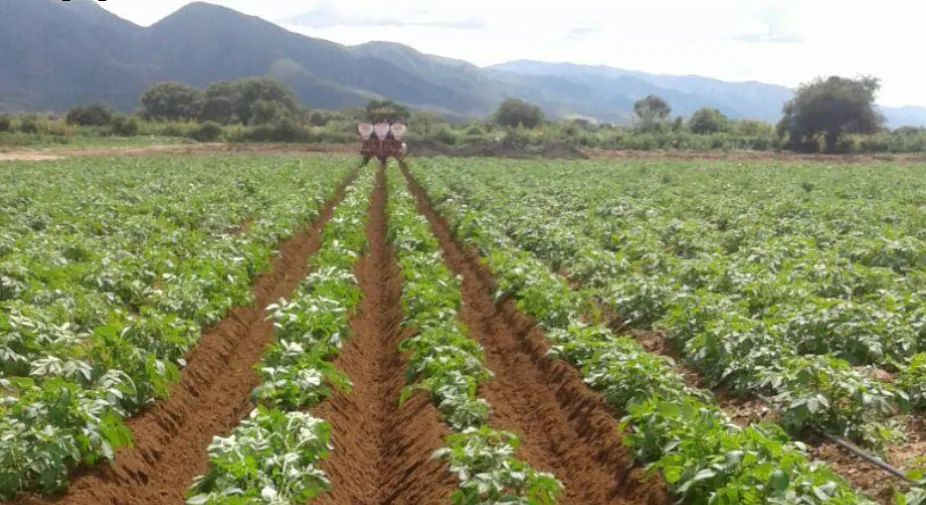
6. Customer Success Case Study:
Client 1 Profile:
Company: Seosan Farming Collective, South Korea
Avaliações de clientes:
“We’ve been using the Watanabe ERA-3100 for over a season now, and it’s made a huge difference in how we manage our fields. The ability to fertilize and till in one go has saved us so much time, especially during the busy planting season. The robust build, especially the high-resistance blades, is perfect for our clay-heavy soils in Seosan. We’re able to complete our work faster and with less soil compaction, which is crucial for maintaining the health of our crops.”
Client 2 Profile:
Company: Daegu Agricultural Services, South Korea
Avaliações de clientes:
“As a contractor, we’ve used various tillers, but the Watanabe ERA-5100 stands out for its ability to handle large-scale operations. With its 5-row design, we can cover more ground quickly without sacrificing precision. The heavy-duty construction and high-capacity fertilizer bunkers are built to last. It’s the perfect solution for farms looking to improve efficiency without compromising on quality.”
Client 3 Profile:
Company: North American Farm Equipment, USA
Avaliações de clientes:
“We distribute the Watanabe ERA-3100 in North America, and our customers absolutely love it. The build quality is top-notch, and it’s easy to integrate with most of the tractors on the market. We’ve received great feedback from farms in the Midwest, especially for root crops like potatoes, where soil aeration is crucial. The independent row units also give our clients the flexibility to work in various soil conditions.”
Client 4 Profile:
Company: South-East Asia Land Development, Vietnam
Avaliações de clientes:
“The Watanabe ERA-3100 has been a perfect fit for our operations in Vietnam. The machine is versatile, handling both tillage and fertilizer application in a single pass. Our clients in rice and vegetable farming are already seeing faster turnaround times and better crop yields. We also appreciate the machine’s durability, especially in our region’s heavy clay and humid conditions.”
Client 5 Profile:
Company: New Zealand Precision Farming, New Zealand
Avaliações de clientes:
“We recently tested the ERA-3100 with our sheep and crop farms, and it’s been a solid addition to our fleet. The working speed of 3-5 km/h is ideal for maintaining soil structure, which is vital for our pasturelands. The independent row units allow for precise tilling and fertilizer application, which is crucial when you’re working with high-value crops like carrots and radishes.”
7. Application Scenarios
The EP series cultivador rotativo is designed for professional agricultural operations where integrated soil preparation and fertiliser application is the productivity standard. The following represent the key application areas for this rotary tiller cultivator system.
Highland Vegetable Production — South Korea
South Korea’s highland vegetable growing regions — including the Taebaek and Sobaek mountain ranges in Gangwon and North Gyeongsang provinces — produce cabbage, radish, pepper, garlic, and onion crops under tight seasonal schedules driven by altitude-specific temperature windows. The EP cultivador rotativo EP-3100 is widely specified for these highland operations because it combines the seedbed preparation and basal fertiliser placement steps into a single, time-efficient operation that maximises the productive use of the short, weather-dependent planting windows available at elevation. The spring-loaded furrower system on this cultivador rotativo handles the rocky subsoil commonly found in these upland growing areas without tine breakage or frame damage.
Paddy Field Upland Conversion
A significant area of Korean paddy rice land is being converted to upland vegetable and forage crop production as water availability constraints and changing market conditions reduce paddy cultivation economics. Converting paddy soil to upland cropping requires primary tillage to break the impermeable hardpan layer and establish the free-draining seedbed profile upland crops need, followed immediately by basal fertiliser application before planting. The EP rotary soil cultivator performs both operations in a single pass, giving converted paddies the best agronomic start and minimising the number of field operations — and hence the soil compaction risk — in the conversion year when soil structure is most vulnerable to trafficking damage.
Commercial Grain & Maize Production
Commercial grain and maize producers in South Korea’s lowland grain-growing regions of South Chungcheong, South Jeolla, and the Gyeonggi Plain use the EP best rotary cultivator option EP-5100 for its five-row coverage that maximises field output during the compressed spring sowing window. At 3 to 5 Km/h working speed, the EP-5100 covers significantly more hectares per day than a two- or three-row configuration, which is particularly important on large flat-field operations where the bottleneck is typically cultivation speed rather than field access or turning time. The 125 Kg per-row bunker capacity provides adequate on-board fertiliser storage for productive run lengths at typical maize NPK basal application rates.
Contract Cultivation Services
Agricultural contractors in South Korea offering cultivador rotativo cultivation and fertilisation services to multiple farm clients use the EP series cultivador rotativo to maximise revenue per machine per season by offering a combined service — cultivation plus basal fertiliser application — in a single machine visit. This billing model is more attractive to farm clients than separate visits for each operation and commands a higher service fee than cultivation alone, improving contractor economics. The EP series’ robust construction, simple operator controls, and standardised spare parts across the model range make it well suited to the high-utilisation, multi-client service model used by Korean agricultural contracting businesses operating across multiple farms during peak cultivation periods.
Orchard Floor Renovation
Orchard and vineyard floor cultivador rotativo renovation work in South Korea’s apple (North Gyeongsang), pear (Naju, Chungnam), and grape (Gyeongbuk, Gyeonggi) growing regions involves periodic inter-row cultivation to manage weed competition, aerate compacted surface layers, and apply potassium and phosphate fertilisers that require soil incorporation for effective uptake. The EP-2100 cultivador rotativo — the lightest cultivador rotativo in the EP series — with its 720 Kg operating weight and 2-row configuration, is the preferred choice for narrow inter-row cultivation in mature orchards where tree root zone proximity and overhead clearance constraints limit the implement’s working envelope. Its category 2 linkage compatibility suits the compact orchard tractors common in Korean specialist fruit production.
Cover Crop Incorporation & Green Manure
Incorporating cover crops and green manures before main crop establishment involves cutting and mixing the biomass into the soil profile while simultaneously establishing the seedbed for the following crop. The EP series cultivador rotativo‘s tine action effectively chops and mixes green biomass through the tilled layer in a single pass, while the fertiliser system allows supplementary mineral fertiliser to be applied concurrently if the green manure’s nutrient contribution is insufficient to meet the main crop’s basal requirement. This combined operation — residue incorporation plus supplementary fertiliser placement — consolidates three separate operations (cutting, incorporation, and fertilising) into one tractor pass, representing a significant productivity advance for Korean growers adopting conservation-oriented rotations that use cover crops to build soil organic matter between vegetable crops.
8. Applicable Standards & Regulatory Considerations
Buyers of the EP series cultivador rotativo for professional agricultural use should be aware of the standards and regulations governing PTO-driven agricultural implements and fertiliser application equipment in their market.
South Korea — Agricultural Machinery Safety Act (농업기계화 촉진법) & KMST — Agricultural machinery operated commercially in South Korea must comply with the Agricultural Mechanisation Promotion Act. PTO-driven implements including cultivador rotativo systems are subject to safety evaluation requirements administered through the Korean Agricultural Machinery Safety Test (KMST) process. PTO shaft guards must comply with Korean agricultural machinery safety standards, which align with ISO 4254-7 for rotary cultivators. For commercially operated rotary cultivator tractor systems, buyers should confirm that the supplied machine carries relevant safety documentation and that the PTO shaft guard specification meets current Korean safety standards before commencing commercial operations.
EU Machinery Regulation 2023/1230 (and predecessor Directive 2006/42/EC) — Tractor-mounted cultivador rotativo systems sold into EU markets must carry CE marking confirming conformance with the Machinery Regulation’s essential health and safety requirements. For PTO-driven rotary cultivators, specific requirements govern rotor zone guarding, PTO shaft guard dimensions (aligned with ISO 4254-7), and maximum PTO stub-shaft exposure length. The fertiliser application components of combined cultivation-and-fertilise machines must additionally comply with EU fertiliser material regulations if they are intended for use with EU-regulated fertiliser types.
ISO 4254-7 — Agricultural Machinery Safety: Rotary Cultivators — This international standard covers the safety requirements for rotary cultivators and rotary tillers, addressing rear-zone guarding, tine containment in breakage events, PTO driveshaft protection, and operator safety distances. Rotary cultivator machines built to ISO 4254-7 meet the baseline safety requirements recognised in most global export markets, including South Korea’s KMST-aligned safety assessment framework.
USA — ASABE S318 & OSHA 29 CFR 1928.57 — Agricultural machinery PTO driveshaft dimensions in U.S. markets are governed by ASABE S318, and PTO machinery guarding requirements fall under OSHA 29 CFR 1928.57. Buyers sourcing a new rotary cultivator for U.S. market commercial use should confirm that the PTO shaft connector meets ASABE S318 specification and that the rotor guarding complies with OSHA 1928.57 containment requirements.
Australia — AS 2091 & State Agricultural Machinery Regulations — Australian commercial operators of PTO-driven cultivador rotativo equipment must comply with AS 2091 (safety of agricultural machinery) and relevant state machinery regulations. The gearbox oil specification for the cultivador rotativo must additionally meet the Australian environmental requirements for lubricant containment and disposal, which are more stringently enforced under current state EPA frameworks than in previous regulatory periods.
9. Compatible Components & Related Products
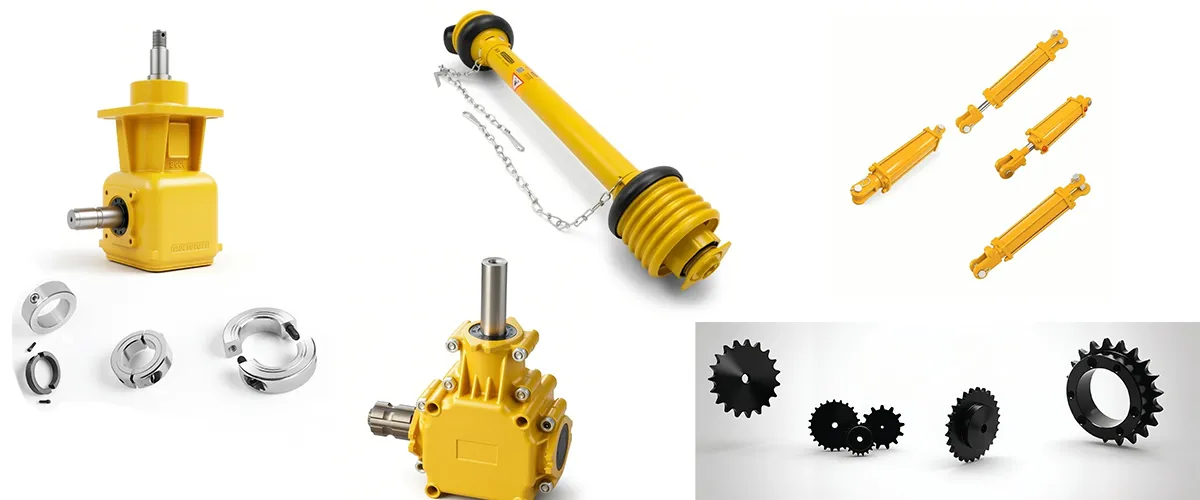
The EP series cultivador rotativo is the primary implement, but a complete, reliable system also requires matched PTO shafts, gearboxes, and ancillary drive components. We supply a full range of compatible power transmission products to support the complete drivetrain from tractor PTO output to cultivador rotativo rotor shaft.
PTO Shafts & Gearbox Components
A correctly rated PTO shaft is essential for safe and reliable cultivador rotativo operation. The shaft must be rated for the full torque output of the tractor at its maximum PTO horsepower and must include either an overrunning clutch or a shear-bolt torque limiter to protect the cultivador rotativo gearbox against rotor blockage — a critical safety feature for machines that frequently operate in stony or residue-heavy soils. We supply gearbox units and internal gear sets compatible with the EP series cultivador rotativo powertrain across all three model configurations. Our gear product range covers the torque and speed specifications required for 540 RPM PTO-driven rotary cultivator applications from 75 cv through 100 cv tractor pairings.
Sprockets & Drive Chain Components
The internal side-drive chain or sprocket transmission within the EP series cultivador rotativo frame distributes power from the central gearbox to the outer row drive units. Sprocket wear in this secondary drive system can result in chain slip or jumping that disrupts consistent row drive speeds and, in the worst case, causes uneven fertiliser distribution across rows. We supply replacement sprocket sets and drive chain components for the EP series cultivador rotativo, manufactured to the same pitch and tooth-profile specifications as the original equipment components. Maintaining a stock of common drive chain and sprocket wear parts at the operating site reduces unplanned downtime risk during peak cultivation seasons when parts availability from local suppliers may be constrained.
10. About Us
We are a specialist manufacturer and global B2B supplier of professional agricultural implements, including the EP series cultivador rotativo range, and associated power transmission components. Our product development is focused on the commercial and professional farming market — equipment designed for agricultural contractors, farm cooperatives, and large-scale growers who require reliable, high-output implements capable of sustained multi-shift operation across demanding field conditions. The EP cultivador rotativo series — the most capable cultivador rotativo in our product range — represents the synthesis of rotary soil cultivation capability and precision granular fertiliser application in a single machine — a combination that reflects our understanding of how integrated field operations create competitive advantages for professional farming businesses.
Perguntas frequentes
Q1. What is a rotary cultivator used for in professional tractor-based farming, and how does the EP series add fertiliser placement to the standard cultivation function?
A cultivador rotativo is a PTO-driven tractor implement that uses high-speed rotating tines to fragment soil, incorporate crop residues, and create the fine-tilth seedbed required for even crop germination. What is a rotary cultivator used for beyond simple tillage? In the EP series, the answer is simultaneous fertiliser application: while the tines cultivate the soil, spring-loaded furrower units on each row open a slot at the appropriate planting depth, and granular fertiliser from the 125 Kg per-row bunker is delivered into this slot by the metering system. The slot is then re-closed by a following press element, burying the fertiliser at the optimal basal placement depth for root uptake after germination. This combined operation replaces two separate field passes and is the primary reason the EP cultivador rotativo is specified by professional Korean growers and contractors seeking maximum operational efficiency.
Q2. What is the difference between a tiller and a rotary cultivator, and which is better for a commercial vegetable farming operation in South Korea?
In common agricultural usage, “tiller” and “cultivador rotativo” are often used interchangeably, but in the professional context there is a meaningful distinction. A garden-scale rotavator tiller or manual rotary cultivator is a lightweight, walk-behind or small-tractor-mounted implement designed for small garden plots and light soils. A rotary cultivator tractor like the EP series — weighing 720 Kg to 1,300 Kg, requiring a minimum of 75 cv tractor power, and including an integrated fertiliser application system — is firmly in the commercial-grade category designed for large-scale field operations. For commercial vegetable farming in South Korea, the EP new rotary cultivator series is the appropriate choice: its scale, power requirement, and integrated fertiliser bunker are matched to the field sizes, tractor availability, and productivity targets of commercial Korean vegetable producers, where a garden-scale tiller rotary cultivator would be completely unfit for purpose.
Q3. How does a rotary cultivator work, and what determines the tilth quality it produces in clay or loam soils common in Korean agricultural regions?
A cultivador rotativo works by driving a horizontal rotor shaft at high speed (powered from the 540 RPM tractor PTO) so that the tines mounted on the rotor cut into the soil in a downward and rearward arc as the tractor advances. The tilth quality produced depends primarily on three variables: rotor tip speed (set by PTO speed and tine rotor diameter), forward travel speed (which controls how much soil each tine bite takes), and soil moisture at the time of operation. In clay and clay-loam soils common in South Korea’s river basin farming regions, operating the rotary soil cultivator when soil moisture is close to field capacity — not too wet, not too dry — produces the best clod breakdown. The EP series’ 3–5 Km/h working speed range allows operators to fine-tune forward speed for current soil conditions, with slower speed producing finer tilth and faster speed producing greater area coverage with slightly coarser output.
Q4. Which EP rotary cultivator model should I specify for a commercial vegetable operation in South Korea’s highland Gangwon province with predominantly rocky highland soil?
For commercial vegetable production in Gangwon province’s rocky highland soils, the EP-3100 cultivador rotativo (3 rows, 1,020 Kg, 75 cv minimum tractor power) is typically the best balance of row coverage, machine weight, and soil adaptability. The spring-loaded furrower system handles the variable stone and rock burden of highland Korean soils without tine breakage or frame stress cracking that would affect rigid-furrower designs. The 3-row configuration suits the typical row spacing used for highland Chinese cabbage and radish — Korea’s main Gangwon highland crops — while the 1,020 Kg implement weight is within the three-point linkage lift rating of most 75–100 cv tractors used in this region. The EP-5100 provides higher field output but at 1,300 Kg requires a 100 cv tractor and is better suited to the flatter lowland fields of the Gyeonggi and Chungcheong plains where row density and area output are the primary considerations.
Q5. What maintenance does a rotary cultivator require, and how often should the tines and furrower tips be replaced during a typical Korean farming season?
Routine maintenance for the EP series cultivador rotativo — as with any cultivador rotativo of this type — includes daily checks of tine bolt torque (tines should not be loose), furrower tip wear inspection, gearbox oil level check, PTO shaft guard integrity inspection, and visual check of fertiliser metering components for blockage. Tine replacement frequency depends heavily on soil abrasiveness — in the sandy or gravelly highland Korean soils of Gangwon province, tine life per set may be as low as 30–50 hectares; in heavier clay loam soils of the lowland plains, 80–150 hectares per set is more typical. Furrower tips wear faster in stony soils and should be inspected and replaced as soon as the tip profile shows visible wear, as a worn tip creates a wider, shallower furrow that leads to inaccurate fertiliser depth placement and inconsistent crop nutrition. Gearbox oil change intervals for the powered cultivators rotary cultivator system are typically every 500 operating hours or annually, whichever comes first.
Q6. What types of fertiliser can be used in the EP rotary cultivator’s per-row bunkers, and are there any fertiliser types that should be avoided?
The EP series cultivador rotativo bunker system is designed for free-flowing granular mineral fertilisers — standard NPK granules, urea prills, ammonium sulphate, diammonium phosphate (DAP), and potassium chloride are all suitable. The key requirement is that the fertiliser particles are free-flowing (not caked or agglomerated from moisture absorption), appropriately sized for the metering aperture (typically 2–6 mm granule size), and not hygroscopic to the point of clumping inside the bunker between filling and field application. Fertiliser types to avoid include wet or pre-dissolved liquid fertilisers (the system is designed for granulars only), very fine dusts or powders (which can block the metering mechanism), and fertilisers that have absorbed moisture and formed hard lumps. Clean, dry granular fertiliser from sealed bags used promptly after opening will give the most consistent metering performance.
Q7. How does the rotary cultivator vs tiller debate apply when choosing equipment for large-scale commercial operations in South Korea’s key agricultural provinces?
Rotary cultivator vs tiller is a comparison that only makes practical sense when both types are being considered at the same working scale. For small garden plots, a manual rotary cultivator or garden rotary cultivator is appropriate. For commercial-scale operations in South Korea’s major agricultural provinces — Gyeonggi, Chungnam, Chungbuk, Jeonnam, Jeonbuk, Gyeongbuk — the correct comparison is not between a garden-scale tiller and a commercial rotary cultivator tractor, but between the EP cultivador rotativo with integrated fertiliser system and alternative cultivation implements (disc harrow, chisel plough, conventional rotary tiller without fertiliser) that require a separate fertiliser application pass. The integrated approach of the EP series — cultivation plus fertiliser placement in one pass at 3–5 Km/h — represents a productivity standard that a single-function implement cannot match for large-scale commercial operations.