Opis
EP-5-8 Km/h Potato Furrower — EP-380 (3 Rows) & EP-580 (5 Rows)
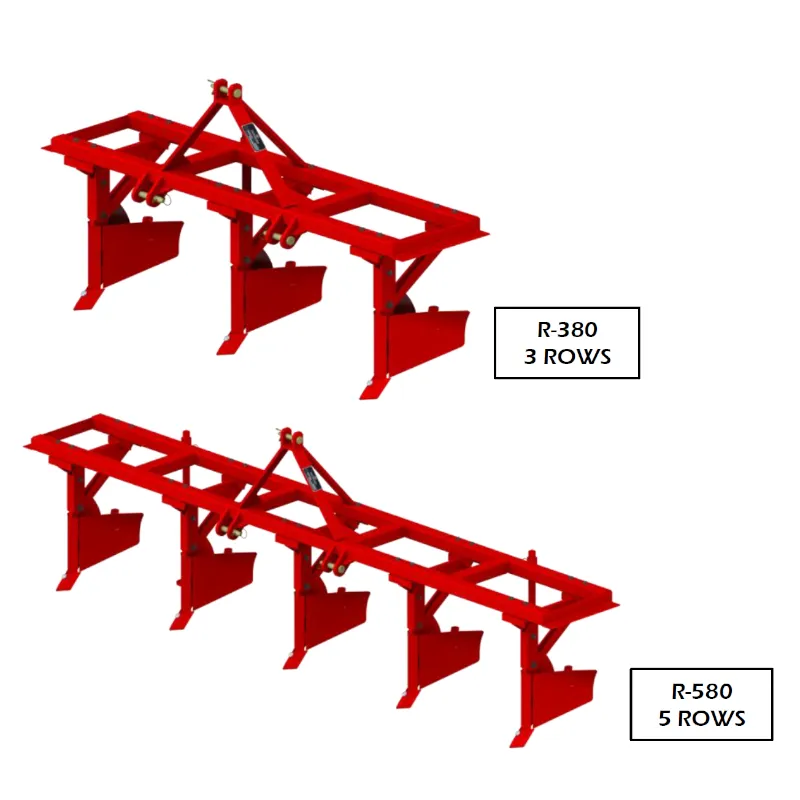
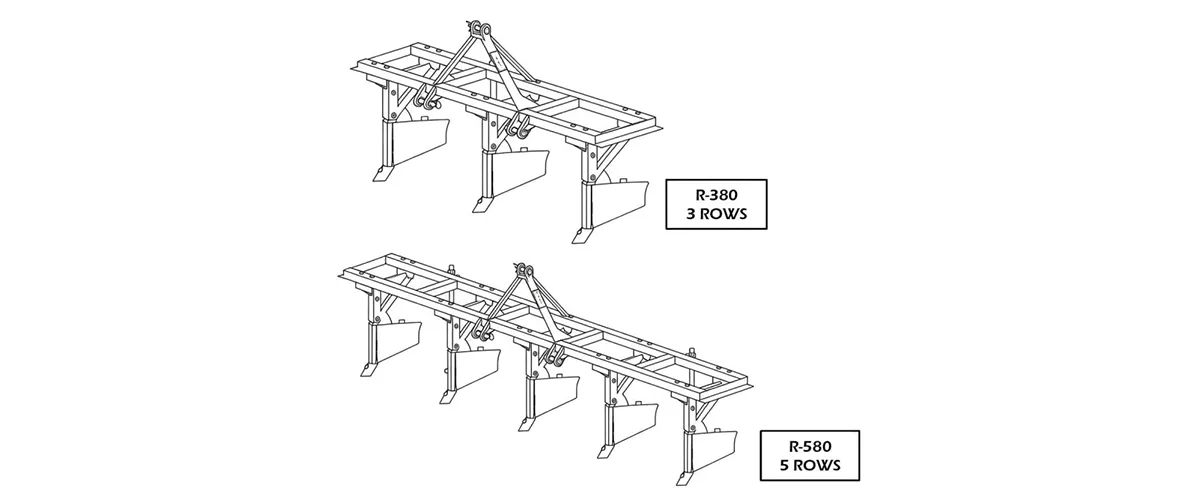
Consistent furrow geometry is the foundation of a productive potato crop. When the ridge profile is uniform, tubers develop symmetrically, irrigation water tracks predictably, and harvesting equipment operates without obstruction. The EP series bruzdownica do ziemniaków was engineered around exactly that requirement — delivering precise, repeatable furrow formation across every row on every pass. Available in 3-row (EP-380) and 5-row (EP-580) configurations, this tractor-mounted agriculture potato furrower is built to handle the full range of commercial potato-growing field conditions, from the loam soils of South Korea’s Gangwon highlands to the clay-rich alluvial lowlands of Jeolla province. With a working speed of 5–8 km/h and a Category 2 three-point linkage, the EP series mounts directly to mid-range and large agricultural tractors without modification, making it the most accessible potato furrower attachment in its class for B2B buyers across Northeast Asia and global potato-producing regions.
The EP-380 and EP-580 are passive hydraulic implements — they require no PTO shaft and no auxiliary oil flow from the tractor. The furrowing action is entirely ground-driven: as the tractor moves forward, the shaped furrower bodies cut and displace the soil laterally to form raised beds with consistent inter-row spacing. This mechanical simplicity translates directly to lower ownership cost, easier operator training, and reduced scheduled maintenance compared to powered cultivation alternatives. For Korean agricultural cooperatives, commercial potato growers, and equipment distributors evaluating a large potato furrower for multi-row potato field preparation, the EP series offers the right balance of capacity, reliability, and total cost of operation.
Technical Specifications — EP Potato Furrower Series
The table below lists the complete technical data for both EP series potato furrower models. The EP-380 potato furrower provides 3-row coverage suited to small and medium commercial plots; the EP-580 delivers 5-row throughput for larger-scale potato operations. Both attach via Category 2 three-point linkage and operate without PTO shaft drive. Engine power figures are minimums — operating with greater reserve power improves consistency at higher working speeds and in heavier soils.
| Technical Parameter | EP-380 (3 Rows) | EP-580 (5 Rows) |
|---|---|---|
| Weight | ||
| Empty Weight | 500 Kg | 620 Kg |
| Bottom Linkage Category | 2 | |
| Number of Furrowers | 3 | 5 |
| Tractor Requirements | ||
| Engine Power (min.) | 75 cv | 85 cv |
| Working Speed | 5 – 8 Km/h | |
| PTO Drive Required | No | |
| Drive Mechanism | Ground-driven (passive) | |
| Row Spacing | Adjustable (standard 70–90 cm) | |
Note: Row spacing is adjustable to match local planting standards. Minimum engine power figures assume normal working conditions. Heavier or wetter soils may require higher tractor output for sustained performance at maximum working speed.
2. Five Key Advantages of the EP Potato Furrower Series
① 3-Row and 5-Row Options — Scalable to Your Field
The EP-380 handles three furrow rows simultaneously while the EP-580 tackles five, covering more ground per pass without increasing tractor power requirements proportionally. For Korean potato growers managing fields of varying sizes — from the mid-scale plots common in North Jeolla and South Gyeongsang to larger commercial operations in Chungcheong — this scalable configuration range means you choose exactly the output capacity you need, rather than over-specifying equipment that adds unnecessary weight or under-specifying for your actual planted area. The 5-row EP-580 is particularly well-suited to contract farming operations where daily hectarage targets are the commercial benchmark.
② No PTO Required — Simpler Operation, Lower Maintenance
Because the EP series bruzdownica do ziemniaków is a passive implement — driven entirely by forward ground motion rather than a PTO shaft — there are no rotating drive components to service, no gearboxes to oil, and no driveline vibration transmitted to the tractor. This dramatically reduces the scheduled maintenance burden compared to powered cultivation alternatives. For operators in remote Korean highland potato regions or island farming communities where workshop access is limited, a passive furrower that requires only periodic bolt checks and surface paint touch-ups is a genuine operational advantage over the alternatives.
③ High Working Speed — 5–8 Km/h Productivity
At an operating speed of 5–8 km/h, the EP potato furrower series outpaces many comparable passive implements, which are often limited to 3–5 km/h to maintain furrow quality. The shaped furrower body geometry is designed to maintain ridge profile consistency across this wider speed range, meaning operators can push throughput without compromising the uniformity that potato planting machinery depends on. For time-critical spring planting windows in Korean agricultural calendars — typically late March through May in mainland regions — this higher productivity per working hour is a commercially meaningful advantage.
④ Category 2 Linkage — Universal Tractor Compatibility
The EP-380 and EP-580 both mount via a standard Category 2 three-point bottom linkage as defined by ISO 730, making them directly compatible with the full range of 75–150 cv tractors used across Korean commercial potato farms. There is no need for adapter hardware, proprietary coupling systems, or structural modifications to the tractor. The Category 2 hitch specification is also recognized globally — in Japan, Southeast Asia, Europe, North America, and Australia — which is particularly valuable for international dealers and distributors adding this hiller furrower attachment to their equipment portfolios for multiple export markets simultaneously.
⑤ Replaceable Furrower Bodies — Cost-Effective Long-Term Use
The working bodies — the shaped steel components that cut and displace soil to form each furrow — are bolt-mounted replaceable parts. As the furrower body wear progresses over seasons of use, individual units can be swapped without replacing the entire frame. This modularity keeps the total cost of ownership low across a 10–15 year implement lifespan typical for well-maintained commercial furrowing equipment. Spare potato furrower parts can be pre-stocked at the farm level, ensuring that wear-related downtime during peak planting season is measured in minutes rather than days waiting for new components.
3. Potato Furrower Working Principle — How the EP Series Operates
Understanding the potato furrower working principle is the starting point for selecting the right configuration for your soil type and planting system. The EP series potato furrower operates on a passive ground-driven mechanism: there are no rotating shafts, no engine-driven components, and no hydraulic actuators involved in the furrowing action itself. As the tractor advances at 5–8 km/h, the implement’s main frame — mounted rigidly to the tractor’s Category 2 three-point linkage — carries a row of shaped furrower bodies through the prepared soil. Each body is a pressed and machined steel component with a symmetrical wing geometry: the leading point penetrates the soil and the angled wings push material outward and upward simultaneously, forming a raised ridge between each pair of adjacent bodies. The ridge height and width profile are determined by the working depth setting adjusted at the linkage, allowing the operator to tune the output for different potato varieties and planting depths.
What distinguishes the EP series from simpler disc-based furrowers is the precision of the ridge profile. The furrower body shape ensures that the walls of each ridge are compacted at an angle that resists collapse during irrigation without becoming so compacted that emerging potato shoots cannot break through. This potato furrow plough geometry supports both conventional dry furrow planting — where seed potatoes are placed manually or by planter into the open furrow before ridging — and potato furrow irrigation practices, where the channel between ridges carries irrigation water along the row at a controlled flow rate. The same implement body geometry that forms a clean planting ridge also forms a drainage and irrigation channel that functions correctly across a wide range of soil moisture conditions.
After the ridges are formed, the EP series leaves the field in a ready-to-plant condition with no additional tillage required between furrowing and planting. The raised bed height provides the drainage advantages critical in the heavy rainfall months of the Korean summer growing season, while the defined channel geometry between rows simplifies mechanical cultivation — the inter-row hoeing and hilling passes that keep weeds suppressed and maintain ridge integrity throughout the crop cycle. For Korean growers following the cultivation protocols recommended by the Rural Development Administration (RDA / 농촌진흥청), the ridge dimensions achievable with the EP series align with standard potato cultivation guidelines for the major commercial varieties grown across South Korea.
4. Materials & Construction of the EP Potato Furrower
The main structural frame of both EP potato furrower models is fabricated from structural steel sections — square hollow section (SHS) and rectangular hollow section (RHS) profiles — welded to form a rigid, torsion-resistant carrier beam. The primary frame beams are manufactured from S355 grade structural steel or equivalent, providing a yield strength of at least 355 MPa that is sufficient to handle the peak bending moments generated when all furrower bodies simultaneously encounter embedded stones or hardpan layers without permanent deformation. Frame joints are MIG-welded with full penetration at high-stress connections, and all external welds are ground flush to eliminate stress concentration points that could initiate fatigue cracking under sustained cyclical loading in the field.
The furrower bodies themselves — the shaped steel components that perform the actual soil cutting and displacement — are cast or forged from boron-alloyed wear-resistant steel, typically 27MnCrB5 or equivalent, heat-treated to a hardness of approximately 38–45 HRC on the working surfaces. This hardness level provides good resistance to abrasive soil wear while maintaining enough core toughness to withstand the impact load of striking a partially embedded stone at working speed. The potato plow point — the leading tip of each furrower body — experiences the highest wear rate and is therefore made as a separate bolt-on replacement component in many configurations, so the most frequently worn element can be swapped in the field with hand tools rather than replacing the entire body casting. Mounting brackets connecting furrower bodies to the frame carrier are produced from S355 flat plate, laser-cut and drilled for precise row spacing positioning.
All external steel surfaces are prepared by shot-blasting to Sa 2.5 surface cleanliness before application of a two-coat paint system: an epoxy zinc-rich primer for corrosion protection at the metal interface, followed by a polyurethane agricultural topcoat in a distinctive high-visibility red finish. This coating system is designed to withstand the combined effects of UV radiation, soil moisture, fertilizer residues, and the mechanical abrasion of soil contact across multiple seasons of commercial use. For Korean field conditions — where annual rainfall averages 1,200–1,500 mm, concentrated in summer monsoon months — the epoxy primer layer is the critical barrier that prevents the undercoating corrosion that shortens the lifespan of less well-protected implements. All pivot points, adjustable row-spacing brackets, and linkage pins are fitted with grease nipples for routine lubrication maintenance.
5. Regulatory Compliance & Standards
Tractor-mounted agricultural implements operate within regulatory frameworks governing machinery safety, tractor-implement compatibility, and in some jurisdictions, environmental and soil-protection rules. For B2B buyers sourcing a bruzdownica do ziemniaków for use in South Korea or for export to other markets, and particularly for buyers evaluating this potato furrower for commercial deployment across multiple farms, the following standards and regulations are relevant.
South Korea — RDA, KATS & Agricultural Machinery Act
In South Korea, agricultural machinery standards are set by KATS and administered through the RDA. The Agricultural Machinery Act governs machinery used in Korean agriculture, including this type of potato furrower, covering requirements for safety marking, operator protection, and compatibility with Korean standard tractor specifications. The Category 2 three-point linkage used on the EP series conforms to KS B 6027 (the Korean national standard adopting ISO 730), ensuring legal and practical compatibility with Korean-market tractors from brands including LS Tractor, TYM, and Kukje. Potato cultivation practices in Korea are additionally guided by RDA technical bulletins on potato ridge formation and furrow spacing, which the EP series ridge geometry is designed to satisfy.
ISO Standards — Three-Point Linkage & Implement Safety
The three-point hitch system conforms to ISO 730:2009, which defines Category 2 linkage dimensions, pin sizes, and clearance requirements. ISO 4254-1 (Agricultural machinery — Safety — General requirements) governs the design of guarding, warning labels, and operator access considerations for tractor-mounted implements. ISO 11684 sets the requirements for safety signs on agricultural machinery. The EP potato furrower series is designed with these standards as the baseline, ensuring that B2B buyers in ISO-standard markets can use the implement without additional safety modifications.
European Union — Machinery Directive 2006/42/EC
For buyers in EU member states, passive tractor-mounted implements like this agriculture potato furrower fall within the scope of the EU Machinery Directive 2006/42/EC when placed on the EU market, and a Declaration of Conformity may be required. EU buyers should request relevant technical documentation from the supplier. Soil protection regulations under the EU Soil Thematic Strategy should also be consulted when planning furrowing operations on sloped terrain, as the formation of planting ridges perpendicular to slope is a recognized erosion-control practice.
United States — ASABE Standard S217
In the US market, the American Society of Agricultural and Biological Engineers (ASABE) standard S217 defines three-point hitch dimensions for Category 2 linkage. The EP series conforms to these dimensions, ensuring compatibility with American-market tractors. OSHA agricultural safety regulations (29 CFR Part 1928) apply to workers operating tractor-mounted implements commercially.
Japan & Southeast Asia
Japanese agricultural machinery standards (JIS B series) adopt ISO 730 linkage dimensions. For Southeast Asian markets including Vietnam, Thailand, and Indonesia — significant potato-growing regions where this type of powered cultivators potato furrower is increasingly adopted — the ISO-based standards apply, and buyers should confirm local import duty classification with their customs agent for proper tariff handling.
6. Application Scenarios
The EP series bruzdownica do ziemniaków is designed for commercial potato production at all scales. Each potato furrower model in the EP range is suited to a particular combination of farm size, tractor availability, and crop type. The following application environments represent the primary use cases for which this implement was developed and optimized.
Commercial Potato Planting — Row Bed Formation
The primary application of any bruzdownica do ziemniaków is forming the raised ridge beds into which seed potatoes are placed before the final earthing-up pass. The EP series achieves consistent ridge height and inter-row spacing in a single pass across the previously ploughed and tilled field, leaving each row bed ready for the planting pass immediately. In Korean commercial potato production — particularly the Hanji seed potato operations in Gangwon-do and the large-scale spring crop fields of Chungnam — this consistency directly supports automatic potato planters that depend on precise row spacing for their drop-metering accuracy.
Potato Furrow Irrigation System Preparation
In areas of Korea and other potato-growing regions where surface potato furrow irrigation is practiced — particularly in drier inland areas of South Gyeongsang and North Chungcheong — the furrow channel formed between the raised beds serves as the irrigation conduit. The EP furrower creates a channel with a consistent cross-section that regulates water flow velocity and distributes irrigation water evenly along the row length. Consistent channel geometry is critical for avoiding waterlogged sections or dry spots within a single row, both of which cause uneven tuber development and reduce marketable yield.
Sweet Potato & Root Crop Bed Preparation
The shaped furrower body geometry of the EP series is not limited to potato crops. Sweet potato (고구마) cultivation in South Korea’s Jeolla region — one of the country’s largest sweet potato producing areas — uses identical raised-bed geometry for both planting and irrigation management. The EP furrower’s adjustable row spacing accommodates the wider row distances typical of sweet potato cultivation compared to white potato, and the ridge profile provides the well-drained, loose-soil root zone that sweet potato vines require for maximum tuber development with minimum surface cracking.
Pre-Season Land Preparation for Multiple Crop Cycles
Korean farmers who rotate potato with other vegetable crops — onions (양파), garlic (마늘), or Chinese cabbage (배추) — commonly use the same raised-bed geometry across successive crops, reforming the ridges between each planting rather than re-ploughing from scratch. The EP series’ passive ground-driven operation at 5–8 km/h allows the reformed ridge pass to be completed quickly between crop cycles, minimizing the gap between harvest of one crop and planting of the next — a commercially important factor on land with high rental costs or under contract supply agreements with food processors requiring year-round delivery schedules.
Seed Potato Production Farms
Certified seed potato production in Korea operates under strict RDA phytosanitary protocols that require precise row spacing for inspection access and isolation distance maintenance between different variety lots. The EP-580’s 5-row configuration allows seed potato farms to plant large certified blocks efficiently, while the uniform ridge geometry simplifies the mechanical harvesting that seed potato fields require at the end of the growing season. The consistent ridge height of the EP series also supports plastic mulch laying — a common technique on Korean seed potato farms to accelerate early-season soil warming and suppress weeds without herbicides.
Contract Agricultural Service Operations
Agricultural machinery contractors in South Korea — businesses that provide field preparation and planting services to multiple farm clients on a fee-per-hectare basis — benefit from the EP series’ combination of the high working speed of 5–8 km/h, low maintenance requirements, and universal tractor compatibility. The long potato furrower frame of the EP-580, which spans 5 furrow rows, delivers the daily output contractors need to remain profitable at competitive service rates. The ability to move the implement between different client farms without tractor-specific adapters is a practical commercial advantage that reduces the non-productive travel time between jobs.
7. About Us
We are a dedicated manufacturer and international distributor of professional agricultural cultivation and soil preparation equipment. Our product portfolio encompasses potato furrowers, stone crushers, rock rakes, rotary cultivators, and associated drive components, all developed and production-tested for demanding commercial field conditions across diverse global markets. Our B2B customers include agricultural cooperatives, commercial farming operations, equipment dealers, and contract farming service providers in South Korea, Japan, Southeast Asia, Europe, North America, and Australia. Every implement leaves our production facility with a full inspection against published technical specifications.
8. Related Products — Complete System Supply
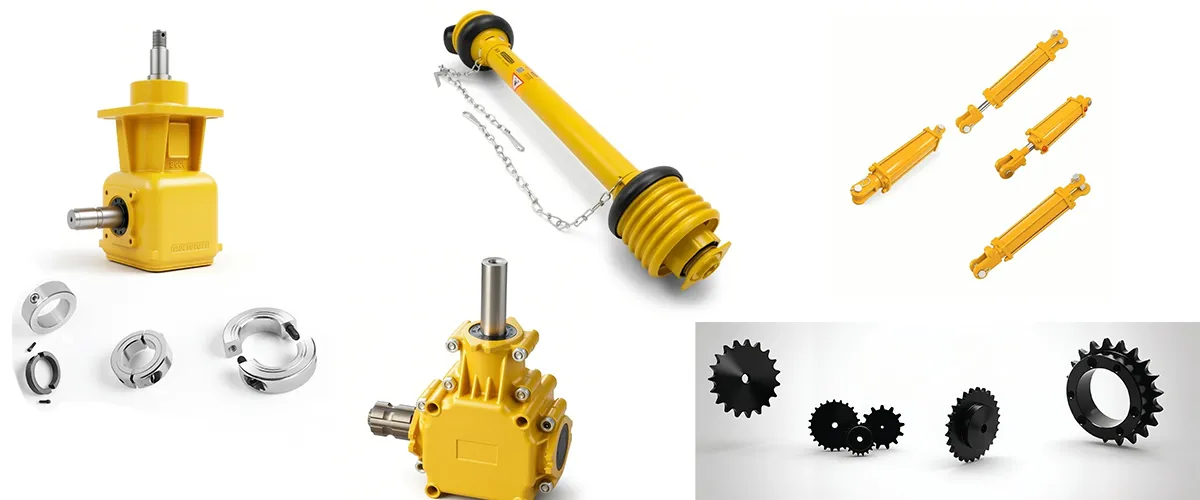
The EP potato furrower is part of a broader soil preparation and cultivation system. Alongside your potato furrower, we also supply the drive and power transmission components that support the wider range of PTO-driven implements used across the potato cultivation cycle — providing a one-stop supply advantage that reduces procurement complexity for our B2B customers.
Sprockets — Drive Transmission Components
Precision-manufactured sprockets for PTO-driven potato cultivation implements — including planters, cultivators, and irrigation pump drives — that operate alongside the EP furrower across the crop cycle. Correct sprocket sizing ensures full power transfer efficiency and extended chain life. Sourcing your furrower and compatible drive sprockets from the same supplier simplifies parts traceability, reduces procurement lead times, and ensures dimensional compatibility is confirmed before delivery rather than discovered on-farm during commissioning.
Gearboxes — Power Transmission for Cultivation Systems
Agricultural gearboxes for PTO-driven rotary cultivators, potato planters, and inter-row cultivation implements used in the potato growing cycle before and after the furrowing pass. Our gearbox range covers the torque and speed reduction requirements of light to heavy cultivation implements operating at 540–1000 RPM PTO input. Matching gearbox selection to the implement’s power demand ensures efficient operation, prevents overload damage, and extends the service life of both the gearbox and the PTO shaft across the multiple seasonal operations of a commercial potato growing rotation.
Frequently Asked Questions
Editor: PXY