Technical Guide | PTO Stone Crusher Series
PTO Rock Crusher Torque Limiter Adjustment: Setting the Right Slip Threshold for Your Stones
A precise torque limiter setting is what separates a long-lived, productive pto stone crusher from a machine that sheds shear bolts on the first pass through a rocky paddock. This guide walks through how torque limiters work on a pto stone crusher, why the slip threshold matters, and exactly how to dial it in for granite, basalt, limestone, and mixed-soil conditions across Korea’s diverse farming terrain.
1. Why the Torque Limiter Is the Most Critical Safety Component on a PTO Stone Crusher
Every tractor stone crusher — and every pto stone crusher — that draws power through a PTO shaft carries a fundamental mechanical risk: the rotor may suddenly encounter a boulder, a buried concrete fragment, or a hardened bedrock protrusion that exceeds the machine’s design capacity. When that happens without a correctly set torque limiter in place, the energy spike travels backward through the driveline — snapping the propshaft, damaging the tractor’s transmission, or shearing teeth from the rotor at tremendous speed. The torque limiter acts as a mechanical fuse inserted into the PTO shaft, and its slip threshold is the single setting that determines whether your pto stone crusher absorbs a shock event gracefully or sends components across the field. Every model in our pto stone crusher range is delivered with a factory-set limiter — but factory settings are calibrated for mid-range conditions, not for your specific stone type.
For Korean farmers and land contractors — working on the volcanic basalt fields of Jeju Island, the granite-rich hillside terraces of Gyeonggi-do, or the river-gravel floodplains along the Nakdong River — understanding torque limiter mechanics is not optional. The terrain variability across the Korean peninsula means that a slip threshold dialled in for soft limestone gravel will be completely wrong when the same pto stone crusher encounters igneous rock outcrops on the next run. Getting this adjustment right from the start, and revisiting it every time the stone type or working depth changes, is the foundation of productive and safe agricultural stone crushing work. A correctly calibrated pto stone crusher delivers consistent crushing throughput, protects the tractor’s transmission, and extends the machine’s service life significantly compared to a unit running with an incorrectly set or neglected limiter.
2. Action Mode: How a Torque Limiter Works on a PTO-Driven Rock Crusher
The torque limiter sits inline between the tractor’s PTO stub and the stone crusher’s gearbox input shaft. In normal operation on any pto stone crusher, the limiter transmits torque rigidly — the tractor’s power flows straight through it without any slippage, maintaining the rotor at its design RPM (typically 540 or 1000 RPM depending on the model). The slip threshold is the torque value — measured in Newton-metres (N·m) — at which the limiter disengages or allows relative rotation between its drive and driven plates. Understanding this mechanism is fundamental to operating any pto stone crusher safely and productively.
There are three main action types you will encounter on modern agricultural stone crushers for tractors:
Friction-Disc (Slip-Type) Limiter
The most common type on field stone crusher and tractor stone crusher models. A stack of friction plates is compressed by a pre-loaded spring. When impact torque exceeds the spring pre-load, the plates slip against each other, absorbing the spike and allowing the output side to decelerate independently of the tractor PTO. Once the obstruction clears, rotation automatically re-engages. This type is preferred for continuous-work stone-crushing scenarios because it self-resets with no operator intervention. It is the standard limiter type on every pto stone crusher in the PSC and THOR series. The slip threshold is adjusted by tightening or loosening the compression nut on the spring stack — typically requiring a torque wrench reading confirmed against the manufacturer’s torque-versus-spring-length chart.
Shear-Bolt Limiter
Found on lighter, small pto stone crusher models and entry-level stone crusher machines. A sacrificial bolt (usually Grade 8.8 M10 or M12) passes through aligned holes in the drive and driven flanges. When the slip threshold is exceeded, the bolt shears cleanly, allowing the driven side to freewheel. The threshold is fixed by bolt grade and diameter — it cannot be adjusted without changing the bolt specification. Replacement requires stopping the tractor, inserting a new bolt, and confirming alignment before restarting. For Korean contractors working in high-stone-density basalt zones, frequent shear events signal the need to upgrade to a friction-disc type or move to a larger pto stone crusher model with a higher-rated limiter.
Cam-Ratchet (Automatic Re-Engagement) Limiter
A higher-grade option fitted to heavy-duty portable stone crusher machines and commercial agricultural stone crushers. Spring-loaded cams ride in profiled recesses. On overload, the cams pop out of their seats with an audible click, the output side overruns, and when the obstruction passes, the cams automatically drop back and re-engage at the next aligned position. This type provides faster re-engagement than friction-disc types but requires periodic inspection of cam surfaces for wear, especially after working through granite-heavy Korean hill terrain. Cam wear can cause premature slip at loads below the intended threshold, reducing the power delivered to the rotor and causing incomplete stone crushing. Regular cam inspection is especially important on any pto stone crusher used for seasonal Korean orchard floor clearing, where the workload is intense but concentrated into short periods.
3. Manufacturing Structure: Inside the Torque Limiter Assembly
Understanding the physical construction of the torque limiter helps technicians adjust and maintain it correctly. The design philosophy behind our pto stone crusher limiter assemblies prioritises field-replaceability — every component can be swapped without specialist tooling. On pto stone crusher equipment designed for tractors, the assembly typically comprises the following manufactured components, each with a direct influence on the slip threshold:
| component | Material | Function | Maintenance Interval |
|---|---|---|---|
| Drive Flange / Input Hub | Forged alloy steel | Splines onto tractor PTO stub; transmits engine torque into limiter | Inspect splines every 200 h |
| Friction Disc Pack | Sintered bronze / steel-backed composite | Generates controlled slip at threshold; absorbs shock energy as heat | Replace if glazed or thickness <50% of new |
| Compression Spring (Belleville washer stack) | Spring steel, heat-treated | Clamps friction discs; spring pre-load sets slip threshold | Check free height annually; replace if set >10% |
| Adjustment Nut / Locking Ring | Case-hardened steel | Controls spring compression depth; primary adjustment interface | Re-torque after each adjustment cycle |
| Output Shaft / Driven Hub | Forged alloy steel, induction-hardened journals | Connects to stone crusher gearbox input; overruns during slip events | Inspect journal wear every 500 h |
| Dust / Debris Shield | Sheet steel or polymer composite | Prevents stone dust ingress into friction pack; critical in dry Korean summer conditions | Inspect for cracks before each season |
Note: Always disengage the PTO and allow the rotor to come to a complete stop before accessing any torque limiter component. Residual rotational energy in a 450–700 mm diameter rotor at 1000 RPM represents a significant stored-energy hazard.
4. Material System: How Stone Type Determines Your Slip Threshold
The torque limiter threshold is not a fixed-for-life setting on any pto stone crusher. Stone density, Mohs hardness, fragment size, and burial depth all affect peak impact torque — meaning the correct slip threshold varies significantly between stone types and working conditions. The following breakdown gives practical guidance for the main stone categories encountered across Korean agricultural regions, using data applicable to the PSC Series and THOR 2.4 models. Every pto stone crusher operator in Korea should keep this table accessible as a field reference when changing terrain zones or working depth.
| Stone Type | Mohs-hardheid | Max Dia. (PSC Series) | Recommended Threshold Setting | Korean Region Example |
|---|---|---|---|---|
| Limestone / Marl | 3.0 – 4.0 | Up to 150 mm | Low–Medium (factory default ±10%) | Chungcheong terrace soils |
| River Gravel / Alluvial Pebble | 5.0 – 6.5 | Up to 150 mm | Medium (factory +15%) | Nakdong & Han River floodplains |
| Granite / Granodiorite | 6.0 – 7.0 | 150 mm max; reduce working depth | Medium–High (+20 to +30%) | Gyeonggi highlands, Sobaek range foothills |
| Basalt (Volcanic) | 6.0 – 7.0 | 150 mm; PSC models at max depth 150 mm | High (+25 to +35%); use dual-pass | Jeju Island volcanic fields |
| Quartzite / Sandstone | 6.5 – 7.0 | 150 mm or upgrade to THOR 2.4 / STCM | High (+30%); reduce ground speed to 2.5 km/h | Eastern Taebaek mountain piedmont |
| Mixed Field Stone (unknown) | Variable | 150 mm (PSC) / 300 mm (STCM) | Start at factory default; increase in 5% increments | All regions — standard starting point |
5. Step-by-Step: Adjusting the Slip Threshold on Your PTO Stone Crusher
The following procedure applies to friction-disc type torque limiters as installed on the PSC 100–200 Series, the RockMaster agricultural stone crusher, and the THOR 2.4 Kit Drawbar models. Always consult the specific operator’s manual for your pto stone crusher — spring-length specifications and torque values differ by model. This guide assumes a tractor with a working PTO rated at 1000 RPM and minimum 80 hp at the PTO shaft. Following these steps precisely ensures your pto stone crusher operates within its designed protection envelope for every field session.
Step 1 — Isolate the Machine Safely
Lower the pto stone crusher fully to the ground, disengage the PTO, shut down the tractor engine, and remove the ignition key. Wait a minimum of 90 seconds for the rotor to come to complete rest. Confirm standstill by pressing the rotor body lightly — there must be zero rotation. Never approach a coast-down rotor; a 450 mm diameter rotor at 1000 RPM stores significant kinetic energy. Failing to observe this step is the leading cause of serious injury during pto stone crusher servicing.
Step 2 — Locate the Torque Limiter
The limiter is positioned at the PTO-side end of the main driveshaft, immediately behind the cross-joint yoke. On the PSC models it is enclosed in a plastic or sheet-metal guard. Remove the guard fasteners (typically 4× M8 bolts) and slide the guard back to expose the adjustment nut. Photograph the current position of the adjustment nut relative to the reference mark or dimension stamped on the shaft — this is your baseline.
Step 3 — Measure Current Spring Stack Length
Using digital vernier calipers, measure the free length of the Belleville washer stack from the face of the backing plate to the face of the adjusting nut. Record this dimension. For the PSC 125/150/175 models the factory-set spring stack compressed length is typically 18–22 mm — but verify against your specific model’s data sheet. A shorter stack dimension means higher spring pre-load, which means a higher slip threshold. Each 1 mm of additional compression raises the threshold roughly 8–12% depending on the spring rate. Maintaining accurate records of these measurements across your fleet of pto stone crusher units allows you to standardise procedures and reduce per-machine setup time.
Step 4 — Calculate Target Compression
Refer to the material table in the previous section. For basalt on Jeju Island with a PSC 150 (90–120 hp tractor, 1000 RPM PTO), start at factory compression +25%. If factory stack length is 20 mm, your target is 20 × 0.75 = 15 mm (because compressing reduces the free length). Turn the adjustment nut clockwise — never exceed the minimum stack-length stop mark, which prevents the spring from being over-compressed to coil-bind. Use a face-spanner or castellated-nut socket that fits the nut geometry on your specific unit.
Step 5 — Lock and Verify
Once at the target stack length, lock the adjustment nut using the lock ring or split-pin through the castellation, as specified for your model. Reinstall the guard. Start the tractor, engage PTO, and perform a low-load test pass at 2–3 km/h over bare soil to confirm the limiter does not slip under zero-load conditions — any slippage at this stage means the threshold is set too low and you must repeat from Step 2. Then make a careful first pass through representative stone material at reduced forward speed, observing for appropriate impact absorption without unexpected tractor stall. A well-calibrated pto stone crusher will handle typical Korean field stones cleanly at 3 km/h without repeated limiter slip events on the first pass.
Step 6 — Fine-Tune After First Field Pass
After the first full field pass, inspect the friction disc pack for heat discolouration — slight darkening is normal, but blue-black oxidation indicates sustained slipping. If this occurs, increase compression by 5% and retest. Conversely, if the pto stone crusher’s tractor shows traction loss or engine bog without limiter slip events, the threshold may be too high, placing excessive load back onto the transmission; reduce compression by 5% increments until the system responds cleanly to buried-stone impacts.
6. Common Torque Limiter Mistakes That Damage Stone Crushers
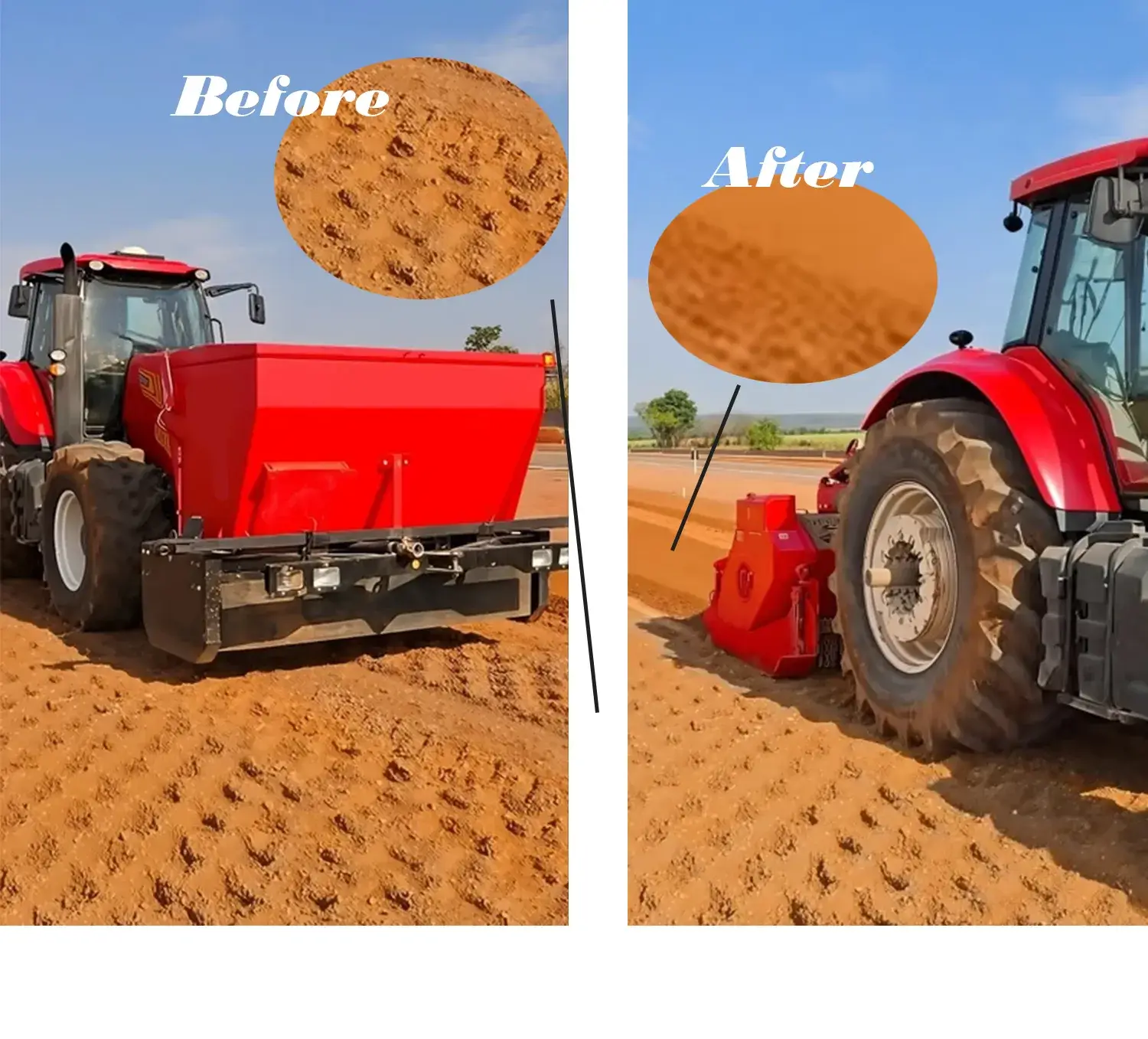
Years of field service experience with agricultural stone crushers reveal a handful of recurring errors that mechanics and farmers make when adjusting or ignoring the torque limiter. Each of these translates directly to premature component failure, expensive repair bills, or dangerous field incidents. Every pto stone crusher owner should read this section before the first field season — and revisit it annually.
Setting Too High for the Stone Type
When the threshold is set above what the pto stone crusher driveline can safely absorb, impact energy passes through to the gearbox input bearing, the cross-joint yokes, and ultimately the tractor PTO output shaft. On granite terrain this can destroy a universal joint cross-spider in a single working day — a part that costs significantly more than a correctly specified friction disc service. This is why every pto stone crusher operator should treat threshold calibration as a first-priority task when starting on new terrain.
Setting Too Low for Productivity
An excessively low threshold on a pto stone crusher causes the limiter to slip repeatedly even on standard field stones, generating heat in the friction pack. The disc material glazes, losing friction coefficient and making the effective threshold even lower — a feedback loop that ends in a completely worn-out disc pack. Consistent slipping also causes the rotor to lose momentum, reducing crushing efficiency and leaving large fragments unprocessed.
Bypassing or Removing the Limiter
Some operators remove or lock-out the torque limiter on their pto stone crusher to prevent what they perceive as unnecessary slipping. This is one of the most dangerous modifications possible. When the rotor strikes an immovable bedrock protrusion with no energy relief, peak torque can reach 5–10× normal operating values, destroying the PTO shaft, the gearbox, and potentially causing the tractor to lurch violently. Korean occupational safety regulations (산업안전보건법) strictly prohibit defeating safety devices on machinery — this applies equally to every pto stone crusher regardless of age or model — see the regulatory section below.
Neglecting Seasonal Re-Adjustment
On any pto stone crusher, Belleville spring washers experience a gradual set (permanent shortening) over hundreds of operational hours and seasonal temperature cycles. A threshold set correctly in spring may have drifted 10–15% lower by harvest season without any physical adjustment. Build a pto stone crusher torque limiter re-check into your maintenance schedule at the start of each working season and after every 100 hours of stone-crushing operation.
7. Regulatory Framework: PTO Safety Standards for Stone Crushing Equipment
Operating a tractor stone crusher in a compliant, legally defensible manner means understanding the applicable standards in the regions where the machine is used. The torque limiter is directly referenced in several of these frameworks as a required protective device.
Korea — 산업안전보건법 (Occupational Safety and Health Act) & Rural Safety Regulations
In South Korea, the Occupational Safety and Health Act (산업안전보건법, Act No. 17326) and its associated enforcement decrees require that power take-off driven machinery be equipped with guards and overload protection devices that prevent operator injury from unexpected driveline disconnection or component ejection. Agricultural machinery used commercially is further governed by the Korea Rural Community Corporation (한국농어촌공사) technical guidelines for safety on cultivated land, which specify that PTO-driven implements including agricultural stone crushers must maintain functioning overload protection on all shaft connections between tractor and implement. Removal or bypassing of such devices is classified as a safety violation subject to inspection penalty. The Rural Development Administration (농촌진흥청) also publishes annual safety advisories for rocky-field tilling equipment, including guidelines for PTO speed and driveshaft guarding. Any pto stone crusher imported into or sold within Korea must document compliance with these requirements, and a torque limiter functional test certificate is increasingly requested during rural equipment registration. Any imported pto stone crusher should carry this documentation.
European Union — ISO 11684 / EN ISO 4254-7 / Machinery Directive 2006/42/EC
For Korean importers and dealers sourcing European-built pto stone crusher equipment, EU standards apply at the point of manufacture. The EU Machinery Directive 2006/42/EC requires that all PTO-driven agricultural machines include overload protection systems sufficient to prevent hazardous energy release. ISO 11684 governs safety labelling on PTO shafts and torque limiters. EN ISO 4254-7 specifically covers soil-working machinery — including rock and stone crushers — and details requirements for PTO shaft guards, torque limiter ratings, and field-verified test procedures. CE marking on any pto stone crusher for sale in EU-adjacent markets confirms compliance with this framework, and Korean importers should verify CE documentation as a baseline for their own market.
United States — ASABE S318 / OSHA 29 CFR 1928.57
North American operators should note that ASABE Standard S318 covers PTO-driven agricultural equipment safety, while OSHA regulation 29 CFR 1928.57 requires that all PTO-driven farm equipment be equipped with a properly maintained master shield and PTO shaft guard. While these regulations do not specify a minimum torque limiter threshold numerically, they establish liability grounds for equipment used with disabled or improperly adjusted safety devices. For Korean exporters supplying used tractor stone crusher units to US buyers, confirming torque limiter function is a standard part of export compliance inspection.
Australia — AS 1473 & National Code for Agricultural Machinery
Australia’s AS 1473 standard covers guarding of powered agricultural machinery including the PTO shaft and associated torque-limiting devices. The National Code for Agricultural Machinery Safety aligns with this standard and requires that overload protection on PTO-driven stone crushing equipment be serviceable and documented. For exporters sending portable stone crusher machines or small pto stone crusher units to Australian agricultural contractors, a pre-export functional test of the torque limiter with documented slip threshold values is advisable.
8. Our PTO Stone Crusher Series — Models With Integrated Torque Limiters
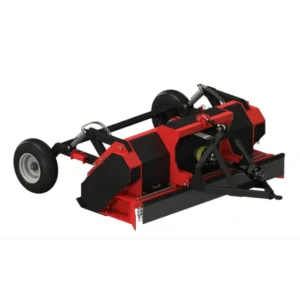
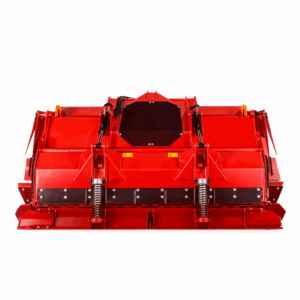
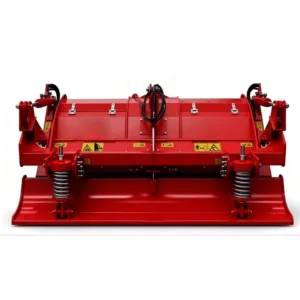
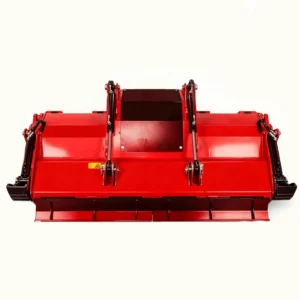
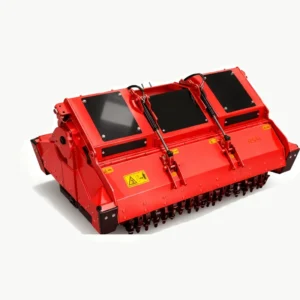
Each pto stone crusher model in our Mulchers / Stone Crushers lineup ships with a factory-calibrated torque limiter. Below are the five core pto stone crusher models available for agricultural and rural development work in Korea and globally. Each pto stone crusher unit includes technical documentation for torque limiter setup.
9. PSC Series Technical Specifications — Torque-Relevant Data
The PSC Series (equivalent to the STCL model family) covers six configurations suited to tractors from 70 to 150 hp. This is our most widely sold pto stone crusher series in Korea. Key parameters that directly influence torque limiter selection and threshold settings are highlighted below. The rotor diameter of 450 mm across all PSC variants means inertia and impact-torque profiles are consistent within the series — an advantage when transferring a pto stone crusher between fields with different stone densities, as your limiter baseline setting requires only minor stone-hardness adjustment rather than a full recalibration.
| Model | Tractorvermogen (pk) | PTO (rpm) | Werkbreedte (mm) | Gewicht (kg) | Rotordiameter (mm) | Maximale steendiameter (mm) | Maximale diepte (mm) |
|---|---|---|---|---|---|---|---|
| PSC 100 | 70–120 | 540–1000 | 1,110 | 1,230 | 450 | 150 | 150 |
| PSC 125 | 80–120 | 540–1000 | 1,350 | 1,280 | 450 | 150 | 150 |
| PSC 150 | 90–120 | 540–1000 | 1,590 | 1,440 | 450 | 150 | 150 |
| PSC 175 (540/1000) | 100–120 | 540–1000 | 1,830 | 1,570 | 450 | 150 | 150 |
| PSC 175 DT | 100–150 | 1000 | 1,830 | 1,600 | 450 | 150 | 150 |
| PSC 200 DT | 120–150 | 1000 | 2,070 | 1,750 | 450 | 150 | 150 |
10. Preventive Maintenance Schedule for the Torque Limiter
A torque limiter that is never inspected will eventually fail to provide its intended protection on any pto stone crusher — and the failure will come at the worst possible moment: mid-pass through a dense-stone section on a steep Korean hillside paddock. The following schedule is designed around the STCL/PSC Series pto stone crusher operating in typical Korean rocky-field conditions, but the principles apply to all tractor-mounted agricultural stone crusher models. Treat this schedule as the minimum — operators in high-stone-density zones like Jeju basalt fields should halve the intervals. Keeping your pto stone crusher limiter within spec at all times is the single highest-return maintenance action you can take for a pto stone crusher in active Korean farm service.
| Interval | Task | Pass Criteria |
|---|---|---|
| Before each season | Verify spring stack length; inspect friction discs for glazing; clean debris from adjustment nut threads | Stack within ±1 mm of specified length; disc surfaces uniform grey (not glazed or scored) |
| Every 50 h of operation | Visual check of limiter housing for heat discolouration; check PTO shaft guard integrity | No blue/black discolouration; guard complete with no missing fasteners |
| Every 100 h | Remove guard and measure spring stack length; inspect cross-joint for play; lubricate per schedule | Stack within ±1 mm; zero perceptible joint play; correct grease quantity confirmed |
| Every 300 h | Full disassembly and friction disc thickness measurement; inspect cam surfaces if cam-ratchet type | Disc thickness ≥ 50% of new specification; cam ramps undamaged and within wear tolerance |
| After any hard-stop event on the pto stone crusher | Immediate re-inspection of limiter, PTO shaft, and universal joints before resuming work | No visible shaft distortion; pto stone crusher joint crosses free of lateral play; limiter re-calibrated |
11. About Us
We are a specialised manufacturer and global distributor of PTO-driven agricultural stone crushing equipment, serving farmers, rural developers, and land contractors across Korea, Southeast Asia, and export markets worldwide. Our product engineering team focuses exclusively on the challenges of tractor-mounted rock crushing — from compact small pto stone crusher units for narrow paddock-edge work to the most demanding hillside applications requiring a heavy-duty pto stone crusher to heavy-duty THOR and RockMaster models capable of processing 300 mm diameter basalt on steep Korean terrain.
Every pto stone crusher unit that leaves our facilities undergoes a factory-calibrated torque limiter setup, aligned to the tractor power range specified for that model. Our after-sales technical support covers torque limiter recalibration guidance, wear-part supply for friction discs and cross-joint kits, and model-selection consultation for customers transitioning from manual stone removal to mechanised stone crushing. We understand the specific soil and stone conditions of the Korean peninsula — from the sedimentary clay and pebble soils of the western coastal plains to the hard volcanic ground of Jeju — and our product range is stocked and positioned accordingly.
Veelgestelde vragen
Redacteur: PXY