Agricultural Technology Guide — Colombia
Hoe de rotorsnelheid (RPM) de deeltjesgrootte regelt in een op een tractor gemonteerde steenbreker
Understanding the direct relationship between PTO-driven rotor speed and the final fragment output is essential knowledge for any Colombian farmer, land developer, or rural machinery operator looking to get the most from their stone crushing equipment.
PTO-steenbreker
Agricultural Land Prep
When Colombian farmers and land managers invest in a tractor-mounted stone crusher, one of the most frequently overlooked variables in machine selection is rotor speed — measured in RPM (revolutions per minute). Yet it is precisely this variable that determines whether the final crushed material is coarse gravel suitable for road bed stabilization, medium-grade aggregate for drainage channels, or fine granules that can be left on the surface to decompose and enrich soil texture. Across the highland zones of Cundinamarca, the cattle pastures of the Llanos Orientales, and the fruit-growing regions of the Eje Cafetero, the ability to control fragment size through RPM management directly translates into better field outcomes, lower downstream material costs, and more predictable machine performance. This guide breaks down exactly how that relationship works — and how to use it on the ground.
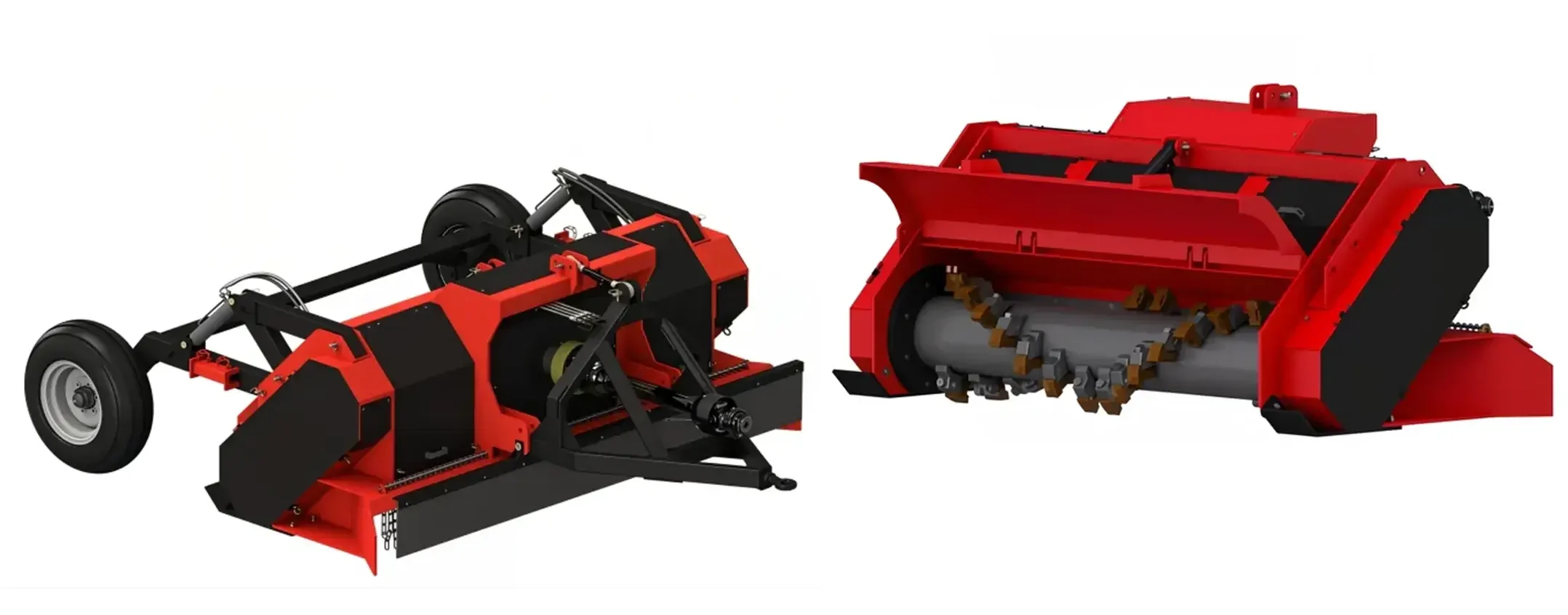
1. Action Mechanism: How RPM Generates Crushing Force
A tractor-mounted stone crusher receives mechanical power from the tractor’s power take-off (PTO) shaft, typically at 540 RPM or 1000 RPM input speeds. This rotational energy is transmitted through a gearbox — a critical intermediate component — before reaching the rotor drum. The gearbox translates and amplifies the input shaft speed into the rotor’s final operating RPM, and different gear ratios can dramatically change what the rotor experiences even when tractor engine speed stays constant.
Inside the crusher housing, the rotor drum spins on its axis. As it rotates, the cutting tools — whether tungsten carbide-tipped picks, fixed teeth, or free-swinging hammers — strike stones at the point of contact. The kinetic energy delivered per impact is proportional to the square of the tool’s tip velocity. Tip velocity, in turn, is determined by two things: the rotor diameter and the rotor RPM. For a rotor with a diameter of 450 mm (such as on the PSC 100 model), a 10% increase in RPM produces a roughly 21% increase in kinetic energy per impact, following the relationship E = half mv squared. This nonlinear scaling is why small RPM changes produce large differences in fragment size.
At higher rotor RPMs, each rock receives multiple, rapid-succession impacts before it can move away from the rotor zone. The result is finer, more uniform particles. At lower RPMs, fewer impacts occur per unit of forward travel, leaving larger fragments. The operator controls this spectrum — within limits set by the machine’s design — primarily through PTO engagement speed and forward travel rate of the tractor. Understanding this mechanism allows an experienced operator to dial in the desired output for a given Colombian terrain type without changing the physical setup of the machine.
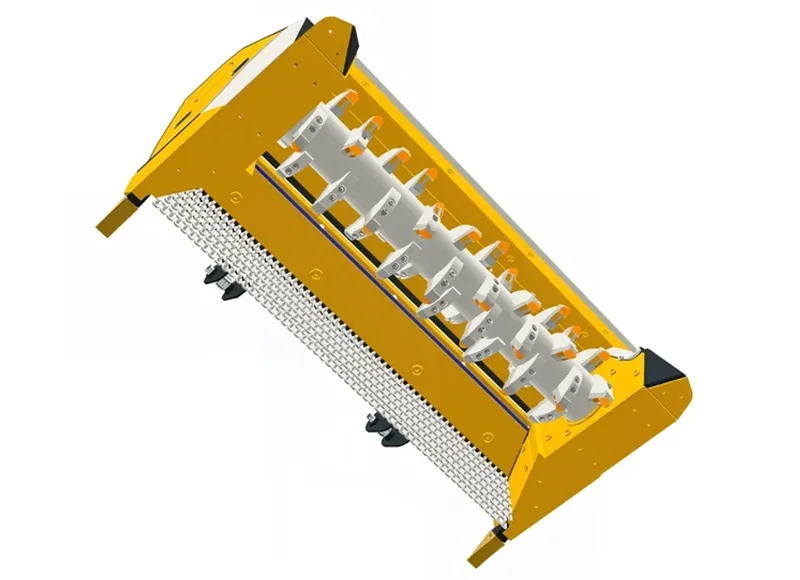
2. Structural Type: How Rotor Design Shapes the RPM-Particle Relationship
Not all stone crusher rotors respond identically to RPM changes — the structural type of rotor is a key modifier. There are two broad rotor categories commonly found in modern tractor-mounted agricultural stone crushers: the cylindrical drum rotor with fixed-tooth cutters and the free-hammer (swinging-tool) rotor. Each interacts with RPM differently, and understanding this distinction is essential when selecting equipment for Colombian field conditions.
Fixed-tooth rotor systems, such as those found on the PSC Series and STCM/STCL families, mount cutting picks directly and rigidly onto the drum surface in a helical pattern. These picks maintain a constant cutting radius at all RPM values. Because the geometry is fixed, the particle size output scales predictably with RPM — operators can develop reliable operating recipes for a given terrain type and desired output size. Fixed-tooth designs also handle subsurface rocks well and can achieve working depths up to 150–200 mm depending on the model, making them especially practical for the rocky volcanic soils common in Colombia’s Andean cordilleras.
Free-hammer (swing-hammer) rotors mount cutting tools on pivot hinges. At low RPM, the hammers hang loosely and deliver lower-impact blows. As RPM climbs, centrifugal force extends the hammers to their full radius, dramatically increasing tip velocity and impact energy. This centrifugally-governed behavior creates a nonlinear RPM response: there is a threshold RPM below which free-hammer rotors produce coarser, inconsistent output, and above which they shift into a highly effective fine-crushing regime. This makes them better suited to applications where the operator needs either very coarse material (slow RPM) or very fine material (high RPM), but potentially less predictable in the middle range. For most Colombian agricultural stone crushing needs, fixed-tooth rotor designs are generally preferred for their consistency.
| RPM Range (Rotor) | Approximate Particle Output | Typical Use Case | Tractor Forward Speed |
|---|---|---|---|
| Low (540 PTO input) | Coarse — 80–150 mm fragments | Road base, drainage fill | 3–5 km/u |
| Medium (1000 PTO input) | Medium — 30–80 mm fragments | Field leveling, pasture prep | 2–4 km/h |
| High (1000 PTO + low travel) | Fine — under 30 mm fragments | Seedbed prep, soil incorporation | 1–2 km/h |
3. Manufacturing Structure: Gearbox Design and Its Role in RPM Delivery
The gearbox is arguably the most mechanically demanding component in any pto stone crusher. It must accept continuous rotational input from the tractor’s PTO shaft at 540 or 1000 RPM, withstand the unpredictable shock loads generated when the rotor strikes buried stones of unknown hardness and size, and do all of this while maintaining its lubrication film under varying ambient temperatures — conditions that in Colombia’s tropical highlands can range from 5°C at altitude to 35°C or more in valley floors.
Modern high-performance crusher gearboxes use helical or bevel-helical gear pairs rather than straight-cut spur gears, because helical engagement produces smoother torque transfer, lower noise levels, and better load distribution across the tooth face. The STCM series, for instance, is engineered with a robust gear train capable of handling rotor loads from tractors ranging between 80 and 280 hp, depending on the variant. The gearbox housing is typically fabricated from ductile cast iron for vibration damping, and the input and output shafts run on tapered roller bearings rated for both radial and axial shock loads.
Lubrication is not a trivial concern. The gear oil inside the crusher gearbox must maintain adequate viscosity across the full operating temperature range. In practice, ISO VG 220 or ISO VG 460 gear oils are commonly specified for agricultural stone crusher gearboxes. Operators in Colombia’s lower-elevation, high-temperature zones — Tolima valley, Cauca river basin — should opt for the heavier ISO VG 460 grade, while highland operators above 2,500 m elevation may benefit from a lighter ISO VG 220 to ensure adequate low-temperature flow during cold morning starts. Always consult the specific gearbox manufacturer’s recommendation for your model.
Key Gearbox Design Parameters in Agricultural Stone Crushers
| Parameter | Light Crushers (PSC 100–175) | Mid-Range (STCM / RSL) | Heavy (STCH / RSH) |
|---|---|---|---|
| PTO Input Speed | 540 or 1000 RPM | 1000 RPM | 1000 RPM |
| Gear Type | Helical spur | Bevel-helical compound | Multi-stage bevel-helical |
| Housing Material | Cast iron / ductile iron | Ductile iron | Heavy ductile iron |
| Bearing Type | Deep groove ball + tapered | Tapered roller (dual) | Heavy-duty tapered roller |
| Recommended Gear Oil Grade | ISO VG 220 | ISO VG 220–460 | ISO VG 460 |
4. Material System: Cutting Tool Metallurgy and Its Interaction With RPM
The cutting tools mounted on the rotor are the primary point of energy transfer between the spinning drum and the rock face. Because they operate at high peripheral speeds — sometimes exceeding 30 m/s at 1000 RPM rotor speed on a 550 mm diameter drum — the metallurgical properties of the cutting tools are not merely a quality concern but a functional determinant of how the crusher behaves across different RPM settings and rock hardness conditions.
Tungsten carbide (WC-Co) is the dominant cutting insert material in modern agricultural stone crushers, and for good reason. At room temperature, tungsten carbide grades used in stone-crushing applications typically exhibit hardness values of 1,400–1,600 HV (Vickers Hardness) — compared to roughly 60 HV for mild steel and 700–900 HV for hardox-type wear steels. This extreme hardness allows the cutting tip to maintain its geometry even after thousands of impacts per operating hour, which is critical to maintaining consistent particle size output across an extended working session.
However, tungsten carbide is relatively brittle compared to steel. At lower RPMs with larger, angular rocks, the impact loads per strike are higher and more shock-like, which can cause tip fracture if the carbide grade is too hard and insufficiently tough. Well-engineered tractor stone crushers typically specify cobalt-bonded tungsten carbide grades with 6–12% cobalt content: lower cobalt increases hardness (better at fine grinding), while higher cobalt improves toughness (better shock resistance at low RPM operation on large irregular stones). The steel shank or body that holds the carbide insert is equally important: high-manganese austenitic steel shanks (12–14% Mn) work-harden under impact, developing a hard surface layer while retaining a tough core — a combination that resists both abrasive wear and fracture in demanding Colombian volcanic and metamorphic rock conditions.
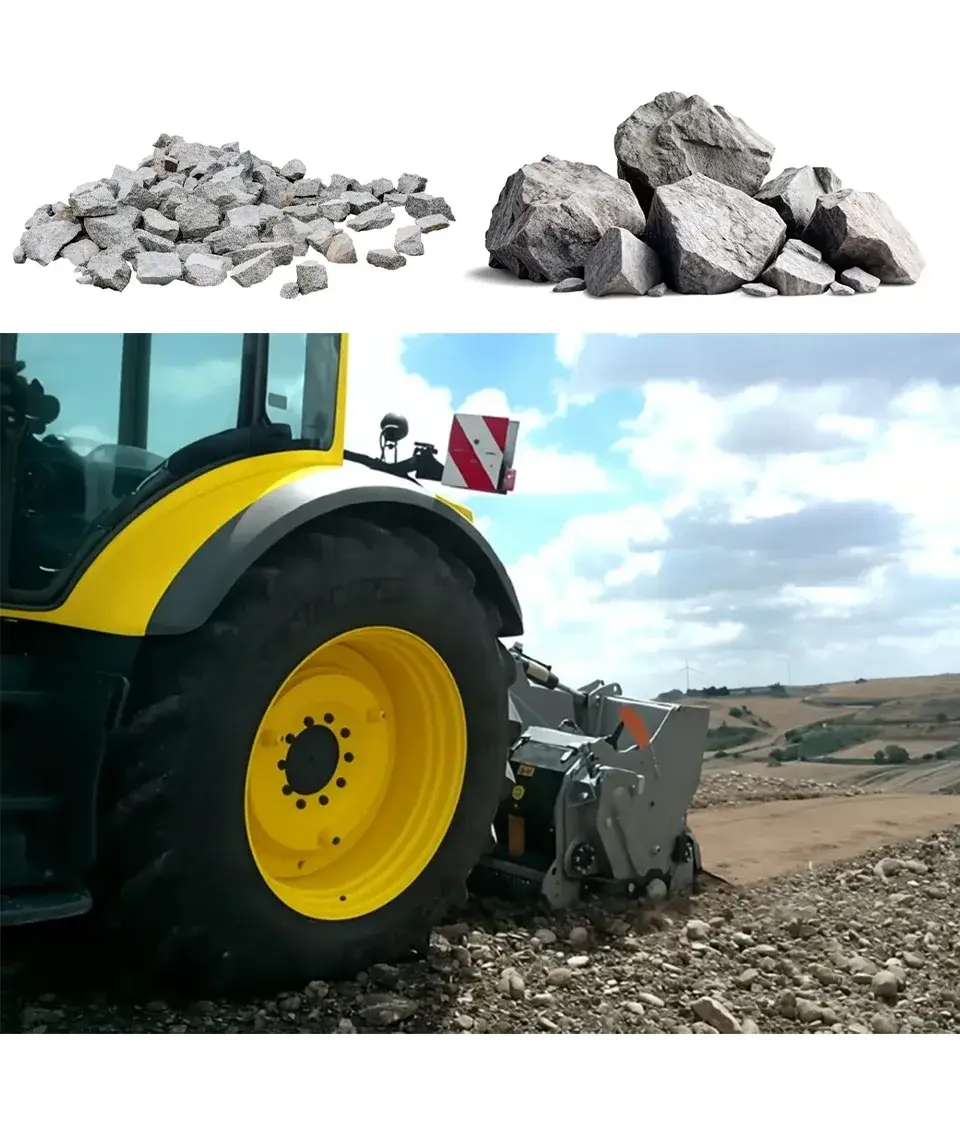
5. PTO Input Speeds Explained: 540 RPM vs. 1000 RPM — What Changes in Practice?
Colombian agricultural operators frequently encounter machines listed with dual PTO compatibility: “540 or 1000 RPM.” Understanding what this means in practical field terms — beyond the spec sheet — is crucial for both safety and performance. The two speeds represent two distinct operating regimes, not simply a faster or slower version of the same process.
At 540 RPM PTO input, the gearbox steps up the rotor speed through an internal gear ratio, but the absolute rotor tip velocity remains lower than at 1000 RPM. The result is lower kinetic energy per impact, larger average fragment sizes, and — importantly — lower peak torque spikes transmitted back to the tractor’s PTO shaft and rear linkage. This makes the 540 RPM mode preferred for tractors at the lower end of the rated power range (such as 70–90 hp machines) and for first-pass operation on terrain with dense, irregular boulder fields where sudden shock overloads are common. The lighter blows reduce tip fracture risk and gearbox stress in highly variable rock distributions.
At 1000 RPM PTO input, rotor tip velocities are significantly higher compared to 540 RPM operation — the exact multiplier depends on the gearbox ratio, but typically results in 60–90% higher rotor RPM. Kinetic energy scales with velocity squared, so the impact energy delivered per cutting tip strike increases by roughly 2.5x–3.2x. Fragment sizes decrease significantly, and the crushed material is distributed more uniformly across the worked swath. This mode is standard for high-throughput operations with tractors of 120 hp and above, and it is the setting required to process stones in the 150–300 mm diameter range efficiently on models like the STCM or RockMaster series. For Colombian land clearing projects involving the characteristically hard igneous and metamorphic boulders common in the Andes, 1000 RPM is typically the only setting that delivers acceptable field-clearance outcomes within a practical working day.
Practical Operating Guideline for Colombian Conditions
Rocky highland zones (Boyacá, Nariño, Cundinamarca): Start with 540 RPM input at 3–4 km/h to assess stone density and size distribution. Switch to 1000 RPM only after confirming stone sizes are within the rated shredding diameter of your model.
Tropical lowland fields (Huila, Meta, Tolima): 1000 RPM is generally appropriate from the outset given the typically softer, more friable volcanic and alluvial rocks commonly encountered, but advance at no more than 2 km/h during the first pass on uncleared ground.
6. The Second Variable: Why Forward Travel Speed Modifies the RPM Effect
Rotor RPM and tractor forward travel speed operate as a combined system, not independently. A given rotor RPM delivers a fixed number of tool impacts per unit of rotor rotation. But the spatial density of those impacts — how many times each patch of ground is struck — depends on how quickly the machine advances over it. Slow travel at high RPM results in maximum impact density, finest fragments, and highest energy consumption per hectare. Fast travel at the same RPM reduces impact density, producing coarser output with lower fuel consumption per hectare.
At 1000 RPM rotor input and a forward speed of 1.5 km/h, a 540 mm rotor diameter machine delivers approximately 120–150 tool impacts per square decimeter of ground. At 3 km/h with the same RPM, this drops to roughly 60–75 impacts per square decimeter. The difference in particle size distribution between these two extremes is measurable and significant — typically a 40–60% difference in the D50 (median fragment diameter) value, according to field trials conducted on similar equipment in comparable terrain conditions in Brazil and Spain. For Colombian operators managing varied stone density across a single field, this interaction offers a practical real-time control tool that requires no stopping or mechanical adjustment.
Many experienced operators use forward speed as their primary real-time control during operation, holding PTO speed constant at 1000 RPM and slowing the tractor through difficult stone-dense patches while accelerating slightly on lighter terrain. This maintains consistent power delivery to the gearbox while dynamically adjusting output quality in response to what is actually happening under the machine. The RockMaster Agricultural Stone Crusher and Tractor-Mounted Rock Crusher series, with their robust gearboxes matched to 80–190+ hp tractors, are particularly well-suited to this style of dynamic speed management across Colombia’s irregular field topographies.
Product Range
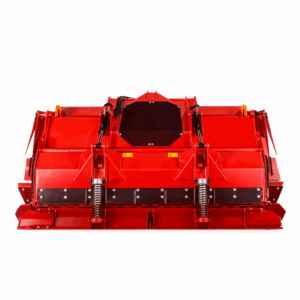
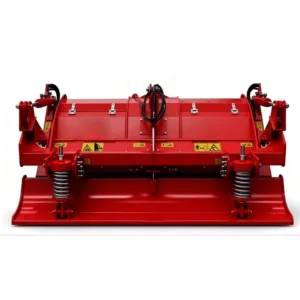
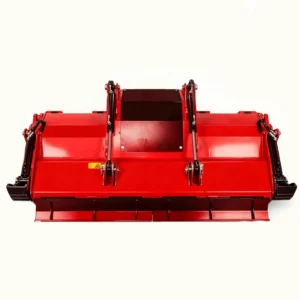
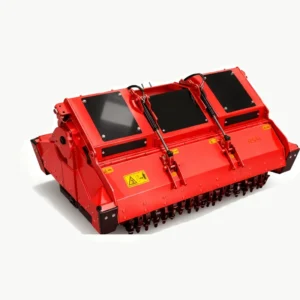
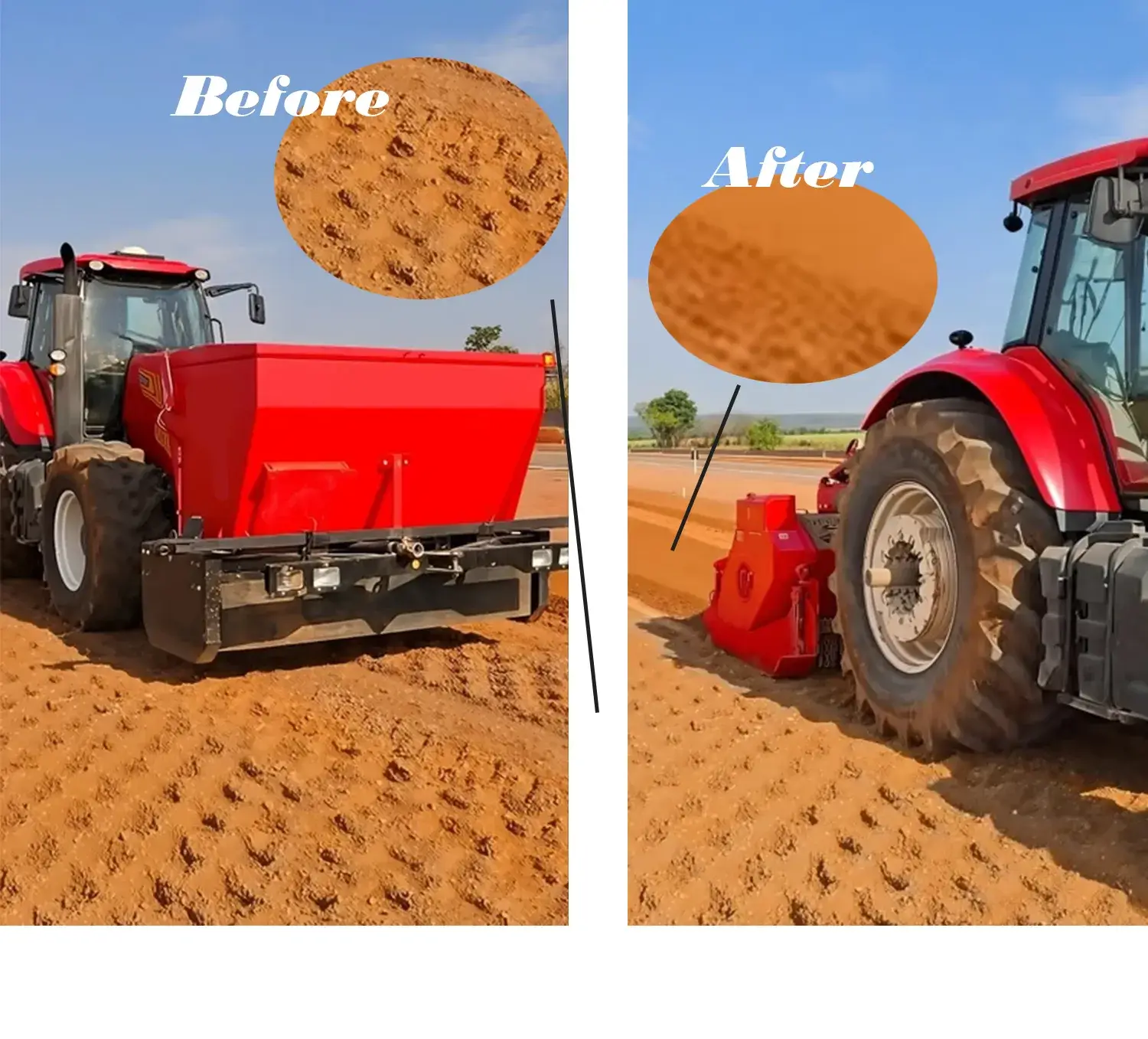
7. Stone Crusher Series — Model Comparison
Each model in the range is optimized for a specific power and application bracket. Selecting the right model for your Colombian field conditions is the foundation of effective RPM management.
8. Gearbox Regulations, Safety Standards, and Legal Compliance in Colombia and Beyond
Operating a tractor-mounted stone crusher — specifically its power-transmission system — is subject to regulatory frameworks across multiple jurisdictions. For Colombian operators, importers, and rental companies, understanding which standards apply is essential to avoid liability exposure and ensure safe operation in field conditions.
Colombia: Under Resolución 3673 de 2008 (work-at-height safety) and the broader framework of Resolución 0312 de 2019 (Minimum Occupational Safety Standards, SGSST), employers and machine operators must conduct formal risk assessments for all rotating machinery. The PTO shaft and gearbox input coupling zone must be guarded in accordance with NTC ISO 11684 (safety signs for agricultural machinery) and NTC 5722 (PTO drive shaft and coupling protection). The ICONTEC standard NTC-ISO 4254-1 — Colombia’s adoption of the ISO standard for safety of agricultural machinery — directly covers tractor-mounted implements including stone crushers and specifies minimum guarding requirements for PTO-driven components. Additionally, Colombia’s Decreto 1079 de 2015 (transport sector regulations) applies when stone crusher implements are transported on public roads and must meet load-securing and signage requirements.
European Union (applicable for imported EU-origin equipment): Stone crushers sold into or manufactured in the EU must comply with the Machinery Directive 2006/42/EC, which mandates CE marking and a Declaration of Conformity. EN ISO 11684 covers safety signs, while EN ISO 4254-7 (safety of agricultural machinery — soil tillage machinery) covers crushing and mulching attachments. The Directive requires full guarding of gearboxes and PTO couplings, overload protection on the PTO driveline (typically a slip clutch or shear bolt assembly), and documented residual risk in the operator’s manual.
United States (for reference, relevant where equipment is re-exported): ASABE Standard S318 (Safety for Agricultural Equipment) and OSHA 29 CFR 1928.57 (guarding of farm equipment) establish baseline requirements. ASABE S219 specifically addresses PTO-driven equipment design and is referenced in equipment certifications for North American markets.
Brazil (relevant given regional equipment supply chains): NR-31 (Norma Regulamentadora 31 — Safety and Health at Rural Work) mandates guarding on all PTO-driven agricultural equipment. Equipment should carry ABNT NBR compliance marks for PTO coupling guarding (NBR 14685) and machinery safety (NBR ISO 4254-1). Given that Brazil is a significant source of agricultural stone crushers in the Latin American market, operators in Colombia who source equipment from Brazilian manufacturers should verify NR-31 compliance documentation before purchase.
Important: Gearbox Oil Disposal and Environmental Compliance in Colombia
Colombia’s Decreto 1076 de 2015 (Environmental Sector Regulatory Decree) classifies used gear oil as hazardous industrial waste. Operators must dispose of spent gearbox oil through authorized collectors registered with the Corporaciones Autónomas Regionales (CARs). Improper disposal on agricultural land constitutes an environmental infraction under Law 99 of 1993. Retain oil change records as part of your SGSST documentation to demonstrate compliance during inspection.
9. Practical Tips for Optimizing RPM-Based Particle Control in Colombian Field Conditions
Beyond the theoretical relationship between RPM and particle size, day-to-day field management decisions significantly influence whether an operator achieves the desired output. The following practical guidance is drawn from operational experience with tractor-mounted stone crushers in conditions similar to those found across Colombia’s varied agricultural zones — from the cool, rocky soils of the Andean cordilleras to the harder basaltic plains of the interior.
Pre-field reconnaissance matters more than most operators acknowledge. Before engaging the PTO, walk a representative 50–100 meter transect of the target area. Probe the soil with a rod to locate approximate depths of subsurface stones. If stones are predominantly 80–150 mm and at 50–100 mm depth, the PSC 100 or PSC 125 at 1000 RPM and 2.5 km/h will deliver excellent fine output. If you encounter boulders exceeding 200 mm at the surface, a model with a higher rated shredding diameter — such as the RockMaster or Tractor-Mounted Rock Crusher series — is the appropriate machine to bring to the site first before attempting fine-particle passes with lighter models.
Rotor depth adjustment interacts with RPM at the soil interface. Setting the machine’s working depth deeper increases the resistance the rotor encounters per revolution, effectively loading the gearbox harder. At 1000 RPM PTO, operating at maximum rated working depth (150–200 mm for PSC models) requires the tractor to be within the upper portion of its rated HP range. Attempting maximum depth with an underpowered tractor causes PTO speed drop, which reduces rotor RPM and produces coarser, less uniform output — the opposite of what operators typically expect when they increase depth. Monitor your tractor’s PTO speed indicator during operation, and if you see sustained drops exceeding 5–8% from target, reduce forward travel speed rather than maintaining advance pace. Sustained PTO speed depression in tough material significantly accelerates gearbox wear and can overheat gear oil if the condition persists.
10. Selecting the Right Small PTO Stone Crusher for Compact Tractor Operations in Colombia
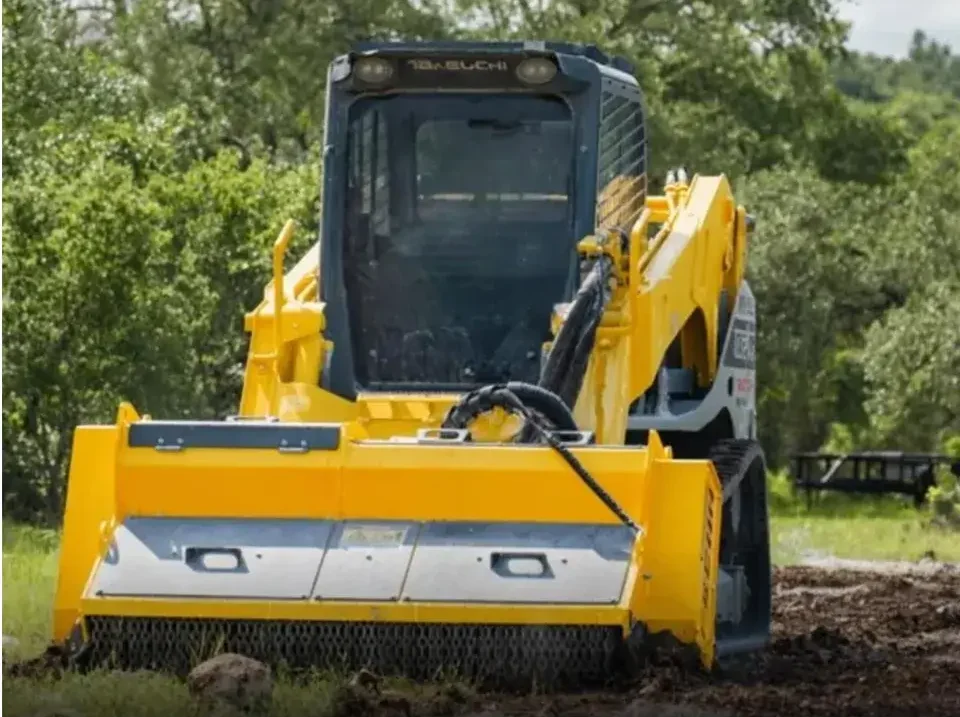
Not all agricultural stone crushing operations involve large, high-horsepower tractors. Across Colombia, many smallholder farms and rural road maintenance programs operate with compact tractors in the 70–100 hp range. For these users, the term “small pto stone crusher” is not just a marketing category — it represents a genuine need for equipment that delivers effective particle-size control without demanding excessive horsepower or oversized attachment weight. Budget constraints in Colombia’s rural economy also make right-sizing critical: an oversized stone crusher machine consumes more fuel, requires a larger tractor, and generates higher transport and maintenance costs without delivering proportionally better results on small-acreage land parcels.
The PSC 100 model, with its 1110 mm working width, 1230 kg operating weight, and compatibility with tractors as small as 70 hp, represents the entry point into properly engineered pto stone crusher performance. At this power and size level, the 450 mm rotor diameter delivers tip velocities of approximately 23.6 m/s at 1000 RPM — still well within the range required to fracture typical Colombian field stones up to 150 mm in diameter. The dual PTO compatibility (540 or 1000 RPM) gives smaller tractor operators flexibility to select the PTO speed at which their specific tractor delivers maximum torque, rather than forcing them into a single operating mode regardless of conditions.
For compact operations such as narrow terrace cultivation (terrazas de ladera common in the Andean coffee zone), row-crop management, or rural lane maintenance in the paramo-adjacent communities of the Eastern Cordillera, the ability to operate an effective stone crushing equipment without a 150+ hp machine dramatically reduces the barrier to mechanized land improvement. This is why the PSC 100 and PSC 125 models represent genuine small pto stone crusher solutions rather than scaled-down compromises — they are genuinely engineered for the power range they serve, not simply undersized versions of a larger design.
11. About Us
We are a dedicated supplier and technical resource for professional-grade agricultural stone crushing equipment and related land preparation machinery, serving the needs of farmers, agribusinesses, rural developers, and land managers across Latin America — with a particular focus on Colombia, Peru, Ecuador, and neighboring markets. Our product catalog spans the full spectrum of stone crushing needs, from compact tractor-mounted units for smallholder operations to high-horsepower implements designed for large-scale land clearing and infrastructure preparation.
Our team combines field-level agricultural experience with technical knowledge of stone-crushing engineering principles, allowing us to offer not just equipment supply but also application-specific guidance — helping customers in Colombia’s diverse terrain zones identify which model, operating RPM regime, and working depth combination will deliver the particle size output their specific project demands. We maintain product lines including equipment developed from agricultural engineering traditions in Korea and Europe, and pride ourselves on transparent technical communication and reliable after-sales support.
Whether you are searching for a portable stone crusher machine for a rural road project in Boyacá, an agricultural stone crusher for pasture renovation in the Llanos, or a heavy-duty rock crusher for terracing in Cundinamarca, our team is ready to assist. We welcome inquiries from experienced operators and first-time buyers alike — our goal is to match you with the right stone crushing equipment for your specific terrain and output requirements, not the most expensive available.
Veelgestelde vragen
Ready to Find the Right Stone Crusher for Your Farm?
Browse our complete range of tractor-mounted stone crusher models — from compact small pto stone crusher units to heavy-duty agricultural stone crushers — and get expert guidance on matching RPM capability to your specific terrain and output needs in Colombia.
Redacteur: PXY