Panduan Peralatan Pertanian
Best PTO Stone Crusher for Texas Rocky Soil: Caliche, Limestone, and Creek-Bed Stone Guide
A comprehensive technical guide to selecting, operating, and maintaining a PTO stone crusher for the unique rock challenges found across Texas — from Hill Country caliche to Panhandle flint and East Texas creek-bed cobbles.
1. Why Texas Rocky Soil Demands a Specialized PTO Stone Crusher
Texas spans over 268,000 square miles and encompasses radically different geological zones. What this means practically for any farmer, rancher, or land developer is that the rock you’re dealing with in the Hill Country near Fredericksburg is nothing like what you’ll find along creek beds in the Pineywoods, and both differ significantly from the caliche-heavy soils of the Rolling Plains. Each rock type presents a unique crushing challenge, and choosing the wrong pto stone crusher — or worse, attempting to clear land without one — leads to broken equipment, wasted labor, and soil damage that takes years to correct.
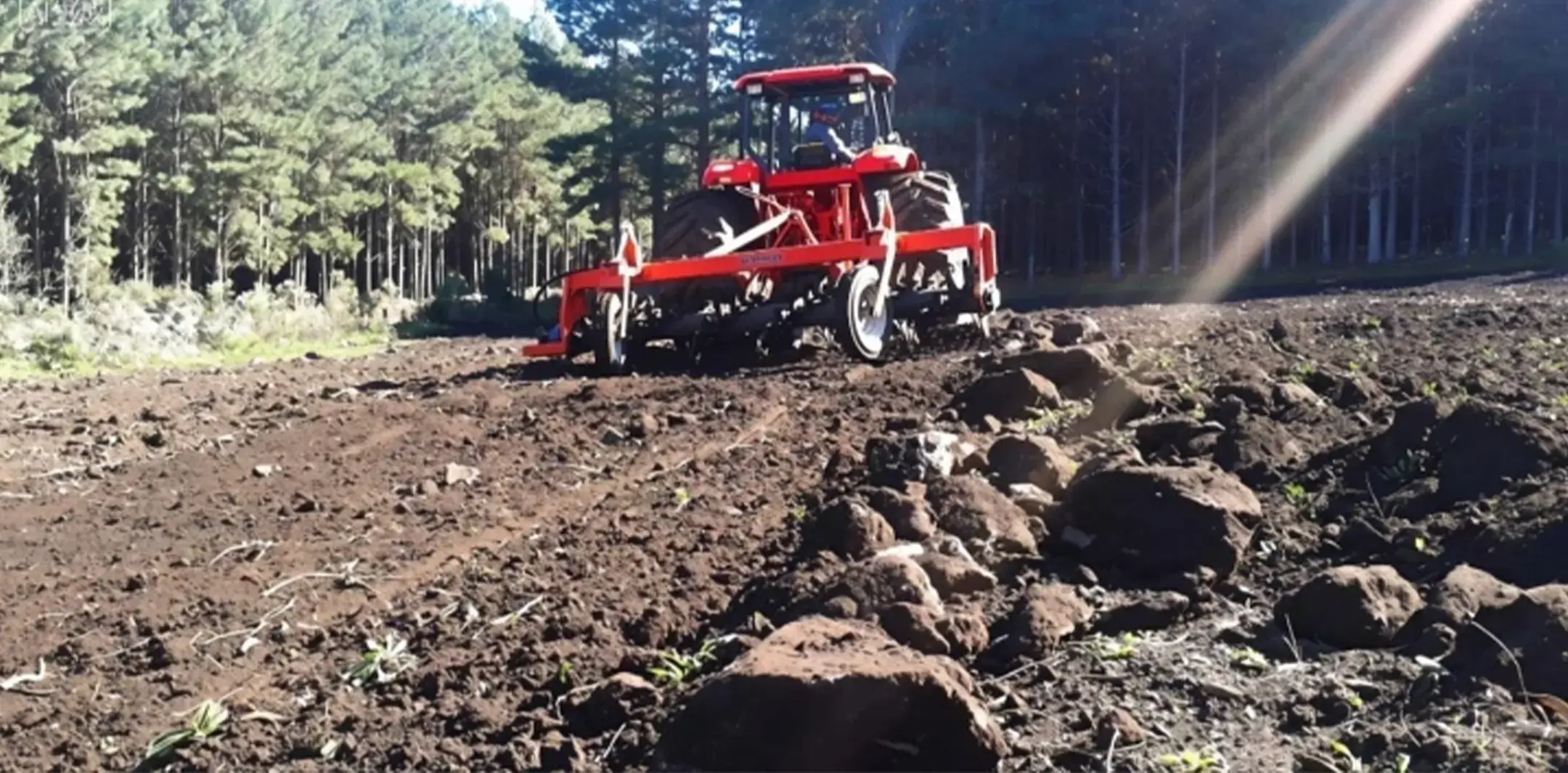
Caliche, which is a calcium carbonate hardpan commonly found across central and west Texas, presents a particular challenge. When exposed, it forms rock-hard plates just below the surface that are impervious to standard tillage equipment. Attempting to plow through caliche without crushing it first destroys disc blades, chips moldboard surfaces, and can crack frames on even heavy-duty implements. A tractor stone crusher designed for this layer — one that operates with enough rotor torque and tooth geometry to break the plate apart — changes the situation entirely, converting an obstacle into workable material that the plow can then incorporate.
Limestone outcroppings across the Edwards Plateau and Balcones Escarpment zone are similarly demanding. Texas limestone frequently occurs as fractured slabs that sit partially submerged in shallow soils, posing equipment-damaging risks during standard cultivation. Creek-bed stone — the rounded quartzite, chert, and flint cobbles deposited by historical waterways — adds yet another dimension, since smooth surface finishes make them difficult for fixed-tooth cutters to grip. The best stone crusher machine for Texas conditions therefore needs to handle all three scenarios: cutting through flat plate, splitting angular limestone, and reducing smooth rounded cobbles. Investing in a well-specified pto stone crusher — rather than attempting to work around the rock problem — is what separates operations that plateau in productivity from those that steadily expand cultivated area. This guide covers every relevant dimension of that decision.
2. What Is Crusher Stone Used For, and Why Use a PTO-Driven Machine?
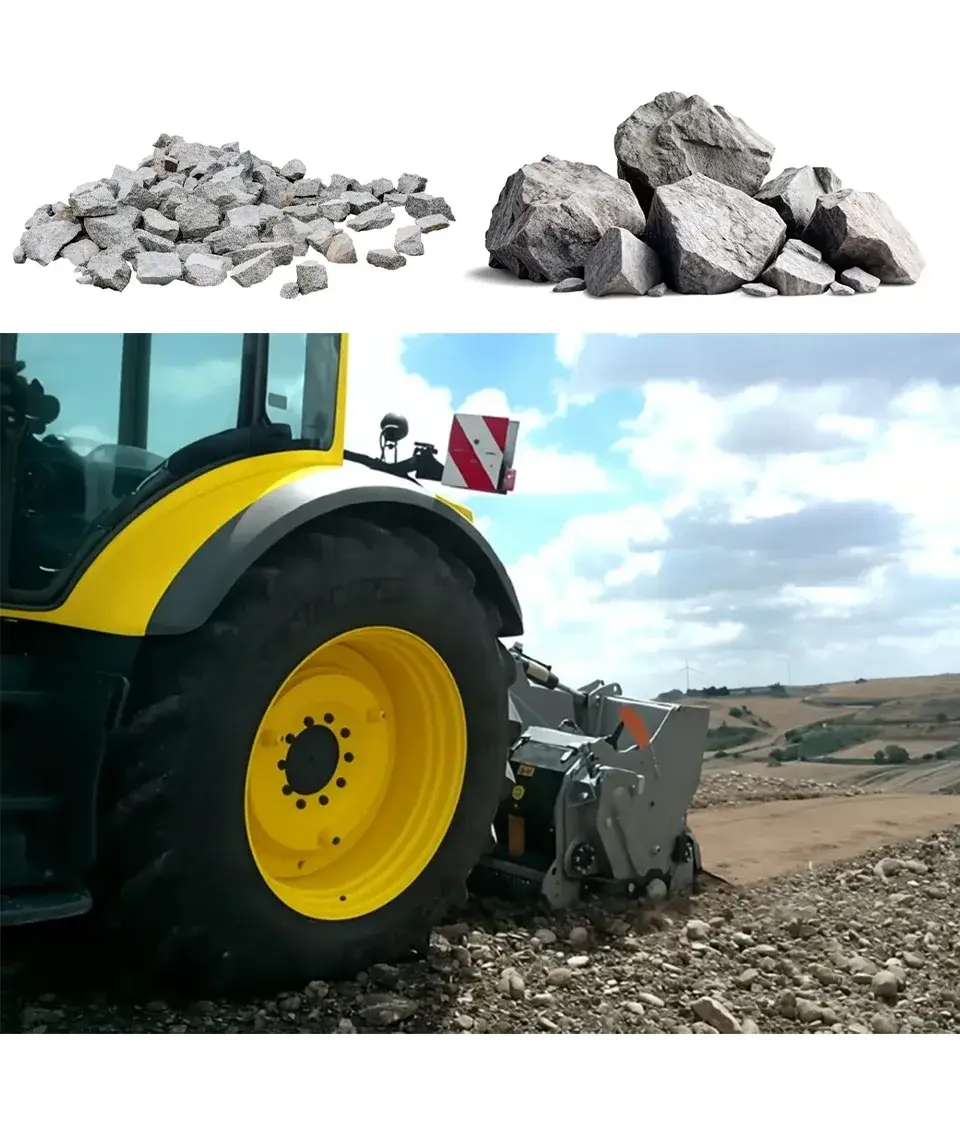
Crusher stone serves a wide range of purposes once reduced to appropriate fragment sizes. In agricultural contexts, the primary purpose is removing surface and near-surface obstacles that block cultivation, damage machinery, and prevent uniform seed-bed preparation. Beyond farm use, crushed stone fragments from field operations are also useful as natural aggregate for gravel roads, drainage swales, and hardstand areas — making an agricultural stone crusher a dual-purpose investment for many Texas operations. On ranches, crushed stone spread across bare feeding areas reduces mud during wet seasons, a simple benefit that can significantly improve livestock health outcomes.
A PTO stone crusher is preferred over standalone motorized crushers for on-farm work because it eliminates the need for a separate power source. The tractor’s own engine, channeled through the Power Take-Off (PTO) shaft at 540 or 1000 RPM depending on the model, provides more than adequate energy to drive a high-mass rotor at operational speed. This integration means lower overall equipment cost, simpler logistics — you drive one machine around the field rather than coordinating a tractor with a separate crushing unit — and easier maintenance since the power train components are shared with equipment the operator already knows. For Texas operations where fields may be remote and service calls expensive, this simplicity has tangible economic value.
Tractor-driven stone crushing equipment also preserves the operator’s ability to manage working speed dynamically. In rocky terrain, moving slower through dense stone concentrations lets the rotor work more thoroughly, while speeding up over lighter stone patches keeps overall job times manageable. This adaptive approach isn’t possible with a fixed-location stationary crusher, and it’s one of the key reasons the pto stone crusher format — specifically the PTO-driven tractor-mounted variety — has become the standard choice for field stone management across the southern United States, including across all the major farming zones in Texas. Running a pto stone crusher at the correct operational speed for the specific rock density encountered is arguably the single most impactful technique variable within the operator’s control.
3. Action Mechanism: How the Rotor Crushes Rock
The crushing action in a pto stone crusher centers on the rotating drum — commonly called the rotor — which carries an array of hardened steel teeth or picks arranged in a helical pattern around its circumference. As the tractor moves forward, the rotor spins at high speed (driven by PTO torque transmitted through a gearbox), and the teeth strike exposed or partially buried stones with enormous kinetic energy. The impact force breaks the rock along its natural grain lines, shattering it into fragments. A rear deflector plate or containment hood controls where the fragments project, ensuring they fall back into the working zone rather than becoming projectiles. On models designed for heavier stone, secondary containment chains add a further safety and containment layer.
The geometry of the tooth arrangement matters considerably. A helical pattern — where successive teeth are offset rotationally around the drum — distributes the impact load more evenly compared to a straight-row arrangement where all teeth strike simultaneously. Distributed impact reduces peak stress on the gearbox input shaft, extends bearing life, and produces a more consistent output fragment size. For Texas caliche and limestone, which tend to fracture along irregular planes rather than cleanly, the distributed impact approach is preferable because it subjects the stone to multiple strike angles rather than a single directional force. The PSC Series stone crusher, for example, uses exactly this approach with its STCL/3 tooth configuration, achieving consistent 150 mm maximum shredding diameter performance across the working width.
Depth of penetration is controlled by a rear skid or roller that rides on the soil surface while the rotor engages below. Adjusting the height of this skid changes the working depth between the rotor’s lowest tooth path and the soil surface level. For caliche hardpan treatment, working at maximum depth (up to 150–200 mm depending on model) lets the rotor attack the full thickness of the cemented layer in a single pass. For surface rock management on pasture land, a shallower setting protects the rotor from excessive soil engagement that could clog the mechanism. Getting this adjustment right for the specific rock depth is the single most important operational decision a Texas operator makes before starting a crushing run.
4. Structural Construction: What Makes a Stone Crusher Machine Built to Last
A stone crusher machine that breaks down under heavy Texas fieldstone is worse than useless — it’s a liability. The structural decisions that separate a long-service machine from one that fails early start at the frame. Heavy-duty stone crushers use structural steel profiles for the main chassis, typically rectangular hollow sections welded into a rigid assembly that resists torsional flex as the rotor encounters stone of uneven distribution across the working width. When a cluster of large caliche blocks appear on one side of the working path, the frame must absorb the momentary imbalance without deforming. Undersized or poorly welded frames accumulate fatigue cracks at weld toes that eventually progress to full fracture — the most common form of catastrophic structural failure in field stone crushers.
The rotor drum itself is a precision-balanced component. Because it rotates at high speed — typically 1000 RPM at the PTO input, geared up to rotor operational speed — even small asymmetries in mass distribution create significant vibration. Vibration damages bearings, fatigues chassis welds, and causes loose hardware to back off under working loads. Quality manufacturers balance the rotor dynamically after assembly, verifying that residual imbalance falls below a defined threshold before the machine ships. The rotor shaft runs in sealed, heavy-duty spherical roller bearings housed in reinforced side-plate assemblies. These bearing housings need to be designed for field replacement, because even well-maintained bearings eventually wear — and when they do, the repair should take hours rather than days.
The gearbox occupies a critical position in the power train, transferring torque from the PTO shaft to the rotor at the correct speed ratio while withstanding the shock loads generated by rotor-stone impacts. These shock loads can be several times the nominal torque value in a fraction of a second — far higher than steady-state operating conditions. Gearboxes specified for stone crushing service must be rated for this duty cycle with appropriate service factors. In practice, this means a gearbox that would normally be specified for 180 hp steady-state power transmission is often used in a 150 hp pto stone crusher application, providing a margin against shock. The Thor 2.4 unit, which requires 180 hp minimum and uses 2 control valves, exemplifies this design philosophy with its 2300 kg robust body that holds up under repeated high-impact passes. Choosing a pto stone crusher with properly rated gearbox components is therefore not just a performance decision — it directly determines maintenance intervals and total cost of ownership over the machine’s working life.
5. Material System: What PTO Stone Crushers Are Made Of — and Why It Matters for Hard Texas Rock
The steel used to construct rotor teeth is perhaps the single most consequential material decision in a pto stone crusher’s design. Teeth that dull quickly require frequent replacement, driving up operating costs and downtime. Teeth that fracture catastrophically under impact — rather than wearing gradually — create safety hazards and unpredictable failure events. The solution is a carefully chosen tool steel, typically a chromium-molybdenum or chromium-tungsten alloy, hardened to 55–62 HRC (Rockwell hardness C-scale) through a controlled heat treatment process. At this hardness level, the material resists abrasion from quartz-rich Texas limestone and flint while maintaining enough toughness to absorb impact without shattering. Some manufacturers use tungsten carbide inserts at the tooth tip for maximum wear life — this is the STC/3 tooth type referenced in the PSC Series specifications.
The rotor drum body is typically fabricated from medium-carbon structural steel plate, heavy-gauge, welded to forged steel flanges at each end. The forged flange connection point is the area of highest stress concentration in the rotor assembly, and using forgings rather than weldments or castings at this location provides a measurable improvement in fatigue life. The containment hood and side deflectors — the components most exposed to abrasive fragment contact — are fabricated from wear-resistant (AR) steel plate, commonly AR400 or AR500 grade, which provides hardness of 370–500 Brinell while retaining adequate toughness for structural service. AR500 is the preferred choice for hood liners in heavy-duty applications like Texas limestone crushing where fragment sizes and velocities are both high.
Sealing systems for bearings and gearboxes in field stone crushers work in a highly contaminated environment — fine rock dust, soil moisture, and occasional water exposure from creek-bed operations combine to challenge seal integrity. Multi-lip contact seals with labyrinth outer rings are the appropriate specification for this service, supplemented by grease-purge lubrication that pushes fresh grease through the bearing cavity during operation, carrying contamination out with the displaced old grease rather than allowing it to accumulate. Surface coatings — epoxy primer under a polyurethane topcoat — protect structural steel surfaces from the accelerated corrosion that occurs when iron-bearing soil contacts abraded metal surfaces. Operators in the Gulf Coast prairie region of Texas should pay particular attention to coating integrity during seasonal inspections.
6. Comparing Key PTO Stone Crusher Models for Texas Applications
Selecting the right model comes down to matching tractor power, stone hardness, required working width, and target output size to the appropriate machine specification. The table below compares the primary pto stone crusher models available in the Mulchers / Stone Crushers series to help you narrow down the right fit for your Texas operation. Whether you are evaluating a pto stone crusher for the first time or replacing an existing unit, these specifications provide the basis for an informed comparison. All parameters sourced directly from product specifications.
| Parameter | PSC 100 (Light) | PSC 175 (Mid) | PSC 200 (Heavy) | Thor 2.4 | Thor 3.0 |
|---|---|---|---|---|---|
| Tractor Power (hp) | 70–120 | 100–120 | 120–150 | 180 min. | 230 min. |
| PTO Speed (rpm) | 540–1000 | 540–1000 | 1000 | N/A (hydraulic) | N/A (hydraulic) |
| Lebar Kerja (mm) | 1,110 | 1,830 | 2,070 | 2,400 | 3,000 |
| Machine Weight (kg) | 1,230 | 1,570 | 1,750 | 2,300 | 2,800 |
| Diameter Pemutar (mm) | 450 | 450 | 450 | — | — |
| Max Stone Diameter (mm) | 150 | 150 | 150 | 300+ (heavy) | 300+ (heavy) |
| Kedalaman Kerja Maksimum (mm) | 150 | 150 | 150 | 200+ | 200+ |
| Hitch Category | Cat II | Cat II | Cat II | Cat II + Drawbar | Cat II + Drawbar |
| Best Texas Application | Caliche driveway, small pasture | Hill Country limestone | Creek-bed stone fields | Large ranch land clearing | Commercial land development |
7. Matching Crusher Configuration to Texas Stone Type
Caliche Hardpan (Central & West Texas)
Caliche hardpan forms when calcium carbonate cements soil particles into a dense, poorly permeable layer. Its compressive strength can reach 500–1500 psi depending on moisture content and depth of cementation. A small pto stone crusher in the PSC 100–150 range works effectively for treating caliche layers up to 100 mm thick in driveway maintenance and garden bed preparation. For agricultural field scale — where caliche layers may extend over many hectares at depths of 50–150 mm below surface — the PSC 175 or PSC 200 is the better specification, offering wider coverage per pass and the higher torque reserve needed to power through continuous hardpan without stalling. Working speed should be reduced to 2–3 km/h in solid caliche versus the 3–5 km/h suitable for loose rock.
Limestone Outcropping (Hill Country, Edwards Plateau)
Texas limestone varies considerably in hardness and fracture pattern. Georgetown formation limestone — common in Williamson and Bell counties — tends to be soft and flaky, while Ellenburger dolomitic limestone found further west is significantly harder and more angular. The key distinction for crusher selection is maximum stone diameter. For limestone slabs up to 150 mm thick, the PSC series handles the task within spec. For larger fractured slabs or boulders — common in rocky Hill Country areas where slabs can be 200–400 mm across — the RockMaster Agricultural Stone Crusher with its capacity to process stones up to 500 mm in size is the appropriate choice. The tractor-mounted rock crusher with fixed-tooth cutter design excels at the angular fracture geometry typical of limestone, gripping edges effectively.
Creek-Bed Cobbles (East Texas, River Valleys)
Creek-bed cobbles are a distinct challenge because their smooth, rounded surfaces reduce initial tooth grip. This means the first contact between rotor tooth and cobble surface tends to deflect rather than bite — requiring the containment hood to redirect the stone back into the rotor zone for a second or third strike. Machines with effective containment geometry — where the hood maintains close clearance to the rotor — handle creek stone more efficiently than open designs. The agricultural stone crusher format is well-suited here, and operators should select working speeds on the lower end (around 2–3 km/h) to maximize the number of rotor contacts per forward meter of travel. Quartzite cobbles, common in East Texas creek beds, are among the hardest rocks encountered in Texas field operations and require tungsten carbide tipped teeth for acceptable tooth life.
For operators dealing with mixed rock — which is common across the rolling terrain of North-Central Texas where alluvial deposits intermix with caliche layers — a mid-range pto stone crusher for sale with adjustable depth control and replaceable tooth options is the most practical solution. The ability to swap between STC/3 standard teeth and tungsten-tipped variants without removing the entire rotor saves significant time when site conditions change between fields or across seasons.
8. Regulatory Compliance: Gearbox Standards and Agricultural Equipment Laws
Operators in Texas and Korea alike need to understand the regulatory framework governing PTO-driven stone crushing equipment before purchasing and deploying these machines. Non-compliance creates liability exposure, can void equipment warranties, and in commercial or contractor applications may result in regulatory penalties. The following is an overview of the most relevant compliance requirements by jurisdiction.
| Jurisdiction | Key Standard / Regulation | Relevance to Stone Crushers |
|---|---|---|
| United States (Federal) | ASABE S203.13 — PTO shaft safety guarding; OSHA 29 CFR 1928 (Agricultural Operations) | PTO guards must be fitted and maintained; employer liability for agricultural worker injury if guards are removed |
| Texas (State Level) | Texas Agriculture Code §251.003; Texas Department of Agriculture equipment registration requirements for commercial operators | Commercial land-clearing operators using stone crushers for hire must maintain liability insurance; roadway transport requires SMV emblem |
| Korea (South Korea) | Korean Industrial Safety and Health Act (산업안전보건법); KOSHA GUIDE A-36; Agricultural Machinery Mechanization Promotion Act | PTO-driven implements must meet national safety mark requirements; gearboxes used in agricultural machinery require KS (Korean Standards) certification for commercial sale |
| European Union (Reference) | EU Machinery Directive 2006/42/EC; EN ISO 4254-7 (Agricultural Machinery Safety — Harvest Machinery) | CE marking required for machinery sold within EU; stone crusher gearboxes must meet ISO 6336 gear load capacity calculations |
| ISO (International) | ISO 500 (PTO dimensions); ISO 11684 (PTO safety guarding and signs); ISO 11684-2 (safety sign dimensions) | PTO connection dimensions and guard specifications — universal compliance baseline applicable to all markets |
| Gearbox Standards | AGMA 2001 (Gear Tooth Rating); ISO 6336 (Gear Capacity Calculation); DIN 3990 (Reference) | Gearboxes must be rated for transmitted torque plus shock load service factor; replacement gearbox components must meet original specification |
In Korea specifically, the Agricultural Machinery Mechanization Promotion Act (농업기계화 촉진법) governs the approval and market distribution of agricultural machinery including stone crushing equipment. Machinery must pass safety inspection requirements before receiving type approval. Korean agricultural stone crusher buyers should verify that imported equipment carries appropriate conformity documentation and that the Korean Standards Institute (KSI) marking is present on gearbox components where required. For commercial-use operators, registering equipment with the relevant Regional Agricultural Research and Extension Services office is standard practice that ensures eligibility for government mechanization subsidy programs.
9. Our Stone Crusher & Mulcher Product Lineup
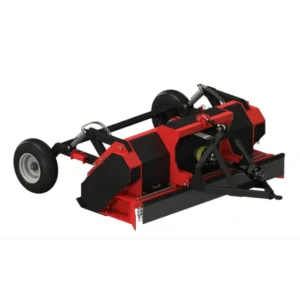
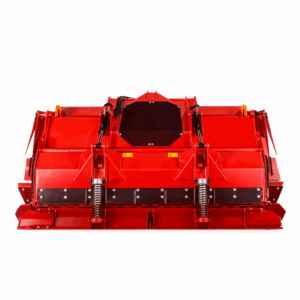
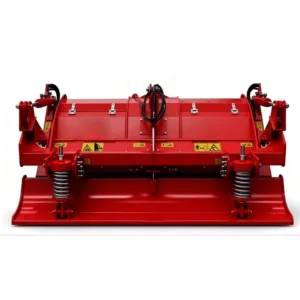
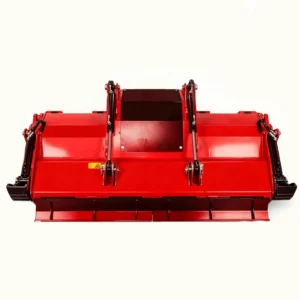
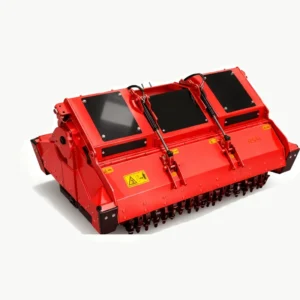
The following products form our core Mulchers / Stone Crushers series. Each addresses a specific power range, working width, and stone hardness scenario. Click any product to view full specifications and inquiry options.
10. Operational Tips for Texas and Korean Rocky Field Conditions
Maximizing productivity and minimizing component wear on a pto stone crusher comes down to a handful of operational habits that experienced operators follow consistently. In Texas Hill Country operations, always walk the target area before the first crusher pass to identify any stones larger than the machine’s rated maximum shredding diameter. Stones above the design limit should be removed by hand or broken with a mechanical hammer before the pto stone crusher operates over that zone. Attempting to force the rotor through an oversized stone — especially a dense limestone slab — risks tooth breakage, rotor bearing shock damage, and potential gearbox damage from a momentary stall-and-release load spike.
In hot Texas summer conditions — particularly across the Rolling Plains where July temperatures routinely exceed 38°C — gearbox oil viscosity drops and thermal expansion affects seal integrity. Checking gearbox oil level and condition before extended summer work sessions, and using the oil viscosity grade recommended for high-temperature operation rather than a universal grade, meaningfully extends gearbox service life. Many commercial operators in Texas switch to a higher-viscosity gear oil (such as ISO VG 220 versus ISO VG 150) for summer months and back to the lighter grade in winter, accommodating the viscosity-temperature relationship of mineral gear oils.
For Korean operators working in mountain agricultural zones — where fields are often terraced and slopes can be significant — forward speed management is even more critical than on flat Texas terrain. On a downhill slope, the machine’s weight assists forward motion, so the operator must actively reduce throttle or use the tractor’s service brake to maintain the target working speed. If the crusher overspeeds on a downslope pass, the rotor-PTO coupling must decelerate a heavy rotor rapidly, which generates significant shock loading in the gearbox. Consistent speed management protects both the machine and the operator on sloped terrain typical of Korean agricultural regions in Gyeongsangbuk-do and Chungcheongbuk-do provinces.
11. Tentang Kami
We are a professional manufacturer and supplier of agricultural stone crushing equipment serving farming operations across North America, Asia, and beyond. Our product development is grounded in real-field testing across diverse geological conditions — from the caliche hardpan of Central Texas and the volcanic soils of Korea’s highland farming zones to the fractured limestone of the Balcones Escarpment. This field-first approach guides every engineering decision, from pto stone crusher tooth geometry and rotor balance specifications to gearbox service factor ratings and hood containment design. Our team’s hands-on experience with pto stone crusher performance across different rock types informs every product iteration we release.
Our Mulchers / Stone Crushers series covers the full range from small pto stone crusher configurations suitable for compact tractors in the 70 hp range all the way to heavy commercial units requiring 230 hp or above, addressing the needs of individual farm operators, ranching operations, land development contractors, and municipal road maintenance teams. We supply both used tractor stone crusher for sale inquiries (where applicable) and new equipment, and our technical support team can assist with model selection, spare parts sourcing, and operational guidance for specific soil and stone conditions. If you’re searching for a reliable pto stone crusher for sale from experienced pto stone crusher manufacturers, our range provides the breadth and specification depth to meet that need.
Soalan Lazim
Editor: PXY