설명
1. Technical Specifications: EP-ERA ROWS Series
| Feature | EP-ERA-2100 (2 ROWS) | EP-ERA-3100 (3 ROWS) | EP-ERA-5100 (5 ROWS) |
|---|---|---|---|
| Empty Weight | 720 Kg | 1020 Kg | 1300 Kg |
| Linkage Category | Category 2 | ||
| Min. Engine Power | 75 cv | 75 cv | 100 cv |
| Bunker Capacity | 125 Kg per Row (Fertilizer) | ||
| Input Speed (PTO) | 540 RPM | ||
| Working Speed | $3-5~km/h$ | ||
2. Five Key Facts
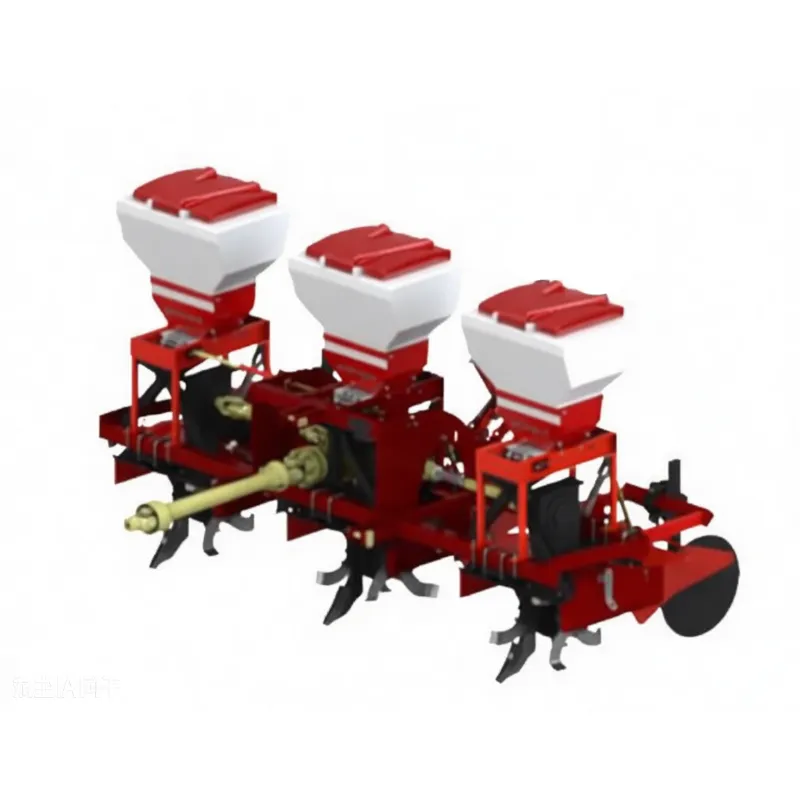
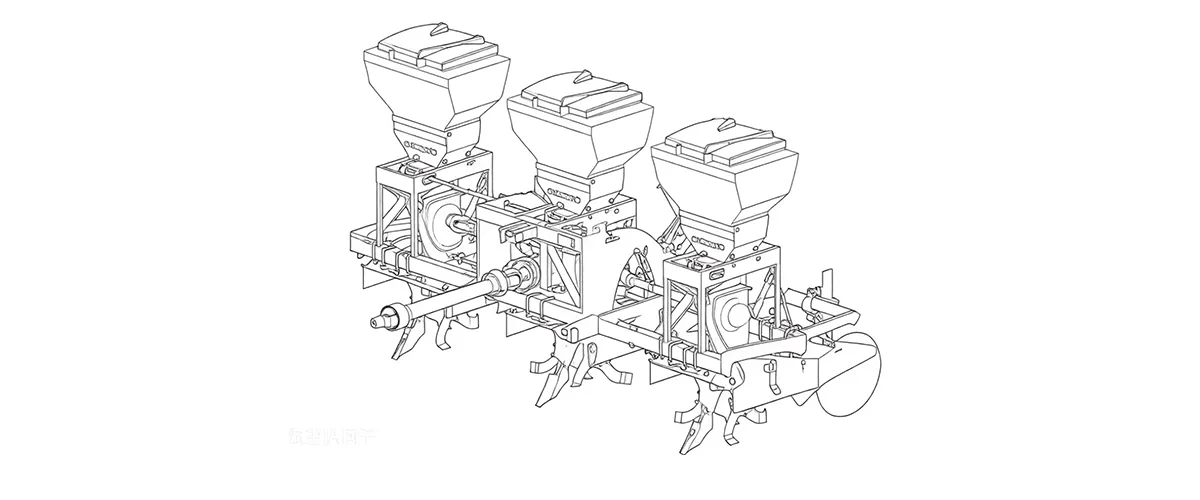
Multifunctional Performance: Each unit acts as a **rotary hoe tiller cultivator for sale**, fertilizer applicator, and fumigator in a single pass.
Robust Mechanical Build: Features high-resistance blades and a heavy-duty bed frame (1020 Kg for ERA-3100) to ensure longevity in abrasive soils.
Precision Row Control: Independent row units allow for precise adjustment of width and depth, essential for specialized ridge farming.
High-Capacity Bunkers: Individual row bunkers provide a 125 Kg fertilizer capacity, reducing refill downtime.
Optimized Speed: Engineered to maintain soil structure integrity while operating at a working speed of 3-5 km/h.
3. Why the Watanabe ERA-3100 is the Premier Choice for Korean Precision Farming
In the modern agricultural landscape of South Korea—from the reclaimed lands of Seosan to the fertile valleys of Pyeongchang—efficiency is defined by the ability to perform multiple operations within a single window of opportunity.
The Watanabe ERA-3100 rotary cultivator tool addresses this by consolidating soil aeration, ridge building, and nutrient placement into one streamlined operation. Unlike a standard hand held soil tiller used in home gardening, the ERA-3100 is a professional-grade 3 point hitch tiller for sale that leverages the full torque of a tractor’s PTO. This machine utilizes a specialized drive train that ensures even distribution of power to each row unit, preventing the skips and uneven tillage often seen in lighter models. The high resistance of the blades is particularly crucial for the “Jeju Stone Soil” or the clay-heavy soils of the Gyeonggi province, where durability is the difference between profit and frequent mechanical failure.
By using a three-point hitch tillers for sale from a legacy manufacturer like Watanabe, farmers ensure they are compliant with local standards for soil conservation while maximizing the bio-availability of fertilizers placed directly in the root zone.
4. Regulatory Standards and Land Management Compliance
Navigating the agricultural sector in South Korea requires strict adherence to the Agricultural Machinery Safety Management Act. All tractor tillers 3 point hitch must be certified by the Korea Agricultural Machinery Industry Cooperative (KAMICO) to ensure they meet local safety and durability standards. Furthermore, the Farmland Act of Korea emphasizes the prevention of soil erosion and degradation.
Globally, for users seeking a cultivator tiller rotary hoe in the EU or USA, the equipment aligns with ISO 4254-1 safety standards for agricultural machinery. Specifically, the “shielding” around the rotating parts of our rotary hoe cultivator is designed to prevent accidental contact, a key requirement for Occupational Safety and Health Administration (OSHA) compliance in North America. Whether you are using a 9-tyne rigid cultivator or our advanced rotary system, land management laws increasingly require “Integrated Pest Management” (IPM) practices, which our built-in fumigator applicator supports by placing chemical treatments precisely where needed, reducing overall environmental impact.
5. Application Scenarios
1. South Korea – Precision Ridge Farming in Pyeongchang
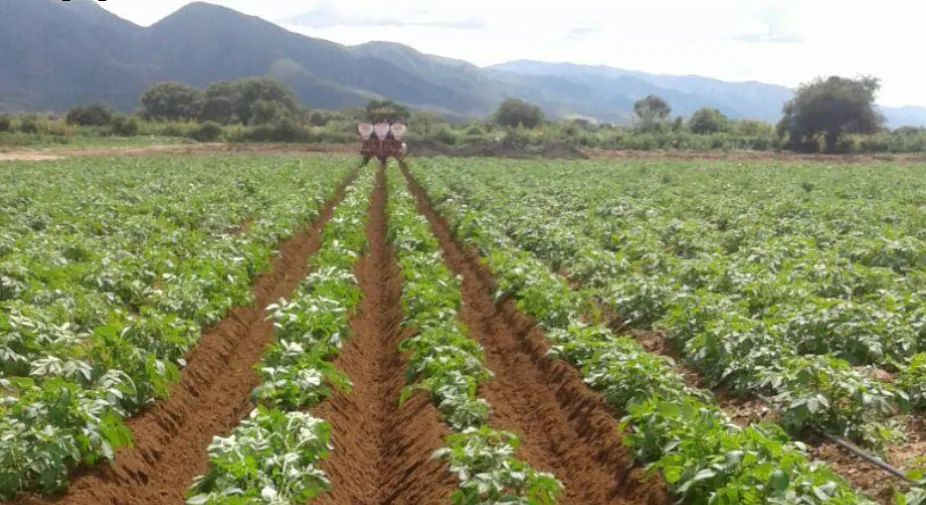
In Pyeongchang, South Korea, the ERA-3100 is heavily utilized for precision ridge farming on ginseng fields. Ginseng requires highly aerated soil for root development, and the ERA-3100’s ability to maintain an optimal working speed of 3-5 km/h helps maintain soil integrity. The independent row units and high-resistance blades are crucial in breaking through the rocky, clay-heavy soil found in this mountainous region. This cultivator’s multifunctionality allows farmers to combine soil aeration, fertilizer application, and pest control in a single pass, making it a critical tool for ginseng farmers.
2. Australia – High-Volume Crop Residue Management
In the vast farmlands of Australia, especially in areas like Queensland, where wheat and barley are commonly grown, the ERA-5100 (5 Rows) rotary cultivator is used to tackle high volumes of crop residue. Its high-capacity bunkers can handle 125 kg per row of fertilizer, significantly reducing downtime for refilling. The machine’s independent row units allow for greater maneuverability across large fields, while the machine’s ability to handle heavy crop residue without clogging is crucial for conservation tillage. It works well in the stony soils often found in Australian agricultural zones.
3. United States – Large-Scale Potato Farming in Idaho
In Idaho, one of the U.S. largest potato-producing states, the ERA-3100 is widely used for soil preparation and fertilizer application. The rotary cultivator’s high-performance capabilities help Idaho farmers efficiently prepare their soil before planting potatoes. Its ability to handle compact and clay-heavy soils is critical for breaking up the ground in large-scale fields, while its independent row units ensure that each row gets precise tilling and fertilization. This helps farmers maintain consistent soil structure, which is crucial for growing high-quality potatoes.
4. European Union – Precision Tillage in France
In the French vineyards of Bordeaux, the ERA-3100 rotary cultivator is a vital tool for soil aeration and weed control in narrow vineyard rows. The independent row units provide precise control over the depth and width of the tilling, which is essential for maintaining healthy vine roots. The cultivator is also used for fertilizer application, ensuring that the nutrient-rich solution is placed directly where it is needed in the root zone. This helps maintain soil health and improves grape yield while reducing the environmental impact of traditional farming methods.
5. Japan – Rice Paddy Maintenance in Hokkaido
In Hokkaido, Japan, known for its large-scale rice production, the ERA-2100 (2 Rows) is deployed for weed control and soil preparation in rice paddies. Japanese farmers have to deal with tightly spaced crops, and the ERA-2100’s precision row control allows for minimal soil disturbance while aerating the soil. It also functions as a fertilizer applicator, ensuring that nutrients are directly applied to the roots of rice plants. This cultivator helps to manage water retention and weed growth in paddy fields, improving overall rice yields.
6. Brazil – Crop Residue Management in Soybean Fields
In Brazil, particularly in the soybean-growing regions of Mato Grosso, the ERA-5100 (5 Rows) rotary cultivator is instrumental in managing crop residue after the soybean harvest. The large capacity of the machine allows for efficient tillage and residue breakdown, ensuring that the soil remains ready for the next planting season. With the ability to handle high volumes of residue without clogging, the ERA-5100 plays a key role in minimizing soil compaction and improving soil health in Brazil’s vast soybean fields.
6. Tractor Compatibility & Replacement Guide
The ERA series is designed for seamless integration with high-performance tractors common in Korea and global markets.
| Compatible Brand | Series / Horsepower Range | Linkage Type |
|---|---|---|
| LS Mtron (Korea) | XP Series / MT7 Series (85 – 120 HP) | Cat 2 – Standard |
| TYM / Daedong (Korea) | T130 / PX Series (100+ HP) | Cat 2 – Standard |
| Kubota | M7 Series / M8 Series (110 – 150 HP) | Universal ISO Cat 2 |
| John Deere | 6M Series / 6R Series (110 – 140 HP) | Universal ISO Cat 2 |
7. Market Trend Analysis: The Future of Row Tillage (2025-2030)
The agricultural machinery market is currently shifting from “Massive Coverage” to “Precision Intensity.” In South Korea, the rising cost of labor and the aging agricultural workforce are driving a 15% annual increase in the adoption of multi-pass implements like the Watanabe ERA rotary garden cultivator. We are observing a significant trend where farmers are moving away from simple rotary tillers toward units that integrate Smart Sensing and variable-rate application for fertilizers.
Furthermore, the global demand for “Conservation Tillage” means that the best rotary cultivator must now be able to handle high volumes of crop residue without clogging. The ERA series’ independent line design is perfectly positioned for this, as it allows for the spacing required to navigate residue-laden fields while maintaining ridge integrity. For high-value crops, the market is also seeing a move toward higher horsepower requirement machines that offer greater depth control, moving the standard from 60 HP to the 100-140 HP range, where the ERA-5100 excels.
8. Customer Success Case Study:
Client 1 Profile:
Company: Seosan Farming Collective, South Korea
Customer Reviews:
“We’ve been using the Watanabe ERA-3100 for over a season now, and it’s made a huge difference in how we manage our fields. The ability to fertilize and till in one go has saved us so much time, especially during the busy planting season. The robust build, especially the high-resistance blades, is perfect for our clay-heavy soils in Seosan. We’re able to complete our work faster and with less soil compaction, which is crucial for maintaining the health of our crops.”
Client 2 Profile:
Company: Daegu Agricultural Services, South Korea
Customer Reviews:
“As a contractor, we’ve used various tillers, but the Watanabe ERA-5100 stands out for its ability to handle large-scale operations. With its 5-row design, we can cover more ground quickly without sacrificing precision. The heavy-duty construction and high-capacity fertilizer bunkers are built to last. It’s the perfect solution for farms looking to improve efficiency without compromising on quality.”
Client 3 Profile:
Company: North American Farm Equipment, USA
Customer Reviews:
“We distribute the Watanabe ERA-3100 in North America, and our customers absolutely love it. The build quality is top-notch, and it’s easy to integrate with most of the tractors on the market. We’ve received great feedback from farms in the Midwest, especially for root crops like potatoes, where soil aeration is crucial. The independent row units also give our clients the flexibility to work in various soil conditions.”
Client 4 Profile:
Company: South-East Asia Land Development, Vietnam
Customer Reviews:
“The Watanabe ERA-3100 has been a perfect fit for our operations in Vietnam. The machine is versatile, handling both tillage and fertilizer application in a single pass. Our clients in rice and vegetable farming are already seeing faster turnaround times and better crop yields. We also appreciate the machine’s durability, especially in our region’s heavy clay and humid conditions.”
Client 5 Profile:
Company: New Zealand Precision Farming, New Zealand
Customer Reviews:
“We recently tested the ERA-3100 with our sheep and crop farms, and it’s been a solid addition to our fleet. The working speed of 3-5 km/h is ideal for maintaining soil structure, which is vital for our pasturelands. The independent row units allow for precise tilling and fertilizer application, which is crucial when you’re working with high-value crops like carrots and radishes.”
9. EVER-POWER Factory Capabilities & OEM Customization
We understand that soil conditions vary not only from country to country but also within different regions of the same country.
Our manufacturing facilities are equipped with advanced CNC machining equipment and robotic welding production lines, enabling us to provide exceptional customized services.
Unlike traditional fixed assembly lines, we can adjust the chassis reinforcement, tooth spacing, and hydraulic line layout of our rock rakes to suit specific regional needs, such as adapting to the heavy clay soils common in Southeast Asia or the dry, abrasive soils of the Middle East.
We offer OEM services to our distributors and can customize the connection system to suit specific tractors.
Whether you need a rock rake configuration for road construction or specialized equipment for agricultural production, our engineering team is ready to assist you.
10. About us
– Rock & Soil Equipment: Rock rakes, rock pickers, rotavators, rotary cultivators
– Potato-Specific Machinery: Potato planters, potato furrowers, potato diggers (2-row, trailed, 2-row trailed, 4-row trailed), potato harvesters (2-row, big-bag compatible), potato processing auxiliary equipment
– Livestock Machinery: Specialized equipment for livestock farming operations
– Agricultural Inputs: High-performance fertilizers
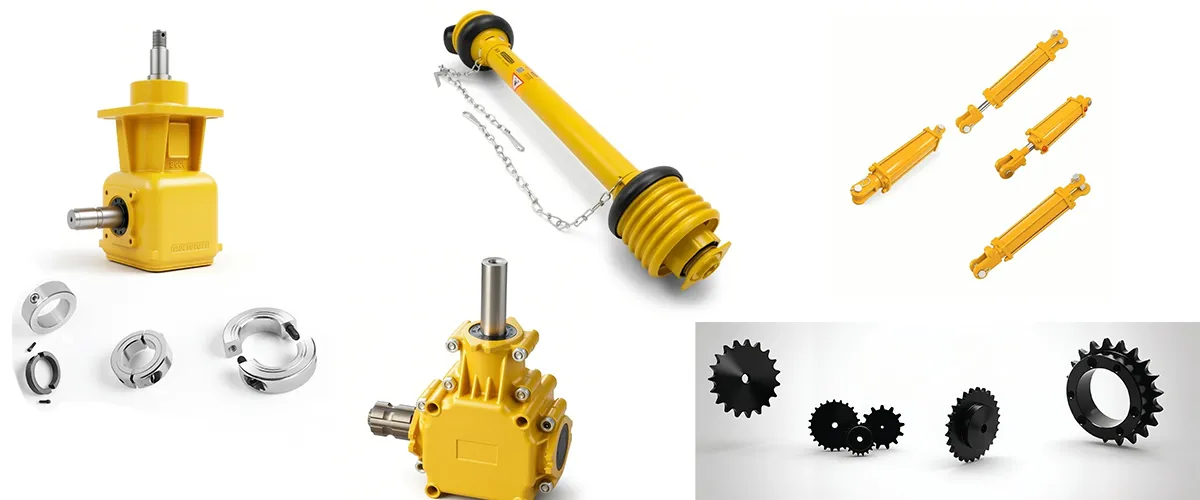
11. Replaceable parts
11.1. PTO Drive Shaft and PTO Gearbox
1. PTO Shaft
2. Agricultural Gearboxes / PTO Gearboxes
11.2. Agricultural Gearboxes (including various applications)
1. Rotary tiller gearboxes
2. Fertilizer spreader gearboxes
3. Rake & mower PTO gearboxes
11.3. Hydraulic Cylinders
1. Standard hydraulic cylinders
2. Custom hydraulic cylinders
11.4. Drive Chains / Sprockets / Couplings / Gear Components
1. Roller Chains
2. Chains & Sprockets
3. Couplings
12. Agricultural Professional FAQ:
Q1. How does the Watanabe ERA-3100 3-row rotary cultivator perform in heavy clay soil conditions common in South Korea?
A1. The ERA-3100 is specifically designed with high-resistance boron steel blades and a heavy-duty chassis (1020 Kg) to provide the necessary downward force for heavy clay. The independent row units allow the machine to penetrate deep without “floating,” which is a common issue with lighter tractor tillers 3 point hitch** models.
Q2. What is the average price for a Watanabe ERA-5100 and do you have local suppliers in the Seoul area?
A2. The back rotary power tiller price for the ERA-5100 depends on your specific bunker and fumigator options. We work with specialized distributors across South Korea, including Seoul and Daegu. For a detailed commercial quote and current stock availability, please click our “Get a Quote” button.
Q3. Can I replace the standard tines on this three point hitch tillers for sale with specialized parts from other brands?
A3. While the ERA series uses proprietary high-resistance blades for peak efficiency, the flange pattern is designed for broad compatibility. However, to maintain your warranty and ensure the structural integrity of the machine, we recommend using genuine Watanabe replacement parts or consulting our factory for custom specifications.
Q4. Which tractor models from LS Mtron or TYM are best suited to power the 5-row ERA-5100 rotary cultivator?
A4. For the ERA-5100, we recommend a tractor with at least 100 CV (Horsepower). The LS Mtron XP Series (115 HP) or the TYM T130 are excellent matches, as they provide the necessary PTO torque and hydraulic lift capacity to manage the 1300 Kg empty weight of the implement plus fertilizer load.
Q5. How does the working speed of 3-5 km/h impact the soil aeration quality for ginseng farming in Korea?
A5. Maintaining a working speed of $3-5~km/h$ is critical for high-value crops like ginseng. This speed allows the rotary blades to properly pulverize soil clods and create a highly aerated ridge structure without pulverizing the soil into dust, which preserves the delicate moisture-retention properties required for root development.
Q6. When is the best time to perform maintenance on the independent fertilizer bunkers to prevent corrosion from nitrogen-based fertilizers?
A6. We recommend a full clean-out of the 125 Kg bunkers after every 50 hours of operation or at the end of each planting window. Because fertilizers are corrosive, the bunkers should be washed with water and dried completely. The ERA series features a “simple change” system for the fertilizer quantity, making it easy to access the internal metering components for maintenance.
Q7. What is a rotary cultivator used for?
A7. A rotary cultivator, also known as a rotavator, is used primarily for soil preparation. It is an agricultural tool designed to break up compacted soil, mix in fertilizers or compost, and prepare seedbeds for planting. The rotary blades or tines spin as the cultivator is pulled by a tractor, effectively loosening the soil and creating a fine, even texture for crops like vegetables, root crops, and flowers. Rotary cultivators can also be used to control weeds and incorporate organic matter into the soil.
Q8. Are rotary cultivators worth it?
A8. Yes, rotary cultivators are worth it, especially for those working on larger plots of land or in rough or compacted soil. The benefits include:
Efficiency: Rotary cultivators can cover large areas in a relatively short amount of time, improving productivity compared to hand tools or smaller tillers.
Soil Health: They help to aerate the soil, improving root penetration and soil structure, which benefits plant growth.
Multi-functionality: Many rotary cultivators can also serve as fertilizer applicators, weed controllers, and soil mixers, making them versatile for various farming tasks.
Time Savings: They reduce the amount of labor required for soil preparation, which is especially important during busy planting seasons.
Q9. What is the difference between a tiller and a rotary cultivator?
A9. While both tools are used for soil preparation, there are key differences:
Tiller: A tiller is generally a smaller, lighter machine that is used for shallow tilling of the soil. It typically operates with rotating blades or tines that break up the soil to a shallow depth (typically 2-4 inches). Tillers are more suitable for small to medium-scale gardening or light-duty soil preparation.
Rotary Cultivator: A rotary cultivator, or rotavator, is a more heavy-duty machine designed for deeper soil penetration (typically 6-12 inches) and is used for larger-scale agricultural operations. It is equipped with more robust, heavier-duty blades or tines that allow it to handle tougher soil and harder ground conditions. Rotary cultivators are better suited for tasks such as soil aeration, plowing, and mixing in larger fields or more compacted soils.
Q10. Will a cultivator break up hard ground?
A10.Yes, a rotary cultivator is capable of breaking up hard ground, but its effectiveness depends on the specific model and the conditions of the soil. Rotary cultivators are designed to handle compact, rocky, or clay-heavy soils. They have powerful, rotating blades or tines that can penetrate and break up harder soils, especially when used with appropriate horsepower and depth settings.
However, if the soil is extremely compacted, very rocky, or has a thick crust, you may need to do some pre-treatment (like moistening the soil) or use additional equipment (such as a subsoiler or disk harrow) before using the cultivator. While a rotary cultivator is designed to break up hard soil, it may struggle with very tough or deeply compacted earth without proper pre-conditioning.
Editor: PXY
*Disclaimer: The other brand names mentioned above are provided solely for illustrative purposes. We do not offer original products or equipment bearing these brand names.