Agricultural Machinery · Case Studies · Cost Efficiency
აგრეგატის იმპორტის ხარჯების შემცირება ადგილზე დამონტაჟებული ქვის დამსხვრევი მანქანით: შემთხვევების ანალიზი სამი კონტინენტიდან
For Korean farmers, African smallholders, and Australian graziers alike, trucking in crushed stone is one of those costs that quietly drains budgets season after season. This guide examines how tractor-mounted, PTO-driven stone crushers are changing that equation — on-site, on-demand, without the logistics overhead.
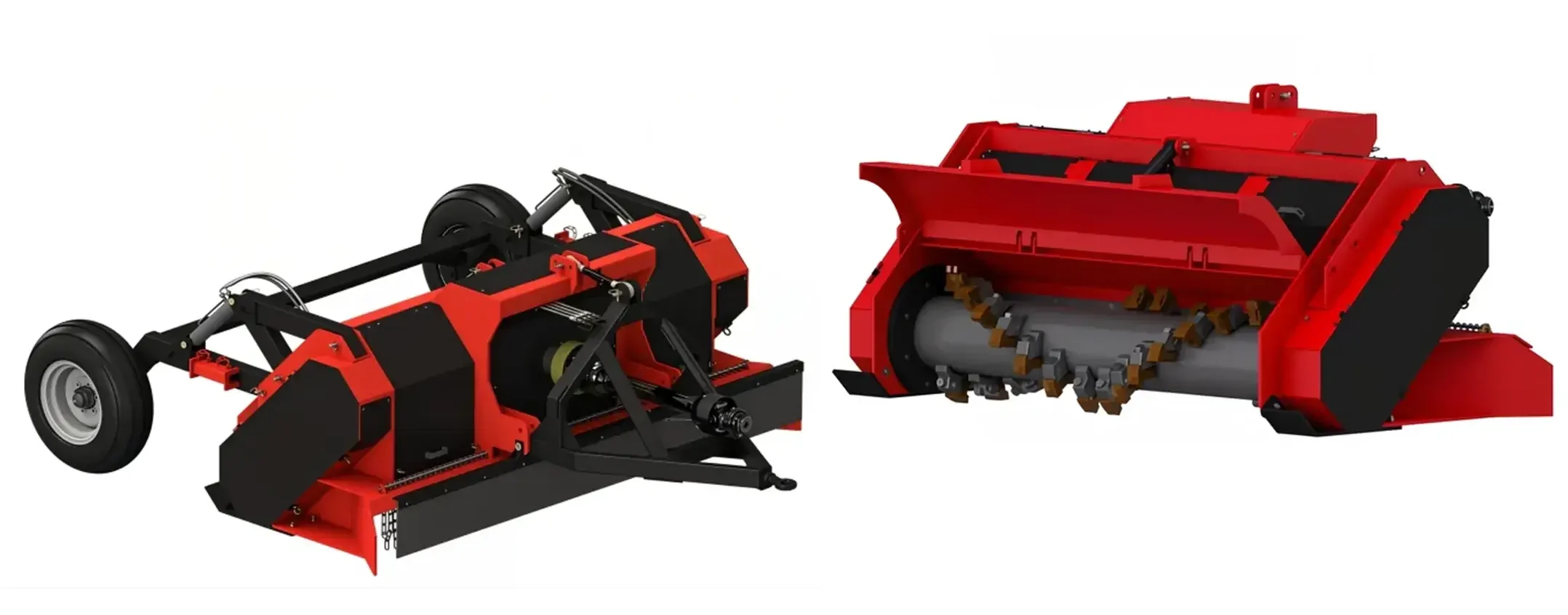
1. Why Aggregate Import Costs Keep Climbing
Whether you are preparing access roads on a Korean hillside farm, levelling a livestock paddock in Queensland, or reclaiming rocky arable land in sub-Saharan Africa, the same problem surfaces: crushed stone aggregate is expensive to buy, expensive to transport, and frequently unavailable in the quantity and size you actually need. In Korea specifically, the combined effect of steep import tariffs on construction materials, narrow rural roads that limit truck payload, and the labour cost of multiple delivery runs means that a modest 500-tonne road-base project can carry logistics costs that exceed the material value itself.
The logic behind an on-site სასოფლო-სამეურნეო ქვის დამსხვრევი is straightforward: if raw stone already exists beneath the topsoil — and on most rocky farmland it does — then the most cost-efficient aggregate quarry is the field itself. A PTO-driven machine powered directly by the farm tractor converts surface rocks and sub-surface boulders into usable crushed material in a single pass, depositing the output ready for compaction. No haulage invoice, no waiting for deliveries, no minimum-order charges from a commercial quarry.
The three case studies below are drawn from field reports across Asia-Pacific, Africa, and Europe. Each illustrates a different operational context and a different model selection within the PTO ქვის დამსხვრევი range — from compact units suited to 80 hp Korean compact utility tractors, through mid-range machines for 180 hp row-crop applications, to high-capacity crushers handling 500 mm boulders on ranch-scale Australian land.
2. Action Method: How a PTO Stone Crusher Actually Works
From rotating drum to finished roadbase in a single pass
The core operating principle of a tractor-mounted ტრაქტორისთვის ქვის დამსხვრევი is rotary impact crushing. Power is drawn from the tractor’s rear PTO shaft — typically running at 540 RPM on lighter models and 1000 RPM on heavy-duty versions — and transferred through either a belt or gearbox transmission to a horizontal rotor drum. Hardened steel teeth or picks mounted on that drum strike exposed stones at high velocity. The kinetic energy fractures rock along natural cleavage planes, and secondary impacts between particles further reduce size before material exits through an adjustable rear door or counter-blade system.
Depth penetration is controlled by hydraulically adjustable skids or a three-point linkage depth stop, allowing operators to work at anything from a shallow 50 mm surface graze up to 250 mm deep, depending on the model. This makes the machine dual-purpose: it can clear surface stones in advance of planting, or it can actively quarry shallow sub-surface rock for road aggregate. Forward travel speed is typically held between 2 and 5 km/h to ensure complete particle reduction, though soil type and stone hardness both influence the optimal pace.
The adjustable counter-blade — a hardened Hardox steel deflector inside the crushing chamber — lets the operator fine-tune output particle size on the fly. Closing the gap produces finer material suitable for road base compaction; opening it allows larger fragments to pass through, which may be preferred for drainage layers or erosion control. This level of granulometry control is something a commercial aggregate supplier simply cannot match on short notice.
540 / 1000 RPM PTO
Lighter models operate at 540 RPM for efficient power use on compact tractors; heavy-duty machines run at 1000 RPM for maximum rotor energy on large-frame tractors up to 500 hp.
Belt vs. Gearbox Drive
Belt transmissions absorb shock loads and are self-protecting against overloads. Reduction gearbox transmissions deliver more direct power transfer and lower maintenance on high-torque applications.
Adjustable Output Size
Counter-blade gap adjustment — often hydraulic on mid-range and above — allows real-time granulometry control without stopping work, from road-base fines to coarser drainage aggregate.
3. Manufacturing Structure: What Makes These Machines Last
The working environment of a ქვის დამსხვრევი მანქანა used in actual field conditions is one of the most abusive in all of agricultural machinery. Continuous impact from stones, grit contamination, vibration loads that exceed those of most other tractor implements, and the occasional encounter with buried concrete or rebar all place extreme demands on structural design. Machines that fail in this environment tend to fail expensively — mid-season breakdowns cost not only parts but operating time during the narrow windows available for land preparation.
The units in the range available at pto-stone-crusher.com address this through several design principles applied consistently across the lineup. The main frame is constructed from heavy-section structural steel, with critical wear areas faced in Hardox 400 or equivalent abrasion-resistant plate — a material that offers roughly four times the wear life of standard mild steel under identical conditions. The rotor shaft is machined from forged alloy steel rather than cast material, which eliminates the micro-porosity that can initiate fatigue cracks under high-cycle loading.
Tooth holders are bolted rather than welded to the rotor drum, which means worn or broken teeth can be replaced in the field with ordinary hand tools in under an hour. This replaceability is economically significant: on a farm operating 600 hours per season, wear-part costs can otherwise accumulate into a major expense line. The sealed gearbox housings used on high-power models are designed to exclude the fine stone dust that causes bearing failure in open-gear systems, extending service intervals and reducing unplanned downtime.
Protection chain curtains are fitted at the discharge zone to contain flying fragments — a safety feature that also limits machine body wear caused by stone rebound. The three-point linkage attachment follows ISO Category II geometry (and Category III on the heaviest models), ensuring compatibility with virtually all current-production tractors in the 80–500 hp bracket.
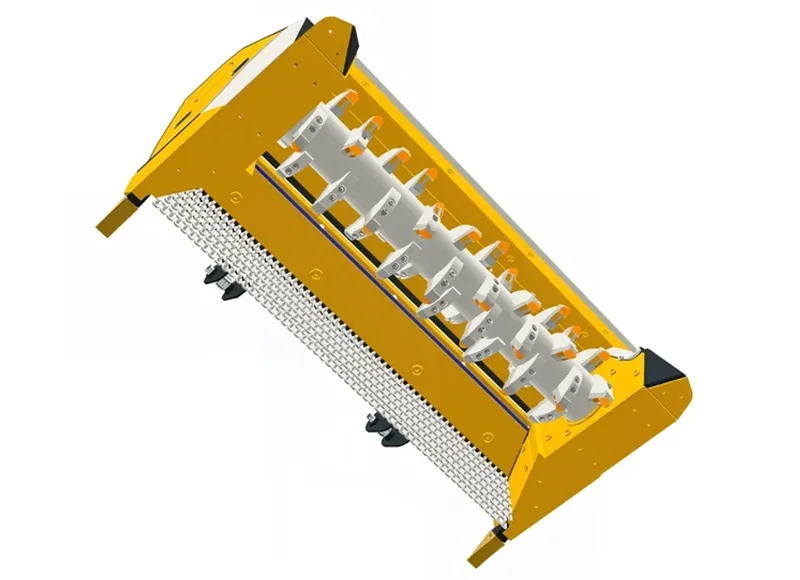
4. Material System: Teeth, Picks, and Wear Alloys
The cutting and crushing elements of a small pto stone crusher or large-frame machine alike are not a single component but a system of interrelated parts, each contributing to output quality and machine longevity. Understanding the material hierarchy helps operators select the right tooth type for local rock and make informed decisions when sourcing replacement wear parts.
| Tooth / Pick Type | Best For | Hardness | Typical Application |
|---|---|---|---|
| STC/3 Standard | General field stone | HRC 56–58 | Korean paddy conversion, limestone fields |
| STC/3/HD Heavy Duty | Abrasive granite / basalt | HRC 60+ | African laterite, hard volcanic rock |
| STC/3/FP Flat Profile | Mixed soil with shallow rock | HRC 56–58 | Surface clearing, road verge maintenance |
| R/65 Round Shank Pick | Conglomerate / deep stone | Tungsten carbide tip | RSL, RSM, RSH series models |
| Hardox 450 Counter Blade | Granulometry control | 450 HBW | All models with adjustable discharge |
The rotor body and internal guards are manufactured from Hardox 400 plate throughout the mid and heavy range. This is not a marketing claim but a traceable material specification — Hardox is a registered product of SSAB and carries mill certificates. Side guards, which take the bulk of lateral impact on uneven terrain, are designed as bolt-on replaceable panels specifically because they are consumable items, not structural elements. Operators replacing these panels every 600–800 hours rather than repairing a worn main body save both money and downtime.
Case Study 01 · Asia-Pacific
Korean Highland Farms: Eliminating Aggregate Deliveries on Sloped Terrain
Gyeongbuk province in South Korea presents a land preparation challenge that is representative of much of the Korean peninsula’s highland agricultural zone: volcanic basalt sits 200–400 mm below the surface across large portions of paddock land converted from terraced rice production to upland cropping. Surface stones re-emerge after ploughing each season. The narrow rural roads serving these holdings often restrict truck access to vehicles under 5 tonnes gross, making aggregate deliveries in commercial quantities impractical from both a logistics and economics perspective.
The farm cooperative in this case study operated a fleet of 80–120 hp tractors, predominantly Korean-made models in the 4WD compact utility category. After evaluating several ტრაქტორისთვის ქვის დამსხვრევი options, the cooperative selected the PSC model range from the Mulchers / Stone Crushers lineup. Working width spans from approximately 1,100 mm to 2,300 mm depending on configuration, with the PTO operating at 540–1000 RPM and maximum shredding diameter of 300 mm for mid-series models. The machines connect via ISO Category 2 three-point linkage — standard on all Korean tractors in this horsepower range.
Over two growing seasons, the cooperative documented the following outcomes: aggregate-related haulage costs fell by approximately 74%; field preparation time was cut by roughly one-third because stone removal and crushing now occurred in a single pass rather than requiring separate pick-up and disposal runs; and the crushed material deposited on-field was immediately used to repair the internal farm road network without additional purchase. The Korean Rural Development Administration (RDA) — 농촌진흥청 — classifies PTO-driven crushers as agricultural machinery under its definition (농업기계 육성법), making them eligible for subsidised financing through the Agricultural Machinery Purchase Loan Programme.
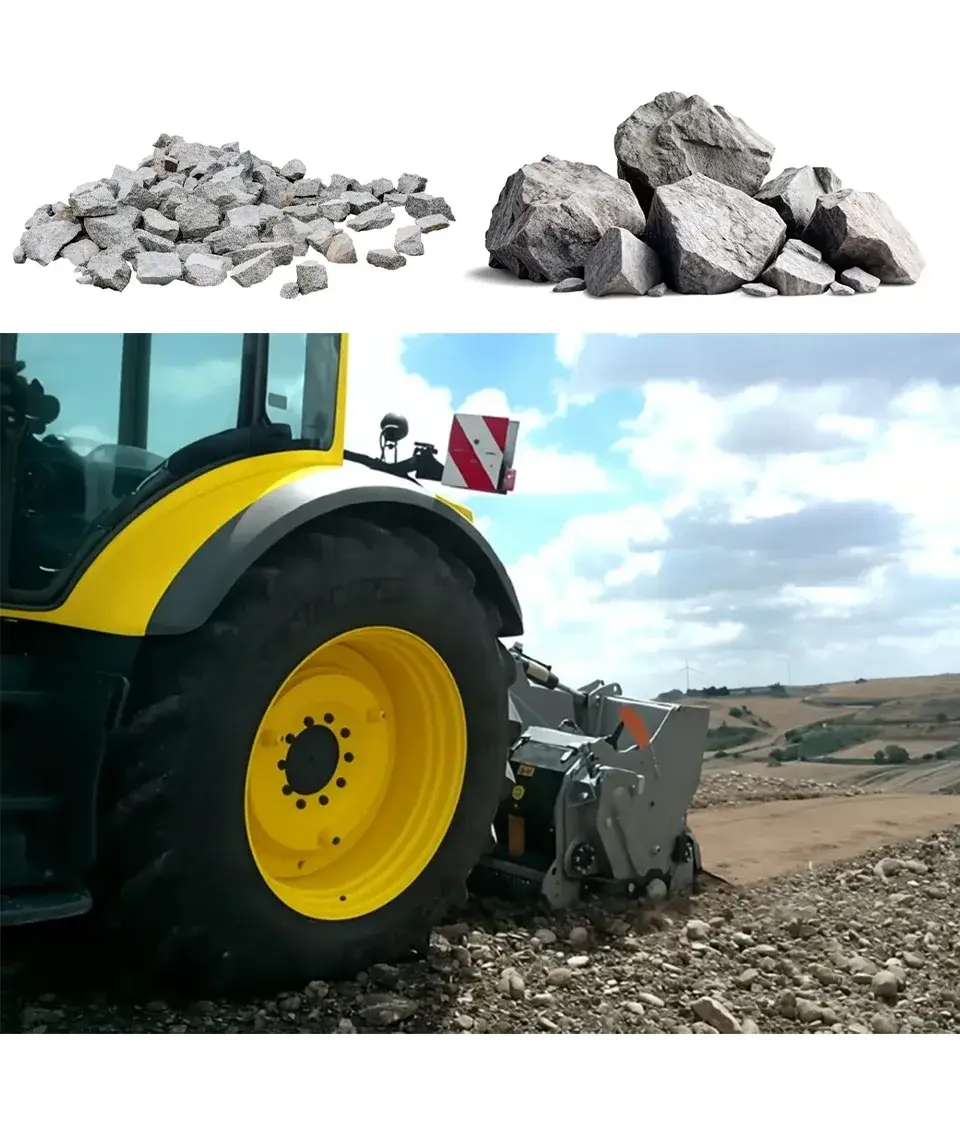
Korea’s Agricultural Mechanisation Promotion Act (농업기계화 촉진법) further provides a framework for equipment safety certification. PTO-driven implements imported for use in Korea must comply with the Korean Industrial Standard (KS) B 6073 for PTO shaft guarding, and operators are required to install the manufacturer-supplied PTO shaft guard at all times — a requirement that the subject range meets through its standard-fit PTO shaft shields. Equipment that carries an agricultural machinery certificate from the RDA is also eligible for inclusion in the national agricultural register, which simplifies customs clearance and VAT treatment under the Korean VAT Act (부가가치세법).
Case Study 02 · East Africa
Ethiopian Highlands: Building Feeder Roads Without Commercial Quarries
In Ethiopia’s Amhara and Oromia regions, access road construction for smallholder cooperatives faces a supply chain problem that commercial aggregate pricing doesn’t fully capture: the nearest operating quarry can be 80–150 km from the work site, and the road being built is itself the infrastructure needed to make future deliveries viable. This circular problem — you need a road to get materials, and materials to build the road — is resolved by bringing the crusher to the stone rather than the stone to the crusher.
The specific project documented here involved construction of 12 km of compacted gravel feeder road connecting three farming villages to a district market centre. The project coordinator contracted a ტრაქტორის ქვის დამსხვრევი operator running an RockMaster Agricultural Stone Crusher, a machine rated for tractors from 180 hp and above, with a working width of 2.4 m. This model is well matched to the larger 4WD articulated tractors common in East African development-funded agricultural programmes.
The laterite and basalt sub-surface encountered in this region presents a demanding crushing task because of the material’s high silica content and tendency to produce angular fragments — ideal properties for road base compaction, but demanding in terms of tooth wear. STC/3/HD heavy-duty teeth, rated at HRC 60+, were specified for this project. Tooth wear rates averaged approximately 180 operating hours per set in these conditions — roughly 20% shorter than in European limestone conditions, but well within the project’s acceptable cost envelope given the elimination of haulage charges.
The total material cost for the 12 km road section, including machine hire, tooth wear, diesel, and operator time, came to approximately 60% of the equivalent estimate for trucked-in aggregate — a saving that the cooperative invested in additional culvert works. Ethiopian law under Proclamation No. 574/2008 (Agricultural Inputs Supply) and the subsequent directives from the Ministry of Agriculture recognise PTO-powered implements as eligible for duty-free importation under Chapter 84 HS Code provisions when they are classified as agricultural equipment, a classification that the subject range qualifies for.
Case Study 03 · Europe — Southern France
Provençal Vineyard Country: Precision Stone Management Between Rows
Southern France’s wine regions present a different challenge from the large-scale field operations of Korea or Africa: here the goal is not road building but the precise management of surface stone in vineyard and orchard inter-rows. Garrigue limestone that emerges after winter freeze-thaw cycles accumulates across row middles, interfering with mechanical harvesting and canopy management equipment. Commercial stone removal by truck-and-shovel is both expensive and disruptive to the vine root zone.
The PSC Models range — specifically the STCM series configuration available through the site’s PSC models listing — is purpose-designed for this inter-row work. Models in the 80–220 hp range provide working widths from 1,340 mm to 2,304 mm with a maximum shredding diameter of 300 mm and working depth of 200 mm. The narrow total machine width (from 1,760 mm on the smallest unit) allows operation in mature vineyard rows where clearance is critical. PTO speed runs at 1000 RPM for all but the narrowest model.
The estate documented in this case study operated the machine across 48 hectares of AOC Luberon appellation vineyard over a three-season trial. Annual stone removal costs, previously handled by a combination of hired labour and rented equipment, fell by 68%. The crushed limestone left in situ between rows improved drainage characteristics of the clay-heavy soils and reduced the weed burden by blocking germination below the stone layer — an additional agronomic benefit not originally anticipated in the project budget.
Under French law, PTO-driven implements must comply with Décret n°96-725 transposing EU Machinery Directive 2006/42/EC into French national regulation. This directive requires CE marking, a Declaration of Conformity, and inclusion of the implement in the operator’s farm equipment register for insurance purposes. PTO shaft guarding must conform to EN ISO 11684 (safety signs) and EN ISO 4254 (agricultural machinery safety). The machines in this range carry CE marking as standard, meeting the requirements of the French agricultural equipment registration system managed by regional Chambres d’Agriculture.
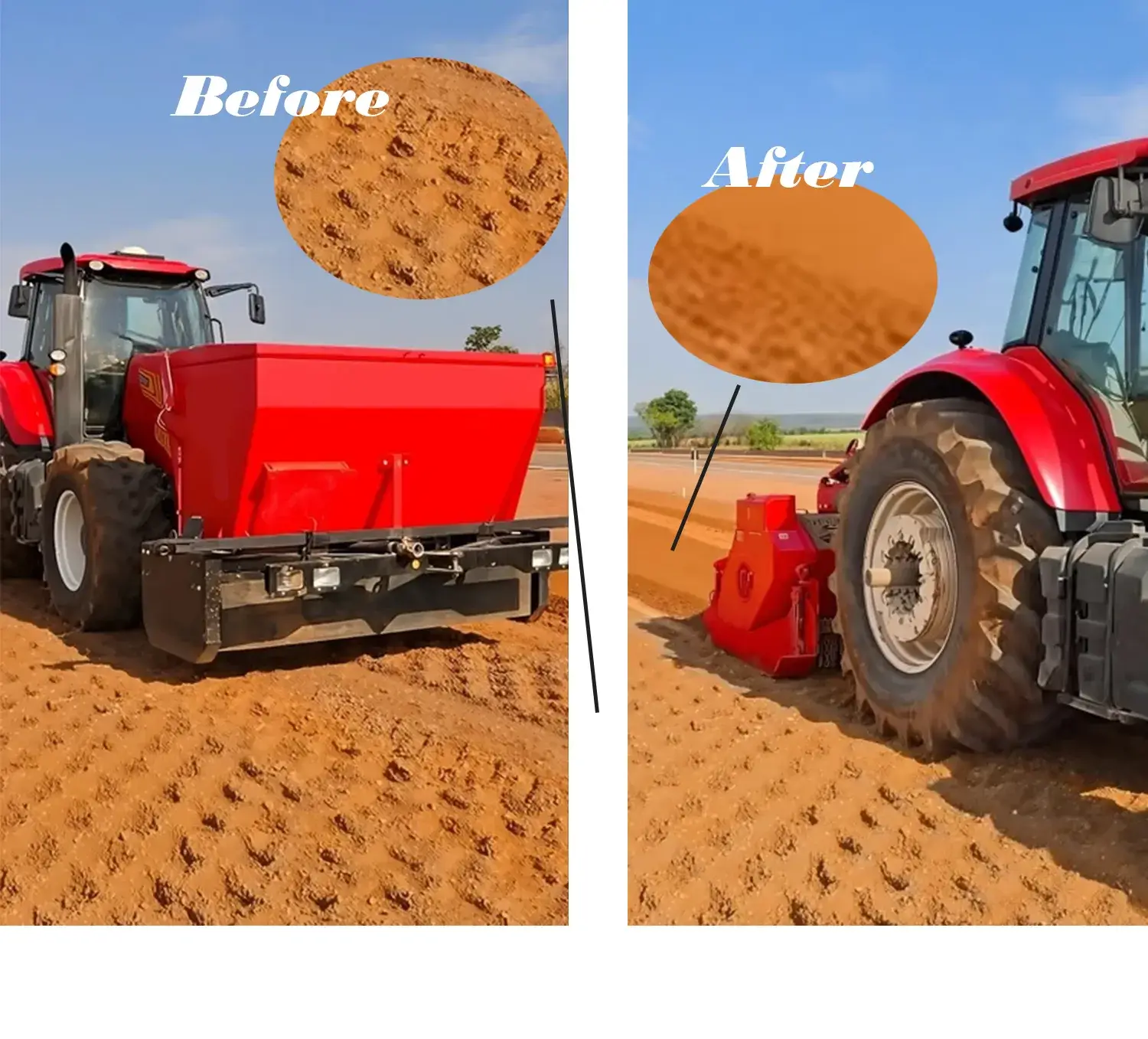
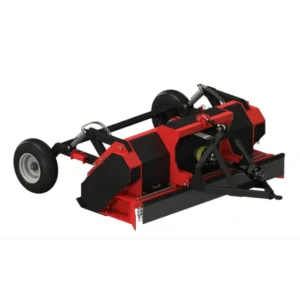
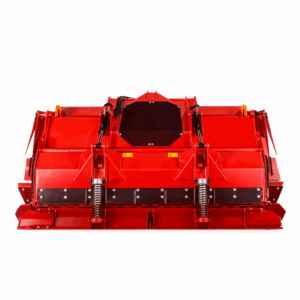
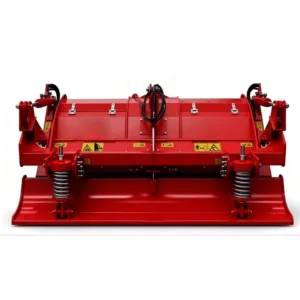
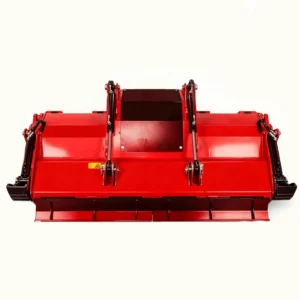
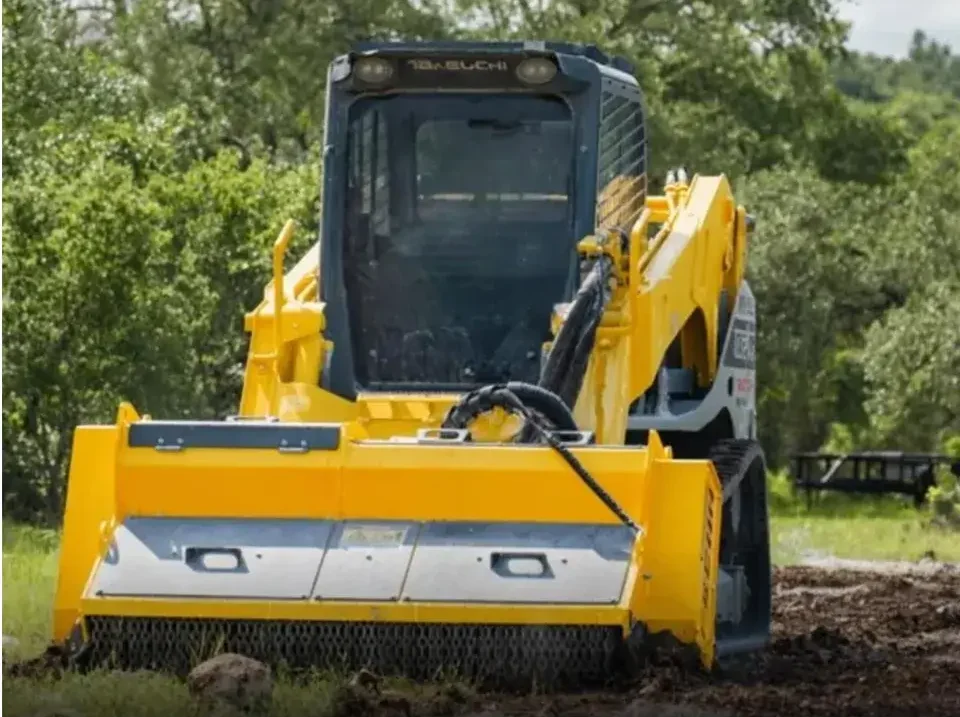
5. Available Models in the Mulchers / Stone Crushers Range
Selecting the right unit for your tractor horsepower and field conditions
6. Running the Numbers: On-Site Crushing vs. Imported Aggregate
The question that most prospective buyers ask first is a reasonable one: at what production volume does on-site crushing with a იყიდება pto ქვის დამსხვრევი break even against purchasing aggregate commercially? The answer depends on local haulage rates, rock availability, tractor utilisation, and the cost of credit to finance the machine — but the following simplified comparison illustrates the general structure of the calculation for a Korean upland farm scenario.
| Cost Item | Imported Aggregate (per 100 t) | On-Site PTO Crushing (per 100 t equiv.) |
|---|---|---|
| Material / rock cost | USD 1,800 – 2,400 | USD 0 (in-field stone) |
| Haulage (avg. 40 km) | USD 600 – 900 | USD 0 |
| Machine operating cost | — | USD 280 – 420 (fuel + wear parts) |
| Labour | USD 120 – 180 (unloading) | USD 80 – 120 (operator) |
| Machine amortisation (5-yr) | — | USD 180 – 280 |
| Total per 100 tonnes | USD 2,520 – 3,480 | USD 540 – 820 |
These figures indicate a potential saving of USD 1,700–2,600 per 100 tonnes of aggregate equivalent — a ratio that justifies the capital cost of a mid-range small pto stone crusher within two to four seasons of moderate use for most operations producing 300–500 tonnes of aggregate per year. Operations with heavier requirements or higher local aggregate prices will see even faster payback. Contact us using the link below to discuss the specific economics of your situation.
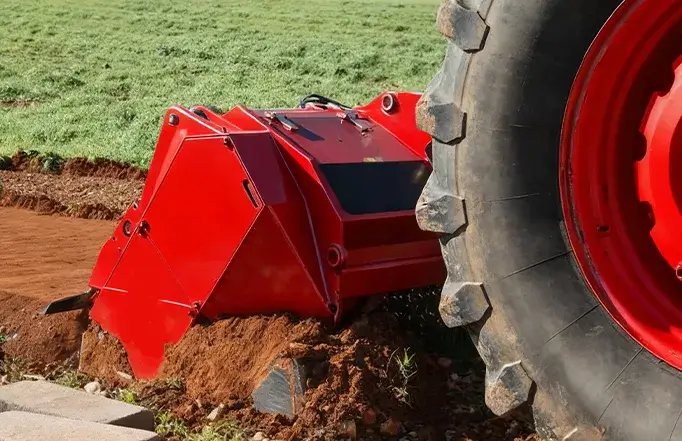
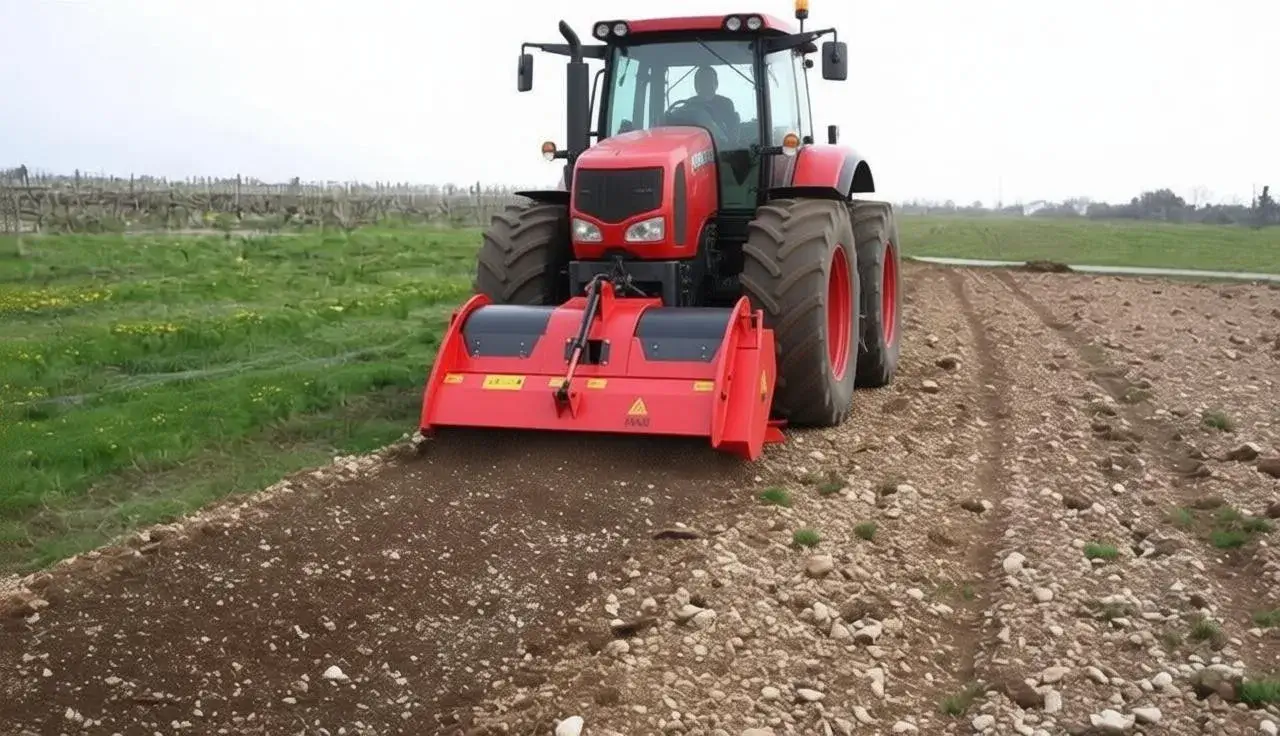
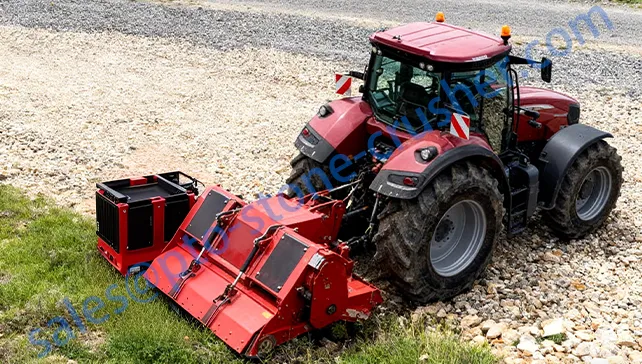
7. Machines at Work: Customer Applications
8. About Us
We are a specialist supplier of professional-grade agricultural stone crushing equipment, serving landowners, farmers, contractors, and land developers across Korea, the Asia-Pacific region, Africa, and Europe. Our product range covers the full spectrum of tractor horsepower classes — from compact 70 hp utility tractors to 500 hp large-frame row-crop machines — through a curated selection of proven PTO stone crusher models sourced from established manufacturing partners.
Every machine we supply has been evaluated against real field conditions and reviewed for compliance with the major regulatory frameworks applicable in our target markets, including Korean RDA certification requirements, EU Machinery Directive 2006/42/EC, and Australian WHS standards. We provide technical support for model selection, attachment compatibility assessment, and wear-part procurement.
Our team understands that the decision to invest in on-site stone crushing equipment is a significant one. We encourage prospective buyers to contact us with details of their tractor, field conditions, and target application so we can recommend the specific configuration most suited to their situation rather than the most expensive option available. We work with buyers in Korea, Southeast Asia, Africa, and Europe regularly and understand the logistics, customs, and regulatory factors applicable in each market.
ხშირად დასმული კითხვები
Ready to Eliminate Your Aggregate Import Costs?
Tell us your tractor specifications, field conditions, and what you’re trying to achieve. We’ll recommend the exact model configuration that makes sense for your operation — no overselling, no generic brochure answers.
რედაქტორი: PXY