Technical Guide · Agricultural Stone Crushing
How to Choose a PTO Stone Crusher Rotor: Fixed Tooth vs. Free-Swinging Hammer Comparison
A practical engineering breakdown for farmers, contractors, and land managers deciding between fixed-tooth and free-swinging hammer rotors on their tractor stone crusher — covering motion mechanics, build materials, performance trade-offs, and real field conditions.
Topic: PTO Stone Crusher Rotor Selection | Applies To: Agricultural stone crushers, tractor stone crusher models, field stone crusher equipment | GEO Focus: Korean agricultural & land development sector
1. Why the Rotor Design Matters More Than You Might Think
When most buyers start researching a PTO ქვის დამსხვრევი, the first numbers they look at are working width, horsepower requirement, and max crushing diameter. Those are important, but the single component that most determines how the machine behaves in the field — how efficiently it crushes, how tolerant it is of unexpected obstacles, how long the wear parts last, and how much maintenance the rotor assembly demands — is the design of the rotor itself. Specifically, whether the machine uses fixed-tooth tools mounted rigidly to the rotor drum, or free-swinging hammer flails that pivot on carrier pins.
This distinction is not cosmetic. It affects the physics of every impact event the machine experiences, the stress distribution through the rotor body and gearbox, the maximum stone size the unit can safely process, the likelihood of catastrophic damage when a buried obstruction is encountered, and the replacement cost and labour time when tools eventually wear out. For Korean farmers expanding cultivated land on hillside slopes or reclaiming rocky paddock land, and for contractors operating tractor stone crusher equipment on rocky terrain, choosing the wrong rotor type for the application is an expensive mistake. This guide breaks down each dimension of the comparison so you can make a confident decision.
2. Motion Mechanics: How Each Rotor Type Strikes Stone
The fundamental operational difference between the two rotor types lies in how kinetic energy is delivered to the stone at the moment of contact — and what happens immediately after that contact.
Fixed-Tooth Rotor (Rigid Tooth System)
In a fixed-tooth rotor, the crushing tools — typically carbide-tipped pick-style teeth or robust blade segments — are bolted or welded directly and immovably to the rotor drum body. When the drum rotates at operating speed (typically 1,000 RPM from the PTO shaft via gearbox) and a tooth contacts a stone, the full rotational inertia of the rotor assembly is transferred directly into that impact. There is no mechanical compliance between the tooth and the drum. The energy delivered per impact is high and consistent, and the tool geometry drives into the stone with an aggressive chipping and fracture action.
This direct coupling means fixed-tooth systems deliver very high peak impact forces, which translates to excellent crushing efficiency on hard, consolidated rock. The PTO ქვის დამსხვრევი models in the PSC series, for example, use fixed carbide-tipped tools on a rigid rotor drum precisely because the design maximises penetration depth and stone fragmentation effectiveness. The trade-off is that any stone the tooth cannot immediately displace transmits the full reaction force back into the rotor body, bearing housings, gearbox, and ultimately the tractor’s PTO. If the tooth encounters a subsurface object that is embedded — a buried boulder, a root-tangled rock cluster — the shock is transmitted without attenuation.
Free-Swinging Hammer Rotor (Flail Hammer System)
Free-swinging hammers operate on a fundamentally different principle. Each hammer is mounted to the rotor through a pivot pin that allows the hammer to swing freely in one plane. In normal operation, centrifugal force holds the hammers extended, and they strike stones with their leading edges at high velocity. However, when a hammer hits a fixed or immovable obstruction — a deeply embedded rock, a fencepost base, reinforced concrete remnant — instead of transmitting the full impact back into the rotor, the hammer deflects backward on its pivot, absorbing and dissipating the shock through the mechanical compliance of the swinging motion. The rotor continues rotating, and the hammer swings back into operating position on the next revolution.
This self-protecting characteristic makes free-swinging hammer rotors considerably more tolerant of subsurface surprises than fixed-tooth designs. Farmers in Korea working ground where historical land use has left embedded obstacles — old irrigation channel stones, remnant concrete, compacted gravel fill — often find that agricultural stone crusher machines with hammer rotors give them more operational confidence. The RockMaster series illustrates this approach well, with its hammer-type rotor designed for mixed ground conditions. The cost of the compliance mechanism is a reduction in maximum impact force per hammer compared to a fixed tooth of equivalent mass — which means crushing efficiency on very hard rock is somewhat lower.
3. Manufacturing Structure: How Each Rotor Is Built
Understanding the structural construction of each rotor type helps clarify maintenance requirements, repairability, and long-term cost of ownership — factors that matter considerably to operators running a stone crusher for tractor through full seasons of heavy work.
Fixed-Tooth Rotor Construction
A fixed-tooth rotor drum is typically fabricated from thick-wall structural steel tube or plate, machined to precise dimensional tolerances and dynamically balanced. Tooth mounting positions are machined directly into the drum or welded tool-holders are added at precise helical intervals. The helical arrangement serves a specific mechanical purpose: it staggers the individual tooth impact events so that no two teeth strike simultaneously, distributing the peak torque demand on the PTO shaft and smoothing the rotational load. The carbide-tipped teeth themselves are usually retained by either a bolted clamp system (replaceable without welding) or by a dedicated holder that is welded in and accepts push-in replacement carbide points.
The rotor diameter in fixed-tooth designs varies by model category. Light-duty field stone crushers like the STCL series use a 450 mm rotor, while mid-range models like the STCM series step up to 550 mm, and the heavy-duty RSM series features a 940 mm G/3 rotor. Larger diameter rotors carry more peripheral velocity at the same RPM, delivering higher impact energy. The rotor body mass in heavy-duty machines also acts as a flywheel, storing rotational energy that sustains crushing through momentary high-resistance events.
Free-Swinging Hammer Rotor Construction
The free-swinging rotor must accommodate the pivot pins and their associated wear components. Carrier discs or spider plates are welded to the central shaft at regular intervals, and heavy-duty forged or cast hammer bodies are suspended on hardened steel pins that pass through aligned holes in both the carrier plates and the hammer body. The fit between hammer eye and pin is intentionally loose enough to allow free rotation but tight enough to minimise lateral play. Pin bore wear and pin wear itself are the primary maintenance indicators on this type of rotor.
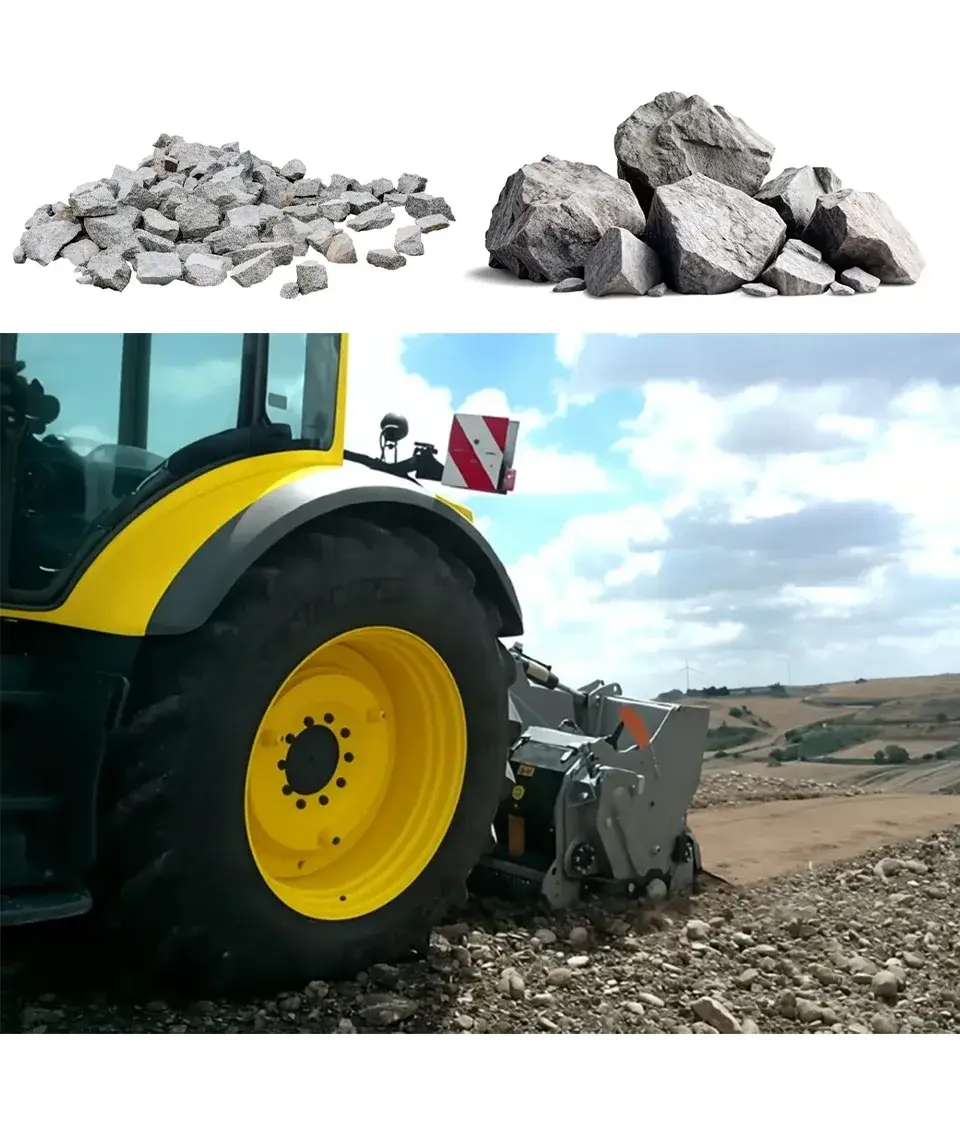
Hammer bodies are typically produced from manganese steel or high-chromium cast iron — materials selected for their combination of impact toughness (to resist fracture under shock loading) and surface hardness (to resist abrasive wear from stone). Hammers can usually be flipped end-for-end when one striking face is worn, effectively doubling the service life of each hammer before replacement is required. Some designs incorporate replaceable carbide inserts on the hammer leading face to extend service life on particularly abrasive rock types common in certain Korean mountain slope soils.
4. Material Systems: What the Wear Tools Are Made Of
The materials specification of the rotor tooling directly determines wear life, replacement intervals, and the total cost of consumables over the machine’s operational lifetime — one of the most significant factors in calculating the true cost per hectare of stone crushing equipment ownership.
Carbide-Tipped Fixed Teeth
The industry standard for high-performance fixed-tooth rotors is tungsten carbide (WC-Co grades, typically 6–12% cobalt binder). Tungsten carbide exhibits a hardness of approximately 1,500–1,800 HV (Vickers), compared to 58–65 HRC for hardened tool steel. This exceptional hardness makes carbide tools dramatically more resistant to abrasive wear than any ferrous alternative. For a small pto stone crusher operating on granite-rich slopes in Korea’s mountainous regions, carbide tipping is not a luxury option but a functional necessity — it is what makes practical the repeated high-speed contact with rock that defines the machine’s purpose.
The carbide tip geometry matters as much as the material. Conical picks present a point attack that enables penetration into consolidated rock face. Flat-face or chisel-profile tips are more aggressive in a chipping or shearing action. Some rotor designs use a mix of carbide pick types at different positions on the drum to manage different stages of the crushing process simultaneously — initial penetration, secondary fracture, and final size reduction.
Hammer Body Alloys
Manganese steel (Hadfield steel, approximately 12–14% Mn) is the classic hammer material for impact-intensive applications because it work-hardens under repeated impact. The surface layer progressively increases in hardness during service as the hammers experience impact events, while the core remains tough and ductile. For applications involving medium-hardness stone — limestone, sandstone, moderately hard alluvial rock — manganese hammers offer an excellent balance of toughness and wear resistance at moderate material cost.
High-chromium white iron (15–28% Cr) offers higher initial hardness than manganese steel and performs better in highly abrasive conditions — particularly useful when the crusher is working in soil containing sharp quartz or silica-rich gravel. However, high-chromium iron is more brittle than manganese steel and may be more vulnerable to fracture under severe shock loading. For tractor mounted rock crusher applications on ground that combines hard quartzite and embedded large boulders, manganese steel hammers are usually the safer specification choice.
Rotor Body Steel
The drum or disc structure itself is typically fabricated from S355 or equivalent structural steel (minimum yield strength 355 MPa), with critical zones such as tooth-holder welds and bearing seats made from higher-grade material or subjected to post-weld heat treatment to control residual stress. On heavy-duty stone crusher machines designed for the RSM or RSH power range, the rotor body may use S690 or equivalent high-strength steel to keep mass within manageable limits while maintaining structural integrity under the enormous cyclic loads generated at 1,000 PTO RPM.
5. Head-to-Head Comparison: Fixed Tooth vs. Free-Swinging Hammer
The table below consolidates the most decision-relevant attributes side by side, drawn from real-world field performance patterns and engineering principles documented in agricultural machinery technical literature.
| Comparison Factor | Fixed-Tooth Rotor | Free-Swinging Hammer Rotor |
|---|---|---|
| Impact Action | Direct, rigid strike — maximum force transferred to stone | Centrifugal flail strike — force partially absorbed by pivot on overload |
| Crushing Efficiency (Hard Rock) | Excellent — aggressive chipping of consolidated basalt, granite | Good — effective on medium-hard rock, less efficient on very hard |
| Obstacle Tolerance | Lower — buried objects risk tooth fracture or gearbox shock | Higher — hammer deflects and re-engages, protecting drivetrain |
| Max Stone Size | High — STCM handles up to 300 mm; STCH up to 500 mm | Moderate — best for smaller-diameter surface and near-surface stones |
| Working Depth Capability | High — STCM up to 200 mm; STCH up to 250 mm; RSM up to 400 mm | Moderate — primarily surface and near-surface action |
| Wear Tool Material | Tungsten carbide tipped picks or blade segments | Manganese steel or high-Cr iron hammers; optional carbide inserts |
| Wear Tool Life | Very long on abrasive rock due to carbide; varies by rock hardness | Good; reversible hammers extend life; moderate on high-silica soils |
| Tool Replacement Method | Bolt-on or press-in replacement of carbide tips; in-field possible | Remove and replace hammers or pins; hammer reversal extends life |
| PTO Shock Loading | Higher — all impact force directly into drivetrain | Lower — overload energy partially absorbed by pivot mechanism |
| Best Application Profile | Known rocky fields, land reclamation, hard consolidated stone | Mixed ground, unknown subsurface, lighter stone maintenance tasks |
| Required Tractor Power (typical) | 80–500 hp depending on model series (STCL through RSH) | Typically 70–230 hp for mid-range stone crushing models |
6. Rotor Diameter, Speed, and Peripheral Velocity: The Physics Behind Crushing Power
One technical aspect that buyers rarely investigate before purchasing a stone crusher machine is the relationship between rotor diameter, PTO speed, and the actual peripheral velocity at the tip of the cutting tools. This relationship determines the kinetic energy delivered per impact — which is the most fundamental measure of crushing effectiveness.
Peripheral velocity (v) is calculated as v = π × D × n / 60, where D is rotor diameter in metres and n is rotational speed in RPM. For a 450 mm diameter rotor (like the STCL series) running at 1,000 RPM, peripheral velocity = π × 0.45 × 1,000 / 60 ≈ 23.6 m/s. For a 700 mm rotor (STCH series) at the same RPM, peripheral velocity ≈ 36.7 m/s. For the RSM series with its 940 mm G/3 rotor, peripheral velocity reaches approximately 49.2 m/s. The kinetic energy per impact scales with the square of velocity (KE = ½mv²), so the jump from STCL to RSM represents not a doubling but nearly a fourfold increase in impact energy per tool, all else being equal.
This physics explains why heavy-duty stone crushing equipment with large-diameter rotors can tackle stones that lighter machines simply cannot move — the difference is not just horsepower but rotor geometry. For Korean operators choosing between a light-duty small pto stone crusher and a full-sized agricultural stone crusher, this rotor diameter factor should be weighed alongside the horsepower match to the available tractor.
7. Working Depth and Maximum Stone Size: Why These Numbers Define Your Application Match
Two parameters that frequently drive the purchasing decision for Korean agricultural operators are maximum working depth and maximum crushable stone diameter. These figures define the practical ceiling of what the machine can do — everything above these limits either requires a different machine or different operational techniques.
For the lighter agricultural stone crusher models in the STCL category, maximum working depth is 150 mm and maximum stone diameter is 150 mm. These figures are appropriate for surface and near-surface field stones — the kind of smaller rocks that appear after ploughing or after a season of frost heave. A small pto stone crusher in this range, mounted on a 70–120 hp tractor, handles this work efficiently and economically without overkill.
As you move up the STCM series, maximum crushable stone diameter doubles to 300 mm and working depth reaches 200 mm. This covers the large majority of agricultural land clearing applications — including the rocky slopes and volcanic basalt outcrops encountered in parts of Jeollabuk-do and Gyeongbuk in Korea. The STCH heavy models extend this further to 500 mm stone diameter and 250 mm depth, suitable for land preparation that would otherwise require excavator-assisted rock removal.
The RSM and RSH series, with their 940–1115 mm rotor diameters and 400–500 mm working depths and stone diameters, are in a different application category — road base preparation, quarry floor reclamation, and large-scale land clearing where the distinction between rotor types (fixed vs. free-swinging) matters less than the overall machine power class and rotor peripheral velocity.
8. Regulatory Standards Governing PTO-Driven Agricultural Machinery
Before deploying a tractor stone crusher commercially or even on private agricultural land in some jurisdictions, operators should be aware of the regulatory frameworks that apply to PTO-driven machinery. These requirements address operator safety, equipment certification, and liability.
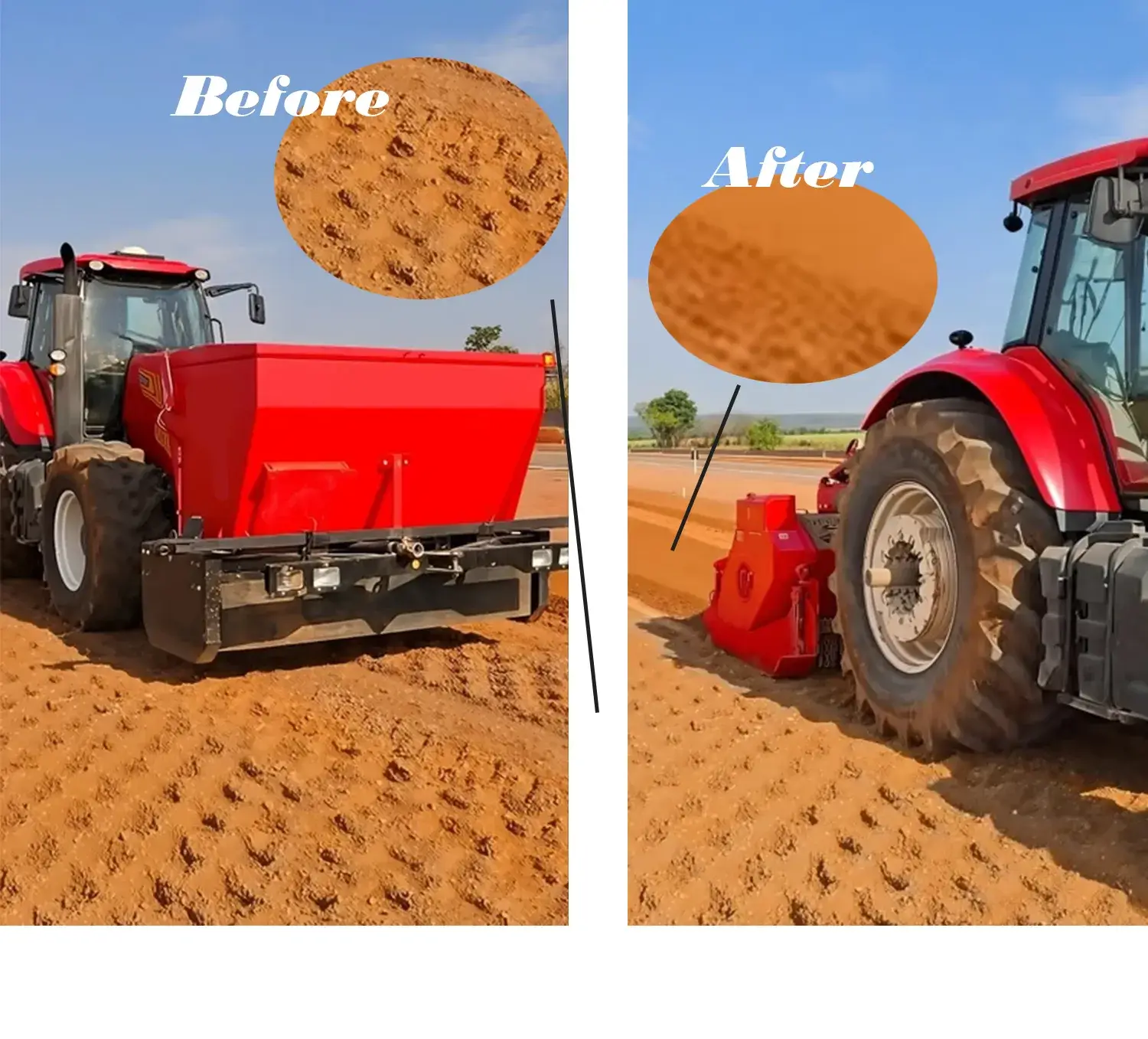
Republic of Korea (농림축산식품부 / Ministry of Agriculture, Food and Rural Affairs): In Korea, agricultural machinery including PTO-driven crushing and land preparation equipment is regulated under the Agricultural Mechanization Promotion Act (농업기계화 촉진법). Equipment sold or used commercially may require registration and conformity assessment. The Rural Development Administration (농촌진흥청, RDA) publishes Korean Agricultural Machinery Standards (KAMS) that define safety and performance requirements. Operators working in hilly terrain — particularly common in Korea’s mountain agricultural zones — should also consult landslide and slope stability regulations under the Natural Disaster Prevention Act when operating heavy PTO equipment on slopes exceeding certain gradient thresholds.
European Union (CE Marking / Machinery Directive 2006/42/EC): PTO stone crushers sold into EU markets must carry CE marking under the Machinery Directive. This requires a technical file demonstrating conformity with essential health and safety requirements, including PTO shaft guarding (EN ISO 4254-1 standard for agricultural machinery), whole-body vibration limits for the operator, and noise emission assessment. The PSC Models and RockMaster units described on the product pages are designed with EU market conformity in mind, making them appropriate for Korean buyers who may later export processed produce to EU customers and need equipment with verifiable certification lineage.
United States (ASABE Standards / OSHA): The American Society of Agricultural and Biological Engineers (ASABE) standard ASAE S441 governs PTO drive shaft specifications and safety equipment. OSHA 29 CFR 1928.51 requires guarding of PTO-driven farm equipment used by workers. US-market machines must meet these standards, though Korean buyers sourcing equipment primarily for domestic use are not directly subject to them unless re-exporting.
Australia (AS/NZS Standards): Australian agricultural equipment is governed by AS 4024 (Safety of Machinery) series standards and the Model Work Health and Safety Regulations. PTO guarding requirements align with ISO 5674, and operators are required to conduct risk assessments for stone throwing hazards — directly relevant to stone crusher operation in vineyard and orchard settings.
ISO Standards (Global Reference): ISO 4254-1 (Agricultural machinery — Safety — General requirements), ISO 11684 (Safety signs and hazard pictorials), and ISO 11684-3 (Agricultural machinery safety signs) are the international baseline standards that most reputable pto stone crusher manufacturers design their equipment to meet, regardless of the specific destination market.
9. Decision Framework: Matching Rotor Type to Field Conditions
Given everything covered above, how do you actually choose a PTO ქვის დამსხვრევი rotor type? The answer begins with an honest assessment of the ground conditions you will encounter — not the best-case scenario, but the realistic range including worst-case events.
Choose Fixed-Tooth When:
You are working consistently rocky ground where the stone content is known, there are no embedded metallic or concrete obstacles, and maximum crushing efficiency and working depth are the primary priorities. Land reclamation from natural rocky scrubland, vineyard preparation in volcanic or limestone terrain, and subsoil tillage in granite-rich Korean hillside plots all suit fixed-tooth rotor designs. If your tractor already has a robust driveline with shock-absorber clutch PTO protection, fixed-tooth machines are the high-productivity choice for a stone crusher for sale in demanding terrain.
Choose Free-Swinging Hammer When:
You are dealing with mixed or unknown ground conditions, historical land use has left potential buried obstacles, or you are operating a relatively lower-horsepower tractor and want to protect the drivetrain from shock overloads. Farm operations in Korea where old field terracing stones, irrigation system remnants, or former orchard support posts may be present in the soil profile are classic hammer-rotor territory. The lower peak crushing force is an acceptable trade-off when operational continuity and drivetrain protection are the priority. A used tractor stone crusher for sale with a hammer rotor typically shows less catastrophic damage history than one with fixed teeth operated on unknown ground.
10. Explore Our PTO Stone Crusher Product Range
Understanding the rotor design principles is most useful when you can apply them to specific machine models. Below are representative products from the Mulchers / Stone Crushers series, covering a wide range of tractor horsepower and field application profiles. View the full product catalogue here to compare all available configurations.
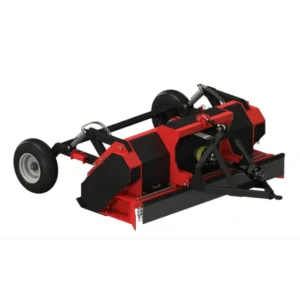
THOR 2.4 + Kit Drawbar
Working Width: 2.4 m · Min 180 hp · 2,300 kg
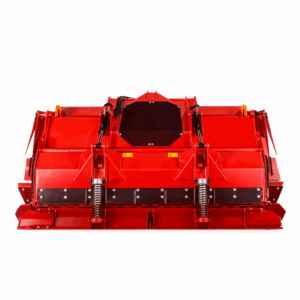
RockMaster Agricultural
Versatile agricultural stone crusher for mixed terrain
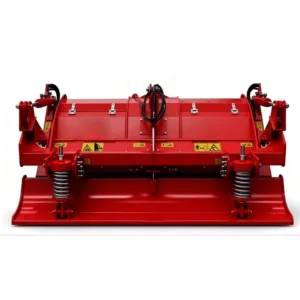
PSC Series Models
Field stone crusher · STCL series · 70–150 hp
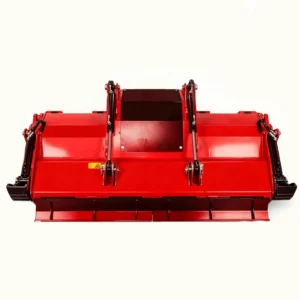
Tractor Mounted Rock Crusher
Heavy-duty tractor mounted rock crusher for demanding terrain
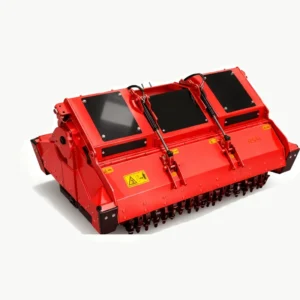
Agricultural Crusher – Korea
Optimised for Korean terrain and horticultural applications
11. Maintenance Requirements and Long-Term Ownership Cost
Beyond the initial purchase — whether you’re looking for a pto stone crusher for sale at a dealership or comparing quotes from pto stone crusher manufacturers — the ongoing cost of ownership is determined by how the two rotor types compare in routine maintenance demands.
Fixed-tooth PTO ქვის დამსხვრევი rotor maintenance is relatively straightforward: monitor carbide tip condition, replace worn or broken tips at scheduled intervals, and periodically re-torque tool holders. Because the teeth are rigid, there are no pivot wear surfaces to inspect. However, a single broken tooth can create rotor imbalance that stresses bearing housings and gearbox components, so any tooth loss should be addressed promptly. On hard stone, experienced operators often keep a supply of replacement carbide tips and a breaker bar in the tractor cab for field replacement during work breaks.
Free-swinging hammer rotor maintenance involves additional items: hammer pivot pins must be inspected for wear at regular intervals, carrier disc bores must be checked for elongation from pin hammering, and the hammers themselves must be turned or replaced as faces wear. The more components involved in the pivot assembly mean more inspection points — but each individual component is a stock item that most agricultural machinery suppliers in Korea can provide from domestic inventory. Bearing in mind that hammer damage events (deflection on buried objects) are a normal operational occurrence rather than a failure mode, the wear rate on hammers can be higher than on fixed teeth operating in their intended application range.
Frequently Asked Questions
Q1. Which type of pto stone crusher rotor works best for clearing rocky paddock land in Korea’s Gyeonggi region?
For Gyeonggi paddock land where soil profiles are variable and subsurface obstacle history is unclear, a free-swinging hammer rotor on a mid-range agricultural stone crusher generally offers better protection against drivetrain damage. If a ground survey confirms consistently surface-to-shallow stone without embedded debris, a fixed-tooth model in the STCM power range would deliver better crushing throughput per hour.
Q2. What is the maximum stone size that a small pto stone crusher can handle on sloped agricultural land?
Entry-level small pto stone crusher models in the STCL category handle stones up to 150 mm diameter at a working depth of up to 150 mm. For stones larger than 200 mm, you need to step up to the STCM series, which handles 300 mm diameter stones at 200 mm depth. Slope operation does not change the maximum stone size the machine can process, but it does affect stability and forward pass rate — steeper slopes typically require slower working speeds.
Q3. How do I compare the cost and performance of a used tractor stone crusher versus a new agricultural stone crusher for sale?
A used tractor stone crusher for sale may offer a lower entry cost but carries unknown wear history on the most critical components — rotor bearings, gearbox, and tooth or hammer condition. New machines come with manufacturer warranty and known wear part baselines. For high-hours seasonal work, the total-cost-of-ownership calculation often favours new equipment over a three-to-five year horizon. We can assist with comparative analysis if you provide your anticipated annual usage hours and primary stone type.
Q4. What does a stone crusher do to stones that are too large for the rotor to crush in one pass?
When the stone crusher machine encounters a stone that exceeds its single-pass capacity, two things typically happen: on a fixed-tooth rotor, the machine may lift slightly or the operator feels a distinct resistance that signals to reduce forward speed or make a second pass at the same location. On a free-swinging hammer rotor, oversized stones may be partially moved but not fully reduced, again requiring a repeated pass. Stones significantly above the stated maximum diameter should be pre-broken by manual splitting or by a separate rock breaker before the crusher processes the area.
Q5. Which pto stone crusher manufacturers offer models that meet Korean RDA (Rural Development Administration) machinery standards?
For equipment to be registered under Korea’s Agricultural Mechanization Promotion Act framework, machines should meet the technical standards assessed by the Rural Development Administration (농촌진흥청, RDA). We work with established pto stone crusher manufacturers whose products are designed to meet or exceed international safety standards (ISO 4254-1, CE Machinery Directive 2006/42/EC) that are broadly aligned with Korean KAMS requirements. Contact us directly for certification documentation relevant to your specific model of interest.
Q6. How often do carbide teeth on a fixed-tooth stone crusher rotor need to be replaced when used in Korean granite soil conditions?
Tooth replacement frequency in granite-dominant soils depends heavily on stone hardness, daily operating hours, and operating speed. Under typical Korean hillside granite conditions at 3–5 km/h working speed, operators report carbide teeth lasting between 80 and 200 working hours per set. Monitoring is best done visually at each refuelling stop — a worn carbide tip changes shape noticeably before it fails catastrophically. Keeping a complete set of spare tips on hand avoids unplanned downtime during the peak crushing season.
Q7. When is the best time of year to use a tractor stone crusher on Korean paddy field perimeters and orchard slopes?
In Korea, the optimal window for stone crusher for tractor operation on paddy perimeters is between rice harvest completion in late October and the ground-freeze onset in December. A second opportunity arises in early March through April before the soil warms for the spring planting cycle. Orchard slopes are best worked in the dormant season — November through February — when tree root damage risk is lowest and soil moisture is typically moderate, reducing stone crusher operational dust and improving visibility around the machine.
Editor: PXY