Knowledge Guide · Agricultural Stone Crushing
Best Small PTO Stone Crusher for Hobby Farms and Smallholdings: Choosing the Right Size for Under 50 Acres
A practical, engineering-backed guide for smallholders and hobby farmers — including model comparisons, regulatory context, and real-world size selection advice.
If you manage a hobby farm, smallholding, or rural property under 50 acres and your land is littered with surface stones, subsurface rock fragments, or compacted gravel deposits, a PTO stone crusher is one of the most transformative tools you can invest in. Unlike conventional rock collection methods — raking, picking, or blasting — a small PTO stone crusher pulverises stones directly in the field, returning material back into the soil profile as fine aggregate that actually improves drainage and structure. No skips, no haulage costs, no hired labour for a job that would otherwise take weeks.
The challenge most smallholders face is not whether to buy one, but which size and model to choose. Undersizing means your tractor struggles and wear rates soar. Oversizing means you have bought more machine — and more weight — than your ground conditions and tractor horsepower justify, with a higher upfront spend that takes years to recover. This guide walks through how a tractor stone crusher works, how its structural components are built, what materials are used in critical wear zones, and — most importantly — how to match the machine to a farm of under 50 acres.
1. What Is a PTO Stone Crusher and What Is Crusher Stone Used For?
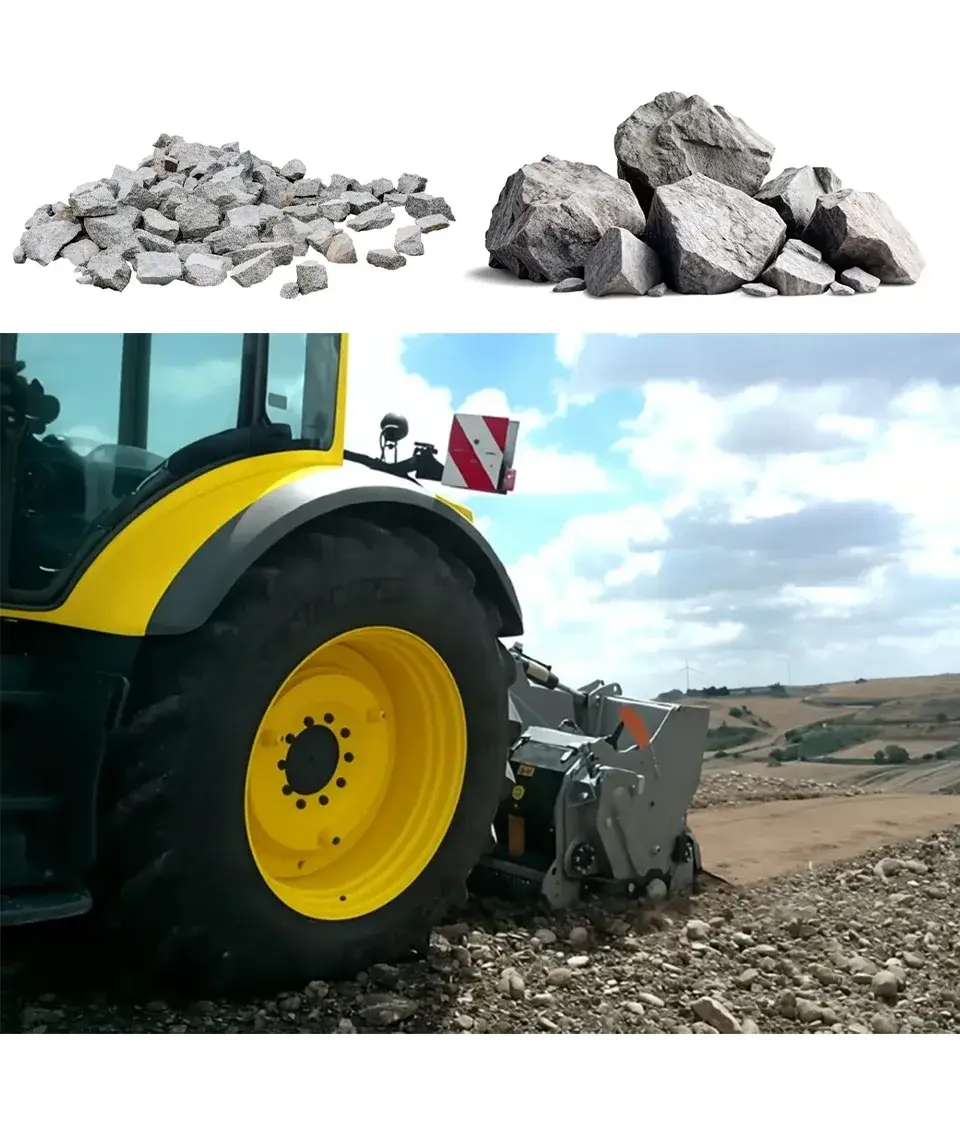
A PTO ქვის დამსხვრევი — also called an agricultural stone crusher, field stone crusher, or rock mulcher — is a tractor-mounted implement that draws power from the tractor’s Power Take-Off (PTO) shaft to drive a high-speed rotor fitted with tungsten carbide-tipped teeth. As the tractor drives forward, the spinning rotor — typically turning at 1,000 rpm — strikes, fractures, and pulverises any rock or stone material it encounters on or just below the soil surface, leaving crushed stone fragments that are either reintegrated into the topsoil or swept to the rear in a controlled fashion.
What is crusher stone actually used for once processed? The fine crushed aggregate left behind after a stone crusher machine has worked a field serves a range of agricultural and land management purposes. On arable land, the removal or reduction of surface stones directly reduces machinery wear during subsequent cultivation, drilling, and harvesting passes — particularly important for cereal crops and root vegetables grown on light soils in Korea’s Jeolla and Chungcheong provinces, where volcanic and alluvial soils frequently surface stones during freeze-thaw cycles. On pastoral land, crushed stone returns calcium-rich aggregate to the root zone, improving soil pH buffering. On access tracks, pathways, and farm roads, the processed material creates a stable, free-draining surface without any spoil to dispose of. Hobby farm owners running orchards, vineyards, or paddock grazing operations cite the elimination of tyre and machinery damage as the primary driver for investing in a portable stone crusher machine or tractor-mounted equivalent.
Beyond agricultural use, a well-chosen stone crusher for tractor also enables land reclamation and development work — grading and preparing construction access roads, clearing rocky hillside plots for forestry, and establishing new fields on previously uncultivated rocky ground. For Korean hobby farm owners looking to develop rural plots in mountainous regions (산지), the ability to process rock in-situ without requiring a mobile jaw crusher or separate crushing plant is a significant logistical and financial advantage.
2. Action Mechanism — How a PTO Stone Crusher Works
Understanding the action mechanism of a PTO ქვის დამსხვრევი is essential for choosing the right model, because the crushing action directly determines the output fragment size, the power demand on the tractor, and the rate of tooth wear — all of which vary significantly across the size classes available for farms under 50 acres. The operating principle is consistent across all models but differs in the details of rotor design, tooth geometry, and counter-blade arrangement.
Power from the tractor PTO shaft (typically running at 540 or 1,000 rpm depending on the model) is transmitted through a driveshaft with an integrated cam-type overload clutch to a gearbox or belt-drive system that spins the rotor at working speed. The rotor — a heavy steel drum of 450–700 mm diameter depending on the machine class — carries hardened tooth holders spaced at regular intervals around the circumference. Forged-steel tooth holders accept interchangeable tungsten carbide-tipped cutting teeth that engage stones with a high-velocity impact, fracturing the stone through a combination of direct blow force and the anvil effect of the fixed counter-blades inside the crushing chamber.
The crushing chamber geometry is critical: stones enter through the front opening (which sets the maximum input stone diameter), strike the rotating teeth, bounce against the internal Hardox counter-blades, and undergo repeated fragmentation until the fragments are small enough to pass through the gap between the rotor and the adjustable rear counter-blade. This gap is the primary granulometry control — reducing it produces finer output but increases power demand. Raising the rear hood opens the gap, allowing coarser material to pass and reducing load on the drivetrain. The rear protection chains slow down ejected fragments and prevent material from being thrown rearward at dangerous velocity, which is why they are a standard safety feature on all modern stone crushing equipment.
The tractor’s forward travel speed — generally 1–5 km/h for stone crushing work — controls the volume of material fed into the rotor. For hobby farm conditions with moderately dense surface stone populations, a travel speed of 2–3 km/h is typical, allowing the rotor to process material thoroughly without overloading the drivetrain. The PSC series models listed on our site are specifically calibrated for this kind of light to medium duty, where stone density is variable and the operator may need to adjust travel speed quickly in response to changing ground conditions.
3. Manufacturing Structure — How PTO Stone Crushers Are Built
The manufacturing structure of a quality agricultural stone crusher reflects the extreme abrasion and impact loads the machine must sustain throughout a working season. For hobby farms and smallholdings, where the machine may be used seasonally rather than daily, selecting a unit with a robust structural specification still matters enormously — because the key failure modes (tooth wear, bearing damage, frame cracking, and rotor imbalance from material build-up) do not respond to lighter-than-rated use as much as one might expect. A single encounter with an unexpected bedrock shelf or a cluster of large cobbles can damage an undersized or poorly manufactured unit.
The mainframe — the outer housing that encloses the rotor and forms the crushing chamber — is fabricated from high-strength structural steel plate, typically laser-cut and robot-welded, with additional reinforcing ribs at stress concentration points around the mounting brackets and the rotor journal housings. In the heavier classes, the frame is sealed and enclosed to keep grit and stone fragments out of the rotor bearings, extending bearing service life substantially. Lighter models in the STCL class (70–150 hp range) may have a more open frame to save weight for compatibility with compact utility tractors, while still using reinforced brackets and hardox wear plates in the critical impact zones.
The rotor is the heart of the machine. For the STCL series, the rotor diameter is 450 mm. Moving up to the STCM class, the rotor diameter increases to 550 mm — the larger diameter increases peripheral tooth velocity for a given RPM, delivering more kinetic energy per tooth strike and allowing the machine to handle larger input stones (up to 300 mm diameter for the STCM, versus 150 mm for the STCL). The rotor is precision-balanced to minimise vibration at working speed, and tooth holders are typically bolted — not welded — for field replaceability without removing the rotor assembly. The PTO shaft assembly incorporates a safety cam clutch that disengages the drivetrain in the event of sudden rotor lock-up (striking a deeply buried concrete or steel obstacle), protecting the tractor PTO and gearbox from sudden torque shock.
Three-point linkage mounting follows category 2 standards across all models relevant to hobby farm tractors, meaning standard compatibility with any Category 2 rear linkage — which covers the vast majority of utility tractors from 60 to 200 hp commonly found on Korean smallholdings. The top link geometry positions the crushing head at the correct angle of attack to the ground, and depth skids or roller assemblies control working depth, preventing the rotor from digging into soft ground during headland turns.
4. Material System — What PTO Stone Crushers Are Made From
The material specifications used in a stone crusher machine determine its real-world service life more than almost any other design factor. For hobby farm buyers who may be comparing models purely on price and working width, understanding the material system helps explain why quality machines carry a higher purchase cost but deliver dramatically lower total cost of ownership over a 5–10 year service life. The three primary material systems are the cutting teeth, the wear plates (counter blades and internal cladding), and the structural frame.
Tungsten Carbide Teeth
The cutting teeth are the primary consumable component. High-quality stone crusher teeth consist of a forged alloy steel tooth body with a tungsten carbide (WC-Co) insert brazed or press-fitted at the tip. Tungsten carbide has a hardness of approximately 1,500–2,000 HV — roughly 3× harder than hardened tool steel — enabling it to abrade siliceous stone and granite without losing its edge profile over hundreds of operating hours. The STC/3 tooth type is standard; the STC/3/HD (heavy duty) uses a denser carbide grade for harder rock formations such as basalt and quartzite; the STC/3/FP uses a flat-profile tip for harder but more brittle materials. Tooth replacement is a routine maintenance task that can be performed in the field with basic hand tools, and correctly timed tooth replacement prevents secondary damage to the tooth holder and rotor body.
Hardox Wear Plates
The internal counter blades, side plates, and crushing chamber floor are typically fabricated from Hardox 400 or Hardox 500 wear-resistant steel — a trademarked product from SSAB with Brinell hardness of 400–500 HB. This material is specifically engineered for high-impact abrasive wear environments and is 3–5× more wear-resistant than standard structural steel at similar impact toughness. On quality machines, these plates are bolted rather than welded, making field replacement practical without specialised workshop equipment. Some models in the STCM class feature hydraulically adjustable counter blades, allowing the operator to change output fragment size from the tractor seat without stopping work.
Frame and Rotor Steel
The mainframe and rotor body are fabricated from S355 or equivalent structural steel, selected for its yield strength (minimum 355 MPa) and proven fatigue performance under cyclic loading. The rotor is often manufactured from a higher-strength grade — S460 or equivalent — to handle the bending moments generated by tooth impact forces at 1,000 rpm. Bearing housings are cast steel or cast iron, machined to tight tolerances to maintain rotor alignment over the service life of the machine. Anti-corrosion protection systems for machines sold into maritime-climate environments (such as Korea’s western and southern coasts) include epoxy primer plus polyurethane topcoat paint systems, with zinc-rich primer in higher-exposure areas.
5. Choosing the Right Size PTO Stone Crusher for Under 50 Acres
For farms and smallholdings under 50 acres (approximately 20 hectares), the fundamental sizing question revolves around three variables: your tractor’s PTO horsepower, the maximum stone diameter you need to process, and the working width that represents the best balance between productivity and machine weight on your ground conditions. Getting this balance right is what distinguishes a smart purchase from an expensive mistake — both oversizing and undersizing have real operational consequences.
For properties at the smaller end — 5 to 15 acres of hobby farm or mixed orchard/paddock land — the STCL class of small pto stone crusher (70–150 hp tractor requirement, maximum stone diameter 150 mm, working depth up to 150 mm) is typically the right starting point. These machines offer working widths from 1,110 mm to 2,070 mm and weigh between 1,230 and 1,750 kg, making them compatible with the compact utility tractors (50–100 hp) commonly operated by Korean hobby farmers. The STCL’s rotor diameter of 450 mm and PTO speed compatibility of 540–1,000 rpm means it pairs well with older tractor models running 540 rpm PTO, which are still widely found on Korean farms.
For smallholdings from 15 to 50 acres where stone populations are heavier, rock sizes are larger (up to 300 mm diameter), or where the land is being reclaimed from rough grazing or scrubland, the STCM series becomes the better fit. The STCM/ST 125 (80–110 hp, 1,340 mm working width, 1,850 kg) is the natural entry point, offering 300 mm maximum stone diameter and 200 mm working depth — meaningfully more capable than the STCL at modest extra weight and cost. Moving up to the STCM 150 or 175 makes sense for farms in the 30–50 acre range where throughput efficiency matters and the tractor has 150–220 hp available. Our full stone crusher product range includes models covering all of these power bands.
STCL Series — Specifications for Compact Farm Tractors (70–150 hp)
| Spec | STCL/ST 100 | STCL/ST 125 | STCL/ST 150 | STCL/ST 175 | STCL/DT 175 | STCL/DT 200 |
|---|---|---|---|---|---|---|
| Tractor (hp) | 70–120 | 80–120 | 90–120 | 100–120 | 100–150 | 120–150 |
| PTO (rpm) | 540–1000 | 540–1000 | 540–1000 | 540–1000 | 1000 | 1000 |
| Working Width (mm) | 1,110 | 1,350 | 1,590 | 1,830 | 1,830 | 2,070 |
| Weight (kg) | 1,230 | 1,280 | 1,440 | 1,570 | 1,600 | 1,750 |
| Rotor Diameter (mm) | 450 | 450 | 450 | 450 | 450 | 450 |
| Max Stone Ø (mm) | 150 | 150 | 150 | 150 | 150 | 150 |
| Max Working Depth (mm) | 150 | 150 | 150 | 150 | 150 | 150 |
| No. Teeth | 22+4 | 26+4 | 32+4 | 38+4 | 38+4 | 42+4 |
STCM Series — Specifications for Mid-Range Farm Tractors (80–280 hp)
| Spec | STCM/ST 125 | STCM 150 | STCM 175 | STCM 200 | STCM 225 | STCM/HP 200 | STCM/HP 225 |
|---|---|---|---|---|---|---|---|
| Tractor (hp) | 80–110 | 150–220 | 160–220 | 170–220 | 180–220 | 200–280 | 200–280 |
| PTO (rpm) | 540 or 1000 | 1000 | 1000 | 1000 | 1000 | 1000 | 1000 |
| Working Width (mm) | 1,340 | 1,584 | 1,824 | 2,064 | 2,304 | 2,064 | 2,304 |
| Weight (kg) | 1,850 | 3,000 | 3,250 | 3,550 | 3,800 | 3,600 | 3,840 |
| Rotor Ø (mm) | 550 | 550 | 550 | 550 | 550 | 550 | 550 |
| Max Stone Ø (mm) | 300 | 300 | 300 | 300 | 300 | 300 | 300 |
| Max Depth (mm) | 200 | 200 | 200 | 200 | 200 | 200 | 200 |
| No. Teeth | 26+4 | 32+4 | 38+4 | 42+4 | 48+4 | 42+4 | 48+4 |
6. Recommended PTO Stone Crusher Models for Hobby Farms Under 50 Acres
The following models from our stone crushing equipment range represent the best-fit options for hobby farms and smallholdings based on the size and power criteria discussed above. All are available through our product catalogue and can be specified with optional features to match your specific ground conditions.
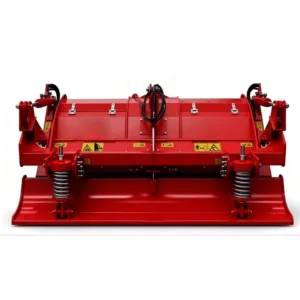
PSC Series — Field Stone Crusher (STCL Class)
The PSC models are our entry-level field stone crushing equipment series, designed specifically for hobby farms, market gardens, and smallholdings where tractor horsepower is limited and working widths of 1.1–1.8 m are appropriate. Compatible with tractors from 70 hp upward, they deliver reliable surface stone processing with minimal complexity. The PSC series is an ideal choice for Korean hobby farmers managing plots of 5–20 acres with compact utility tractors.
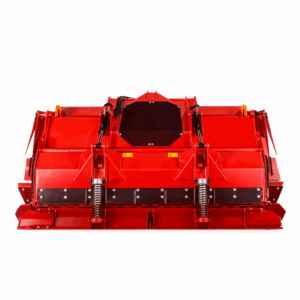
RockMaster — Agricultural Stone Crusher
The RockMaster is our mid-tier agricultural stone crusher, suited to farms in the 15–35 acre range with moderate to heavy surface stone populations and tractor power in the 80–150 hp bracket. It offers a robust rotor assembly with replaceable tungsten carbide teeth and Hardox wear plates throughout the crushing chamber. The RockMaster handles stones up to 200–250 mm diameter, making it versatile enough for tougher reclamation tasks on Korean rural properties with volcanic basalt or granite cobble deposits.
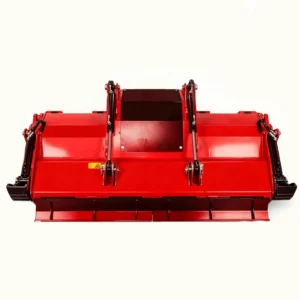
Tractor Mounted Rock Crusher — Standard Series
Our standard-series tractor stone crusher is the most versatile option for 25–50 acre smallholdings, offering a balance between working width (up to 2.0 m), processing capacity, and compatibility with mid-range farm tractors. It is available as a stone crusher for tractor in category 2 three-point linkage configuration and can be ordered with optional hydraulic counter-blade adjustment — essential for farms where stone size and soil conditions change significantly across the property.
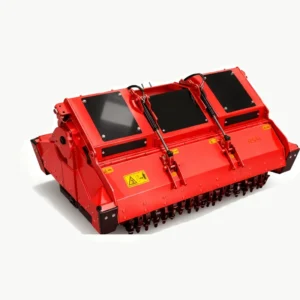
Agricultural Tractor Mounted Rock Crusher — Korea Edition
Specifically configured for the Korean agricultural market, this pto stone crusher for sale in Korea is adapted for the compact and mid-size tractors (60–130 hp) most commonly operated by Korean hobby farmers and rural landowners. The Korea edition incorporates localised documentation, technical support, and spare parts availability through Korean distribution channels, making it the most practical choice for Korean buyers looking for a small pto stone crusher for plots under 50 acres.
7. Acreage Matching Guide — Which PTO Stone Crusher Size Do You Need?
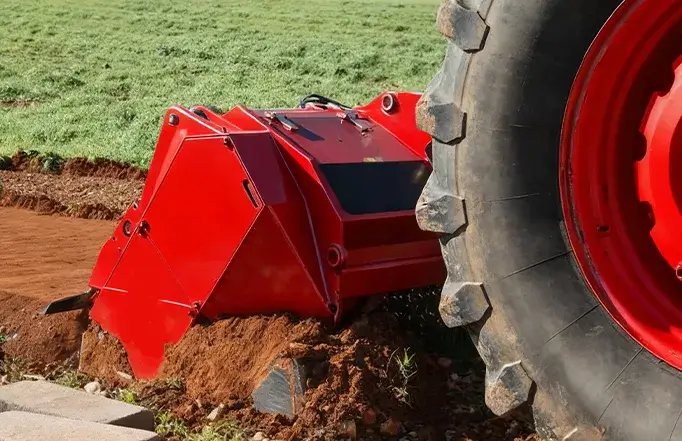
The table below provides a quick reference for matching farm size, tractor horsepower, and stone crusher model to realistic productivity expectations. All throughput figures assume a stone density of 10–20 stones per square metre and a working speed of 2–3 km/h.
| Farm Size | Tractor HP | Recommended Model Class | Working Width | Approx. Throughput |
|---|---|---|---|---|
| Under 5 acres | 40–70 hp | PSC Series / STCL/ST 100 | 1.1–1.35 m | 0.15–0.25 ha/hr |
| 5–15 acres | 70–100 hp | STCL/ST 125–150 | 1.35–1.59 m | 0.25–0.35 ha/hr |
| 15–25 acres | 100–130 hp | STCL/ST 175 / RockMaster | 1.59–1.83 m | 0.35–0.50 ha/hr |
| 25–40 acres | 130–180 hp | STCM/ST 125 / Tractor Mounted Standard | 1.34–1.82 m | 0.40–0.60 ha/hr |
| 40–50 acres | 160–220 hp | STCM 150–175 | 1.58–1.82 m | 0.55–0.75 ha/hr |
8. Regulatory and Safety Requirements — Korea and International Standards
Agricultural machinery safety regulations govern the design, import, and operation of PTO stone crushers across all major markets. Buyers in Korea and internationally should be aware of the following framework requirements before purchasing or operating stone crushing equipment.
Republic of Korea (대한민국): Agricultural machinery including PTO-driven stone crushers falls under the Agricultural Mechanization Promotion Act (농업기계화촉진법) and associated regulations administered by the Ministry of Agriculture, Food and Rural Affairs (농림축산식품부, MAFRA). Imported agricultural machinery must comply with the Korea Certification (KC) mark requirements under the Electrical Appliances Safety Act where electrical components are involved, and must meet the safety standards set out in the Korean Industrial Standards (KS) for agricultural equipment. For PTO-driven implements specifically, KS B 5202 governs PTO shaft safety guarding, requiring driveshaft guards with compliant materials and retention systems. The National Institute of Agricultural Sciences (농촌진흥청) provides technical guidance on safe operation of stone crushing equipment including required operator safety zones and travel speed limits on slopes. Additionally, where stone crusher operations are conducted near water courses or on agricultural land under land-use regulation, operators should check compliance with the Farmland Act (농지법), which governs permitted agricultural activities.
European Union (EU Machinery Directive 2006/42/EC): All PTO stone crushers sold in EU member states must carry CE marking and comply with the Machinery Directive, which transitions to the EU Machinery Regulation 2023/1230 in January 2027. Relevant harmonised standards include EN ISO 11684 for safety signs, EN 13857 for safety distances, and EN ISO 4254-1 for general agricultural machinery safety. The PTO shaft guard must comply with EN 12965.
United States (OSHA / ASABE): In the US, PTO machinery is governed by OSHA 29 CFR 1928.57 for agricultural operations, requiring specific guarding of PTO shaft, master shield, and implement input connection point. ASABE standards S207 and EP455 govern PTO power requirements and driveline specifications for agricultural equipment.
Australia and New Zealand: PTO equipment must comply with AS/NZS 4600 for steel structures and the relevant state/territory Workplace Health and Safety regulations. Safe Work Australia guidance WHS Regulation Schedule 9 covers powered agricultural machinery. New Zealand’s Health and Safety at Work Act 2015 applies to anyone operating stone crushing equipment in a commercial or semi-commercial farm context.
Regardless of jurisdiction, all operators should ensure the PTO driveshaft guard is intact and correctly fitted before use, and that the minimum working clearance behind the machine (typically 8–10 metres) is maintained to prevent injury from ejected material. Operators should also check local noise ordinances that may apply to stone crusher operation near residential areas, as rotor noise at 1,000 rpm can exceed 90 dB(A) at the operator position.
9. Key Maintenance Practices for Hobby Farm Stone Crusher Longevity
For a hobby farm owner who may operate the stone crusher only 20–50 hours per season, establishing a disciplined maintenance schedule is arguably more important than for a contractor running the machine daily — because seasonal storage introduces corrosion and lubrication degradation risks that daily-use machines avoid. Following these practices will extend service life significantly and protect your investment in stone crushing equipment.
Check tooth condition every 5–8 operating hours and replace any tooth showing more than 50% carbide tip wear before the steel body of the tooth holder contacts the stone. Bearing housings should be greased every 50 hours with the manufacturer’s specified grease grade — typically a lithium complex EP grease with NLGI grade 2. At the end of each season, clean all soil from the crushing chamber and rotor, inspect the PTO driveshaft guards for cracks and replace any damaged guard segments, and apply corrosion-inhibiting oil to all exposed machined surfaces. Check rotor balance by spinning the machine briefly with the cover open (at a safe distance) — any vibration suggesting imbalance should be investigated before the next season to prevent bearing damage. Store the machine in a covered, dry location if possible, as exposure to Korean winter freeze-thaw cycles can accelerate seal deterioration.
10. About Us
We are a specialised supplier of agricultural stone crushing equipment and rock mulching machinery, serving hobby farmers, smallholders, agricultural contractors, and land reclamation specialists across Korea and international markets. Our product range spans the full spectrum of tractor PTO stone crushers — from compact entry-level models compatible with 40–70 hp utility tractors right through to heavy-duty units for 200+ hp machines tackling the most demanding field stone clearance and reclamation tasks.
Every product we supply is selected for verified performance, parts availability, and compliance with relevant agricultural machinery safety standards. Our team understands the specific soil and rock conditions found across Korea’s diverse agricultural regions — from the volcanic basalt soils of Jeju Island to the alluvial gravel deposits of the Han River plains — and we are able to advise on the most appropriate model and specification for your particular situation. If you would like to discuss your requirements in detail, get in touch with us directly and we will provide a tailored recommendation.
Frequently Asked Questions — PTO Stone Crusher for Hobby Farms
Q1. What is the best small PTO stone crusher for a 10-acre hobby farm in Korea with a 70 hp tractor?
▼
For a 10-acre hobby farm with a 70 hp tractor, the STCL/ST 100 or PSC series small PTO stone crusher is the most appropriate match. These models are designed for tractors from 70–120 hp, work at 540 or 1000 rpm PTO, and offer a working width of 1.1–1.35 m — manageable for a compact tractor and sufficient for processing 10 acres over a short working period. They handle stones up to 150 mm diameter and work to 150 mm depth, which covers the majority of hobby farm surface stone conditions in Korea.
Q2. What size PTO stone crusher do I need for a 30-acre field with volcanic basalt cobbles up to 20 cm in diameter?
▼
For 30 acres with basalt cobbles up to 200 mm in diameter, the STCM/ST 125 or a comparable mid-range stone crusher for tractor with 300 mm maximum stone capacity would be the correct specification. Basalt is a dense, hard rock requiring STC/3/HD heavy-duty teeth for acceptable tooth life. A working width of 1.3–1.6 m paired with a 100–150 hp tractor will process 30 acres in 3–5 working days at typical travel speeds.
Q3. How much does it typically cost to replace the teeth on a small pto stone crusher after a full season of use?
▼
Tooth replacement cost varies by machine class, tooth type, and how promptly worn teeth are replaced. On an STCL-class machine with 26 working teeth, a full set of standard STC/3 teeth costs significantly less than a full set of STC/3/HD heavy-duty teeth for harder rock. Replacing teeth before the tooth body wears into the holder is the single most effective way to control total maintenance costs. We can advise on specific spare parts pricing when you contact us with your model details.
Q4. When is it worth buying a portable stone crusher machine versus a tractor-mounted pto stone crusher for a smallholding?
▼
A portable stone crusher machine — typically a towable or self-contained jaw crusher — makes sense when you need to process very large rock volumes (over 100 tonnes per day) or when you want to produce graded aggregate for sale or construction use. For most hobby farm applications under 50 acres, a tractor-mounted PTO stone crusher is more cost-effective, simpler to operate, requires no separate power source, and processes material in situ without needing to load, transport, and crush separately. The tractor-mounted option is almost always the right choice for under-50-acre hobby farm applications.
Q5. What are the Korean safety regulations I need to follow when operating a stone crusher on my farm near Gyeonggi province?
▼
In Korea, PTO stone crusher operation is regulated under the Agricultural Mechanization Promotion Act and the Occupational Safety and Health Act (산업안전보건법). Key requirements include maintaining a minimum 8-metre exclusion zone behind the machine during operation, ensuring the PTO driveshaft guard conforms to KS B 5202, wearing appropriate PPE (hearing protection, safety glasses, and steel-toe boots), and observing the Farmland Act restrictions on what types of land modification are permitted in designated agricultural protection zones in Gyeonggi province. For operations near rivers or drainage channels, additional permits may be required from the local authorities.
Q6. How do I find a used tractor stone crusher for sale that is suitable for a 20-acre hobby farm in South Korea?
▼
Used stone crushers are available through Korean agricultural machinery dealers, auction platforms such as 중고나라 and 직거래 sites, and through rental-to-buy schemes offered by some distributors. When evaluating a used machine, prioritise inspecting the rotor, tooth holders, and Hardox counter-blade wear surfaces before committing to purchase. Alternatively, contacting us directly gives you access to both new stock and reconditioned units with documented service history for the Korean market.
Q7. What is the typical working depth and stone diameter capacity of a pto stone crusher for sale in the 80–130 hp class?
▼
In the 80–130 hp tractor class, PTO stone crushers typically offer maximum working depths of 150–200 mm and handle stones up to 150–300 mm in diameter depending on the specific model. The STCL series (70–150 hp) processes up to 150 mm stones at 150 mm depth; the STCM/ST 125 (80–110 hp) handles up to 300 mm stones at 200 mm depth despite being the lightest STCM model. Your specific ground conditions and the predominant stone size on your property should guide which of these specifications is the more appropriate match.
Editor: PXY