Maintenance Knowledge Series
How to Grease a PTO Rock Crusher: Bearing Points, Grease Grade, and Interval Schedule
A practical lubrication guide for agricultural operators, contractors, and fleet maintenance teams using frantoio per pietre PTO equipment in Korea and globally.
1. Why Lubrication Determines the Lifespan of a PTO Stone Crusher
A frantoio per pietre PTO subjects its internal components to an operating environment that is genuinely among the most hostile in agricultural or light construction machinery. The rotor assembly — the primary wear component — spins at 1,000–2,200 RPM depending on model and PTO speed, generating substantial heat in the bearing housings through friction. At the same time, the crushing action produces a constant shower of fine rock dust that settles across all exposed surfaces and finds its way into any gap, seal interface, or fitting that is not actively maintained. Water from field irrigation, rain, morning dew, and stream crossings adds a third contamination vector, creating conditions where rust formation inside a bearing can begin within days of inadequate greasing.
The consequence of under-lubrication is well-documented in the service histories of agricultural stone crusher equipment: bearing failure typically begins with micro-pitting of the rolling element contact surfaces — a process accelerated by a thin or degraded lubricant film — progresses to spalling (larger surface flakes peeling away from the raceway), and ends in either seizure or cage fracture. Both failure modes can be catastrophic during operation, potentially damaging the rotor shaft, the crusher housing, or throwing components. For operators in Korea who depend on a tractor stone crusher to complete land clearing projects within seasonal windows — typically spring preparation before rice planting or autumn clearing after harvest — an unplanned bearing failure mid-season is not just a repair cost; it is a productivity loss that can ripple through the entire growing cycle. Proper greasing prevents this at a cost that is orders of magnitude lower than replacement parts and labor.
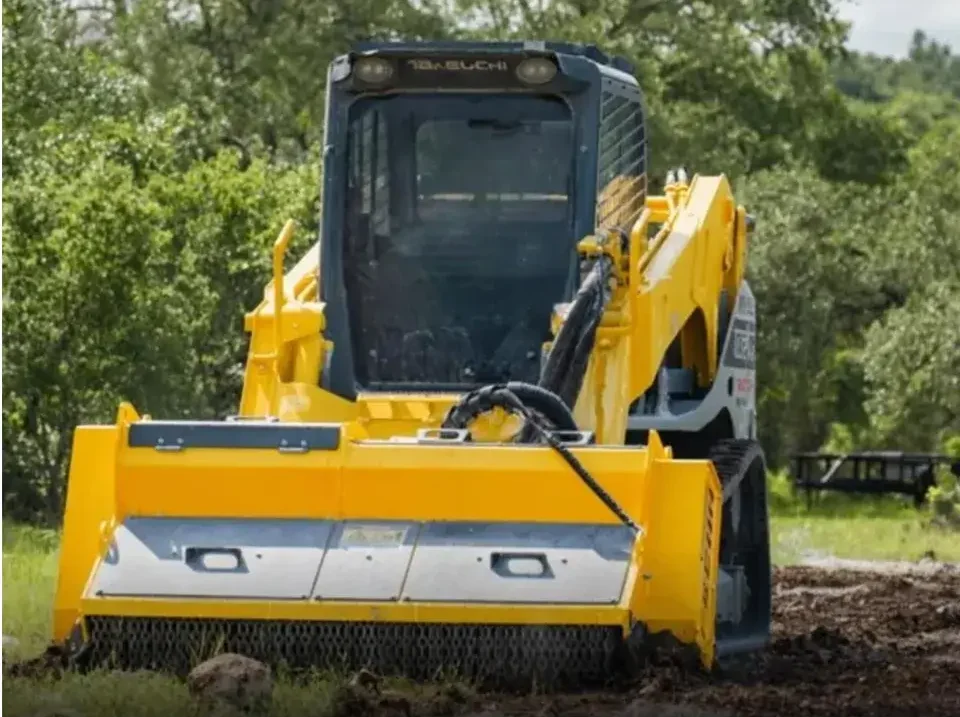
2. Action Modes — How Operating Conditions Drive Grease Consumption Rates
Understanding how a frantoio per pietre PTO operates in different modes is essential for setting lubrication intervals that actually match the machine’s consumption rate. Different operating conditions consume grease at radically different rates, and a fixed calendar-based schedule misses this variability. Three primary action modes define the lubrication environment:
Rotor Free-Run Mode
The PTO is engaged and the rotor is spinning, but the machine is either being repositioned or the rotor is raised above working depth. In this mode, bearing loading is purely centrifugal and gravitational — lower than during crushing. Heat generation is moderate, and grease consumption is slow. This is the appropriate mode for running in a freshly greased machine, as it allows the new grease to distribute evenly across the bearing raceways before full crushing loads are applied. For a STCL/ST 150 model with 1,440 kg mass and 1000 RPM PTO, a 5-minute free-run after greasing is recommended before returning to working depth.
Normal Crushing Mode
The machine is working at designed operating depth (up to 150 mm for STCL Series, up to 200 mm for STCM Series) in standard rocky soil. Rotor bearing load cycles are regular, shock loading occurs at each tooth–rock impact, and temperature at the bearing housing rises steadily to 50–70°C under sustained operation. Grease film thickness at the bearing contact zone decreases over the operating session as the lubricant is mechanically worked and partially expelled from the bearing cavity. This is the baseline mode for interval calculation — normal crushing mode defines the standard greasing interval.
Heavy-Impact Mode
The rotor encounters large embedded rocks, concrete slabs, or very high rock density. Shock loads on the rotor shaft bearings can momentarily exceed 5–10 times the normal radial load, compressing and temporarily displacing the grease film at the rolling element contact zone. Sustained heavy-impact operation heats bearing housings above 80°C, accelerating grease oxidation and base oil evaporation. After extended heavy-impact sessions, intermediate greasing — regardless of hours elapsed since the previous service — is advisable. For high-power models like the PSC 200 (1,750 kg, 2,070 mm working width) used in Korea’s granite-heavy upland zones, heavy-impact mode should trigger a greasing check every 4–6 hours of actual field time rather than the standard 8-hour interval.
3. Structure Types — Identifying All Bearing Points That Require Greasing
A stone crusher machine has multiple distinct grease points, each with its own loading condition, contamination exposure, and optimal maintenance priority. Knowing every point — and what happens when each is neglected — is the foundation of an effective lubrication program. The following structure types and their associated bearing points apply across the PSC Series, THOR Series, and the broader range of stone crushing equipment:
| Bearing Point | Location | Load Type | Contamination Risk | Priority |
|---|---|---|---|---|
| Rotor shaft bearing (drive side) | Side of rotor nearest PTO input | High radial + shock | Very High | Critical |
| Rotor shaft bearing (non-drive side) | Opposite side of rotor | High radial + shock | Very High | Critical |
| Gearbox input shaft bearing | Internal gearbox, PTO connection | Moderate radial + torsional | Low (enclosed) | High |
| Gearbox output shaft bearing | Internal gearbox, rotor drive end | Moderate radial + torsional | Low (enclosed) | High |
| PTO driveshaft universal joint crosses | Both ends of PTO driveshaft | Cyclic angular misalignment | High (exposed) | Critical |
| PTO driveshaft sliding spline | Telescoping shaft section | Axial sliding, torsional | High (exposed) | High |
| 3-point hitch pivot pins and bushings | Top link pin, lower link pins | Static + shock lifting loads | High (soil exposure) | Medium |
| Depth roller / depth wheel bearings | Rear or side depth control | Rolling contact, soil abrasion | Very High | Medium-High |
| Rear flap pivot/hinge pins | Crushing chamber rear door | Low, intermittent | High (rock dust) | Medium |
Each grease fitting (Zerk fitting / grease nipple) on the machine corresponds to one of these points. Before beginning any greasing session, it is good practice to identify and count the fittings on your specific model — the PSC 100 (working width 1,110 mm) typically has fewer fittings than the THOR 2.4 (working width 2,400 mm, weight 2,300 kg) simply because it has a shorter rotor and smaller overall physical envelope. Some manufacturers locate fittings on the exterior of the bearing housing (easy to reach) while others route them through the frame structure to protected positions — knowing your machine’s specific layout before starting prevents missed points.
4. Manufacturing Structure — How Construction Choices Affect Grease Selection and Retention
The structural design of a stone crusher machine determines not just which grease points exist, but how well each point retains lubricant under operating conditions. Three manufacturing structure aspects directly influence your greasing practice:
Sealed versus open bearing designs: Many rotor shaft bearings on modern frantoio per pietre PTO equipment use spherical roller bearing units in housings that incorporate labyrinth seals, lip seals, or combination sealing systems. The quality and design of these seals determines how long a grease charge actually stays inside the bearing cavity before being expelled by the rotating action or pumped out by pressure differential. Well-designed seal arrangements on premium models retain grease for longer intervals and provide better ingress protection against rock dust contamination. On older or lower-specification equipment, worn or simple-lip seal designs allow quicker grease loss, requiring shorter intervals.
Bearing housing material and wall thickness: The thermal mass of the bearing housing affects how quickly bearing temperature rises during operation and how effectively heat is dissipated. Cast iron housings — common on heavier models like the THOR 3.0 (weight 2,800 kg, 230 cv minimum) — have higher thermal mass and dissipate heat more slowly than thin-wall fabricated steel housings, meaning grease base oil can oxidize faster if the machine is worked continuously without rest. For Korean summer field operations (July–August temperatures regularly exceeding 32°C in lowland areas), ambient temperature adds to bearing operating temperature, and grease viscosity selection must account for this.
Gearbox lubrication type: The internal gearbox of a tractor stone crusher is typically lubricated separately from the rotor bearings. Most PTO-driven stone crusher gearboxes use oil bath lubrication rather than grease — the gear teeth and their associated shaft bearings run partially immersed in or splashed by gear oil (typically ISO VG 220 or SAE 90 EP). This oil must be treated as a separate fluid maintenance item, distinct from the bearing grease program, with its own change interval (typically annually or every 500 hours). Confirming which type of internal lubrication your gearbox uses is the first step in building a comprehensive maintenance schedule for a portable stone crusher machine.
5. Our Stone Crusher Product Range — Lubrication Points by Model
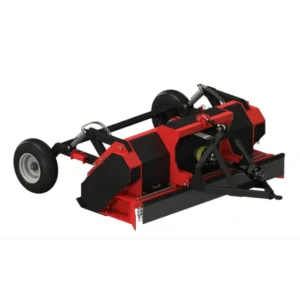
EP-Thor 2.4 + Kit Drawbar
2,300 kg · 2.4 m · 180 cv · 9 grease points
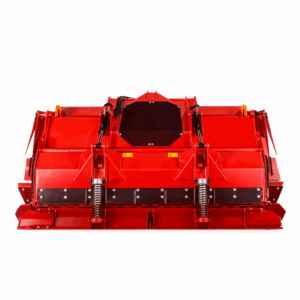
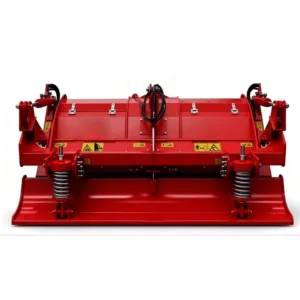
EP-PSC Series Models
PSC100–PSC200 · 70–150 hp · compact
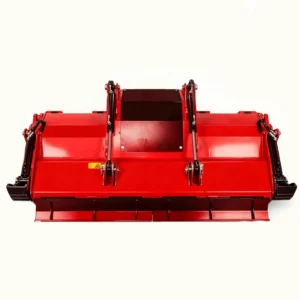
EP-Tractor Mounted Rock Crusher
3-point hitch · multi-application
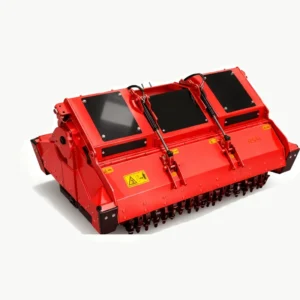
EP-Korea Agricultural Rock Crusher
Engineered for Korean farm conditions
6. Material Systems — Selecting the Right Grease Grade for PTO Rock Crusher Bearings
Choosing the correct grease is not simply a matter of picking the most expensive product on the shelf. The grease must be matched to the bearing operating temperature, the speed of the bearing, the load type, and the contamination environment. For stone crushing equipment, all four of these factors push the selection toward specific characteristics that not all general-purpose agricultural greases possess.
NLGI Grade: The National Lubricating Grease Institute grade defines the grease’s consistency — its resistance to flow under the application of mechanical force. For frantoio per pietre PTO rotor shaft bearings operating at 1,000–2,000+ RPM with heavy radial and shock loads, NLGI Grade 2 is the standard recommendation. NLGI 2 greases are firm enough to stay in the bearing cavity and resist being flung out by centrifugal force at rotor operating speeds, but soft enough to be worked by the rolling elements and to flow into contact zones before each startup. NLGI Grade 1 (softer) can be used in cold Korean winter conditions (November–February) when thicker grease may not reach all bearing surfaces quickly enough at low ambient temperatures (below 0°C in highland areas of Gangwon-do). NLGI Grade 3 is not recommended for rotor bearings — it is too stiff for adequate distribution at high rotational speeds.
Thickener Type: Lithium complex (Li-complex) and polyurea thickeners are the two best choices for high-temperature, high-load agricultural applications. Lithium complex grease offers a dropping point above 260°C (well above the maximum bearing operating temperature of approximately 90°C in severe use), excellent water resistance, and compatibility with most bearing seal materials. Polyurea-based greases offer superior oxidation resistance and slightly better high-speed performance, making them preferable for the higher-RPM rotor bearings on 1000 PTO speed models like the PSC 175 (1,600 kg, 1,830 mm working width). Avoid calcium soap greases — despite their good water resistance, their low dropping point (~100°C) provides insufficient margin for shock-loaded rotor bearings. Simple lithium soap greases are acceptable as a minimum but offer inferior performance to lithium complex in the demanding environment of a stone crusher for tractor.
Base Oil Viscosity: The ISO VG (viscosity grade) of the base oil in the grease should be selected based on bearing operating temperature and DN value (bore diameter in mm × RPM). For PSC Series rotor bearings (450 mm rotor diameter, approximately 60 mm shaft diameter at bearing, running at 1,800 RPM), DN ≈ 108,000. At this DN value and a bearing operating temperature of 60–80°C, an ISO VG 150–220 base oil in the grease is appropriate. Grease products conforming to specifications like SKF LGEP 2, Mobilgrease XHP 222, or equivalent EP (extreme pressure) NLGI 2 lithium complex formulations are appropriate for the rotor bearings on all models in the range.
Extreme Pressure (EP) Additives: The shock loads in stone crushing applications make extreme pressure additive packages in the grease a practical requirement rather than an optional upgrade. EP additives (typically organosulfur or organophosphorus compounds) form a sacrificial protective film on bearing contact surfaces under boundary lubrication conditions — the moments when a shock load momentarily collapses the oil film and metal-to-metal contact would otherwise occur. Confirming that the grease you select carries an EP designation (or equivalent certifications such as DIN 51825 KP 2K) protects against the most damaging shock loading events that occur in rock crushing operation in Korean highland fields.
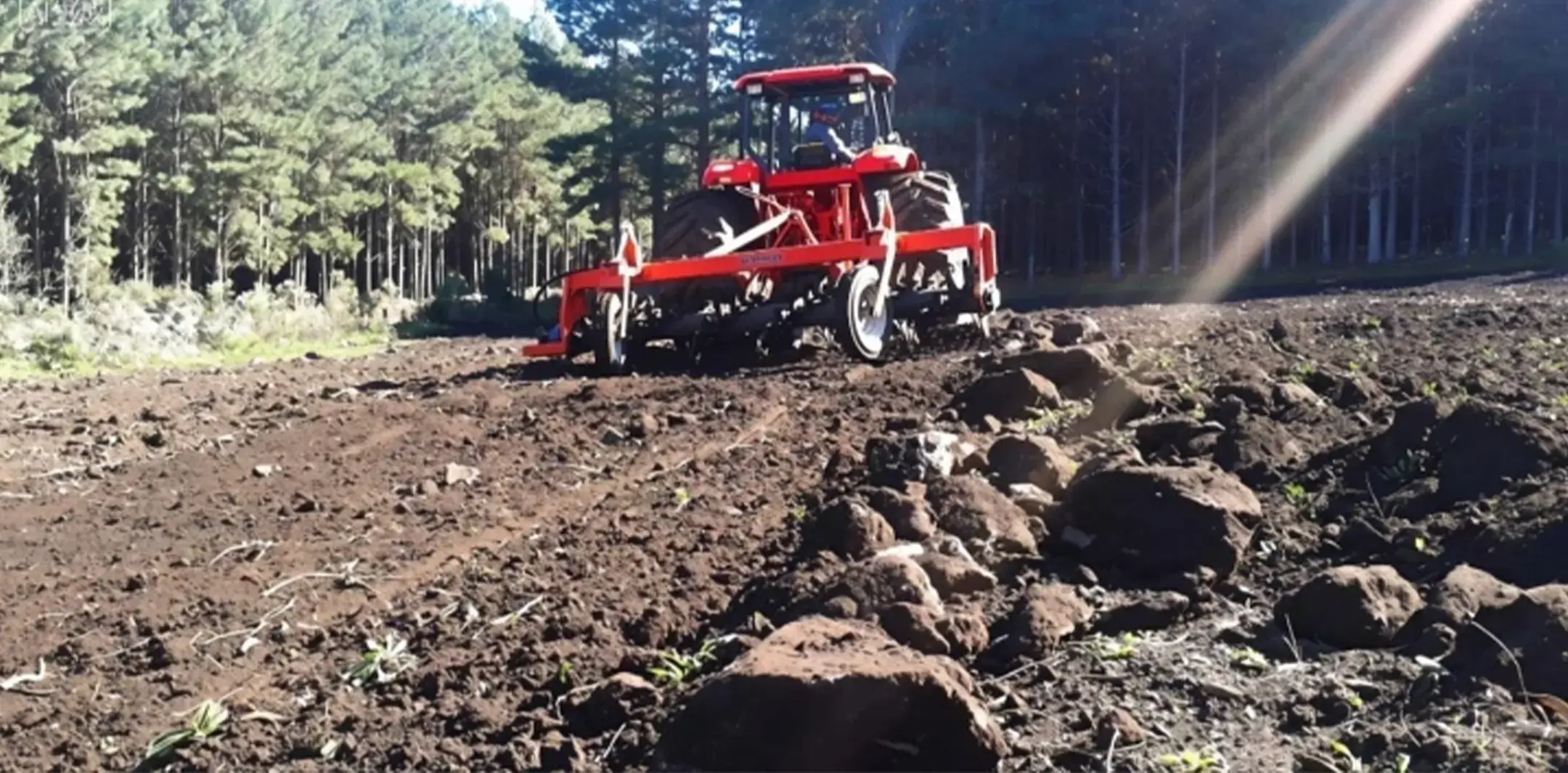
7. Greasing Interval Schedule — Complete Reference by Component and Operating Condition
The following interval schedule is applicable to the full frantoio per pietre PTO range. Intervals are stated in operating hours unless otherwise noted. Always default to the shorter interval when field conditions are severe (high rock density, very abrasive material, wet soil, or high ambient temperature above 30°C).
| Component | Normal Conditions | Severe Conditions | Grease Qty per Point | Notes |
|---|---|---|---|---|
| Rotor shaft bearings (both sides) | Every 8 hours | Every 4–6 hours | 3–5 pumps | Most critical point; never skip |
| PTO driveshaft U-joint crosses | Every 8 hours | Every 4–6 hours | 2–3 pumps each | Grease until fresh grease exits all 4 cup seals |
| PTO driveshaft sliding spline | Every 50 hours | Every 25 hours | Apply full coverage | Clean old grease before reapplication |
| Gearbox (oil bath type) | Check level weekly | Change oil after 250 hrs | Fill to dipstick mark | ISO VG 220 EP gear oil; annual change standard |
| 3-point hitch pivot pins | Every 50 hours | Every 25 hours | 2–3 pumps | Includes top link and lower link pins |
| Depth roller / wheel bearings | Every 25 hours | Every 10 hours | 2–4 pumps | Very high contamination from direct soil contact |
| Rear flap hinge pins | Every 100 hours | Every 50 hours | 2 pumps | Prevent rust seizure of adjustment mechanism |
| Initial run-in (new or rebuilt machine) | After first 2 hours | Same | Full re-grease all points | Bearing seating and heat cycling require early re-grease |
Note: Severe conditions include working in wet soil, ambient temperatures above 30°C, heavy rock density requiring maximum working depth, or operating at continuous PTO speed of 1,000 RPM for more than 2 consecutive hours without rest periods.
8. Step-by-Step Greasing Procedure for PTO Stone Crusher Field Maintenance
A correct greasing procedure is as important as the correct interval and grease selection. These are the practical steps applicable to any frantoio per pietre PTO model regardless of size:
Step 1 — Machine Off, PTO Disengaged, Safety Check
Stop the tractor, disengage the PTO, lower the crusher to the ground, and wait a minimum of 3 minutes for the rotor to come to a complete stop. Never attempt to access grease points while any part of the machine is in motion. On Korean agricultural operations, the Occupational Safety and Health Act (산업안전보건법, Act No. 17326) and its associated machinery safety standards require that rotating machinery must be secured before maintenance access. Attach a PTO-off tag to the tractor controls as a visual lockout reminder.
Step 2 — Clean Grease Fittings Before Attaching the Gun
Use a rag to wipe rock dust, soil, and old grease from every Zerk fitting before attaching the grease gun. Contamination pushed into the bearing with fresh grease is worse than no grease at all — particles inside the bearing cavity act as a grinding compound that accelerates raceway wear. A small wire brush is useful for clearing mud-packed fittings in Korean clay-soil fields. If a fitting is corroded or non-functional, replace it immediately rather than skipping that point. Blocked fittings are a common cause of bearing failures that are misattributed to inadequate greasing intervals.
Step 3 — Apply Grease in Slow, Steady Pumps
Attach the grease gun coupler firmly to the fitting and pump slowly. Rapid high-pressure pumping can rupture bearing seals, defeating the purpose of the lubrication entirely. For rotor shaft bearings, pump 3–5 shots and then observe whether old grease is being expelled from the lip seal around the fitting bore. The appearance of old (darker, contaminated) grease at the seal confirms that fresh grease is reaching the bearing — this is the visual indicator that the application was adequate. If pressure builds immediately without grease movement, the fitting may be blocked or the internal delivery channel may be pinched; investigate before applying more pressure.
Step 4 — Work Through All Points in a Consistent Order
Establish a fixed greasing sequence and follow it every service. For a PSC 150 (working width 1,590 mm): start at the near-side rotor bearing, move to the far-side rotor bearing, then the PTO shaft U-joints (both ends), then depth roller fittings, then hitch pin fittings. For larger machines like the THOR 2.4 or THOR 3.0, the extended rotor span means there may be intermediate rotor bearing housings as well. A consistent order prevents points from being inadvertently skipped in the fatigue of a long field day. Some operators use a laminated checklist attached to the machine frame for reference during the greasing routine.
Step 5 — Run the Machine Briefly After Greasing
After completing all grease points, restart the tractor, engage PTO at low throttle, and run the crusher in free-run mode (no ground contact) for 3–5 minutes. This run-in allows the fresh grease to be worked into the bearing contact zones and expelled grease to clear the seals. After this run, wipe away any excess grease that has been pushed out at the seal faces — leaving excess grease on external surfaces attracts rock dust and creates a mud-paste that can migrate back into the seal over time. Record the greasing in your service log with hours, date, and grease product used.
9. Regulatory Framework — Machinery Maintenance Standards in Korea and International Markets
Lubrication and maintenance practices for agricultural machinery in Korea and internationally are shaped by occupational safety regulations, equipment standards, and industry guidelines that together establish the legal and professional framework within which stone crusher for tractor operators work.
Korea — Occupational Safety and Health Act (산업안전보건법): The KOSHA (Korea Occupational Safety and Health Agency, 한국산업안전보건공단) administers the Occupational Safety and Health Act and its supporting regulations. For machinery used in construction and agriculture, the Act requires that equipment is maintained in a safe working condition through regular inspection and servicing, including lubrication of rotating parts. Employers and equipment operators are responsible for preventing foreseeable mechanical failures that could cause injury — a bearing failure leading to a seized rotor or thrown component during operation is a foreseeable risk if maintenance logs demonstrate that lubrication intervals were not followed. The KOSHA publishes industry-specific safety guidelines (KOSHA Guide) for agricultural machinery, which reference bearing maintenance practices in the context of equipment used on rocky terrain.
Korea — Agricultural Mechanization Promotion Act (농업기계화촉진법): This act and its implementing regulations, administered by the Rural Development Administration (RDA, 농촌진흥청), govern the inspection, registration, and maintenance of agricultural machinery in Korea. Tractor stone crusher for sale equipment operated under this act must conform to technical requirements including proper lubrication maintenance. The RDA publishes technical guides for PTO-driven machinery that provide field-specific maintenance recommendations relevant to Korean growing conditions and soil types.
European Union — Machinery Directive 2006/42/EC and Machinery Regulation 2023/1230: For pto stone crusher for sale equipment distributed in the EU market, the Machinery Directive (and its replacement Machinery Regulation, effective August 2027) requires that machinery be designed for safe maintenance, including lubrication access, and that the manufacturer provides clear lubrication schedules in the machine documentation. The CE marking and accompanying technical file for EU-destined equipment must include lubrication point identification and interval specifications. Operators in EU member states working with Korean-market or internationally-sourced equipment should verify that lubrication documentation accompanies the machine.
ISO and ASABE Technical Standards: ISO 6743-9 covers lubricants for agricultural equipment, providing a classification framework (including grease specifications) referenced by equipment manufacturers globally. ASABE Standard S563 (Agricultural Machinery Management Data) provides operating cost and maintenance data frameworks used by equipment economists and fleet managers in agricultural businesses operating agricultural stone crusher fleets. ISO 281 (dynamic load ratings for rolling bearings) is the standard referenced when manufacturers specify bearing selection for stone crusher rotor shafts, and its load rating calculations implicitly assume adequate lubrication — operation without proper grease invalidates the rated bearing life calculations entirely.
DIN Standards for Grease Specification: German DIN standards, widely referenced in European and Asian agricultural machinery technical documentation, include DIN 51825 (grease specification for rolling bearings) and DIN 51502 (grease designation coding). For buyers of stone crusher machines who are sourcing grease through Korean industrial supply channels, the DIN 51825 KP 2K designation confirms a lithium complex EP NLGI 2 grease meeting the performance level required for rotor bearings in high-shock, high-contamination applications.
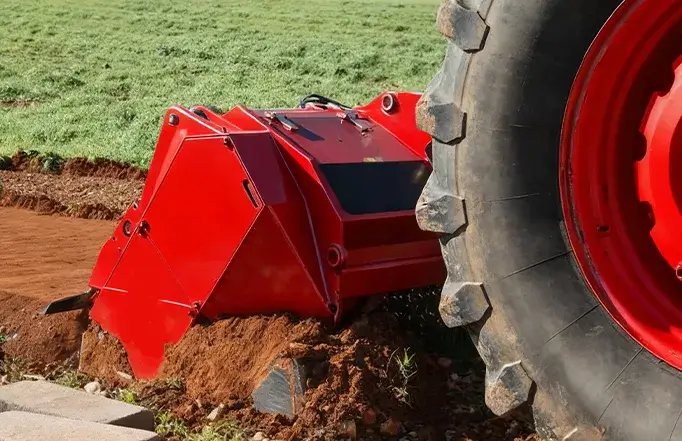
10. Common Greasing Mistakes That Shorten Bearing Life
Even operators who grease regularly can inadvertently reduce bearing life through technique errors. These are the most frequently observed mistakes when servicing frantoio per pietre PTO equipment in the field:
Over-Greasing Bearing Housings
Applying too much grease — particularly in enclosed bearing housings — creates excessive internal pressure that forces grease past the lip seals. Once the seal is lifted or deformed, it no longer excludes contamination effectively. Over-greased bearings also run hotter because the excess lubricant churns rather than simply film-lubricating the rolling elements. For rotor shaft bearings on small pto stone crusher models, 3–4 pumps of a standard grease gun (approximately 1.5–2 g per pump) is typically sufficient. Resist the temptation to pump until resistance is felt — that resistance may be a correctly pressurized bearing cavity, not an empty one.
Mixing Incompatible Grease Types
Combining greases with different thickener chemistries — such as adding lithium complex grease to a bearing that was previously filled with calcium soap grease — can cause the mixture to lose consistency and liquefy at operating temperature. This is an especially significant risk when using used tractor stone crusher for sale equipment where the previous owner’s grease type is unknown. The safest approach is to completely flush the bearing cavity with the new grease type before relying on the fresh product alone. Consult the grease compatibility matrix published by your lubricant supplier before switching products mid-service life.
Skipping the PTO Driveshaft U-Joints
PTO driveshaft universal joint crosses are consistently among the most neglected grease points on tractor stone crusher equipment. Their exposed position, high angular velocity, and relatively small bearing size make them vulnerable to rapid grease loss. A U-joint running dry on a crusher producing 180 cv or 230 cv torque (as required for THOR 2.4 and THOR 3.0 respectively) will fail quickly and spectacularly — usually as a bent or seized shaft that may damage nearby hydraulic lines or the gearbox housing. Always include all U-joint crosses in every greasing session, every 8 hours without exception.
Greasing a Hot Bearing Under Full Load
Applying grease to rotor shaft bearings that are at full operating temperature without first stopping and cooling the machine can cause the grease base oil to thin excessively and wash away before the machine cools. More importantly, the seal faces are under maximum thermal expansion when hot, and forcing fresh cold grease against a thermally expanded seal can lift the seal lip. Best practice is to grease immediately after a work session while the machine is still slightly warm (to ensure fittings are not blocked by congealed old grease) but after the PTO has been disengaged and the rotor has stopped — not while running or immediately after shutdown at maximum temperature.
Frequently Asked Questions
Q1. How often should I grease the rotor shaft bearings on a PTO stone crusher used in rocky Korean farmland?
For rotor shaft bearings on a frantoio per pietre PTO operating in rocky Korean agricultural conditions, the standard interval is every 8 operating hours under normal conditions. In severe conditions — highly abrasive granite soil, wet fields, or ambient temperatures above 30°C (common in Korean midsummer) — this should be shortened to every 4–6 hours of actual field operation. The 8-hour interval corresponds roughly to one full working day, making it convenient to grease at the start or end of each day’s shift. For the heavier models like the THOR 2.4 (2,300 kg) and PSC 200 (1,750 kg, 2,070 mm working width), the larger rotor bearing load means the contamination-excluding function of fresh grease is exhausted faster, and the shorter severe-condition interval should be applied whenever these machines are working at or near maximum working depth.
What type of grease should I use for a tractor stone crusher operating in Korea’s summer heat and rocky terrain?
For Korean summer operating conditions, use an NLGI Grade 2 lithium complex grease with EP (extreme pressure) additive package and a base oil viscosity of ISO VG 150–220. The lithium complex thickener provides a dropping point above 260°C — well above the maximum bearing operating temperature even in Korean summer conditions — and resists water washout during rainy season (June–July). EP additives protect against the shock loads generated when the rotor teeth impact embedded granite or basalt. Specific products suitable for this application include grades conforming to DIN 51825 KP 2K specification. Avoid simple calcium soap greases (too low a dropping point) and NLGI 0 or 1 grades (too soft for high-speed centrifugal retention in the rotor bearings).
Q3. Where can I find a reliable pto stone crusher supplier or get a quote for agricultural rock crushing equipment in Korea?
For pto stone crusher for sale inquiries in Korea, the most effective approach is to contact suppliers who maintain technical documentation in both English and Korean, can provide model specifications matched to your tractor’s horsepower, and offer after-sales parts supply. Our product range covers models from 70 hp (PSC 100, suitable for common 60–75 kW Korean farm tractors) through 230 cv (THOR 3.0 for large-scale land clearing). Use the contact page to submit your tractor model, available horsepower, target working width, and primary application (farmland clearing, construction site preparation, road maintenance) and receive a tailored product recommendation with quotation.
Q4. How many grease points does a PSC Series small pto stone crusher have and how long does greasing take in the field?
A small pto stone crusher in the PSC 100–PSC 150 range typically has 6–8 grease points including the two rotor shaft bearing housings, two PTO driveshaft U-joint crosses, the driveshaft sliding spline, and the depth roller bearing(s). For the PSC 175 and PSC 200, the wider working width may add one or two additional bearing housings along the rotor span, bringing the total to 8–10 points. A complete greasing session — cleaning all fittings, applying grease, and wiping excess — takes approximately 10–15 minutes with a pre-filled grease gun on a well-maintained machine. On a new or recently purchased unit, a first greasing familiarization session may take 20–25 minutes as the operator locates and confirms all fitting positions.
Q5. What happens if I skip greasing my agricultural stone crusher rotor bearings for a full season of use without servicing?
Skipping rotor bearing greasing on an agricultural stone crusher for an extended period — particularly in contaminated, high-vibration Korean field conditions — typically produces the following progressive failure sequence: micro-pitting of the bearing raceway surfaces (detectable only microscopically); surface spalling and noise generation (audible as grinding or rumbling at rotor speed); cage fracture or inner ring cracking; and finally complete bearing seizure or disintegration. The timeline depends on the initial grease charge, seal quality, and operating conditions, but in heavy Korean rocky soil use, visible wear symptoms can appear within 50–100 hours of completely unlubricated operation, with catastrophic failure possible within 200–300 hours. The replacement cost of rotor shaft bearings, housing bore repair (if the housing is damaged by outer ring spinning), and lost-season labor far exceeds what grease costs over the entire service life of the machine.
Q6. How do Korean occupational safety regulations apply to PTO stone crusher maintenance and greasing procedures on construction sites?
Under Korea’s Occupational Safety and Health Act (산업안전보건법) and the associated machinery safety standards enforced by KOSHA (한국산업안전보건공단), employers operating construction or agricultural machinery in Korea are required to maintain equipment in a safe condition. This includes ensuring that bearing lubrication is maintained per the manufacturer’s schedule — a documented failure to grease that results in a bearing seizure and subsequent component throw during operation would constitute a foreseeable hazard. On construction sites specifically, Article 38 of the Act requires a safety manager for sites above a certain size to maintain equipment inspection records. For stone crusher for tractor equipment used in construction site clearance, maintaining a grease log (date, hours, points serviced, product used) provides the documentation trail required by site safety management systems.
Q7. Which PSC stone crusher model is most suitable for a 100 hp tractor working in Gangwon-do rocky highland farmland in Korea?
For a 100 hp tractor working in Gangwon-do’s rocky volcanic highland soils, the PSC 150 (90–120 hp range, 1,440 kg, 1,590 mm working width, 450 mm rotor diameter, max 150 mm stone diameter) or PSC 175 (100–120 hp, 1,570 kg, 1,830 mm working width) are the most appropriately matched models. The PSC 150 is the lighter option, which reduces rear-axle hitch load on medium-weight Korean farm tractors. The PSC 175 offers wider coverage per pass, which improves productivity in large-acreage highland field clearing. Both models operate on 540–1000 RPM PTO and handle the basalt and andesite rock types common in Gangwon-do highland zones. For a quotation and fitment confirmation specific to your tractor model and field conditions, contact our technical team with tractor specifications.
Editor: PXY