Land Reclamation Guide — PTO Stone Crusher Series
ट्रैक्टर पर लगे स्टोन क्रशर से पथरीली बंजर भूमि को परिवर्तित करके भूमि का मूल्य कैसे बढ़ाया जा सकता है
Rocky marginal land is one of the most underutilised assets in Korean agriculture. Across mountainous provinces like Gangwon, Gyeongbuk, and the volcanic terrain of Jeju, vast areas that could support productive crops or permanent pasture sit idle because surface stones make mechanised farming impossible. A पीटीओ पत्थर कोल्हू — mounted directly onto the tractor’s three-point hitch and driven by the PTO shaft — offers a practical, cost-effective path to converting that unproductive ground into genuinely farmable land, and with it, a measurable increase in land value.
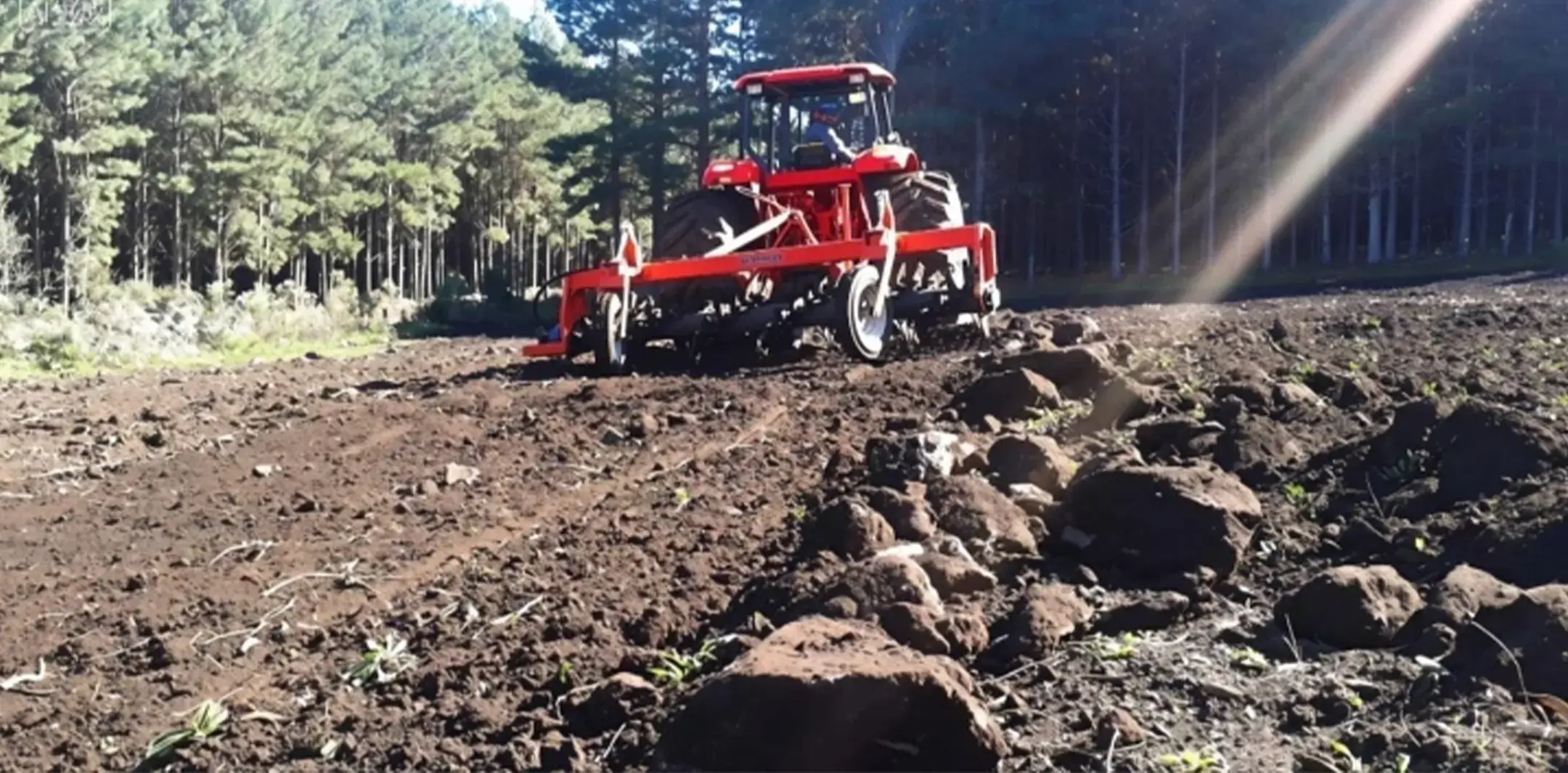
1. The Hidden Cost of Rocky Agricultural Land
When agricultural land is heavily stoned, it is not merely inconvenient — it is economically classified differently from productive arable land. Under Korea’s Farmland Act (농지법), land that cannot support regular tillage and cropping may be assessed at a lower official land valuation (공시지가), reducing the owner’s equity, limiting access to agricultural loans under the Korea Rural Community Corporation (한국농어촌공사) guarantee frameworks, and shrinking the potential resale or inheritance value of the property.
Beyond formal valuation, there are direct operational costs that rocky ground imposes every single season. Conventional tillage implements — ploughs, rotary tillers, seedbed cultivators — suffer accelerated wear and frequent breakdowns when encountering buried stones. A single large granite rock can shear a rotary tiller blade, buckle a subsoiler share, or jam a seeder’s disc coulter in seconds. In Korean highland farming, where short growing windows demand rapid soil preparation, machine downtime at the wrong moment translates directly into missed planting dates and lost revenue. Farmers who own stony land often resign themselves to partial cultivation of the cleanest areas and accept that the rocky sections simply cannot earn their keep.
ए ट्रैक्टर स्टोन क्रशर changes this calculation entirely. Rather than extracting and removing stones — which requires heavy equipment, significant labour, and legal disposal arrangements — the machine crushes field stones in situ, reducing them to small fragments that are incorporated back into the soil. The result is a level, stone-free surface that standard agricultural machinery can cross safely, and a permanent improvement to the land’s productive capacity rather than a seasonal workaround.
2. Action Mode: The Mechanics of Field Stone Crushing
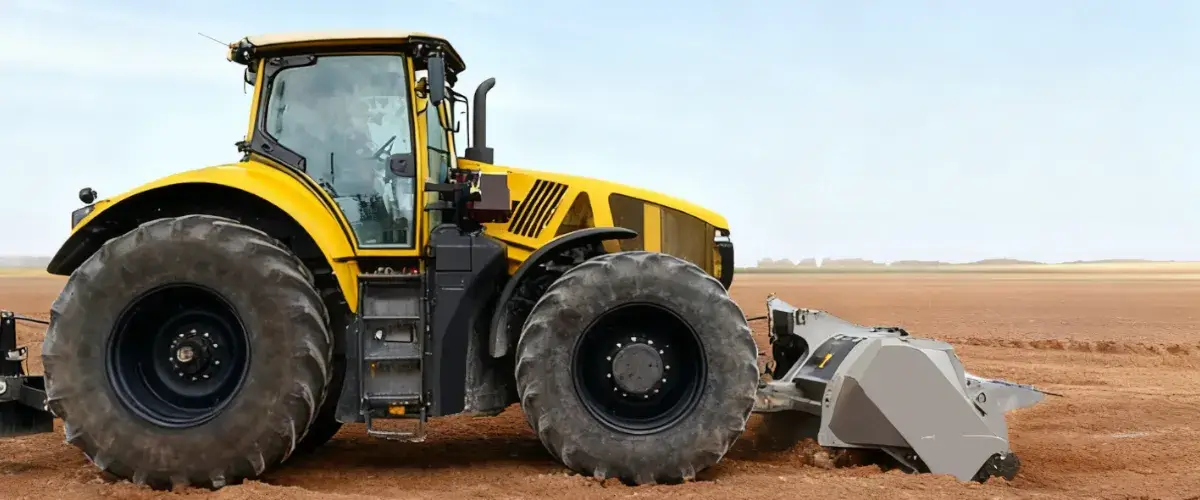
The operating principle of a पीटीओ पत्थर कोल्हू is elegantly straightforward. The machine attaches to the tractor’s category 2 three-point linkage and is driven by the tractor’s power take-off shaft, typically at 540 or 1000 RPM depending on the model series. As the tractor advances at a controlled field speed of around 3 km/h, a heavy-duty rotor drum — fitted with hardened cutting teeth — spins at high velocity below the machine housing. The rotor is lowered into engagement with the ground surface, and as it rotates, the teeth strike any stone or rock fragment encountered with enormous kinetic energy.
This percussive impact shatters the stone. Fragments that are still too large to escape the machine’s rear curtain are recirculated in the working chamber and struck again until they reach the permitted exit size — which corresponds to the machine’s maximum shredding diameter setting. The crushed material exits rearward and is deposited back into the surface soil. The net effect is that stones which were previously large enough to damage downstream tillage implements are reduced to small angular fragments, typically concentrated in the upper 15–25 cm of the soil profile where they contribute to drainage without obstructing root development or machinery movement.
The self-contained nature of this process — no separate collection, no transport, no disposal — is one of its key practical and regulatory advantages. The crushed stone stays in the field. It counts as a soil amendment rather than a waste stream, which keeps the operation firmly within the category of routine agricultural soil preparation rather than triggering the environmental permitting requirements that would apply to stone extraction and off-site disposal.
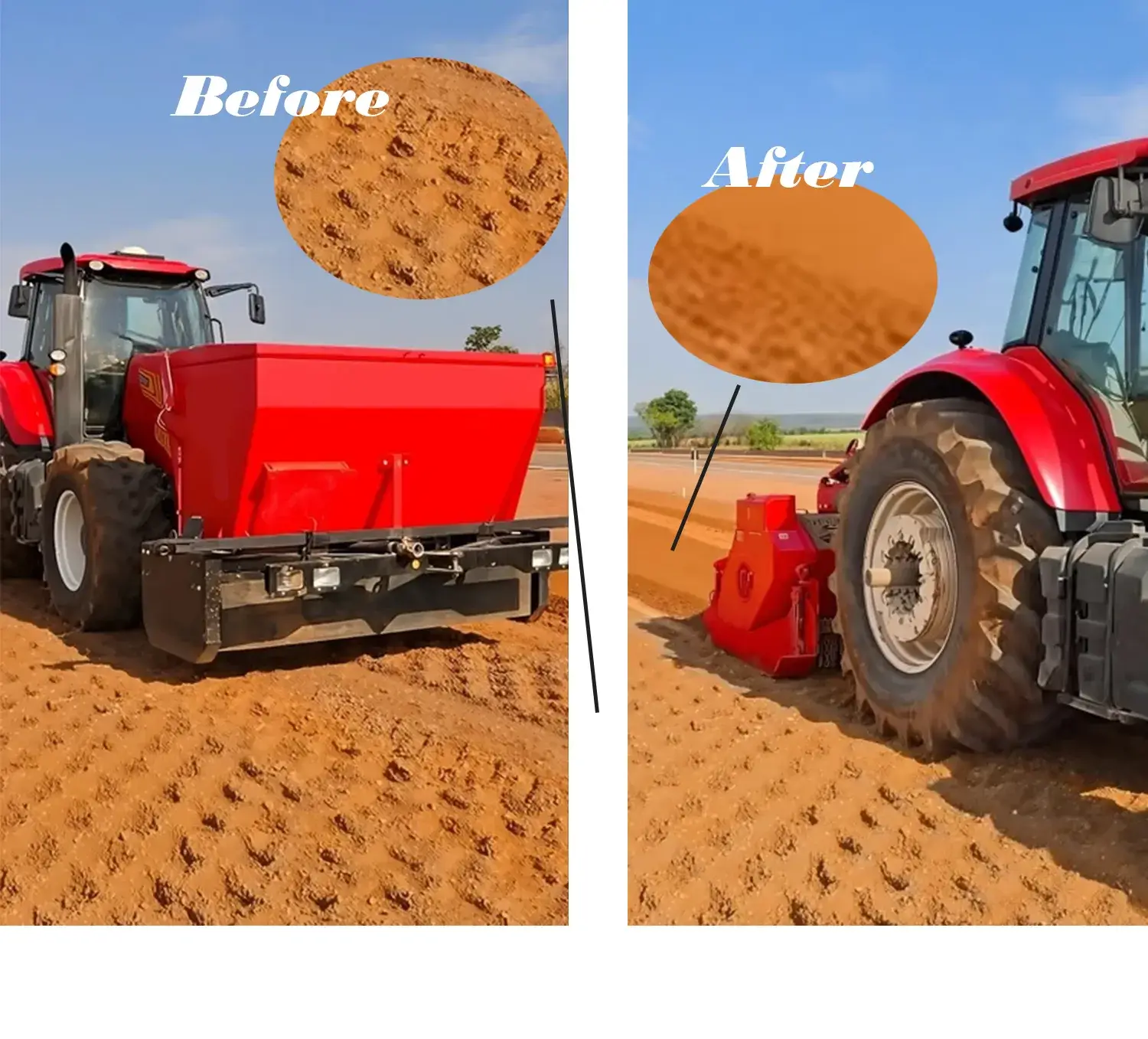
3. Manufacturing Structure: What Makes These Machines Durable Enough
The demands placed on a tractor mounted rock crusher are among the most severe in agricultural engineering. The machine must repeatedly withstand extreme impact forces as hardened rotor teeth strike rock at tip speeds exceeding 20 m/s, while the overall chassis absorbs the reaction forces transmitted through the three-point linkage. This imposes strict requirements on structural steel section sizes, weld quality, rotor bearing specifications, and the protective guarding that prevents stone projectiles from reaching the operator.
The rotor drum itself is the heart of the machine and the primary component that distinguishes light-duty from heavy-duty models. Light-duty series designed for 70–150 hp tractors use rotors of approximately 450 mm diameter — compact enough to keep the machine balanced on smaller tractors, while still delivering adequate tip speed for stone fragmentation. Mid-range machines stepping up to 80–280 hp increase the rotor to 550 mm, storing more rotational kinetic energy and handling larger stone inputs up to 300 mm in diameter. Heavy-duty models for 280–500 hp tractors use rotor drums from 700 mm up to 1,115 mm diameter — at this scale, the rotor’s angular momentum is enormous, allowing the machine to work through dense boulder fields without stalling even when a large stone is encountered unexpectedly.
The cutting teeth fitted to the rotor require careful specification. For general field stone work in Korean granite-derived soils, STC/3 standard pick teeth deliver the right combination of fracturing ability and wear life. In more abrasive quartzite or basalt conditions, STC/3/HD heavy-duty picks with harder alloy inserts extend service intervals considerably. The R/65 and R/65/HD conical point-attack picks used on the RSL, RSM, and RSH series are suited to larger stone work where penetrating engagement with embedded boulders is the priority. Tooth replacement is a routine maintenance task — the bolted mounting design allows tooth changeover in the field without specialist tools, which is an important practical consideration for Korean farms operating without dedicated workshop facilities.
4. Material System: Matching Machine to Rock Type
Korea’s diverse geology means that the rock type encountered on stony farms varies significantly by region — and the right machine specification depends on understanding what you are actually crushing. The granite intrusions widespread across Gyeonggi, Chungcheong, and Gyeongbuk provinces produce hard, dense field stones that require robust tooth geometry and adequate PTO power. Jeju Island’s basaltic field stones are similarly hard but often larger in surface area and less regularly shaped. The metamorphic schists and gneisses found in highland Gangwon fields fracture along cleavage planes, producing elongated slab-like fragments that need a working depth and rotor engagement strategy suited to their irregular form.
From a machine wear perspective, siliceous rocks (granite, quartzite, gneiss with high quartz content) are the most abrasive — they erode tooth inserts faster than calcareous or basaltic material. Operators working these harder rocks should expect shorter tooth replacement intervals and budget accordingly when calculating operating costs against the land value improvement the reclamation achieves. In typical Korean highland granite conditions, tooth life on standard STC/3 picks ranges from approximately 40–80 ha per set depending on stone density and working depth; the HD variant extends this by 30–50%.
The soil matrix surrounding the stones also matters. In very dry sandy soils, abrasion on the rotor drum housing is higher because fine grit particles act as a cutting medium during operation. In heavier clay soils, impact forces per stone are slightly cushioned but the overall machine weight needs to be carefully managed to avoid compaction of the freshly worked seedbed. The adjustable depth control on category 2 three-point linkage machines allows operators to fine-tune working depth to the specific soil-stone combination they are dealing with — working shallower in compaction-sensitive clay conditions, deeper in free-draining sandy soils where surface stone sits on a well-drained base.
5. How Stone Crushing Translates to Higher Land Value
The relationship between stone clearing and land value is not simply theoretical — it plays out in very concrete terms through multiple channels. First and most directly, cleared land can be cultivated with standard farm machinery, which means it can support the same crop rotations and yield targets as the surrounding improved farmland. This is immediately visible in land rental markets: rocky marginal parcels in Korean highland areas typically rent for 30–60% less per 3.3 m² (평) than equivalent stone-free fields in the same district. After reclamation with an कृषि पत्थर क्रशर, the same land commands rental rates comparable to adjacent productive parcels.
Second, and increasingly important in the Korean agricultural context, reclaimed land qualifies for a broader range of subsidy and support programs administered by the Ministry of Agriculture, Food and Rural Affairs (농림축산식품부) and the Korea Rural Community Corporation. Certain direct payment programs and facility horticultural support funds require that beneficiary land meets minimum soil preparation quality standards. Land that was previously excluded due to stone contamination becomes eligible once reclamation has been demonstrated — adding a recurring annual value stream on top of the one-time capital improvement.
Third, cleared and cultivated land has a stronger position in the agricultural real estate market. When an owner eventually sells, reclaimed land commands a premium over equivalent-sized rocky parcels. The reclamation investment — typically the cost of operating a ट्रैक्टर के लिए पत्थर तोड़ने वाली मशीन for one to three passes over the field — is recovered many times over in the increased sale price, particularly in peri-urban agricultural zones around Icheon, Yangpyeong, or the Chungnam highlands where agricultural land prices have risen substantially alongside suburban demand.
6. Technical Comparison: Model Series by Land Reclamation Application
Selecting the correct पीटीओ पत्थर कोल्हू model for a specific reclamation project depends on the severity of the stone problem, the available tractor horsepower, and the land use target after clearing. The table below maps model series to typical Korean reclamation scenarios.
| Series | Tractor HP | Max Stone (mm) | अधिकतम गहराई (मिमी) | Rotor Dia. (mm) | कार्य चौड़ाई (मिमी) | Typical Korea Application |
|---|---|---|---|---|---|---|
| एसटीसीएल | 70 – 150 | 150 | 150 | 450 | 1110 – 2070 | Orchard rows, vineyard inter-rows, small upland parcels, Gyeongbuk fruit farm reclamation |
| एसटीसीएम | 80 – 280 | 300 | 200 | 550 | 1340 – 2304 | Commercial arable reclamation, vegetable field clearance, Gangwon highland crop land development |
| एसटीसीएच | 280 – 400 | 500 | 250 | 700 | 2080 – 2560 | Boulder-dense pasture, large-scale land development projects, heavy granite terrain |
| आरएसएल | 80 – 190 | 300 | 150 – 280 | 595 / 612 | 1000 – 2200 | Medium-duty reclamation with deeper engagement option, mixed stone density fields |
| RSM / RSM-HP | 200 – 360 | 500 | 400 | 940 / 915 | 2080 – 2320 | High-output commercial reclamation, large stony field projects, contract crushing services |
| RSH / RSH-HP | 360 – 500 | 500 | 500 | 1065 – 1115 | 2107 – 2587 | Worst-case boulder fields, new highland land opening projects, professional land development contractors |
7. Regulatory Framework for Land Reclamation Using Stone Crushers
Understanding the regulatory context is critical before committing to a large-scale stone crushing operation, particularly in Korea where agricultural land use is tightly governed. The key frameworks that apply are as follows.
Korea — Farmland Act (농지법)
In-situ stone crushing that does not alter topographic contour or impair adjacent drainage is generally classified as soil improvement, not a change of land use. No prior approval is required for typical reclamation work. However, operations in absolute agricultural protection zones (절대농업진흥지역) should be pre-confirmed with the local si/gun/gu land office before commencing.
Korea — Environmental Impact Assessment Act
Small-to-medium farm reclamation projects generally fall below EIA thresholds. Large-scale developments involving repeated stone crushing over substantial areas may require pre-screening (전략환경영향평가 대상 확인) with the Ministry of Environment if they are part of a wider land development project. Crushing and leaving material on-site avoids the solid waste classification that would apply to stone extraction and transport.
EU — Machinery Directive 2006/42/EC
All CE-marked stone crushers sold for the European market must comply with this Directive, which covers PTO shaft guarding, operator protection from projectile discharge, emergency stop systems, and minimum stability criteria on sloped terrain. Korean buyers importing CE-marked machines benefit from design features mandated by this standard even where equivalent Korean regulations are less specific.
Korea — Industrial Safety and Health Act (산업안전보건법)
Agricultural machinery operation in Korea is subject to general workplace safety obligations under this Act, administered by the Ministry of Employment and Labor. PTO-driven implements with rotating components require functional PTO shaft guards at all times during operation. Agricultural contractors using stone crushing equipment as a commercial service must ensure operator training records and safety inspection documentation are maintained.
ISO 4254-1 / KS B ISO 11684
International and Korean standard for agricultural machinery safety signs and operating instructions. Machines formally imported into Korea for commercial sale must carry safety labelling compliant with the Korean Standards (KS) version of these ISO standards. This requirement applies to importers and distributors rather than individual farmers purchasing equipment for personal use.
Japan / Australia — Comparative Reference
Korean operators who also manage land or sell equipment in Japan should note that Japanese MLIT and MHLW co-regulate PTO-driven farm machinery under the Agricultural Machinery Safety Standards (農業機械安全鑑定). In Australia, Work Health and Safety Regulations specifically require risk assessment documentation for high-hazard agricultural machinery including stone-throwing implements operating near occupied zones.
8. A Practical Step-by-Step Reclamation Process
Converting rocky wasteland to productive farmland with a पत्थर तोड़ने वाली मशीन is not simply a matter of driving across the field once. A structured approach delivers the best outcome and maximises the land value gain per hour of machine time.
Step 1 — Site Assessment
Walk the field and map the stone density, stone size range, and rock type. Identify any partially buried boulders larger than the machine’s maximum shredding diameter that may need pre-breaking with a hydraulic rock breaker before the crusher works the area. Assess the tractor’s available PTO horsepower and match it to the appropriate machine series from the range.
Step 2 — First Crushing Pass
Work at 3 km/h with 1000 RPM PTO, at moderate working depth (approximately 80–120 mm), traversing the field in parallel runs with 10–15% overlap. This pass breaks the primary stone population — the larger surface and semi-embedded rocks — and deposits the crushed fragments into the soil. Do not rush this pass; consistent speed gives better fragmentation than variable speed.
Step 3 — Inspection & Second Pass
After the first pass, walk a representative section of the treated area. If stones larger than 50 mm remain at the surface at more than 5% density, a second pass is warranted. On the second pass, work perpendicular or diagonal to the first, at slightly shallower depth, to catch stones that were in the wheel tracks or sheltered from direct rotor engagement on pass one.
Step 4 — Tillage & Seedbed Preparation
Once stone-clearing is complete, proceed with conventional tillage to incorporate the crushed fragments more evenly through the topsoil. A rotary tiller or power harrow pass at this stage creates a final seedbed quality suitable for direct sowing. The crushed stone material in the soil profile actually improves drainage in heavy soils — a secondary benefit of the reclamation process.
Step 5 — Documentation & Valuation
After reclamation, commission a soil quality assessment and if applicable a formal land re-valuation through a certified agricultural land appraiser (감정평가사). Updated documentation of the land’s improved condition is important for refinancing, subsidy applications, and any future sale. Photograph the before-and-after condition of the field for records supporting the improvement claim.
9. Stone Crusher Models for Land Reclamation
Each model below has been selected for its relevance to Korean field conditions. View the complete product catalogue for full specifications and availability.
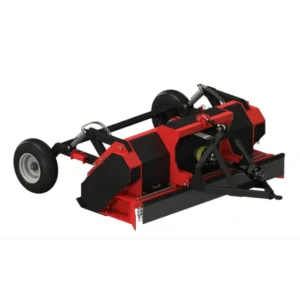
थोर 2.4 + किट ड्रॉबार
Min. 180 hp · 2.4 m working width · 2300 kg · 3 km/h · Cat. 2 linkage
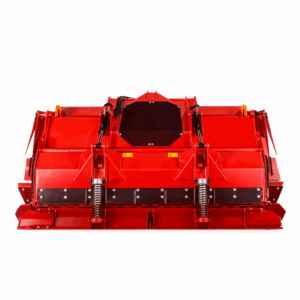
रॉकमास्टर कृषि पत्थर कोल्हू
Dedicated agricultural reclamation · wide working width options · robust build
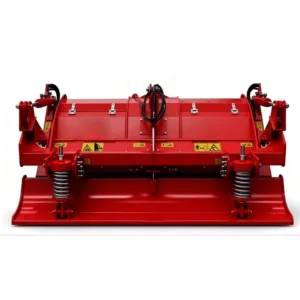
PSC Series (STCL Model)
70–150 hp · 450 mm rotor · max stone 150 mm · orchard and light-duty reclamation
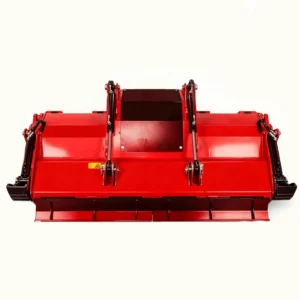
ट्रैक्टर पर लगा हुआ पत्थर कुचलने वाला यंत्र
Mid-range HP · reliable 3-point hitch attachment · versatile field use
10. Contract Crushing: Turning a Stone Crusher Into a Revenue Stream
For operators who own a बिक्री के लिए पीटीओ स्टोन क्रशर or have already purchased one for their own land, offering contract crushing services to neighbouring farms is a practical way to generate additional income and accelerate the machine’s payback period. In Korean agricultural communities — particularly in the tight-knit farming villages (농촌마을) of Gangwon and Gyeongbuk — cooperative use of expensive equipment between farms is a well-established practice supported by the Rural Development Administration’s agricultural machinery sharing programs (농기계임대사업).
A contractor operating a mid-range STCM-series machine on a 100 hp tractor can typically treat 1.5–2 ha per day under normal Korean highland stone conditions. Factoring machine depreciation, fuel, tooth wear, and operator time, contract rates in Korean reclamation markets commonly reflect the value of the land improvement delivered rather than simply the machine-hour rate — because the client is paying for a permanent land value increase, not just a service.
From a business registration perspective, Korean agricultural machinery service operations with annual revenue above ₩75 million must register as a general individual business (일반 개인사업자) and are subject to VAT. Below this threshold, simplified tax filing applies. Operators using the machine for both own-farm use and paid contract work should maintain separate work records to support accurate cost allocation for tax purposes. The Ministry of Agriculture’s 농기계임대사업소 (agricultural machinery rental service) network also provides a framework for formalising machinery sharing between farmers at regulated rates.
अक्सर पूछे जाने वाले प्रश्नों
संपादक: पीएक्सवाई