Agricultural Knowledge Guide — British Farmland Edition
PTO Rock Crusher for UK Farmers: Working with Flint, Sandstone, and Limestone on British Farmland
A complete knowledge guide to selecting and operating a pto stienbrekker on British farmland — covering machine action, build structure, material systems, geology matching, legal compliance, and practical field tips.
British farmland presents stone management challenges that are unlike almost anywhere else in Europe. From the razor-sharp flint nodules embedded in East Anglian and Downland chalk soils, to the thick sandstone slabs that surface across the Midlands, through to the ancient limestone scarps of the Cotswolds and the volcanic debris fields of parts of Scotland and Wales — UK farmers must contend with a remarkable diversity of rock types that can destroy tillage machinery, snap drill coulters, restrict root penetration, and remove productive land from rotation entirely. For decades, the standard answer was hand-picking, stone-burying with a heavy subsoiler, or expensive contractor removal. A correctly specified pto stienbrekker changes that calculation entirely. It processes in-field rock material back into the seedbed rather than hauling it offsite, turning an obstacle into a soil amendment.
This guide covers everything a UK farmer or farm manager needs to know before investing in a pto stienbrekker: how the machine operates, what its manufacturing structure looks like, what the material system means for different geological conditions, how the available models compare, what UK and European regulations govern PTO-driven stone crushing equipment, and what practical field routines produce the best results. Whether you manage 30 acres of market garden on chalk-derived flint brash or operate hundreds of hectares of mixed arable on limestone-dominant soils in Lincolnshire, the information below will help you choose and use the right stone crushing machine for your specific conditions.
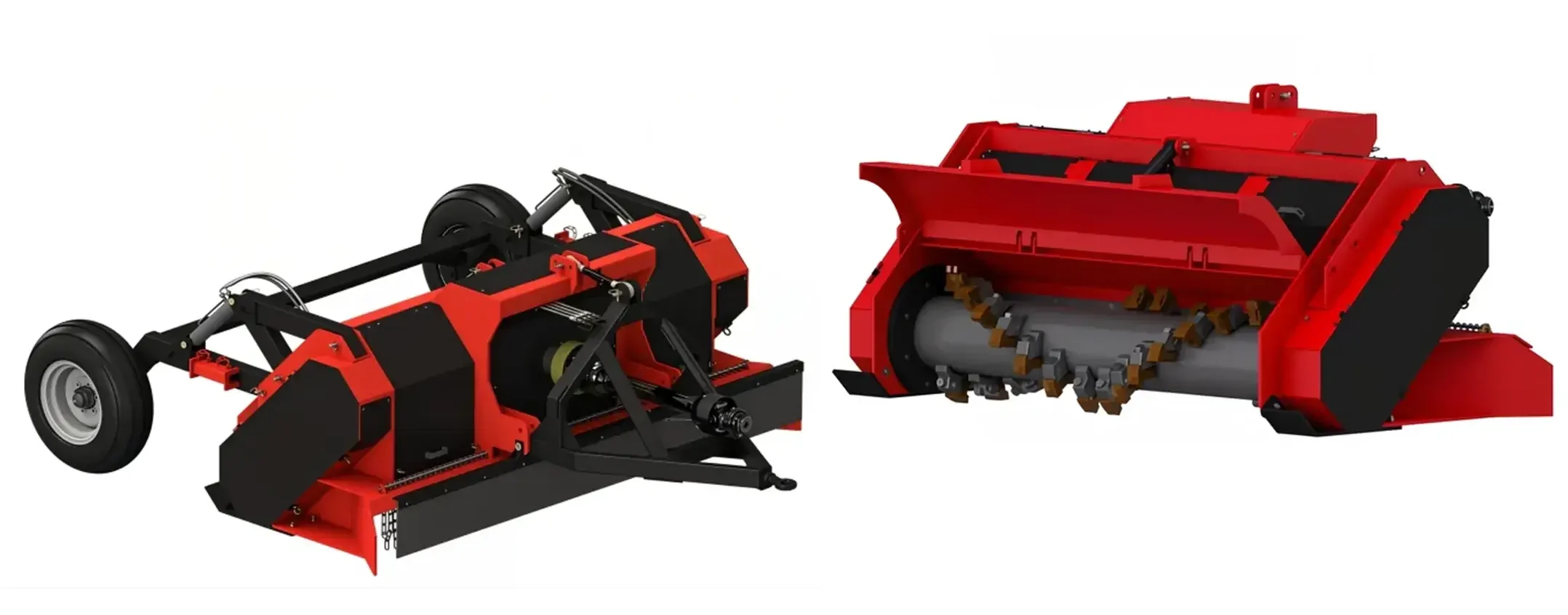
1. Understanding British Agricultural Geology: Why Stone Type Governs Your PTO Stone Crusher Choice
Before selecting a pto stienbrekker, it is worth understanding what geological material the machine will actually encounter. British soils are the product of multiple glaciations, marine transgressions, and varied bedrock formations, which means stone composition changes sharply even within a single county. Flint — the hardest and most abrasive challenge for any stone crusher on British farms — is a cryptocrystalline silica mineral with a Mohs hardness of 6.5 to 7. It fractures into sharp conchoidal shards when struck by a rotor tooth, which is exactly the crushing action a pto stienbrekker delivers, but flint’s exceptional hardness places enormous demands on tooth metallurgy and rotor design. Machines built and specced for limestone will experience severe tooth wear and shortened service life when deployed on East Anglian or Sussex Downland flint fields.
Sandstone is softer, more variable, and geologically dominant across the Midlands, North West, and parts of Yorkshire. It fractures more easily than flint but produces a dusty, gritty output that accelerates bearing wear and clogs fine sealing surfaces unless the pto stienbrekker is built with generous housing clearances and well-sealed bearing assemblies. Limestone — the predominant geology of the Cotswolds, Yorkshire Dales, Peak District fringes, and large parts of Lincolnshire, Cambridgeshire, and Northamptonshire — is moderately hard at Mohs 3–4 but occurs in large tabular fragments and buried boulder formations that demand substantial crushing force from any tractor stone crusher tasked with working it. Matching the machine to the dominant material on your land is the single most important specification decision.
| Stone Type | UK Locations | Mohs Hardness | PTO Stone Crusher Challenge | Key Spec Requirement |
|---|---|---|---|---|
| Flint | East Anglia, Downs, Chilterns | 6.5–7 | Very high rotor tooth wear; sharp ejected fragments | Tungsten-carbide teeth; heavy rotor mass |
| Sandstone | Midlands, Yorkshire, Cheshire | 6–7 | Abrasive dust; bearing contamination | Sealed bearings; generous housing clearances |
| Limestone | Cotswolds, Lincs, Peak fringes | 3–4 | Large slab sizes; high mass per impact | Wide working depth; high-torque PTO input |
| Granite / Basalt | Scotland, Wales, Devon, Cornwall | 6–7 | Extreme hardness; large embedded boulders | Heavy-class pto stone crusher; 180 hp minimum |
| Chalk | Wiltshire, Hampshire, Dorset | 3 | Soft but large; wet adhesion to rotor hood | Rear hood adjustment; manageable for most models |
2. Action Method: How a PTO Stone Crusher Processes British Field Rock
The operating principle of this type of rock crusher is elegant in its directness. Power is drawn from the tractor’s Power Take-Off (PTO) shaft — typically at 540 or 1000 rpm depending on the specific pto stienbrekker model — and transmitted through a heavy-duty speed-increasing gearbox into a high-inertia rotor drum that spans the machine’s full working width. As the tractor travels forward at a controlled working speed (generally 2–5 km/h depending on stone density and available tractor power), the rotor teeth strike any surface stones or buried debris with tremendous kinetic energy, shattering them into smaller fragments. The processed material passes under an adjustable rear hood or counter-blade, which limits the maximum output particle size, and the finely crushed stone falls back into the working surface, improving drainage characteristics and providing a physically uniform seedbed for the following cultivation pass.
What distinguishes a pto stienbrekker from a stone picker or a heavy roller is its active, violent fracturing action. The rotor does not merely compact stones downward into the soil — it actually shatters them. A properly set pto stienbrekker working in the right soil conditions leaves a surface where no individual stone fragment exceeds the rear hood clearance setting, typically between 50 mm and 100 mm depending on operator preference and subsequent crop requirements. This means seed drills, potato planters, and root harvesters encounter a consistent, machine-friendly surface rather than the unpredictable mix of fist-sized flints or limestone slabs that characterise many UK fields in the seedbed preparation window. For farmers who lease land and cannot commit capital to permanent earthworks, a pto stienbrekker offers land improvement with zero infrastructure — the work is done during a standard field pass.
Working speed is a critical operational variable for any pto stienbrekker. Too fast, and stones roll under the rotor rather than being caught by the descending teeth with sufficient velocity to fracture. Too slow on lighter stones, and the machine loses throughput efficiency without improving output quality. Most experienced operators find that 3 km/h is the practical optimum for limestone and sandstone conditions on medium-HP machines, while flint work benefits from slightly reduced speeds — closer to 2.5 km/h — to allow the rotor to deliver repeated impacts before larger nodules pass completely through the working zone. The relationship between forward speed, rotor tip speed, and stone hardness is the core operating science of any pto stienbrekker, and getting it right is the difference between excellent output and wasted fuel.
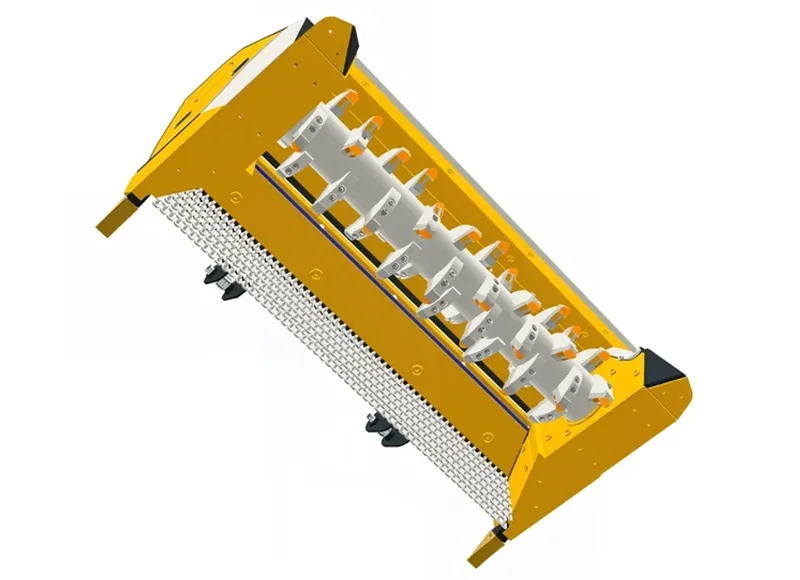
3. Manufacturing Structure: What Makes a PTO Stone Crusher Built to Last
When comparing pto stienbrekker options from different suppliers, what the machine is actually made from matters as much as any headline specification. The structural components of an agricultural stone crusher break down into five main assemblies: the main frame and hood, the rotor drum, the gearbox and driveline, the depth-control system, and the tooth configuration. Understanding each helps avoid the expensive mistake of buying a machine that looks similar to competitors on paper but is manufactured to a fundamentally different structural standard.
The main frame of a quality pto stienbrekker is fabricated from structural steel of sufficient section gauge to withstand the sustained impact loading that rock work generates. Side plates must resist lateral stone ejection forces and the bending moments imposed by three-point hitch mounting on tractors working across sloped ground. Better-grade pto stienbrekker machines use laser-cut heavy plate construction with robotically welded seams, producing a more consistent, fatigue-resistant structure than rolled section frames. The rear hood — the adjustable deflector that controls output particle size — should pivot cleanly and hold its set position under prolonged field vibration. Hydraulic hood adjustment from the tractor cab is a significant operating convenience when the same pto stienbrekker moves between fields with different stone profiles on the same day.
Rotor Drum
The heart of every pto stienbrekker is the high-inertia forged or cast rotor. The THOR 2.4 model (2,300 kg total weight; 2.4 m working width; minimum 180 hp) features a heavy-duty rotor scaled for sustained hard-rock work. Rotor diameter directly determines tip speed and, therefore, crushing energy at any given PTO rpm — a larger diameter delivers more energy per tooth strike at identical shaft speed.
Gearbox
The gearbox on a pto stienbrekker is positioned to maintain optimal PTO shaft angle under the full range of hitch-raise positions. Speed-multiplying gearboxes on the THOR 2.4 and heavier PSC models accept 1000 rpm PTO input and step up rotor velocity. Sealed oil-bath lubrication, helical gear sets, and forged input shafts characterise the higher-specification designs and reduce maintenance requirements significantly in heavy use.
Depth Control
The rear support roller or skid assembly determines how deeply the rotor penetrates the soil. Adjustable in discrete steps or continuously, this system allows the operator to match working depth to where stones actually sit in the profile — typically 50–200 mm for UK farmland scenarios — and prevents unnecessary soil disturbance in fields where stones are concentrated near the surface.
4. Material System: Teeth, Alloys, and Wear Management on a PTO Stone Crusher
The material system — the specific steels, carbides, and heat treatment methods used in the wear components — is arguably the single most important differentiator between a machine that delivers thousands of trouble-free hours and one that becomes an expensive consumable within a single season. The rotor teeth or picks that actually contact and shatter the stone experience compound wear: abrasive surface wear from the rock mineral, impact fatigue from the repeated shock loads, and in persistently wet British conditions, corrosive surface attack. No single alloy excels simultaneously at all three, which is why serious manufacturers design their tooth configurations with multiple materials working in combination.
For UK flint conditions specifically, standard hardened-steel teeth — sufficient for many European stone types — deteriorate rapidly. Flint’s high silica content makes it among the most abrasive natural materials any pto stienbrekker will encounter in agricultural use. Tungsten-carbide tipped picks or carbide-faced hammer teeth significantly outperform conventional hardened steel on East Anglian and Downland farms. The PSC series models, for example, operate with fixed-tooth rotors engineered for consistent particle sizing, with 450 mm rotor diameters and maximum shredding diameters of 150 mm across the range — appropriate for the smaller flint nodules and fractured chalk common on UK chalk-derived soils. For larger limestone blocks in the 200–500 mm range, the RockMaster pto stienbrekker provides the working envelope that Cotswold and Lincolnshire limestone farmers need, with composite hammers delivering the crushing energy required to fracture large tabular slabs reliably.
| Tooth Type | Best Application | Wear Life (relative) | UK Suitability |
|---|---|---|---|
| Fixed hardened steel | Chalk, soft limestone | Baseline | Southern chalk belts; low-stone-density pasture |
| Hardox / AR steel | Sandstone, mixed rock | 2–3× baseline | Midlands and Yorkshire sandstone farms |
| Tungsten-carbide tipped | Flint, granite, basalt | 5–8× baseline | Essential for East Anglian and Sussex flint |
| HD composite pick | Heavy limestone blocks | 4–6× baseline | Cotswolds and Lincolnshire limestone |
5. Product Range: Choosing the Right PTO Stone Crusher for Your Farmland Profile
Selecting the right pto stienbrekker comes down to matching four key variables: your tractor’s PTO horsepower and hydraulic capacity, the typical stone size and hardness on your land, the working width needed to maintain field productivity, and terrain geometry — whether you operate on flat arable, sloping improved pasture, or rough uneven ground along woodland and hedgerow margins. The following models each represent a specific part of the pto stienbrekker operating spectrum, from lighter, versatile compact units through to serious heavy-duty machines suited to demanding British rock work.
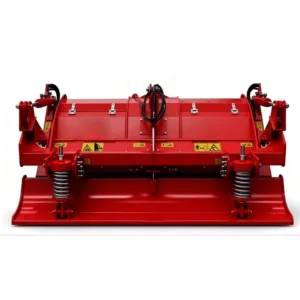
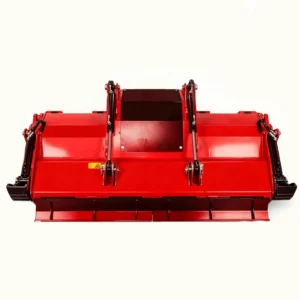
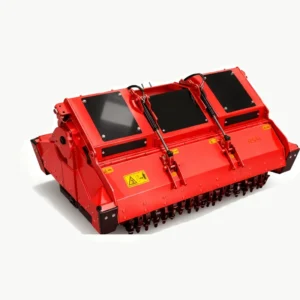
6. PSC Series — Full Technical Specifications for the Compact pto stone crusher Range
The PSC series is the most accessible entry point for UK farmers starting stone management on medium-powered tractors. This agricultural crusher range spans six configurations sharing core design DNA, scaling from compact units for orchard and driveway work through to full-width agricultural machines suited to arable field preparation ahead of drilling. All PSC pto stienbrekker models use 3-point Category 2 linkage.
| Specification | PSC 100 | PSC 125 | PSC 150 | PSC 175 | PSC 175 DT | PSC 200 |
|---|---|---|---|---|---|---|
| Trekker (pk) | 70–120 | 80–120 | 90–120 | 100–120 | 100–150 | 120–150 |
| PTO (rpm) | 540–1000 | 540–1000 | 540–1000 | 540–1000 | 1000 | 1000 |
| Working Width (mm) | 1110 | 1350 | 1590 | 1830 | 1830 | 2070 |
| Total Width (mm) | 1414 | 1654 | 1894 | 2134 | 2134 | 2374 |
| Gewicht (kg) | 1230 | 1280 | 1440 | 1570 | 1600 | 1750 |
| Rotor Diameter (mm) | 450 (all models) | |||||
| Max Shredding Dia. (mm) | 150 (all models) | |||||
| Max Working Depth (mm) | 150 (all models) | |||||
7. Gearbox Standards, PTO Regulations, and Legal Compliance for a PTO Stone Crusher in the UK and Europe
Any pto stienbrekker operating on UK farms or roads must comply with a set of interconnected legal frameworks that govern machinery safety, drive system design, and field operation. These requirements are not bureaucratic formalities — they reflect hard-won knowledge about the most common failure modes of high-power PTO drivelines and, for a machine as energetic as a pto stienbrekker, non-compliance carries significant insurance and liability consequences.
United Kingdom: Machinery Safety Regulations and HSE Requirements
The Machinery Safety Regulations 2008 (SI 2008 No. 1597, implementing the EU Machinery Directive 2006/42/EC into UK law) remained on the statute book after Brexit and continue to govern the placing on the UK market of agricultural machinery including the pto stienbrekker. Under these regulations, any PTO-driven equipment must incorporate a guarded PTO shaft, clearly marked rotation direction, appropriate overrun protection, and must carry UKCA or CE conformity marking supported by a technical file and Declaration of Conformity. Both UKCA and CE marks remain valid under transitional arrangements extending to 31 December 2027 for most product categories, so buyers of an agricultural machine in the UK can accept either marking during this period.
The Health and Safety Executive’s Agricultural Information Sheet AIS 21 specifically addresses PTO hazards and requires that all PTO guards be in place and undamaged during operation. Under the Provision and Use of Work Equipment Regulations 1998 (PUWER) and the Health and Safety at Work etc. Act 1974, operators are legally required to maintain guards in serviceable condition. For a pto stienbrekker, rear hood integrity is particularly critical — stone ejection is an inherent feature of the machine’s operation, and a compromised or incorrectly adjusted rear hood can project fragments at dangerous velocities.
EU Machinery Regulation and ISO Standards for PTO Stone Crusher Gearboxes
The EU Machinery Directive 2006/42/EC and its successor, EU Machinery Regulation (EU) 2023/1230 (fully effective 20 January 2027), govern pto stienbrekker design across the EU27. Agricultural gearboxes used in PTO drives must comply with EN ISO 11684 (safety signs and pictograms). PTO shafts for a pto stienbrekker must conform to ISO 500-1:2014, specifying standard lengths, 21-spline Series 4 connection dimensions for high-torque applications, and protective guard requirements. The 1000 rpm PTO configuration used across the THOR series and heavier PSC pto stienbrekker models is standard Series 4 / 1000 rpm specification under ISO 500.
UK Road Transport Width Rules
When moving a pto stienbrekker between fields on UK public roads, machine width becomes legally relevant under the Road Vehicles (Construction and Use) Regulations 1986. Machines exceeding 2.55 m total width require additional notification and possibly an escort vehicle. The THOR 2.4 pto stienbrekker has a total width of 2,481 mm, and the PSC 200 measures 2,374 mm — both within the 2.55 m threshold. All rotating parts must be stationary and the PTO driveshaft parked when road-transporting a pto stienbrekker.
Korean Agricultural Machinery Standards (Reference for Export Operations)
For those evaluating this pto stienbrekker range for Korean agricultural use, the Rural Development Administration (RDA) oversees safety standards under Korea’s Agricultural Mechanization Promotion Act. KS B 6301 is the governing standard for PTO-driven implements. Imported pto stienbrekker equipment must comply with Korean Confirmation of Conformity (KCC) requirements where applicable, and wear parts after-sales support must be available through a Korean logistics network (CJ Logistics or Hanjin for standard parts) for commercial operations.
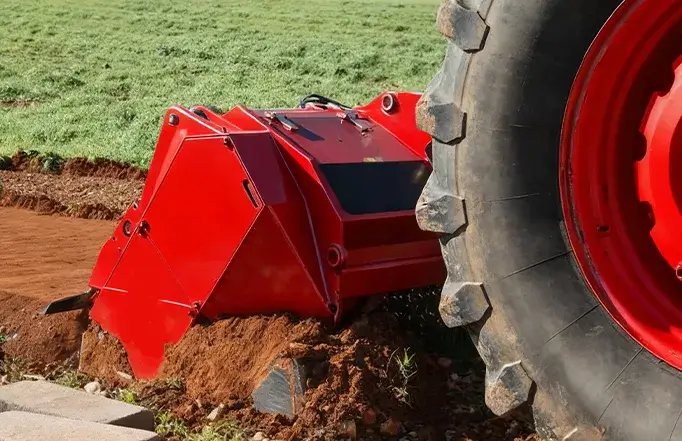
8. Practical Field Operation: Getting Maximum Results from a PTO Stone Crusher on British Farmland
Understanding the specification of a pto stienbrekker is one thing; extracting maximum value from it in UK field conditions is another. Variable soil types, unpredictable stone distribution, and the wide range of weather conditions British farmers contend with all influence how well a pto stienbrekker performs on any given day. The following practical guidance reflects real-world operating experience across the stone types and conditions most commonly encountered on British farms.
Soil Moisture and Timing
On the clay soils of the Midlands and East Anglia, operating the machine in wet conditions causes stone output to adhere to the rotor and block the rear hood, while excessively dry, cracked clay can allow the machine to sink deeper than intended. Target field capacity — firm soil that holds its shape but shows no visible surface saturation — for best pto stienbrekker performance and minimal soil structural damage.
Pre-Field Stone Assessment
Before committing to a full field pass, probe the working zone to assess stone depth distribution. Flint in chalk soils typically concentrates 80–150 mm below the surface — matching the PSC series pto stienbrekker working depth range precisely. In recently ploughed fields, buried limestone slabs may be significantly larger than surface stones suggest. Knowing what lies beneath prevents unexpected overload on the rotor and gearbox.
Power Headroom
The minimum power figures for each pto stienbrekker model apply to ideal conditions. In typical UK field use — variable stone density, heavier soils, wet patches — size the machine so the tractor works at no more than 80% of rated PTO power on the most demanding passes. This protects tractor longevity, stabilises rotor speed on the machine, and delivers a more consistent output particle size across the full field area.
9. Long-Term Soil Benefits of Running a PTO Stone Crusher on British Arable Land
The case for a pto stienbrekker extends well beyond protecting machinery from damage. When stones are crushed and redistributed through the topsoil rather than removed and disposed of offsite, they contribute positively to several soil health characteristics valued under UK agricultural policy, including the Sustainable Farming Incentive (SFI) scheme criteria that reward soil organic matter management, erosion reduction, and improved water infiltration.
Crushed limestone from a pto stienbrekker pass has a well-documented slow liming effect. As rainwater percolates through a seedbed where limestone fragments have been reduced to sub-100 mm particles, calcium carbonate dissolves progressively over subsequent seasons, raising soil pH and buffering against the acidification that follows repeated nitrogen fertiliser applications. This is a genuinely zero-cost soil amendment — stone that would otherwise destroy a drill coulter becomes, over two or three seasons, a slow-release calcium source. Crushed flint, while chemically inert, improves drainage on heavy chalk-derived soils, creating macropore pathways that reduce waterlogging risk during high-rainfall winters. Crushed sandstone fragments improve structural stability in clay-dominant profiles, reducing surface capping and improving aggregate stability for subsequent cultivations. All these benefits compound over time for any farm running a pto stienbrekker as part of the standard rotation management programme.
From a farm economics standpoint, UK comparisons between stone-picked fields and stone-crushed fields over five-year arable rotations show consistent reductions in drill wear costs, measurably better crop establishment in stone-sensitive crops like spring oilseed rape and sugar beet, and lower fuel consumption per hectare on post-crushed ground. For farms evaluating a used tractor stone crusher for sale, the long-run payback calculation often favours in-field crushing once avoided machinery repair costs and improved establishment rates are included in the analysis.
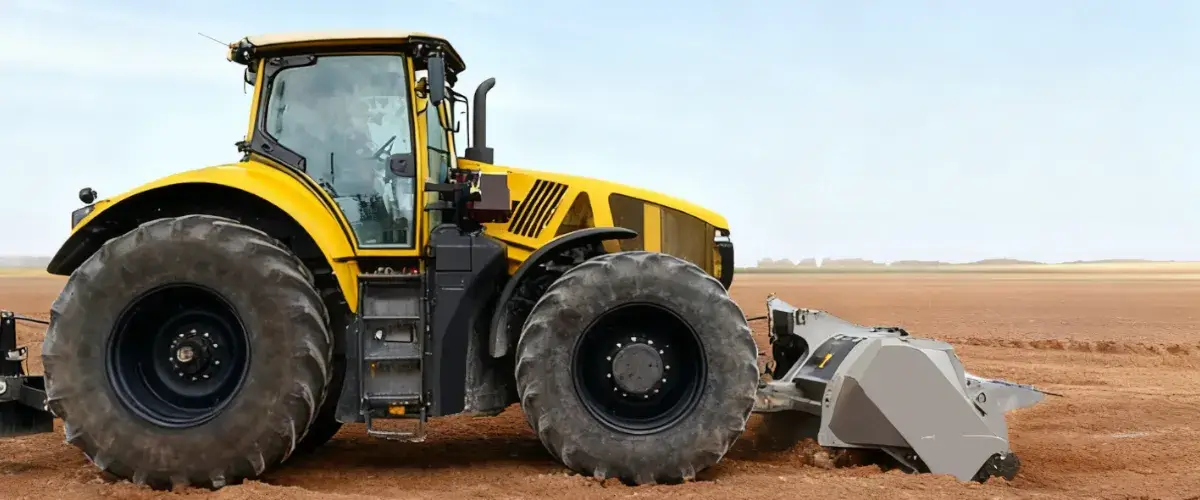
10. Maintenance Schedules and Wear Part Management for a PTO Stone Crusher
A pto stienbrekker is, by design, a high-wear piece of equipment. No honest pto stienbrekker manufacturer claims indefinite tooth life — the machine’s function is to transfer enormous kinetic energy to hard rock, and the wear components accept that punishment so that the structural components do not have to. The sensible approach to pto stienbrekker ownership economics is to plan tooth replacement as a standard operating cost from the outset, and to use good maintenance practice to prevent wear from propagating into structural failures.
A basic maintenance schedule for this type of equipment should include: daily inspection of all tooth bolts for tightness (vibration loosening is the leading cause of tooth loss in field operation); weekly inspection of the rear hood hinge and hydraulic adjustment mechanism where fitted; monthly gearbox oil level and condition check — particularly important on THOR series machines where the gearbox operates at high power density for sustained field periods; and at the start and end of each season, a full bearing inspection and lubrication service. The PTO driveshaft universal joints should be greased at the manufacturer’s specified interval — generally every 8 operating hours for joints working under high angularity conditions, which can occur when a heavy pto stienbrekker is hitched to a short-wheelbase tractor with significant rear hitch drop. Maintaining a small stock of correct-grade replacement teeth for your specific stone conditions eliminates the downtime that commonly follows tooth failure during a critical spring field preparation window.
Frequently Asked Questions About PTO Stone Crushers for UK Farmers
Q1. What is a PTO stone crusher actually used for on a British farm and how is it different from a stone picker?
A pto stienbrekker fractures surface and shallow-buried stones into fine particles that remain in the soil, improving its structure and drainage characteristics. A stone picker, by contrast, collects stones from the surface and stores them in a collection bin for offsite disposal. The stone crusher approach is generally faster, avoids the handling and disposal cost of removed material, and delivers secondary soil improvement value from the crushed mineral fragments. For farms with continuous stone emergence from frost heave — common on Lincolnshire limestone and chalk downland — this approach often provides a more sustainable long-term management solution than repeated picking cycles.
Q2. Which pto stone crusher model is the best option for working with flint on a 100-hectare East Anglian farm with a 120 hp tractor?
For East Anglian flint work with a 120 hp tractor, the PSC 150 or PSC 175 pto stienbrekker with tungsten-carbide tipped teeth represents the best combination of working width, tractor power demand, and tooth durability. Both configurations accept 540–1000 rpm PTO input, work at a depth of up to 150 mm (exactly where flint concentrates in chalk-derived soils), and have rotor diameters of 450 mm that deliver the tip speed needed to fracture flint nodules reliably. Operators with tractors above 150 hp should consider the THOR 2.4 pto stienbrekker if wider coverage and occasional large stone work are priorities.
Q3. What minimum tractor horsepower is needed to run a pto stone crusher effectively on Cotswold limestone ground?
Cotswold limestone occurs as large tabular slabs that require substantial crushing force. The THOR 2.4 pto stienbrekker (minimum 180 hp) is appropriate for serious limestone work. For lighter limestone concentrations or smaller stone sizes, the PSC 175 DT (100–150 hp) offers a lower entry point. As a practical operating rule, size your pto stienbrekker so the tractor delivers the specified minimum power at 1000 rpm PTO with at least 20% headroom under full stone load — in practice, a 220+ hp tractor for the THOR 2.4 and a 150 hp tractor for the PSC 175 DT in genuine Cotswold conditions.
Q4. How often do teeth need replacing on a small pto stone crusher working in Midlands sandstone conditions?
In pure sandstone, hardox-grade teeth on a PSC series pto stienbrekker typically need inspection after every 40–60 operating hours, with replacement at 80–150 hours depending on measured wear profiles. Tungsten-carbide tipped teeth extend this interval to 300+ hours in most sandstone conditions. The simplest maintenance discipline is a weekly visual tooth-height inspection — when a tooth has worn to 60% of its original profile height, the efficiency benefits of replacement justify the cost of stopping. Running the machine on excessively worn teeth increases fuel consumption, reduces output quality, and can eventually cause rotor imbalance.
Q5. Is there a small pto stone crusher that can be used by a contractor across multiple UK farms without specialist transport?
The PSC 100 is the most compact option in the range, designed for tractors from 70 hp upward with a pto stienbrekker working width of 1,110 mm and total transport width of just 1,414 mm — entirely road legal without special permits and transportable on any standard flatbed trailer. For contractors offering stone crushing services across multiple farm clients, this compact pto stienbrekker makes an efficient start. The PSC 125 adds modest working width with only a small increase in minimum tractor power and fits most 80–120 hp tractors found across UK mixed farms.
Q6. Where can I find a reliable pto stone crusher supplier in the UK that offers after-sales parts support and documentation?
When evaluating any pto stone crusher for sale, after-sales parts availability and technical support infrastructure should rank alongside purchase cost in the decision. A machine with poor parts supply becomes economically unviable after the first major tooth replacement cycle. Our product range is backed by genuine wear parts availability and technical documentation. When assessing any pto stienbrekker supplier, request specifically: the lead time for replacement teeth in the grade required for your stone type, and confirmation that a full technical file and UKCA/CE Declaration of Conformity is available with the machine.
Q7. How does buying a tractor stone crusher for sale compare economically to hiring a stone-removal contractor for UK arable land?
Contractor stone picking on moderately stony UK arable land typically costs £80–£150 per hectare depending on stone density and region. A PSC 150 pto stienbrekker working at 3 km/h with a 1.59 m working width processes approximately one hectare per 2–3 operating hours. Factoring in tractor fuel, pto stienbrekker wear parts, and depreciation, in-field crushing typically delivers a net cost saving over contractor stone removal from the second season onward on moderately stony ground, with faster payback on heavier stone concentrations.
Q8. What safety regulations specifically apply to using a pto stone crusher on a UK farm and what marks should I look for on the machine?
UK operators of a pto stienbrekker fall under the Provision and Use of Work Equipment Regulations 1998 (PUWER), the Health and Safety at Work etc. Act 1974, and the Machinery Safety Regulations 2008. HSE Agricultural Information Sheet AIS 21 specifically covers PTO hazards. A compliant pto stienbrekker should carry UKCA or CE conformity marking and be accompanied by a Declaration of Conformity. PTO shaft guards must be intact. Bystanders must be excluded from the working area during pto stienbrekker operation — rear stone ejection is a genuine hazard at high rotor speeds during operation.
Editor: PXY