Maintenance Guide · PTO Stone Crusher Drive Systems
PTO Stone Crusher Belt and Chain Maintenance: Tension, Alignment, and Replacement Schedule
A practical, field-tested guide to keeping the belt and chain drives on your agricultural stone crusher in peak condition — extending service life, preventing costly failures, and maximizing uptime season after season.
1. Why Belt and Chain Maintenance Is Critical on a PTO Stone Crusher
Of all the wear items on a pto stone crusher — whether you operate a small stone crusher machine or a tractor stone crusher for tractor or a dedicated agricultural stone crusher —, the belt and chain drives are among the most frequently neglected — and among the most consequential when they fail. These elements sit at the heart of the machine’s power path, transferring torque from the PTO input shaft through to the rotor at continuous operating speeds of 540–1000 rpm. Under those conditions, even a moderate deviation from correct tension or alignment accelerates wear at a rate that makes an otherwise long-lived pto stone crusher agricultural stone crusher component fail in a fraction of its intended service life.
Whether you operate a compact small pto stone crusher matched to a 70–120 hp tractor — the pto stone crusher buyer’s first unit, a small pto stone crusher for farm use, or a heavy-duty pto stone crusher and agricultural stone crusher paired with a 360–500 hp machine, the fundamental maintenance principles governing your pto stone crusher drive belts and chains remain consistent across every pto stone crusher class. What the best pto stone crusher operators share is disciplined maintenance adherence. What varies is the frequency and scale — a heavier pto stone crusher tractor stone crusher running at higher PTO torque output places proportionally greater stress on each drive element, meaning inspection intervals should be adjusted accordingly.
This pto stone crusher belt drive and chain maintenance guide — applicable to every pto stone crusher, from stone crusher for sale stock to used tractor stone crusher for sale units — covers all four essential dimensions of pto stone crusher belt and chain maintenance: the action mode (how these components transmit force and where failure begins), structural types (the different configurations used across stone crusher models), manufacturing construction (how quality affects maintenance requirements), and material systems (what drive components are made of and why it matters for longevity). We also include a practical replacement schedule table and address relevant regulatory requirements for operators and contractors in Colombia and Latin America.
2. Action Mode: How Belt and Chain Drives Transmit Power on a Stone Crusher
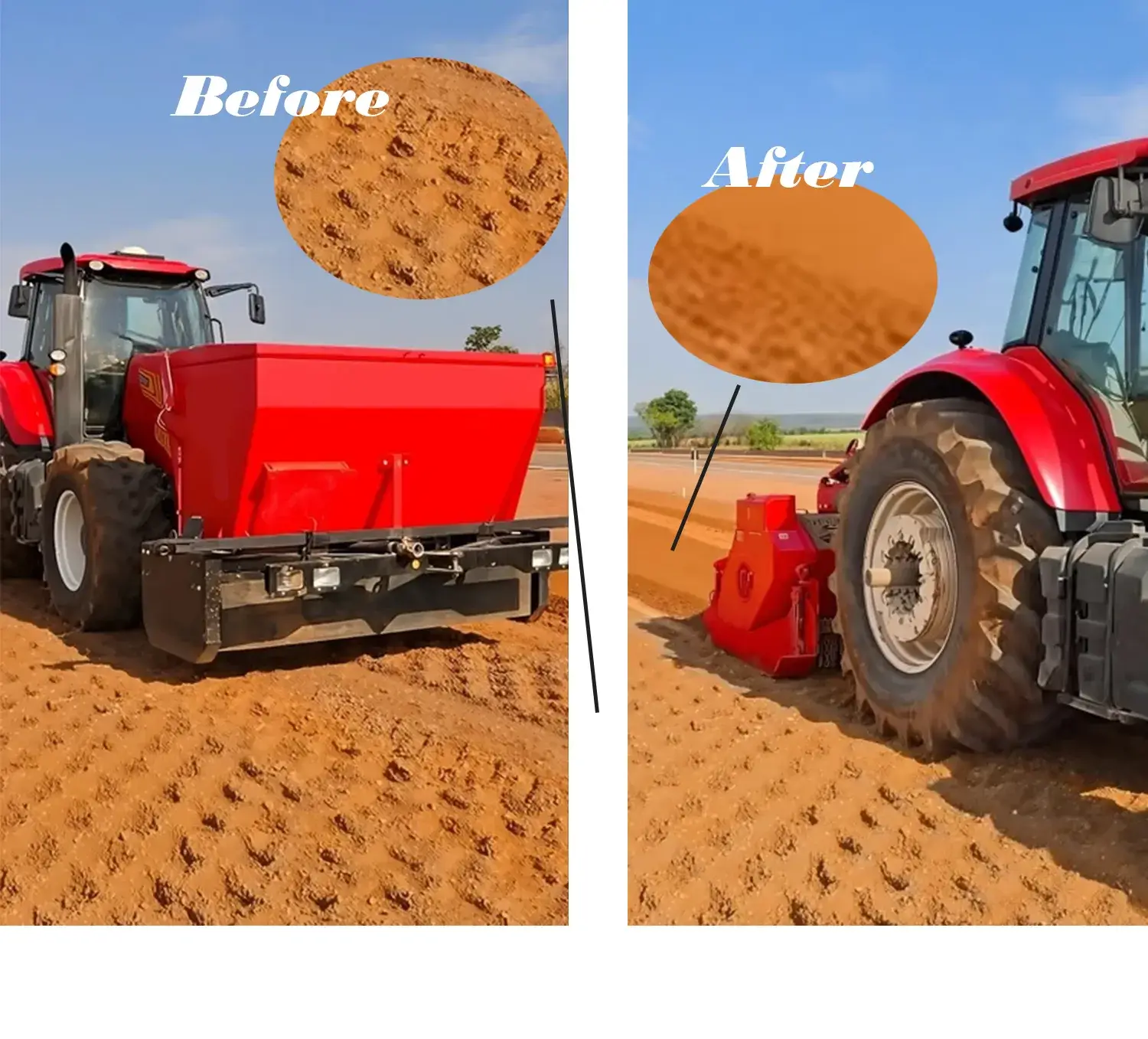
Understanding how each drive type functions is the foundation of any effective maintenance strategy. The belt drive and roller chain drive used on agricultural stone crushers operate on fundamentally different physical principles — and each fails in characteristic ways that, once recognized, allow early intervention before catastrophic damage occurs.
V-Belt Drives: Friction-Based Power Transfer
V-belts on a pto stone crusher transmit torque through friction between the belt’s angled sidewalls and the matching grooves of the drive and driven pulleys. The tension pre-loaded into the belt creates a normal force at the pulley contact arc, and friction converts this into tangential force — the working torque. The moment tension drops below the minimum required, the belt begins to slip, generating heat at the contact surface. PTO stone crusher applications are particularly prone to tension loss because the pto stone crusher rotor’s impulse loads — a defining characteristic of pto stone crusher operation — because the impulse loads from rock impacts travel back through the rotor shaft and act dynamically on the driven pulley, stretching and fatiguing the belt in rapid cycles.
Roller Chain Drives: Positive Engagement Transmission
Roller chains transmit power through positive mechanical engagement between the chain rollers and the sprocket teeth — there is no slip under normal conditions. This makes roller chains highly efficient (typically 97–99% mechanical efficiency) and capable of transmitting much higher torque per unit size than comparable belt drives. On a tractor stone crusher, the chain drive is often used in the secondary reduction stage after the belt drive has stepped down rotor speed. Chain wear manifests as elongation (pitch increase from bushing wear) that eventually causes the chain to ride up the sprocket teeth and jump, or as sprocket tooth wear that progresses rapidly once elongation passes approximately 3% over nominal pitch length.
A pto stone crusher for tractor applications — whether a new pto stone crusher or used tractor stone crusher for sale — subjects both drive types to loading conditions far more severe than standard stone crusher machines than typical agricultural machinery. The rotor’s intermittent heavy impacts — particularly when the pto stone crusher is processing boulders — this is where pto stone crusher drive stress peaks near the maximum shredding diameter (150 mm on STCL/PSC models, up to 500 mm on RSH/HP models) — create torque spikes that propagate through the drivetrain. On pto stone crusher belt-driven stages, these spikes cause momentary belt slippage or belt-from-pulley jump. On chain stages, they produce shock loads on the chain pins and roller bushings that accelerate fatigue wear between scheduled inspections.
Early Failure Indicators — What to Look and Listen For
| Symptom | V-Belt Drive | Roller Chain Drive | Likely Cause |
|---|---|---|---|
| Squealing on startup | ✓ Common | — | Belt tension too low or glazed belt sidewalls |
| Rattling or slapping noise | ✓ Possible | ✓ Common | Excessive slack (overtension or chain elongation) |
| Visible rubber dust on housing | ✓ Definitive | — | Belt slipping; replace and retension immediately |
| Chain jumping under load | — | ✓ Definitive | Chain elongation exceeds 3% or sprocket worn |
| Reduced rotor speed / output | ✓ Common | ✓ Possible | Belt slip or chain skip reducing effective transmission |
| Lateral belt tracking / wander | ✓ Definitive | — | Pulley misalignment; re-align immediately |
| Excessive heat at pulley/sprocket | ✓ Common | ✓ Possible | Belt slip, chain dryness, or bearing failure |
3. Structural Type: Belt and Chain Drive Configurations Across Stone Crusher Models
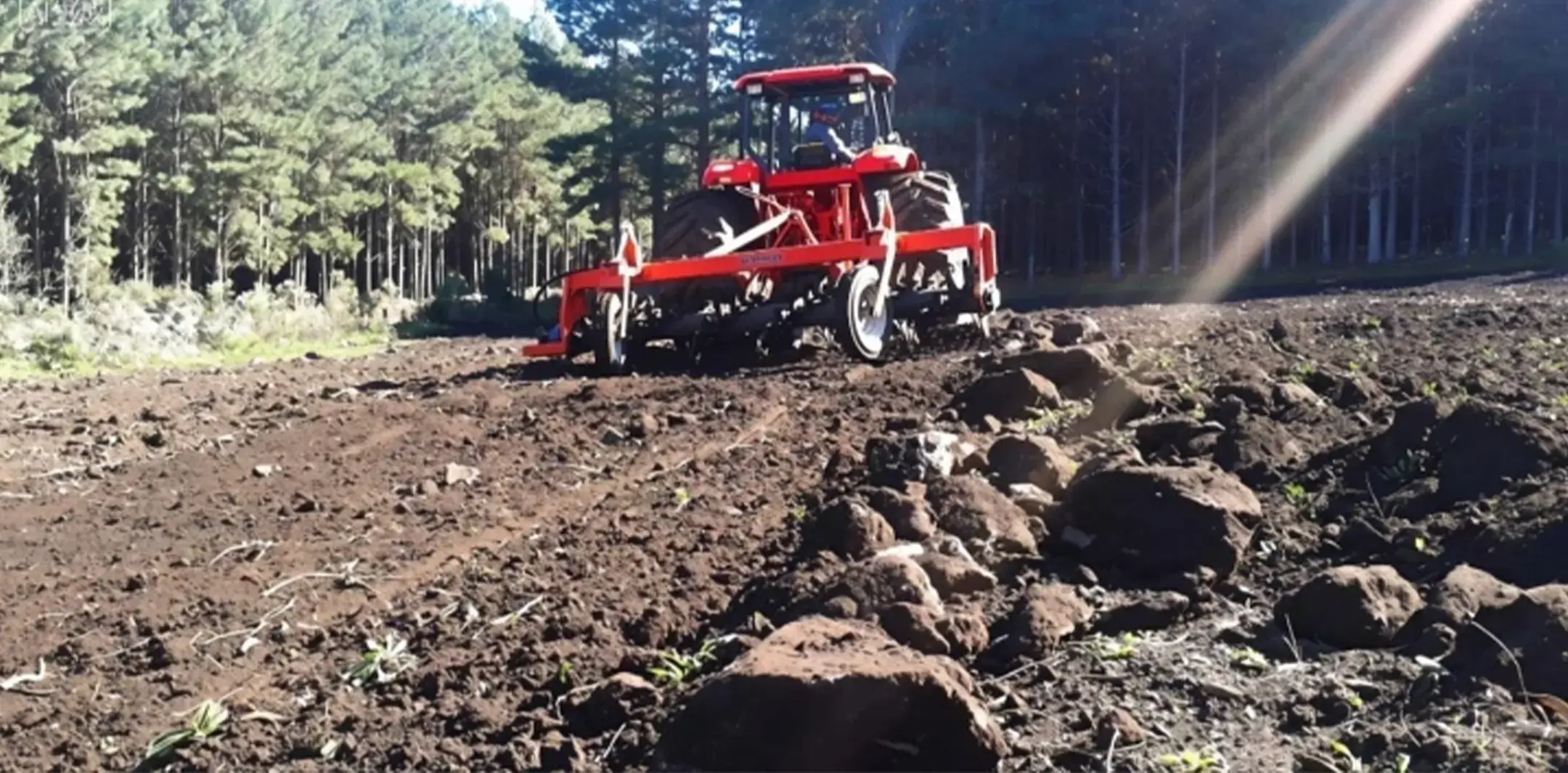
The structural layout of the drive system varies considerably depending on the horsepower class and rotor design of the agricultural stone crusher. Understanding which pto stone crusher drive configuration your pto stone crusher uses is essential before performing any tensioning, alignment, or replacement work — the adjustment mechanisms and access points differ significantly between classes.
Light-to-Medium Series (STCL / PSC Models, 70–150 hp)
The compact PSC series and STCL-class pto stone crusher models — the standard small pto stone crusher range — — matched to tractors in the 70–150 hp range — typically use a single-stage V-belt drive as the primary power transmission element between the PTO input shaft and the rotor. The belt is typically a matched set of two or three classical V-belts (section B or C, depending on torque) running on fixed-centre pulleys. Tension adjustment is achieved by shifting the motor/gearbox mounting plate on slotted bolt holes — a straightforward design that allows quick field tensioning with basic tools. Working width in this series ranges from 1,110 mm (PSC 100) to 2,070 mm (PSC 200 / STCL/DT 200), with rotor diameters uniformly at 450 mm. The modest rotor inertia in this class means belt tension requirements are less extreme than in higher-power models, but the 540–1000 rpm operating PTO speed range creates variable dynamic loading that still demands regular tension checks.
Mid-Range Series (STCM and RSL Models, 80–280 hp)
STCM pto stone crusher models — a versatile mid-range pto stone crusher for sale class — covering 80–280 hp with rotor diameter of 550 mm) and RSL series machines (80–190 hp, rotor diameters of 595 mm / 612 mm depending on rotor type) frequently combine a primary V-belt drive with a secondary roller chain stage. The belt drive handles the first-stage speed reduction from 1000 rpm PTO input, and the roller chain provides the final drive to the rotor shaft at the correct working speed. This two-stage arrangement is particularly common on the STCM HP-class pto stone crusher — a high-output pto stone crusher for sale configuration — where the rotor size and maximum shredding diameter of 300 mm demand higher torque delivery than a single belt stage can practically handle. Chain tensioning on these models is typically managed by an adjustable idler sprocket on the slack side of the chain run, or by sliding the driven shaft in slotted bearing housings. The RSL’s dual-rotor option (G/3 and R rotors) adds a second chain stage that must be maintained simultaneously — allowing both rotors to remain synchronised.
Heavy-Duty Series (STCH, RSM, RSH Models, 200–500 hp)
Heavy pto stone crusher machines — STCH 280–400 hp (rotor diameter 700 mm, 500 mm max stone), RSM 200–360 hp (G/3 rotor 940 mm, R rotor 915 mm), and RSH/HP 360–500 hp (G/3 rotor 1115 mm, R65 rotor 1065 mm) — operate at a fundamentally different scale. These machines use heavy-duty industrial roller chains (typically ISO standard sizes in the 32B or 40B range, or double-strand equivalents) with substantially heavier sprockets and dedicated sealed chain housings with continuous lubrication provisions. Belt drives on this class are typically of the banded V-belt or poly-V design, with wider pulley faces and higher-strength belt materials to handle continuous power levels exceeding 200 kW. Tensioning on these heavy drives requires a torque wrench to confirm bearing housing bolt torque after adjustment, and chain lubrication points are often accessible through a dedicated service panel rather than by removing a full guard — an important design consideration for maintenance frequency in remote Colombian field operations.
4. Belt Tension: How to Check, Measure, and Adjust Correctly
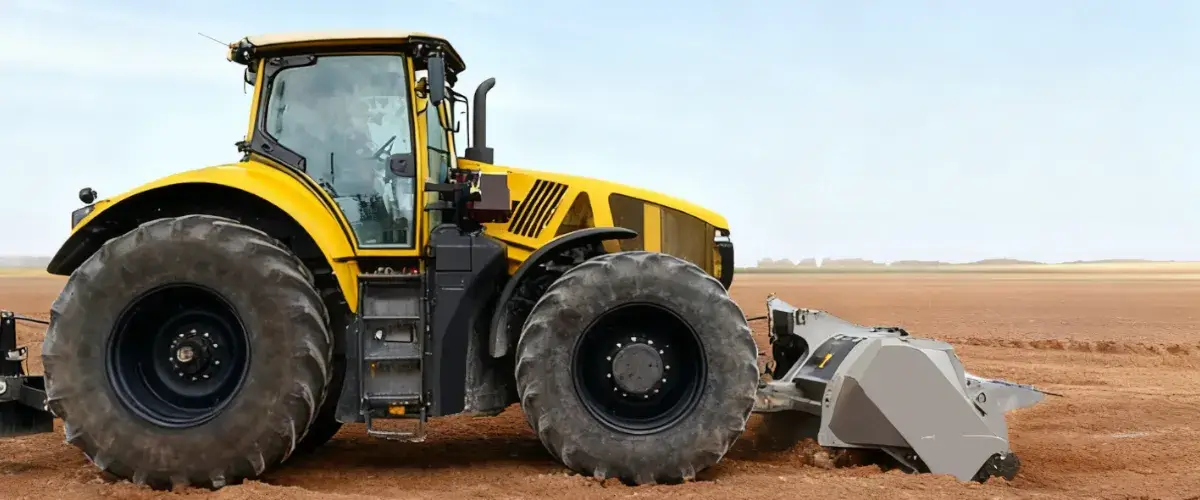
Correct belt tension is one of the single most important variables in any pto stone crusher drivetrain maintenance programme. Every pto stone crusher technician should master this skill., yet it remains one of the most commonly misjudged. Both under-tensioning and over-tensioning cause damage — the failure mechanisms are just different.
Under-tension allows slip, generating heat at the belt-pulley interface, burning and glazing the belt sidewalls, and dramatically reducing the effective coefficient of friction — which in turn causes more slip, more heat, and accelerated belt degradation. In the worst case, a severely under-tensioned belt on a pto stone crusher machine running hard rock can overheat and snap in the field, stopping work until a replacement is sourced.
Over-tension imposes excessive radial loads on the drive and driven shaft bearings, accelerating bearing fatigue at both the rotor end and the input shaft end. On larger pto stone crusher models like the STCM 225 (weight 3,800 kg, working widths up to 2,304 mm), the rotor shaft bearings are robust, but even heavy bearings have finite load ratings — sustained overtension will halve or quarter their theoretical L10 life.
Practical Tension Checking Methods
Deflection Method
Midway between the two pulleys on the slack side of the belt run, apply a perpendicular force of approximately 2–3 kg (using a fish scale or dedicated belt tension gauge). Measure the resulting deflection. For most agricultural stone crushing machine V-belt spans, correct deflection is approximately 10–16 mm per metre of free span length. So a 600 mm free span should deflect 6–10 mm under 2–3 kg force. Compare against the machine’s specific service manual value — models with higher torque ratings may specify tighter tolerances.
Frequency / Acoustic Method
A more precise approach uses a belt tension frequency meter (or a smartphone app with accelerometer capability) to measure the natural vibration frequency of the belt when plucked. The frequency is compared against a target value derived from the belt’s mass per unit length and the required tension. This method gives consistent, repeatable results regardless of operator force variation and is the preferred approach for quality-critical maintenance on high-value stone crusher for tractor equipment where bearing replacement costs are substantial.
After Break-In Re-Tension
New belts on a pto stone crusher require a mandatory break-in re-tension. Fresh V-belts undergo initial elastic and permanent set during the first 2–4 hours of operation under load — typically losing 10–20% of their initial tension during this period. Always check and re-tension new belt installations after the first 2 hours of field work. Skipping this step is one of the leading causes of early belt failure on stone crushing equipment, particularly on pto stone crusher machines operating continuously in the 180–230 cv range like the THOR 2.4 (180 cv) and THOR 3.0 (230 cv) models.
5. Alignment: Belt Pulleys and Chain Sprockets
Misalignment is the second leading cause of premature belt and chain failure on agricultural pto stone crusher equipment, after incorrect tension. It manifests in two forms — angular misalignment (the shaft axes are not parallel) and offset or parallel misalignment (the shaft axes are parallel but the pulleys/sprockets are not in the same plane). Both degrade component life, but offset misalignment is by far more common on field equipment subjected to ground vibration, heavy frame loads, and periodic removal/reinstallation during transport.
For V-belt drives, offset misalignment causes the belt to ride up one side of the pulley groove, generating uneven sidewall wear, increasing the tendency to roll over and flip off the pulley under high-torque shock loads, and creating lateral stresses at the belt’s cord layer that accelerate structural fatigue. On a pto stone crusher operating in rocky Colombian highland terrain, where every pto stone crusher faces constant vibration from uneven field surfaces, continuous ground vibration,, where ground vibration from uneven field surfaces constantly acts on the machine frame, periodic realignment checks should be part of every scheduled service event.
For roller chain drives on a pto stone crusher — and on every stone crusher for tractor in the medium-heavy class — misalignment between the driving and driven sprockets causes the chain to contact only one side of each sprocket tooth, generating asymmetric wear on both the chain’s outer side plates and the tooth flanks. This produces a characteristic hourglass wear profile on the sprocket teeth that is visible during inspection — if you see uneven tooth contact wear, realign the sprockets immediately before replacing the chain, otherwise the new chain will quickly exhibit the same wear pattern.
Alignment Tools and Techniques
A straightedge or laser alignment tool placed across both pulley faces (or both sprocket faces) is the standard method for checking offset misalignment. The contact points should be consistent across the full pulley/sprocket face width. For shaft parallelism, a dial indicator on an adjustable magnetic base, traversed across the shaft ends, provides the most accurate measurement. On portable stone crusher machine configurations in the field, a taut string line between two pulleys gives sufficient accuracy for routine maintenance checks when precision tools are unavailable.
After any major pto stone crusher service event on any pto stone crusher regardless of size — belt replacement, sprocket replacement, bearing replacement, or gearbox removal — always perform a full alignment verification before running the machine under load. This applies across all machine classes from the small pto stone crusher PSC 100 up to the RSH/HP 250.
6. Manufacturing Structure: How Belt and Chain Components Are Built
The manufacturing quality of belt and chain components directly affects how quickly they wear under the demanding conditions of pto stone crusher stone crushing operations. Understanding the construction of these pto stone crusher components helps operators make informed purchasing decisions when sourcing replacements — whether buying direct or sourcing locally in Colombia, Brazil, or other Latin American markets.
Classical V-belts used on pto stone crusher drives — and on every pto stone crusher stone crusher for tractor in the PSC, STCM, and STCH classes — in the PSC, STCM, and STCH classes — are constructed from a polyester or aramid fibre tensile cord embedded in a rubber compound body, wrapped in a fabric cover. The tensile cord carries the bulk of the tension load and determines the belt’s effective working strength. In agricultural stone crusher applications, aramid (Kevlar) fibre cords are significantly superior to polyester — they exhibit far lower elastic elongation (approximately 0.5% versus 4–6% for polyester under operating tension), which means the belt maintains consistent tension over a longer period between adjustments. The rubber compound surrounding the cord must resist the dual attack of abrasive stone dust ingress and the elevated operating temperatures generated by cyclic rock-impact shock loads.
Industrial roller chains used on pto stone crusher for tractor equipment — the backbone of the pto stone crusher secondary drive — are manufactured to ISO 606 (or equivalent ANSI B29.1) standards. The key quality differentiator between commodity and heavy-duty chain is the manufacturing precision of the pin and bushing diameters, and the hardness profile of the pin surface. In high-shock agricultural applications, pins are typically induction-hardened to a case depth of 0.2–0.5 mm with a surface hardness of HRC 58–62, over a tough through-hardened core at HRC 30–40. This combination resists surface wear at the pin-bushing interface while maintaining core toughness that prevents pin fracture under overload. Sprockets should be manufactured from case-hardened alloy steel with profiles matching the ISO 606 standard for the chain pitch in use — using a mismatched profile accelerates tooth wear regardless of chain quality.
All drive components used in any pto stone crusher equipment certified to CE (EU Machinery Directive 2006/42/EC) must meet the dimensional and strength standards specified by harmonised European standards for power transmission components. ISO 9001 quality management certification at the manufacturing level provides an additional layer of traceability — ensuring that tensile cord material, rubber compound, and chain material batch records are available for inspection.
7. Material System: What Drive Components Are Made Of
V-Belt Materials
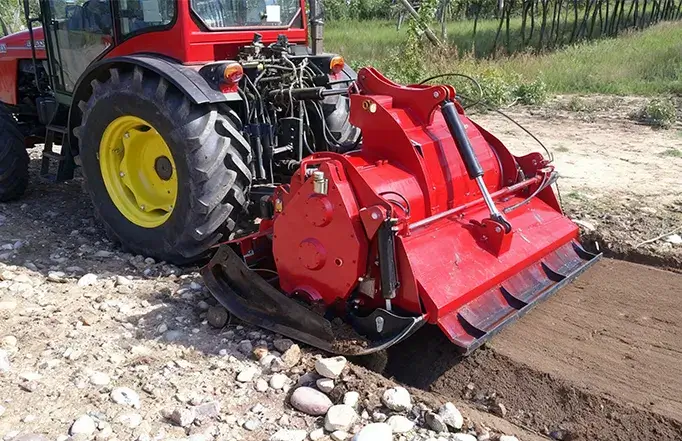
The standard V-belt body used on a pto stone crusher — whether the pto stone crusher is compact or heavy-duty — is a chloroprene rubber (neoprene) or EPDM compound offering resistance to oil, heat, and ozone degradation. For high-shock agricultural pto stone crusher applications, reinforced neoprene with an operating temperature range of −30°C to +80°C is standard. Wrapped belts use a cotton/polyester fabric cover that provides grip within the pulley groove; raw-edge belts expose the rubber compound directly to the groove surface, offering higher friction coefficients and are preferred for high-torque stone crusher drives.
Tensile cord materials: polyester (standard, low cost, higher elongation), aramid (premium, minimal elongation, recommended for pto stone crusher applications), and HMPE (high-modulus polyethylene, highest strength-to-weight, found on extreme-duty configurations).
Roller Chain Materials
Standard agricultural roller chains for pto stone crusher applications use case-hardened alloy steel pins and bushings (17CrNiMo6 or similar), with carbon steel link plates at approximately 600–700 N/mm² tensile strength and rollers made from bearing-quality steel. The pin-bushing interface is the primary wear site — material hardness ratio between pin (harder) and bushing (slightly softer) controls controlled wear direction, ensuring the bushing wears preferentially and is the replaceable component.
For pto stone crusher applications in high-humidity Colombian coastal environments, where a used tractor stone crusher for sale may already have corrosion issues, or irrigation-adjacent sites, nickel-plated or stainless chain variants offer superior corrosion resistance at higher cost. Standard chains should be lubricated with ISO VG 150–220 mineral gear oil or dedicated chain lubricant applied to the inner side plate to reach pin-bushing clearances.
Pulley and Sprocket Materials
Drive pulleys on agricultural pto stone crusher equipment — matched precisely to each pto stone crusher model’s belt specification — are typically manufactured from grey cast iron (GG20 or GG25) for modest-power applications, or nodular cast iron and steel fabrications for heavy-duty applications. Sprockets are case-hardened carbon or alloy steel, with tooth profiles machined to ISO standards. On RSH/HP and RSM-class equipment, sprockets are frequently keyed and clamped to the shaft using a taper-lock bush system — allowing quick replacement in the field without shaft heating or hydraulic presses.
Pulley groove geometry must match the belt section precisely. A worn groove — one that has been machined deeper by belt contact over time — reduces the belt’s effective wedging action and forces tension higher than nominal to maintain the same friction. When groove wear is visible, replace the pulley rather than simply adding tension.
8. Chain Elongation: How to Measure and When to Replace
Chain elongation measurement is one of the most straightforward and reliable maintenance checks available for roller chain drives on any pto stone crusher, and is required maintenance for every pto stone crusher operator. Unlike belt wear, which requires tactile or instrument assessment, chain elongation can be measured quickly with a simple ruler or vernier calliper in the field.
The standard pto stone crusher field method measures the length of a known number of pitches (typically 12 or 24 links) and compares the measured length against the nominal new-chain length for the same number of pitches. A fully new ISO standard 1-inch pitch chain (25.4 mm pitch) over 24 links has a nominal length of 609.6 mm. If the measured length is 627.8 mm or more (3% over nominal on a standard machine class, or 2.5%/2% on heavier models per the schedule above), the chain should be replaced regardless of visible condition — internal bushing wear has already progressed to a point where continued operation accelerates sprocket tooth wear at an exponential rate.
A common field shortcut is the “chain sag” test: with the chain installed and lubricated, push the slack side upward at the midpoint. More than 20–25 mm of vertical play on a mid-range machine (approximately two chain pitches) typically indicates replacement is approaching or overdue. This is a quick indicator only — always confirm with the pitch measurement method before replacing an expensive heavy-duty chain on a stone crusher machine.
9. Regulatory Requirements for Drive Maintenance and Machine Safety
Proper belt and chain maintenance is not only a practical matter of machine reliability — it is a legal requirement in several regulatory frameworks applicable to operators of pto stone crusher and related stone crushing equipment in Colombia, Latin America, and export markets.
Colombia (ICONTEC / Ministerio del Trabajo): Under Decreto 1072 de 2015 (Decreto Único Reglamentario del Sector Trabajo), employers operating agricultural and construction machinery must implement a preventive maintenance program for all equipment where drive or mechanical failure could cause worker injury. This applies directly to pto stone crusher belt and chain drives — any pto stone crusher operator or pto stone crusher contractor in Colombia must comply, which are classified as hazardous mechanical elements under Resolucion 0312 de 2019. Maintenance records demonstrating that drive inspections occurred at defined intervals are required documentation during SGSST (Sistema de Gestión de la Seguridad y Salud en el Trabajo) audits. All drive guards must remain in place during operation — removal of belt or chain guards during running is a serious safety violation.
European Union (CE / EN Standards): CE-marked agricultural stone crusher equipment must comply with EN ISO 4254-1 (agricultural machinery general safety) and EN 14861 (agricultural machinery — self-propelled and tractor-mounted machinery safety). These standards specify minimum requirements for guarding of belt and chain drives, including minimum guard opening sizes, fastener requirements, and the prohibition of design features that require tools other than those supplied with the machine for access to high-wear maintenance points. A pto stone crusher machine that has had its drive guards modified, removed, or damaged no longer complies with its CE declaration of conformity.
United States (OSHA / ASABE): OSHA 29 CFR 1910.219 specifies requirements for mechanical power-transmission apparatus including belt and chain drives — guard openings, construction materials, and access provisions. ASABE standards ASABE S318 and ASABE EP457.2 provide agricultural-specific guidance on PTO equipment safety guarding. Any pto stone crusher equipment sold to US agricultural contractors must comply with these requirements, and maintenance documentation is part of due diligence in equipment liability situations.
Brazil (ABNT NBR): Brazilian NR12 (Norma Regulamentadora 12 — Segurança no Trabalho em Máquinas e Equipamentos) specifies safety requirements for machinery in commercial use, including guarding of transmission elements. Pto stone crusher machines and stone crusher machines operating on Brazilian farms or under commercial contracts must demonstrate NR12 compliance for belt and chain guard configurations. Colombia and Brazil share significant agricultural machinery trade flows, so equipment often needs to satisfy both regulatory environments.
International (ISO 9001 / ISO 4254): ISO 9001 quality management certification at the manufacturer level requires documented product maintenance requirements — including belt tension specifications, replacement intervals, and chain lubrication procedures. Purchasing a pto stone crusher for sale — whether a new or used tractor stone crusher for sale — or any stone crusher machine for tractor — from an ISO 9001-certified manufacturer provides confidence that these specifications have been validated during the design and testing process, not simply assumed. When sourcing replacement belts or chains, insist on ISO 606 or equivalent certification for chains, and confirm belt section and tensile cord specifications match the original equipment manufacturer’s requirements.
10. Our Stone Crusher Range
Explore the full range of pto stone crusher models — from compact small pto stone crusher units for light land clearing to high-capacity agricultural stone crusher machines for professional contractors.
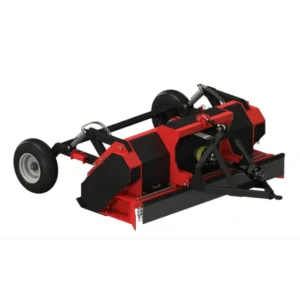
EP-Thor 2.4 + Kit Drawbar
180 cv · 2.4 m width
EP-RockMaster Agricultural
Concasseur de pierres
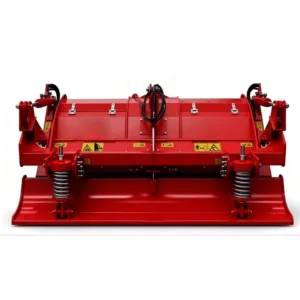
EP-PSC Models
70–150 hp · 150 mm max stone
EP-Tractor Mounted
Rock Crusher
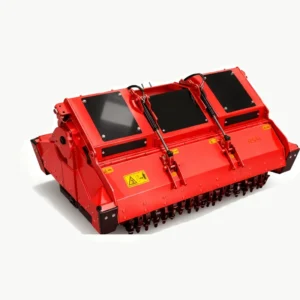
EP-Korea Agricultural
Rock Crusher
11. About Us
We are a professional manufacturer of pto stone crusher systems and agricultural stone crushing equipment with over 50 years of experience in land preparation machinery. Our portfolio of pto stone crusher equipment spans the complete range from compact small pto stone crusher units — the entry-level pto stone crusher for sale — for family farms to industrial-scale stone crushing equipment for professional contractors operating in Colombia, Latin America, and global markets.
Our production facilities hold ISO 9001 Quality Management System certification, CE Machinery Safety certification for EU and CE-compatible markets, and SGS-verified manufacturing status. Drive component specifications for our machines — belt tensions, chain grades, pulley profiles, and replacement intervals — are validated through accelerated life testing and field trials across multiple crop cycles and ground conditions, ensuring that the maintenance guidelines we publish are grounded in real operational data rather than theoretical calculations alone.
Beyond pto stone crusher models and mulchers, we supply rock rakes, rock pickers, rotavators, rotary cultivators, soil stabilizers, and a full range of potato cultivation machinery — providing a complete land preparation and crop establishment solution from a single source. Our after-sales pto stone crusher team supports customers with installation guidance, spare parts supply (including belts, chains, sprockets, and wear items), and long-term technical assistance for equipment operating in remote agricultural zones across Latin America.
Foire aux questions
Éditeur : PXY