Agricultural Machinery · Land Clearing Guide
PTO Rock Crusher for Australian Farmers: Dealing with Granite, Quartz, and Ironstone in Paddocks
A comprehensive field guide for Australian farmers managing granite outcrops, quartz-vein soils, and ironstone-rich paddocks — covering how a concasseur de pierres à prise de force actually handles each rock type, what mechanical design features matter, and which model specifications match the tractor power typically available on Australian broadacre and mixed farming operations.
1. The Scale of the Rock Problem Across Australian Farming Regions
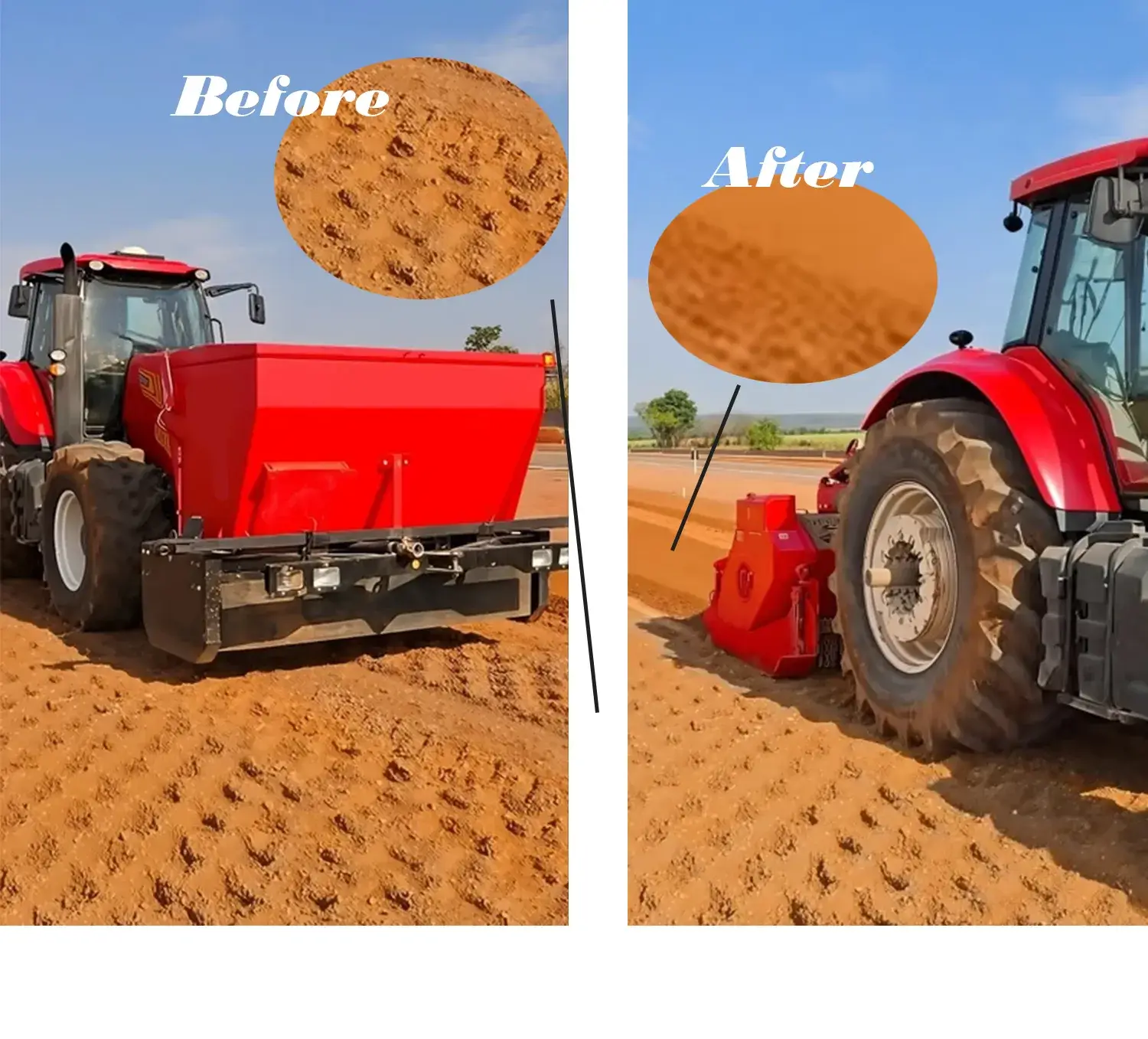
Rocky paddocks are among the most persistently expensive constraints on Australian broadacre farming productivity. From the granite-gneiss country of Western Australia’s Wheatbelt and the quartz-rich soils of South Australia’s Mid North to the ironstone gravels that dominate parts of Victoria’s Wimmera and the volcanic basalt zones of the Darling Downs in Queensland, in-field rock causes damage to tillage implements, obstructs seeding passes, reduces herbicide application coverage, and creates liability hazards in livestock paddocks. The traditional approach — rock picking or pushing rocks to paddock edges — creates windrow barriers that harbour vermin, reduce effective cropping area, and do nothing to address the rock fragments that remain below the surface threshold. A concasseur de pierres à prise de force — also referred to as a concasseur de pierres pour tracteur in many product catalogs — attached to the PTO shaft offers something fundamentally different: this type of concasseur de pierres à prise de force processes the stone in situ, grinding it into sized aggregate that integrates back into the soil profile, eliminates the need for cartage, and leaves the surface fully workable in a single pass.
The economics are compelling. A single paddock with a moderate rock burden — say, 15–25 tonnes per hectare of surface and near-surface stone — can cost a broadacre farm operator thousands of dollars annually in implement maintenance, reduced crop establishment, and management workarounds. A concasseur de pierres à prise de force that processes that rock permanently changes the paddock’s productive character. The capital cost of a quality concasseur de pierres à prise de force is recovered over time — through reduced implement damage, better seeding uniformity, and the ability to run higher-value rotations on ground that was previously marginal. The key is selecting the right concasseur de pierres à prise de force for the specific rock type found in the paddock — and Australian farmers face a narrower than expected range of dominant rock types, each with distinct crushability characteristics.
This article examines granite, quartz veins, and ironstone in detail: their Mohs hardness, how they respond to high-velocity hammer impact, what working depth is needed to address each problem adequately, and how the technical specifications of concasseur de pierres agricoles models available in the EP series align with typical Australian tractor fleet capabilities. We also cover the relevant Australian and international regulatory framework that applies to PTO-driven machinery operated in a farm workplace context.
2. Action Method: How a PTO Stone Crusher Processes Hard Rock in the Field
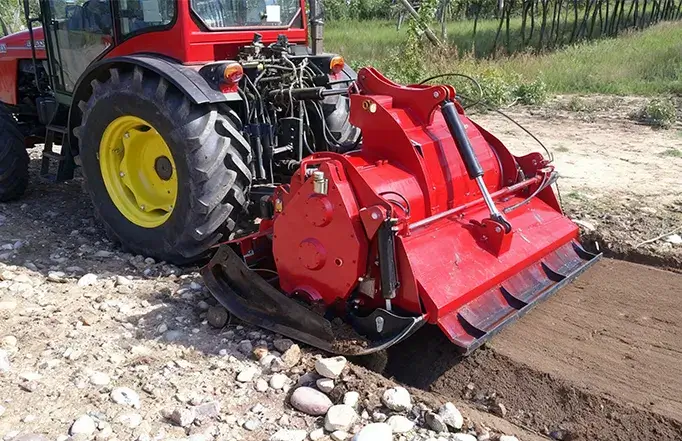
The working principle of every concasseur de pierres à prise de force — whether a compact PSC unit or the heavy THOR series — is fundamentally an impact-fracture process. The machine connects to the tractor’s Power Take-Off (PTO) shaft, which rotates at either 540 or 1,000 RPM depending on the model. That rotational input is stepped through a purpose-built gearbox to drive the central rotor shaft at the design operating speed. The rotor — a heavy steel drum of 450 mm to 1,115 mm diameter depending on the series — carries rows of hardened hammers or picks mounted at fixed angular intervals around its circumference. As the rotor spins at high velocity, these hammers trace a circular arc through the soil profile down to the selected working depth, striking embedded stones with tremendous instantaneous impact force.
The fracture mechanism is primarily tensile splitting: stone fails when the tensile stress induced by the hammer impact exceeds the rock’s modulus of rupture. Granite, despite its high compressive strength, has relatively modest tensile strength — typically 7–25 MPa — which makes it amenable to hammer impact crushing at realistic operating speeds. Quartz veins are harder (Mohs 7) but occur in discrete seams that the hammer picks can follow if working depth is set correctly. Ironstone gravel is soft enough (Mohs 5–6) that it processes quickly, though the high density means the rotor carries substantial impact energy on each blow.
After primary impact fracture, broken fragments are thrown against the rear counter-plate (anvil bar), where secondary size reduction takes place. The adjustable rear gate controls the final outlet aperture — closing it increases the number of times a fragment is re-struck before exiting, yielding a finer end product. The crushed material deposits directly onto the worked path, creating an in-situ graded aggregate layer that can be incorporated into the seedbed or left as a surface stabiliser on bare-earth tracks and laneways. On a concasseur de pierres à prise de force equipped with a front bulldozer blade option (as on the THOR series), simultaneous levelling occurs during the crushing pass.
3. Granite vs Quartz vs Ironstone: What Each Rock Type Demands from Your PTO Stone Crusher
Matching the right concasseur de pierres à prise de force to the rock type in your paddocks determines how long hammers last, what tractor power is required, and how many passes achieve an acceptable result. The table below summarises the critical characteristics of each dominant rock type encountered in Australian paddocks.
| Type de roche | Mohs Hardness | Typical Size | Recommended Max Shred Ø (mm) | Suitable Series | Key Hammer Demand |
|---|---|---|---|---|---|
| Granite / Gneiss | 6–7 | 50–400 mm | 300–500 | STCM / STCH / RSL | TC-tipped picks; high rotor mass for impact energy |
| Quartz Veins | 7 | 10–150 mm seams | 150–300 | PSC / STCL / STCM | Precision working depth control; TC tips essential |
| Ironstone Gravel | 5–6 | 10–80 mm | 150–300 | PSC / STCL | Volume throughput capacity; abrasion-resistant frame |
| Basalt / Dolerite | 5.5–7 | 100–500 mm | 300–500 | STCM / STCH / RSM | Maximum rotor diameter; 1000 RPM PTO preferred |
| Calcrete / Limestone | 3–4 | 50–300 mm | 150–300 | PSC / STCL / STCM | Lower power demand; good hammer life on soft rock |
4. Manufacturing Construction: What Sets a Paddock-Ready Stone Crusher Apart
Australian paddock conditions place extreme demands on a concasseur de pierres à prise de force that differ markedly from European vineyard or Italian terrace environments where many of these machines were originally designed. Australian stones tend to be larger on average, the soil between them is often drier and harder, and operating distances from service centres mean that reliability over long intervals between maintenance visits is non-negotiable. The following structural elements directly determine whether a machine survives and performs in this context.
Heavy-Gauge Outer Hood and Side Plates
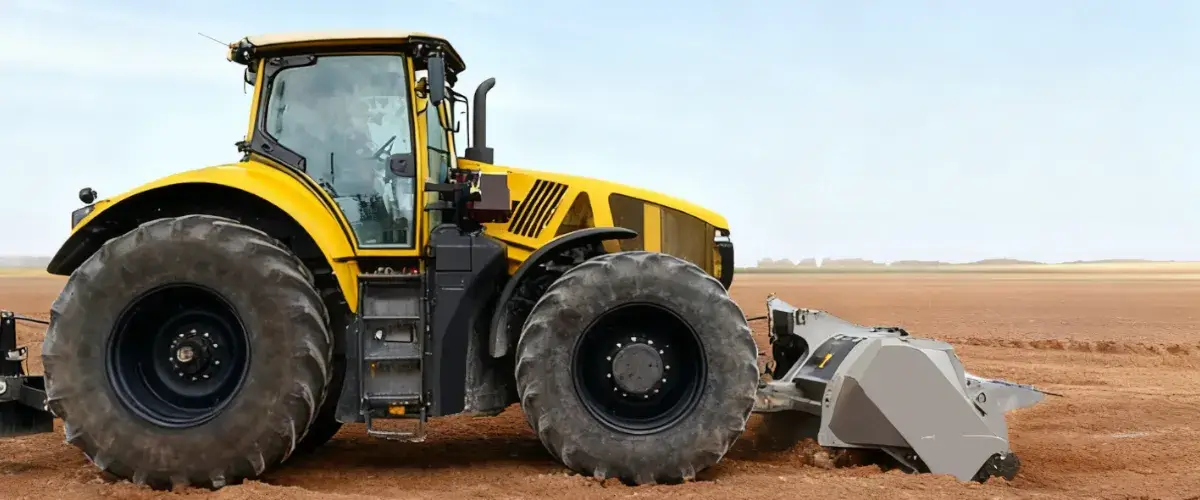
The crushing chamber hood must withstand continuous rock fragment ejection at high velocity. Heavy-duty concasseurs de pierre use 10–20 mm AR400 (abrasion-resistant) steel inner liners within the hood, backed by structural frames in S355 hot-rolled plate. The THOR 2.4 (2,300 kg) and THOR 3.0 (2,800 kg) series use this construction approach, giving the machine the structural mass needed to resist deflection under impact loads without relying purely on frame stiffness. In Australian granite country, stone ejection velocity inside the chamber is substantial — a lightweight hood will be deformed within a single season of heavy use.
Counter-Plate (Anvil) System
The rear breaker bar — the fixed surface against which the rotor throws stone fragments for secondary reduction — must be replaceable when worn. Agricultural équipement de concassage de pierres rated for granite and hard-stone applications uses segmented replaceable anvils, typically cast in high-chromium white iron (HRC 60+). The adjustment mechanism that controls the outlet gap between the rotor path and the anvil surface must be accessible and lockable under field conditions, since correct gap setting is the primary control over final aggregate size. Machines with hydraulic rear-gate adjustment (as available on STCM/HP series) allow on-the-go gap changes without stopping.
Gearbox and Torque Limiter
The gearbox transmits PTO torque from the tractor to the rotor shaft, stepping up speed as required. In hard-rock applications like granite paddocks, sudden torque spikes occur when a hammer strikes an unexpectedly large embedded boulder. A properly rated torque limiter (slip clutch) in the driveline of any concasseur de pierres à prise de force protects both the gearbox internals and the tractor PTO. The THOR series requires 2 double-acting hydraulic remote valves and a minimum tractor power of 180 cv (2.4 m model) or 230 cv (3.0 m model), reflecting the substantial torque reserve needed for genuine granite-class crushing. Under-specifying tractor power is the leading cause of gearbox failures in PTO-driven stone crushers used on hard Australian rock.
Three-Point Linkage and Drawbar Options
All models in the EP product range use Category 2 three-point linkage as standard, which aligns with the rear linkage available on tractors from 70 hp upward that are common in Australian mixed farming operations. The THOR series is also available with a Kit Drawbar option — a separate trailing undercarriage that allows the machine to be towed rather than directly mounted, useful on tractors with limited rear axle load capacity or where the machine’s weight (up to 2,800 kg for THOR 3.0) approaches the rated linkage capacity. For farms running older-generation tractors without Category 2 rear linkage upgrades, the drawbar variant removes a potential fitment constraint.
5. Material System: Hammer and Wear-Part Grades for Australian Hard Rock
Choosing the right hammer material is not a secondary consideration on an Australian granite or ironstone property — it determines the economics of the entire operation. If hammers wear out after 20 hours on hard granite, the cost per hectare processed escalates rapidly. The material science behind concasseur de pierres à prise de force hammer grades has advanced significantly, and the current generation of picks and hammers available for the EP product line uses a tiered wear-resistance system that matches material grade to rock hardness and abrasivity.
Standard C45 Steel (normalised): Suitable only for soft rock — calcrete, limestone, and friable ironstone gravel. Appropriate for PSC Series units handling sub-150 mm material. Low initial cost; reasonable service life when the material being crushed has Mohs hardness below 5. Not recommended for granite or quartz applications in Australian paddocks.
High-Manganese (Hadfield) Steel (Mn 11–14%): Work-hardens progressively at the impact face, providing improving wear resistance as the hammer breaks in. Well-suited to impact-dominant environments like granite impact crushing. Used in STC/3 type picks across the STCM and RSL series. The work-hardening effect means these hammers actually perform better as they accumulate operating hours — a practical advantage for remote Australian farms where frequent parts delivery is inconvenient.
Tungsten Carbide (TC) Tipped Picks: The R/65 type picks used on the RSL and RSM series incorporate tungsten carbide inserts at the cutting/impact tip. With Vickers hardness of 1,200–1,600 HV, TC inserts outlast all-steel hammers by a factor of 5–10× in quartz and granite conditions. The higher acquisition cost per pick is more than offset by the extended service interval. For Australian Wheatbelt farmers dealing with quartz veins or consistent granite fragment fields, TC-tipped picks are the economically rational choice despite the higher upfront cost per pick unit. Replacement picks are typically sold as matched sets to maintain rotor balance.
6. Region-by-Region Guide: Which Stone Crusher Suits Your Australian Farming Area
Rock character varies significantly across Australian farming regions. The following overview helps match the EP product range to the specific conditions each region presents.
WA Wheatbelt — Granite and Quartz
Granite outcrops and quartz veins dominate paddock rock problems across the central and northern Wheatbelt from Northam to Dalwallinu. Typical stone sizes range from small quartz chips to granite boulders exceeding 300 mm. The STCM 175 or STCM 200 (160–220 hp tractors) is well-matched to broadacre operations here, offering 300 mm max shredding diameter, 200 mm working depth, and the rotor mass needed to maintain kinetic energy through hard granite. The concasseur de pierres agricoles in this region typically pays for itself within 3–5 seasons through reduced seeder damage and improved establishment.
SA Mid North — Mixed Limestone and Ironstone
The rolling country of the Barossa, Clare, and Mid North regions involves variable rock situations: calcrete hardpan at depth, surface ironstone gravel, and occasional quartzite outcrops. The softer nature of calcrete and ironstone (Mohs 3–6) means the PSC Series handles most of this country adequately with smaller tractor power (90–150 hp), which matches the fleet profile of many mixed enterprise SA properties. Where quartz-dominant zones are encountered, upgrading to the STCM with TC-tipped picks is recommended. The PSC 200 DT at 2,070 mm working width offers good productivity per hour on the open paddocks typical of this region.
Victoria Wimmera and Mallee — Ironstone and Quartz Pebbles
Victorian Wimmera paddocks on the eastern edges of the mallee transition zone often carry dense ironstone pebble and quartz cobble layers at 50–150 mm depth. The small average stone size (mostly under 80 mm) means the PSC Series or STCM/ST125 (80–110 hp range) provides adequate crushing capacity without the high capital cost of the THOR series. Operating speed on these relatively soft ironstone fields can be held at 2–3 km/h for maximum throughput, and the adjustable rear gate should be set for maximum crushing to produce soil-mix particle sizes that integrate fully into the paddock profile rather than leaving surface aggregate that hinders direct-drill seeding.
Queensland Darling Downs — Basalt and Hard Volcanic
The rich basalt plains of the Darling Downs carry heavy volcanic rock, often buried by the exceptionally fertile cracking clay soils but periodically frost-heaved to the surface or exposed by deep cultivation passes. Basalt is hard and dense — similar in crushing difficulty to granite — requiring the higher-power STCM 200/225 or THOR series for efficient processing. Tractor power on Darling Downs broadacre operations commonly reaches 200–280 hp, which aligns well with the STCM/HP 200–225 models. The 300 mm maximum shredding diameter of the STCM series comfortably handles the fist-to-head-size basalt cobbles encountered in these soils.
7. Australian and International Regulatory Framework for PTO Stone Crushers
PTO-driven machinery including concasseurs de pierre and mulchers operated in an Australian farm workplace are subject to a layered regulatory framework at both state and federal levels. Understanding these obligations matters for farm operators, both to ensure legal compliance and to ensure insurance coverage remains valid in the event of an injury or property damage incident involving the machine.
Australia (National): The primary instrument is the Model Work Health and Safety (WHS) Act, adopted by all Australian states and territories (with some variation) through their respective WHS legislation — for example, the Work Health and Safety Act 2011 (NSW), Occupational Health and Safety Act 2004 (Vic), and equivalent legislation in other states. These laws require farm operators to ensure that plant and equipment — including PTO-driven stone crushers — is designed, constructed, used, and maintained in a way that minimises risk. Australian Standard AS 4600 and related agricultural machinery safety standards set out guarding requirements for PTO shafts and rotating components. WHS regulations require that PTO guards on stone crushers remain in place and serviceable during operation, and that all workers who operate the machine receive documented instruction on safe operating procedures.
European Union (relevant for imports): EP series stone crushers are supplied with documentation to CE marking requirements under the Machinery Directive 2006/42/EC, transitioning to the Machinery Regulation (EU) 2023/1230. This CE documentation is a useful technical reference for Australian customs and import compliance purposes, and the accompanying operator manuals meet EN ISO 11684 requirements for safety labelling. When importing PTO-driven agricultural machinery into Australia, import compliance requirements under the Australian Border Force and applicable biosecurity (clean-down) protocols must be satisfied before the machine enters service.
United States (reference standard): ASABE Standard S304.8 governs PTO driveline and implement safety in agricultural equipment; while not directly applicable in Australia, ASABE standards are referenced in Australian agricultural machinery safety guidance and may be relevant where no direct Australian Standard applies.
Note on Gearbox Standards: The internal gearboxes of PTO stone crushers must be rated for the full transmitted torque of the intended tractor PTO power rating. Australian farm operators should verify that the gearbox specification in the machine’s technical documentation explicitly covers the tractor horsepower being used — operating a machine rated for 150 cv with a 200 cv tractor without explicit gearbox clearance from the supplier voids the machine’s warranty and potentially invalidates WHS compliance. This is a common oversight when farmers upgrade tractor power between seasons without verifying implement compatibility.
8. Practical Operating Tips: Getting the Best Results from a Stone Crusher in Australian Paddocks
Work at 3 km/h or slower on granite. Attempting to push forward speed on a concasseur de pierres à prise de force tackling hard granite reduces hammer impact energy per stone, reduces crushing effectiveness, and increases vibration loading on bearings. The THOR series specifies 3 km/h as the rated working speed for this reason. On ironstone gravel or calcrete, slightly higher speeds (up to 4–5 km/h) are acceptable without quality compromise.
Set working depth incrementally. On paddocks with a mixture of surface stone and buried rock, make a first pass at 100–120 mm depth to clear surface and near-surface material. Subsequent passes at 150–200 mm depth address the next horizon. Attempting maximum depth in a single pass on virgin rocky ground leads to PTO overload events and disproportionate hammer wear.
Check hammer wear after the first 10 hours on a new paddock. The first paddock on a new property often reveals hidden rock density or hardness that wasn’t apparent from surface inspection alone. Checking hammer tip wear at 10 hours gives you time to order replacement sets if needed rather than discovering a problem when hammers are exhausted mid-season.
Avoid operating in waterlogged or very wet soil. Wet soil packs around the rotor, reducing crushing efficiency and creating a cleaning problem. In Australian summer cropping regions, afternoon thunderstorms can change paddock conditions rapidly — check soil moisture before commencing a session and be prepared to park the machine if conditions deteriorate to mud level. Both the PSC and STCM series are designed for firm-to-hard soil conditions, not saturated paddocks.
9. EP Series Product Range — Find the Right Rock Crusher for Your Paddock
From compact petit concasseur de pierres à prise de force units for orchard and vineyard laneways through to heavy-duty paddock machines for broadacre granite country, the EP series covers the full range of Australian farm requirements. Click any product to view full specifications and inquire about availability.
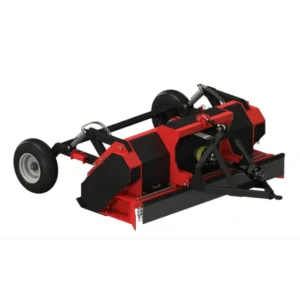
EP-THOR 2.4 + Kit Drawbar
180 cv · 2.4 m · 2,300 kg · Granite/Basalt
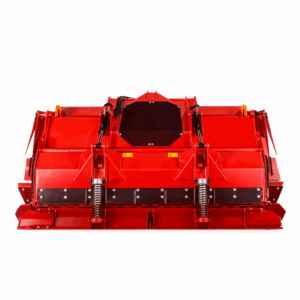
EP-RockMaster Agricultural
Heavy-duty broadacre use
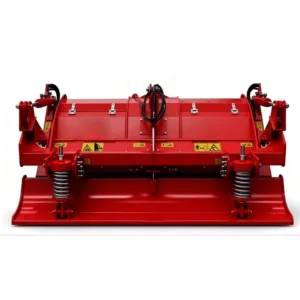
EP-PSC Series
70–150 hp · compact & versatile
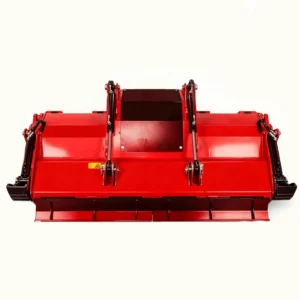
EP-Tractor Mounted Rock Crusher
3-point Cat 2 · multi-terrain
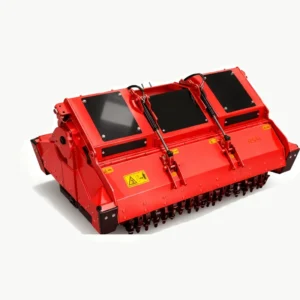
EP-Agricultural Rock Crusher
Korean market model · full service support
10. About Us
We are a specialist manufacturer and international supplier of professional concasseur de pierres à prise de force equipment and concasseur de pierres agricoles solutions, mulchers, rock rakes, and land preparation machinery for agricultural, construction, and rural contracting applications. Our product engineering draws on operating feedback from rocky farming environments across multiple continents, and our EP series stone crusher range reflects the combined demands of hard-rock paddock operations in environments where large granite outcrops, dense ironstone gravels, and deeply embedded quartz material all need to be processed reliably.
For international buyers including Australian farm operators, we provide comprehensive technical documentation in English, detailed model selection guidance based on tractor power and rock type, and access to genuine wear parts — hammers, picks, counter-blade segments, bearings, and gearbox components — through our distribution network. Every EP series concasseur de pierres agricoles is pre-tested before dispatch, and our after-sales team can provide remote technical support for installation, initial setup, and ongoing maintenance questions.
Foire aux questions
Éditeur : PXY