Romanian Agricultural Land Management · Danube Plain Soil Science
سنگ شکن PTO برای کشاورزی رومانی: پاکسازی سنگ آهک، رسوبات لس و شن رودخانه در دشت دانوب
A field-level guide for Romanian farmers, land developers, and agricultural machinery contractors on deploying the right pto stone crusher across the diverse geologies of the Danube Plain and surrounding highland zones.
Romania’s agricultural landscape is strikingly varied. Across the vast Danube Plain — the country’s most productive cereal belt — farmers regularly encounter three distinct soil obstacles that limit mechanization and reduce yields: surface limestone outcrops carried by ancient glacial and fluvial processes, consolidated loess deposits that form hard crusts resistant to conventional tillage, and river gravel bars left behind by Danube tributaries as the river’s course has shifted over millennia. Each of these materials presents a different challenge, and each calls for a slightly different approach when choosing and operating a سنگ شکن pto.
This guide covers the geological and agronomic context of each material, explains how a سنگ شکن تراکتوری works mechanically against them, reviews the construction and material specifications that matter in this environment, outlines the applicable regulatory framework across Romania, the EU, and export markets including South Korea, and provides a structured product selection guide. Whether you are a farm manager near Brăila looking for a سنگ شکن pto برای فروش to handle Danube gravel bars, or a Korean agricultural equipment importer evaluating سنگ شکن pto کوچک models for European-compatible tractor fleets, this article gives you the technical foundation to make a confident decision.
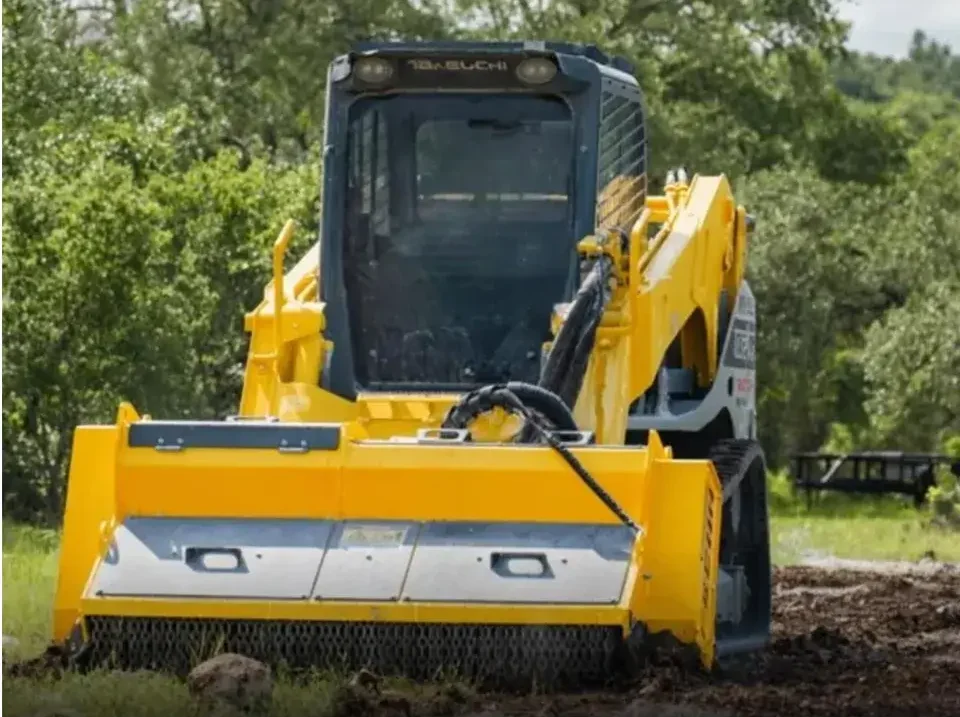
1. Romanian Field Geology: Three Obstacles, Three Approaches
The Danube Plain (Câmpia Dunării) stretches across southern and southeastern Romania, covering provinces including Dolj, Olt, Teleorman, Giurgiu, and Ialomița. The region’s parent rock geology is dominated by Neogene sediments topped by Quaternary alluvial deposits, and it is within these deposits that the three main stone-related obstacles arise for arable farming.
Limestone Outcrops
Limestone (predominantly Cretaceous and Miocene calcarenite) emerges along the northern edge of the plain and across the Sub-Carpathian foothills of Vâlcea, Argeș, and Prahova counties. Where limestone meets the surface or lies within the top 30 cm of the soil profile, it creates irregular rocky patches that resist plowing and damage disc harrows and seed drills. The hardness of Romanian limestone varies from relatively soft bioclastic calcarenite (Mohs 3–4) to harder micrite limestone approaching Mohs 5–6 in some formations. A well-specified سنگ شکن کشاورزی with appropriate rotor diameter and tooth geometry can reduce this material in a single pass — provided the machine is matched to the correct tractor horsepower range for the particular hardness encountered on site.
Loess Deposits and Calcareous Crusts
Loess covers approximately 30% of Romania’s lowland agricultural area. While unconsolidated loess is workable with standard tillage, two degradation processes create serious problems: calcification (re-precipitation of calcium carbonate within the loess profile) and pedogenic compaction. Both create cemented layers at depths of 10–40 cm that behave mechanically much like soft limestone. These layers block root penetration for deep-rooted crops like sunflower, maize, and sugar beet — crops that dominate Romanian Danube Plain agriculture. A سنگ شکن برای تراکتور operating at an appropriate working depth fractures these cemented zones and redistributes the broken material as a coarse aggregate amendment that actually improves soil drainage over subsequent seasons.
Danube River Gravel
The Danube and its major Romanian tributaries (Argeș, Olt, Siret, Prut) have deposited extensive gravel terraces at multiple elevations above the current river level. On first-generation farmland created by draining former river floodplains — particularly in counties bordering the Danube between Turnu Măgurele and Galați — rounded quartzite and flint gravel cobbles at 30–100 mm diameter are a persistent obstacle for all soil-working machinery. Unlike angular limestone, river gravel presents a smooth, hard surface to the crushing tool. This demands high-impact-energy machines with conical or pick-type teeth rather than flat hammer geometries, and working speeds slightly lower than those used on softer materials.
| Material Type | Typical Romanian Region | Hardness / Character | Recommended Machine Class |
|---|---|---|---|
| Surface limestone | Sub-Carpathian foothills, Dobrogea | Mohs 3–6, irregular outcrop | PSC 125–175 / STCM 150 |
| Cemented loess layer | Danube Plain, Bărăgan | 10–40 cm depth, moderate hardness | PSC 175 / STCM 175–200 |
| River gravel (Danube terrace) | Dolj, Teleorman, Giurgiu, Ialomița | Quartzite / flint, 30–100 mm, hard | RSL / RockMaster, pick teeth |
| Mixed gravel-limestone | Oltenia, Western Muntenia | Variable, abrasive | THOR 2.4 / STCM 200–225 |
2. Action Mode: The Mechanical Sequence of a PTO Stone Crusher
Understanding exactly how a سنگ شکن pto engages limestone, consolidated loess, and river gravel helps operators set working depth, select correct working speed, and anticipate wear patterns on consumable components. The operation unfolds in three connected mechanical stages.
Stage 1 — Power Delivery Through the PTO Drive Line
The tractor’s power take-off shaft transmits rotational energy directly to the machine’s gearbox at either 540 or 1000 RPM, depending on the model and the tractor’s available PTO speed settings. This direct mechanical connection is fundamental to reliable performance: it maintains consistent rotor RPM even when the machine encounters sudden resistance from an embedded gravel cobble or a dense limestone slab. Machines configured for 1000 RPM PTO input — including the PSC 175, STCM series, and THOR 2.4 — deliver higher peripheral velocity at the rotor for a given rotor diameter, which translates to greater impact energy per tooth strike. This matters particularly for the hard, rounded quartzite gravel common on Danube terrace land, where a slower peripheral speed simply deflects the cobble rather than fracturing it.
The THOR 2.4, for example, requires a minimum of 180 cv (approximately 132 kW) tractor power and 2 hydraulic control valves, producing sufficient torque reserve to handle sudden shock loads without stalling. The gearbox in this configuration is designed to absorb and distribute the peak stress of a large stone strike across the full rotor shaft assembly rather than concentrating it at a single bearing point — a critical design feature for longevity in gravel-intensive Romanian field conditions.
Stage 2 — Rotor Impact and Primary Fracture
Inside the crushing chamber, the rotor spins at high velocity carrying rows of hardened alloy teeth or picks mounted on the rotor drum. When a tooth contacts a stone, compressive stress propagates through the material, causing fracture along the weakest internal planes. For limestone, these are typically bedding planes and joint surfaces — meaning a properly aimed strike can break a 150–300 mm limestone slab into sub-50 mm fragments efficiently. For river gravel, which has no preferred cleavage, the fracture is entirely impact-dependent: sufficient kinetic energy at the tooth tip is the only variable that matters. This is why pick-type teeth with conical tungsten carbide geometry are preferred for Danube gravel work, while flat hammer teeth perform adequately on limestone and soft calcareous loess.
Stage 3 — Counter-Plate Refinement and Aggregate Deposit
Following primary fracture at the rotor, broken fragments are projected against the adjustable counter-plate (anvil bar) at the rear of the housing. This secondary impact reduces oversized fragments further and helps achieve a consistent output gradation. The adjustable rear grill then controls the maximum exit size of crushed material: closing the grill forces large fragments through additional rotor contact cycles before they exit the machine. For Romanian gravel-clearing operations where the landowner wants to leave a gravel-free surface suitable for direct seeding, closing the grill to 40–50 mm and making two overlapping passes typically achieves the target result. For limestone land reclamation where some surface texture is acceptable, a more open grill setting and a single pass may suffice.
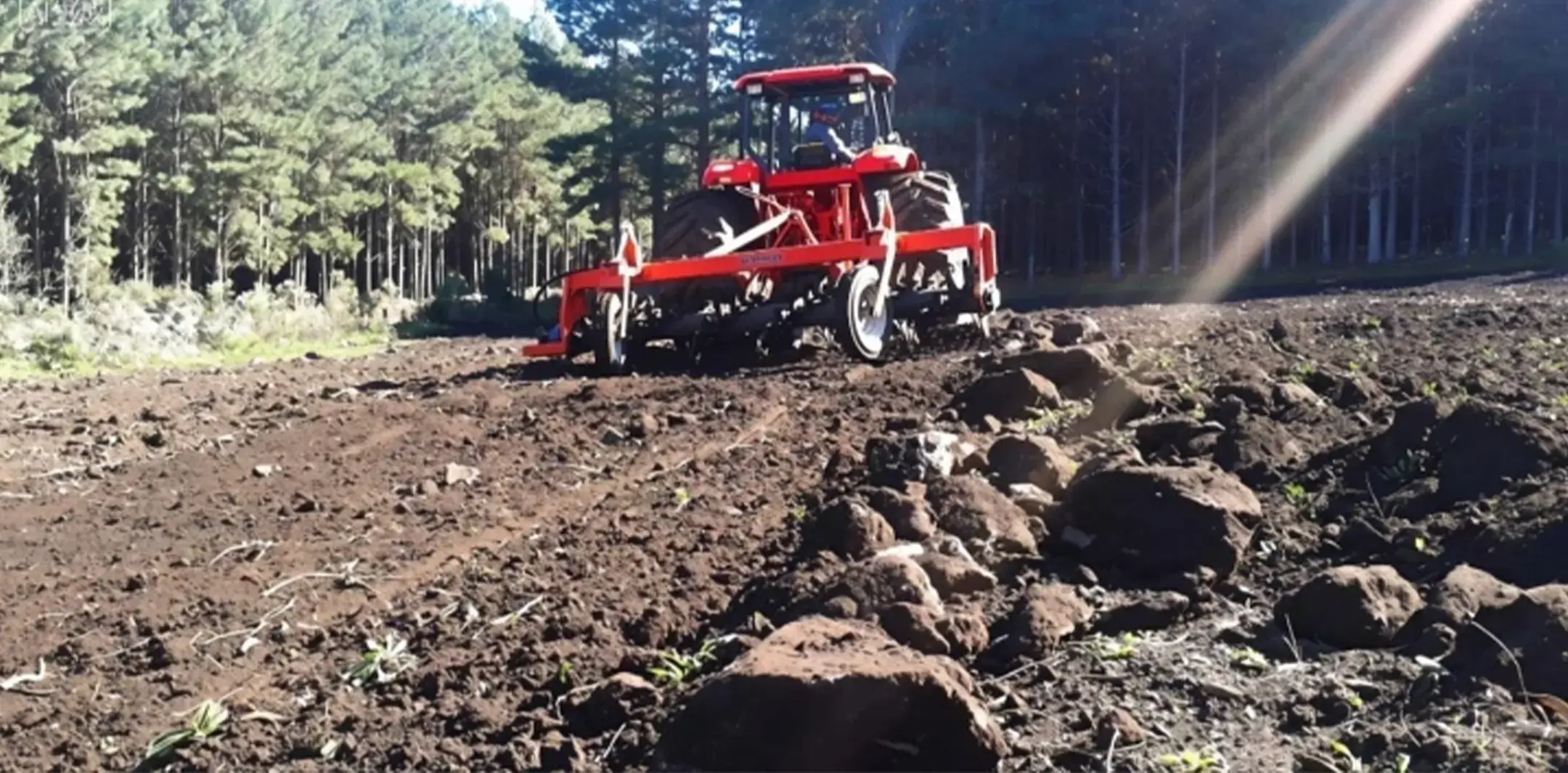
3. Manufacturing Construction: What a Romanian Field Demands from the Housing and Frame
The combination of abrasive river gravel and the wet-dry cycles typical of the Romanian steppe climate places specific demands on machine construction that go beyond what equipment designed purely for Mediterranean or Atlantic European conditions needs to address. The following structural elements are the ones most likely to determine whether a machine lasts two seasons or ten in Romanian field conditions.
Main Frame and Housing Fabrication
The outer housing on a well-built دستگاه سنگ شکن is fabricated from high-strength structural steel — typically S355J2 or equivalent — with a minimum plate thickness of 10–12 mm on the floor section that faces direct stone impact. Internal surfaces are lined with Hardox 400 or Hardox 450 abrasion-resistant steel panels, which have a Brinell hardness of approximately 370–450 HB. This is substantially harder than standard S355 structural steel (around 200 HB), and the difference is directly measurable in service life when working Danube quartzite gravel, which has an abrasion coefficient comparable to industrial silicon carbide. Machines in the PSC series feature interchangeable internal protection panels that can be replaced in the field without welding or specialized tooling — a practical advantage in the Romanian agricultural context where dealer service networks are typically less dense than in western Europe.
The frame’s three-point linkage interface must conform to category 2 bottom linkage standards (ISO 730) to connect to the majority of Romanian tractors currently in use. Both the THOR 2.4 and the PSC series confirm category 2 compatibility, meaning they integrate directly with the large installed base of New Holland, John Deere, Fendt, and Massey Ferguson tractors operated by larger Romanian farms and contractors.
Rotor Design and Bearing Support
The rotor is the most mechanically stressed component. Rotor diameters across the product range span from 450 mm in the PSC/STCL class through 550 mm in the STCM series up to 700 mm in the STCH configuration. Larger diameter means higher peripheral velocity for a given input RPM, delivering more impact energy per tooth — a genuine advantage when attacking hard Danube quartzite cobbles. Rotor shaft bearings must be rated for the combined radial and axial loads generated by continuous stone impact. Premium machines use spherical roller bearings (FAG or SKF equivalent) with positive-pressure labyrinth seals on the housing faces to exclude grit and moisture ingress. Romanian river gravel operations are particularly aggressive in this regard because the silica-rich gravel generates a fine abrasive powder that accelerates seal degradation faster than most other materials.
Gearbox Engineering and Sealing
The gearbox design in a سنگ شکن تراکتوری intended for Romanian conditions requires careful attention to both thermal management and contamination exclusion. Gearboxes operating in summer conditions on the Danube Plain face ambient temperatures of 35–40°C, which significantly reduces the effective viscosity of standard gear oils, increasing metal-to-metal contact at loaded gear flanks. High-quality machines use purpose-designed agricultural gearboxes with ISO VG 220 or 320 extreme-pressure (EP) gear oil specifications, positive-pressure lubrication circuits, and labyrinth dust seals on both input and output shafts. For Romanian gravel operations, it is also advisable to specify gearboxes with an independent oil cooler or at minimum ensure the housing has sufficient exposed surface area for passive cooling during extended working shifts.
The THOR 2.4 model uses a heavy-duty sealed gearbox matched to its 180 cv minimum tractor and 2 control valve requirement. The sealed design prevents contamination from the fine silica dust generated when crushing quartzite gravel — a contamination route that shortens the service life of standard agricultural gearboxes considerably under these conditions.
4. Material System: Tooth Geometry and Metallurgy for Romanian Conditions
The choice of tooth type is arguably the most important variable in achieving efficient stone reduction in Romanian Danube Plain conditions. Three fundamental configurations are used, each suited to a different primary material:
| Tooth Configuration | Material Composition | Optimal Romanian Application | Expected Service Life |
|---|---|---|---|
| STC/3 Fixed tooth | Alloy steel, tungsten carbide tip | Limestone, soft calcareous loess | 100–160 h in limestone |
| STC/3 HD Heavy Duty | Chrome-moly reinforced shank | Cemented loess, mixed materials | 120–180 h depending on abrasivity |
| STC/FP Flat Pick | Tungsten carbide insert, flat geometry | Road base prep, seedbed finishing | 80–120 h in abrasive gravel |
| R/65 Conical Pick | 65 mm shank, tungsten carbide cone | Danube quartzite gravel, hard flint | 150–220 h; highest per-unit cost |
For Danube gravel operations specifically, the R/65 conical pick geometry outperforms every other tooth type because the conical form continually self-presents a sharp cutting edge as the tungsten carbide wears — unlike flat hammer teeth that lose cutting geometry progressively. The RSL series machines are specifically configured for R/65 pick rotor geometry, making them the natural choice for Romanian river terrace reclamation work. The PSC series using STC/3 teeth is the correct selection for limestone outcrop clearing in Sub-Carpathian agricultural zones, where the softer rock does not justify the higher cost of conical pick tooling.
5. Product Selection for Romanian Agricultural Conditions
The following five models from the Mulchers / Stone Crushers product range represent a logical progression from compact smallholding machines to heavy commercial land reclamation equipment. Each is suited to specific Romanian field scenarios, and the correct selection depends primarily on tractor availability, target material hardness, and required daily coverage area.
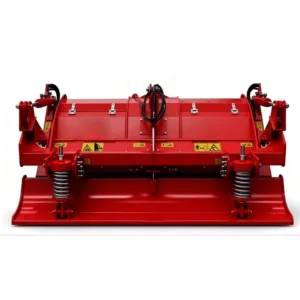
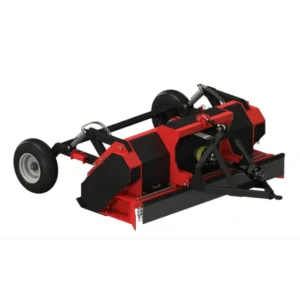
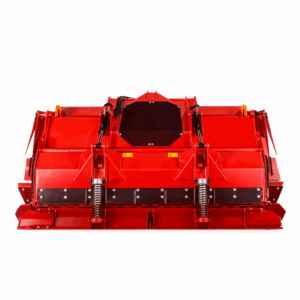
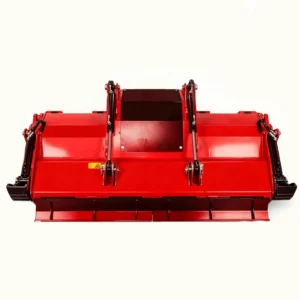
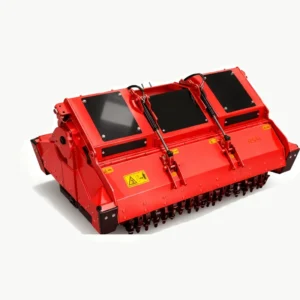
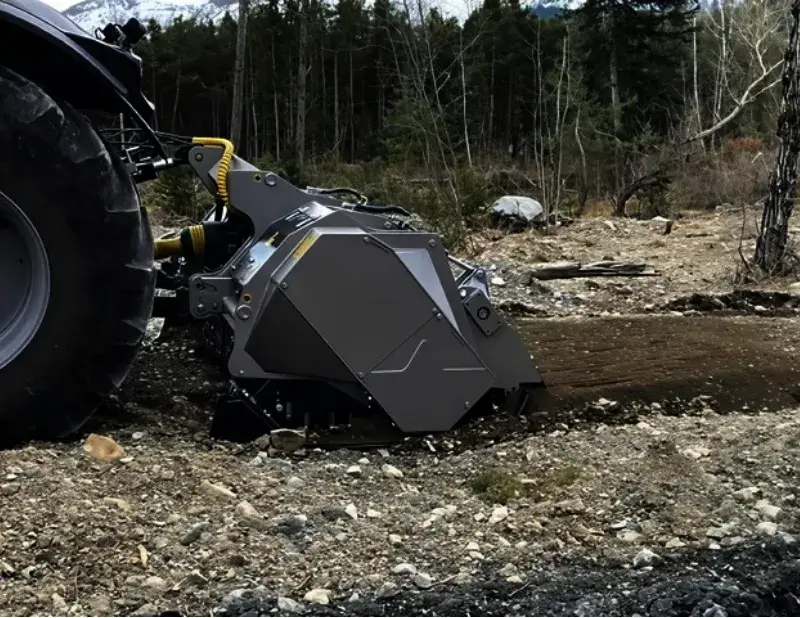
6. Model Comparison: Romanian Application Matching Guide
| مدل | تراکتور اچ پی | عرض کاری | Max Depth | Max Stone ⌀ | Best Romanian Scenario |
|---|---|---|---|---|---|
| پیاسسی ۱۲۵ | ۸۰–۱۲۰ | 1350 mm | 150 mm | 150 mm | Smallholding limestone prep, Sub-Carpathian |
| پیاسسی ۱۷۵ | ۱۰۰–۱۵۰ | 1830 mm | 150 mm | 150 mm | Mid-farm loess crust breaking, Bărăgan |
| اس تی سی ام ۱۷۵ | ۱۶۰–۲۲۰ | 1824 mm | 200 mm | 300 mm | Commercial-scale orchard / vineyard prep, Dobrogea |
| THOR 2.4 | ۱۸۰ سیویدی دقیقه | 2400 mm | متغیر | High | Large-scale Danube floodplain reclamation |
| RSL DT 200 | 130–190 | 1960 mm | 280 mm | 300 mm | Danube terrace gravel, Dolj / Giurgiu / Ialomița |
7. Regulatory Framework: Standards Governing Stone Crushers in Romania, the EU, and Export Markets
Romania’s membership in the European Union since 2007 means that all agricultural machinery placed on the Romanian market must comply with the EU Machinery Directive 2006/42/EC, which requires CE marking and a Declaration of Conformity from the manufacturer before the machine is first sold or put into service. For سنگ شکن pto equipment specifically, the following standards and regulations are most directly relevant:
| Region / Jurisdiction | Applicable Standard / Regulation | Scope for Stone Crushers | Key Requirement |
|---|---|---|---|
| Romania / EU | EU Machinery Directive 2006/42/EC | All powered machinery sold in EU | CE marking + Declaration of Conformity obligatory |
| Romania / EU | ISO 4254-7 (EN ISO 4254-7) | Safety of soil tillage machinery | Rotor housing, projection zone, PTO guard dims |
| Romania / EU | ISO 500 (EN ISO 500) | Tractors — rear-mounted PTO | PTO shaft dimensions, guard clearances |
| Romania / EU | EU Regulation 167/2013 | Agricultural/forestry vehicle type approval | Relevant for tractor certification; affects attachment specs |
| South Korea | KS B ISO 11684; KS R ISO 5674 | Safety markings, PTO shaft guards | KAMICO certification required for MAFRA-subsidized purchases |
| USA | ASABE S203.12; OSHA 1928.57 | PTO guarding, operator safety | PTO master shield and integral driveline guard |
| Australia / New Zealand | AS/NZS 4024.3801 | Agricultural machinery safety | CE marking generally accepted as equivalent |
Romanian farmers purchasing equipment through the AFIR (Agenția pentru Finanțarea Investițiilor Rurale) subsidy programs under EU Rural Development Policy (PNDR) sub-measures 4.1 and 4.2 must ensure that any purchased سنگ شکن تراکتوری carries current CE certification documentation and meets the definition of eligible agricultural equipment under the applicable financing conditions. Gearbox safety specifically is addressed in both EN ISO 4254-7 (guarding requirements) and in the general machinery safety requirements of the Machinery Directive Annex I, which requires that all power transmission components — including gearboxes and PTO shafts — be guarded to prevent operator contact during normal operation. Non-compliant equipment may be ineligible for subsidy reimbursement and could create employer liability under Romanian labor law (Legea nr. 319/2006 — Legea securității și sănătății în muncă).
Korean importers should note that Romanian-origin and EU-sourced machinery carrying CE marks must still undergo KAMICO inspection under Korea’s Agricultural Machinery Act (농업기계화 촉진법) before formal sale through subsidized channels under the Ministry of Agriculture, Food and Rural Affairs (MAFRA) mechanization support program. The KS B ISO 11684 safety marking standard and KS R ISO 5674 PTO shaft guard standard are the two most frequently cited compliance requirements during KAMICO review of stone crusher imports.
8. Field Operation Strategies for Romanian Terrain
Correctly deploying a سنگ شکن pto in Romanian conditions involves more than simply selecting the right machine. Operational decisions about working speed, pass direction, moisture conditions, and post-crush tillage sequence all influence both the quality of the final seedbed and the total cost per hectare of the reclamation operation.
Working Speed and Depth Setting
On Danube gravel terraces, the recommended approach is to reduce working speed to the lower end of the specified range (typically 2–3 km/h rather than 4–5 km/h) when first entering an area of dense cobble concentration. This gives each tooth contact longer dwell time against the stone surface, increasing fracture probability per pass. After the first pass has reduced the largest cobbles, working speed can be increased for finishing passes. For limestone outcrop work in Sub-Carpathian zones, working speed is less critical but working depth must be set precisely — too shallow and the machine will ride over embedded slabs; too deep and the machine begins working soil below the stone layer unnecessarily, wasting energy and accelerating tooth wear.
Seasonal Timing on the Danube Plain
The optimal window for stone crushing operations on Romanian Danube Plain farmland is mid-autumn (October–November) and early spring (March–April). During these periods, soil moisture in the 10–30 cm profile is typically sufficient to provide some lubrication between the crushing tool and the rock surface, reducing heat generation and wear. Summer operations in the Bărăgan region — where July temperatures regularly exceed 38°C and topsoil moisture drops to near-zero — significantly accelerate tooth wear and gearbox thermal loading. If summer operation is unavoidable, reduce working speed by 20%, monitor gearbox oil temperature, and plan for tooth replacement at 60–70% of the standard interval rather than waiting for visible failure.
Sunflower and Maize Seedbed Preparation Sequence
For Romanian farmers preparing loess-covered Danube Plain fields for sunflower or maize production, the recommended three-step reclamation sequence is: first, a stone crusher pass at 10–15 cm depth to fragment the calcareous crust and any surface stones; second, a subsoiler pass at 45–60 cm to break the deeper compaction zone; third, a disc harrow or power harrow finishing pass to mix the crushed material into the topsoil and create a uniform seedbed. Sunflower root systems can reach 2.5 m depth in well-structured Danube Plain soils, and eliminating the calcareous crust layer is the single most impactful intervention for improving sunflower yield in this region.
سوالات متداول
تدوینگر: PXY