Agricultural Equipment Guide · New Zealand Farms
Best Tractor-Mounted Rock Crusher for
New Zealand Hill Country Farms
A complete technical guide covering how a PTO stone crusher works, what it’s made of, how to match it to your tractor, and why New Zealand’s rugged hill country demands purpose-built stone crushing equipment.
If you’ve ever tried farming the steep slopes of New Zealand’s North Island ranges or the rocky foothills of Canterbury and Marlborough, you already know that surface stones are more than an inconvenience — they’re a daily hazard. Broken blades, jammed tillers, damaged tyres, and wasted labour hours add up fast. The right سنگ شکن pto mounted to your existing tractor eliminates this problem permanently, turning jagged fieldstone into fine, workable aggregate in a single pass.
This guide is designed for New Zealand sheep and beef farmers, dairy operations, horticulturalists, and land developers who need a realistic, technical breakdown of what a tractor-mounted rock crusher is, how it functions mechanically, what materials go into building one that lasts, and which models from the PSC, RockMaster, and Tractor-Mounted series genuinely suit the terrain conditions found across New Zealand’s hill country. We’ll also look at the regulatory side — gearbox and PTO driveline compliance requirements that any responsible buyer should understand before attaching equipment to their tractor.
2. What Is a Tractor-Mounted Rock Crusher?
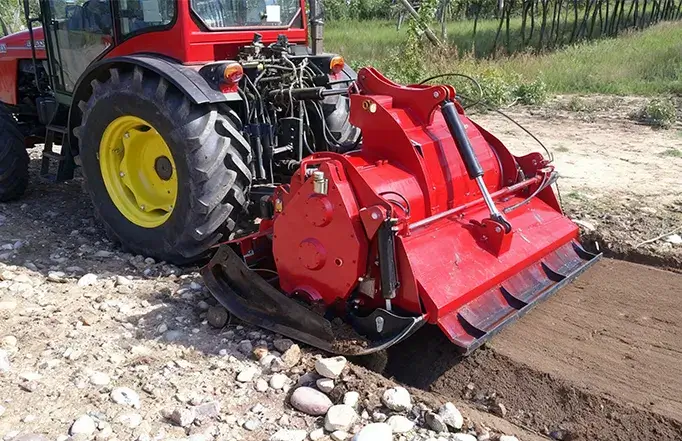
الف tractor-mounted rock crusher — more accurately called a PTO-driven stone crusher or agricultural stone crusher — is an implement attached to the three-point hitch of a tractor and driven through the tractor’s power take-off (PTO) shaft. Unlike jaw crushers or impact crushers used in quarrying, a tractor stone crusher is designed to process rock that is in situ, meaning stones embedded in soil or lying on the surface of a field. The rotor, spinning at high speed, strikes the rock with hardened steel teeth, breaking it into fragments small enough to remain in the soil without interfering with cultivation, irrigation, or livestock grazing.
For New Zealand hill country farms, this technology is especially relevant because of the prevalence of greywacke, schist, basalt, and limestone formations that appear on or near the surface across much of the South Island and in parts of Hawke’s Bay, Waikato, and Manawatū-Whanganui. Rather than spending days physically removing rocks by hand or with an excavator — at significant cost and with soil disturbance — a single tractor pass with an appropriate PTO stone crusher can clear and condition ground to a depth of 150–280 mm in one operation.
The difference between a good result and a failed investment typically comes down to matching the right model to the right application. A small pto stone crusher suited to an orchard row may be entirely wrong for a stony Marlborough hillside. Understanding the mechanics and material specifications is the first step toward that correct match.
2. Action Mode: How a PTO Stone Crusher Actually Works
The operational sequence of a سنگ شکن برای تراکتور use begins the moment the PTO shaft engages. Power from the tractor engine is transmitted via the PTO shaft (operating at either 540 RPM or 1000 RPM depending on the model) to the machine’s gearbox. The gearbox multiplies torque and channels rotation to the central rotor shaft, which in turn spins the crushing rotor at working speed. On most agricultural stone crushers, the rotor is the heart of the machine — a heavy steel drum of 450–700 mm in diameter to which hardened crushing teeth are mounted in a precisely engineered pattern.
As the tractor moves forward at a working speed of approximately 1–4 km/h (slower on harder ground, slightly faster on lighter soils), the rotor makes contact with stones and rock slabs at the soil surface. Fixed teeth — typically made from tool steel with hardened carbide inserts — strike rock with rotational impact force, fracturing it progressively from the surface downward to the working depth. Adjustable depth skids on each side of the machine control how deep into the soil the rotor penetrates, giving the operator precise control over the final result.
A counter-blade positioned inside the crushing chamber plays a key role in determining the final fragment size. On models fitted with hydraulic hood adjustment, the operator can fine-tune how small the output material is crushed, directly from the tractor cab. Crushed material is released back into the soil profile behind the machine, mixed with the existing earth — an approach that improves drainage and workability rather than removing material entirely.
In New Zealand hill country conditions, where rocks of 15–30 cm diameter are common and ground slopes can exceed 15 degrees, the machine needs good traction support from the tractor, adequate ballast on the front axle, and ideally a Category 2 three-point linkage system rated for the implement weight — which ranges from approximately 1,600 kg for smaller models up to 2,650 kg for wider configurations designed for high-hp tractors.
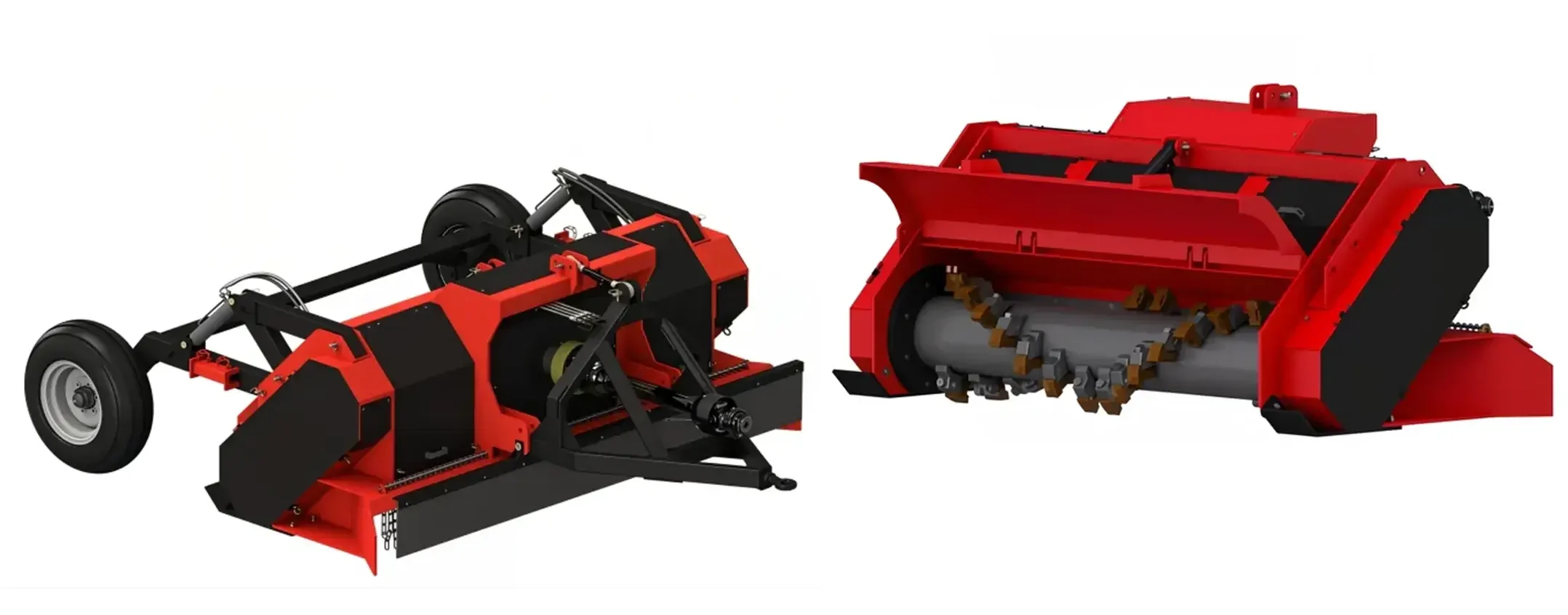
3. Manufacturing Structure: What Goes Into Building a Durable Stone Crusher
Not all ماشین آلات سنگ شکن are built equally. When evaluating any agricultural stone crusher, particularly for the harsh working environment of New Zealand’s rocky hill farms, the manufacturing structure is the single most reliable predictor of long-term performance. A well-engineered machine will outlast a cheaply assembled one by years, even when both face identical field conditions.
Frame and Main Structure
The outer frame of a quality agricultural stone crusher is fabricated from high-strength structural steel, typically with wall thicknesses of 10–20 mm at the critical stress points. The frame must absorb constant vibration and intermittent shock loads generated when the rotor contacts buried boulders or dense greywacke slabs. Welded construction with reinforced corner gussets is standard; the quality of those welds — full penetration rather than surface stitching — is often what separates machines that last a season from those that last a decade.
On the Tractor-Mounted Rock Crusher series (TMRC models), the frame integrates sealed side panels that protect the gearbox and bearing housings from soil ingress, which is especially important in the wet, muddy conditions of New Zealand winter paddock work. Replaceable wear plates line the interior crushing chamber on quality models, allowing the most heavily abraded surfaces to be swapped out without replacing the entire housing.
Rotor and Shaft Assembly
The rotor shaft is a forged steel component, heat-treated for hardness and fatigue resistance. On the TMRC series, rotor diameter is 595 mm across all six models (TMRC 100 through TMRC 225), which provides a consistent contact arc and predictable performance regardless of the working width selected. The rotor is dynamically balanced at the factory to minimise vibration that would otherwise accelerate bearing wear and stress the tractor’s driveline. Tapered roller bearings at both ends of the shaft are typically sealed and grease-lubricated, with drain and refill points accessible without tools for ease of field maintenance.
Gearbox
The gearbox is the component that most directly determines whether a stone crusher for tractor operations survives demanding New Zealand conditions. Most professional-grade سنگ شکن کشاورزی designs use a helical or bevel-helical gear arrangement that provides smooth power transmission, high efficiency, and excellent torque handling. The gearbox housing is typically cast iron or ductile iron, oil-bath lubricated, with thermal expansion accommodated by the oil volume. On models using 1000 RPM PTO input (the TMRC 175 through TMRC 225), the gearbox must handle higher input speeds while maintaining correct rotor RPM — this places greater demands on gear precision and shaft alignment.
Side reduction gears, where fitted on heavier models, are oil-cooled — a feature that matters enormously in sustained heavy-duty operations such as clearing large areas of established pasture that has grown over a rocky base. Overheating a standard splash-lubricated gearbox mid-job is a common failure mode on under-specified machines; the oil-cooled side gear arrangement eliminates this risk.
4. Material System: What the Machine Is Made Of
The choice of materials throughout a دستگاه سنگ شکن defines not just durability but also the cost of ownership over time. Understanding these material systems helps New Zealand farmers make better purchasing decisions, particularly when comparing stone crusher for sale offerings at different price points.
Crushing Teeth and Tool Holders
The cutting teeth are the consumable component of any سنگ شکن pto. On quality machines, the tooth body is investment-cast or forged from tool steel (equivalent to AISI H13 or similar hot-work grades), and the tip is either an integrated wear-hardened point or a brazed or press-fit tungsten carbide insert. Carbide-tipped teeth are significantly harder (approximately 1600–2000 HV vs. 600–700 HV for hardened steel) and last considerably longer on abrasive igneous rocks — greywacke being a prime example of the abrasive greywacke sandstone found throughout New Zealand’s North and South Island hill country.
The tooth-holder — the mounting block welded or bolted to the rotor — is typically forged steel, heat-treated to a hardness that resists deformation under impact while remaining tough enough not to crack. On the TMRC series and the PSC models, tooth holders are designed for quick replacement without removing the rotor, which significantly reduces maintenance downtime during peak clearing seasons.
Internal Wear Protection (Hardox Liners)
Inside the crushing chamber, the walls and hood face constant abrasion from rock fragments moving at high velocity. Premium stone crushers line these surfaces with HARDOX wear-resistant steel plate — a Swedish-origin material widely used in mining, earthmoving, and agricultural applications. HARDOX 400 and HARDOX 500 grades, with Brinell hardness of 400 and 500 HBW respectively, provide dramatically superior wear life compared to ordinary structural plate. On machines working in the highly siliceous greywacke and schist terrain of Canterbury and Otago, these liners can represent the difference between 300 hours and 1,500 hours of service before replacement is needed.
Counter-Blade Material
The counter-blade — the anvil against which the rotor throws material for secondary fragmentation — is another critical wear component. It is manufactured from hardened tool steel, sometimes with a hardfacing weld overlay applied to the leading edge to extend service intervals. The ability to reverse or replace the counter-blade without special tooling is a practical feature that many New Zealand operators specifically look for, given that service access on remote hill farms can be limited.
5. Technical Specifications: Tractor-Mounted Rock Crusher (TMRC Series)
The TMRC series covers six model configurations ranging from the TMRC 100 for 80–120 hp tractors up to the TMRC 225 for 140–190 hp tractors. All models operate at a rotor diameter of 595 mm, share a maximum shredding capacity of 300 mm rock diameter, and achieve working depths of 150–280 mm. This range covers the majority of hill country clearing needs on New Zealand farms, from lighter orchard and vineyard clearing to full pasture renovation on stony volcanic soils.
| مدل | تراکتور اچ پی | دور موتور انجمن اولیا و مربیان | عرض کاری (میلیمتر) | وزن (کیلوگرم) | Max Crush Ø (mm) | Working Depth (mm) |
|---|---|---|---|---|---|---|
| TMRC 100 | ۸۰–۱۲۰ | 540 | 1000 | 1600 | 300 | ۱۵۰–۲۸۰ |
| TMRC 125 | ۹۰–۱۲۰ | 540 | 1240 | 1800 | 300 | ۱۵۰–۲۸۰ |
| TMRC 150 | ۱۰۰–۱۲۰ | 540 | 1480 | 1960 | 300 | ۱۵۰–۲۸۰ |
| TMRC 175 | 120–190 | 1000 | 1720 | 2350 | 300 | ۱۵۰–۲۸۰ |
| TMRC 200 | 130–190 | 1000 | 1960 | 2500 | 300 | ۱۵۰–۲۸۰ |
| TMRC 225 | 140–190 | 1000 | 2200 | 2650 | 300 | ۱۵۰–۲۸۰ |
All TMRC models use Category 2 three-point linkage and a rotor diameter of 595 mm. Maximum shredding capacity is 300 mm (approximately 12 inches) for all configurations.
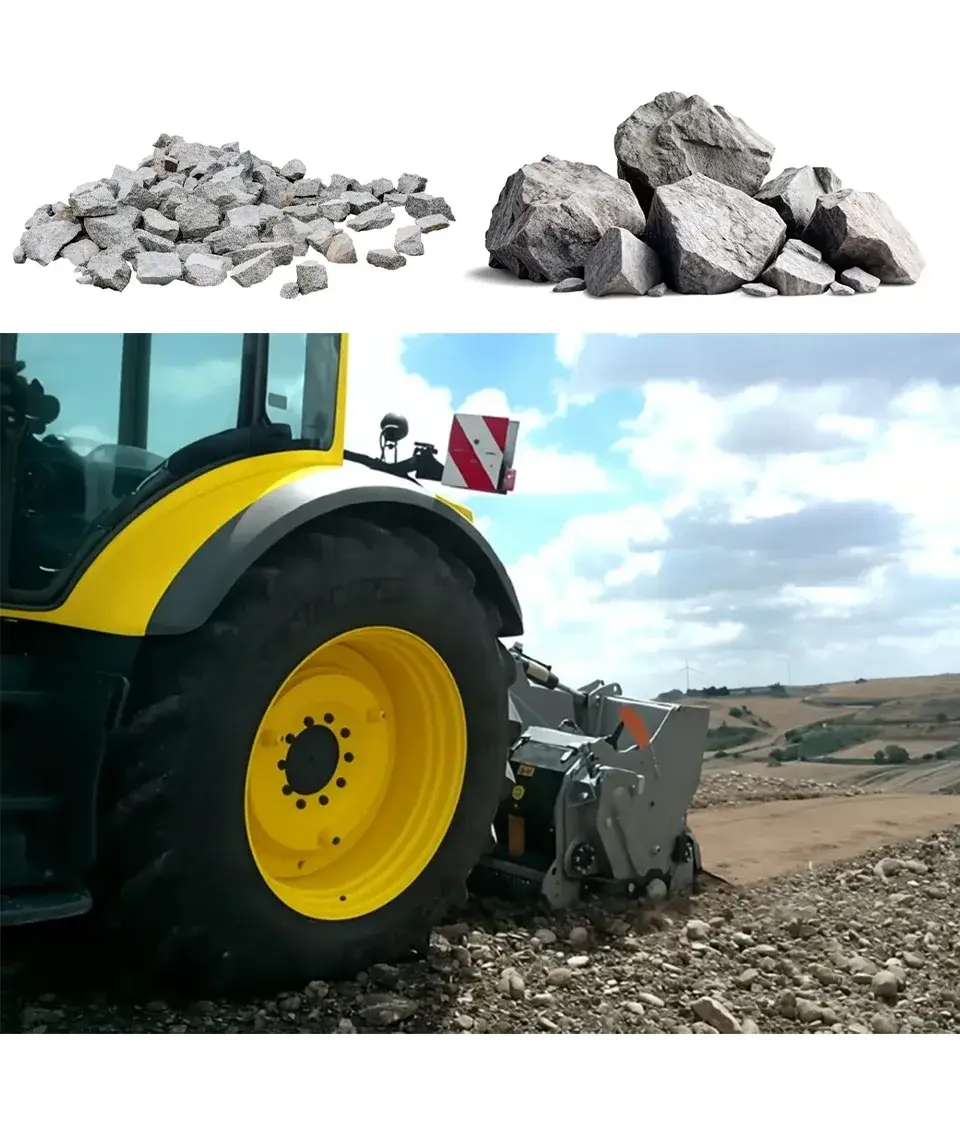
6. Product Range: Which Model Suits New Zealand Hill Country Best?
The Mulchers / Stone Crushers series includes five distinct product lines, each engineered for specific tractor power ranges and field conditions. Here’s how they compare in the context of New Zealand hill farming:
THOR 2.4 + کیت میله کشش
Designed for high-output operations with tractors from 180 hp, the THOR 2.4 features a 2.4 m working width, Category 2 linkage, and a machine weight of 2,300 kg. Working speed at 3 km/h and 2 required control valves. Best suited to broader, accessible hill paddocks with heavy stone loading where maximum throughput matters.
سنگ شکن کشاورزی راک مستر
A purpose-built agricultural stone crusher with a working depth of 200 mm and a maximum crush diameter of 300 mm, compatible with tractors in the 80–220 hp range. The RockMaster is particularly well-suited to New Zealand’s sheep and beef farms where periodic pasture renovation is needed across mixed rocky and loamy soils.
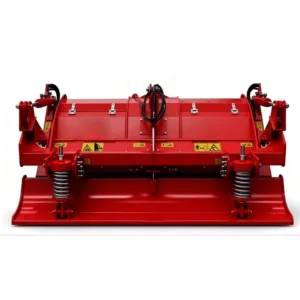
PSC Series — PTO Stone Crusher Models
The PSC series is the compact workhorse of the lineup, with working depths up to 150 mm and shredding capacity up to 150 mm diameter, operating from 70–150 hp tractors. Ideal for lighter-duty stone clearing in orchards, narrow vineyard rows, and smaller terraced hill blocks where larger machines cannot manoeuvre. A top choice for small pto stone crusher applications in New Zealand.
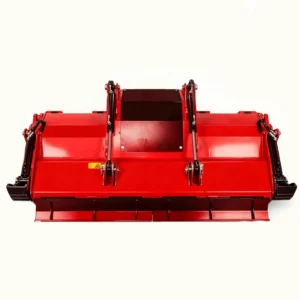
Tractor-Mounted Rock Crusher (TMRC Series)
Six models covering 80–190 hp tractors with working widths from 1,000 mm to 2,200 mm. This series delivers up to 280 mm working depth and 300 mm max crush diameter — the most versatile configuration for mid-to-large New Zealand hill operations. The best all-round choice for farmers looking for a tractor stone crusher for sale with genuine hill country capability.
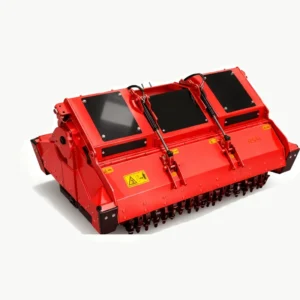
Agricultural Tractor-Mounted Rock Crusher (Korea Edition)
Specifically configured for the rocky terraced farmland and mountainous regions common across Korea and similar Pacific Rim agricultural zones. Features modular design with hydraulic rear hood adjustment and quick-replace liners — practical for any operator managing remote rocky terrain with limited workshop access.
7. New Zealand Hill Country: Why Terrain Specifics Matter for Your Crusher Selection
New Zealand’s geological diversity produces distinctly different stone challenges depending on where you farm. Farmers in the Waikato or South Taranaki predominantly encounter volcanic basalt and andesite — dense, hard rocks that demand robust carbide-tipped teeth and a generous working depth. In contrast, operators in Marlborough’s stony river terraces or the upper South Canterbury foothills deal largely with river cobbles and fragmenting schist — where a medium-weight سنگ شکن برای تراکتور at 80–120 hp can clear ground efficiently without overspecification.
Slope is another major consideration. The Health and Safety at Work Act 2015 (New Zealand) and the associated Machinery regulations under the Machinery Act 1950 (now administered under the Health and Safety at Work (General Risk and Workplace Management) Regulations 2016) require that agricultural machinery is used only within the operating limits defined by the manufacturer. For tractor-mounted implements on slopes, this means checking the approved working gradient for the specific tractor-implement combination — most سنگ شکن pto برای فروش specifications will quote a maximum slope angle, and New Zealand farmers should confirm this figure against their actual paddock gradients before purchase.
Ground moisture is also a factor. Working a stone crusher in saturated soils can push fine material and moisture into the crushing chamber at a rate that accelerates bearing wear. Many experienced New Zealand operators schedule stone crushing runs in late summer and autumn when soils have dried sufficiently to produce a clean, dry crushing environment — which also produces better soil re-incorporation of the crushed material.
8. Gearbox Compliance and PTO Safety Regulations: What You Need to Know
Any discussion of a سنگ شکن برای تراکتور use would be incomplete without addressing the regulatory framework governing gearboxes and PTO-driven equipment. This is not purely academic — non-compliance can result in insurance voidance and personal liability exposure that New Zealand farm operators need to take seriously.
New Zealand
Under the Health and Safety at Work Act 2015 (HSWA) and WorkSafe New Zealand guidelines, all PTO-driven agricultural machinery must be fitted with a properly guarded PTO shaft — including a full-length shaft guard and a shield over the tractor PTO stub. The Approved Code of Practice for Agricultural Machinery Safety (available from WorkSafe NZ) specifies that gearbox shafts and coupling points must be guarded to prevent entanglement, and that all implements must be operated within the tractor manufacturer’s recommended PTO torque limits. Overloading the PTO with an implement that exceeds the tractor’s rated PTO horsepower is a common cause of gearbox failures and driveline damage.
European Union (CE Marking)
Agricultural stone crushers sold into EU markets must comply with Machinery Directive 2006/42/EC, which requires a Declaration of Conformity and CE marking. The gearbox and PTO shaft must meet EN ISO 4254-7 (agricultural machinery safety for soil-working machines) and EN 12965 (PTO drive shafts and their guards). Operators in New Zealand purchasing directly sourced equipment should verify that CE-certified machines have had their PTO shaft overload protection (typically a cam clutch or friction clutch integrated into the driveshaft) correctly set for the receiving tractor’s PTO output torque.
Korea
In the Republic of Korea, agricultural machinery safety is governed by the Act on Agricultural Mechanization (농업기계화 촉진법) administered by the Rural Development Administration (RDA). Imported PTO-driven stone crushing equipment must pass the Agricultural Machinery Safety Certification process (농기계 안전검정), which includes assessment of gearbox load rating, PTO shaft compatibility, and operator protective guarding. The RDA’s safety standards align substantially with ISO 11684 (safety signs and hazard pictograms on agricultural machinery), and manufacturers supplying to Korean dealers need RDA approval documentation.
Australia
Given the close trade relationship between New Zealand and Australia and the common importation channels, it’s worth noting that Safe Work Australia’s Code of Practice for Plant (2023) requires that PTO-driven machinery operating on Australian farms meets the Machinery of Choice Safety Standard, and that any modifications to gearboxes or drivelines after import must be assessed by a qualified engineer. This applies to any New Zealand operator who also runs operations across the Tasman.
United States (ASABE Standards)
The American Society of Agricultural and Biological Engineers (ASABE) publishes ASABE S318 (Agricultural Machinery Management Data) and ASABE S205 (Specifications for implement power take-off drives). Gearbox load ratings in US-marketed سنگ شکن کشاورزی equipment must align with these standards, and the PTO driveshaft torque limiter must be set to protect both the tractor PTO and the implement gearbox from shock loading during stone contact.
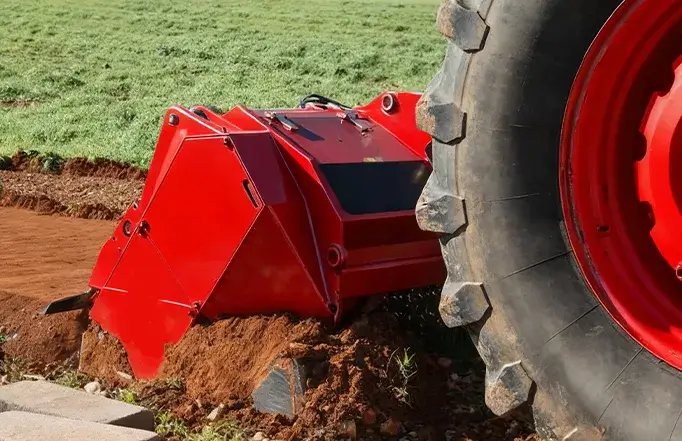
9. How to Match a PTO Stone Crusher to Your Tractor
Getting the tractor-implement match right is arguably the most important decision in the entire purchasing process. Under-matching — putting a wide, heavy crusher on a tractor with insufficient PTO output — results in premature gearbox failure, excessive fuel consumption, and poor crushing quality. Over-matching is less damaging but represents unnecessary capital expenditure. The following approach works well for most New Zealand hill country applications.
Step 1: Confirm Your Tractor’s PTO Power Output
The rated engine horsepower figure quoted in your tractor’s specifications is not the same as PTO horsepower. In typical agricultural tractors, PTO power is approximately 80–85% of gross engine power, after accounting for transmission losses, hydraulic system draw, and accessory loads. A 140 hp engine tractor will typically deliver 112–119 hp at the PTO shaft under sustained load. Use the PTO hp figure, not the engine hp figure, when matching to a crusher model’s requirements.
Step 2: Check Your PTO Speed (540 or 1000 RPM)
The TMRC 100, 125, and 150 models operate at 540 RPM PTO input, while the TMRC 175, 200, and 225 require 1000 RPM PTO. Most modern New Zealand farm tractors from 100 hp upward offer both 540 and 1000 RPM PTO options; older tractors may only have 540 RPM. Using a 1000 RPM machine on a 540 RPM PTO will result in the rotor running at half speed — dramatically reducing crushing effectiveness and potentially stalling under load. Always verify PTO speed compatibility before purchase.
Step 3: Confirm Three-Point Linkage Category and Lift Capacity
All models in the range use Category 2 three-point linkage. The heaviest TMRC model weighs 2,650 kg — which is at the upper limit of what many 140 hp tractors can lift via the rear linkage, particularly when operating on a slope with the implement at working depth. Check your tractor’s rear linkage lift capacity at 610 mm behind the lower link pivot point, and verify that the crusher weight falls within this rating with appropriate safety margin.
Step 4: Consider Front Ballasting for Slope Work
A heavy rear-mounted implement on a hill country tractor shifts the centre of gravity rearward and reduces front axle loading. On slopes exceeding 10–12 degrees, front ballasting is generally recommended to maintain steering responsiveness and prevent front wheel lift. Front weights or a front-mounted implement (such as a blade or loader) help restore axle load balance. This is a practical point that is often overlooked by operators transitioning from flat-farm equipment experience to hill country work.
10. Soil Health and Productivity Benefits of In-Situ Stone Crushing
One of the less-discussed advantages of a quality سنگ شکن pto برای فروش compared to mechanical stone picking or removal is what happens to the soil after the crushing pass. Physical stone removal — by rock picker or by hand — leaves the soil structurally disturbed and depletes the mineral content of the topsoil profile. In-situ crushing, by contrast, keeps all the crushed mineral material in place within the soil, which can have measurable agronomic benefits over time.
Crushed greywacke and basalt, for example, both contain calcium, magnesium, potassium, and trace minerals that become progressively available to plant roots as the crushed fragments continue to weather over subsequent seasons. On soils that are naturally low in these minerals — as is common on many older, highly leached New Zealand hill soils — a stone-crushing programme can contribute to long-term soil mineralisation without any additional input cost. This is a genuine productivity argument for the use of تجهیزات خرد کردن سنگ beyond the immediate operational benefit of clearing rocky ground.
Furthermore, fine-crushed stone material improves soil drainage in compacted clay-dominant profiles that are common in the Waikato and Manawatū regions. Adding fractured rock material to a tight clay soil increases macropore volume, allowing water to infiltrate rather than pond on the surface — which is directly relevant to reducing nitrogen and phosphorus loss through runoff, a compliance issue that New Zealand farms are increasingly subject to under the National Policy Statement for Freshwater Management 2020.
11. Side-by-Side: PSC vs. RockMaster vs. TMRC for New Zealand Conditions
| Criteria | سری PSC | RockMaster | TMRC Series |
|---|---|---|---|
| Tractor Power Range | ۷۰–۱۵۰ اسب بخار | ۸۰–۲۲۰ اسب بخار | ۸۰–۱۹۰ اسب بخار |
| Max Crush Diameter | 150 mm | 300 mm | 300 mm |
| حداکثر عمق کار | 150 mm | 200 mm | 280 mm |
| Best For NZ | Orchards, vineyards, narrow rows | Mixed pasture, medium rocky terrain | Heavy hill country, pasture renovation |
| Available Models | 6 | Multiple | 6 (TMRC 100–225) |
| محدوده وزن (کیلوگرم) | 1,230–1,750 | 1,850–3,840 | 1,600–2,650 |
12. Real-World Applications on New Zealand Hill Country Farms
Understanding where a سنگ شکن تراکتوری برای فروش delivers genuine return on investment requires looking at the specific tasks New Zealand hill farmers face year after year. The following represent the most common applications that drive equipment purchases in this market.
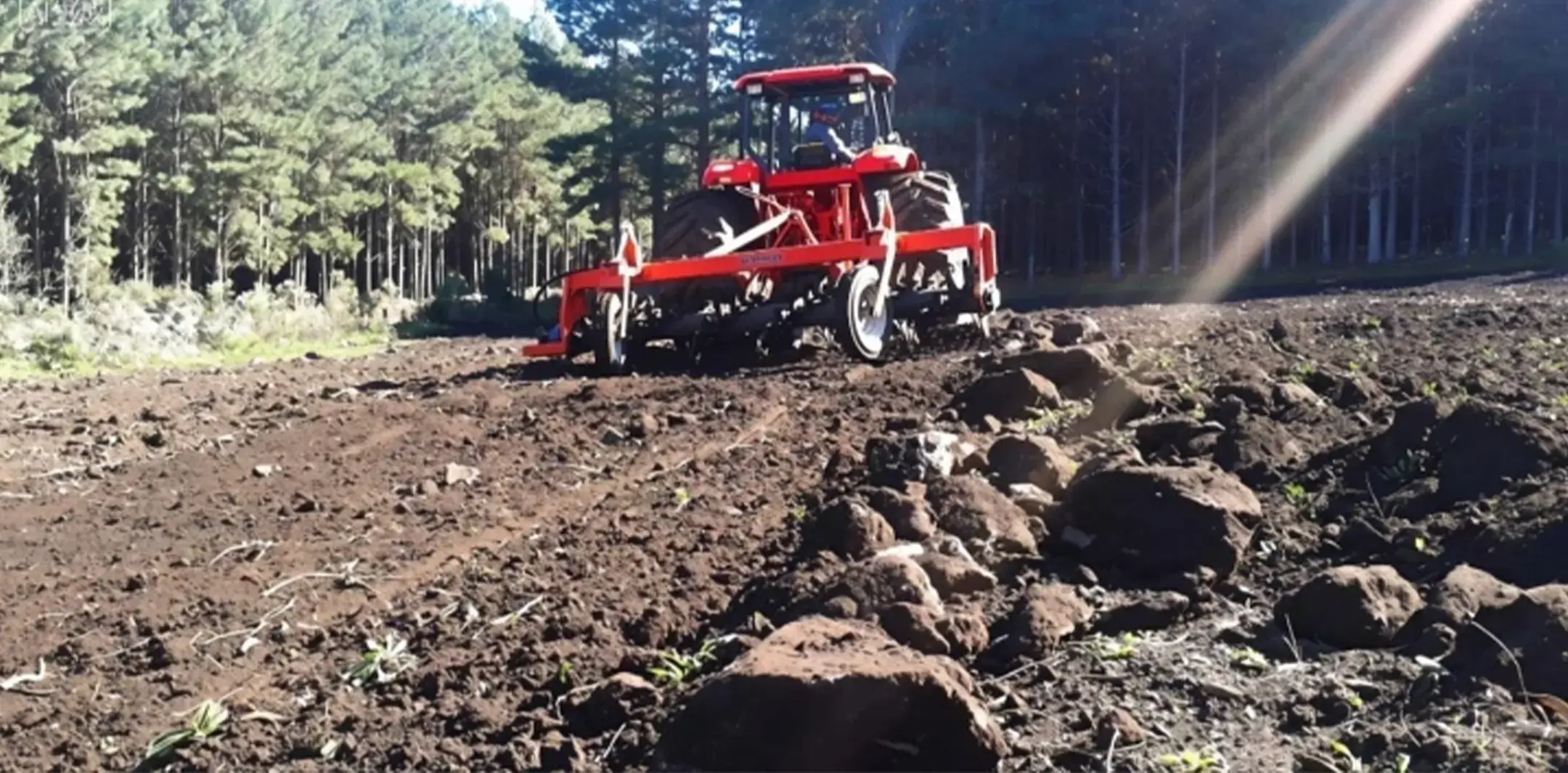
Pasture Renovation: Older hill paddocks in Hawke’s Bay, Wairarapa, and the Maniototo often contain generations of accumulated surface stone. Renovating these paddocks for oversowing, cultivation, or conversion to cash crops requires a crushing pass before any tillage work begins. A TMRC 150 or TMRC 175 matched to a 100–130 hp tractor will clear a medium-density stone load in a single pass at working depths sufficient to handle most New Zealand surface stones without excessive soil disturbance.
Track and Laneway Construction: Many hill farms rely on an extensive network of farm tracks that need periodic resurfacing. Using a دستگاه سنگ شکن to process rock sourced from the paddocks themselves — rather than trucking in purchased aggregate — is an economically attractive approach that is increasingly common in South Island high-country farming. The crushed material produced by the TMRC series is typically 0–50 mm in fragment size, which is ideal for compacting into a stable farm track base.
Orchard and Vineyard Row Clearing: The PSC series and smaller TMRC models (TMRC 100 with its 1,000 mm working width) are well-matched to the narrow inter-row requirements of New Zealand’s expanding wine and pip-fruit growing regions in Marlborough, Nelson, Hawke’s Bay, and Central Otago. Schist and river-stone soils in these zones create ongoing tyre and equipment damage that a seasonal crusher pass can address efficiently.
Post-Earthworks Site Preparation: After subdivision cuts, drainage works, or riparian fencing programmes, exposed subsurface rock frequently appears at the surface. A دستگاه سنگ شکن قابل حمل or tractor-mounted unit can process this material on-site before re-grassing, avoiding the need for topsoil importation over a fragmented, rocky surface.
سوالات متداول
تدوینگر: PXY