Regional Agricultural Equipment Guide
PTO Stone Crusher for Turkish Agriculture: Dealing with Limestone and Marl in the Konya Plain and Aegean Zones
A detailed field guide to choosing, configuring, and operating a PTO stone crusher across Turkey’s most challenging calcareous agricultural landscapes — from the Konya Basin’s hard limestone pans to the Aegean’s marl-heavy terrace soils.
1. Turkey’s Rock Problem — and Why a PTO Stone Crusher Is Often the Answer
Turkey sits at the crossroads of three tectonic plates, and the geological consequences of that positioning are felt in farmfields from the Central Anatolian plateau to the Aegean coastal terraces. Across millions of hectares of cultivable land, farmers contend with calcareous bedrock that sits stubbornly close to the surface, secondary limestone cobble brought up by plowing, and marl layers — soft but cohesive calcium-rich sedimentary rock — that resist conventional cultivation equipment. These conditions drive significant demand for stone crushing equipment capable of processing material in place, without the cost and labor of manual stone removal.
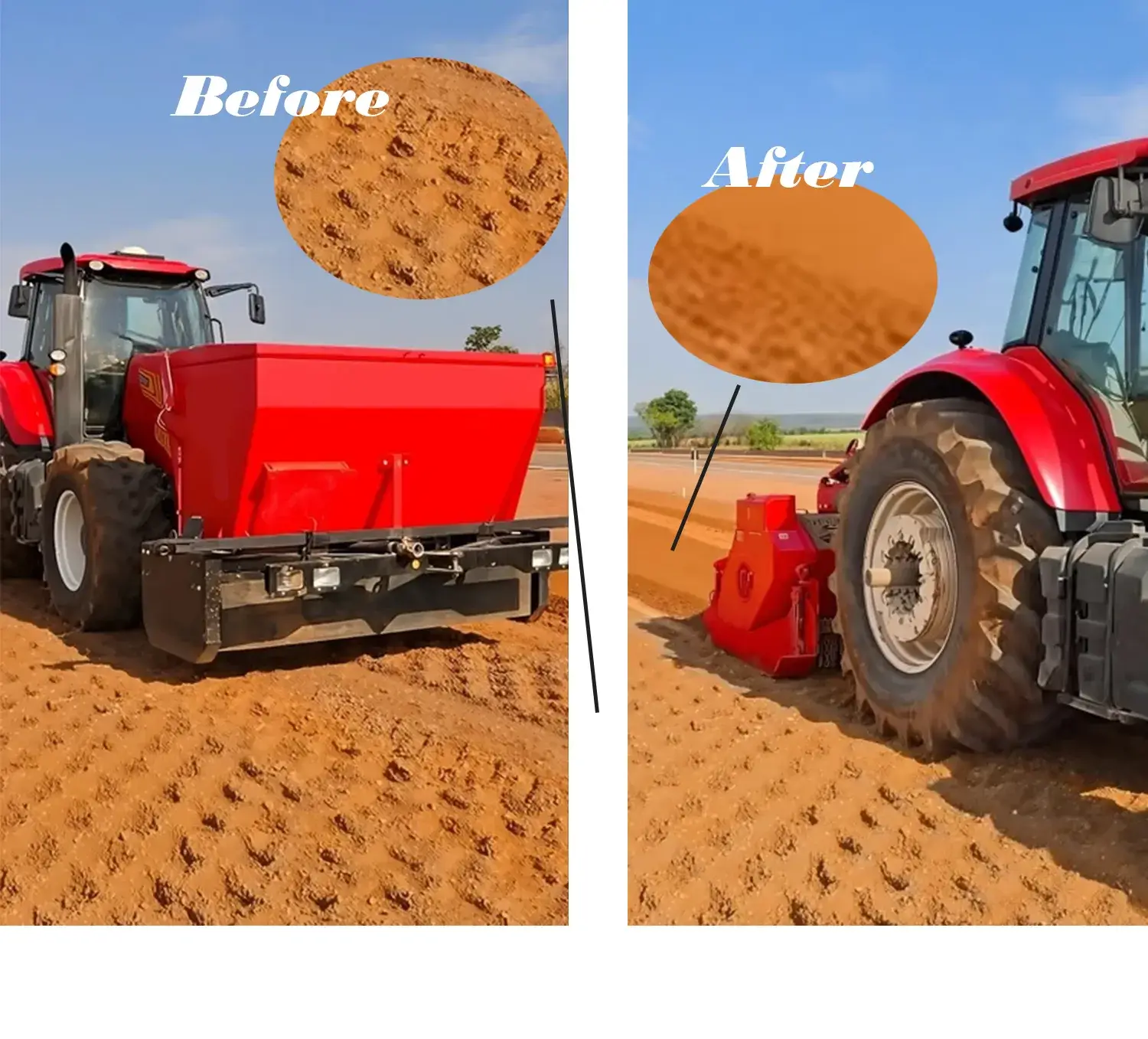
A PTO stone crusher addresses this challenge directly. Driven from the tractor’s Power Take-Off shaft and rear-mounted via a three-point hitch, the machine uses a high-speed rotor fitted with hardened steel hammers or fixed picks to fracture surface stone and shallow sub-surface rock as the tractor advances across the field. The processed material remains distributed across the worked zone as gravel or fine aggregate, stabilizing the surface for further cultivation or direct seeding. For cereal farmers on the Konya Plain and olive, vine, and vegetable growers across the Aegean region, this process converts previously unworkable or equipment-damaging ground into productive agricultural land with a single machine pass.
This guide is written specifically for Turkish agricultural conditions, with attention to the two zones where stone-related productivity losses are most acute: the Konya Basin, where hard Cretaceous limestone layers frequently break the surface after deep plowing, and the Aegean coastal and foothill zone, where marl formations and mixed limestone-clay soils are characteristic of vineyard, olive orchard, and horticultural terraces. Understanding what makes these two geological environments different from each other — and how those differences affect stone crusher selection and operation — is central to making a well-informed equipment decision.
2. Understanding Turkish Calcareous Soils: Limestone vs. Marl — Two Different Challenges
The terms “limestone” and “marl” are sometimes used interchangeably in agricultural conversation, but they represent meaningfully different materials that behave differently under a stone crusher rotor. Limestone, in the Turkish agricultural context, typically refers to consolidated sedimentary rock composed predominantly of calcium carbonate (CaCO₃). In its harder forms — particularly the dense Cretaceous and Paleocene limestones common across Central Anatolia — it can have a compressive strength exceeding 100 MPa. When embedded in soil or exposed at the surface, these fragments absorb and deflect enormous impact energy, demanding higher rotor tip speed and heavier crushing chamber construction than softer materials.
Marl is geologically distinct: it is a calcium carbonate-clay mixture, typically containing 35–65% CaCO₃ and a significant proportion of fine-grained silicate clay. The Aegean coastal zones — including the Gediz, Küçük Menderes, and Büyük Menderes river valleys — feature extensive Neogene marl deposits that have been shaped by both sedimentation and Quaternary erosion. Marl is typically softer than pure limestone and breaks under mechanical stress more readily, but its clay fraction creates a different operational challenge: when wet, marl becomes sticky and plastic, coating crusher hammers, filling rotor clearances, and dramatically increasing the energy required to turn the rotor. For operators in the Aegean, seasonal timing of stone crusher operations is therefore more important than in the drier Konya Basin.
A third scenario common across both regions is mixed cobble — fields where weathered limestone fragments of varying sizes are embedded in calcareous loam or clay-loam soil. Here the challenge is less about raw rock hardness and more about stone size distribution: fragments ranging from 50 mm gravel to 300 mm embedded cobbles demand a machine with both sufficient rotor diameter to handle the larger pieces and adequate tooth density to process the smaller material efficiently in a single pass. The stone crusher for tractor that works best in these mixed conditions typically sits in the mid-power range (120–180 hp) with a maximum stone processing diameter of at least 300 mm.
3. Action Mode: How the Crushing Process Works in Rocky Calcareous Ground
The working principle of a PTO stone crusher is rotary impact: the tractor’s PTO shaft drives the implement’s internal gearbox, which in turn spins a heavy steel rotor at high speed — typically between 540 and 1000 RPM at the shaft input, translating to a rotor tip speed that delivers the necessary kinetic energy to fracture rock on contact. As the tractor advances at a controlled working speed of approximately 2–5 km/h, the rotor continuously engages with the soil surface and sub-surface material, with the hammers or picks striking stone repeatedly across the working width.
What makes limestone and marl processing distinctive in terms of action mode is the variability of resistance encountered across a single pass. On a typical Konya Plain field, the rotor might encounter loose topsoil, then a buried cobble, then a partially exposed outcrop — all within meters of each other. This variability generates shock loads that reverse instantaneously through the driveline, which is why the torque limiter or overload clutch fitted at the PTO input shaft is not a convenience feature but a genuine operational necessity. Without it, sudden rotor deceleration on hard limestone contact can transmit destructive reverse torque to the tractor’s PTO clutch assembly.
In marl-dominant Aegean conditions, the action mode changes subtly. Because marl fractures more readily than consolidated limestone, the rotor encounters less peak-load shock but experiences higher sustained load from the clay-bound material wrapping around the rotor body and hammers. The counter-blade — the fixed anvil against which processed material is driven — plays a particularly important role here. Adjusting the counter-blade gap determines both the maximum fragment size of the output material and the energy consumed per unit area. Wider gaps reduce power demand but leave larger fragments; narrower settings produce finer output but require more PTO power and increase hammer wear rate.
Working speed also matters more in mixed limestone-marl fields than in purely stony conditions. Moving too quickly through marl-rich soil produces poorly processed patches; moving too slowly through hard limestone can stall the rotor in extreme cases. Experienced operators in the Aegean typically settle on 2.5–3.5 km/h working speed in spring when soils are moist, increasing to 4–5 km/h in drier late-summer conditions when the marl fraction has lost much of its clay plasticity.
4. Manufacturing Structure: What Makes a Stone Crusher Durable Enough for Turkish Rocky Ground
The structural demands placed on a stone crusher working in Anatolian calcareous soils are among the most severe of any agricultural implement application. The mainframe — the welded steel chassis that carries both the rotor assembly and the three-point hitch attachment points — must simultaneously resist the bending loads of the implement’s own weight (typically 1,500–3,000 kg for mid-to-heavy machines), the dynamic impact forces transmitted from the rotor during crushing, and the lateral forces generated when the machine encounters an embedded boulder at an angle. Mainframe steel thickness in quality agricultural stone crushers typically ranges from 8–12 mm for side panels and up to 20–25 mm at rotor chamber floor and hitch mounting brackets.
The rotor drum itself is precision-manufactured from high-tensile steel, machined to dimensional tolerances that allow dynamic balancing after assembly. Rotor diameter is a critical specification: larger diameters (typically 450–700 mm across the mid-to-heavy range) generate higher peripheral speed at the same shaft RPM, which translates to more effective stone fracturing. Rotor diameter also determines the maximum working depth of the machine — generally, working depth is limited to approximately one-third of rotor diameter to prevent the rotor from being buried in processed material.
The crushing chamber — the enclosed working space within the machine housing — must be lined with abrasion-resistant steel to survive the constant bombardment of stone fragments during operation. Quality machines use replaceable Hardox-grade steel liners (typically 400–500 HB hardness) on the chamber floor, rear wall, and sidewalls. For Turkish limestone conditions, these liners wear considerably faster than in softer agricultural stone applications, and ease of liner replacement in the field is a practical consideration that distinguishes well-engineered machines from budget alternatives.
Depth control skids — the ground-contact plates that determine working depth — are another structural element worth examining carefully. In rocky calcareous soil, skids encounter embedded stones during every pass and must be designed to resist both abrasion and impact deformation. Bolt-on reversible or replaceable skid designs allow worn sections to be exchanged without replacing the entire skid assembly, reducing ongoing maintenance costs significantly on high-use machines.
5. Material System: Tooth and Hammer Specifications for Limestone and Marl
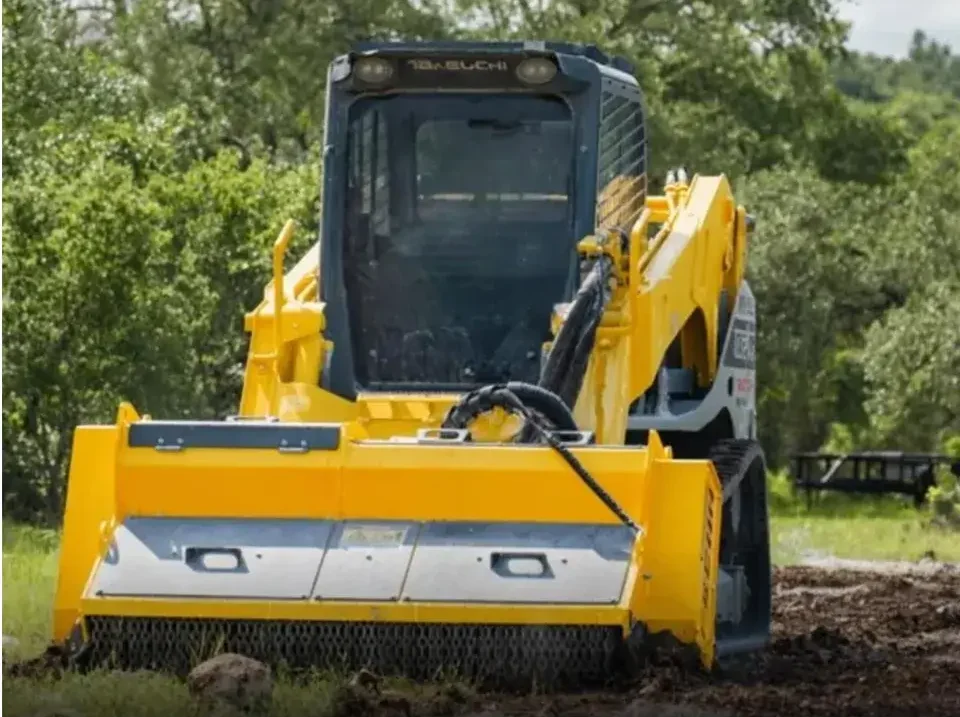
The material system of a PTO stone crusher — the selection and metallurgical specification of the rotor’s cutting and impact elements — has a disproportionate effect on performance and running costs in Turkish limestone conditions. Two primary rotor configurations are used in agricultural stone crushers: swinging hammers and fixed picks or teeth. Each has advantages for specific geological situations, and the choice between them is not trivial when working in the distinct conditions of the Konya Basin versus the Aegean zone.
Swinging hammers are mounted on pivot pins that allow the hammer body to deflect rearward when it strikes an obstacle that exceeds its design impact load. This self-protective characteristic makes swinging-hammer rotors more forgiving when working in ground where very large, unexpected embedded boulders may be present — the hammer swings back rather than transmitting the full shock load to the rotor body. For the Konya Plain, where subsurface limestone outcroppings of unpredictable size can emerge after deep plowing, swinging hammers provide a degree of operational insurance. The tradeoff is somewhat reduced cutting aggressiveness compared to fixed-tooth designs, particularly in the direction-change zones of the rotor’s rotation.
Fixed picks or teeth — carbide-tipped or hardox-tipped elements bolted rigidly to the rotor body — deliver maximum cutting force and are generally preferred for systematic land reclamation work where the stone type is known and consistent. In Aegean marl conditions, fixed picks penetrate the calcareous clay more effectively than swinging hammers, which can skip across the surface of cohesive wet marl rather than engaging cleanly. Fixed-tooth machines used in these conditions require a reliable torque limiter at the PTO input to protect against the reverse shock load that occurs when a fixed pick contacts dense embedded limestone within the marl matrix.
Tungsten carbide inserts — commonly used for tip reinforcement on both hammer and pick designs — provide hardness values in the 85–92 HRA range (Rockwell A scale), well above the hardness of most calcareous agricultural stone. In practice, the rate of carbide wear is more strongly influenced by the abrasive silica content of the associated soil than by the hardness of the stone itself. Turkish calcareous soils with a high silica fraction — common in parts of the Konya Basin where Quaternary alluvial deposits have mixed limestone fragments with quartz-rich sand — can consume carbide tips considerably faster than the same machine working in purer limestone conditions elsewhere. Carbide replacement intervals should be verified during the first 50 hours of operation on any new site.
6. Konya Plain: Operating a PTO Stone Crusher on Central Anatolia’s Hard Limestone Fields
The Konya Closed Basin covers roughly 50,000 km² and is the largest endorheic basin in Turkey, supporting major production of sugar beet, wheat, barley, and sunflower. The region’s geology is dominated by Paleocene and Eocene limestone formations that have been exposed and fragmented by centuries of cultivation, erosion, and frost-thaw cycling. In the northern and eastern parts of the basin, in particular, farmers regularly encounter limestone slabs and cobbles at depths of 15–30 cm that damage plow points, disc blades, and seeders with predictable regularity each spring.
The standard approach historically was to use heavy disc plows or subsoilers to break up the top layer of limestone and then manually collect fragments — a labor-intensive process that has become increasingly uneconomical as rural labor availability has declined. A PTO stone crusher eliminates the manual collection step entirely by grinding fragments in situ, leaving processed material that integrates back into the soil profile under subsequent tillage. For the Konya Basin’s characteristic deep brown calcareous soils (Calcic Kastanozems and Calcisols in the FAO classification), the calcium carbonate contribution from processed limestone actually has some agronomic benefit, slightly improving pH buffering in fields that have been acidified by long-term fertilizer application.
Working depth on the Konya Plain typically targets 10–20 cm, sufficient to process the near-surface cobble layer without excessively disrupting deeper soil structure. Horsepower requirements for this depth range, given the hardness of Central Anatolian limestone, generally favor machines in the 150–230 hp class for practical working widths of 2.0–3.0 meters. Attempting to use a lighter machine at the lower end of the power range risks continuous PTO overload events in conditions where hard limestone contact is frequent and unpredictable.
7. Aegean Zone: Stone Crusher Applications in Turkey’s Vine, Olive, and Horticultural Terraces
The Turkish Aegean agricultural zone — encompassing İzmir, Manisa, Aydın, Muğla, Denizli, and Uşak provinces — produces a disproportionate share of Turkey’s high-value agricultural exports: olives, figs, grapes, cotton, tobacco, and specialty vegetables. The geological substrate across much of this region consists of Neogene sedimentary sequences where marl, limestone, and calcareous conglomerate alternate in horizontal or gently dipping layers that have been cut and reshaped by river valley incision and Quaternary tectonics. The result, agriculturally, is highly variable ground conditions across short horizontal distances — a field may transition from workable alluvial loam to hard limestone cobble within a single row of vines.
Vineyard and olive orchard management in the Aegean creates a specific set of demands on stone crushing equipment that differ somewhat from open field applications. Working widths must often be limited to the inter-row spacing of established plantings, which in traditional Aegean vineyards can be as narrow as 2.0–2.5 meters. The machine must therefore be maneuverable, well-matched in width to the row spacing, and capable of operating on the sloped terraces that characterize much of the region’s viticulture landscape. Three-point hitch stability on gradients up to 15–18% is a practical consideration that some operators underestimate, particularly with heavier implements mounted to the rear of a relatively light-chassis tractor.
Inter-row stone crushing in the Aegean also intersects with questions of soil structure preservation. Olive and vine roots extend laterally and the shallow-rooted work of a stone crusher at 10–15 cm depth, if conducted regularly, can disrupt feeder root networks. Most agronomists in the Aegean region recommend limiting stone crusher passes to fields being newly established or after significant lime-stone surface emergence following erosive rainfall events, rather than as a routine annual operation. A stone crusher for tractor that allows precise depth adjustment — via hydraulic skid control or manual skid repositioning — is therefore particularly valuable in perennial crop settings.
8. Horsepower and Working Width Matching: Turkey-Specific Recommendations
The table below provides a practical guide for matching tractor horsepower to stone crusher working width and typical application in Turkish calcareous agricultural conditions. These recommendations are conservative, accounting for the additional power demand of hard limestone and wet marl conditions compared to softer agricultural stone environments.
| Tractor PTO HP | Recommended Working Width | Application | Max Stone Diameter | Suitable Region |
|---|---|---|---|---|
| 80–110 hp | 1,100–1,600 mm | Vineyard/orchard rows, small fields | Up to 150–200 mm | Aegean inter-row, soft marl |
| 110–160 hp | 1,600–2,200 mm | Mixed limestone/marl field prep | Up to 300 mm | Aegean terraces, Konya light cobble |
| 160–200 hp | 2,200–2,500 mm | Heavy Konya limestone, new land reclamation | Up to 400 mm | Konya Basin, Central Anatolia |
| 180–230 hp | 2,400–3,000 mm | Large-scale cereal land clearing | Up to 500 mm | Konya Plain open field, commercial scale |
9. Gearbox Design and Driveline Considerations for High-Shock Limestone Applications
The gearbox of a PTO stone crusher is the single most stress-loaded component in the entire machine when working in Central Anatolian limestone conditions. Unlike rotary tillers or mulchers — which encounter relatively consistent soil resistance — a stone crusher processing hard limestone generates repeated shock loads that can exceed the steady-state torque rating of the input shaft by factors of three to five during hard-rock contact events. The gearbox must be designed not just for rated torque but for cyclic shock loading at high frequency.
Quality stone crusher gearboxes address this through several design features working together. Helical gear sets rather than spur gears provide smoother load transfer and better fatigue resistance. Input shaft bearings are typically double-row tapered roller or spherical roller types with significant axial and radial load capacity. The gearbox housing itself is cast iron or ductile iron rather than fabricated steel, providing superior vibration damping. And critically, oil-bath lubrication ensures that gear teeth and bearings remain lubricated even during extended high-load operation — unlike grease-lubricated designs where repeated shock loading can displace lubricant from critical contact surfaces.
The PTO input shaft protection device is equally important. A cam-and-ball overload clutch or a slip clutch set to a predetermined torque limit protects the gearbox from reverse-impulse loads when the rotor strikes an immovable embedded boulder. For Turkish limestone applications, specifying the correct clutch slip torque is important: set too high, the clutch fails to protect on genuine overload events; set too low, it slips during normal heavy rock contact and causes premature clutch wear. Consultation with the implement supplier to specify the correct clutch rating for the anticipated tractor PTO torque output is strongly recommended for new machinery purchases in the Konya Basin context.
From the tractor’s side, it is also worth noting that Turkish-market tractors from Turkish brands (Türk Traktör / New Holland, TürkTraktör / Case IH, Erkunt) and the common European brands (Fendt, Deutz-Fahr, Claas) all use ISO 500-compliant PTO shafts and Category II or III hitch systems, aligning with the international standards that stone crusher models in the 100–230 hp range are designed to accommodate.
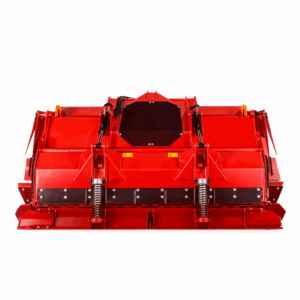
10. PTO Stone Crusher Product Range
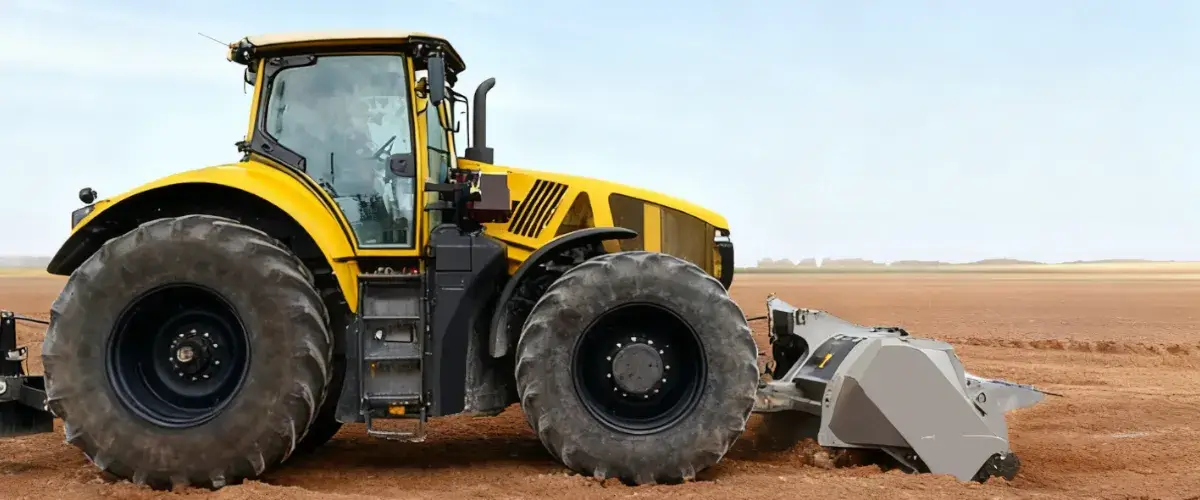
Each model is specified to perform in demanding rock conditions. The profiles below highlight the key parameters relevant to Turkish agricultural applications.
11. Regulatory Framework: Turkey, the EU, and International Standards for Agricultural Stone Crushers
Agricultural machinery sold and operated in Turkey is subject to a regulatory framework that has been progressively harmonized with European Union standards as part of Turkey’s customs union obligations and ongoing accession process. Understanding this framework is relevant both for importers sourcing stone crushing equipment for the Turkish market and for operators managing compliance for commercial agricultural operations.
| Jurisdiction | Key Standard / Legislation | Applicability to Stone Crushers |
|---|---|---|
| Turkey | Makine Emniyeti Yönetmeliği (2006/42/AT harmonization); TS EN ISO 4254-1; Agricultural Machinery Law No. 5488 | CE marking is required for machinery placed on the Turkish market under the harmonized Machinery Safety Regulation. PTO shaft guards must comply with TS EN ISO 5674. Agricultural implement import requires Turkish Standards Institute (TSE) conformity assessment in specific categories. |
| European Union | EU Machinery Directive 2006/42/EC; EN ISO 4254-1; EN ISO 5674 (PTO shaft guarding); EN 1032 (vibration testing) | Full risk assessment and technical construction file required. PTO cardan shaft guards must enclose the entire driveline. Operator-zone noise and vibration emissions must be measured and documented. CE declaration of conformity mandatory. |
| Korea (Republic of Korea) | Agricultural Mechanization Act; RDA (Rural Development Administration) certification; KS R ISO 11684 | PTO safety guards mandatory. RDA performance testing certification available and commercially relevant for Korean market. ISO 500 PTO shaft dimensions apply. |
| ISO (International) | ISO 500 (PTO dimensions); ISO 730 (three-point linkage); ISO 11684 (safety signs); ISO 4254-1 (general agricultural machinery safety) | ISO 500 defines 540 RPM and 1000 RPM PTO shaft configurations worldwide. ISO 730 specifies Category I, II, and III hitch dimensions. Compliance with these standards ensures cross-market interoperability of implements and tractors. |
| Germany / DGUV | DGUV Regel 114-001 (agricultural safety); BetrSichV (Betriebssicherheitsverordnung) | Gearbox overload protection devices must be maintained in functional condition and regularly inspected. PTO shaft guards must be replaced if damaged — operating without guards is a criminal liability in Germany regardless of private land status. |
For operators in Turkey specifically, the practical implication is that CE-marked stone crushers from international manufacturers satisfy Turkish Machinery Safety Regulation requirements for market placement. Verifying CE marking, checking that the PTO shaft guard set is complete and undamaged before any operation, and ensuring operator familiarity with the specific machine’s overload protection system are the three most important compliance steps for day-to-day operation under Turkish law.
12. Maintenance in Alkaline Calcareous Conditions: What Turkish Operators Need to Know
Turkish limestone and marl soils create a specific maintenance environment for stone crushing equipment that differs from maintenance practices developed for neutral or acidic soil conditions. The high calcium carbonate content of processed stone dust combines with moisture to form a mildly alkaline coating on all exposed metal surfaces. While less corrosive than acid soils, this calcium-rich dust accumulation is highly abrasive and will accelerate wear on any surface where it becomes packed and compressed — particularly around bearing seals, depth control skid wear surfaces, and the rotor chamber liner mounting interfaces.
After each working day in limestone conditions, thorough washing of the crushing chamber — particularly the rotor body, hammer mounting zones, and chamber floor liners — prevents calcium carbonate scale from hardening overnight. Once hardened, limestone scale bonds firmly to steel surfaces and requires mechanical removal that risks damaging paint and surface coatings. Pressure washing while the machine is still warm from operation is the most effective approach.
Gearbox oil change intervals in Turkish limestone applications should be treated as a minimum rather than a guideline. The first oil change after 50 operating hours should be treated as mandatory — break-in debris combines with any fine dust that has entered through the filler breather to create an abrasive oil slurry that accelerates gear tooth and bearing wear if left unchanged. Subsequent changes at 200-hour or annual intervals are acceptable for machines with good seal integrity, but checking oil condition at each refueling stop is good practice in high-dust limestone environments.
Hammer or tooth inspection after every 50–80 operating hours is also recommended for new machine deployments in Turkish limestone, as carbide wear rates vary significantly by site. Recording the number of hours between replacement intervals on the first season allows operators to build a realistic maintenance budget for subsequent seasons, avoiding unplanned downtime at critical planting or preparation periods in the Konya wheat cycle or the Aegean spring pre-planting window.
What Is Crusher Stone Used for in Turkish Agriculture?
In Turkish agricultural practice, processed crusher stone serves several practical functions beyond the obvious benefit of removing obstacles from working fields. Finely crushed limestone, returned to the soil surface, acts as a natural liming agent — gradually neutralizing soil acidity in cereal fields that have received high nitrogen applications over many seasons. In the Konya Basin, where soil pH tends naturally toward alkalinity, this effect is minimal, but in the slightly more acidic soils of the Aegean interior valleys, returning crushed limestone to the soil has measurable long-term pH correction value.
Coarser crusher stone output is commonly used as a road base material on farm tracks and inter-field access roads. Rather than carting removed stone to a spoil pile, operators who process stones in-field near access tracks often redirect the crushed output to fill ruts and potholes, reducing the cost of road maintenance on larger farm operations. The stone crusher for tractor thus performs double duty as both a field preparation tool and an informal road base producer in areas where gravel road maintenance is otherwise expensive.
13. About Our PTO Stone Crusher Product Line
Our range of agricultural stone crushers is built for the realities of demanding field conditions — not test-bed specifications. Every machine incorporates a heavy-gauge steel mainframe, sealed oil-bath gearbox with integrated overload protection, replaceable Hardox-grade chamber liners, and three-point hitch attachment verified for Category II tractor compatibility across the full range of working weights. We offer models matched to tractors from 80 hp compact utility units through 230 hp commercial agricultural machines, covering the full spectrum of Turkish field requirements from Aegean inter-row vineyard work to large-scale Konya Plain limestone reclamation.
Frequently Asked Questions
Editor: PXY